Cerro Colorado sits in southern Pima County, accessible via dirt roads off Arivaca Road — bring a high-clearance vehicle, plenty of water, and sturdy boots. You’ll want to visit between December and February, when temperatures stay comfortable in the 50s and 60s. The ruins include crumbling adobe walls, stone fort remnants, and John Poston’s visible grave. But the history here runs darker and stranger than most ghost towns, and there’s far more to this place than what the desert surface reveals.
Key Takeaways
- Cerro Colorado is located in southern Pima County, accessible via dirt roads off Arivaca Road, requiring a high-clearance vehicle for safe navigation.
- Visit between December and February for ideal temperatures in the 50s and 60s, avoiding summer heat exceeding 100°F.
- Pack essential supplies including water, sturdy boots, recovery gear, and a map, as the remote site lacks nearby services.
- Explore crumbling adobe walls, stone fort remnants, and John Poston’s visible concrete grave as historical landmarks throughout the ruins.
- The site’s violent history includes a deadly 1861 cave-in, executions, and outlaw raids, contributing to its haunted ghost town reputation.
Cerro Colorado, Arizona: A Ghost Town That Still Has Its Secrets
Tucked away in southern Pima County, Arizona, Cerro Colorado is a ghost town that wears its violent, treasure-laced history like a second skin. Its mining history stretches back to 1855, when Charles Poston’s Sonora Exploring and Mining Company first carved into the earth here.
What followed was a turbulent legacy of cave-ins, executions, outlaw raids, and unsolved mysteries that still linger today.
The ghost stories aren’t just campfire legends — they’re woven into the ruins themselves. Miners once fled the shafts, convinced the dead were walking alongside them. A foreman’s stolen silver was never recovered. A man was killed, his grave later ransacked.
The dead don’t stay buried at Cerro Colorado — and neither do their secrets.
You’ll find crumbling adobe walls, stone fort remnants, and a concrete tombstone that quietly dares you to dig deeper into the secrets this desert refuses to surrender.
The Collapse, the Execution, and the Violence That Ended It All
The haunted reputation of Cerro Colorado didn’t spring from imagination — it was forged in tragedy. In 1861, a devastating cave-in killed 15 miners, and the collapse implications rippled outward fast. Surviving Mexican miners fled to Sonora, convinced spirits haunted the shafts.
German and American replacements reported the same visions and refused underground work.
Then came the execution aftermath. When foreman Juanito was caught stealing silver and executed by John Poston, Mexican outlaws retaliated violently. They raided the town, killing John Poston and two German miners before fleeing back to Mexico.
The stolen silver Juanito allegedly buried was never recovered.
Walking these ruins today, you’re standing where real blood was spilled and real secrets were buried — and possibly still are.
The Lost Silver of Cerro Colorado and the Spirits That Guard It
Somewhere beneath the crumbling adobe and sun-baked earth of Cerro Colorado, a cache of stolen silver may still be waiting. Foreman Juanito allegedly buried the lost treasure near the mine before his execution, and nobody’s found it since. That mystery alone draws adventurers who crave wide-open possibilities and untamed history.
Somewhere beneath the sun-baked earth of Cerro Colorado, stolen silver and untamed mystery have waited over 150 years to be found.
But you won’t be searching alone. The spirits of fifteen miners killed in the 1861 cave-in reportedly haunt these shafts, and replacement workers refused to enter after encountering them.
These ghostly guardians seem unwilling to surrender the mine’s secrets.
Even the outlaws who murdered John Poston left empty-handed after tearing through the site searching for Juanito’s silver.
Whatever’s buried here has stayed buried for over 150 years, and it might stay that way forever.
What Cerro Colorado’s Ruins Actually Look Like Today
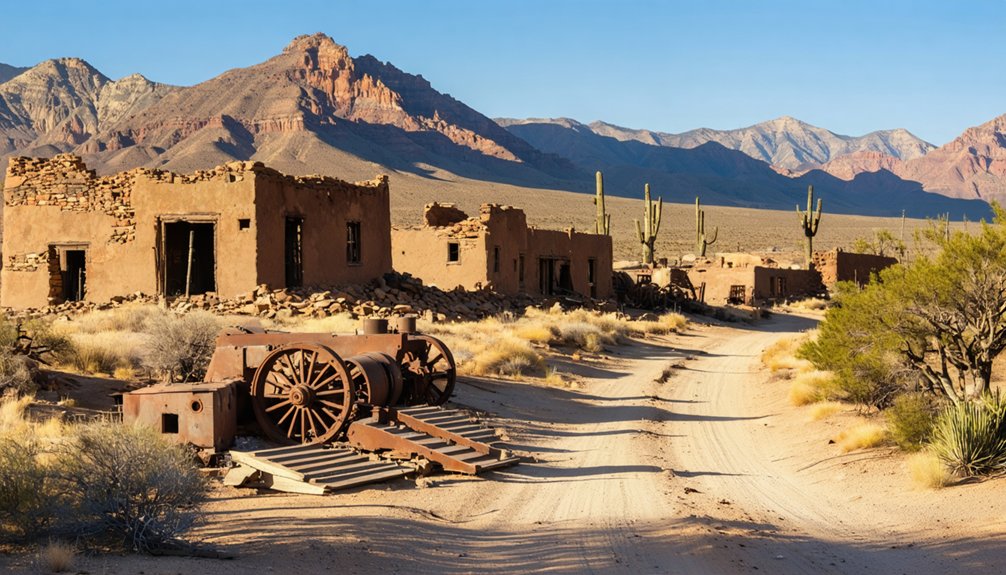
When you arrive at Cerro Colorado, you’ll find adobe walls still standing amid the desert scrub, their sun-bleached surfaces telling a quiet story of the community that once thrived here.
You can also spot the remnants of the stone fort built on a nearby hill after the Civil War, its crumbling outline still tracing the defensive perimeter miners once relied on for protection.
Perhaps most striking is John Poston’s concrete grave and tombstone, which remain visible on the site despite the violence and pillaging the gravesite endured over the years.
Adobe Walls Still Standing
Crumbling adobe walls and scattered stone foundations are the first things you’ll notice as you approach what’s left of Cerro Colorado. These weathered remnants carry enormous historical significance, standing as silent witnesses to Arizona’s turbulent mining era.
Adobe preservation techniques, including the original sun-dried brick methods used in the 1850s, explain why portions of these structures still hold their shape despite over 150 years of desert exposure.
You’ll wander through roofless rooms where miners once lived, worked, and died. The thick walls absorbed brutal summer heat and bitter winter nights equally.
Stone fort remnants on the nearby hill add a military dimension to your exploration. Touch these walls carefully — you’re making direct contact with mid-19th-century frontier life few people ever experience firsthand.
Stone Fort Remnants Visible
Beyond the adobe walls, the stone fort remnants on the nearby hill tell a different story about Cerro Colorado’s troubled past. Built in 1864 after Civil War disruptions left the mine vulnerable, the stone fort architecture reflects urgent necessity rather than permanence.
Workers constructed it specifically to defend against Apache raids and Mexican outlaw threats.
As you climb toward the hilltop ruins today, you’ll immediately recognize the strategic positioning — commanding sightlines across the surrounding desert. The stone fort’s historical significance becomes clear when you consider that miners literally built their own protection just to continue working.
A guard tower once stood in the main square below, completing a defensive network that kept operations alive.
Walking these grounds, you’re standing inside a self-contained frontier survival system unlike anything else in southern Arizona.
Grave And Tombstone Remains
Though the stone fort commands attention from the hilltop, John Poston’s concrete grave and tombstone pull you back down to ground level — and straight into one of Cerro Colorado’s darkest chapters.
The grave significance here runs deep. John Poston, brother of Arizona’s founding father, was murdered by outlaws hunting Juanito’s buried silver.
Standing at his marker connects you directly to that violent historical context.
What you’ll find at the gravesite today:
- A concrete grave structure still intact despite decades of exposure
- A tombstone bearing visible markings that identify Poston’s story
- Evidence of past desecration, reminding you how lawless this territory once was
You’re standing where real frontier justice — and injustice — played out. No museum recreates this rawness.
Why Cerro Colorado Rewards a Visit More Than Most Ghost Towns
What sets Cerro Colorado apart from most ghost towns is the sheer density of history packed into a single, rugged site.
You’re not just walking through crumbling adobe walls — you’re stepping into a landscape shaped by mining disasters, executions, outlaw raids, and ghostly encounters that locals still whisper about today.
The legends of hidden treasures buried by the ill-fated foreman Juanito give every crumbling corner a sense of mystery that keeps your curiosity sharp.
You’ll find John Poston’s concrete grave, stone fort remnants, and haunted mine shafts all within striking distance of each other.
Few ghost towns deliver this combination of documented history and raw, unfiltered atmosphere.
Cerro Colorado doesn’t just tell a story — it pulls you directly inside one.
Getting to Cerro Colorado: Roads, Timing, and What to Bring
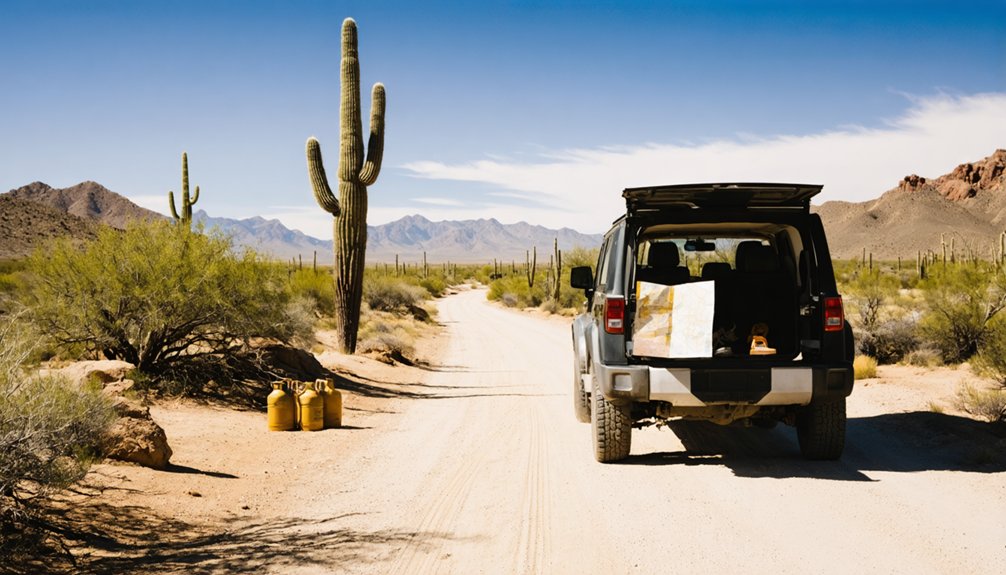
You’ll find Cerro Colorado tucked in southern Pima County, accessed via dirt roads off Arivaca Road near Arivaca.
So bring a high-clearance vehicle to handle the rough terrain safely. Plan your trip for fall or winter, when mild temperatures make exploring the ruins far more comfortable than the punishing summer heat.
Pack plenty of water, sturdy boots, and a map, since the remote location offers little margin for being underprepared.
Once you leave the pavement of Arivaca Road, the drive to Cerro Colorado shifts into rugged desert terrain that demands a high-clearance vehicle and a cautious pace.
Dirt road safety isn’t optional here — it’s essential for reaching the ruins without incident. Vehicle requirements aren’t strict, but low-clearance cars won’t survive the rocky, uneven paths.
Follow these three dirt road safety basics:
- Drive slowly — sharp rocks and hidden dips can shred tires without warning.
- Check conditions beforehand — desert rains transform dirt roads into impassable mud traps.
- Carry recovery gear — a shovel, tow strap, and spare tire can save your trip if things go sideways.
Respect the terrain, stay alert, and the road rewards you with one of Arizona’s most haunting destinations.
Best Seasons To Visit
Timing your visit to Cerro Colorado can mean the difference between a memorable desert adventure and a miserable slog through scorching heat. Southern Arizona’s summers are brutal, pushing temperatures well past 100°F, making exploration genuinely dangerous.
You’ll want to plan around the seasonal highlights that make this ghost town shine.
Fall and winter offer the best visiting conditions, delivering mild temperatures, clear skies, and comfortable hiking weather. December through February keeps temperatures in the pleasant 50s and 60s, perfect for wandering adobe ruins and tracking down John Poston’s gravesite without battling the sun.
Spring works too, though temperatures climb quickly by April.
Avoid June through August entirely. The desert won’t forgive poor timing, and you deserve a road trip that feels like freedom, not survival.
Frequently Asked Questions
What Are the Legal Coordinates for Locating Cerro Colorado on a Map?
You’ll find Cerro Colorado’s legal coordinates at T20S, R10E—pinpointing this intriguing ghost town’s rich mining history on your map. Could hidden spirits truly guard these ruins? Explore and uncover the truth yourself!
When Did Cerro Colorado’s Post Office Open and Permanently Close?
You’ll find that Cerro Colorado history shows its postal service opened on April 17, 1879, and permanently closed on April 15, 1911 — giving this ghost town over three decades of frontier mail delivery!
How Many Miners Died in the Tragic 1861 Cerro Colorado Cave-In?
Like a wound swallowed by the earth, the 1861 cave-in claimed 15 miners — a haunting moment of mining accidents with deep historical significance. You’ll feel that weight standing at Cerro Colorado’s ghostly ruins today.
Who Founded the Sonora Exploring and Mining Company in 1855?
Charles Poston founded the Sonora Exploring and Mining Company in 1855, shaping Cerro Colorado’s founding and rich mining history. You’ll discover he’s celebrated as Arizona’s “Father,” leaving an unforgettable legacy you can explore firsthand today!
Has the Silver Stolen by Foreman Juanito Ever Been Recovered?
The silver heist of the century remains unsolved! You won’t believe it, but Juanito’s stolen silver hasn’t been recovered as of 2010. Ghost stories swirl around the mine, keeping treasure hunters endlessly captivated by Cerro Colorado’s mysterious buried fortune.
References
- https://www.ghosttowns.com/states/az/cerrocolorado.html
- https://kids.kiddle.co/Cerro_Colorado
- https://www.youtube.com/watch?v=eysPIkhZe1w
- https://www.ghosttowngallery.com/test/htme/cerrocolorado.htm
- https://tucson.com/spirits-of-the-cerro-colorado-mine/article_96ac9f2c-71d4-11e5-b14a-07259b862fd3.html
- https://www.youtube.com/watch?v=ZJznsPU2tqM
- https://hikearizona.com/decoder.php?ZTN=20326