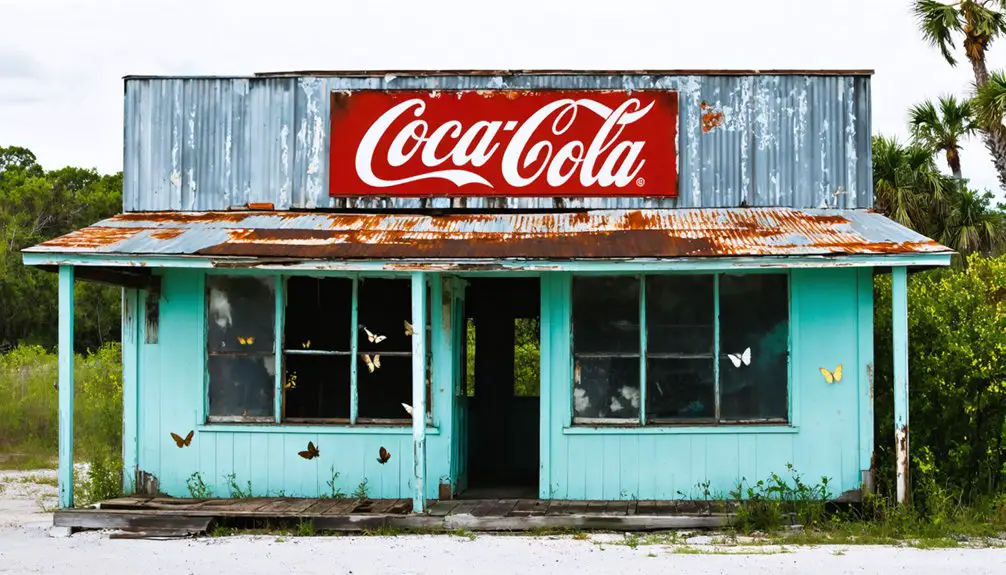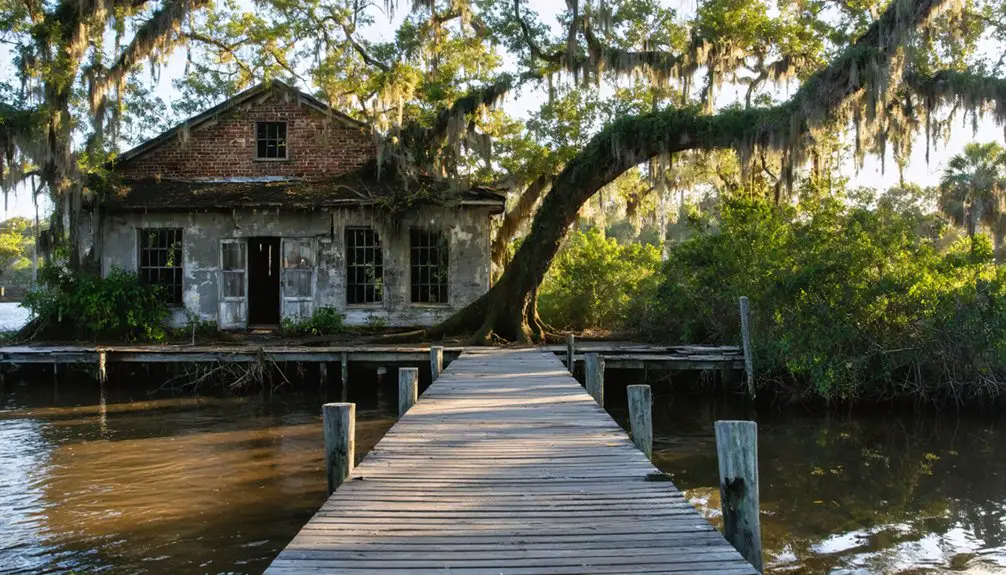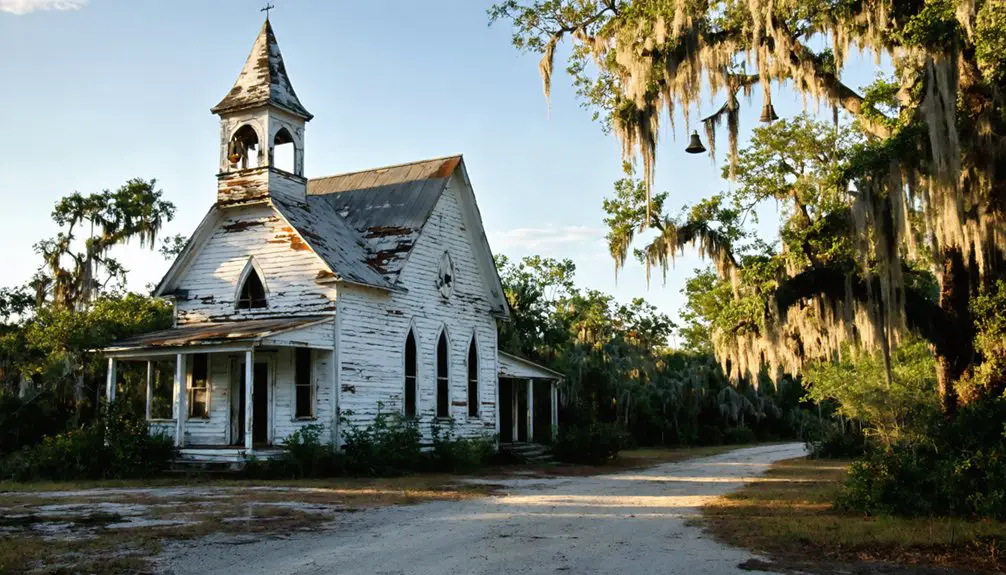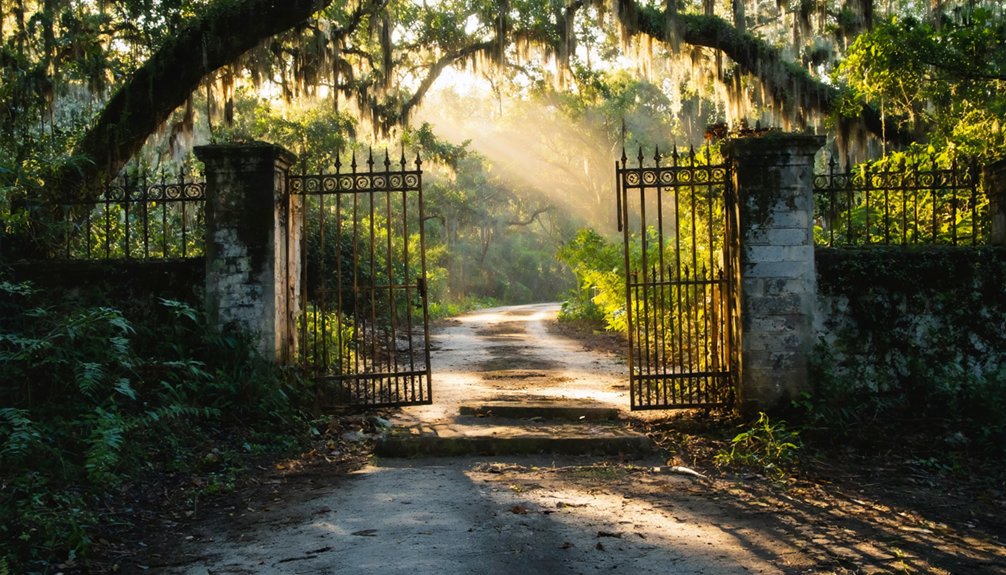
Slavia, Florida sits quietly along SR 426 in Seminole County, and it’s easier to miss than you’d think. Founded in 1911 by Slovak immigrants, this once-thriving agricultural colony dissolved by 1928, leaving behind weathered homes, a historic Lutheran church, and the faint outline of a community that time forgot. It’s not a tourist trap—it’s the real thing. Stick around, and you’ll uncover every crumbling detail that makes Slavia worth the detour.
Key Takeaways
- Slavia, Florida, located along SR 426 in Seminole County, was founded in 1911 by Slovak immigrants who purchased 1,200 acres of farmland.
- Key landmarks include St. Luke’s Lutheran Church (1912), Stanko’s General Store, and weathered abandoned homes offering authentic ghost town experiences.
- The community declined after the Slavia Colony Company dissolved in 1928, scattering landowners and gradually eroding organized agricultural operations.
- Slavia is accessible via SR 426 year-round on 2WD-friendly roads, with D.O.T. signs marking the area roughly a mile apart.
- Pairing Slavia with nearby Winter Park and Oviedo creates a well-rounded road trip connecting historical, cultural, and small-town Florida experiences.
What Is Slavia, Florida: and Why Is It Called a Ghost Town?
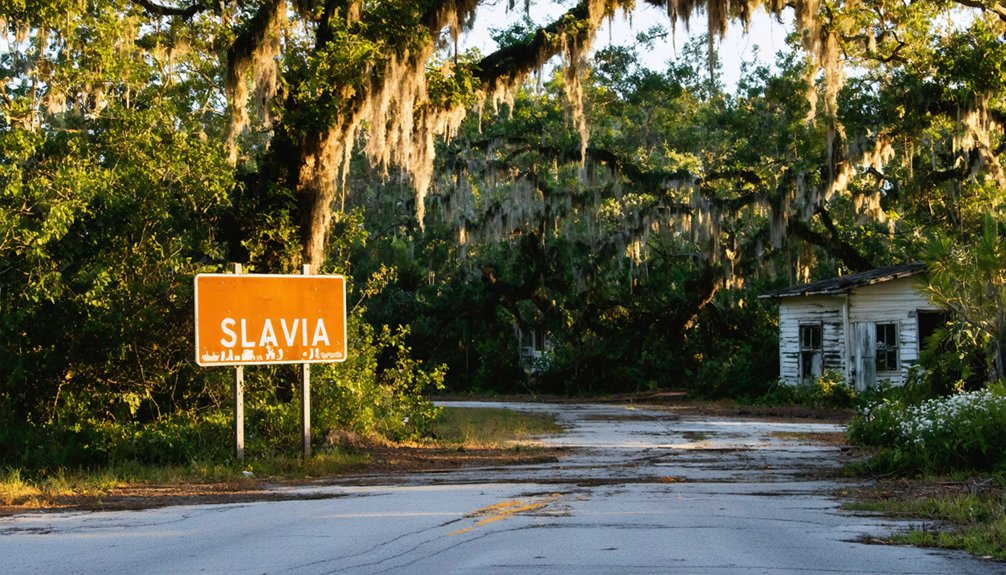
Tucked along SR 426 in unincorporated Seminole County, Slavia, Florida, is a near-forgotten settlement that once thrived as a tight-knit community of Slovak immigrants seeking farmland and religious freedom in the early 1900s.
Its Slavia history began in 1911 when the Slavia Colony Company purchased 1,200 acres, cultivating an agricultural legacy rooted in Slovak culture and Lutheran faith.
You’ll find ghost town origins tied directly to community decline — the company dissolved in 1928, and urban sprawl from nearby Oviedo gradually consumed what remained.
Today, vacant homes, a historic church, and local legends are all that anchor this place to its past.
Heritage preservation efforts keep Slavia’s story alive, reminding you that freedom-seekers once built something remarkable here, only to watch it quietly fade.
The Slovak Immigrant Colony That Built Slavia From Scratch in 1911
In 1911, a determined group of Slovak immigrants transformed 1,200 raw Florida acres into a self-sustaining agricultural colony they called Slavia. Escaping industrial labor, these early settlers built their cultural identity from the ground up, driven by Slovak heritage and community resilience.
Here’s what shaped their story:
- Escape from factories — Immigrants fled grueling industrial work, choosing agricultural practices and open land over urban confinement.
- Religious freedom — They established a Christian Lutheran community, deliberately separate from Catholicism.
- Organized land ownership — The Slavia Colony Company purchased 1,200 acres for $17,400, distributing land to stockholders.
- Immigrant challenges — Building infrastructure, farming unfamiliar Florida soil, and maintaining cultural traditions tested every family.
Their economic shift from industry to agriculture remains a reflection of historic preservation worth exploring firsthand.
What Happened to Slavia After the Colony Dissolved in 1928?
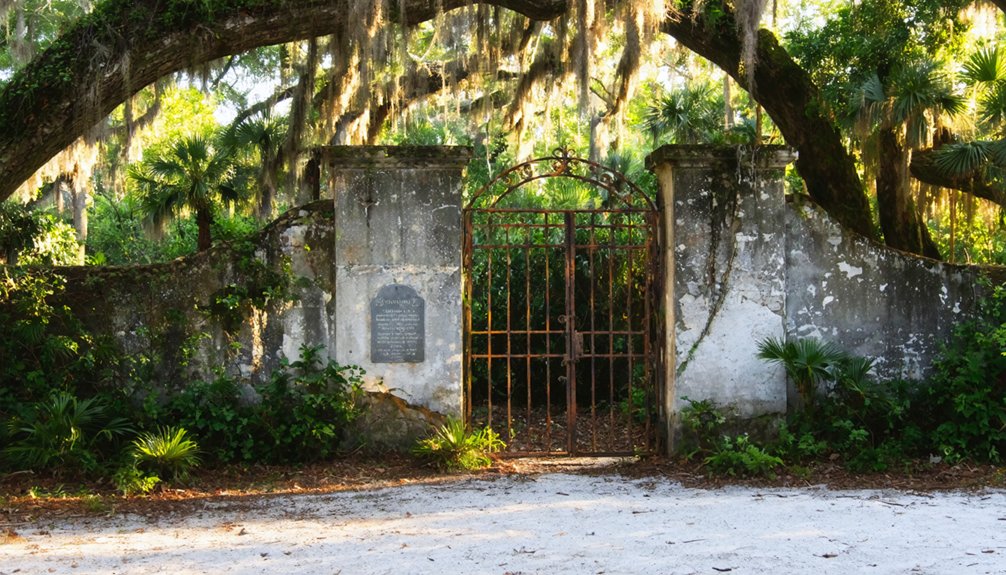
When the Slavia Colony Company dissolved in 1928, it distributed 785 acres to its stockholders and effectively ended the organized backbone that had held the community together.
In 1928, the Slavia Colony Company dissolved, scattering 785 acres among stockholders and unraveling the community’s organized foundation.
Without that structure, Slavia history shifted from a thriving agricultural settlement to a slow, quiet decline. Families who’d built their lives farming this land gradually dispersed as urban sprawl crept in from nearby Oviedo and Orlando.
The community legacy didn’t vanish overnight, though. St. Luke’s Lutheran Church still stands, the cemetery holds its ground, and the Duda farm operation survived the change.
What you’re visiting today is a place caught between its immigrant roots and modern development pressure. Old homes sit vacant, land goes up for sale, and the grid of streets remains — waiting for you to explore it.
How Slavia Went From Farming Hub to Forgotten Roadside Remnant
Slavia didn’t fade overnight — it unraveled gradually, as the forces that once built it quietly worked against it. The farming shift stalled when the colony dissolved, stripping away the cooperative backbone that kept families working the land together.
Then urban encroachment crept in from Oviedo and Orlando, swallowing fields one subdivision at a time.
Here’s what that slow collapse looked like on the ground:
- 1928 — Company dissolution scattered 785 acres to individual stockholders, ending unified agricultural operations.
- Mid-century — Families trickled away as farming became economically unsustainable.
- Late 20th century — Surrounding development pressured remaining residents and landowners to sell.
- Today — Vacant homes, a silent general store, and a church stand where a self-sufficient Slovak community once thrived.
Which Original Slavia Structures Are Still Standing Today?
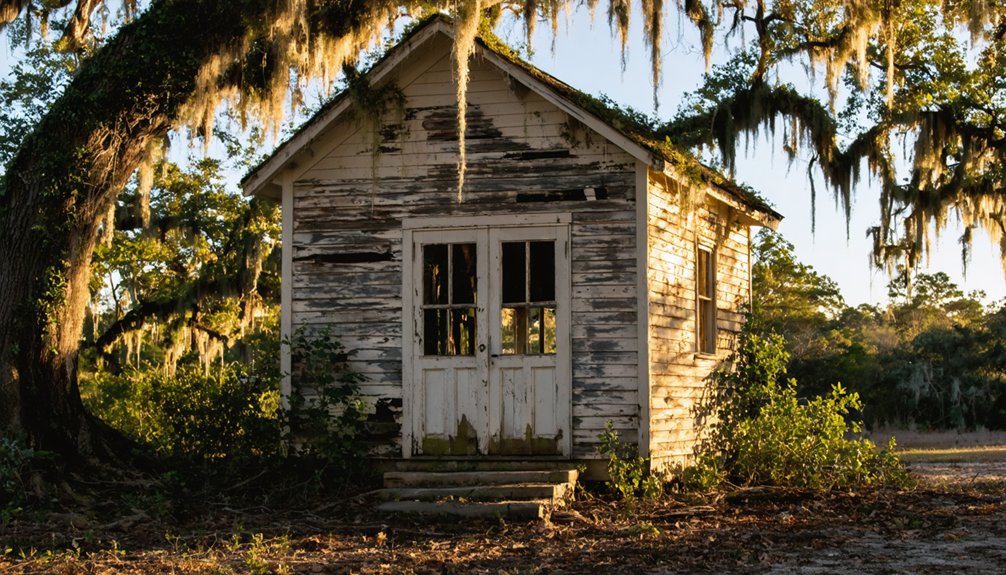
Few ghost towns leave this much behind. When you drive through Slavia, you’ll spot genuine remnants of Slovak heritage still anchoring the landscape.
The 1912 St. Luke’s Lutheran Church stands as the oldest surviving example of Slavia architecture, originally built to house workers during the colony’s earliest days. Nearby, a vacant general store — known as Stanko’s Store — still holds its ground, weathered but recognizable.
The Duda Sod Farm and A. Duda & Sons building remain active, connecting the area’s agricultural past to its present. St. Luke’s Cemetery, relocated south in 1915, saw its first burial in 1933 and still exists today.
A former pink gas station, once a Lukas Garden Center, rounds out what you’ll find standing along this forgotten Florida corridor.
St. Luke’s Lutheran Church: The Oldest Surviving Building in Slavia
When you pull up to St. Luke’s Lutheran Church, you’re standing before Slavia’s oldest surviving structure, built in 1912 to serve the Slovak immigrants who carved this community out of Florida’s wilderness.
The church reflects the settlers’ deep commitment to a Christian Lutheran identity, distinct from the Catholicism many had left behind in Europe.
Its enduring architecture stands as a symbol of a community that once thrived here, making it the most powerful reminder of Slavia’s remarkable origins.
Church’s Historical Origins
Standing as the oldest surviving structure in Slavia, St. Luke’s Lutheran Church carries deep church significance, reflecting the community values of Slovak immigrants who built it in 1912.
These settlers weren’t just constructing a building — they were establishing a spiritual identity rooted in Christian Lutheran faith, separate from Catholicism.
Here’s what shaped the church’s historical origins:
- 1911 — Holy Trinity Church purchased 1,200 acres for $17,400 on October 7th
- 1912 — St. Luke’s Lutheran Church was constructed as a cornerstone of settler life
- Faith-driven — Slovaks deliberately sought a Lutheran environment distinct from Catholic traditions
- Community anchor — The church unified immigrants escaping industrial labor for agricultural freedom
You’re fundamentally walking through living history when you visit this remarkable structure.
Architectural Legacy Preserved
Built in 1912, St. Luke’s Lutheran Church stands as Slavia’s oldest surviving structure, anchoring the town’s identity against encroaching urban sprawl.
You’ll immediately notice how its simple, modest architectural styles reflect the Slovak immigrants’ practical values—these weren’t people building cathedrals; they were farmers carving out a new life.
Historical preservation efforts have kept this humble wooden church intact, giving you a rare, tangible connection to early 20th-century immigrant life in Central Florida.
Unlike polished museum exhibits, St. Luke’s carries authentic wear—weathered wood, quiet grounds, and a cemetery relocated south in 1915 with its first burial recorded in 1933.
When you visit, you’re not just seeing a building; you’re standing inside a living fragment of a community that refused to disappear entirely.
Stanko’s Store, the Pink Gas Station, and What’s Left of Main Street
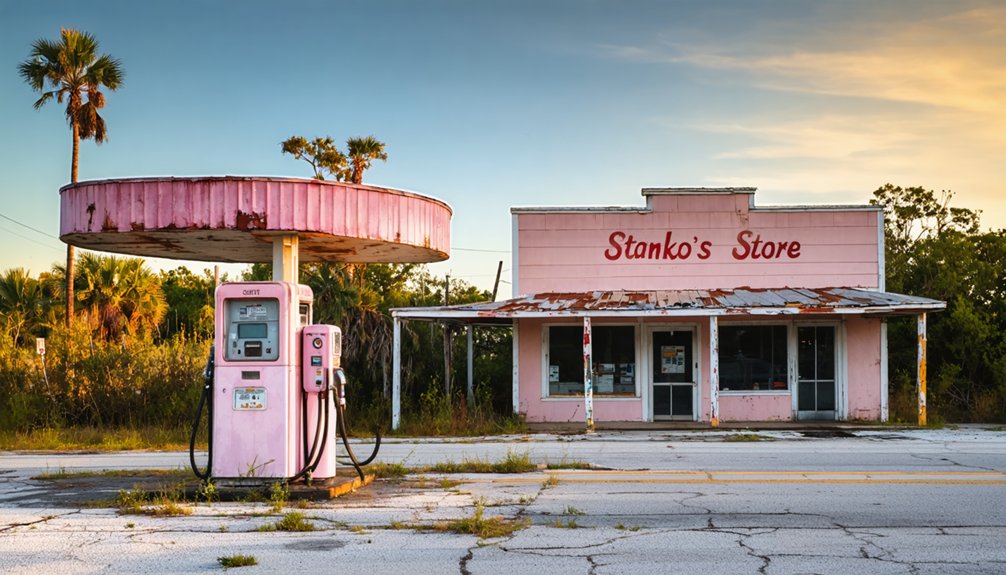
Along SR 426, a handful of weathered structures hint at what Slavia’s main commercial strip once looked like.
Two landmarks anchor the experience:
- Stanko’s Store – A vacant general store standing quietly, its faded facade carrying decades of Slovak immigrant commerce.
- The Pink Gas Station – A distinctive former station, now operating as Lukas Garden Center/Nursery, its unusual color making it impossible to miss.
- St. Luke’s Lutheran Church – Built in 1912, anchoring the streetscape with enduring authenticity.
- Duda Sod Farm – A working reminder that agriculture still breathes life into this forgotten stretch.
You won’t find a bustling downtown, but you’ll find something rarer — a raw, honest snapshot of a community that carved its identity from Florida’s flat farmland.
What Slavia Actually Looks Like When You Get There
As you cruise SR 426 between Winter Park and Oviedo, green-and-white D.O.T. signs marked “Slavia” appear about a mile apart, quietly announcing that you’ve arrived somewhere that still technically exists.
You’ll spot the 1912 St. Luke’s Lutheran Church standing as the oldest surviving structure, alongside a vacant general store once known as Stanko’s and a former pink gas station now housing a garden nursery.
The remaining buildings sit scattered along the route, some abandoned, some repurposed, all aging against a backdrop of encroaching suburban sprawl.
Visible Remnants Along SR 426
Cruising down SR 426, you’ll spot just a handful of structures that hint at Slavia’s Slovak roots.
These hidden treasures stand quietly among modern sprawl, carrying local legends of immigrant determination.
Look for these four landmarks:
- St. Luke’s Lutheran Church (1912) – The oldest surviving structure, built from worker housing materials, still anchors the community.
- Stanko’s General Store – A vacant building frozen in time, once the neighborhood’s commercial heartbeat.
- A. Duda & Sons Sod Farm – Active agricultural land proving Slavia’s farming legacy hasn’t completely vanished.
- Former Pink Gas Station – Now operating as Lukas Garden Center, its distinctive color makes it impossible to miss.
Watch for green-and-white D.O.T. signs marking “Slavia” — they’ll keep you oriented as you explore.
Abandoned Structures Still Standing
Stepping out of your car in Slavia, you’ll immediately notice how just a few structures shoulder the weight of an entire immigrant community’s story. The 1912 St. Luke’s Lutheran Church stands as the oldest surviving building, its walls quietly holding a century of Slovak worship.
Nearby, Stanko’s vacant general store hints at a once-thriving commercial center where settlers exchanged goods and conversation. Scattered abandoned homes line the corridor, their weathered facades offering raw, unfiltered ghost town experiences that no museum can replicate.
The Duda Sod Farm operation remains active, creating a striking contrast between past and present. You’ll also spot the former pink gas station, now a nursery, repurposed but still recognizable.
Each structure tells Slavia’s story without a single exhibit placard needed.
How to Find Slavia on SR 426 Between Winter Park and Oviedo
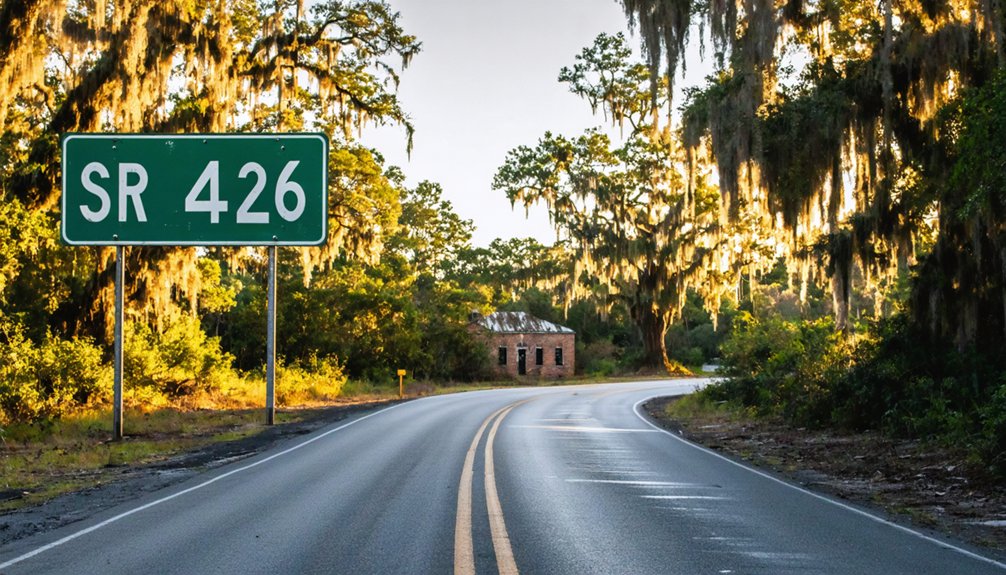
Finding Slavia is surprisingly straightforward — just hop on SR 426, also known as Aloma Avenue, and travel between Winter Park and Oviedo.
Green-and-white D.O.T. signs marked “Slavia” appear roughly a mile apart, guiding you toward hidden history and local legends most drivers completely miss.
Here’s what to watch for along the route:
- D.O.T. signage — Two “Slavia” markers signal you’re entering forgotten territory.
- St. Luke’s Lutheran Church — The 1912 landmark appears roadside, unmistakable.
- Stanko’s vacant general store — A weathered shell sitting quietly off the road.
- Duda Sod Farm structures — Active agricultural remnants breaking the abandoned landscape.
Roads are 2WD-friendly, and Slavia welcomes visitors year-round.
No special gear needed — just curiosity.
Why Oviedo and Winter Park Make Slavia Worth the Drive
Slavia sits perfectly between two of Central Florida’s most rewarding towns, making the detour feel less like a side trip and more like the main event.
Winter Park draws you in with its brick-lined streets, boutique shops, and lakeside charm. Oviedo delivers a slower, small-town energy with local legends rooted deep in Florida’s agricultural past.
Together, they frame Slavia’s quiet remnants with genuine context. You’re not just stopping at a forgotten crossroads — you’re tracing a living corridor of Central Florida history.
The Slavia attractions you’ll encounter, from St. Luke’s Lutheran Church to the old Stanko’s Store, hit differently when you’ve already soaked up the culture on both ends of SR 426.
This drive rewards the curious and the free-spirited equally.
Frequently Asked Questions
Are There Guided Tours Available for Visiting Slavia, Florida?
No guided tours are available, but you’ll uncover Slavia’s ghost town history independently. Drive SR 426, explore local legends, spot century-old structures, and let the remnants tell their own fascinating, freedom-filled story.
Is It Legal to Explore or Photograph Abandoned Structures in Slavia?
Carefully consider abandoned safety and photography ethics before you explore. You’re free to photograph from public roads, but don’t trespass on private property. Slavia’s structures are largely privately owned, so always respect boundaries and seek permission first.
What Is the Best Time of Year to Visit Slavia?
You’ll find Slavia’s climate’s great year-round, but cooler months offer the best activities for exploring its haunting remnants. Visit local attractions like St. Luke’s Church and Duda Farm without Florida’s intense summer heat slowing you down!
Are There Any Annual Events or Commemorations Held in Slavia?
No confirmed annual events exist, but you’ll discover ghost town history and local folklore as you explore Slavia’s remnants. Talk to descendants and veterans who still reside there—they’ll share compelling stories you won’t find anywhere else.
Can Visitors Access St. Luke’s Cemetery, and Are There Restrictions?
You can visit St. Luke’s Cemetery, but you’ll want to respect cemetery etiquette given its historical significance. Tread carefully, avoid disturbing graves, and soak in this relocated 1915 site’s powerful connection to Slavia’s Slovak pioneer heritage.
References
- http://www.gribblenation.org/2018/09/ghost-town-tuesday-slavia-florida.html
- https://theclio.com/entry/36621
- https://www.ghosttowns.com/states/fl/slavia.html
- https://storymaps.arcgis.com/stories/1d66510701c34847a67e24bcda21d6d1
- https://www.youtube.com/shorts/XYeXv8yAgaQ
- https://cmfmedia.org/2010/03/history-of-our-communities-–-slavia-florida/
- https://floridahistoryblog.com/oviedo-ghost-lights/
- https://en.wikipedia.org/wiki/List_of_ghost_towns_in_Florida
- https://americanlives.historyfiles.co.uk/FeaturesStructural/Florida_Slavia01.html