Planning a ghost town road trip to Conata, South Dakota means preparing for one of the state’s most remote destinations. You’ll find the ruins at the southern end of Conata Basin Road, about a mile north of Highway 44, inside Buffalo Gap National Grasslands. Top off your fuel tank, pack water and snacks, and check road conditions before heading out. September’s golden prairie landscapes make it an ideal visit, and there’s far more waiting for you ahead.
Key Takeaways
- Conata sits at the southern end of Conata Basin Road, about 1 mile north of South Dakota Highway 44, within Buffalo Gap National Grasslands.
- September offers the best visiting conditions, with golden prairie grasses, active wildlife, and minimal crowds compared to summer or winter.
- Top off your fuel tank before leaving Highway 44 and carry a spare container, as remote gravel roads consume fuel faster.
- Nearby ghost towns like Capa, Okaton, and Rockerville can be combined into a single road trip to maximize historical exploration.
- Pack water, snacks, and emergency supplies, as local services are extremely limited and conditions can change rapidly without warning.
The Ruins Still Standing at Conata Today
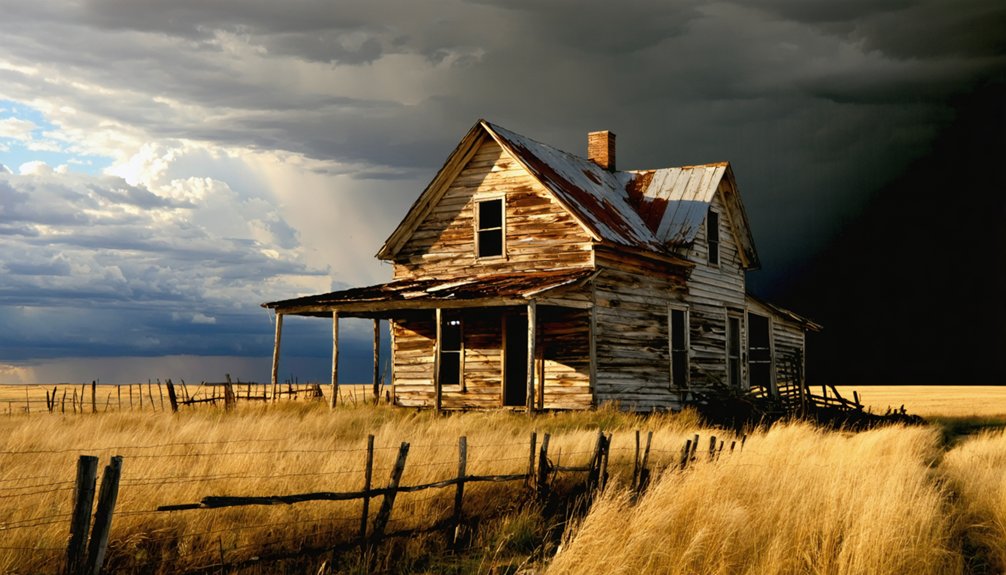
Although little of Conata’s former life remains, what’s still standing tells a quiet but compelling story. As you walk the site, you’ll notice flooded basements where buildings once stood, their hollow outlines marking spaces where families lived and worked.
Foundation remnants stretch across the former townsite, and at least one original sidewalk still cuts through the overgrown landscape.
Foundation remnants and a lone original sidewalk slice through the overgrowth, quietly outlining a town that time swallowed whole.
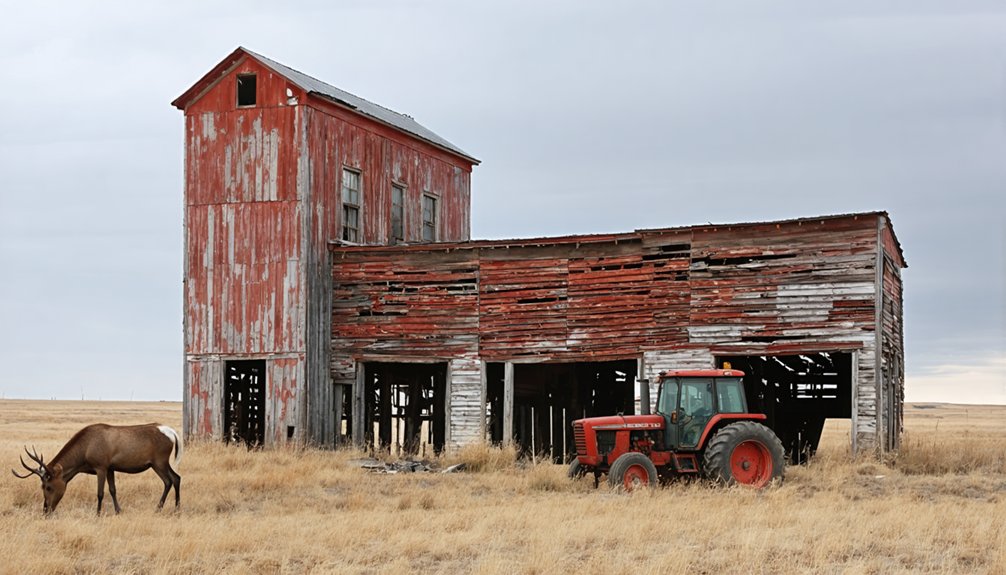
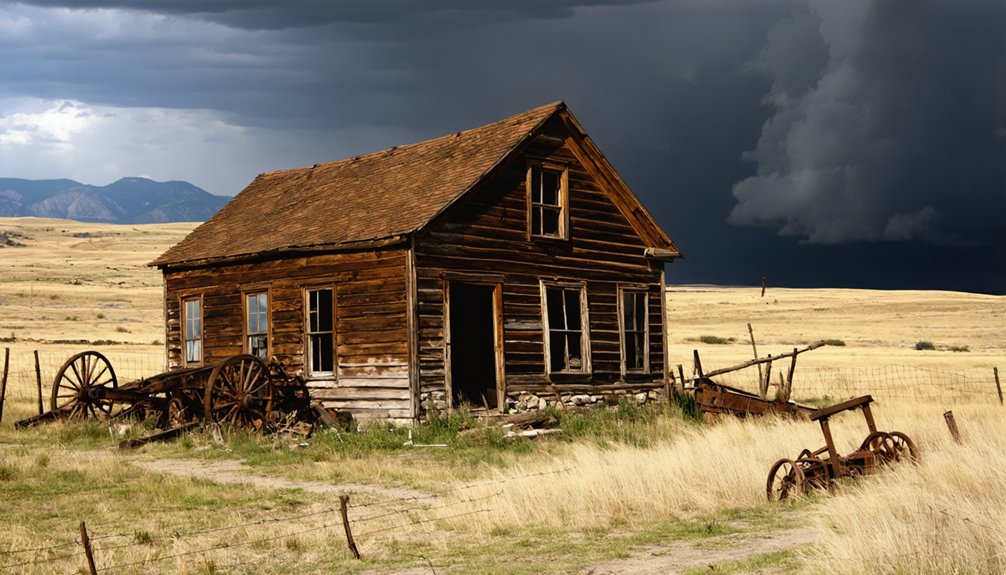
Scattered farming implements and automotive debris rust quietly in the open air, each piece carrying its own historical significance. Prairie dogs dart between the ruins, giving the place an oddly lively energy despite its abandonment.
Your ruins exploration here rewards patience and observation. Conata doesn’t announce itself dramatically — it reveals itself slowly, detail by weathered detail, to anyone willing to look closely enough.
Where Conata Sits and How to Find It
Conata sits at the southern end of Conata Basin Road, roughly 1 mile north of the road’s southern terminus near South Dakota Highway 44. This ghost town geography places you deep inside Buffalo Gap National Grasslands, where open prairie stretches endlessly and historical significance meets raw wilderness.
Ruins spread across both sides of the road, so you’ll want to explore freely. Here’s how to orient yourself:
- Take Highway 44 to reach the southern approach
- Turn onto Conata Basin Road heading north
- Drive approximately 1 mile until ruins appear on both sides
- Park safely and explore the scattered remnants on foot
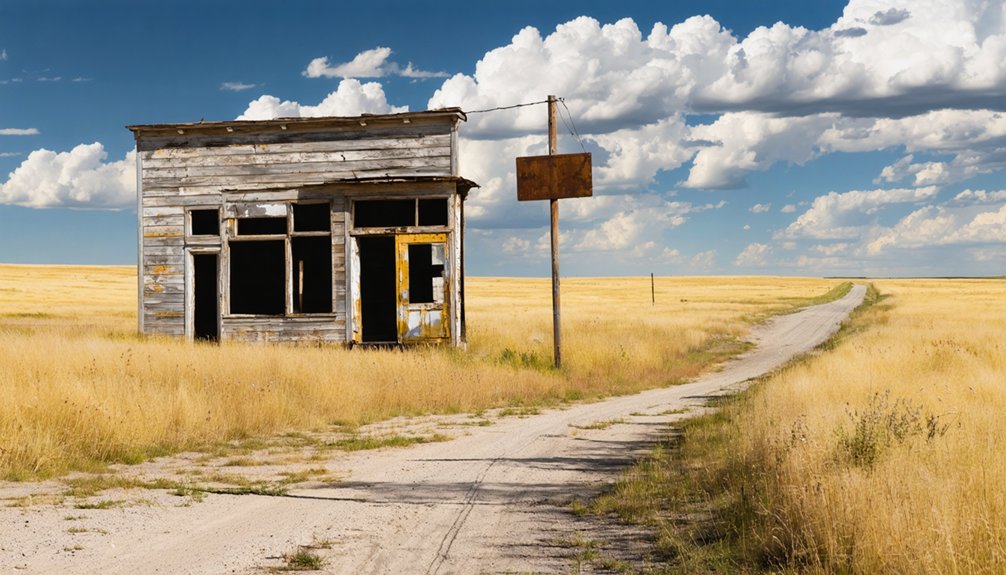
Expect gravel roads and remote conditions. Plan your fuel stops and supplies before heading out, because this stretch of South Dakota doesn’t offer conveniences.
Roads, Fuel, and What to Know Before You Drive Out
Before you head out to Conata, fill your tank completely, because gas stations are scarce once you leave the main highway and venture into this remote stretch of southwestern South Dakota.
You’ll navigate gravel roads to reach the site, so slow your speed, watch for loose rock, and give yourself extra travel time, especially after rain softens the surface.
Keeping your vehicle fueled and your pace measured guarantees you’ll reach those ruins without turning a straightforward drive into an unexpected roadside problem.
Fuel Up Before Leaving
Getting to Conata takes you deep into remote South Dakota terrain, so a few practical realities are worth knowing before you turn the key.
Fuel availability thins out fast once you leave the main highways, so plan accordingly:
- Fill your tank completely before heading south from Highway 44.
- Carry a spare fuel container if you’re driving extended distances through the grasslands.
- Stock water, snacks, and road food since local cuisine options are practically nonexistent near Conata.
- Note your nearest fueling station’s location and hours before departure.
Gravel roads also burn fuel faster than pavement, so your range shrinks.
The freedom to explore this windswept ghost town depends entirely on arriving prepared.
Don’t let an empty tank cut your adventure short.
Gravel Road Travel Tips
Driving out to Conata means committing to gravel roads that wind through open grassland and remote terrain, so your vehicle choice and preparation matter more than you might expect.
Road conditions shift quickly out here, especially after rain, when loose gravel turns slick and low-lying sections can flood. Slow down, give yourself extra stopping distance, and keep your tires properly inflated to handle the uneven surface. A higher-clearance vehicle handles these roads more confidently than a standard sedan.
Check weather forecasts before you leave, since wet conditions can make the route genuinely impassable. These basic safety tips keep your trip moving forward instead of sideways.
Cell service is unreliable, so download offline maps and let someone know your planned route before heading out.
Walking the Site: Foundations, Sidewalks, and Scattered Relics
Once you step off the road and onto the site, the ruins begin telling Conata’s story in fragments — flooded basements mark where buildings once stood, and crumbling foundations trace the outlines of a town that quietly disappeared.
You’ll spot at least one surviving sidewalk cutting across the open grass, an oddly intact detail that makes the absence of everything around it feel sharper.
Scattered farming implements, automotive debris, and rusted metal remnants lie across the grounds, each piece a clue to the working lives that once unfolded here.
Reading Ruins And Foundations
Stepping into Conata feels like reading a sentence someone never finished. The architectural remnants scattered across both sides of the road carry real historical significance if you know what you’re looking for. Each depression and crumbling edge tells a story.
Train your eye to notice:
- Flooded basements marking where homes and businesses once stood
- Foundation outlines revealing building shapes and former street layouts
- Surviving sidewalk sections showing where daily foot traffic once moved
- Scattered implements and metal debris hinting at agricultural and domestic life
You don’t need a guidebook here. The land itself communicates. Walk slowly, observe carefully, and let the ruins speak.
What’s missing matters just as much as what remains standing before you.
Discovering Scattered Relics
Walking Conata’s grounds, you’ll notice the relics aren’t clustered in any obvious museum-like arrangement — they’re simply where life left them. Rusted farming implements sit half-buried in the soil, automotive debris rests where vehicles were abandoned, and scattered metal remnants mark spots where structures once served daily purposes.
These cultural remnants carry real historical significance, offering unfiltered glimpses into the working rhythms of a prairie railroad town. Nothing’s been staged or relocated. You’re reading the landscape exactly as time shaped it.
Move slowly and scan broadly — relics appear on both sides of the road, sometimes half-hidden by grass. Avoid disturbing anything you find.
These objects represent Conata’s final material voice, and preserving their placement keeps the site honest for every explorer who follows you.
Prairie Dogs and Wildlife Living in the Ruins
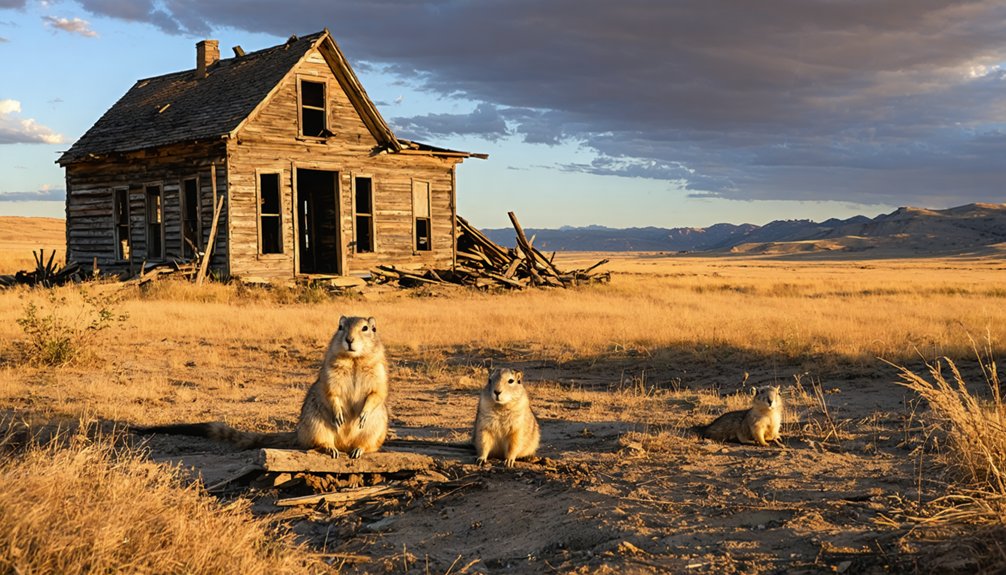
While the buildings of Conata have long since crumbled, the land itself is anything but empty. Prairie dog colonies have claimed the ruins, turning crumbled foundations into thriving burrow networks. Wildlife observation here feels raw and unfiltered.
Watch for these living reminders that nature reclaims everything:
- Prairie dogs popping up from burrows between old sidewalk slabs
- Hawks and eagles circling overhead, hunting the open grassland
- Mule deer moving quietly through the scattered debris fields
- Burrowing owls nesting near the edges of active prairie dog towns
You’re stepping into a working ecosystem, not just a historic site. Move slowly, stay alert near burrows, and let the wildlife set the pace.
This is a working ecosystem, not a museum. Move slowly, stay alert, and let the wildlife lead.
Conata rewards patient, observant explorers.
The Best Time of Year to Visit Conata
Timing your visit to Conata matters almost as much as finding it. Late spring and early fall offer the most rewarding experience. You’ll find mild temperatures, manageable road conditions, and soft natural light ideal for best photography of the ruins and open grasslands.
Summer works, but intense heat and unpredictable thunderstorms can turn gravel roads into muddy obstacles fast. Winter visits are possible, but harsh seasonal weather isolates the area and makes navigation risky without proper preparation.
September hits a sweet spot — the prairie grasses shift gold, wildlife remains active, and harsh crowds never materialize.
Whatever season you choose, check local weather forecasts before leaving, top off your fuel tank, and pack supplies. Conata doesn’t offer second chances if conditions turn against you.
Nearby South Dakota Ghost Towns to Pair With Conata
Conata pairs well with a handful of other ghost towns scattered across South Dakota’s southwestern plains, making a single road trip worthwhile for more than one stop.
Each destination rewards curious travelers who crave open roads and forgotten history.
- Capa – Dig into Capa history along the prairie, where abandoned structures tell stories of early homesteaders.
- Okaton – A near-deserted Interstate 90 community with haunting remnants still visible from the road.
- Rockerville – Rockerville exploration reveals a former gold-rush settlement with preserved buildings near the Black Hills.
- Murdo – A fading roadside town where classic Americana meets quiet decline.
String these stops together on a loose route, and you’ll cover significant ground without retracing a single mile.
Frequently Asked Questions
When Did Conata’s Post Office Officially Close Its Doors?
Conata’s post office history ended in 1954, marking the town’s final connection to postal services. You’ll find it fascinating that this closure came after decades of serving one of South Dakota’s most remote railroad communities.
Was Conata Originally Established as a Railroad Town?
Yes, you’ll find that Conata’s railroad history shaped its entire town development! This southwestern South Dakota settlement sprang to life as a classic railroad town, giving you a fascinating glimpse into how the railways once drove prairie community growth.
Which National Grasslands Territory Does the Conata Ghost Town Fall Within?
Like a relic frozen in time, Conata sits within the Buffalo Gap National Grasslands. You’ll discover its historical significance woven into these vast grassland ecosystems, where freedom stretches endlessly across South Dakota’s breathtaking, untamed prairie landscape.
How Long Ago Did the Last Residents Leave Conata Behind?
Unfortunately, you can’t pinpoint exactly when Conata’s last residents left behind its abandoned structures. What’s known is the post office closed in 1954, marking a pivotal moment in the town’s historical significance and your connection to its fading past.
Is Conata Considered One of South Dakota’s Most Notable Ghost Towns?
Yes, Conata’s earned its place among South Dakota’s standout ghost towns. Imagine wandering its crumbling foundations, soaking in ghost town history and local legends, much like exploring Rockerville — you’ll find it’s genuinely unforgettable.
References
- https://www.atlasobscura.com/places/conata
- https://el-camino-real.smugmug.com/Ghost-Towns/South-Dakota-Ghost-Towns/Conata-SD
- https://www.facebook.com/groups/SouthDakotaBeautiful/posts/1690948365417341/
- https://www.atlasobscura.com/things-to-do/south-dakota/ghost-towns
- https://www.youtube.com/watch?v=c8u4x31tzlo
- https://www.travelsouthdakota.com/trip-ideas/abandoned-beauty-ghost-towns-structures-south-dakota
- https://coratravels.com/blog/ghost-towns-in-south-dakota
- https://www.powderhouselodge.com/black-hills-attractions/fun-attractions/ghost-towns-of-western-south-dakota/
- https://www.tripadvisor.com/Attraction_Review-g54799-d22999414-Reviews-Scenic_Ghost_Town-Scenic_South_Dakota.html
- https://en.wikipedia.org/wiki/List_of_ghost_towns_in_South_Dakota