Alhambra, Oklahoma once thrived as a railroad boom town before fading into open land and silence. To plan your road trip, you’ll want detailed maps, offline GPS, and a full gas tank since cell service gets unreliable fast. Pair your visit with nearby ghost towns like Scullin, Dougherty, and Roff for a fuller picture of Oklahoma’s forgotten past. Keep going, and you’ll uncover everything you need to make this journey count.
Key Takeaways
- Alhambra, Oklahoma, was a railroad-driven settlement that declined after losing rail service, leaving minimal ruins on open land today.
- Navigating to Alhambra requires detailed maps or offline GPS, as cell service is unreliable throughout central Oklahoma’s rural routes.
- Prepare your vehicle before departing by filling the gas tank, and plan morning arrivals for optimal photography and exploration.
- Nearby ghost towns Scullin, Dougherty, and Roff offer historical markers, local legends, and scenic routes to enrich your road trip.
- Abandoned foundations, weathered fence lines, and cemeteries near Alhambra reveal compelling narratives about Oklahoma’s forgotten communities.
What Made Alhambra a Railroad Boom Town?
When the Oklahoma Central Railroad pushed its lines through this stretch of Oklahoma Territory in the late 19th century, Alhambra didn’t just appear on a map — it came to life.
Railroad expansion transformed raw land into opportunity overnight. Settlers, merchants, and investors followed the tracks, drawn by economic speculation and the promise that wherever rails ran, commerce would follow.
Rails didn’t follow towns — towns followed rails, chasing the commerce that steel tracks promised to deliver.
Alhambra became a product of that era’s defining logic: connect a town to a railroad, and growth arrives almost automatically.
Businesses took root. People showed up. A community formed around the certainty that the line would keep running and the money would keep flowing.
That certainty, as you’ll discover on your road trip, didn’t last — but Alhambra’s story absolutely holds up.
Why Did Alhambra Fade Into a Ghost Town?
The same force that built Alhambra ultimately dismantled it. When the Oklahoma Central Railroad shifted priorities, rerouted lines, or lost economic momentum, towns like Alhambra lost their reason to exist. Commerce dried up, residents moved toward more connected communities, and the population decline became irreversible.
Economic shifts across Oklahoma Territory during the late 19th and early 20th centuries hit railroad-dependent settlements especially hard. Without consistent rail traffic driving trade, businesses closed, families relocated, and infrastructure crumbled. Alhambra couldn’t survive on history alone.
That vulnerability is exactly what makes it worth visiting today. You’re not just seeing an empty landscape — you’re standing where ambition collided with reality.
The town didn’t fail quietly; it simply got left behind when the tracks stopped mattering.
What’s Still Standing at Alhambra: Ruins, Markers, or Open Land?
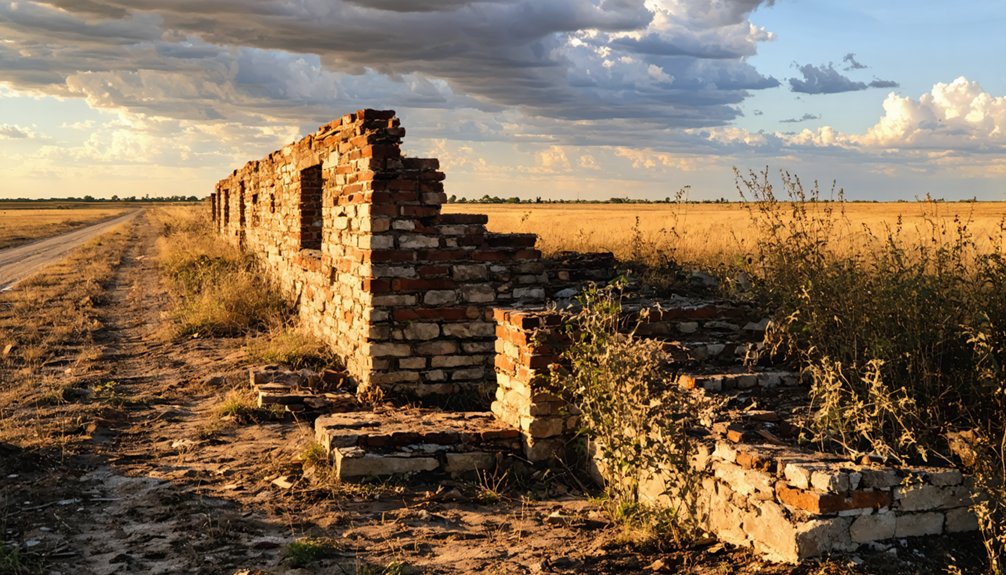
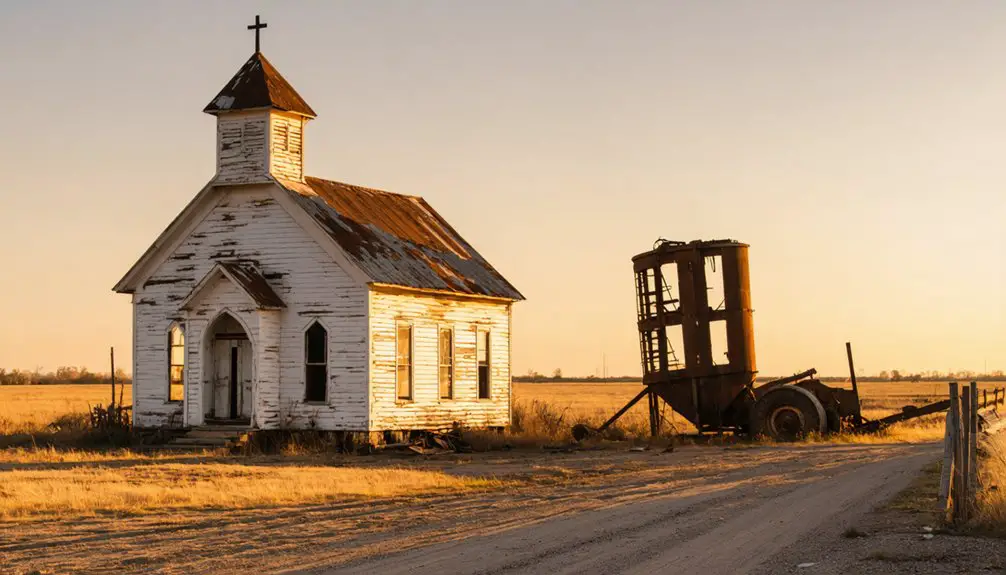
Arriving at Alhambra today, you’ll find what ghost towns so often leave behind — not dramatic ruins or preserved storefronts, but open land where a community once stood.
The ruins exploration experience here is minimal by traditional standards. No crumbling walls frame dramatic photographs. No weathered facades signal a former downtown. Instead, the landscape itself tells the story — grass, quiet roads, and the faint geometry of a settlement that simply dissolved.
No crumbling walls. No weathered facades. Just open land where a community quietly dissolved into the grass.
Historical markers, if present, offer your clearest connection to what existed here. They anchor your visit, giving context that the land alone can’t provide.
Come prepared with research, offline maps, and realistic expectations. Alhambra rewards visitors who understand that absence can be just as powerful as anything still standing.
How to Get to Alhambra, Oklahoma?
Once you’ve taken in everything Alhambra has to offer — which, as you now know, means reading the land more than examining structures — you’ll want to make sure you actually reach it without incident.
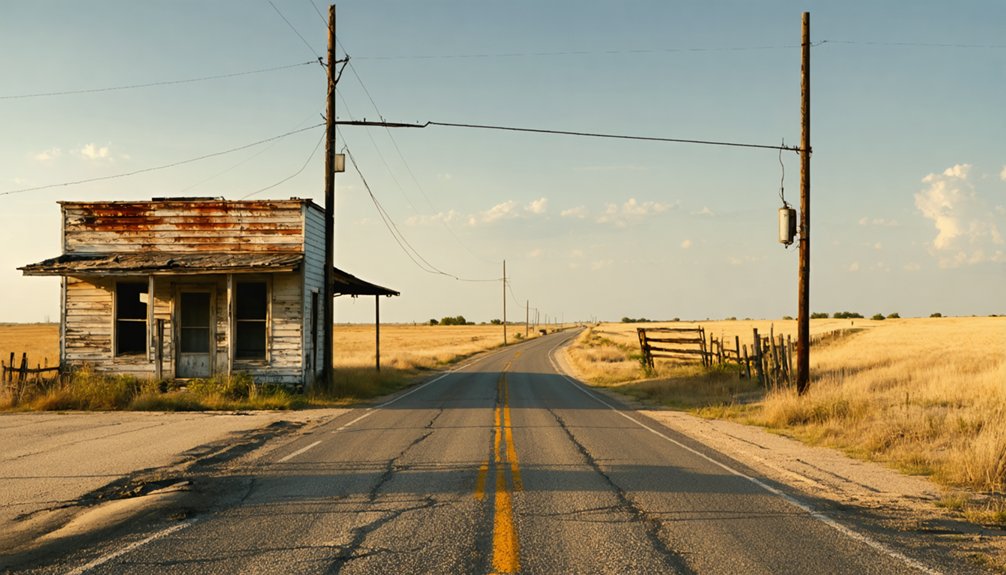
Alhambra sits in central Oklahoma, accessible via rural driving routes that connect through nearby towns with historic landmarks dotting the landscape. You’ll navigate mostly two-lane highways and unpaved county roads, so bring a detailed map or download offline GPS data before heading out.
Cell service gets unreliable fast. Fill your tank beforehand — rural stretches offer few services. Morning departures give you the best light for photography and the most time to explore surrounding stops.
Treat the drive itself as part of the experience, not just transit between destinations.
What to Know Before Driving Oklahoma’s Ghost Town Back Roads
Driving Oklahoma’s ghost town back roads rewards the prepared and humbles the careless. Before you roll toward Alhambra, pack your road trip essentials: full gas tank, paper maps, water, and a charged phone.
Cell service disappears fast across rural Oklahoma, and services thin out quickly beyond small towns.
Expect unpaved stretches, unmarked turns, and gates with no explanation. Seasonal rains turn dirt roads into traps. Check weather forecasts before departing.
Alhambra’s historical significance runs deeper when you arrive informed. Research the railroad era beforehand so the landscape tells you something rather than nothing. Ghost towns rarely announce themselves with signs.
Go slow, stay alert, and respect private property boundaries. The freedom of this road trip lives in the details you’re willing to learn first.
Which Ghost Towns Near Alhambra Are Worth the Drive?
Where you go after Alhambra matters as much as the stop itself. Oklahoma’s back roads connect dozens of forgotten communities worth chasing down. Scullin, Dougherty, and Roff each carry their own local legends, historical markers, and quiet cemeteries that reward curious travelers.
These towns share Alhambra’s railroad-era DNA — they rose fast, then faded when the economic current shifted.
Take scenic routes between stops rather than cutting straight across highways. Gravel roads slow you down in the best way, giving you time to notice abandoned foundations and weathered fence lines.
Cemetery visits often reveal the most honest history, names and dates telling stories no marker can fully capture. Each stop deepens the larger picture of what Oklahoma’s boom-and-bust era actually looked like on the ground.
Frequently Asked Questions
Is Alhambra, Oklahoma Officially Recognized as a Historic Landmark?
There’s no official landmark designation confirmed for Alhambra, but you’ll still discover its historic significance through its abandoned structures and rich railroad-era legacy that speaks powerfully to Oklahoma’s vanished boom-and-bust communities.
Can You Camp Overnight Near Alhambra’s Ghost Town Location?
Like a wanderer sleeping under a forgotten sky, you’ll find no official camping regulations or ghost town amenities at Alhambra. Plan your overnight stay at nearby campgrounds before exploring this vanished railroad settlement.
Are There Guided Ghost Town Tours Available in Oklahoma?
You’ll find guided ghost town experiences across Oklahoma, where local historians and tour operators bring Oklahoma history to life. Check with the Oklahoma Historical Society or regional tourism groups to discover organized tours near your chosen route.
What Is the Best Time of Year to Visit Alhambra?
Why battle summer heat when fall foliage transforms Oklahoma’s rural landscape into something magical? You’ll find visiting Alhambra most rewarding in autumn, when cooler temperatures make exploring abandoned remnants and open countryside feel like true, unhurried freedom.
Is Visiting Alhambra, Oklahoma Free or Does It Require Permission?
Visiting Alhambra’s open rural landscape is generally free, but you’ll want to respect private property boundaries. Always check local visiting regulations and permission requirements before wandering, since some remnants sit on privately owned land.
References
- https://www.facebook.com/unitedstatesghosttowns/videos/alhambra-oklahoma-ghost-town/2303684590154466/
- https://www.reddit.com/r/route66/comments/1rznw5o/best_ghost_towns_in_oklahoma/
- https://www.onlyinyourstate.com/trip-ideas/oklahoma/scary-places-road-trip-ok
- https://www.pinterest.com/pin/82401868178450535/
- https://myfamilytravels.com/a-spooky-road-trip-through-oklahoma-reveals-haunted-history-around-every-bend/
- https://www.okhistory.org/publications/enc/entry?entry=GH002
- https://www.travelok.com/articles/oklahomaghosttowns
- https://www.youtube.com/watch?v=TCrMouVV5Xw
- https://en.wikipedia.org/wiki/List_of_ghost_towns_in_Oklahoma
- https://www.youtube.com/watch?v=JoMWXLjBWi0