Planning a ghost town road trip to Corner, Oklahoma means driving roughly 400 miles from Boise City along US-412 through the panhandle, a six-to-seven-hour journey into the Ozark hills. Once there, you’ll find abandoned schoolhouses, church ruins, pioneer cemeteries, and toxic chat piles left behind by the lead-zinc boom that collapsed after the 1930s. Fuel up in Miami or Commerce before arriving, since Corner has zero services. There’s far more to this haunted landscape than first meets the eye.
Key Takeaways
- Corner, Oklahoma, is approximately 400 miles from Boise City via US-412, taking six to seven hours through panhandle towns and rolling Ozark hills.
- No services exist in Corner, so fuel up in Miami or Commerce and pack all necessary supplies before arriving.
- Wear sturdy boots, nitrile gloves, and a respirator mask to protect against lead dust and contaminated soil throughout the site.
- Visit in late summer through early fall for optimal conditions; avoid spring tornado season and prepare for icy winter roads.
- Nearby ghost towns like Picher, Cardin, and Commerce offer additional mining history, chat piles, and abandoned structures worth exploring nearby.
What’s Left to See in Corner, Oklahoma?
Though little remains standing in Corner, Oklahoma, what survives tells a compelling story of boom-and-bust mining life.
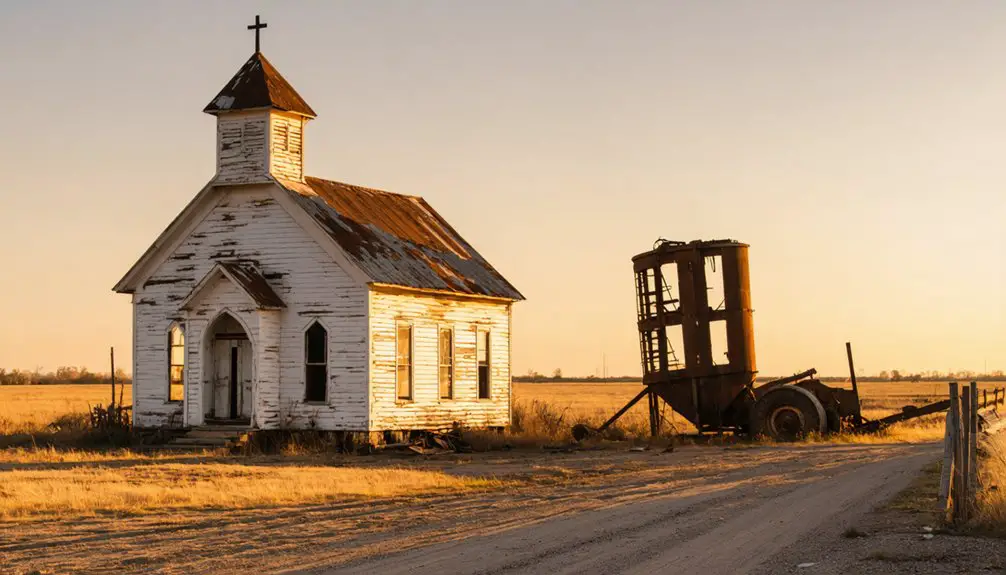
You’ll find abandoned structures scattered across overgrown lots — a crumbling schoolhouse, church ruins, and concrete foundations slowly reclaimed by vegetation. These remnants connect you directly to the thousands who once built lives here during the lead-zinc rush.
The environmental impact is impossible to ignore. Toxic chat piles, mine shafts, and contaminated soil dominate the landscape, serving as stark reminders of unchecked industrial extraction.
You’re fundamentally walking through an open-air museum of consequence.
Explore abandoned cemeteries where pioneer gravestones date back to the early 1900s, offering quiet, personal stories behind the statistics.
Corner doesn’t just show you history — it makes you feel its weight.
Corner’s Lead-Zinc Mining Boom and the Collapse That Followed
When you look at Corner’s history, you can’t ignore the lead-zinc boom that sparked its brief but intense rise around 1905, drawing miners and families into Delaware County with promises of prosperity.
The same ore discoveries that fueled nearby Picher’s explosive growth powered Corner’s expansion, pushing its population into the thousands before World War I.
Mining Boom Origins
Around 1905, lead-zinc ore discoveries pulled fortune-seekers into Delaware and Ottawa counties like a magnet. Corner erupted almost overnight from raw wilderness into a bustling settlement. Miners arrived wielding picks and early shaft-drilling equipment, deploying mining techniques that carved deep into the earth’s rich galena and sphalerite deposits. You’d have witnessed thousands flooding the area, chasing wealth that felt limitless beneath the soil.
Historical figures like Harry Crawfish, credited with nearby Picher’s pivotal 1913 discovery, shaped the region’s explosive identity. Corner mirrored that same frenzied energy, growing rapidly through the late 1910s.
Independent prospectors and large mining companies competed fiercely, transforming quiet farmland into an industrial frontier. For anyone hungry for opportunity and unbeholden to convention, this corner of Oklahoma once represented absolute freedom.
Post-Mining Economic Collapse
Once the richest veins ran dry, Corner’s economy didn’t stumble—it collapsed. Without ore, there’s no payroll, no commerce, no reason to stay.
Post-mining revitalization efforts never gained traction here, and economic diversification strategies simply arrived too late. You’ll see the evidence everywhere you look:
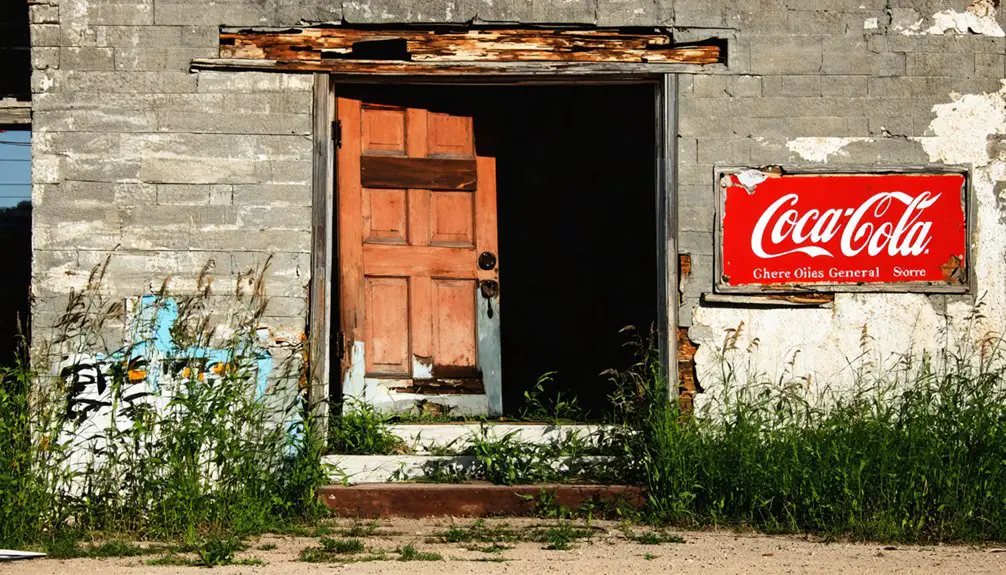
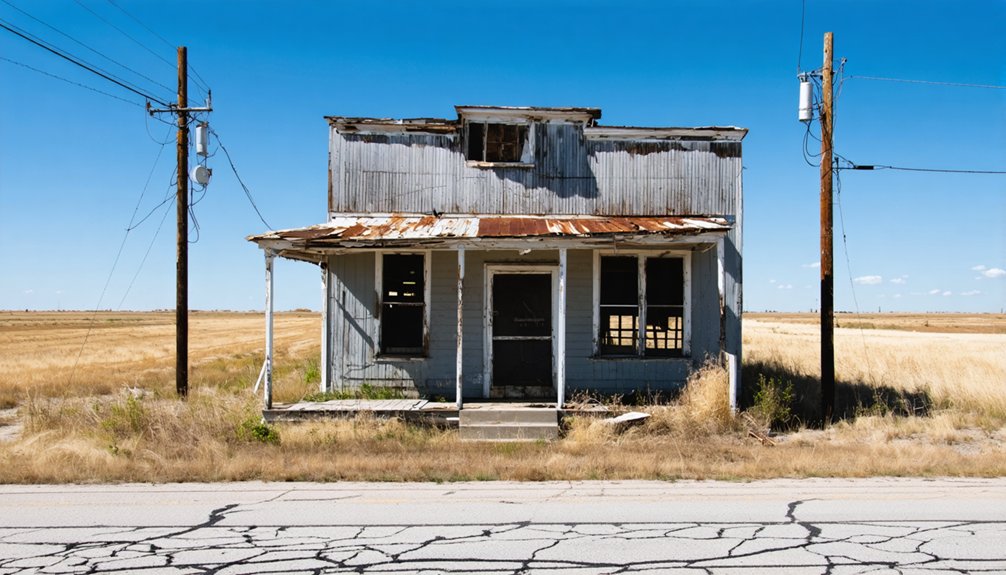
- Abandoned infrastructure — Shuttered storefronts and collapsed buildings mark where thriving businesses once operated.
- Population exodus — Residents fled steadily after the 1930s, chasing work elsewhere.
- Environmental liability — Toxic tailings poisoned soil, making agricultural recovery nearly impossible.
- Lost tax base — Without residents or businesses, municipal services vanished entirely.
Corner became proof that single-industry towns live and die by that industry. When mining stopped, everything stopped.
How to Drive From Boise City to Corner, Oklahoma
The roughly 400-mile drive from Boise City to Corner, Oklahoma takes you through some of the state’s most dramatically shifting landscapes, from the flat, windswept Cimarron County panhandle to the rolling Ozark hills of Delaware County.
From flat panhandle plains to lush Ozark hills, this 400-mile Oklahoma odyssey delivers some of the state’s most breathtaking landscape transitions.
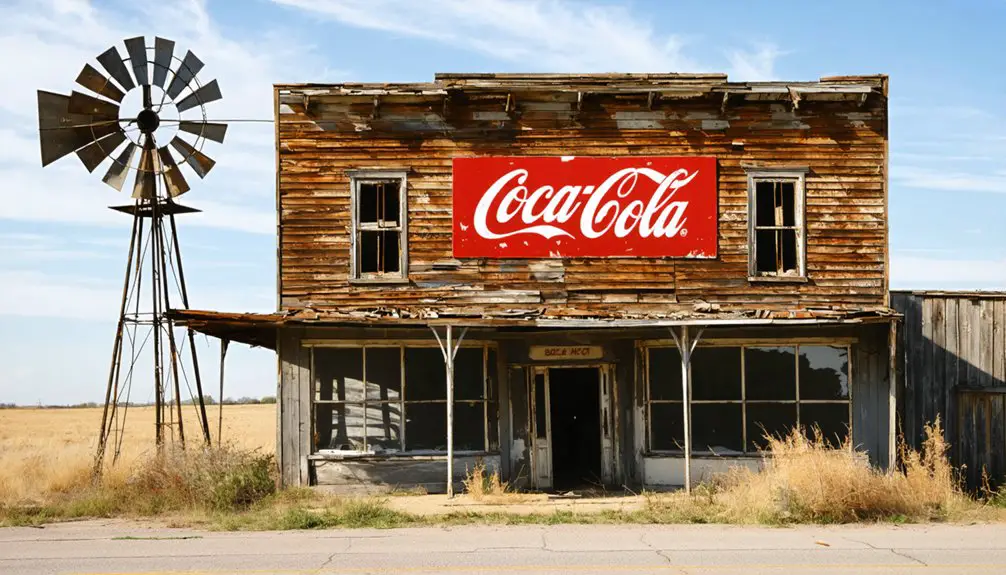
Head northeast on US-412, passing through dying panhandle towns like Kenton, Felt, and Keyes, where faded storefronts reward ghost town photography enthusiasts.
You’ll notice the terrain gradually transforming as plains give way to greener, hillier terrain near Miami.
From Miami, push southeast into Delaware and Ottawa counties, where historical preservation efforts have documented the mining era’s remnants.
Budget six to seven hours driving time, and fuel up in Miami or Commerce since Corner itself offers absolutely nothing regarding services.
Nearby Ghost Towns Worth Adding to Your Route
While you’re exploring Corner’s ruins, you’d be doing yourself a disservice by skipping the nearby ghost towns that share its haunted mining history.
Just a short drive away, Picher stands as Oklahoma’s most infamous abandoned town, evacuated by 2010 after decades of lead contamination turned Tar Creek into a toxic Superfund nightmare.
From there, you can swing through Cardin and Quapaw to see chat piles and subsidence damage before finishing at Commerce, where abandoned mills and mountains of mining waste paint a grim but unforgettable portrait of the region’s boom-and-bust past.
Picher’s Toxic Legacy
Here’s what defines Picher’s devastation:
- Chat piles — Massive toxic waste mountains still dominate the landscape.
- Tar Creek — Federally designated Superfund site with severely contaminated water.
- Subsidence sinkholes — Unstable ground from hollowed-out mine tunnels beneath neighborhoods.
- 2008 EF4 tornado — Destroyed remaining structures before evacuation completed.
You’ll find no redemption story here, just raw evidence of unchecked industrial exploitation and its irreversible consequences.
Cardin And Quapaw
Just a short drive from Picher, Cardin and Quapaw offer two distinctly different glimpses into the region’s mining collapse — and both deserve a stop on your route.
Cardin history reads like a cautionary tale. Chat piles tower over collapsed foundations, and ground subsidence makes exploring feel genuinely eerie.
There’s almost nothing left standing, yet the scale of industrial abandonment hits harder than any museum exhibit could.
Quapaw heritage tells a richer story. You’ll find surviving historic structures alongside visible mining remnants, and the town still breathes with a small remaining population.
It connects the region’s Indigenous and industrial past in ways Cardin simply can’t.
Together, they round out your understanding of how completely this corner of Oklahoma was built, exploited, and ultimately left behind.
Commerce’s Abandoned Mills
Three miles south of the Kansas border, Commerce punches well above its weight as a ghost town destination — abandoned mills loom over streets where Mickey Mantle once played as a kid, and chat mountains dwarf everything around them.
Commerce’s historic significance extends beyond baseball nostalgia. The mills’ architectural remnants tell a raw industrial story worth exploring:
- Collapsed ore processing structures with rusted equipment still visible inside
- Chat mountains rising 50+ feet, reshaping the entire landscape
- Crumbling mill foundations dating to pre-1920s peak mining operations
- Abandoned railroad spurs that once hauled lead-zinc ore north into Kansas
You’ll find no services here, so fuel up in Miami beforehand.
Bring your camera — these structures won’t stand forever.
Real Hazards to Know Before You Go
Before you load up the car and head toward Corner, understand that this stretch of northeastern Oklahoma carries real risks that go well beyond a few No Trespassing signs. The ghost town ecology here reflects decades of industrial trauma — lead-laced soil, collapsed mine shafts, and subsidence sinkholes hide beneath deceptively ordinary-looking ground.
Mining heritage left behind more than rusted equipment and crumbling foundations. Chat piles surrounding former operations still leach toxic heavy metals, so avoid touching loose materials or letting kids run freely across open lots.
Some areas fall under Superfund restrictions around Tar Creek, meaning access is legally limited. Wear sturdy boots, bring your own water, skip the spring tornado season, and always confirm whether land is privately owned before exploring.
What to Pack for Corner’s Toxic Ghost Town Terrain

Packing for Corner demands more than your average road trip checklist — five essentials in particular separate a safe, productive explore from a genuinely dangerous one.
Toxic waste awareness isn’t optional here; lead-contaminated soil still poisons the ground across former mining zones.
- Respirator mask — filters lead dust stirred up near chat piles and tailings
- Nitrile gloves — prevents skin contact with contaminated surfaces during ghost town photography
- Sturdy, ankle-support boots — protects against subsidence sinkholes and unstable terrain
- Extra water supply — nearest services sit miles away in Miami or Commerce
Keep your camera ready but your hands clean — Corner rewards the curious explorer who respects its dangerous, fascinating legacy.
Best Time to Visit Corner and Northeastern Oklahoma’s Ghost Towns
Timing your visit to Corner and the surrounding ghost towns can mean the difference between a memorable explore and a weather-shortened nightmare.
Late summer through early fall offers the best conditions — storms calm down, temperatures stay manageable, and golden light transforms ghost town photography into something genuinely striking.
Avoid spring entirely; tornado season turns northeastern Oklahoma’s open terrain dangerous fast.
Winter visits bring stark, dramatic landscapes ideal for capturing historical preservation details in abandoned structures, though icy roads complicate access.
October hits the sweet spot: foliage frames Picher’s ruins beautifully, sinkholes stay dry enough to navigate safely, and you’ll face fewer weather complications crossing the 400-mile panhandle route.
Whatever season you choose, check forecasts obsessively — this region doesn’t forgive unprepared travelers.
Frequently Asked Questions
Is Corner, Oklahoma Officially Recognized as a Ghost Town?
By 2015, Corner’s last residents had gone. You’ll find it’s officially a ghost town, where ghost town history and local legends echo through abandoned structures, inviting your free-spirited exploration of Oklahoma’s forgotten past.
Who Were the Last Known Residents to Leave Corner, Oklahoma?
You’ll find that Corner history’s last residents mirrored Picher’s Gary Linderman, who departed by 2015. These last residents abandoned the toxic, tornado-scarred landscape, leaving behind only crumbling foundations and echoes of a once-thriving mining community.
Are There Any Guided Tours Available for Corner, Oklahoma?
No formal guided tours exist for Corner, but you can initiate your own guided exploration, uncovering its historical significance through abandoned structures, eerie chat piles, and pioneer cemeteries that tell the town’s compelling story independently.
What County Is Corner, Oklahoma Located In?
You’ll find Corner, Oklahoma nestled in Delaware County, carrying deep historical significance from its lead-zinc mining roots. For travel recommendations, it’s an engaging northeastern destination where you can freely explore fascinating ghost town remnants.
Were Any Schools or Churches Ever Built in Corner, Oklahoma?
Yes, you’ll find Corner’s abandoned schoolhouse and church ruins standing as historic landmarks, whispering local folklore of a once-thriving mining community. These crumbling structures boldly invite your exploration of Delaware County’s forgotten past.
References
- https://www.okhistory.org/publications/enc/entry?entry=GH002
- https://en.wikipedia.org/wiki/List_of_ghost_towns_in_Oklahoma
- https://adamthompsonphoto.com/the-sad-tale-of-picher-oklahoma/
- https://www.youtube.com/watch?v=u2AnzRLriq8