Planning a ghost town road trip to Coso means chasing silver-rush ghosts through crumbling stone walls and rusted machinery deep in the Mojave. You’ll want to base yourself in Ridgecrest, visit between October and April to dodge dangerous heat, and pair Coso with nearby towns like Randsburg and Ballarat for a fuller loop. Bring paper maps, a gallon of water per person daily, and a high-clearance vehicle. There’s much more to uncover ahead.
Key Takeaways
- Visit Coso between October and April to avoid dangerous summer temperatures that routinely exceed 110°F.
- Use Ridgecrest as your base camp, offering lodging, gas stations, dining, and last-minute supply stores.
- A high-clearance vehicle is required to navigate the three rough back roads leading into the Coso region.
- Pack one gallon of water per person daily, paper maps, sunscreen, a wide-brim hat, and an emergency kit.
- Nearby ghost towns worth adding to your route include Randsburg, Ballarat, and Calico Ghost Town.
Why Coso Is Worth Building a Desert Road Trip Around
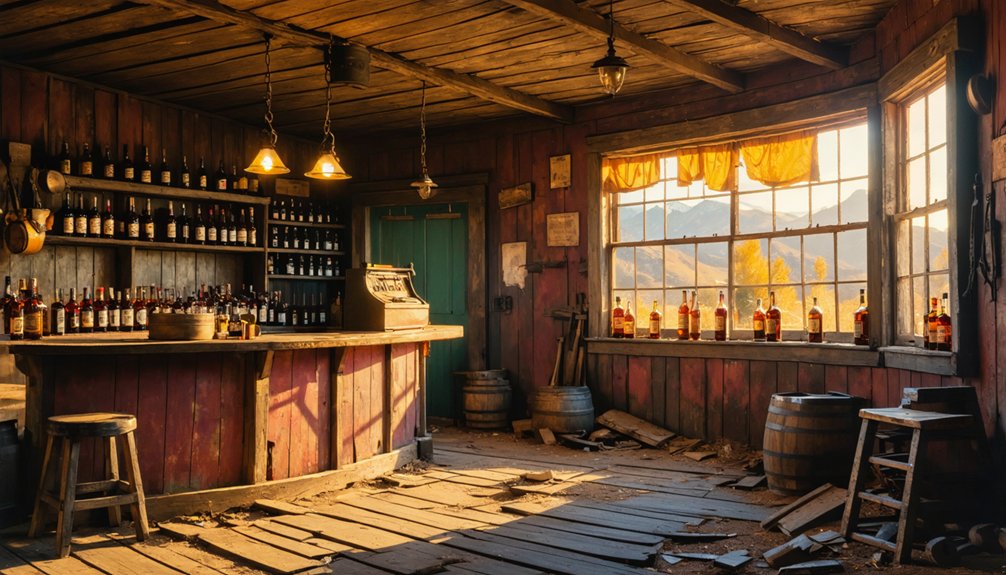
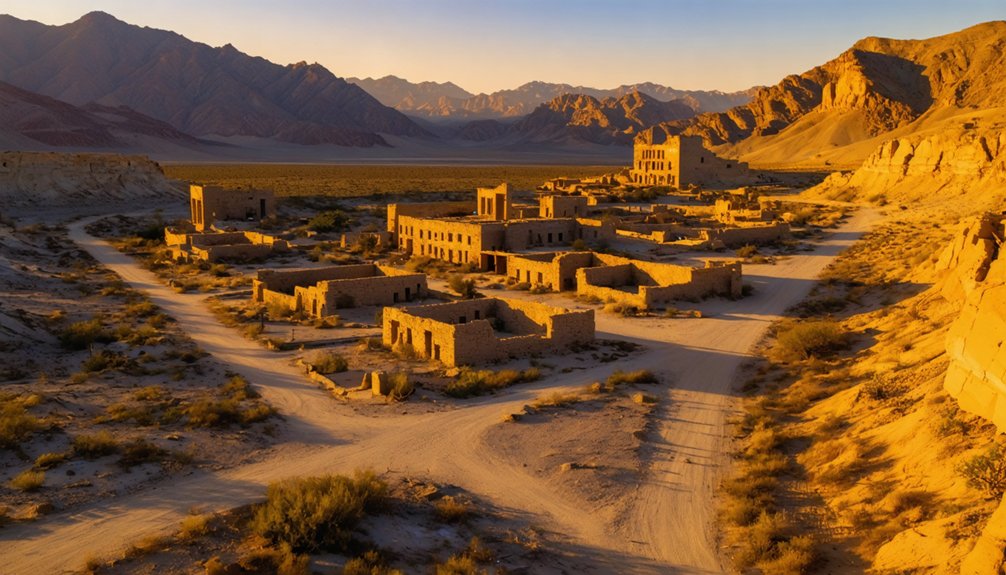
Everything about Coso feels like it’s been swallowed by the desert and left to age quietly — the crumbled walls, the scattered mining claims, the silence that stretches out across eastern California’s high desert flats.
That’s exactly why it works as the anchor for a road trip. Coso history runs deep, tied to silver rushes, forgotten prospectors, and the kind of ambition that pushed people into brutal, beautiful nowhere.
Coso history runs deep — silver rushes, forgotten prospectors, ambition pushed into brutal, beautiful nowhere.
The desert landscapes here don’t perform for you — they just exist, indifferent and vast. You’ll drive remote roads, navigate without much signage, and piece together a story from what’s left behind.
That rawness is the draw. If you want a trip that feels genuinely earned rather than packaged, Coso gives you that.
When to Visit Coso and How Heat Changes Everything
You’ll want to time this trip carefully, because the Mojave doesn’t forgive carelessness in July and August when midday temperatures routinely push past 110°F and turn a scenic drive into something genuinely dangerous.
The sweet spot runs from October through April, when cooler air settles across the desert flats and the old mining ruins feel like they’re breathing again.
Step outside those months, and you’re not just uncomfortable — you’re making real decisions about water, shade, and whether your radiator agrees with your plans.
Best Months To Visit
When you pull onto a remote desert road in July, the heat doesn’t just make the trip uncomfortable — it makes it dangerous. Temperatures near Coso regularly exceed 100°F by mid-morning, leaving little margin for a breakdown or a wrong turn.
The best weather arrives between October and April. Fall delivers crisp air, long golden light, and manageable driving conditions.
Winter mornings can bite with cold, but the stillness feels earned. Spring blooms briefly across the desert floor before summer erases everything.
These cooler months also align with seasonal attractions at nearby stops like Calico, which draws bigger events in fall and spring.
Plan your visit between November and March if you want the freedom to explore without the desert deciding your limits.
Summer Heat Risks
Summer in the Coso region doesn’t ease you into discomfort — it ambushes you before you’ve finished your first cup of coffee. By 9 AM, the desert floor radiates heat you can almost lean against.
Temperatures routinely breach 105°F, turning abandoned mine shafts and open flats into genuine hazards. Summer safety here isn’t a checklist formality — it’s the difference between a memorable road trip and a dangerous situation miles from help.
Your heat preparation should include a minimum of one gallon of water per person daily, sun protection, and a vehicle checked for cooling system integrity. The freedom to explore these forgotten landscapes depends entirely on your willingness to respect the desert’s terms.
Visit before June or after September, and Coso rewards you generously.
How to Use Ridgecrest as Your Base for the Coso Region?
Ridgecrest sits close enough to Coso that you can return each evening to a real bed, a hot meal, and a gas station that’s actually open, which changes everything about how comfortably you can explore the backcountry.
From town, you’ll build your daily routes outward, choosing which ruins or desert tracks to tackle before the afternoon heat settles in.
Before you leave each morning, stock the cooler, top off the tank, and grab whatever you’ve forgotten, because once you head out toward Coso, you’re on your own.
Ridgecrest Lodging And Services
Before you head into the remote silence of Coso’s desert ruins, you’ll want to set up camp in Ridgecrest—a no-nonsense Mojave gateway town that’s been fueling desert explorers for decades.
Stock up here before the pavement thins and the signal fades. Ridgecrest delivers everything a freedom-chasing road tripper needs:
- Lodging: Chain hotels and independent motels line China Lake Boulevard, offering reliable overnight stays.
- Fuel: Multiple gas stations make topping off your tank effortless before remote stretches.
- Ridgecrest dining options: From classic diners to local spots, you’ll find honest desert-town meals that hit differently after dusty miles.
- Ridgecrest shopping tips: Hardware stores and grocery outlets let you grab last-minute supplies, maps, and emergency gear.
Treat Ridgecrest as your anchor—leave it loaded and return to it grateful.
Daily Routes From Ridgecrest
Once you’ve claimed your room on China Lake Boulevard, Ridgecrest opens the surrounding desert like a skeleton key—every ghost town, mining ruin, and crumbling stamp mill within a hundred miles becomes a manageable day trip rather than a logistical puzzle.
Push north toward Coso attractions in the morning, when the light hits the volcanic hills sideways and the air still carries a chill. Spend your afternoons chasing ghost town history along unpaved spurs where weathered headframes lean against an indifferent sky.
Return to Ridgecrest by evening for fuel, a hot meal, and a cold drink before planning tomorrow’s route. You’re not just covering miles here—you’re threading through the same boom-and-bust corridors that swallowed entire communities whole, then spit out only silence.
Stocking Up Before Departing
Every supply stop in Ridgecrest carries the quiet weight of practical ritual—you’re filling water jugs, checking tire pressure, and scanning paper maps the way prospectors once studied hand-drawn claims before heading into the same volcanic hills you’re about to cross.
Coso’s geology rewards the prepared traveler.
Before departing, stock up on these essentials:
- Water and snacks – Road conditions beyond Ridgecrest grow remote fast
- Camera gear – Photography tips always start with morning golden-hour light over abandoned shafts
- Safety precautions kit – Include a first aid bag, emergency blanket, and satellite communicator
- Research notes – Mining history, local legends, desert wildlife sightings, and historical artifacts deserve context before you encounter them
Leave nothing to chance. The desert doesn’t negotiate.
The Best Ghost Towns to Pair With Coso on a Single Loop
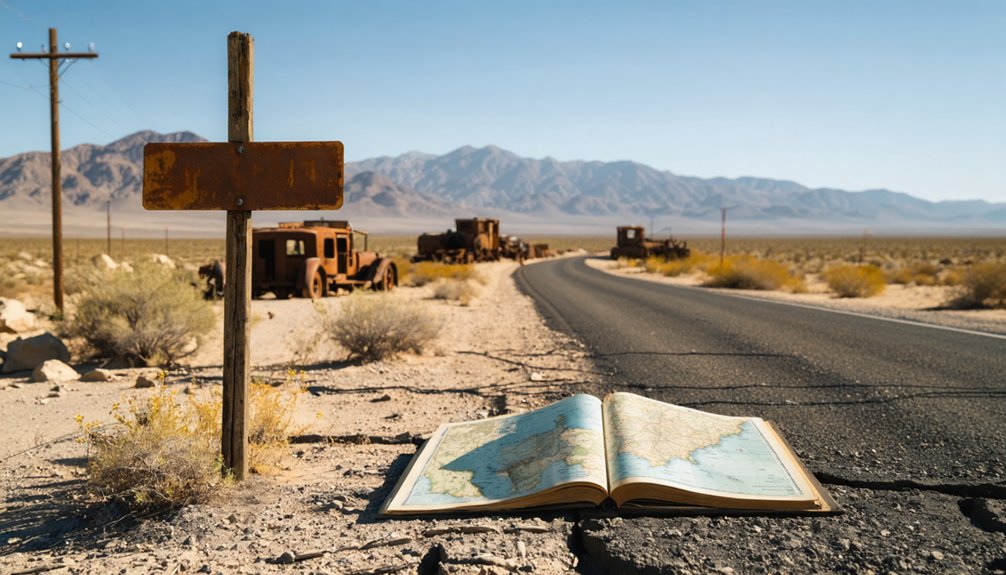
Because the desert doesn’t give up its history all at once, the most rewarding ghost town loops pair Coso’s raw, unrestored silence with stops that offer a bit more to hold onto.
For Coso mining devotees, Randsburg fits naturally into the route — its preserved saloon and general store give context to the boom years your imagination fills in elsewhere.
Ballarat adds another layer of ghost town exploration, sitting quietly at the edge of Panamint Valley with barely a structure standing.
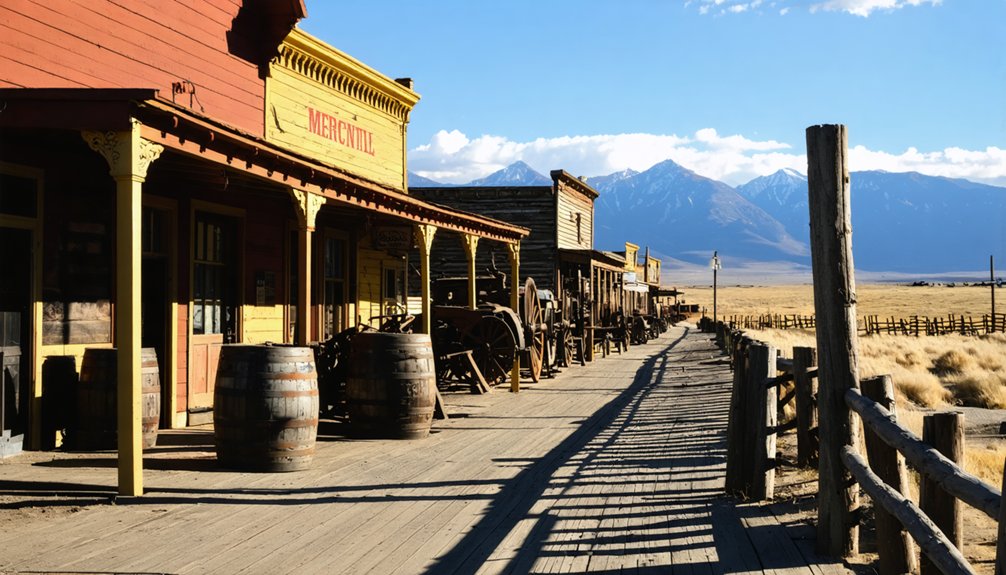
If you’re looping south, Calico Ghost Town delivers organized history with walking trails, mine tours, and gold panning.
Build your loop outward from Ridgecrest, keep the driving segments manageable, and you’ll move through nearly a century and a half of California’s restless, mineral-hungry past.
How Calico Ghost Town Fits Into a Coso Road Trip Itinerary
Calico Ghost Town sits at the far end of a Coso road trip loop — about 36600 Ghost Town Road in Yermo — and it earns its place there by offering what the rawer stops can’t.
Calico history stretches back to 1881, and its ghost town attractions give you something tangible after miles of open desert silence:
- Walk the preserved boardwalks through restored silver-era storefronts
- Ride the Calico & Odessa Railroad for a slow, unhurried view of the grounds
- Pan for gold and keep whatever you find
- Tour the mine shafts where real ore once moved
Calico opens daily at 9 AM, closes at 5 PM, and charges a modest admission.
It’s a fitting road trip finale — structured enough to rest your bones, wild enough to honor the journey.
How to Get to Coso on Desert Back Roads?
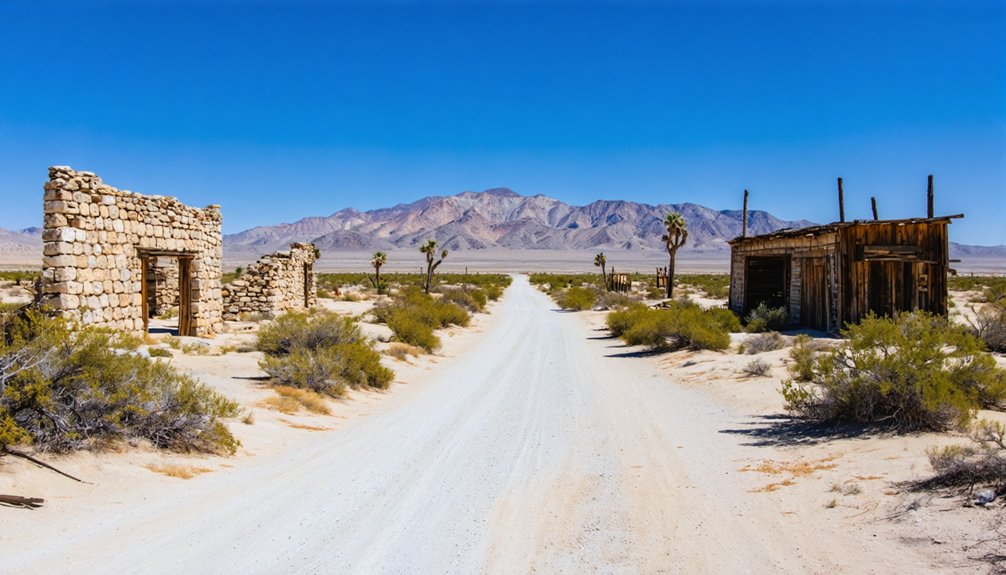
Three roads feed into the Coso region, and none of them will hold your hand. You’re entering land that resists easy access on purpose.
From Ridgecrest, head north on US-395, then cut east onto rougher terrain where pavement surrenders to graded dirt. A high-clearance vehicle isn’t optional here — it’s your admission ticket.
Watch for desert wildlife along the margins: roadrunners darting through creosote, jackrabbits freezing mid-trail.
The landscape itself starts narrating Coso history before you arrive, with dry washes and eroded hillsides marking where miners once pushed hard into unfamiliar country.
Carry extra fuel, printed maps, and more water than you think you’ll need. Cell service disappears fast.
That silence you’ll hear once you’re deep in — that’s not emptiness. That’s the point.
Which Mining Ruins at Coso Are Still Worth Seeing?
Once you’ve parked and stepped out into that dry stillness, the ruins start doing the talking. Coso ruins carry a raw honesty that restored ghost town attractions can’t replicate.
Every crumbling wall and scattered ore fragment connects you to a vanished world worth discovering through real desert exploration.
Don’t miss these standout pieces of mining history:
- Stone foundations from long-abandoned worker quarters, still holding their shape against the wind
- Collapsed mill structures where ore was once crushed and sorted
- Rusted equipment remnants half-swallowed by desert brush
- Prospect holes and tailings piles marking where hopeful miners once gambled everything
You’re walking through something unfiltered here. No ticket booth, no tour guide — just you, the silence, and a century of stories baked into the desert floor.
How to Structure Your Daily Driving Route Through the Coso Region?
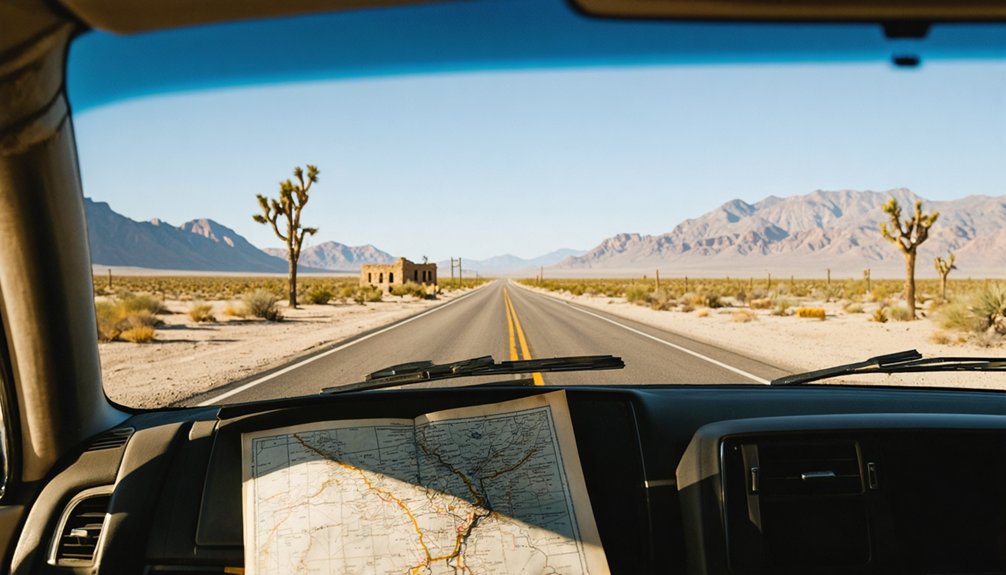
Planning your daily route through the Coso region means thinking like a prospector — conserving energy early, moving deliberately, and knowing when the desert heat will work against you.
Start before sunrise, when the air still carries that cool, mineral stillness. Hit the rougher Coso attractions first, while your legs are fresh and the light stays golden across the basin.
Desert navigation here rewards those who study maps the night before, because cell service disappears fast once you leave Ridgecrest behind.
By midday, pull back into town, refuel, and rest. Save the late afternoon for shorter drives, when shadows stretch long across the hardpan and the desert softens into something almost welcoming.
Structure your days tight, and the region opens itself up generously.
Pack This Before You Leave for the Desert
Before you map your first desert mile, what’s loaded in your vehicle matters as much as where you’re pointed. These roads don’t forgive the unprepared, and the packing essentials you carry become your lifeline between ghost towns.
Treat desert navigation like a contract with the landscape — bring what it demands:
- Water — at least one gallon per person, per day
- Paper maps or downloaded offline routes — cell service disappears fast out here
- High-clearance vehicle emergency kit — jumper cables, fix-a-flat, basic tools
- Food, sunscreen, and a wide-brim hat — the Mojave sun doesn’t negotiate
The same self-reliance that drew miners to Coso a century ago still applies.
Pack deliberately, drive freely, and let the desert reveal what it’s kept hidden.
Frequently Asked Questions
Is a Permit Required to Access the Coso Mining Area?
The knowledge doesn’t confirm specific permit requirements, so verify before you go. As you chase Coso’s rich mining history through sun-baked desert terrain, you’ll want to confirm access rules to roam freely and responsibly.
Are Pets Allowed at Ghost Towns Like Calico or Randsburg?
Your four-legged companions are welcome to roam where history breathes. Pet friendly policies at Calico and Randsburg let you explore ghost town activities together, though you’ll want to keep them leashed and watered in the desert heat.
Can You Find Cell Service Along the Coso Ghost Town Route?
Don’t count on reliable cell coverage out here. Signal strength fades fast as you push deeper into Coso’s windswept, forgotten desert corridors — embrace that disconnection; it’s the same raw freedom those old miners once lived.
What Is the Admission Price for Adults at Calico Ghost Town?
You’ll pay $8 to step into Calico’s ghost town history, where Calico attractions like mine tours and gold panning pull you back to an era when silver ruled the desert and freedom meant striking it rich.
Is Coso on Private Land or Open to the Public?
Coso’s history and Coso’s attractions sit on restricted land, so you’ll need proper access before you explore. Check current permissions, plan your route carefully, and you’ll experience the desert’s raw, untamed freedom responsibly.
References
- https://www.visitcalifornia.com/road-trips/ghost-towns/
- https://parks.sbcounty.gov/park/calico-ghost-town-regional-park/
- https://whimsysoul.com/must-see-california-ghost-towns-explore-forgotten-histories/
- https://www.visitcalifornia.com/now/california-ghost-towns-road-trip/
- https://californiacrossings.com/best-ghost-towns-in-california/
- https://californiathroughmylens.com/calico-ghost-town/
- https://www.instagram.com/reel/DUlVT0TDx0w/?hl=en
- https://www.tripadvisor.com/Attraction_Review-g32947-d25422070-Reviews-Randsburg_Ghost_Town-Randsburg_California.html
- https://www.youtube.com/watch?v=FEiWdlOSoiw
- https://www.facebook.com/groups/americansouthwest/posts/1377612229534914/