Planning a ghost town road trip to Cuervo, New Mexico means taking exit 291 off I-40, about 134 miles east of Albuquerque. You’ll discover crumbling adobe ruins, a stunning 1915 sandstone church, and a weathered 1950s gas station frozen in time. There are no services, so fuel up and bring plenty of water before you go. Respect private property, avoid disturbing the ruins, and visit during daylight hours — everything you need to explore Cuervo confidently is just ahead.
Key Takeaways
- Cuervo is located 134 miles east of Albuquerque; take exit 291 off I-40 to access the village via frontage and dirt roads.
- No services are available in Cuervo, so fuel up beforehand, bring sufficient water, and charge your phone before visiting.
- The intact 1915 Santo Niño de Atocha Catholic Church and abandoned adobe buildings are the town’s most significant attractions.
- Respect private property, avoid graffiti, and leave all structures undisturbed to preserve the integrity of this historic ghost town.
- Visit during daylight hours, inform someone of your plans, and stay aware of your surroundings for a safe experience.
Why Cuervo Is Route 66’s Most Atmospheric Ghost Town
Cuervo checks every box a ghost town enthusiast could want — crumbling adobe walls, an eerily intact 1915 sandstone church, and a silence broken only by freight trains rumbling past on tracks that outlasted the town itself.
Its atmospheric charm comes from authenticity. Nobody staged this decay. You’re walking through a place that simply stopped, frozen somewhere between Route 66’s golden era and today’s interstate indifference.
Nobody staged this decay — Cuervo simply stopped, frozen between Route 66’s golden era and today’s interstate indifference.
The ghostly remnants here feel genuinely undisturbed compared to commercialized ghost towns elsewhere. Abandoned houses still hold their structure. The old Route 66 alignment cuts southwest through empty scrubland.
Explorer John M. Mulhouse, after 70-plus visits across the Southwest, called Cuervo the creepiest ghost town he’d encountered — and once you arrive, you’ll understand exactly why.
What to Know Before You Pull Off I-40 at Exit 291
Exit 291 drops you into a place that hasn’t catered to visitors in decades, so preparation matters more here than at any roadside attraction with a gift shop.
Cuervo sits 134 miles east of Albuquerque, and no services exist once you exit. Respecting its historical significance means arriving self-sufficient and leaving nothing behind.
Before you pull off:
- Fuel up beforehand — the old gas station is purely decorative
- Respect occupied structures — some residents still call Cuervo home
- Honor local culture — occasional church services still occur at Santo Niño de Atocha
- Skip the graffiti temptation — ruins remain impressively intact; keep them that way
You’re driving into living history, not a theme park. Treat it accordingly.
How to Get to Cuervo on Your Route 66 Road Trip
If you’re heading east on I-40 from Albuquerque, take Exit 291 to the frontage road and follow the dirt roads straight into Cuervo — it’s one of the easiest ghost towns you’ll ever access.
Traveling the original 1926 Route 66 alignment from Newkirk puts you about 10 miles out, letting you experience the same stretch of highway that once kept this town alive.
Either way you arrive, thousands of cars pass daily on I-40, so you’ll spot Cuervo’s weathered silhouette from the interstate long before you pull off.
Route 66 Driving Directions
Getting to Cuervo takes just a few simple steps whether you’re heading east or west on I-40. Your route planning starts with Exit 291, roughly 134 miles east of Albuquerque.
Once you’re off the interstate, the frontage road and short dirt roads lead directly into town.
Follow these simple directions to reach Cuervo:
- Westbound travelers: Exit 291 connects you directly to the frontage road heading into town.
- Eastbound travelers: Take Exit 291 and follow signs toward the village.
- South side: Find the church, adobe ruins, and historical significance around every corner.
- North side: Spot the abandoned 1950s gas station just off the highway.
No services exist here, so fuel up before you arrive and embrace the open road freedom Cuervo delivers.
Accessing Cuervo From I-40
Reaching Cuervo from I-40 couldn’t be simpler, and that accessibility is part of what makes it such a rewarding stop on any Route 66 road trip.
Take Exit 291, roughly 134 miles east of Albuquerque, and follow the frontage road directly into the village.
Ironically, the I-40 bypass that devastated Cuervo’s economy and accelerated its abandonment now delivers curious travelers straight to its doorstep.
Thousands of cars pass daily without stopping, but you’re not like most travelers. You’ve come to explore ghost town history firsthand.
Dirt roads branch south toward the church and adobe ruins, while the north side reveals more modern structures.
No services exist here, so arrive with a full tank and everything you need before you exit the interstate.
What to See Inside Cuervo’s Ghost Town Ruins
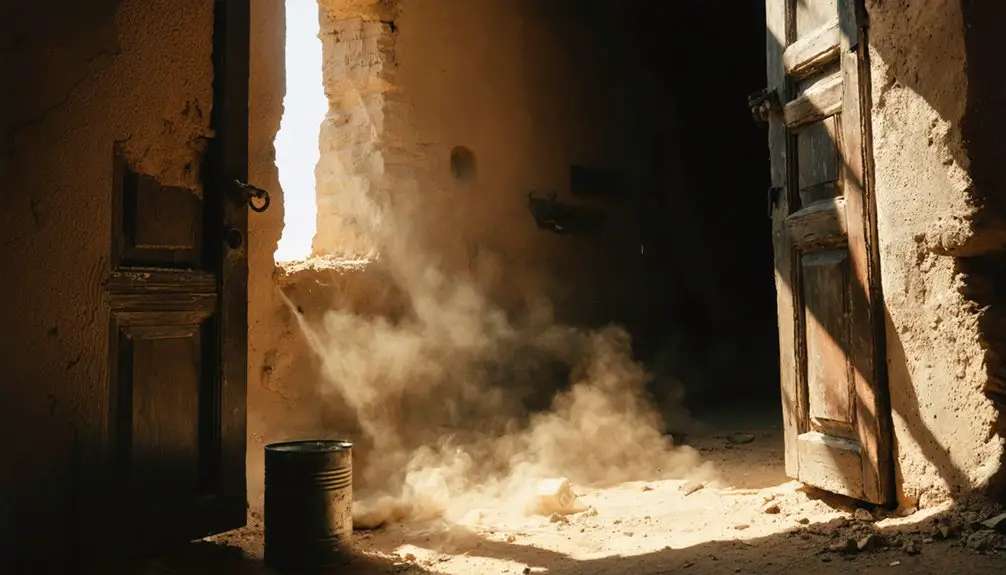
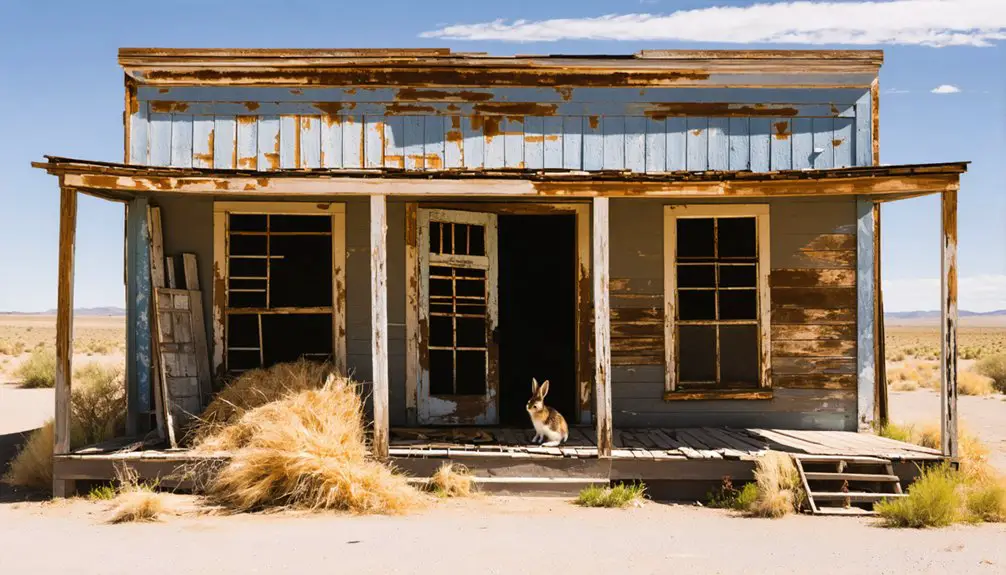
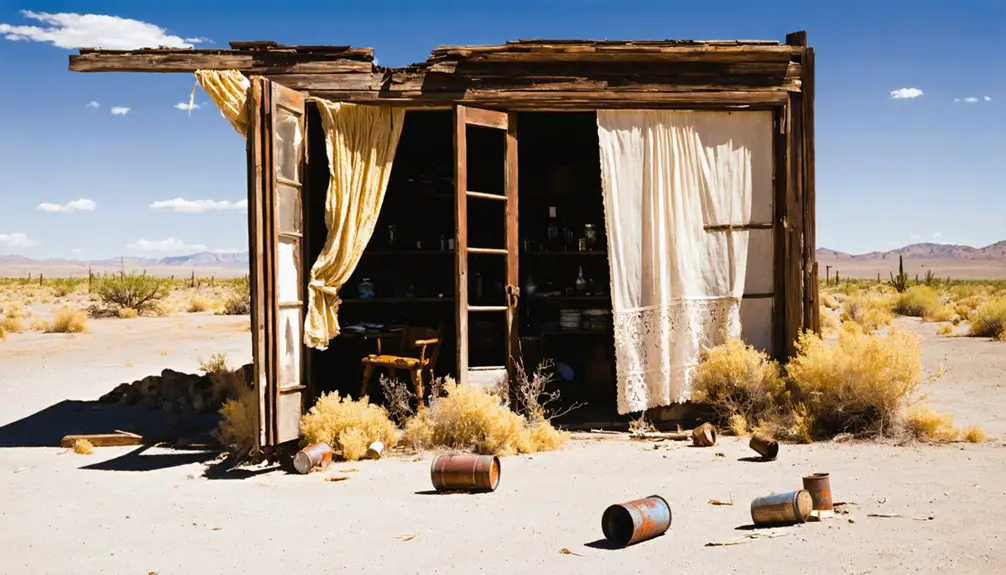
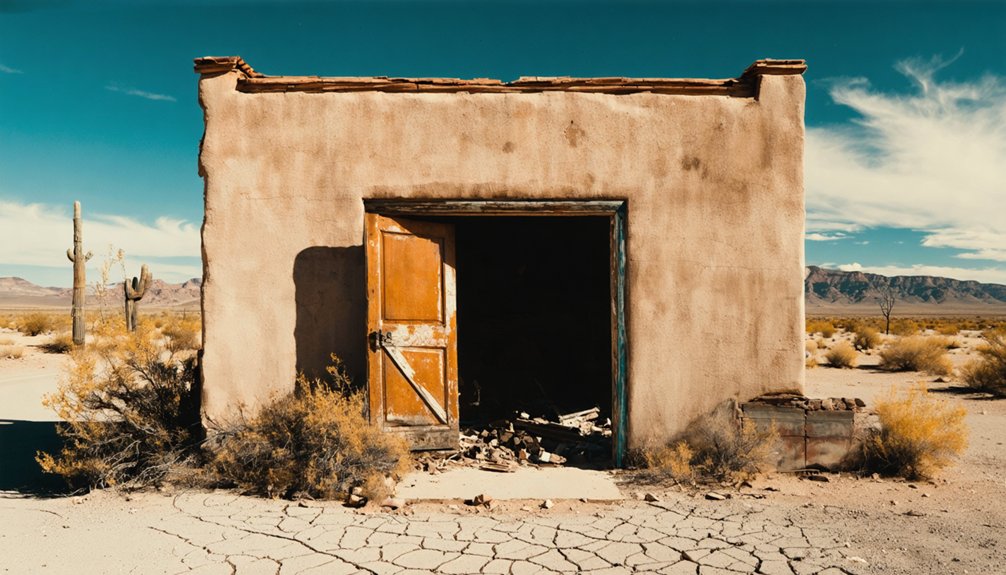
Once you’re inside Cuervo’s ghost town ruins, you’ll find a striking collection of abandoned adobe buildings frozen in time, their walls and structures remarkably intact despite decades of neglect.
The 1915 Santo Niño de Atocha Catholic Church, built from red sandstone, stands as the town’s most compelling landmark, still holding occasional services and offering a rare glimpse into Cuervo’s living past.
Walk the south side of town to take in both the church and the crumbling ruins, where every weathered doorway and collapsed roof tells a piece of this forgotten community’s story.
Abandoned Adobe Buildings
Wandering through Cuervo’s abandoned adobe buildings feels like stepping into a freeze-frame of early 20th-century New Mexico life. This abandoned architecture carries deep cultural importance, revealing how settlers built communities from raw earth and determination.
You’ll find structures remarkably intact despite decades of neglect. Explore freely, but tread respectfully:
- Weathered walls still standing after a century of desert exposure
- Crumbling interiors preserving original room layouts and spatial storytelling
- Earthen construction techniques reflecting traditional New Mexican building methods
- Organic decay patterns creating stunning photographic compositions at golden hour
The desert climate has paradoxically preserved these ruins, slowing deterioration notably.
You’re fundamentally walking through an open-air museum without admission fees or guided tours. Just bring your camera, respect boundaries, and let Cuervo’s silent structures tell their own story.
Historic Church Interior
Standing inside Cuervo’s 1915 Santo Niño de Atocha Catholic Church, you’ll immediately notice how remarkably preserved it’s compared to everything else in town. The red sandstone walls still stand strong, reflecting the historic architecture of early New Mexico craftsmanship.
Unlike the crumbling adobes surrounding it, this church maintains its spiritual significance — it still holds occasional services, meaning real life quietly persists here.
You’ll find simple, humble details inside: worn wooden elements, modest religious fixtures, and thick sandstone walls that have weathered over a century of desert conditions.
The contrast between this living structure and the ghost town outside makes the experience genuinely striking. Wandering freely through this piece of history connects you to the ranchers, railroad workers, and Route 66 travelers who once called Cuervo home.
The 1915 Church and Vintage Gas Station Still Standing in Cuervo
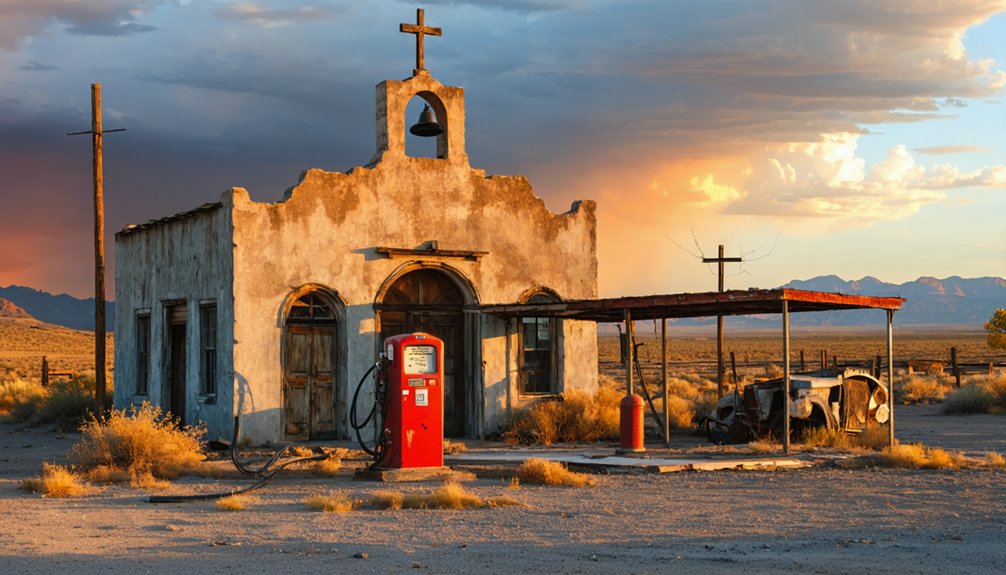
Among Cuervo’s crumbling ruins, two structures have defied the town’s slow erasure: the 1915 Santo Niño de Atocha Catholic Church and a vintage 1950s gas station.
Both reward curious travelers willing to explore beyond the interstate.
The church architecture showcases striking red sandstone construction, still hosting occasional services despite surrounding abandonment.
The gas station history reflects Route 66’s golden era, its faded canopy evoking decades of cross-country travelers.
What you’ll find at each landmark:
- Church: Built 1915, red sandstone walls, active worship continues
- Gas station: Likely Texaco, positioned on I-40’s north side
- Gas station caveat: No fuel available; owner operates a tow service
- Access: Both structures visible and photographable from public roads
Respect boundaries, stay aware, and let these survivors tell their stories.
How to Explore Cuervo Respectfully and Safely
Cuervo’s surviving landmarks make it tempting to wander freely, but exploring this ghost town well means knowing where the boundaries are. Some buildings are privately owned, and a few residents still call Cuervo home. Respect that.
Local etiquette here is simple: don’t trespass, don’t touch what isn’t yours, and leave every structure exactly as you found it. Graffiti has already damaged parts of the ruins, so be part of the solution.
For ghost town safety, come prepared. There are no services, no fuel, and no help nearby if something goes wrong. Bring water, charge your phone, and tell someone your plans.
Visit during daylight, stay aware of your surroundings, and keep your distance from the gas station owner, who doesn’t welcome curious strangers.
Frequently Asked Questions
What Is Cuervo’s Official ZIP Code, and Does Mail Still Get Delivered?
Despite serving a peak population of 300, Cuervo’s ZIP code 88417 still persists! You’ll find postal services quietly honoring local history, even as occasional church services remain the town’s only real sign of life.
Who Founded Cuervo, and Which Railroad Company Originally Established It?
You’ll discover that the Chicago, Rock Island & Gulf Railroad founded Cuervo in 1901 as a simple railroad siding. This railroad history shaped the town’s significance, giving you a fascinating glimpse into New Mexico’s pioneering past.
What Elevation Is Cuervo Hill Compared to Nearby Cuervito Peak?
“The higher you climb, the farther you see!” Cuervo Hill’s elevation comparison stands at 5,366 ft, towering over Cuervito Peak’s 4,984 ft. You’ll love exploring both hiking trails while chasing that boundless freedom.
When Was Cuervo Officially Declared an Abandoned Town?
You’ll find Cuervo’s ghost town history officially concludes in 2011, when this once-thriving community joined New Mexico’s abandoned settlements. After decades of decline, you’re visiting a town that time and progress ultimately left behind.
How Many People Lived in Cuervo at Its Peak Population?
At its peak, you’re looking at around 300 people calling Cuervo home! This ghost town history tells a fascinating tale of population decline, as dreams of prosperity slowly faded into New Mexico’s windswept, enchanting desert landscape.
References
- https://www.theroute-66.com/cuervo.html
- https://patternenergynewmexico.com/ghost-town-cuervo-new-mexico/
- https://www.islands.com/1990999/cuervo-new-mexico-once-thriving-abandoned-ghost-town-route-66/
- https://www.youtube.com/watch?v=EutGMOLNz-g
- https://pebblepirouette.com/a-ghost-town-called-cuervo/
- https://historynet.com/ghost-towns-cuervo-new-mexico/
- https://dryheatblog.com/a-return-trip-to-cuervo-new-mexico/
- https://www.newmexicoghosttowns.net/cuervo-nm