Planning a ghost town road trip to Elkhorn, Montana means driving about an hour south of Helena into the rugged Elkhorn Mountains, where Montana’s most preserved ghost town waits in near-perfect silence. You’ll find original buildings still standing on Main Street, a cemetery full of untold stories, and no admission fees required. Silver built this town, tragedy hollowed it out, and the whole haunting story’s yours to uncover if you keep going.
Key Takeaways
- Elkhorn is located about an hour south of Helena, accessible from Boulder via a winding northeast mountain road through the Elkhorn Mountains.
- No gas stations or convenience stores exist along the route, so fuel up and stock supplies before leaving Boulder or Helena.
- Elkhorn is Montana’s smallest state park, requiring no entry fees, with Fraternity Hall and one adjacent building under state ownership.
- Visitors can freely explore weathered buildings, mining remnants, and a historic cemetery without tour guides, but must respect privately owned structures and land.
- The Silver Crash of 1893 and a deadly diphtheria epidemic shaped Elkhorn’s abandonment, making it the most preserved ghost town in the Northwest.
What Makes Elkhorn Montana’s Most Preserved Ghost Town?
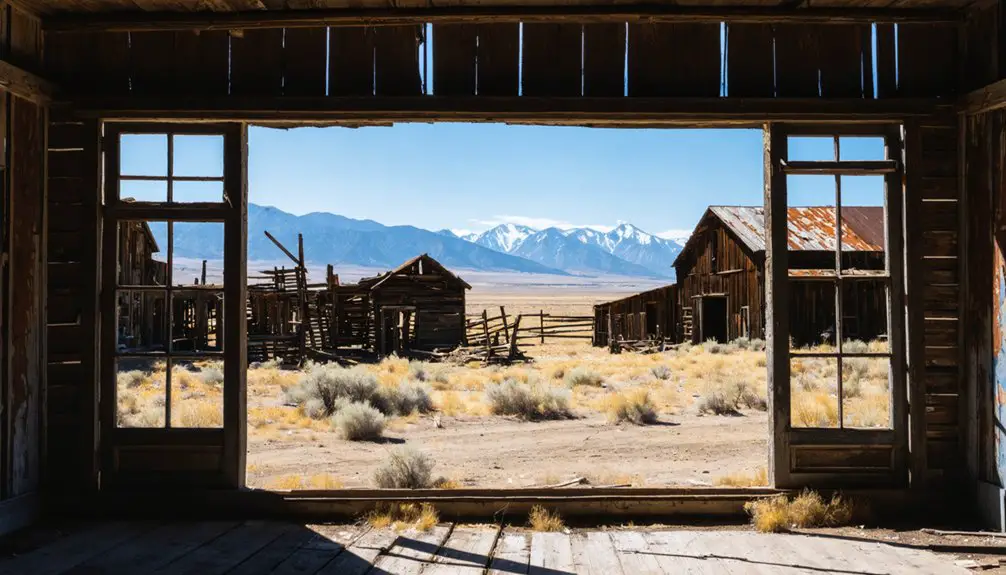
When you roll into Elkhorn, Montana, something feels different from the typical ghost town experience — the buildings are actually still standing.
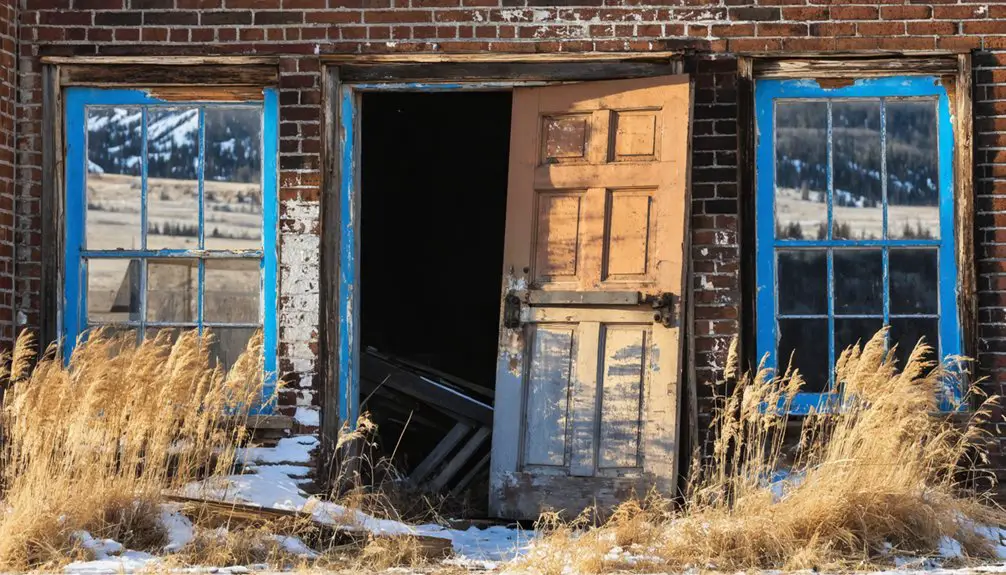
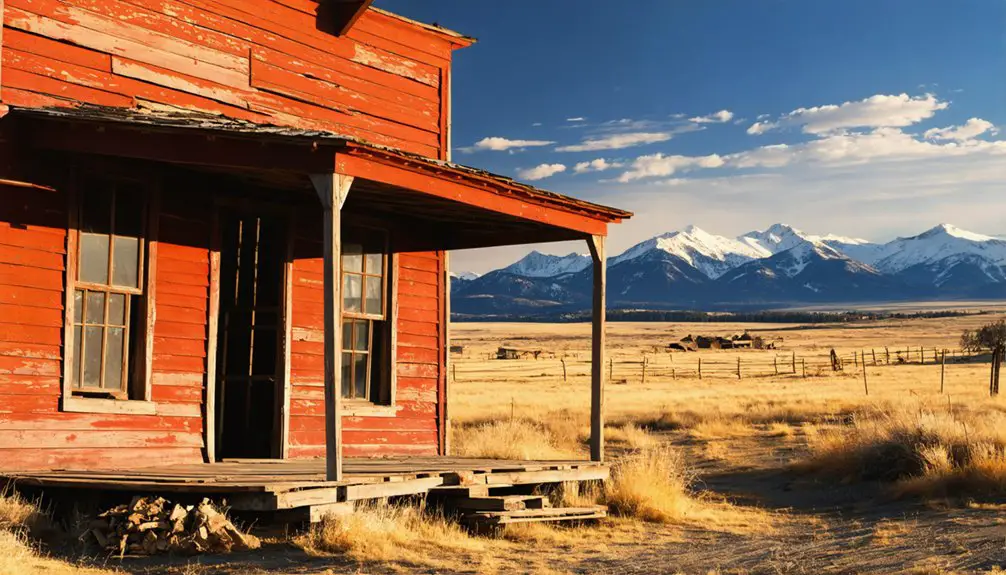
Elkhorn’s architecture has weathered over a century of harsh Montana winters yet remains remarkably intact, earning it a reputation as the most preserved ghost town in the Northwest.
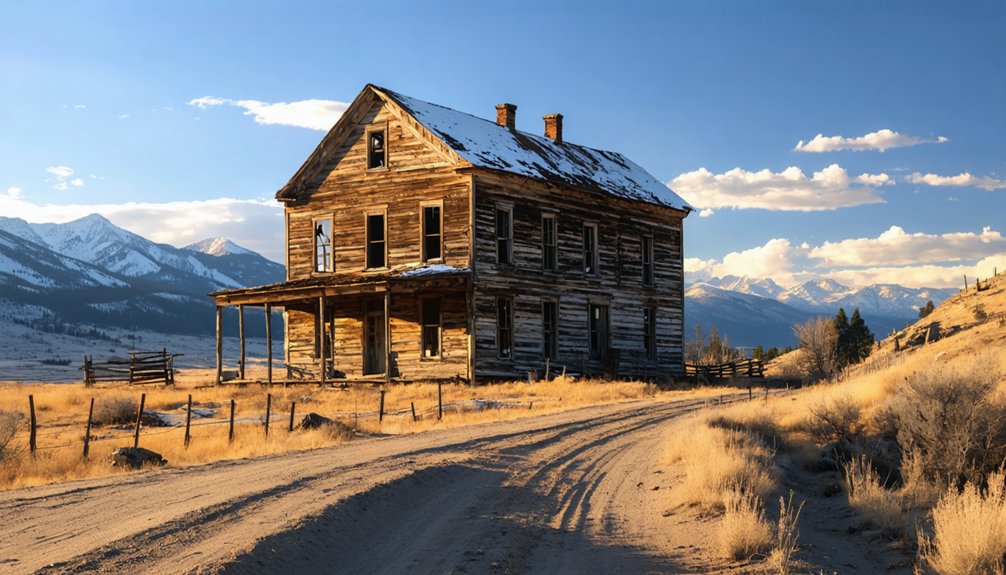
Two-story Fraternity Hall anchors Main Street, where you can still trace the outlines of a bowling alley, candy stores, and boomtown life frozen in time.
The cemetery a mile up the mountain tells harder stories — diphtheria headstones marking children lost in the late 1880s.
What you’re really witnessing is community resilience etched into wood and stone.
People built something meaningful here, and against considerable odds, enough of it survived for you to experience it firsthand.
Elkhorn’s Silver Boom, Bust, and Diphtheria Tragedy
When you walk Elkhorn’s Main Street, you’re tracing the arc of a classic boom-bust story that began with silver and ended in heartbreak.
Peter Wys’s 1870 silver discovery in the Elkhorn Mountains sparked a rush that pushed the population to 2,500 by the 1880s, but the Silver Crash of 1893 gutted that number by 75% in just two months.
Before the economic collapse even arrived, though, a diphtheria epidemic between 1888 and 1890 had already carved its own tragedy into the town, claiming the lives of many children and leaving a cemetery a mile up the mountain as its most sobering monument.
Silver Boom Transforms Elkhorn
Once silver was discovered in the Elkhorn Mountains in 1870, the town that rose around those deposits transformed almost overnight into a thriving community of 2,500 residents.
Peter Wys’s silver discovery sparked a rush that built Elkhorn from wilderness into a self-sufficient boomtown with a school, hotel, church, saloon, and bowling alley.
By the 1880s and 1890s, families had planted roots deep in this mountain settlement, creating a genuine community rather than just a transient mining camp.
That mining heritage shaped every structure on Main Street, every business that opened its doors, and every family that called Elkhorn home.
The Elkhorn Mine alone produced $14 million in silver, fueling the kind of prosperity that makes you understand exactly why so many people risked everything to come here.
The 1893 Silver Crash
The Silver Crash of 1893 hit Elkhorn like a wrecking ball, stripping 75% of its population within just two months. Silver market fluctuations devastated communities built entirely on mineral wealth, and Elkhorn was no exception.
When Congress repealed the Sherman Silver Purchase Act, silver prices collapsed overnight, making extraction financially impossible.
The economic impact was swift and brutal. Families who’d built lives here packed up and disappeared almost as quickly as they’d arrived. The mines that had collectively produced $14 million worth of silver went silent.
Streets that once buzzed with merchants, miners, and children emptied dramatically.
Walking through Elkhorn today, you’re witnessing the physical aftermath of that single legislative decision — a moment that transformed a thriving mountain community into the weathered ghost town you’ve come to explore.
Diphtheria’s Devastating Toll
Before the Silver Crash could finish Elkhorn off, diphtheria had already been quietly devastating the community for years. The diphtheria outbreak struck between 1888 and 1890, cutting through Elkhorn’s youngest residents with brutal efficiency. A 20% death rate among children left families shattered and streets quieter than any silver slump could explain.
Even Dr. Dudley, the town’s own physician, couldn’t protect his family — he lost his son to the disease. The community impact reached beyond grief; railroad service halted following the epidemic, isolating Elkhorn further.
When you walk through town today, the cemetery sitting one mile up the mountain tells this story plainly. Those weathered headstones represent real families who built something here, only to have it taken long before the mines went quiet.
How to Get to Elkhorn From Helena or Boulder
If you’re starting from Helena, you’ll head south for about an hour through the rugged Elkhorn Mountains to reach this remote ghost town.
For those coming from Boulder, the nearest town, you’ll navigate northeast up a winding mountain road that climbs into Jefferson County’s high elevation terrain.
Either way, you’re trading the familiar comfort of pavement for the raw isolation that makes Elkhorn feel like stepping back into the 1880s.
Driving From Helena
Tucked into the Elkhorn Mountains about an hour south of Helena, Elkhorn is straightforward to reach whether you’re coming from the capital or the nearby town of Boulder.
From Helena, head south through Jefferson County, where the landscape opens into sweeping scenic views of Montana’s rugged high country. You’ll gain elevation quickly, so keep your eyes open for local wildlife along the roadside — deer and elk frequently cross these mountain roads.
The drive itself feels like a reward, pulling you deeper into isolation with every mile.
Once you reach Boulder, follow the road northeast up into the mountains toward Elkhorn. The route is uncomplicated, and the journey sets the mood perfectly for stepping into one of Montana’s most authentically preserved ghost towns.
Navigating From Boulder
Boulder serves as your last real waypoint before the road climbs into Elkhorn’s mountain solitude. Stock up on supplies here, because once you head northeast on the Boulder route, civilization disappears fast.
The road winds upward through the Elkhorn Mountains, rewarding you with scenic views that stretch across Jefferson County’s rugged terrain. You’ll feel the elevation shift as ponderosa pines replace the valley floor.
There are no gas stations, no convenience stores — just raw Montana landscape pulling you forward. The drive takes roughly 20 to 30 minutes from Boulder, though the mountain road demands patience over speed.
When weathered wooden structures finally emerge through the tree line, you’ll know you’ve arrived somewhere genuinely untouched — a place that doesn’t advertise itself to anyone unwilling to seek it out.
The Historic Buildings You Can Actually Explore
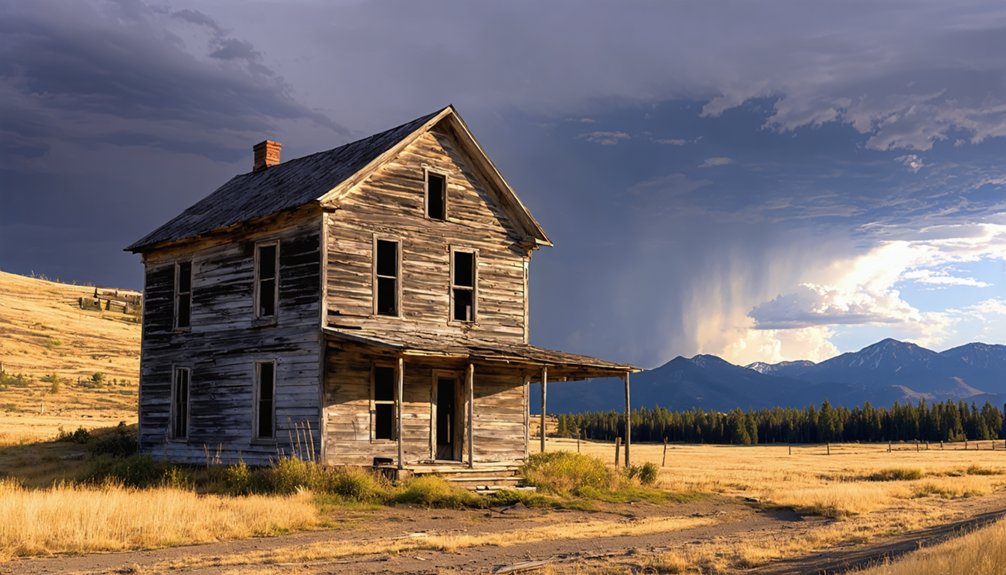
When you arrive in Elkhorn, two historic buildings stand at the heart of Montana’s smallest state park—less than an acre of preserved history managed by Fish, Wildlife and Parks.
The crown jewel is the two-story Fraternity Hall, where miners once gathered for dances, weddings, wakes, and performances by the Cornish Glee Club. It’s a remarkable feat of historic preservation, standing weathered but proud against the mountain backdrop.
Visitor experiences here feel genuinely raw and unfiltered. You can walk inside both structures, touching the same worn wood that residents gripped over a century ago.
Just remember—the park owns only these two buildings. The surrounding land is private property, so you’ll want to respect those boundaries and stay within the designated areas.
The Ghost Town Cemetery and Mining Ruins Worth the Hike
A mile up the mountain from Elkhorn’s main cluster of buildings, the cemetery stands as the town’s most sobering landmark—a quiet memorial to the diphtheria epidemic that tore through the community between 1888 and 1890, killing roughly one in five residents, many of them children.
Cemetery exploration here puts you face-to-face with real human cost behind the silver rush dream.
The cemetery doesn’t romanticize history—it grounds it in names, dates, and the weight of lives lost too soon.
Scattered beyond town, the mining ruins tell a different story. The Elkhorn, C&D, Dolcoath, and Golden Curry mines collectively shaped this mountainside, extracting $14 million in silver before the 1893 crash ended everything.
You’ll find weathered structural remains still standing against the landscape. Mining history isn’t just in the books here—it’s embedded in rusted iron, collapsed timber, and scarred earth you can walk through yourself.
Private Property, No Fees, and What the State Park Actually Owns
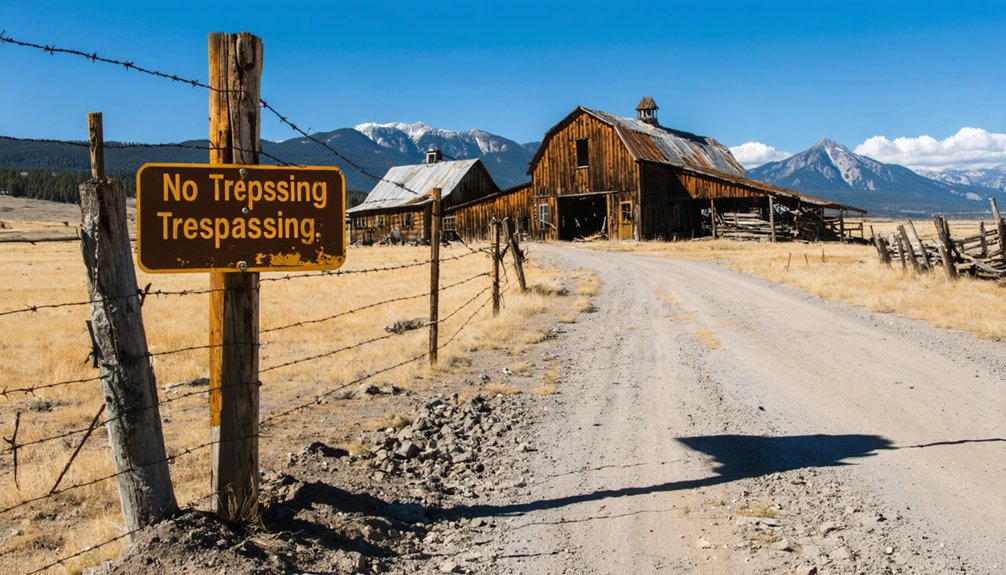
Elkhorn’s state park status might sound more expansive than it actually is—Montana’s smallest state park covers less than one acre and protects just two buildings: Fraternity Hall and the structure beside it, both managed by Fish, Wildlife and Parks.
Understanding state park ownership and private property guidelines keeps your visit respectful and hassle-free.
Here’s what you need to know:
- No entry fees — You walk in freely, no tickets required.
- Two buildings only — State park ownership extends exclusively to Fraternity Hall and its neighbor; everything else is privately held.
- Stay on public ground — Much of Elkhorn sits on private property, so wander thoughtfully and stick to designated areas.
Respect those boundaries, and you’ll experience this extraordinary place exactly as it deserves.
Pair Elkhorn With Helena for a Full-Day Ghost Town Drive
Since Helena sits just one hour north of Elkhorn, pairing both destinations into a single day trip makes obvious sense.
Start your morning in Helena, exploring Montana’s capital city and its rich frontier history, then point your vehicle south through the mountains toward your Elkhorn Exploration.
Begin in Helena, then head south into the mountains — your Elkhorn adventure builds with every mile.
The drive itself rewards you with sweeping mountain scenery before the ghost town even comes into view.
Once you arrive, Elkhorn’s Historical Significance becomes immediately tangible — weathered buildings, silent streets, and a cemetery that tells harder stories than any museum could.
You’re moving through real western history on your own schedule, with no admission gates or tour guides dictating your pace.
Freedom doesn’t get much more honest than a mountain road leading straight into Montana’s past.
Frequently Asked Questions
Is Elkhorn Ghost Town Open Year-Round or Closed in Winter?
You can visit Elkhorn year-round, though winter brings challenging mountain roads. Embrace Elkhorn history through every season’s unique seasonal attractions — summer’s weathered ruins glow warmly, while snow-dusted streets evoke hauntingly beautiful, untamed frontier solitude.
Are Dogs or Pets Allowed When Visiting Elkhorn State Park?
The knowledge base doesn’t specify pet regulations for Elkhorn State Park. You’ll want to contact Montana Fish, Wildlife and Parks directly to confirm dog friendly activities and any leash rules before bringing your furry companion along.
Can Visitors Camp Overnight Near Elkhorn Ghost Town Legally?
The knowledge doesn’t specify camping regulations for Elkhorn. Since it’s Montana’s smallest state park with limited ghost town amenities and surrounded by private property, you’ll want to contact Fish, Wildlife and Parks directly for overnight options.
Is Elkhorn Ghost Town Accessible for Visitors With Mobility Limitations?
Like Lewis and Clark forging new trails, you’ll face rugged challenges here—wheelchair access isn’t guaranteed at Elkhorn’s historic preservation site. You’ll navigate weathered, uneven terrain, so plan accordingly and embrace the wild frontier spirit!
Are Guided Tours of Elkhorn Ghost Town Available to Book?
You won’t find formal guided tour options at Elkhorn, but you’re free to explore independently. Informational signs along Main Street bring the ghost town history to life, letting you discover this hauntingly preserved treasure at your own pace.
References
- https://www.atlasobscura.com/places/elkhorn-ghost-town
- https://passionsandplaces.com/elkhorn-montana-ghost-town/
- https://www.youtube.com/watch?v=J38tAc_Z5rw
- https://historynet.com/ghost-town-elkhorn-montana/
- https://montanastateparksfoundation.org/parks/elkhorn-state-park/
- https://en.wikipedia.org/wiki/Elkhorn
- https://www.ktvh.com/news/elkhorn-montana-not-a-ghost-town-but-a-window-to-a-resilient-past-and-present
- https://fwp.mt.gov/stateparks/elkhorn