Plan your road trip to Maiden, Montana, by starting in Lewistown and following the signs into the Judith Mountains. You’ll find nearly 20 surviving structures, including a preserved saloon, assay office, and an 1884 ten-stamp mill. Bring sturdy boots, water, offline maps, and respect for private property. Nearby ghost camps like Andersonville, Rustle, and Alpine make perfect detours. Everything you need to explore this haunted gold rush landscape is just ahead.
Key Takeaways
- Maiden Ghost Town is located in the Judith Mountains near Lewistown, Montana, which serves as your nearest supply point before heading out.
- Nearly 20 historic structures remain, including a preserved saloon, assay office, and an 1884 ten-stamp mill worth exploring.
- Access the townsite via Montana Street and Main Street; signs at the key fork will guide you toward the townsite or Camp Maiden.
- Nearby ghost camps Andersonville, Rustle, and Alpine make worthwhile detours to enrich your road trip experience.
- Pack water, snacks, sturdy boots, a camera, and offline maps, as cell service is unreliable throughout the backcountry area.
What’s Left of the Maiden Ghost Town Today
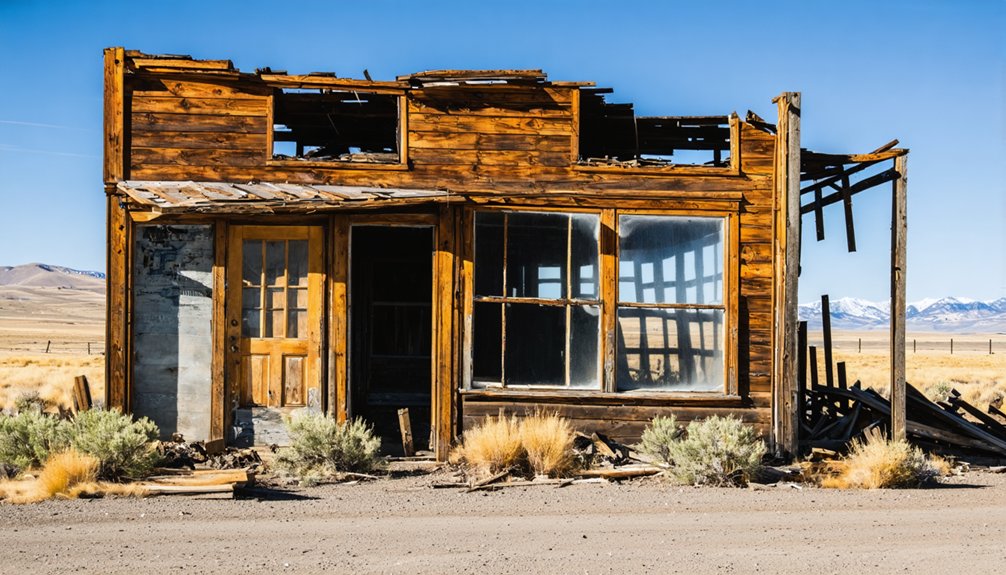
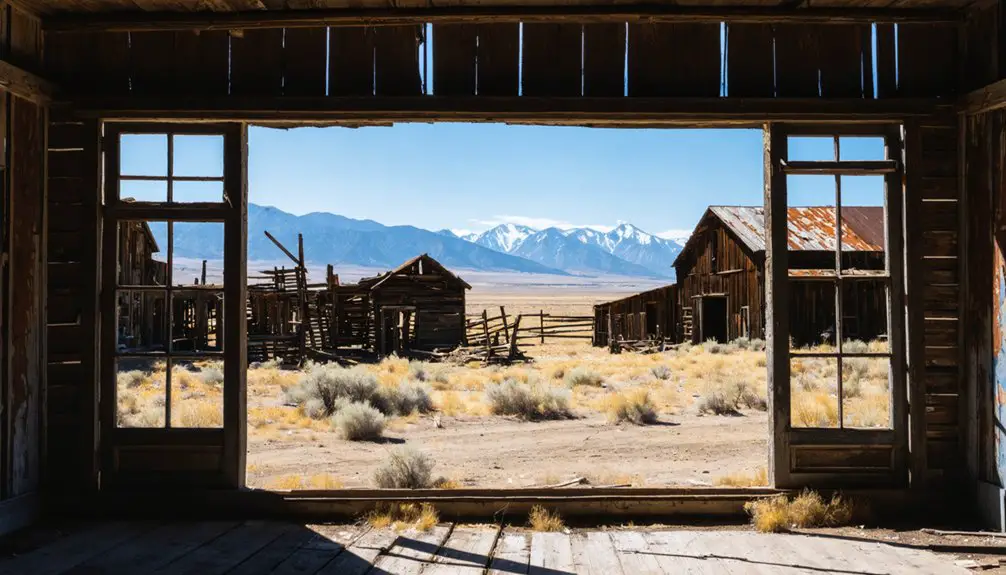
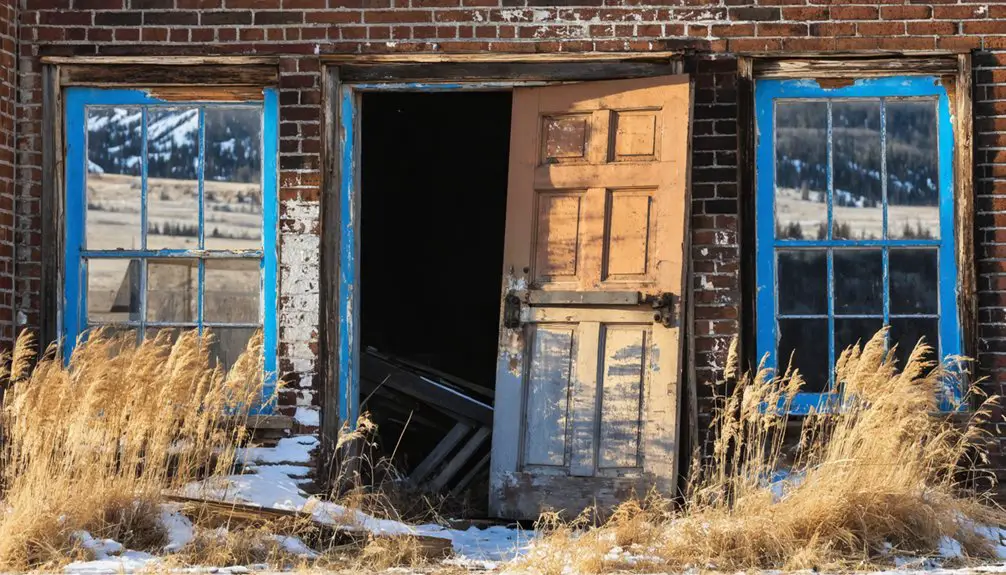
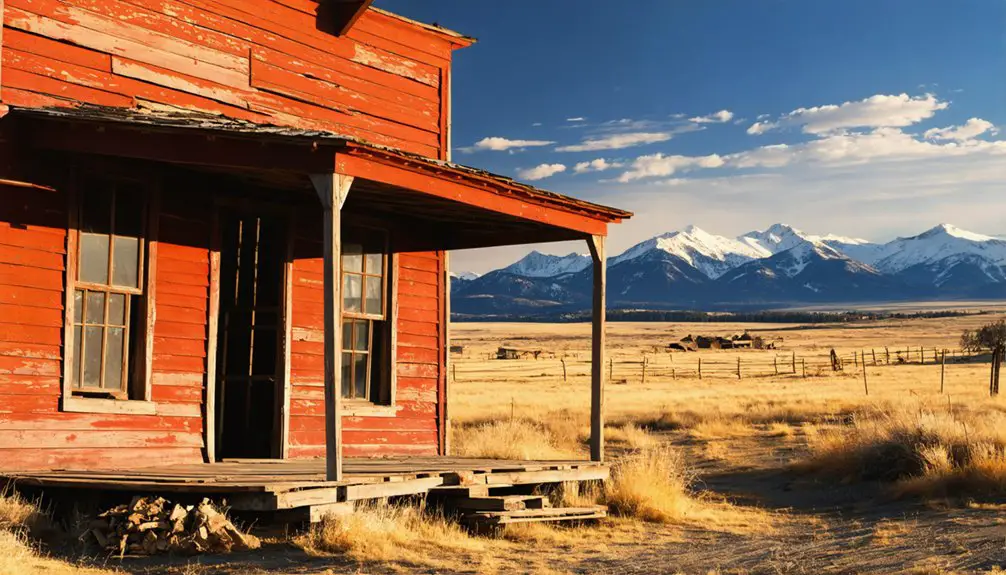
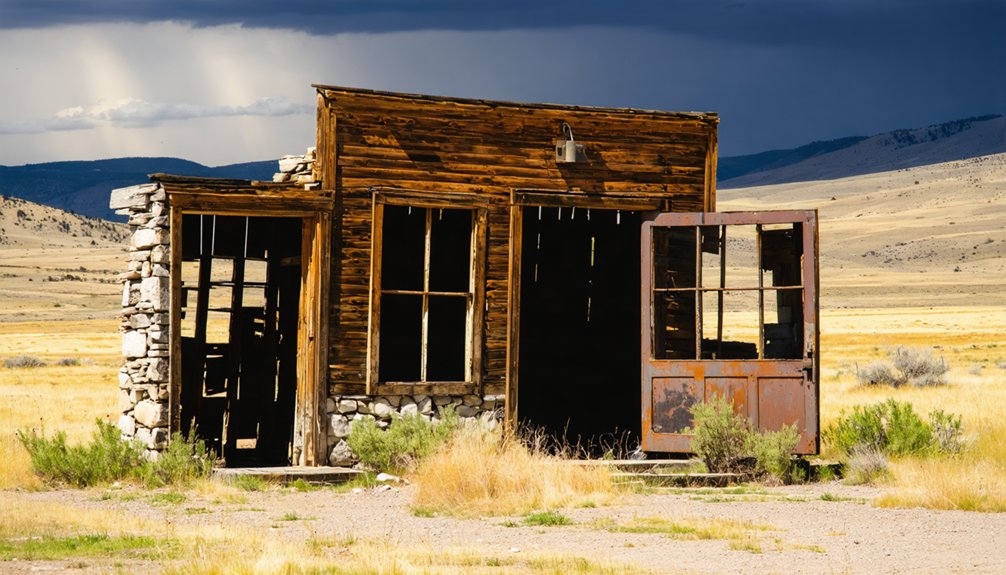
Although Maiden’s heyday is long past, nearly 20 structures still stand as quiet reminders to the town’s frenetic gold rush era.
You’ll find a fascinating mix of crumbling ruins, remodeled dwellings, and newer homes scattered across the townsite. For ruins exploration, don’t miss the privately preserved saloon and assay office, along with Maginnis’ impressive 1884 ten-stamp mill — tangible proof of Maiden’s historical significance.
Driveable streets like Montana Street and Main Street give you direct access to the heart of the old town, though you’ll want to respect surrounding private property. Signs throughout the townsite help orient your exploration.
Nearby Camp Maiden offers a rentable recreation facility just one mile off the road toward Judith Peak, making it an ideal base for your adventure.
How Maiden Went From Boomtown to Ghost Town
Maiden’s fall was as swift as its rise. By the late 1880s, mining decline had gutted the town’s lifeblood. The mines failed, companies went bankrupt, and workers left unpaid. Economic collapse followed fast — population dropped from 1,200 to fewer than 200 by 1896.
The freight wagons stopped rolling, the saloons went quiet, and ambition gave way to abandonment.
Then fire finished what failure started. The 1905 blaze consumed most of the business district, and rebuilding never fully took hold.
The last saloon closed around 1918, the post office shuttered in 1921, and the school soon followed. A 1927 fire destroyed the final hotel.
Maiden didn’t fade — it collapsed, leaving behind only ruins, silence, and stories waiting for curious travelers like you to uncover.
How to Get to Maiden Ghost Town
Tucked into the Judith Mountains near Lewistown, Montana, Maiden sits at the head of Warm Spring Creek Canyon — remote enough to feel forgotten, close enough to reach in an afternoon.
Your access routes branch at a key fork: one leads directly to the townsite, the other splits toward Camp Maiden, about a mile off the road to Judith Peak.
Keep these travel tips in mind before you roll out:
- Start from Lewistown — it’s your nearest supply point
- Watch for signs marking the townsite at the fork
- Stay on Montana Street and Main Street — other areas are private property
- Nearby ghost camps Andersonville, Rustle, and Alpine are worth the detour
- Camp Maiden offers a rentable recreation facility for an overnight stay
Ghost Towns Near Maiden Worth the Detour
While you’re already out exploring the backroads near Maiden, don’t pack up and head home just yet — the surrounding Judith Mountains hold a handful of ghost camps that deserve a look.
Andersonville once supported around 50 abandoned buildings and carries its own share of local legends tied to the gold rush era.
Rustle and Alpine each sheltered a dozen or so structures at their peak, small but historically rich stops that reward curious travelers willing to push a little deeper into the hills.
These camps rose and fell alongside Maiden, chasing the same ore and the same dreams.
Together, they paint a fuller picture of just how wildly this remote corner of Montana once hummed with ambition, boots, and dust.
What to Bring to Maiden Ghost Town
Before you roll out toward Maiden, pack like someone heading into genuine backcountry — because that’s exactly what you’re doing.
Exploring history here means wandering uneven terrain, far from services, where packing essentials separates a great adventure from a miserable one.
- Water and snacks — there’s nothing resupplying you out here
- Sturdy boots — ruins, rocky paths, and crumbling foundations demand ankle support
- Camera and extra batteries — the preserved mill and saloon deserve serious documentation
- Paper maps or downloaded offline GPS — cell service is unreliable in the Judith Mountains
- Respect for private property — some structures and land are privately owned; know boundaries before stepping off the driveable streets
Pack smart, move freely, and let Maiden reveal itself on its own terms.
Before You Go: Safety at Abandoned Sites
Ghost town structures have stood without maintenance for decades. Floors, stairs and roof timbers fail without warning, and a building that looks solid from outside may not hold your weight. Stay out of standing structures unless the site is actively maintained and open to visitors.
Mine workings are the more serious hazard. Vertical shafts can be hundreds of feet deep, are often unfenced, and may be hidden by brush or capped with rotted boards. Never enter an adit, tunnel or shaft: abandoned workings can hold oxygen-poor or toxic air that gives no warning before you lose consciousness.
Enclosed spaces with rodent droppings carry a risk of hantavirus, which is contracted by breathing contaminated dust. Do not sweep or stir up dust inside old cabins and outbuildings.
Cell coverage at these sites is usually poor or absent. Tell someone your route and expected return time, and carry more water than you think you need.
Frequently Asked Questions
Who Originally Discovered Gold in the Judith Mountains Near Maiden?
Like seeds of fortune scattered by fate, the gold discovery in the Judith Mountains traces back to bold prospectors: “Skookum Joe” Anderson, C.C. Snow, Eugene Ervin, Pony McPartland, and David Jones, who’d struck it all in 1879–1880.
How Did the Town of Maiden Get Its Unique Name?
You’ll find Maiden’s name rooted in ghost town legends: it’s either named after prospector Maden’s camp sign or a friend’s beloved daughter. Mining history shaped this adventurous settlement’s identity, leaving you with a beautifully mysterious moniker to explore.
How Much Gold Did the Maiden Area Mines Produce Overall?
Like a modern-day treasure hunter, you’d marvel knowing Maiden’s gold mining legacy boasts historical significance — the Gold Hill mines alone produced roughly 400,000 ounces of gold, with equivalent silver output matching that remarkable, earth-shaking bounty.
Is the Camp Maiden Recreation Facility Available to Rent for Visits?
Yes, you can rent Camp Maiden’s recreation facility for your adventure! It’s tucked a mile off the road toward Judith Peak. Explore the camp amenities and start your booking process to claim your own piece of Montana’s wild history!
When Did Maiden’s Last Post Office and Saloon Permanently Close?
Maiden’s saloon legacy ended around 1918, and its post office history closed in 1921 — capping a town that once boasted 1,200 souls. You’re walking streets where that vibrant, untamed freedom slowly faded into silence.
References
- https://digging-history.com/2014/06/18/ghost-town-wednesday-maiden-montana/
- https://treasurestatelifestyles.com/maiden-gold-and-silver-ghost-town-of-the-judith-mountains-near-lewistown/
- https://westernmininghistory.com/towns/montana/maiden/
- https://centralmontana.com/blog/ghost-towns-gold-mines-in-central-montana/
- https://www.ghosttowns.com/states/mt/maiden.html
- https://missoulacurrent.com/maiden-montana/
- https://www.youtube.com/watch?v=905aB8xEMVw
- https://www.mtmemory.org/nodes/view/88166