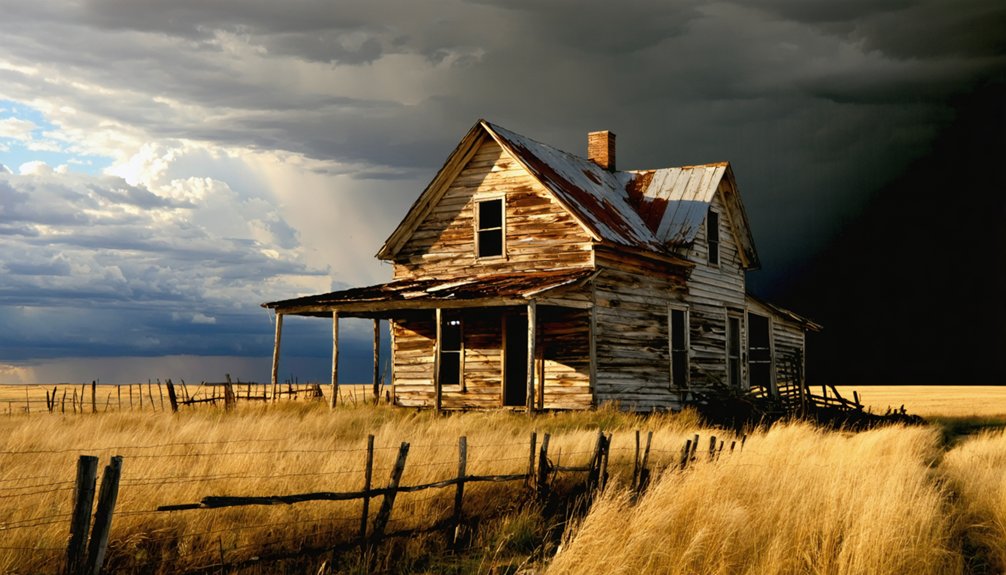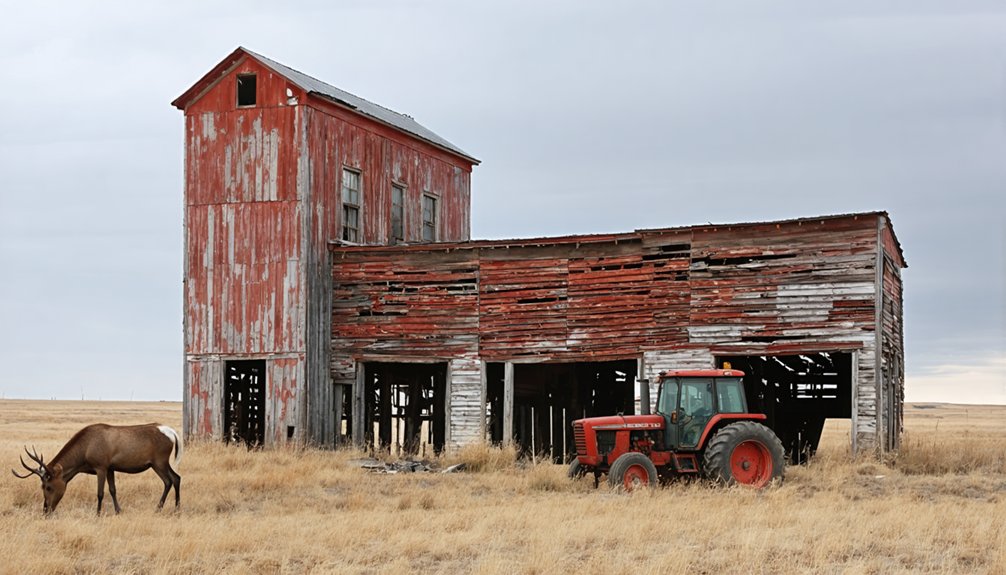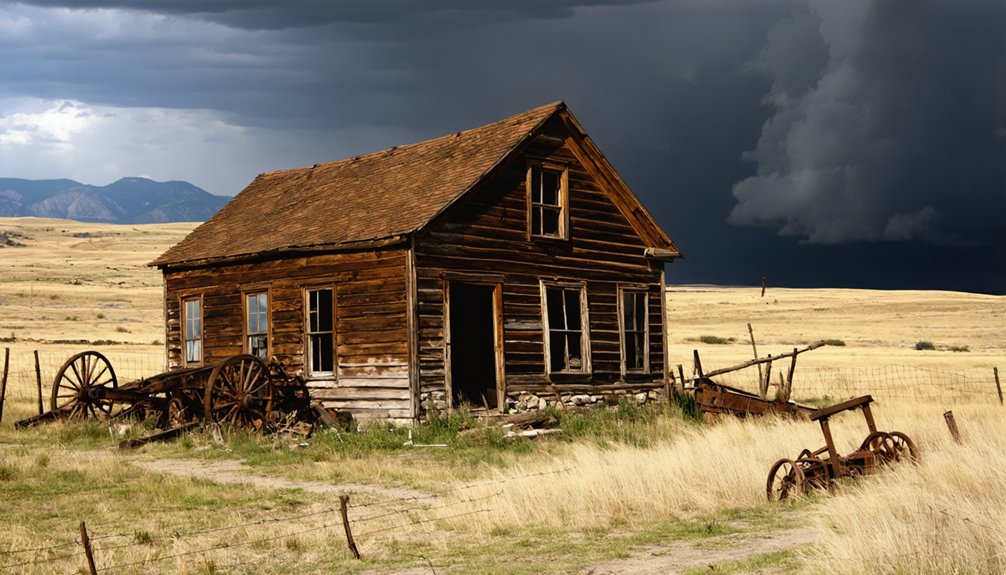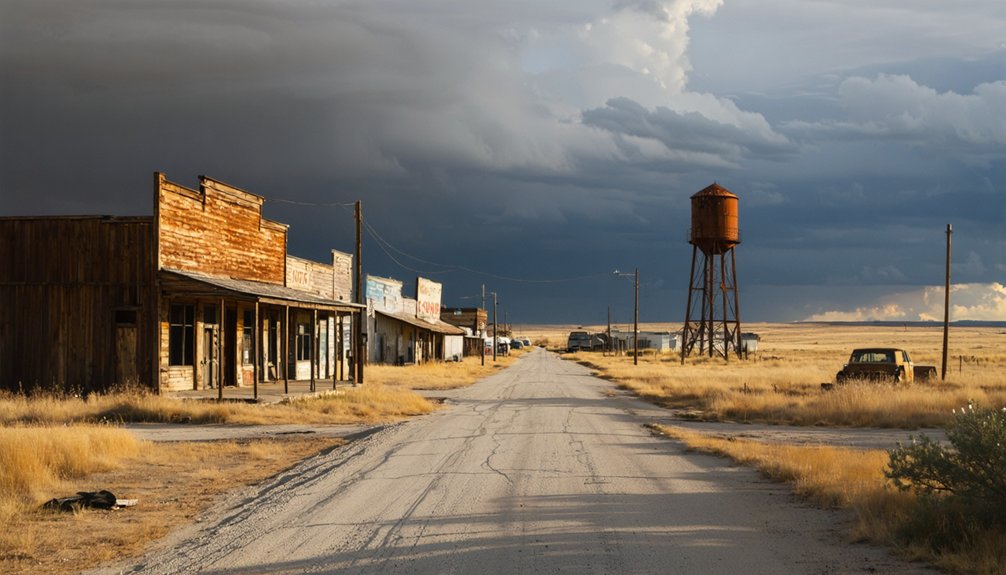
Eureka, South Dakota isn’t technically a ghost town, but it carries that same haunting energy that makes ghost towns so irresistible to road trippers. With a population of just 813, this once-thriving community served as the world’s greatest primary wheat market from 1887 to 1902, shipping millions of bushels across the country. You’ll find remnants of that remarkable past scattered throughout town, and there’s far more to this story than first meets the eye.
Key Takeaways
- Eureka, South Dakota, with a population of 813, isn’t an official ghost town but carries a haunting energy that attracts road trippers.
- From 1887 to 1902, Eureka was the world’s greatest primary wheat market, processing over 4 million bushels annually through 42 elevators.
- Historical markers, grain elevator remnants, and the original railroad path offer compelling stops throughout the town.
- The annual Eureka Fest celebrates German-Russian heritage with authentic kuchen, knoephla, and traditional music performances.
- Combine Eureka with nearby McPherson County ghost towns and scenic railroad corridors for a richer historical road trip experience.
Is Eureka, South Dakota Actually a Ghost Town?
When you hear “ghost town road trip,” you might picture tumbleweeds rolling through empty streets and abandoned buildings slowly recumbing to the prairie wind — but Eureka, South Dakota isn’t quite that story.
Eureka’s population registered 813 residents in the 2020 census, meaning it technically doesn’t hold official ghost town status. Yet the town carries that haunting, hollowed-out energy that draws road trippers chasing forgotten American history.
With 813 residents still calling it home, Eureka defies ghost town labels — yet its hollowed-out soul tells a different story.
It once ruled as the world’s greatest primary wheat market from 1887 to 1902, shipping thousands of freight cars annually. Today, that extraordinary economic thunder has faded into quiet prairie stillness.
You’re not visiting a completely abandoned settlement — you’re exploring a living community that wears its dramatic decline openly, making it arguably more captivating than any crumbling ghost town.
How Eureka Became the World’s Greatest Wheat Market
Few origin stories unfold as fast as Eureka’s rise to agricultural dominance. When the railroad arrived in 1887, Germans from Russia brought their wheat production expertise, transforming raw prairie into an economic powerhouse.
By 1892, Eureka’s economic impact reshaped global grain markets.
Here’s what that dominance looked like:
- 42 elevators processed over 4 million bushels annually
- 3,300 freight-car loads of wheat shipped in a single year
- 32 grain buying concerns operated around the clock
Between 1887 and 1902, Eureka earned recognition as the world’s greatest primary wheat market. Milwaukee Railroad considered it their most profitable station.
You’re fundamentally walking ground where immigrant farmers redefined global agriculture — that’s not a footnote in history, that’s the headline.
Eureka’s Historical Markers, Elevators, and Heritage Sites Worth Stopping For
Scattered across Eureka’s modest grid, historical markers and remnants of grain elevators anchor you directly to the town’s improbable legacy as the world’s wheat capital.
Follow the original railroad path to locate the former town site of St. Petersburg, where predecessor settlers first broke ground before Charles Pfeffer’s lot sales redirected everything westward.
Elevator history runs deep here — at peak operation, 42 elevators processed over four million bushels annually, and traces of that infrastructure still frame the landscape.
Heritage preservation stays alive through local collectors, cultural keepers, and the annual Eureka Fest, where kuchen and knoephla remind you who actually built this place.
Stop at the original plat site markers, read the signage carefully, and let the sheer scale of what happened here settle in.
When to Visit Eureka, South Dakota and What Eureka Fest Offers
Timing your visit around Eureka Fest transforms an already rewarding stop into something genuinely memorable. This annual celebration honors the German-Russian roots that shaped this community, giving you direct access to living cultural traditions you won’t find anywhere else.
Timing your visit around Eureka Fest turns a rewarding stop into something genuinely unforgettable.
Eureka Fest delivers three experiences worth planning around:
- Authentic food — taste kuchen and knoephla prepared using generations-old recipes.
- Musical heritage — hear traditional German-Russian music kept alive by local collectors and performers.
- Community storytelling — connect with residents who carry firsthand knowledge of immigrant history.
Outside festival season, Eureka remains accessible and worth exploring, but Eureka Fest concentrates everything into one vibrant window.
You’ll leave understanding why these cultural traditions survived the harsh prairie and why this small town still commands attention.
Nearby Stops Worth Adding to Your Eureka, South Dakota Road Trip
Eureka rewards you with a full day of history and culture, but the surrounding region adds even more depth to your route.
The nearby attractions surrounding McPherson County include the legendary Black Hills ghost towns, where abandoned mining settlements tell stories of boom-and-bust cycles that rival Eureka’s own dramatic arc.
You’ll drive scenic routes through rolling prairie that stretches toward the North Dakota border, revealing landscapes largely unchanged since German-Russian settlers first broke the sod.
Historical markers along old railroad corridors connect the region’s agricultural past, letting you trace the wheat trade’s golden era across multiple stops.
Combining Eureka with these surrounding destinations transforms a single-town visit into a richly layered road trip through one of the Great Plains’ most overlooked historical corridors.
Frequently Asked Questions
What Is the Current Population of Eureka, South Dakota Today?
You’ll find Eureka’s current demographics show a population of 813, based on the 2020 census. Population trends reveal this small South Dakota gem retains its proud German-Russian heritage while welcoming curious road trippers seeking freedom.
Who Originally Homesteaded the Land Before Eureka Was Established?
A.G. Bernard’s homesteading history shaped Eureka’s destiny! He was among the early settlers who claimed the Southwest quarter of Section 35, sold his land to the Milwaukee Land Co., and inspired the town’s triumphant name.
What Does the Greek Word “Eureka” Actually Mean in English?
Discover deep Greek Etymology — “Eureka” excitedly exclaims “I have found it!” You’ll appreciate the Eureka Significance when you know Milwaukee Land Co. deliberately chose this declaration to celebrate A.G. Bernard’s land discovery in 1887.
What Traditional Foods Are Served at the Annual Eureka Fest Celebration?
At Eureka Fest, you’ll savor traditional dishes bursting with local flavors, including kuchen, a beloved German pastry, and knoephla, a hearty dumpling soup — authentic tastes that beautifully honor the community’s rich German-Russian heritage and culinary traditions.
Which Highways Provide the Best Access Routes to Eureka, South Dakota?
You’ll find scenic routes through McPherson County’s highways near the North Dakota border leading you straight to Eureka. These roads pass historical landmarks, making your drive as adventurous and freedom-filled as the destination itself!
References
- https://inaroundmag.com/local/a-ghost-town-named-eureka/
- https://www.eurekasd.com/our-community
- https://en.wikipedia.org/wiki/List_of_ghost_towns_in_South_Dakota
- https://www.blackhillsbadlands.com/blog/post/old-west-legends-mines-ghost-towns-route-reimagined/
- https://en.wikipedia.org/wiki/Eureka
- https://www.youtube.com/watch?v=3KygZ2LvYiQ
- https://www.youtube.com/watch?v=MgU5jAsyGiw