Planning a ghost town road trip to Farlington, Kansas starts with a two-hour drive southeast from Kansas City via US-69 into Crawford County. You’ll find coal-era ruins, an abandoned railroad depot, weathered cemeteries, and crumbling mine remnants scattered across the prairie. Visit in spring or fall for the best conditions. Farlington also connects to a 200-mile loop hitting nearby ghost towns like Saffordville and Morse — and there’s far more to uncover ahead.
Key Takeaways
- Farlington is located in Crawford County, Kansas, roughly two hours from Kansas City via I-435 south and US-69.
- Visit during spring or fall to enjoy mild temperatures, wildflowers, or foliage while avoiding summer heat and rattlesnakes.
- Key attractions include abandoned mine shafts, a decaying railroad depot, schoolhouse foundations, and a mining-era cemetery.
- Most structures sit on private land, so keep explorations roadside and respect all posted No Trespassing signs.
- Extend your trip with a 200-mile loop connecting nearby ghost towns like Saffordville, Valley Brook, and Morse.
Why Farlington Is Worth the Drive?
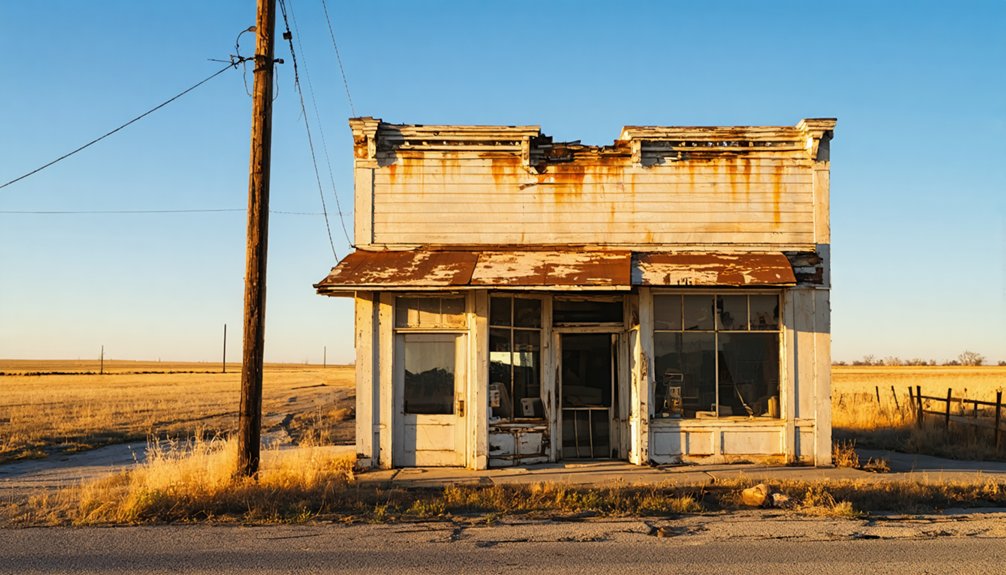
Though it’s easy to dismiss a near-ghost town as just another forgotten dot on the map, Farlington, Kansas, pulls you in with a raw, unfiltered story of boom and collapse that few places still tell so visibly. Founded during the late 1800s coal rush in Crawford County, it once hummed with thousands of residents before post-war mine closures gutted its economy entirely.
You’ll find its historical significance etched into crumbling schoolhouse foundations, a silent railroad depot, and graves that predate your grandparents’ births. Local legends of miners lost in collapsed shafts still drift through the surrounding prairie.
This isn’t a polished heritage site — it’s an open-air record of ambition, hard labor, and eventual abandonment. That honesty makes Farlington worth every mile you drive.
How to Reach Farlington From Kansas City?
From Kansas City, the drive to Farlington runs roughly two hours and cuts straight through the heart of southeast Kansas. Your route options keep it simple: jump on I-435 south, merge onto US-69, and ride it straight into Crawford County’s open terrain.
- Fuel up in Pittsburg before heading into sparse stretches where stations disappear.
- Travel tips: avoid summer months when temperatures push past 90°F and roads bake.
- Take K-7 east after Pittsburg to connect with quieter backroads near the site.
- Link the Flint Hills Trail into your return leg for a fuller ghost town loop.
The landscape shifts gradually from suburban sprawl to rolling prairie, and that change itself signals you’re leaving the ordinary behind.
What’s Left To See in Farlington Today?
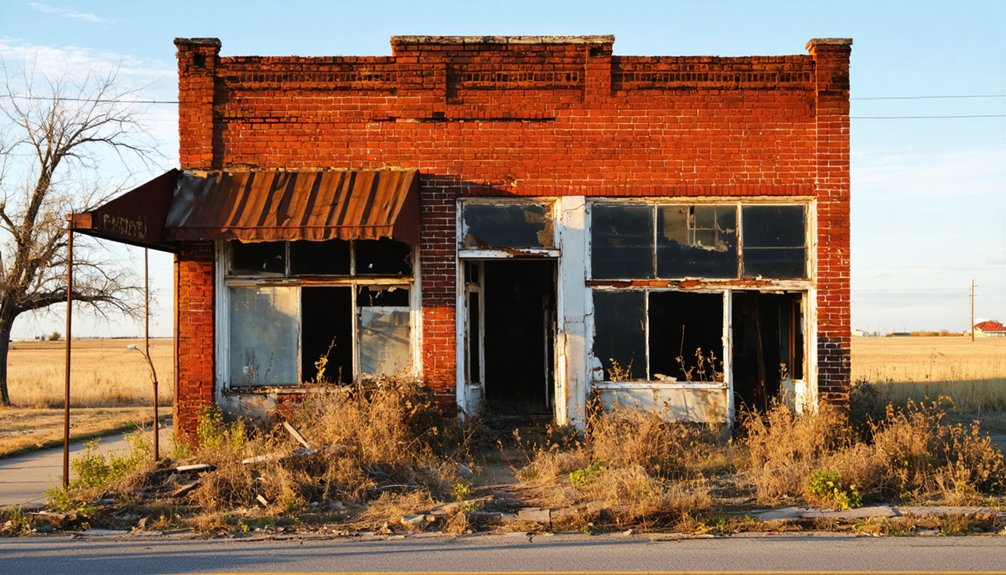
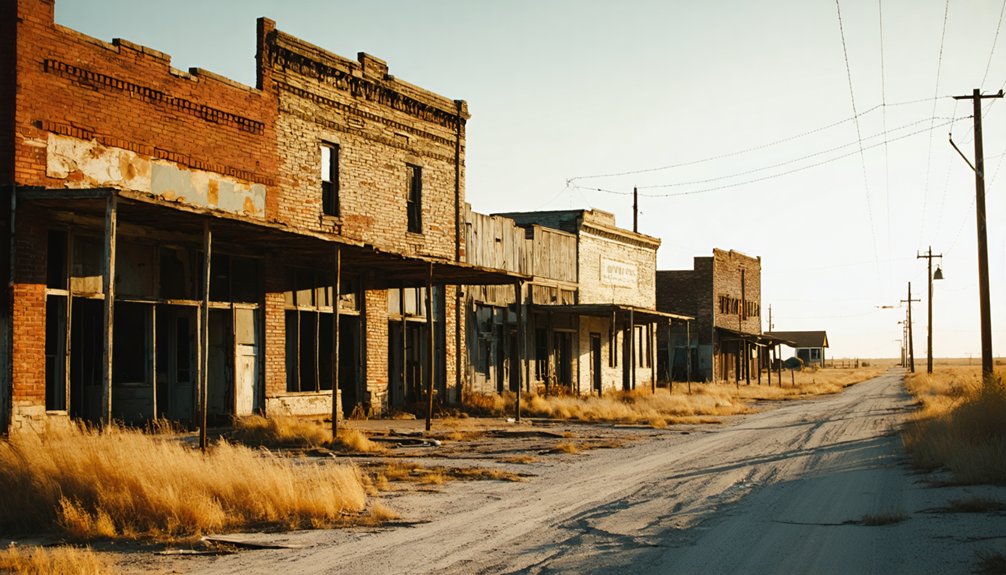
When you arrive in Farlington, you’ll find a haunting landscape where the coal boom’s legacy lingers in crumbling foundations and rusted remnants.
You can spot abandoned mine shafts, tipple ruins, and the skeletal outlines of a schoolhouse and church, each structure whispering the town’s industrial past.
Along the old Missouri Pacific rail corridor, the depot’s decaying frame still stands as a quiet monument to the era when coal and commerce ruled Crawford County.
Surviving Structures And Ruins
While Farlington’s coal-fueled heyday is long gone, the town’s skeletal remains still reward curious visitors with tangible echoes of its industrial past.
You’ll find abandoned buildings scattered across the landscape, each carrying real historical significance for those willing to look closely.
Explore these surviving remnants from the road:
- Coal mine shafts and tipples — ghostly iron structures rising from the prairie
- Schoolhouse and church foundations — stone outlines marking where community life once thrived
- Missouri Pacific railroad depot remnants — rusted rails tracing forgotten commerce routes
- Mining-era cemetery — weathered headstones honoring workers who built this town
You won’t need a guided tour to feel the weight of history here.
Just slow down, scan the horizon, and let Farlington speak for itself.
Mining Era Remnants
Farlington’s most compelling souvenirs aren’t postcards — they’re the rusted iron tipples and half-collapsed mine shafts still jutting from the Kansas prairie like industrial tombstones.
These remnants carry serious historical significance, marking where early twentieth-century miners used room-and-pillar mining techniques to extract the coal that once powered this entire region.
You’ll spot scattered shaft openings and deteriorating equipment foundations if you scan the roadsides carefully.
The Missouri Pacific railroad depot ruins nearby remind you how that extracted coal moved eastward to fuel industrial America.
Each crumbling structure tells a labor story most textbooks skip.
Stay road-side — private property boundaries are real, and rattlesnakes claim the ruins now.
Shoot your photos at dawn when the light turns that oxidized iron a deep, burning amber.
Property Lines and Posted Signs: Exploring Farlington Without Getting Fined
Much of Farlington’s haunting landscape sits on private land, so you’ll need to keep your exploration road-side and resist the pull of those crumbling foundations just beyond the fence line.
You can still capture stunning views of the mine remnants and schoolhouse ruins without crossing a single property boundary.
Watch carefully for posted No Trespassing signs, because violations carry real fines that’ll sour an otherwise unforgettable road trip.
Respecting Private Property Boundaries
Exploring Farlington means traversing a landscape where most of the crumbling structures and overgrown lots you’re keen to photograph sit on privately owned land.
Practicing solid property etiquette and boundary awareness keeps your adventure legal and preserves access for future visitors.
- Watch for posted No Trespassing signs, which carry legal weight in Kansas.
- Shoot from public roads using a telephoto lens to capture distant ruins safely.
- Never cross fence lines, even when structures appear abandoned and unmonitored.
- If you’re uncertain about boundaries, default to staying on the roadside shoulder.
Respecting these lines isn’t just about avoiding fines — it’s about honoring the landowners who’ve quietly coexisted alongside Farlington’s decay for generations.
Your freedom to explore depends entirely on that mutual respect.
Reading Posted No-Trespassing Signs
Kansas law gives posted No Trespassing signs real teeth, so you’ll want to recognize them before you’re already standing on the wrong side of a property line. In Farlington, signs appear on fence posts, rusted gates, and weathered wooden stakes driven into overgrown fields. They’re not decorative—they’re legal boundaries with real fines attached.
Ghost town etiquette demands you treat every posted sign as a hard stop, not a suggestion. Property boundary awareness means scanning ahead before you exit your vehicle, not after your boots are already in someone’s pasture.
Purple paint on fence posts carries the same legal weight as a traditional sign in Kansas, so learn that marker.
Stay road-side, use your zoom lens, and keep your freedom intact.
Spring vs. Fall: When Farlington’s Ruins Are Worth the Drive
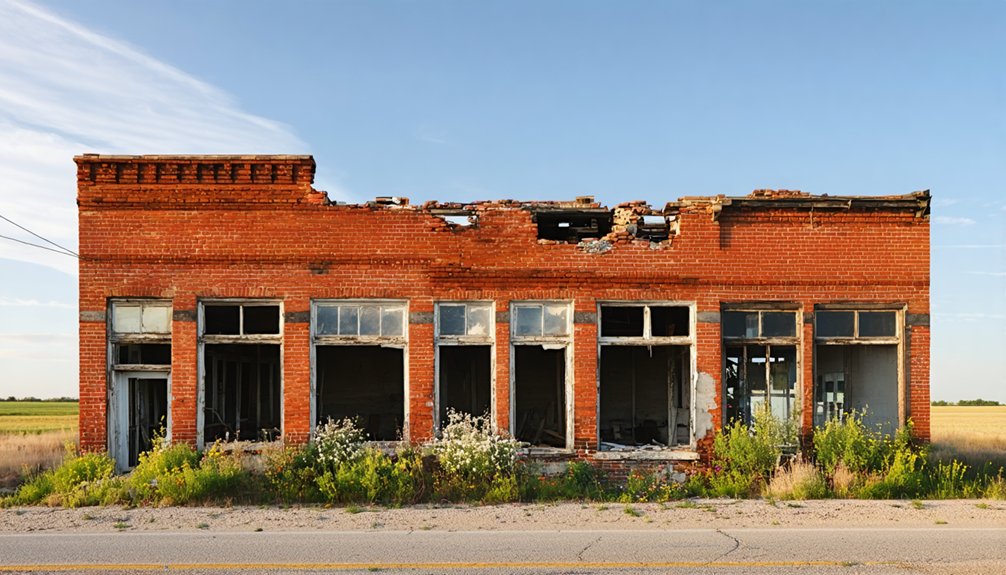
Timing your visit to Farlington’s crumbling remnants can mean the difference between a rewarding road trip and a sweaty, miserable slog through southeast Kansas. Summer temperatures routinely exceed 90°F, making exploration genuinely punishing.
Spring blooms and fall foliage bracket the ideal visiting windows, each offering distinct rewards:
Spring and fall bookend the best of Farlington — wildflowers and golden foliage rewarding those who time their visit wisely.
- Spring (April–May): Wildflowers soften the ruins, morning light hits mine tipples dramatically, and temperatures stay mild.
- Fall (September–October): Fall foliage frames the schoolhouse foundations beautifully, crowds thin considerably, and golden-hour photography becomes effortless.
- Both seasons: Rattlesnake activity remains manageable, and prairie hiking feels genuinely pleasant.
- Avoid: July and August unless you enjoy suffering.
You’ll experience Farlington most authentically when nature cooperates rather than fights you every step through the ruins.
Nearby Ghost Towns That Turn Farlington Into a Full Weekend Route
Farlington earns its place as a road trip anchor, but the ghost towns scattered across southeast Kansas transform a single-afternoon detour into a full weekend loop worth planning around.
Start your weekend itinerary at Le Hunt, 60 miles northeast, where cement factory ruins rise dramatically from the landscape. Push 100 miles west to Saffordville, a flood-erased settlement that’s little more than memory and open sky.
Valley Brook and Morse round out your ghost town exploration with fading farmsteads and mechanized-decline remnants stretching northwest and north. Together, these stops create a 200-mile loop connecting collapsed industries, forgotten communities, and raw Kansas prairie.
You’re not just visiting ruins — you’re tracing the economic forces that shaped and ultimately abandoned an entire region.
Frequently Asked Questions
Are There Guided Tours Available for Farlington’s Abandoned Mining Sites?
You won’t find guided tours at Farlington’s mining heritage sites. You’ll explore this ghost town history solo, viewing abandoned shafts from roads, respecting private property boundaries, and soaking in the raw, untamed freedom of Kansas’s forgotten past.
What Wildlife Besides Rattlesnakes Might Visitors Encounter Near Farlington’s Ruins?
Like silent sentinels reclaiming lost land, you’ll spot deer, coyotes, and hawks amid local flora. Birdwatching opportunities thrive here—warblers and meadowlarks sing freely through Farlington’s crumbling ruins, nature’s untamed spirit filling every forgotten corner.
Can Drones Legally Be Used to Photograph Farlington From Above?
You’ll need to research drone regulations carefully before capturing aerial photography over Farlington. Since private property dominates the area, always secure landowner permission first—federal FAA rules also apply, so fly responsibly and respectfully.
Is Crawford State Park’s Campground Reservable in Advance Online?
Crawford State Park’s campground reservation policies aren’t confirmed in our knowledge base, so you’ll want to check Kansas State Parks’ official website directly to explore campground amenities and secure your freedom-fueling basecamp before exploring Farlington’s haunting ruins.
Have Any Farlington Structures Been Officially Designated as Historical Landmarks?
The available knowledge doesn’t confirm any official historical landmark designations for Farlington’s structures. You’ll find its historical significance lies in raw, unpolished ruins, where preservation efforts remain minimal, leaving you free to witness authentic, untamed decay firsthand.
References
- https://www.youtube.com/watch?v=dy7nLwjHkbY
- https://www.visitgck.com/eminence-and-ravanna-the-story-of-finney-countys-ghost-towns/
- https://everafterinthewoods.com/abandoned-ghost-towns-in-kansas-that-still-hold-stories-of-the-past/
- https://www.youtube.com/watch?v=8dtIPX7pIqI
- https://abandonedkansas.wordpress.com/category/ghost-towns/
- https://www.youtube.com/watch?v=KBXINX0xqnU
- https://kids.kiddle.co/List_of_ghost_towns_in_Kansas
- https://legendsofkansas.com/jackson-county-extinct-towns/