If you’re planning a ghost town road trip to Carrollton, Iowa, you’re stepping into a place frozen in time. Once Carroll County’s thriving seat of power, Carrollton lost everything when the Northwestern Railroad bypassed it in 1867, triggering a mass exodus that left only a store, post office, and blacksmith shop standing. The Carroll County Historical Society’s annual bus tour makes exploring Carrollton and three other forgotten towns easy, and there’s much more to this haunting story ahead.
Key Takeaways
- Carrollton, Iowa, a former county seat, lost its status in 1867 when the Northwestern Railroad bypassed it, shifting power to nearby Carroll.
- Today, Carrollton retains a store, post office, and blacksmith shop, offering visitors an authentic, unpolished glimpse into its historical past.
- The Carroll County Historical Society hosts an annual bus tour covering Carrollton and three other ghost towns for $20 per ticket.
- Tickets must be purchased in person at the Carroll Chamber of Commerce or Carroll County Museum, with no online sales available.
- The tour departs from the Carroll County Museum at 1 p.m., returns around 4:30 p.m., and includes refreshments at the end.
Why Carrollton Lost Its Place as Carroll County Seat
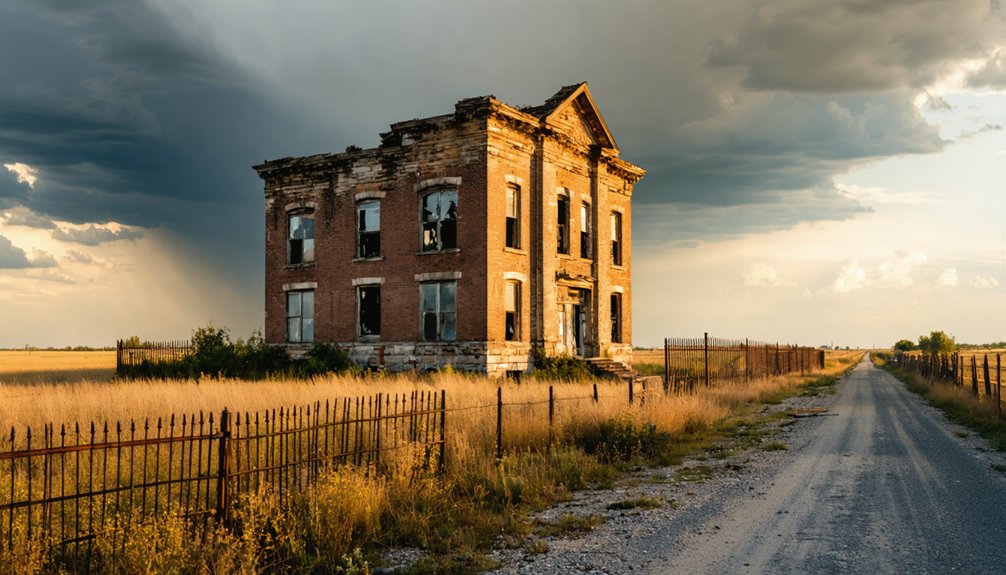
Carrollton once held the distinction of being Carroll County’s seat of government, but it lost that status when the Northwestern Railroad bypassed it in 1867. That single infrastructure decision reshaped the entire region’s future.
When the railroad chose a different path, economic power and political influence followed the tracks, pulling everything toward the newly energized town of Carroll.
Understanding Carrollton history means recognizing how quickly a county seat could lose its relevance once commerce shifted elsewhere. Without rail access, residents had no reason to stay, businesses couldn’t thrive, and growth simply stopped.
The town that once represented Carroll County’s civic center faded into a quiet trading point, then into near obscurity.
Once a proud civic center, Carrollton slowly faded — first into a quiet trading post, then into near obscurity.
You’re now free to explore what remains of a community that progress left behind.
How Carrollton Went From County Seat to Forgotten Town
Once the Northwestern Railroad laid its tracks in 1867, Carrollton’s fate as Carroll County seat was sealed, with the county’s power and commerce shifting toward the newly connected town of Carroll.
You can almost picture the slow exodus that followed — businesses closing, residents packing up, the once-promising town quietly surrendering its relevance.
What had been a functioning county seat gradually faded into a sparse collection of structures, its ambitions outpaced by the iron rails that bypassed its future.
Railroad Shifts County Seat
When the Northwestern Railroad laid its tracks through Carroll County in 1867, it didn’t just reshape transportation — it rewrote the region’s political geography entirely.
The railroad impact was immediate and brutal for Carrollton. Power followed the rails, and the rails didn’t run through Carrollton.
Carroll, positioned along the new line, quickly absorbed the economic energy that Carrollton once commanded. Officials recognized where growth was heading and shifted the county seat to Carroll, stripping Carrollton of its administrative identity almost overnight.
You can imagine the slow deflation — businesses reconsidering, residents weighing their options, the quiet realization that momentum had permanently shifted elsewhere.
Carrollton didn’t disappear instantly, but losing its county seat status set an irreversible course toward the forgotten landscape you can explore today.
Slow Decline After Railroad
Losing a county seat doesn’t kill a town outright — it just starts the clock. After Carroll claimed the courthouse and the railroad’s momentum, Carrollton simply… lingered.
The railroad impact reshaped everything — commerce, migration, opportunity — and none of those currents ran through Carrollton anymore. Businesses that once served a county seat’s foot traffic had no reason to stay competitive. Economic shifts pulled residents toward Carroll, where the future was arriving daily by rail.
Carrollton kept functioning as a modest trading point, but functioning isn’t the same as thriving. No surge of growth came. No reinvention saved it. The town incorporated in 1880, elected D.J. McDougal its first mayor, and quietly accepted its diminished role — a community running on memory more than momentum.
What’s Left Standing in Carrollton Today
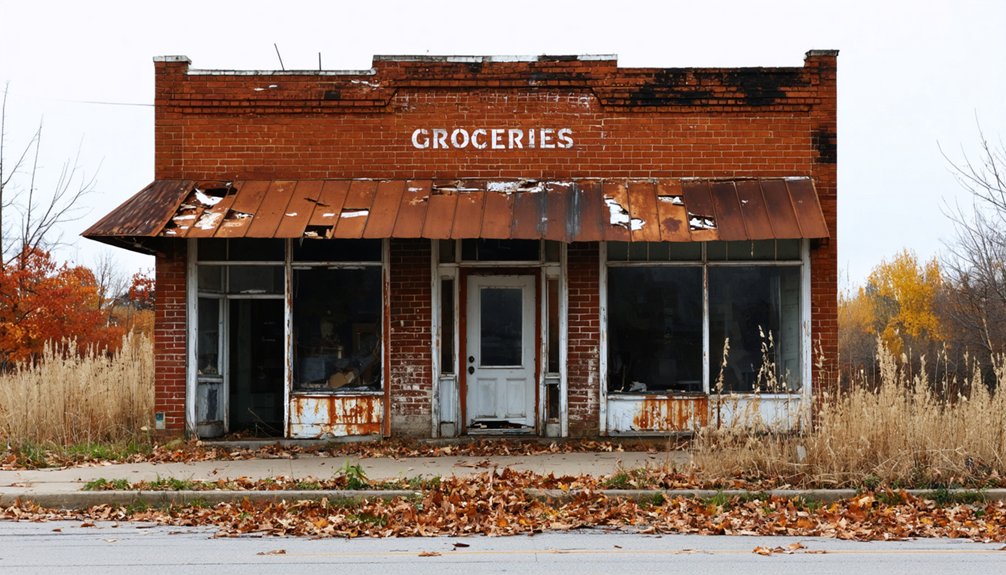
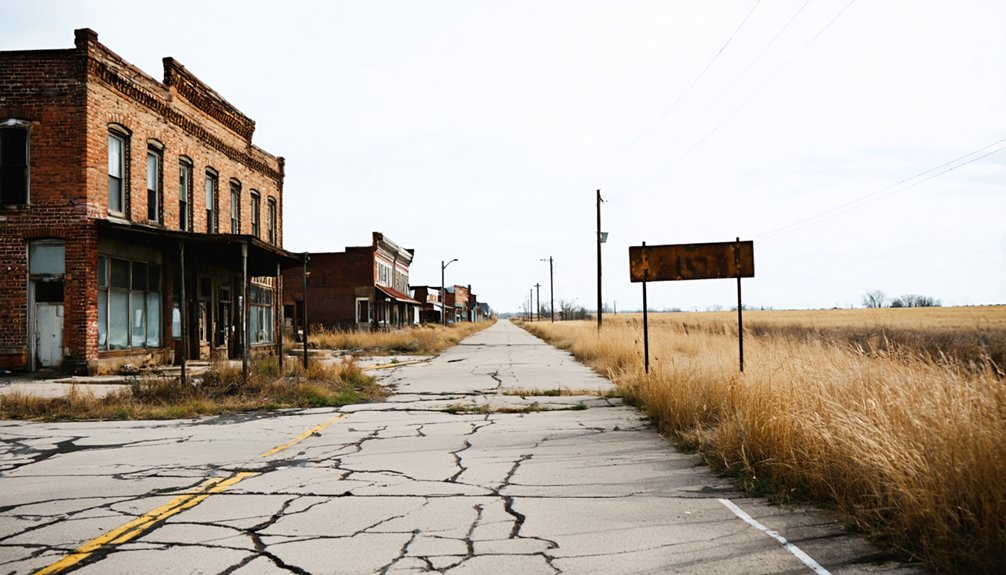
Though time has stripped Carrollton down to its bones, a handful of structures still hold their ground. You’ll find a store, a post office, a blacksmith shop, and a few scattered residences still standing as quiet reminders of Carrollton Heritage.
Many of the original homes didn’t stay put — locals hauled them off for use as stables and outbuildings, leaving behind only fragments of a once-active community.
Walking among these Abandoned Structures, you’re stepping through layers of forgotten daily life. There’s no grand preservation effort here, no polished museum exhibit — just raw, weathered remnants that speak honestly about rural Iowa’s past.
Carrollton doesn’t dress itself up, and that’s exactly what makes it worth visiting. You’ll see the town exactly as history left it.
Which Other Forgotten Towns Does the Carroll County Tour Visit?
Carrollton may be the final stop on the Carroll County Historical Society’s ghost town bus tour, but it’s far from the only forgotten community you’ll explore.
The tour uncovers abandoned places that once buzzed with commerce, ambition, and daily life. Three other stops round out these forgotten histories:
- Hillsdale – a vanished settlement swallowed by surrounding farmland
- Tip Top – once a thriving community, now reduced to memory
- Browning – another lost town reclaimed by the rural landscape
Each stop reveals stories of people and businesses that shaped Carroll County before disappearing entirely.
You’re not chasing supernatural legends here — you’re discovering the real, raw history of communities that simply faded away. That distinction makes the experience genuinely moving.
What Other Carroll County Ghost Towns Disappeared Like Carrollton?
Carroll County’s ghost town story doesn’t end with Carrollton — several other communities followed the same quiet path toward obscurity.
Rockville once thrived as a trading point with mills and stores before fading into forgotten legacies.
Buckhorn shrank down to a cemetery, church, and creamery — bare bones of a community that once had ambitions.
Stiles carried a population of 100 back in 1858, supporting stores, mills, and a blacksmith, yet it vanished just the same.
Stanzel holds onto a few houses, a church, and a building along Highway 92, breathing rural nostalgia into its last surviving structures.
Each town mirrors Carrollton’s trajectory — railroads shifted, economies moved, and people followed.
You’re not just visiting ghost towns; you’re witnessing how entire communities quietly surrendered to time.
How Do You Join the Carroll County Ghost Town Bus Tour?
Knowing these ghost towns existed is one thing — actually walking their forgotten ground is another experience entirely.
The Carroll County Historical Society hosts this annual bus tour, connecting you directly to ghost town legends and historical significance hiding in plain sight.
Here’s how to secure your spot:
- Purchase your $20 ticket at the Carroll Chamber of Commerce on W. 5th Street or the Carroll County Museum on Highway 30.
- Arrive at the museum before the 1 p.m. departure.
- Expect roughly 3.5 hours exploring four forgotten communities, finishing at Carrollton by 4:30 p.m.
Space fills fast, so don’t wait.
This tour delivers authentic Iowa history you won’t find anywhere else.
Where the Tour Starts and How to Get There
You’ll start your ghost town adventure at the Carroll County Museum on Highway 30, where the bus departs promptly at 1 p.m.
Before tour day, you can grab your $20 ticket at either the museum or the Carroll Chamber of Commerce on W. 5th Street.
Highway 30 serves as your primary route in, making the museum easy to find whether you’re coming from inside Carroll County or beyond.
Tour Departure Location
Before you hit the road, there’s one key starting point to lock in: the Carroll County Museum on Highway 30. This is where the tour logistics come together, and knowing the details keeps you moving freely:
- Departure timing: The bus rolls out at 1 p.m. sharp, returning around 4:30 p.m.
- Tickets: Grab yours at the Carroll Chamber of Commerce on W. 5th Street or directly at the museum for $20.
- Space: It’s limited, so secure your spot early.
Highway 30 is your anchor point, making navigation straightforward whether you’re driving in from Carroll or passing through the region.
Show up ready, because this three-and-a-half-hour journey into Carroll County’s forgotten past won’t wait.
Ticket Purchase Options
Securing your spot starts with two straightforward options: stop by the Carroll Chamber of Commerce on W. 5th Street or head directly to the Carroll County Museum on Highway 30, where tickets run $20 per person.
The ticketing process is simple and direct, giving you flexibility based on your schedule. Note that online purchases aren’t currently available, so you’ll want to plan ahead and grab your ticket in person before the tour sells out.
This event’s popularity means spots disappear quickly, and it’s been repeated for several years precisely because demand stays strong.
Whether you’re swinging by downtown Carroll or stopping at the museum along Highway 30, securing your ticket early guarantees you won’t miss your chance to explore these forgotten communities firsthand.
Highway 30 Access
Highway 30 cuts straight through Carroll County like a reliable old road map, and that’s exactly where your ghost town adventure begins. The Carroll County Museum sits right on Highway 30, serving as your launch point for rural exploration into forgotten communities.
Getting there’s straightforward:
- Navigate directly to Highway 30 in Carroll
- Locate the Carroll County Museum along the highway
- Arrive before the 1 p.m. departure to secure your spot
You’ll board the bus here, leaving civilization’s familiar edges behind as you chase ghost town legends across the county’s back roads.
Highway 30 connects you seamlessly to this curated journey without complicated detours. The road doesn’t just deliver you to history—it frames the entire experience from the moment you arrive.
How Much Are Tickets and Where Do You Buy Them?
Tickets for the ghost town bus tour cost $20 per person, and you can pick them up at either the Carroll Chamber of Commerce on W. 5th Street or directly at the Carroll County Museum on Highway 30.
Both purchase locations offer convenient options depending on where your road trip takes you first. Keep in mind that space is limited, and this tour has proven popular enough to repeat for several years running.
Don’t wait too long to secure your spot. The bus departs the museum at 1 p.m., winds through approximately 3.5 hours of forgotten history, and returns by 4:30 p.m.
For $20, you’re getting direct access to vanished communities, untold stories, and a rare look at Carroll County’s buried past.
What to Expect on the Carroll County Ghost Town Bus Tour
Once you’re on the bus, you’ll spend roughly 3.5 hours moving through Carroll County’s forgotten corners, hitting four stops total — Hillsdale, Tip Top, Browning, and finally Carrollton. Each stop unpacks ghost town significance differently, revealing how communities rise, stall, and vanish.
Three and a half hours, four ghost towns, one county’s forgotten story unfolding stop by stop.
Expect the tour to cover:
- The histories of people and businesses tied to each location
- Carrollton history, including its railroad-era shift and slow decay
- Remaining structures like the store, blacksmith shop, and scattered residences
Carrollton closes the tour, and the Carroll County Historical Society ends it right — the Carrollton Community Heritage Club serves refreshments there.
You’ll leave understanding these towns weren’t just dots on old maps; they were living places that simply ran out of momentum.
Frequently Asked Questions
Who Provides Refreshments at the Carrollton Ghost Town Tour Finale?
You’ll find the Carrollton Community Heritage Club serving up refreshment options as local vendors at the tour’s finale, wrapping your ghost town adventure with a warm, welcoming taste of community spirit and Iowa hospitality.
What Was D.J. Mcdougal’s Role in Carrollton’s Incorporation History?
When Carrollton incorporated in 1880, you’ll find D.J. McDougal’s Contributions shaped its foundation as the town’s first mayor. His Historical Significance lies in leading a community that, despite its ambitions, ultimately faded into Iowa’s ghostly past.
Are Relocated Carrollton Houses Still Visible as Rural Outbuildings Today?
You’ll spot some of Carrollton’s relocated houses still standing as rural outbuildings, breathing life into the region’s rural history. These abandoned structures quietly dot surrounding farmsteads, offering you tangible, evocative connections to a vanished community’s forgotten everyday existence.
Has the Carroll County Ghost Town Bus Tour Sold Out Previously?
Yes, the Carroll County ghost town bus tour’s limited space has made tour availability tight! You’ll want to grab your $20 ticket early at the Chamber of Commerce before this popular Carrollton ghost adventure sells out completely.
Does the Tour Explore the Personal Histories of Carrollton’s Residents?
You’ll uncover personal narratives and community memories as the tour actively explores the histories of people and businesses behind Carroll County’s vanished towns, breathing vivid life into forgotten souls who once shaped these communities.
References
- https://www.thevintagenews.com/2015/12/30/10-abandoned-and-creepy-ghost-towns-in-iowa/
- https://www.1380kcim.com/2024/09/28/carroll-county-historical-society-hosts-ghost-town-tour-oct-6/
- https://reformedjournal.com/2019/07/05/ghost-town-legacy/
- https://pubs.lib.uiowa.edu/annals-of-iowa/article/id/6960/download/pdf/
- https://genealogytrails.com/iowa/carroll/town_info.htm