To plan your ghost town road trip to Forest City, Utah, drive up American Fork Canyon to Dutchman Flat, four miles northeast of Tibble Fork Reservoir. This silver boomtown once drew 3,000 miners before abandonment by 1880. You’ll find a haunting graveyard, Sultana Smelter ruins, and miner-carved trees scattered across the alpine wilderness. Check road conditions before you go, since access typically opens late May. Everything you need to explore this forgotten mountain ruin is just ahead.
Key Takeaways
- Forest City, Utah, is a silver mining ghost town in American Fork Canyon, abandoned by 1880, featuring graves, smelter ruins, and carved trees.
- Access Dutchman Flat by driving up American Fork Canyon to reach the ghost town, located four miles northeast of Tibble Fork Reservoir.
- Roads to Dutchman Flat typically open late May or early June; check Uinta-Wasatch-Cache National Forest for current road conditions before visiting.
- Pack sturdy boots, trekking poles, layered clothing, water, and navigation tools to safely explore the rugged alpine terrain surrounding Forest City.
- Extend your trip by visiting Tibble Fork Reservoir, watching wildlife, and exploring historical silver-boom trails throughout American Fork Canyon.
What Was Forest City, Utah?
Once nestled high in the alpine forests of American Fork Canyon, Forest City was a silver mining boomtown that blazed to life in the 1868-69 period, drawing hundreds of permanent residents and thousands of transient fortune-seekers to Utah’s rugged mountain terrain.
At its peak in 1871, roughly 150 people called it home, with estimates suggesting up to 3,000 transients passing through chasing silver dreams. The town boasted hotels, sawmills, general stores, and the massive Sultana Smelter employing 250-300 men.
But fortune proved fleeting. Depleted ore veins, brutal terrain, and failed infrastructure gutted the economy by the mid-1870s. By 1880, Forest City stood completely deserted.
Today, it’s a ghost town inviting you to explore what ambition and wilderness once built together.
Where Exactly Is Forest City Ghost Town Located?
You’ll find Forest City tucked deep within American Fork Canyon in Utah County, perched high in the rugged alpine terrain that once lured silver-hungry miners in the late 1860s.
The ghost town sits in Dutchman Flat valley, about four miles northeast of Tibble Fork Reservoir, where the mountains crowd close and the air still carries the silence of abandonment.
Today, the entire site falls within the boundaries of Uinta National Forest, just over the mountain from Alta’s famous ski runs, reminding you that wilderness has long since reclaimed what ambition built.
American Fork Canyon Setting
Tucked high in American Fork Canyon within Utah County’s Uinta National Forest, Forest City sits in a valley called Dutchman Flat, roughly four miles northeast of Tibble Fork Reservoir.
You’re just over the mountain from Alta’s famous ski runs, yet you’ll feel miles from anything modern.
This historic mining district once thundered with industrial ambition, pulling silver and gold from unforgiving terrain while canyon wildlife moved silently through surrounding alpine forests.
Getting here means driving up American Fork Canyon, then pushing deeper into rugged mountain country where nineteenth-century prospectors once chased fortune.
The isolation that ultimately strangled Forest City’s economy now works in your favor, offering raw, untouched landscape.
You’re not visiting a curated museum — you’re stepping into genuine wilderness that swallowed an entire community whole.
Dutchman Flat Valley Position
Dutchman Flat cradles Forest City’s ghost town remnants at a specific elevation deep in American Fork Canyon — four miles northeast of Tibble Fork Reservoir, well past where casual canyon drivers typically venture.
This valley exploration rewards those willing to push beyond comfortable boundaries.
You’re sitting within Utah County’s Uinta National Forest, perched high above Utah Valley, with Alta’s ski runs just over the ridge.
That geographic isolation defined Forest City’s entire story — silver lured thousands here, but rugged terrain eventually strangled the town’s lifeline.
When you arrive at Dutchman Flat, you’ll immediately understand why the American Fork Railroad never conquered this landscape.
The mountains don’t apologize for their difficulty, and neither does this destination.
Uinta National Forest Boundaries
Forest City sits squarely within the Uinta National Forest‘s boundaries, which gives the ghost town both its preserved isolation and its administrative identity today.
That federal designation means you’re entering managed wilderness when you push into American Fork Canyon — land shared with Uinta wildlife, from elk to mountain birds, that now roam where miners once hauled silver ore.
The forest boundary shapes your entire experience of Forest City history.
No commercial development interrupts the silence here. No tourist infrastructure softens the edges. What stood in 1871 has crumbled naturally, reclaimed by timber and terrain that federal protection keeps wild.
You’ll need a valid America the Beautiful pass or equivalent permit before you drive in.
Respect the boundaries, and the forest rewards you with an authentically raw connection to a forgotten American past.
How to Drive to Dutchman Flat From American Fork Canyon
To reach Dutchman Flat and the ghost town of Forest City, you’ll head up American Fork Canyon in Utah County, climbing through the same rugged terrain that once defeated the American Fork Railroad — Utah’s first rail line to fail.
Follow the canyon road past Tibble Fork Reservoir, then push four miles northeast into the mountains. The route rewards you with stunning scenic viewpoints before depositing you at Dutchman Flat.
Past Tibble Fork Reservoir, four miles northeast through mountain terrain leads you straight to Dutchman Flat.
From there, lace up your boots — hiking trails fan out toward scattered ruins:
- Smelter foundations altered by reclamation piling
- A graveyard holding 15–20 graves, 11 belonging to children
- Old cabins and tree carvings etched by miners long gone
You’re driving into living history. Bring water, curiosity, and respect for what remains.
When Does the Road to Dutchman Flat Actually Open?
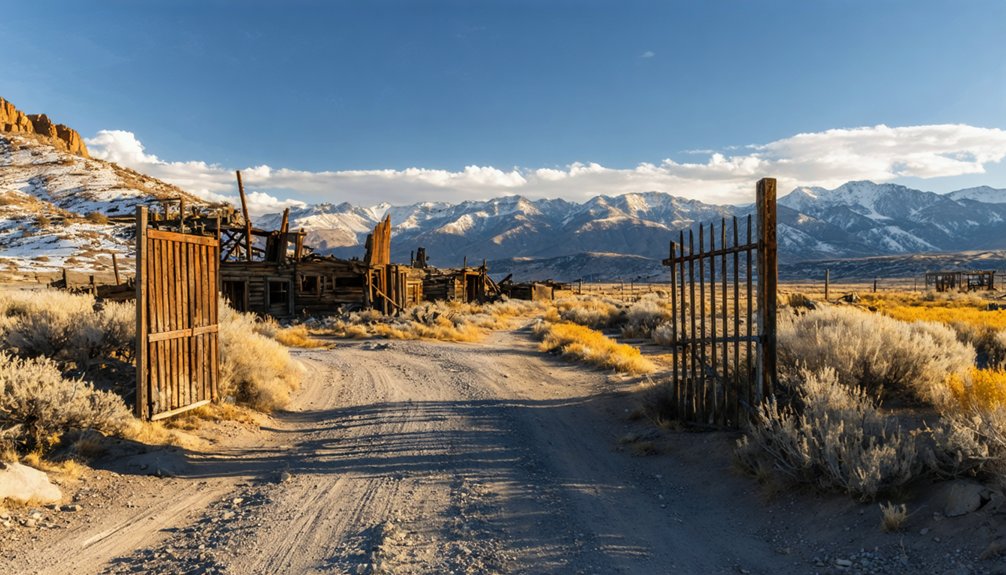
You’ll want to plan your trip carefully, because the road to Dutchman Flat typically doesn’t open until late spring or early summer — often May or June — once snowpack melts at elevation.
The same rugged mountain terrain that defeated the American Fork Railroad in the 1870s still controls access today, and heavy snowfall, mud, or washouts can push that opening date well into summer.
Check current conditions with the Uinta-Wasatch-Cache National Forest before you go, since the road can close unexpectedly even after it’s officially open for the season.
Typical Opening Season Timeline
Because Forest City sits high in American Fork Canyon‘s rugged alpine terrain, the road to Dutchman Flat typically doesn’t open until late May or early June — and some years, heavy snowpack pushes that window well into summer.
Seasonal conditions dictate everything here, so checking ahead saves wasted trips.
Before you roll out, know these visitor guidelines:
- Call the Uinta-Wasatch-Cache National Forest ranger district for current road status before departing
- Plan for June through September as your most reliable window for accessible terrain
- Expect closures after early autumn storms — mountain weather shifts fast at elevation
The same rugged landscape that swallowed Forest City’s railroad ambitions still controls access today.
Respect that reality, and you’ll reach Dutchman Flat on your terms.
Factors Affecting Road Access
Several variables stack against you when you’re trying to nail down an exact opening date for the road to Dutchman Flat. The same rugged terrain challenges that defeated Utah’s first railroad still complicate access today.
Heavy snowpack lingers at elevation long after valley roads clear, and spring runoff turns dirt surfaces unpredictable. Road conditions shift quickly — a warm week followed by freezing nights creates washouts and deep ruts that close routes without warning.
Ranger districts assess damage after winter before authorizing travel, and that timeline varies yearly. Your best move is contacting the Uinta-Wasatch-Cache National Forest directly before you commit to a date.
Freedom out here means planning smart, not just showing up and hoping the mountain cooperates.
What You Can Still Find at the Forest City Ghost Town Site
Despite over a century of weathering and wilderness reclamation, Forest City still holds onto fragments of its turbulent past.
You’ll discover echoes of mining history scattered across Dutchman Flat, where ghost stories and real remnants quietly coexist:
- Graveyard: Fifteen to twenty graves, including eleven children lost to diphtheria, stand as haunting reminders of frontier hardship.
- Smelter ruins: The once-mighty Sultana Smelter’s foundations remain visible, though reclamation piling has altered the site.
- Carved trees: Old carvings etched by long-forgotten miners mark the surrounding timber, nature’s own historical archive.
Occasional cabin remnants cling to the mountainsides above, and possible lumber mill foundations rest near American Fork Creek.
Bring sturdy boots—this land rewards those bold enough to explore it.
The Graveyard, Smelter Ruins, and Carved Trees at Forest City
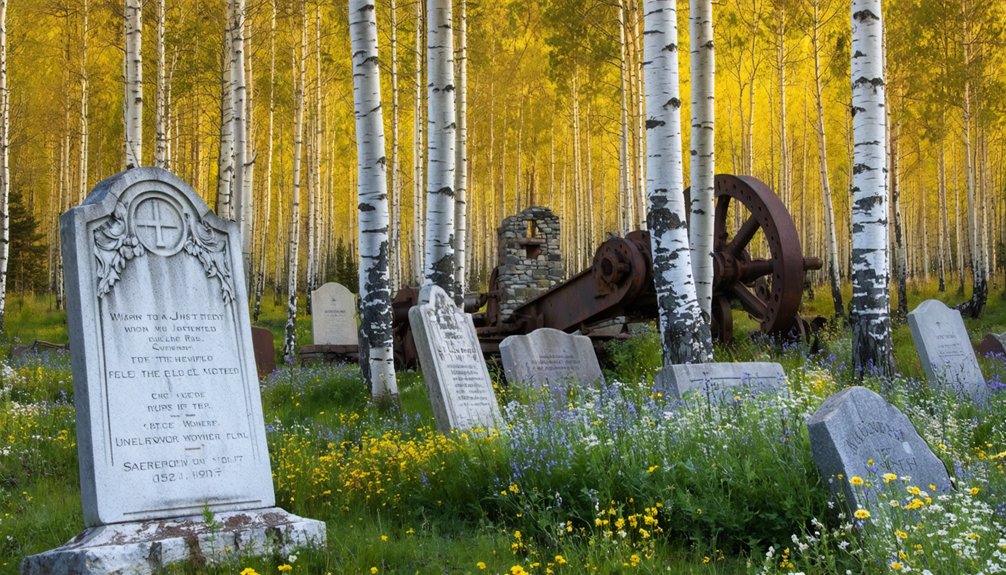
Among Forest City’s surviving remnants, three sites rise above the rest in their power to pull you back into the 1870s: the graveyard, the Sultana Smelter ruins, and the carved trees.
The graveyard history hits hardest. Fifteen to twenty graves rest here, eleven belonging to children lost to diphtheria.
The graveyard stops you cold. Eleven small graves. Diphtheria took these children before the town even faded.
You’re standing where grieving miners buried their families far from home.
The smelter significance still echoes through the landscape. This $90,000 structure once employed 300 men and processed millions in silver and lead.
Reclamation piling has altered the ruins, but the scale remains humbling.
Then there are the carved trees — silent witnesses bearing names and dates from people who lived boldly in this canyon.
Wander freely. These marks outlasted the town itself.
What to Bring for the Hike Into Forest City
Before you set foot on the trail into Dutchman Flat, pack like the terrain demands it — because Forest City sits four miles northeast of Tibble Fork Reservoir through steep, rugged mountain country that once defeated a railroad.
Ghost town exploration here isn’t casual. You’re moving through Uinta National Forest wilderness to reach scattered ruins, a diphtheria graveyard, and carved trees that have outlasted every structure standing above ground.
Your hiking essentials should include:
- Sturdy boots and trekking poles for rocky, uneven ascents
- Water, navigation tools, and layers since alpine elevation shifts fast
- A camera and journal to document carvings, foundations, and smelter remains before light fades
Come prepared, and Forest City rewards you completely.
What Else Is Worth Seeing in American Fork Canyon?
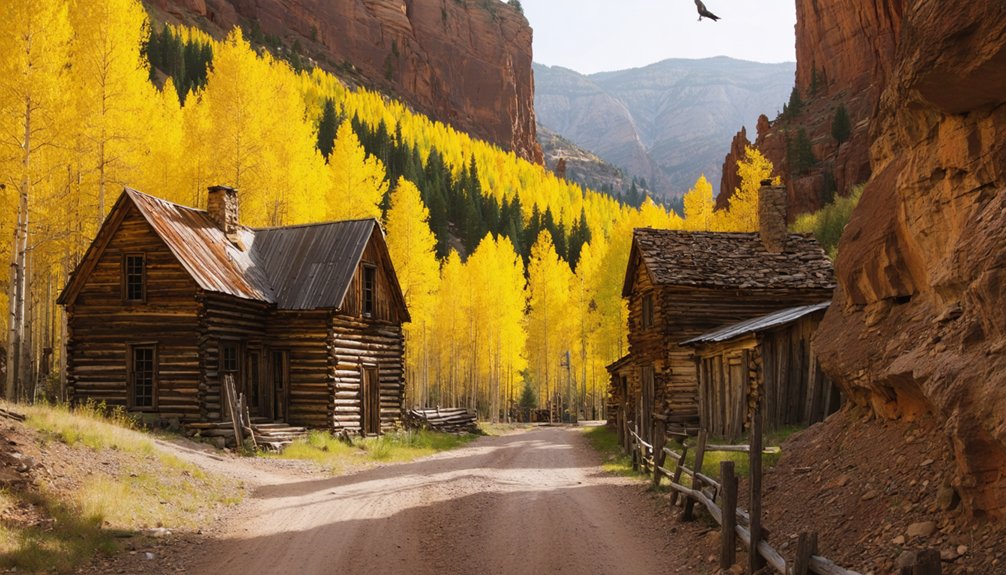
Once you’ve walked Forest City’s graveyard and traced old carvings in the bark, don’t rush back down the canyon — American Fork Canyon holds more than one ghost worth chasing.
Tibble Fork Reservoir sits just four miles southwest, offering striking alpine scenery and hiking trails that wind through terrain the old miners once crossed on foot.
Keep your eyes open for local wildlife; moose, deer, and hawks claim these slopes now that the smelter smoke has cleared.
If you’re still hungry for history, the route connecting American Fork Canyon to Alta tells the same silver-boom story from a different ridge.
The canyon rewards those who linger, explore beyond the obvious, and let curiosity — not a schedule — set the pace.
Frequently Asked Questions
Can You Camp Overnight Near the Forest City Ghost Town Site?
You’ll find camping opportunities near Forest City within Uinta National Forest, but don’t expect ghost town amenities. Follow proper camping guidelines, embrace that pioneer freedom, and you’re sleeping where silver-rush dreamers once roamed American Fork Canyon.
Are Permits Required to Visit Forest City Within Uinta National Forest?
No permit’s required to explore Forest City’s ghost town regulations are minimal within Uinta National Forest. You’re free to walk forest city history’s haunted grounds, discover weathered graves, and trace silver-era ruins on your own adventurous terms.
Is the Forest City Graveyard Protected Under Any Historical Preservation Laws?
Like Boot Hill’s sacred ground, Forest City’s graveyard significance demands your respect. Preservation efforts under federal historic protection laws shield these 15-20 souls. You’re exploring hallowed terrain — tread freely, but honor history’s quiet guardians resting within Uinta National Forest.
Were Any Forest City Miners or Residents Historically Notable or Well-Documented?
You won’t find many individually documented residents, but notable families and skilled miners shaped Forest City’s legacy through innovative mining techniques, leaving behind silent graves and carved trees as their only enduring, adventurous tribute.
Has Any Silver Ore Ever Been Found by Modern Visitors Exploring Forest City?
While boots crunch over silent, exhausted earth, the knowledge base doesn’t confirm modern visitors finding silver ore at Forest City. You’re exploring silver mining’s ghost — thrilling, historically-charged freedom awaits, but documented silver discoveries by modern visitors remain unverified here.
References
- https://onlineutah.com/forestcity_history.shtml
- https://kids.kiddle.co/Forest_City
- http://ghosttowntour.blogspot.com/2014/06/forest-city-utah-county-part-1.html
- https://www.utahlifemag.com/blog/post/4-ghost-towns
- https://www.youtube.com/watch?v=lXIkGof3OjI
- http://www.expeditionutah.com/forum/index.php?threads/remains-at-forest-city.4331/