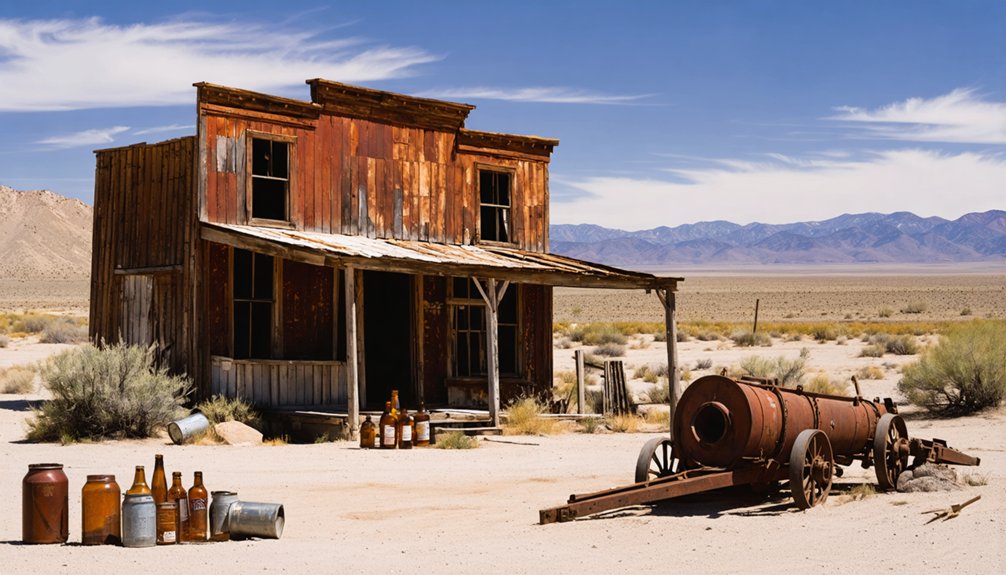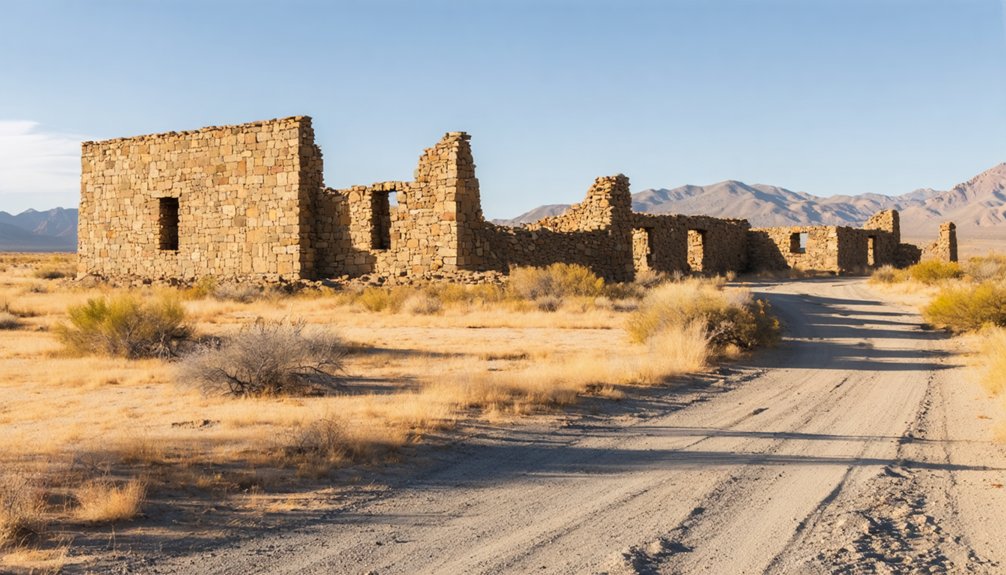
Planning a ghost town road trip to Fort Churchill, Nevada means exploring over two dozen crumbling adobe ruins spread across 3,200 acres along the Carson River, less than an hour from Reno. You’ll walk trails past officer quarters, enlisted barracks, and a historic parade ground where soldiers once drilled during the Civil War. Spring and fall offer the best conditions for your visit. There’s much more to uncover about this hauntingly preserved desert landmark.
Key Takeaways
- Fort Churchill, established in 1860, sits less than an hour from Reno, featuring two dozen adobe ruins across 3,200 acres along the Carson River.
- Travel via US-50 East and Alternate US-395; visit during spring or fall for mild desert temperatures and pack plenty of water.
- Explore trails through officer quarters, enlisted barracks, and the parade ground, with historical signage providing context throughout the ruins.
- The fort is known for paranormal activity, particularly near the parade ground, making it an atmospheric ghost town destination at dusk.
- Camping and shaded picnic facilities are available along the Carson River; arrive early during peak seasons, as facilities are minimal.
Fort Churchill, Nevada: What It Is and Why It’s Worth Your Time
Built in 1860 following the Pyramid Lake War, Fort Churchill stands as one of Nevada’s most compelling historical landmarks, sitting along the Carson River near Silver Springs, less than an hour from Reno.
Its historical significance runs deep — the fort protected westward-bound settlers, guarded Pony Express routes, and secured telegraph lines during a volatile era of American expansion.
Today, you’ll find roughly two dozen adobe ruins preserved in arrested decay across 3,200 acres of open Nevada landscape.
Roughly two dozen adobe ruins stand frozen in time, scattered across 3,200 acres of raw Nevada landscape.
The visitor experience lets you walk designated trails through those ruins, explore a museum, and absorb history without crowds or constraints.
It’s raw, unfiltered, and worth every mile. If you value wide-open spaces and authentic American history, Fort Churchill delivers both without compromise.
From Military Post to Adobe Ruins: A Brief History
When you walk through Fort Churchill‘s crumbling adobe walls, you’re standing inside a post built in 1860 to protect westward-bound settlers following the violent Pyramid Lake War.
At its peak in 1861, the fort housed roughly 600 volunteer soldiers who guarded Pony Express routes, telegraph lines, and California-bound emigrants.
Fort Churchill’s Military Origins
Following the violent clashes of the 1860 Pyramid Lake War, the U.S. Army established Fort Churchill to restore order across Nevada’s volatile frontier. Built in July 1860 and completed by 1861, the post carried real military significance — housing roughly 600 volunteer soldiers prepared to protect westbound settlers, Pony Express riders, and telegraph lines threading through contested territory.
Named for Brigadier General Sylvester Churchill, the fort didn’t merely react to historical conflicts — it actively shaped the region’s stability. Soldiers intervened in miner disputes, safeguarded emigrant routes, and later served as a Union recruiting station during the Civil War.
You’re fundamentally walking ground where American expansion was defended, negotiated, and sometimes violently enforced — making every crumbling adobe wall a direct marker of that turbulent era.
Decline Into Adobe Ruins
By 1869, Fort Churchill had outlived its purpose — the Army officially abandoned the post, and the buildings were auctioned off to rancher Samuel Buckland for just $750.
With no one maintaining the structures, Nevada’s harsh desert climate took over, slowly melting the adobe walls back into the earth.
What You’ll See Walking Through the Fort Ruins
Roughly two dozen adobe building ruins stand frozen in time across the fort grounds, and walking among them gives you a tangible sense of military life on Nevada’s frontier.
Designated trails guide your ruins exploration past structures that once defined daily frontier existence. Historical artifacts and interpretive signage connect each crumbling wall to its original purpose.
You’ll encounter remnants of:
- Officer quarters – larger foundations reflecting rank and hierarchy
- Enlisted barracks – smaller, tightly packed structures housing common soldiers
- The parade ground – open central space where drills and formations occurred
- Storage and supply buildings – critical logistical hubs keeping the post operational
- The Carson River corridor – flowing adjacent to the grounds, unchanged since 1860
Each ruin tells a precise, unfiltered story of frontier independence.
Ghost Stories and Paranormal Activity at Fort Churchill
Fort Churchill’s reputation as a paranormal hot spot adds an unexpected layer to its already haunted history.
Visitors have reported ghostly sightings near the crumbling adobe ruins, particularly around the old parade ground where soldiers once drilled. The Carson River’s proximity seems to amplify the eerie atmosphere, especially at dusk when shadows stretch across the deteriorating walls.
You’ll notice the silence here feels different — charged, almost watchful.
Paranormal enthusiasts believe the energy of soldiers who lived, suffered, and died within these walls hasn’t fully dissipated. The relocated post cemetery adds another dimension to this theory; disturbed burial grounds often anchor unexplained activity.
Whether you’re a skeptic or a believer, Fort Churchill’s atmosphere demands respect.
Come prepared to experience history that feels genuinely alive.
Getting to Fort Churchill From Reno
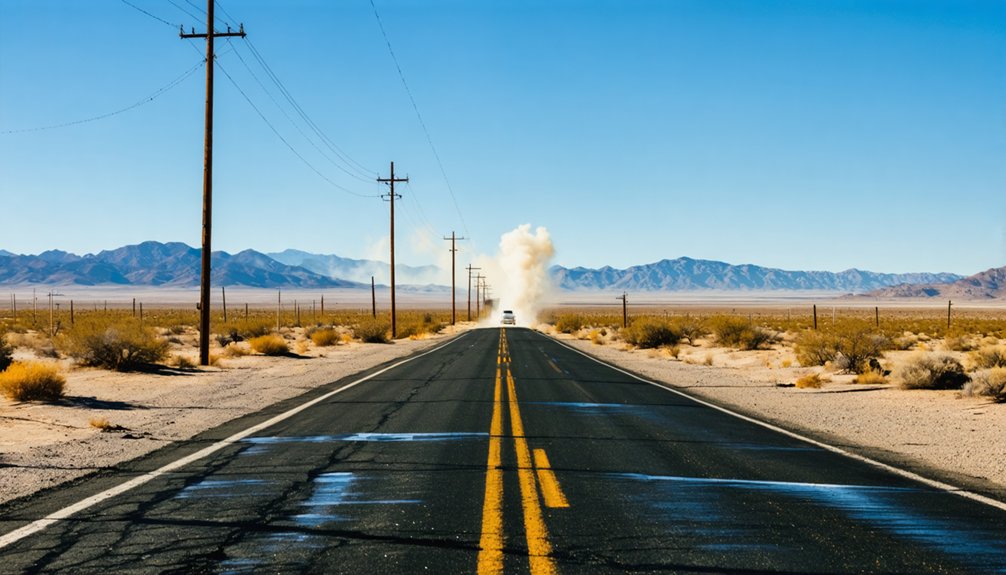
If you’re heading out from Reno, you’ll find Fort Churchill less than an hour away, making it an easy half-day road trip.
You’ll take US-50 East toward Fallon, then turn south on Alt US-95 until you reach Silver Springs, where signs guide you to the park entrance along the Carson River.
Pack water and check road conditions before you leave, since the high desert terrain surrounding the site can turn unforgiving in summer heat or winter cold.
Distance From Reno
Getting to Fort Churchill from Reno takes less than an hour, making it one of the most accessible historic sites in Nevada. You’ll pass through Silver Springs before reaching the fort, giving you a real sense of the open frontier landscape that defines this region’s historical significance.
Here’s what to expect on the drive:
- The route runs approximately 50 miles southeast of Reno
- US-50 East is your primary highway heading toward the site
- Silver Springs serves as your final landmark before arrival
- The Carson River valley scenery builds anticipation along the way
- Minimal traffic means a relaxed, open-road experience
You’re not just driving to ruins — you’re retracing a corridor that once carried Pony Express riders, emigrants, and soldiers shaping the American West.
Route And Travel Tips
Heading out from Reno, you’ll take US-50 East for roughly 50 miles through open high desert until you reach Silver Springs, your final waypoint before the fort.
From Silver Springs, turn south on Alternate US-395, then follow the signs directly to the park entrance along the Carson River.
For travel safety, check road conditions before departing, as desert weather shifts quickly and summer heat demands extra water.
Keep your fuel tank topped off — services thin out past Fernley.
You’ll find scenic stops worth pausing for along US-50, particularly where the terrain opens into sweeping basin-and-range views.
The Carson River corridor itself offers a natural junction point before you enter the park.
The drive rewards those who move at a deliberate pace.
Best Times to Visit Fort Churchill
Spring and fall are Fort Churchill’s sweet spots—temperatures are mild, the Carson River shimmers at its best, and you’ll avoid the punishing summer heat that makes wandering adobe ruins a genuine endurance test.
Check the event schedule before you go, since ranger-led programs cluster around these seasons. Best weather windows run March through May and September through November.
Plan around these seasonal highlights:
- Spring mornings offer cool air and wildflowers along the Carson River trails
- Fall evenings bring dramatic desert light across the crumbling adobe walls
- Summer visits demand early arrivals before 9 a.m. to beat dangerous heat
- Winter access remains open but facilities scale back considerably
- October nights attract paranormal enthusiasts exploring the ruins after dark
Camping and Picnicking Along the Carson River
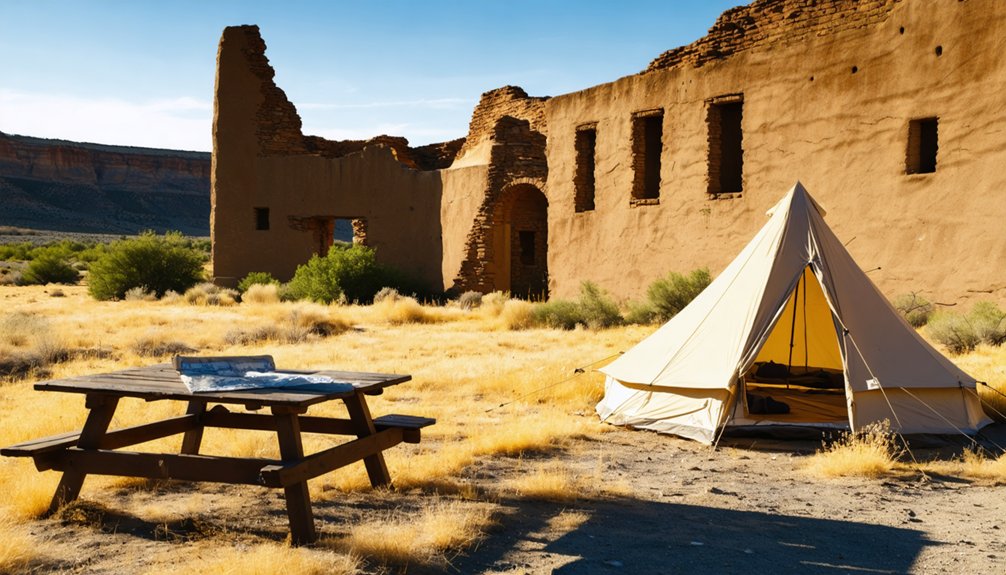
Once you’ve sorted your ideal visit window, it’s worth knowing that Fort Churchill doesn’t just reward day-trippers—the park’s camping and picnicking facilities let you settle in along the Carson River and experience the ruins well beyond a quick walkthrough.
The river’s edge offers shaded picnic spots that balance history with raw Nevada landscape, making a midday pause genuinely worthwhile.
For overnight stays, essential camping tips include arriving early during spring and fall peak seasons, bringing your own firewood, and packing out all waste since facilities remain minimal.
Sleeping within earshot of the Carson River while adobe ruins stand nearby creates a rare intersection of solitude and history.
You’re not just visiting a preserved site—you’re spending real time inside it.
Everything Else Inside the State Park
Beyond camping, the park packs in several features worth your time. Whether you’re chasing history or simply exploring open land, Fort Churchill delivers on multiple fronts.
Here’s what you’ll find inside the state park:
- Visitors Center & Museum – Examine historical artifacts, documents, and exhibits that contextualize the fort’s military past.
- Designated Ruins Trail – Walk directly through adobe remnants frozen in arrested decay.
- Buckland Station – A renovated 1860s way station offering authentic frontier atmosphere.
- Wildlife Observation – Spot local wildlife roaming the 3,200-acre landscape surrounding the ruins.
- Paranormal Exploration – The site carries a reputation as a legitimate supernatural hot spot for those drawn to unexplained activity.
Each feature adds a distinct layer, making Fort Churchill worth far more than a single afternoon.
Frequently Asked Questions
Who Was Brigadier General Sylvester Churchill, the Fort’s Namesake?
You’ll find Brigadier General Sylvester Churchill was a distinguished military leader whose Civil War-era leadership traits left a lasting historical impact on America’s westward expansion, shaping military history through his commanding influence and service.
How Much Did Samuel Buckland Pay for the Fort’s Auctioned Buildings?
At Buckland’s auction, you’ll find that Samuel Buckland acquired the fort’s remaining structures for a mere $750—a bargain that quietly closed a chapter in Fort history when the post officially shuttered its doors in 1869.
When Were Soldiers’ Remains Relocated From the Post Cemetery?
You’ll find that in 1885, workers relocated soldiers’ remains from the post cemetery, reshaping the site’s cemetery history. These soldier memorials found a new home at Lone Mountain Cemetery, preserving their legacy beyond Fort Churchill’s abandoned grounds.
Which Organization Received the Deed to Fort Churchill in 1934?
You’ll find that the Daughters of the American Revolution received the deed in 1934, reflecting their commitment to preservation efforts and honoring the site’s historical significance — ensuring you can explore Fort Churchill’s storied past today.
How Many Volunteer Soldiers Were Stationed at Fort Churchill by 1861?
By 1861, you’ll find that approximately 600 volunteer soldiers were stationed at Fort Churchill, enriching its military history and demonstrating the fort’s essential role in protecting westward freedom and expansion during that pivotal era.
References
- https://www.youtube.com/watch?v=GeYMpEaDkFQ
- https://www.nevadaghosttownsandmininghistory.com/portfolio-2/fort-churchill
- https://www.youtube.com/watch?v=3C9CSzh-ftI
- https://en.wikipedia.org/wiki/List_of_ghost_towns_in_Nevada
- https://www.youtube.com/watch?v=gT3M0q-o2Qg
- https://www.getawaycouple.com/nevada-ghost-towns/
- https://www.youtube.com/watch?v=kVef5aVNcVs
- https://nvtami.com/2023/01/09/fort-churchill/
- https://www.youtube.com/watch?v=vBsyxmTZLtA
- https://travelnevada.com/ghost-town/ghost-towns-near-reno/