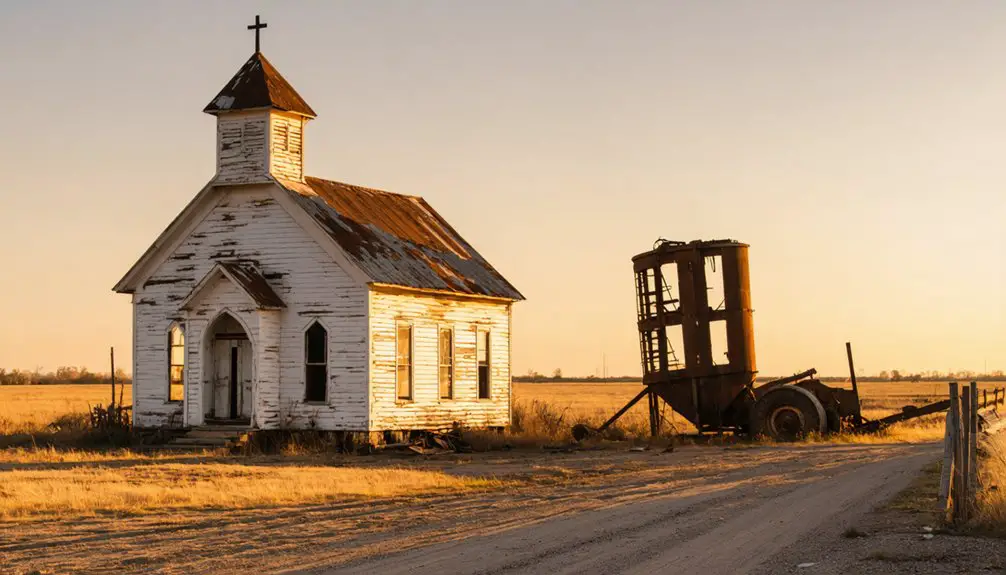
Planning a ghost town road trip to Pavilion, Oklahoma means trading highway comfort for quiet back roads cutting through Kiowa County’s open farmland. You’ll need offline maps, a high-clearance vehicle, and a full pack of supplies since cell service disappears fast out here. Almost nothing remains of the 1904 farming community, but scattered foundations and raw, untouched land still tell a powerful story. Stick around and you’ll uncover everything you need to make this trip count.
Key Takeaways
- Pavilion, Oklahoma, founded in 1904, is a ghost town in Kiowa County with little remaining except scattered foundations and overgrown lots.
- Download offline maps before departing, as cell service is unreliable and rural back roads require careful navigation with unmarked turnoffs.
- A high-clearance vehicle is recommended, especially during wet seasons when unpaved roads become muddy and difficult to travel.
- Pack water, snacks, a first aid kit, and sturdy boots, as the remote location offers no nearby commercial services or amenities.
- Plan arrival during golden hour for optimal photography lighting and respect the site by following leave-no-trace principles throughout your visit.
Where Pavilion, Oklahoma Sits in Kiowa County
Tucked away in Kiowa County, Pavilion sits far from any major roads or urban centers, surrounded by open farmland that stretches in every direction. If you’re craving a destination that feels genuinely off the grid, Pavilion’s geography delivers exactly that.
Kiowa geography shapes this entire experience — the flat, rural landscape gives the area an open, unhurried atmosphere that’s hard to find anywhere else.
Understanding Pavilion history means understanding its isolation. The town developed near agricultural lands, far removed from the commercial corridors that kept other Oklahoma communities alive.
That same remoteness that contributed to its decline now makes it compelling. You’re not fighting traffic or crowds here. You’re traversing quiet back roads, reading the land, and discovering a place that the modern world simply passed by.
How to Get to Pavilion Without a Major Road in Sight
Getting to Pavilion means traversing a maze of rural back roads with no major highways to guide you.
You’ll want to download offline maps before you leave, since cell service out in Kiowa County’s open farmland is unreliable at best.
Trust your downloaded route, watch for unmarked turnoffs, and keep your speed low on unpaved stretches that can catch you off guard.
Navigating Rural Back Roads
Finding Pavilion means embracing the rural labyrinth of Kiowa County, where paved roads give way to gravel and GPS signals grow unreliable.
Download offline maps before you leave civilization, and note landmark intersections since road signs out here are scarce or missing entirely. You’ll want a high-clearance vehicle — muddy seasonal roads punish low-riding cars without mercy.
Once you’ve arrived, follow basic ghost town etiquette: don’t disturb remaining structures, pack out your trash, and respect any posted private property boundaries.
Farmers work this land daily, so keep gates as you find them.
Your rural navigation tips checklist should include a physical map, extra fuel, and a charged battery pack.
Pavilion rewards the self-reliant traveler who plans carefully and moves through the landscape with genuine respect.
Using Offline Maps
Before you leave cell service behind, download at least 2 offline maps that cover Kiowa County’s back roads in detail — apps like Maps.me or OnX Off Road handle rural terrain far better than Google Maps, which tends to blank out once you’re deep in agricultural country.
Save multiple route variations, because dirt roads near Pavilion shift with the seasons and what’s passable in summer may be washed out in spring.
Treat offline navigation as non-negotiable, not optional. Pin the site’s coordinates before you go and cross-reference them against a printed county map.
Out here, no signal means no rescue if things go sideways. Pack emergency supplies — water, a first aid kit, jumper cables — because isolation is the whole point of this trip, until it suddenly isn’t.
How Pavilion Went From Farming Hub to Forgotten Town
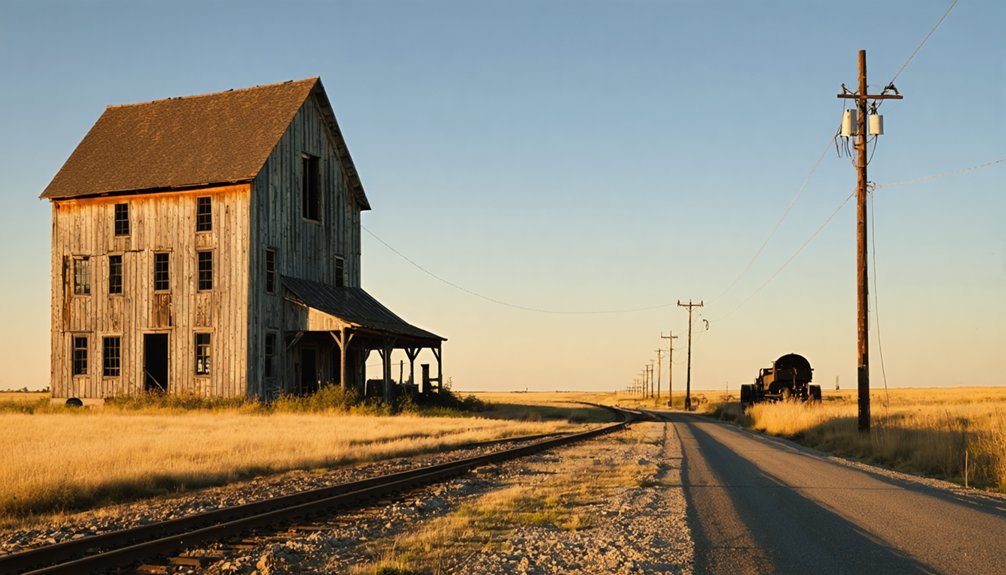
Once a thriving farming hub in Kiowa County, Pavilion followed a trajectory that’s all too familiar across rural Oklahoma — a slow, steady fade into silence.
Understanding this town evolution helps you appreciate what you’re walking into.
Understanding Pavilion’s evolution transforms a simple visit into a deeply personal encounter with Oklahoma’s forgotten rural past.
Here’s how Pavilion’s farming history unfolded:
- 1904 – The town establishes itself amid open agricultural lands
- 1910–1920 – Population peaks as farming drives economic activity
- 1930s – Economic shifts begin pulling residents toward larger centers
- 1950s – Most original structures get abandoned or destroyed
- Pre-2010 – The last remnants disappear, leaving only silence
You’re not just visiting an empty field — you’re standing where generations built livelihoods.
That context transforms your road trip from simple sightseeing into something far more meaningful.
What’s Left of Pavilion, Oklahoma Today
Stepping into Pavilion today, you’ll find almost nothing left — and that near-total absence tells its own story. The abandoned structures that once defined this farming community have largely vanished, most demolished after 1950 and the final remnants cleared before 2010.
What remains are scattered foundations, overgrown lots, and open farmland reclaiming what people once built.
Yet Pavilion’s historical significance hasn’t disappeared entirely. The Oklahoma Historical Society archives preserve its story, and it’s documented in the Encyclopedia of Oklahoma History.
You won’t find markers or maintained trails here — this is raw, unfiltered history. If you’re the kind of traveler who values discovery over convenience, Pavilion rewards your curiosity.
Come prepared with research, sturdy shoes, and an appreciation for places that refuse to be completely forgotten.
Why Ghost Town Visitors Keep Adding Pavilion to Their List
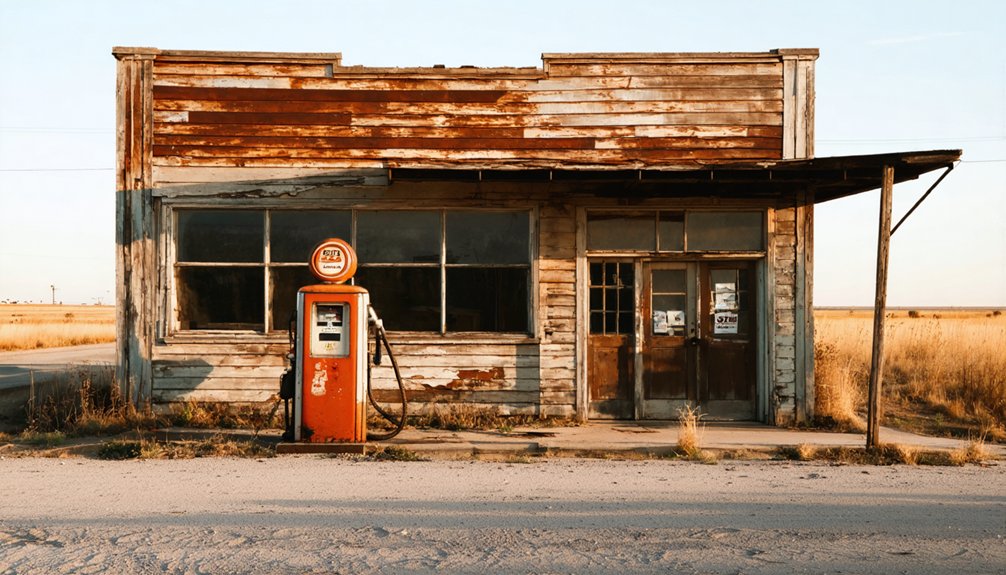
Despite offering little in the way of visible remains, Pavilion keeps drawing ghost town enthusiasts back to Kiowa County — and the reason isn’t hard to understand. Its ghost town allure runs deeper than crumbling structures. You’re stepping into a place where history quietly lingers in the open farmland air.
Here’s what keeps visitors adding Pavilion to their list:
- Historical significance rooted in Oklahoma’s early 20th-century settlement era
- Isolation that gives you genuine freedom from crowded tourist destinations
- Documented archives through the Oklahoma Historical Society and Encyclopedia of Oklahoma History
- Raw, unfiltered landscapes stretching across rural Kiowa County
- The challenge of exploring a site most travelers overlook entirely
Pavilion rewards curiosity. You won’t find gift shops — you’ll find something rarer: uninterrupted silence and authentic history.
What to Bring Before You Drive Out to Pavilion
Knowing why Pavilion pulls explorers in is one thing — showing up ready for it’s another. No major roads cut through this isolated Kiowa County site, so you’re driving into genuine off-grid territory.
Pack your packing essentials smart: water, snacks, a first aid kit, and sturdy boots for uneven terrain. Cell service won’t save you out here, so bring a paper map or downloaded offline route.
Your camera gear earns its weight at Pavilion. Weathered structures and open farmland create striking compositions, so bring extra batteries, memory cards, and a wide-angle lens.
Light shifts fast in Oklahoma’s open landscape, so plan your arrival around golden hour. Leave nothing behind — respect the site so fellow road-trippers find it exactly as you did.
Frequently Asked Questions
Is Pavilion, Oklahoma Listed in the National Register of Historic Places?
Like a hidden gem waiting to be discovered, yes — Pavilion, Oklahoma’s ghost town is listed in the National Register of Historic Places, confirming its historical significance, so you’ll appreciate exploring this remarkable, documented piece of Oklahoma’s past.
When Did Pavilion, Oklahoma Reach Its Peak Population?
You’ll find that Pavilion history shows the town reached its peak population between 1910 and 1920. These population trends reflect a thriving early community before economic shifts gradually pulled residents away from this once-bustling Oklahoma settlement.
What Caused the Economic Decline of Pavilion After 1930?
Like a fire starved of oxygen, economic factors and historical events snuffed Pavilion out. After 1930, you’d have watched shifting agricultural markets and the Great Depression drain the town’s lifeblood, leaving freedom-seekers nothing but silence.
Are There Any Official Records Confirming Pavilion’s Exact Founding Date?
You won’t find any official records confirming Pavilion’s exact founding date. The town’s Pavilion history remains shrouded in founding myths, though historians generally estimate establishment around 1904, leaving you to embrace the mystery surrounding this forgotten Oklahoma ghost town.
Where Can Researchers Find Documented Archives About Pavilion, Oklahoma?
You’ll find Pavilion’s archival resources documenting its historical significance in the Oklahoma Historical Society, the Encyclopedia of Oklahoma History, the National Register of Historic Places, and the Oklahoma Ghost Towns report and travel guide.
References
- https://freepages.rootsweb.com/~gtusa/history/usa/ok.htm
- https://columbus.iit.edu/dreamcity/00024052.html
- https://npgallery.nps.gov/GetAsset/9c699939-3406-4f62-9fb5-f384d6d536b2
- https://www.okhistory.org/publications/enc/entry?entry=GH002
- https://sites.rootsweb.com/~okghstwn/woodward/quinlan.htm
- https://www.travelok.com/articles/oklahomaghosttowns
- https://coilhouse.net/2008/07/the-tarnished-beauties-of-blackwell-oklahoma/
- https://en.wikipedia.org/wiki/List_of_ghost_towns_in_Oklahoma
- https://www.okhistory.org/publications/ml/january2014.pdf
- https://www.405magazine.com/uncovering-lake-texomas-submerged-ghost-towns/