Planning a ghost town road trip to Freedom Colony starts with heading four miles west of Fulton, Kansas, toward the Little Osage River in Bourbon County. Founded in 1897 as a cooperative community, it wasn’t built on speculation—it was built on intention. Today, sixty acres of open prairie hold more history than ruins. Check road conditions before you go, bring water, and stay curious. There’s far more to this story than the silence suggests.
Key Takeaways
- Freedom Colony, established in 1897 along the Little Osage River in Bourbon County, Kansas, was a genuine intentional cooperative community, not a typical frontier settlement.
- The site sits approximately four miles west of Fulton, Kansas, accessible via unpaved rural roads with limited signage and no visitor infrastructure.
- Sixty acres of open ground remain, reclaimed by grass and silence, with the unchanged Little Osage River serving as the primary landmark.
- Nearby Fort Scott and the Marais des Cygnes Massacre site provide essential historical context, making a combined road trip worthwhile.
- Before visiting, confirm road conditions seasonally, bring your own maps and water, and expect a raw, undeveloped historical experience.
What Was Freedom Colony and Why It Still Matters?
When most people think of ghost towns, they picture old mining camps or drought-abandoned homesteads, but Freedom Colony tells a stranger and more deliberate story.
Organized in 1897 along the Little Osage River in Bourbon County, Kansas, it wasn’t born from a gold rush or railroad speculation. It was built on intention.
Not born from a gold rush or railroad speculation — Freedom Colony was built on pure intention.
This cooperative settlement operated as Branch 199 of the General Labor Exchange, admitting members only by unanimous vote and requiring a permanent property deposit.
You couldn’t simply show up. That selectivity gave Freedom Colony a historic significance that separates it from conventional boom-and-bust towns.
It represented a genuine experiment in collective living, carved into 60 acres of rural Kansas.
That experiment collapsed, but the story it left behind is worth chasing down a gravel road.
How to Find Freedom Colony Near Fulton, Kansas
Finding Freedom Colony starts with a single anchor point: Fulton, Kansas. Pull up your directions map and plot a course roughly four miles west of Fulton into Bourbon County‘s quiet heartland.
The Little Osage River marks your geographic reward, threading through a landscape largely unchanged from when determined colonists first staked their 60 acres here in 1897.
Rural access is real here — expect unpaved stretches and limited signage once you leave Fulton’s edges. Check road conditions before you load the car.
This isn’t a polished heritage site with a parking lot; it’s open country where a bold experiment once took root. Bring water, a paper backup of your route, and the willingness to slow down and read the land itself.
What Survives at the Freedom Colony Site Today
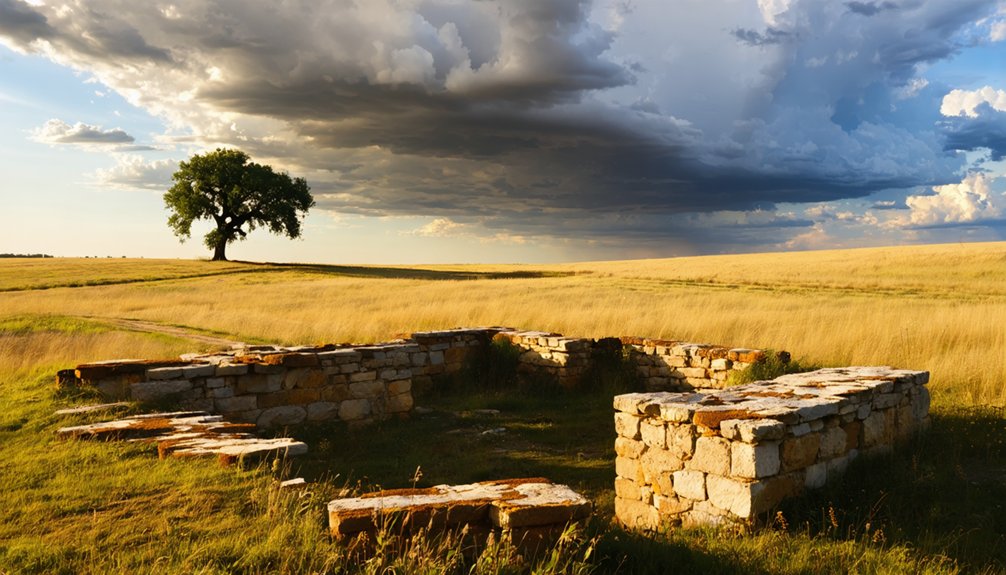
Once you’ve reached the approximate site, the first honest thing to admit is that Freedom Colony left behind almost no physical footprint. The historic remnants are thin, but the landscape features speak quietly if you’re listening.
Stand here and feel what remains:
- The Little Osage River still cuts through the land, unchanged since cooperative dreamers walked its banks in 1897.
- Sixty acres of open ground once held a planned community built on unanimous consent and shared labor — now reclaimed by grass and silence.
- The absence itself — no commercial sprawl, no monuments — reminds you that these people chose freedom over conformity, and history buried them for it.
You’re not visiting ruins. You’re visiting a decision.
Which Bourbon County Sites Pair Well With Freedom Colony?
Bourbon County rewards the curious driver who doesn’t stop at a single pin on the map.
Fort Scott anchors the county’s historic landmarks with its Civil War–era fortifications and Bleeding Kansas heritage — raw, contested ground that shaped the same labor movements feeding Freedom Colony‘s founding spirit.
The Marais des Cygnes Massacre site sits nearby, another marker of ideological struggle etched into the landscape.
Together, these stops build a coherent narrative: people fought here over land, freedom, and economic power long before cooperative settlements like Freedom Colony attempted a quieter revolution.
You’re not just collecting ghost towns — you’re tracing a lineage of resistance.
Map your route through Fort Scott first, then drive west toward Fulton, letting history accumulate mile by mile.
How to Plan Your Visit to Freedom Colony
With the broader Bourbon County narrative mapped in your mind, the next step is putting boots — or tires — on the ground at Freedom Colony itself. Its historical significance demands a deliberate approach, not a casual detour.
Before you go, lock in these three essentials:
- Navigate through Fulton — head 4 miles west toward the Little Osage River; it’s your clearest landmark.
- Check accessibility options — rural roads shift seasonally, so confirm conditions before committing to the drive.
- Travel light but research heavy — the 60-acre site holds no visitor infrastructure, so bring your own maps, water, and curiosity.
You’re not chasing a postcard town. You’re chasing proof that ordinary people once built something extraordinary on their own terms.
Frequently Asked Questions
Was Freedom Colony Ever Featured in Any Newspapers or National Publications?
The available records don’t confirm national media coverage, but Freedom Colony’s historical significance as a rare cooperative settlement likely earned it local newspaper mentions. You’d uncover fascinating stories by digging into 1897–1912 Kansas archives yourself.
How Many Members Did Freedom Colony Have at Its Peak?
The exact peak membership isn’t recorded, but you’ll find Freedom Colony’s Community Dynamics fascinatingly selective — unanimous votes determined every member. Its Historical Significance shines in its deliberate smallness, proving true freedom sometimes thrives in tight-knit, intentional communities.
Did Freedom Colony Have a School or Church for Its Residents?
The records don’t confirm a school history or church community at Freedom Colony. You’re venturing into rare, cooperative territory where labor ideals, not traditional institutions, shaped daily life for its selective, freedom-seeking members.
What Happened to Members After Freedom Colony Disbanded or Failed?
Like seeds scattered by wind, members carried their post disbandment lives forward independently. You’d find they dispersed into surrounding Kansas communities, leaving community legacies of cooperative ideals that quietly shaped local labor and reform movements afterward.
Are There Any Descendants of Freedom Colony Members Still in Kansas?
No confirmed descendant stories exist, but you can chase community legacy through Bourbon County records and local histories—freedom-seekers’ bloodlines may still quietly root the Kansas soil you’re adventuring across today.
References
- https://www.frrandp.com/2024/01/blog-post_01.html
- https://digging-history.com/2014/01/29/ghost-town-wednesday-nicodemus-kansas/
- https://www.ksgenweb.org/archives/1912/f/freedom_colony.html
- https://www.youtube.com/watch?v=8dtIPX7pIqI
- https://www.kcur.org/arts-life/2022-04-09/ghost-towns-are-all-around-kansas-city-if-you-know-where-to-look
- https://www.facebook.com/kansasghosttownhunter/posts/blakeman-ks-a-rawlins-county-ghost-town/1125229935383048/
- https://www.youtube.com/watch?v=0hcxJdSHkdc
- https://legendsofkansas.com/butler-county-extinct-towns/
- https://savingplaces.org/stories/discover-the-kansas-town-settled-by-black-homesteaders-in-the-1870s
- https://www.facebook.com/christopherkirkhamphotography/videos/it-is-seriously-wild-to-think-about-just-how-many-ghost-towns-just-kansas-has-th/986245763824809/