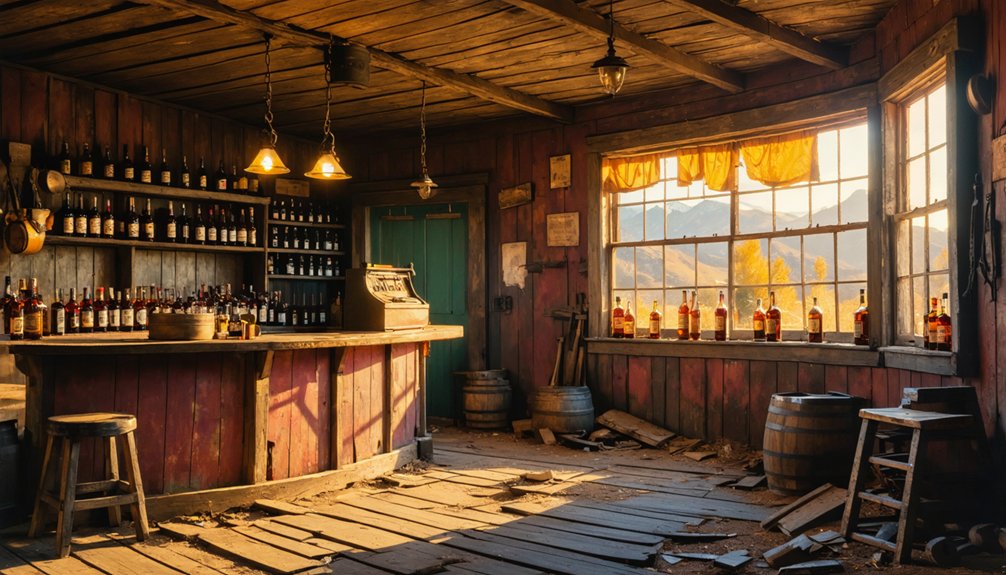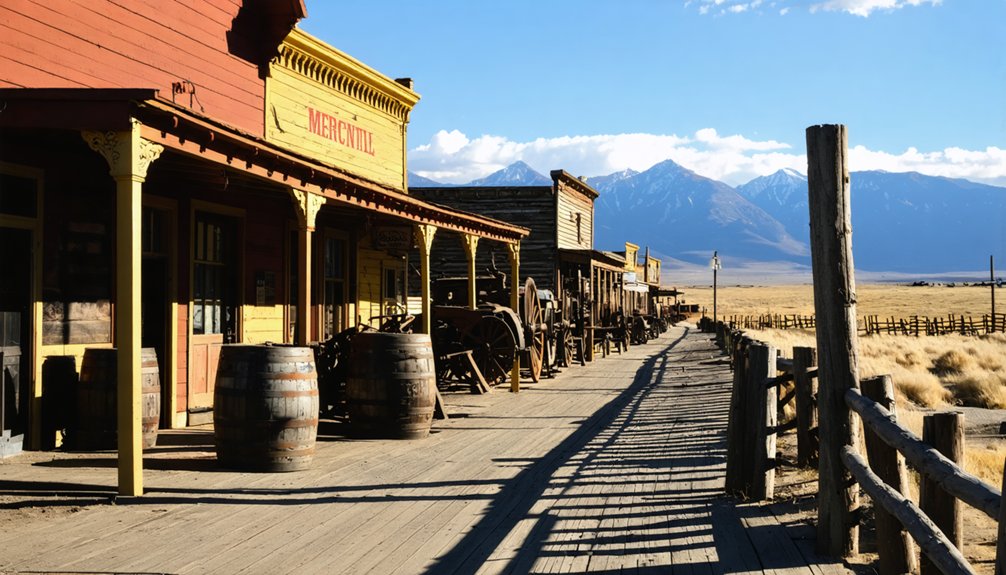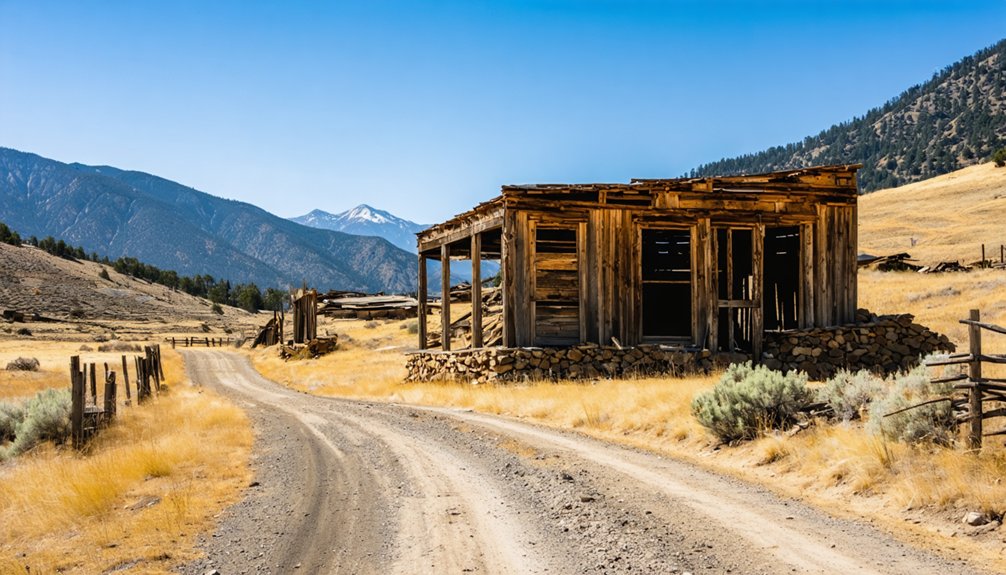
Planning a ghost town road trip to French Flat, California means venturing deep into Tuolumne County’s rugged terrain, where Gold Rush ruins wait in eerie silence. You’ll discover stone walls, crumbling chimneys, and a mysterious 20-foot square structure whose purpose still sparks debate. Bring offline maps, sturdy boots, and a reliable vehicle—there aren’t any highway signs guiding your way. Stick around, and you’ll uncover everything you need to make this unforgettable journey your own.
Key Takeaways
- French Flat, located in Tuolumne County, is a Gold Rush-era ghost town featuring stone ruins, massive chimneys, and mysterious stone enclosures.
- The remote site has no highway signs, so offline maps, a compass, and a reliable vehicle are essential for navigation.
- Nearby ghost towns like Jamestown, Chinese Camp, and Columbia State Historic Park make French Flat ideal for a longer road trip route.
- Pack sturdy boots, ample water, layered clothing, a first-aid kit, and a flashlight to safely explore the rugged terrain.
- Cell service is unreliable, so download topographic maps in advance and maintain a flexible timeline for an authentic experience.
What Makes French Flat a Must-See Ghost Town?
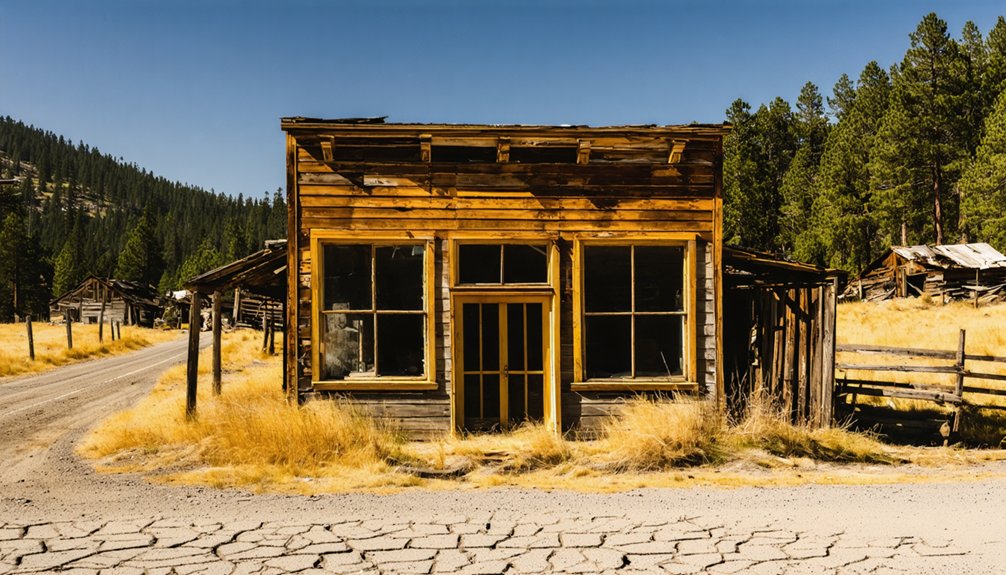
French Flat sits quietly in Tuolumne County at coordinates 37°58′20″N 120°28′17″W, a forgotten relic of California’s Gold Rush era that rewards curious travelers willing to seek it out.
Tucked away in Tuolumne County, French Flat is a Gold Rush ghost town worth every step of the search.
Its historical significance runs deep — boom, bust, and abandonment shaped every stone still standing here.
You’ll find massive chimneys rising 4–5 feet, mysterious stone enclosures, and a central 20-foot square structure whose purpose remains debated.
Ghost town legends swirl around the old brick edifice locals call a bank, its massive safe still sitting open at ground level.
No doors, no windows — just raw, unanswered history.
French Flat doesn’t hand you its story. You earn it by exploring, reading the landscape, and letting the silence tell you what records no longer can.
How to Reach French Flat in Tuolumne County
Getting to French Flat means accepting that remoteness is part of the deal — this isn’t a ghost town with highway signs and a parking lot.
You’re heading into central California’s Tuolumne County, roughly at coordinates 37°58′20″N, 120°28′17″W, through rugged terrain that filters out the casual visitor. That’s exactly the point.
For best travel results, build this stop into a longer route — ideally after Shasta State Historic Park as you work southward.
Knowing how to navigate off-highway conditions matters here. A reliable vehicle, downloaded offline maps, and a flexible timeline aren’t optional extras — they’re essentials.
The isolation you’ll encounter isn’t an obstacle. It’s the authentic experience that highway ghost towns can’t deliver. Embrace the detour, and French Flat will reward you.
The Stone Ruins Waiting for You at French Flat
When you arrive at French Flat, you’ll find massive stone walls still rising 3–5 feet above grade, their silent presence hinting at a community that once thrived here.
The most puzzling feature is a central square structure, roughly 20 feet per side and 5 feet high, with no visible windows, doors, or openings, its interior packed with earth that mounds higher at the center than at the edges.
Scattered traces of former buildings—burned brick walls, remnant chimneys, and a large safe with its door hanging open—round out the eerie tableau that awaits you.
Massive Walls Still Standing
Scattered across the remote landscape of Tuolumne County, the stone ruins of French Flat stand as one of California’s most quietly dramatic Gold Rush remnants.
You’ll find massive chimneys rising 4–5 feet high and stone-walled enclosures standing 3–5 feet above grade.
The crown jewel is a central square structure, roughly 20 feet per side and 5 feet tall, with no windows, doors, or visible apertures.
Its interior fills with earth, the center sitting 3–4 feet higher than the perimeter.
The architectural significance here is undeniable — these walls have outlasted everything around them.
Their historic preservation, though unmanaged, speaks volumes about the durability of Gold Rush-era construction.
You’re fundamentally walking through a structure that refuses to disappear.
The Mysterious Central Structure
At the heart of French Flat’s ruins stands a structure that defies easy explanation — a square stone enclosure, 20 feet per side and 5 feet tall, with no windows, no doors, and no visible apertures of any kind.
It’s French Flat’s central mystery, and it’ll pull you in immediately.
What makes it stranger still:
- The interior is completely filled with earth
- The center sits 3–4 feet higher than the perimeter
- No architectural secrets have been uncovered explaining its original purpose
Was it a vault, a foundation, or something else entirely?
Nobody knows. You’re free to walk the perimeter, study the stonework, and draw your own conclusions.
That’s the raw appeal of places like this — history that refuses to wrap itself up neatly.
Traces Of Former Buildings
Beyond the central enigma, French Flat’s ruins fan out in all directions — chimneys rising 4 to 5 feet from the earth, stone-walled enclosures climbing 3 to 5 feet above grade, each one a skeletal outline of rooms where miners once slept, cooked, and counted their earnings.
Your ruin exploration here feels genuinely unscripted — no guardrails, no interpretive signs, just raw historical significance etched into weathered stone.
To the north, a two-story burned brick structure commands attention. Locals identify it as a former bank, and a large safe with an open door still sits at ground level, silent and exposed.
Brick chimneys and houses persisted into the early 1940s, but they’ve since vanished completely — not a single brick remains. French Flat surrendered everything except its stone bones.
Why French Flat Was Abandoned After the Gold Rush
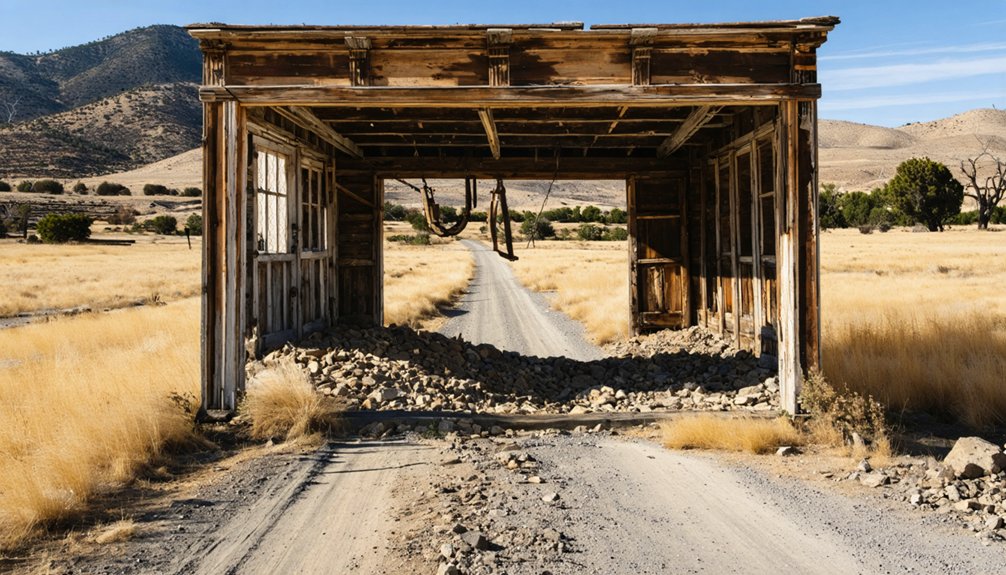
Like so many Gold Rush settlements across California’s Mother Lode country, French Flat didn’t die slowly—it collapsed almost overnight once the gold ran out.
Economic decline hit hard when mining depletion left prospectors with nothing worth staying for. The cycle was brutal and familiar:
- Veins ran dry, forcing miners to chase richer strikes elsewhere
- Merchants and tradespeople followed the money, abandoning storefronts and homes
- Without commerce or community, the remaining residents simply drifted away
What you’re walking through today reflects that boom-and-bust pattern shared across Tuolumne County.
Nobody planned to leave permanently—they just never came back. The chimneys still standing, the stone walls still rising from the earth, they’re all that’s left when ambition outpaces a landscape’s ability to deliver.
Ghost Towns Near French Flat Worth the Detour
While you’re exploring French Flat, you’d be doing yourself a disservice to skip the stone ruins at French Camp in nearby Amador County, where weathered walls echo the same Gold Rush-era construction you’ll find in Tuolumne.
Push a bit further into Calaveras County, and you’ll encounter the remnants of a French colony settlement, largely destroyed by a 1914 fire but still hauntingly present.
These three counties form a triangle of ruined ambition that rewards anyone willing to thread the backroads connecting them.
Nearby Tuolumne County Sites
Tuolumne County hides several ghost towns worth folding into your French Flat itinerary, each carrying its own fragment of Gold Rush wreckage.
The region’s historic mining corridors run deep, and ghostly tales cling to every crumbling wall you’ll pass.
Wander beyond French Flat and you’ll find sites that reward the curious traveler:
- Jamestown — a partially restored camp with original storefronts and railroad relics still standing
- Chinese Camp — one of California’s oldest settlements, where stone ruins and faded signage mark a vanished community
- Columbia State Historic Park — a preserved pocket of Gold Rush infrastructure that lets you walk streets miners once crowded
Each stop compounds the story.
String them together, and you’ve built a route that moves through time rather than just terrain.
Amador County Stone Ruins
Pushing beyond Tuolumne County’s borders pulls you into Amador County, where French Camp offers stone ruins that echo what you’ve already seen at French Flat. This Amador architecture carries the same rugged honesty — walls built to last, now standing half-forgotten against open sky.
You’ll recognize the familiar geometry: thick stone enclosures, weathered surfaces, structures that once anchored a living, breathing community.
French Camp’s ruins deepen your understanding of mining heritage across the Mother Lode region. These weren’t temporary camps. Miners built with permanence in mind, then left anyway when the gold ran out.
Walking these sites back-to-back sharpens your eye for detail and context. Each crumbling wall becomes a layer of the same story — boom, bust, and the stubborn silence that follows.
Calaveras French Colony Remnants
Calaveras County holds its own chapter of French colonial history, and the Stone Houses settlement adds a different texture to your road trip narrative. This French colony built distinctive Calaveras architecture that survived decades before a 1914 fire reduced everything to rubble.
Ghost town legends surrounding this site speak to a tight-knit immigrant community that carved permanence from California stone.
When you visit, you’ll encounter:
- Crumbled stone foundations marking where French settlers built permanent homes
- Scorched remnants revealing the fire’s devastating sweep through the colony
- Silent lots where ambitious immigrants once established community roots
The destruction here feels different from abandonment — it’s abrupt, violent, and final. That contrast makes Stone Houses a compelling stop that deepens your understanding of Gold Rush California‘s fragile settlements.
What to Pack for French Flat’s Rugged Terrain
Reaching French Flat means traversing rugged, remote terrain where the nearest help could be miles away, so packing smart isn’t optional—it’s essential.
Your hiking essentials should include sturdy, ankle-supporting boots, plenty of water, high-energy snacks, and a detailed topographic map—don’t rely solely on cell service that likely won’t exist here.
Toss in a first-aid kit as part of your core safety gear, alongside a compass, emergency whistle, and a fully charged portable battery pack.
California’s central foothills swing between scorching afternoons and cool evenings, so layer your clothing accordingly.
A flashlight with extra batteries keeps you moving if you linger past dusk among those haunting stone ruins.
Pack light, pack purposefully, and you’ll move freely through this forgotten landscape.
Frequently Asked Questions
Can You Camp Overnight Near French Flat in Tuolumne County?
While it’s remote, you can camp overnight near French Flat! Embrace freedom under star-filled skies, but follow these camping tips: store food securely, respect local wildlife, and check Tuolumne County regulations before settling in.
Are There Guided Tours Available for French Flat Ghost Town Visits?
No formal guided tours exist, but you’ll uncover ghost town history and local legends independently, wandering freely among crumbling stone ruins, tracing stories of Gold Rush boom-and-bust on your own adventurous terms.
What Is the Best Time of Year to Visit French Flat?
With 300+ sunny days yearly, spring and fall are your ideal seasons for French Flat. You’ll enjoy mild weather conditions, avoiding summer’s scorching heat and winter’s muddy, impassable terrain—perfect for freely roaming those hauntingly beautiful stone ruins.
Is French Flat Located on Public or Private Land?
The knowledge doesn’t confirm French Flat’s land ownership status. Before you explore French Flat accessibility and uncover its rich French Flat history, you’ll want to verify land ownership with Tuolumne County officials to guarantee unrestricted, legal access.
Are Pets Allowed When Exploring French Flat’s Remote Ruins?
The knowledge base doesn’t specify pet-friendly guidelines for French Flat. When exploring with dogs in remote ruins, you’ll want to verify local land access rules, as policies vary depending on whether you’re crossing public or private terrain.
References
- https://www.visitcalifornia.com/road-trips/ghost-towns/
- https://amadorgold.net/tours/ghosttowns/frenchcamp/index.html
- https://thevelvetrocket.com/2011/12/18/california-ghost-towns-scales/
- https://www.calaverashistory.org/the-french-of-lost-city
- https://sgphotos.com/photostories/inyos/
- https://en.wikipedia.org/wiki/List_of_ghost_towns_in_California
- https://www.terrastories.com/downloads/CaliforniaGhostTown.pdf
- https://www.planetizen.com/node/30787