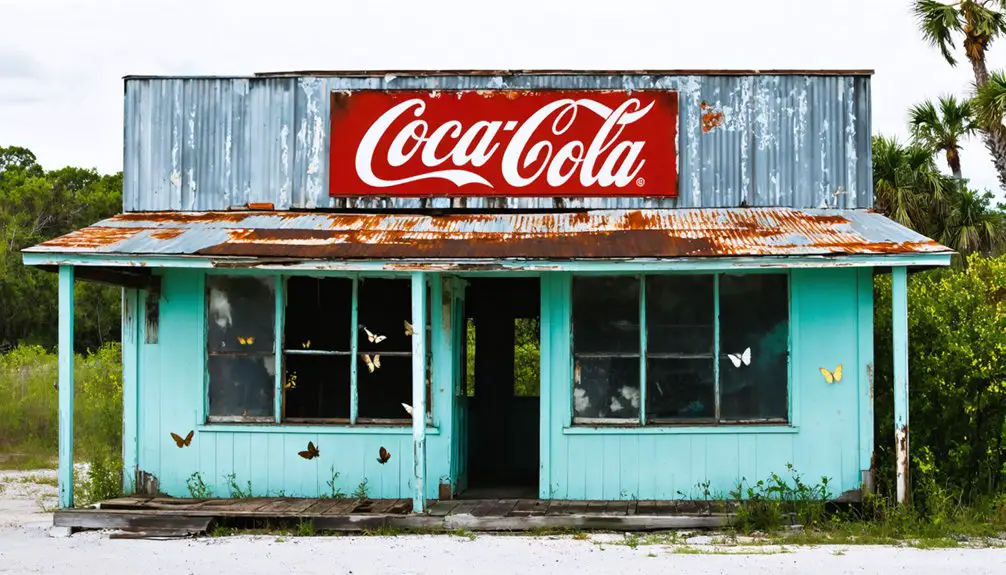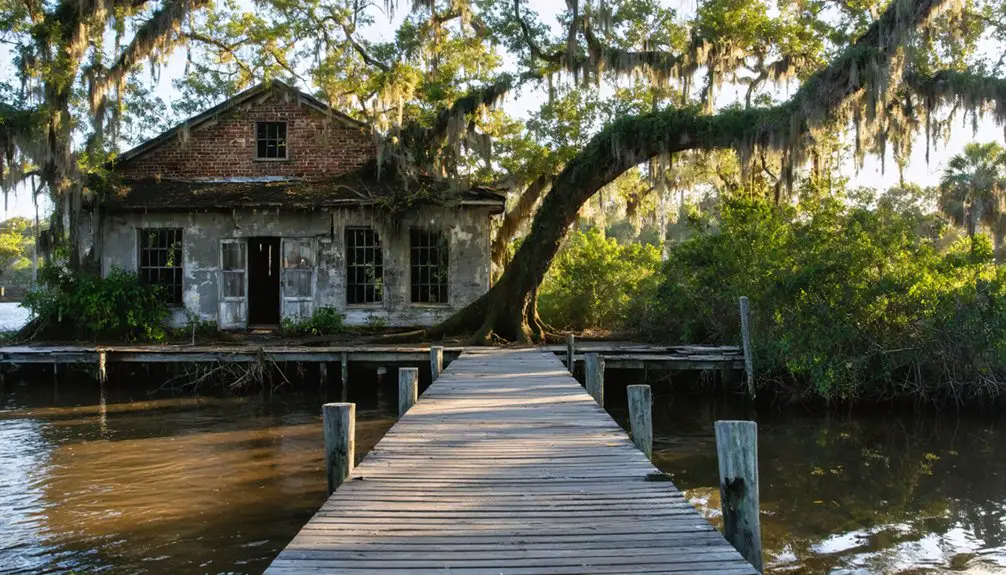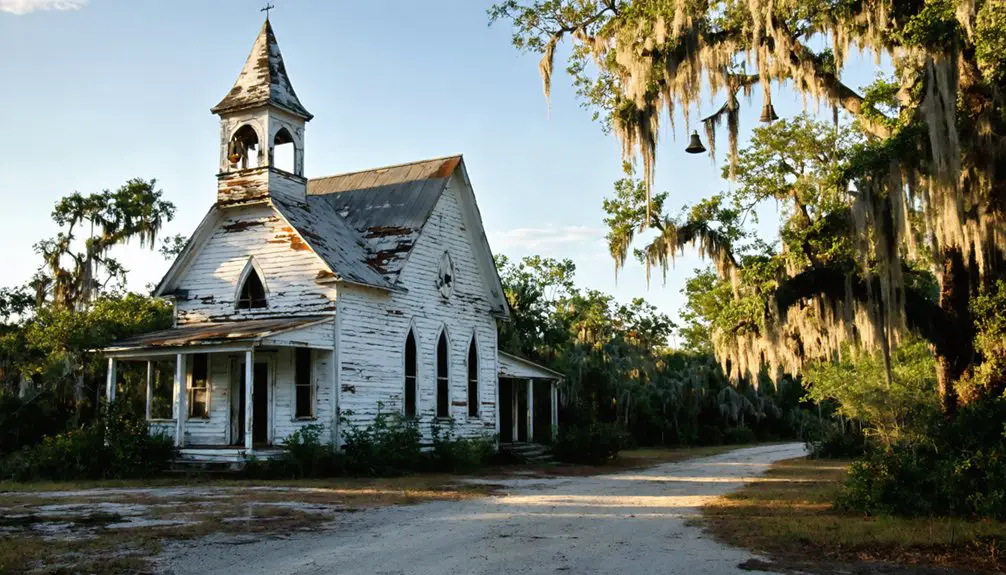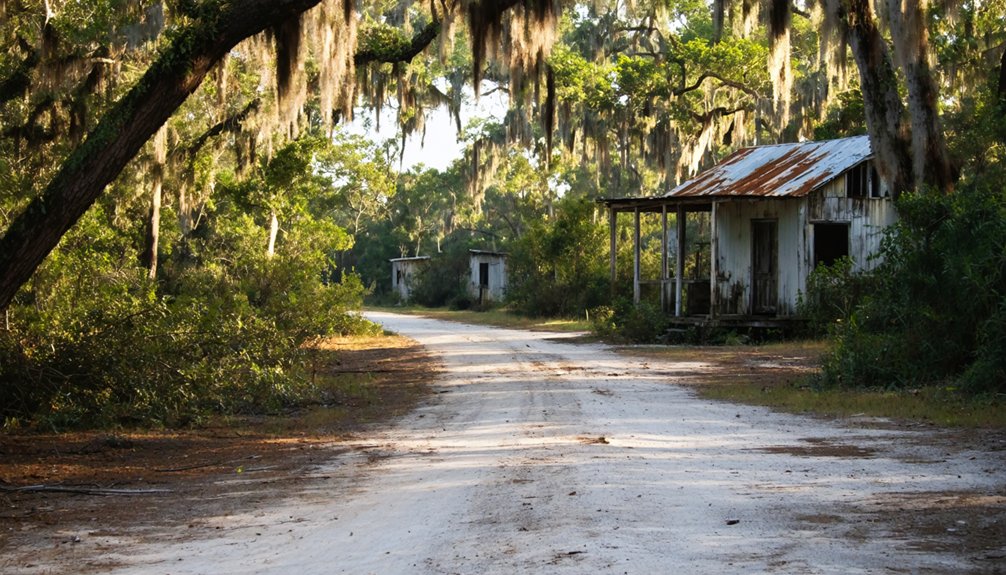
Planning a ghost town road trip to Green Pond, Florida means heading to northern Polk County, near the Green Swamp, where a once-thriving citrus community quietly faded into history. Founded in 1879, Green Pond collapsed after devastating freezes and hurricanes wiped out its groves and livelihoods. Today, you’ll find an old cemetery, a crumbling grove barn, and scattered remnants along Green Pond Road. Pack water, bug spray, and sturdy shoes — there’s far more to this forgotten town than first meets the eye.
Key Takeaways
- Green Pond, Florida, is a ghost town in northern Polk County near the Green Swamp, founded in 1879 by pioneering families.
- The town’s decline resulted from devastating freezes and hurricanes that destroyed citrus groves, causing families to abandon their livelihoods.
- The Green Pond Cemetery is the primary surviving landmark, preserving the stories of founding families like the Judys, Meeks, and Raulersons.
- Scattered remnants along Green Pond Road include an old grove barn and cracker home ruins, offering authentic ghost town exploration.
- Pack water, insect repellent, and sturdy shoes, and visit during quieter times for the best reflective experience.
What Is Green Pond, Florida?
Tucked away in northern Polk County, Green Pond is a forgotten ghost town sitting on the edge of Florida’s sprawling Green Swamp, south of Clermont and north of Polk City. Founded in 1879, its history traces back to pioneering families like the Judys, Meeks, Raulersons, and Hancocks, who built their livelihoods around Florida’s citrus industry.
The community even established a Baptist church in 1890, signaling real ambition and roots. But freezes, hurricanes, and economic collapse eventually stripped Green Pond of its essence.
Today, you won’t find residents or businesses here. What remains are a quiet cemetery, scattered remnants of cracker homes, and an old grove barn. It’s a raw, open-air window into Florida’s past, waiting for those willing to explore it.
Why Did Green Pond Disappear?
As you piece together Green Pond’s story, two culprits stand out: the collapse of the citrus industry and the brutal natural disasters that destroyed it.
Freezes and hurricanes repeatedly hammered the crops, stripping families of their livelihoods and leaving them with little reason to stay.
Once the citrus economy crumbled, the community had no foundation left to stand on.
Citrus Industry Collapse
Like many small Florida communities of its era, Green Pond lived and died by the citrus industry. Citrus farming built this community, giving families like the Meeks and Raulersons a livelihood worth fighting for.
Groves stretched across the land, and for a time, prosperity felt permanent.
But Florida’s weather had other plans. Devastating freezes and hurricanes tore through the groves, wiping out harvests and crushing the economic foundation that held the community together.
Economic decline followed swiftly, and families had little reason to stay once the trees stopped producing.
When you walk the remnants of Green Pond today, that old grove barn tells the story better than any history book. It stands as a quiet reminder that prosperity, once lost, rarely returns to places this small.
Devastating Natural Disasters
Florida’s weather didn’t just inconvenience Green Pond — it buried it. When you’re standing near that old grove barn today, it’s hard not to imagine the devastation that rolled through here in waves.
Freezes crept in and blackened citrus groves overnight. Hurricanes tore through what the cold left behind. These natural disasters didn’t just damage crops — they shattered the economic impact of an entire community built on fragile roots.
Families like the Meeks and Raulersons had staked everything on those groves. One bad season could wipe out a year’s work. Several bad seasons in succession? That could erase a town.
Green Pond never recovered financially, and residents drifted away, leaving behind only graves, a weathered barn, and silence thick enough to feel.
Who Were the Families That Built Green Pond?
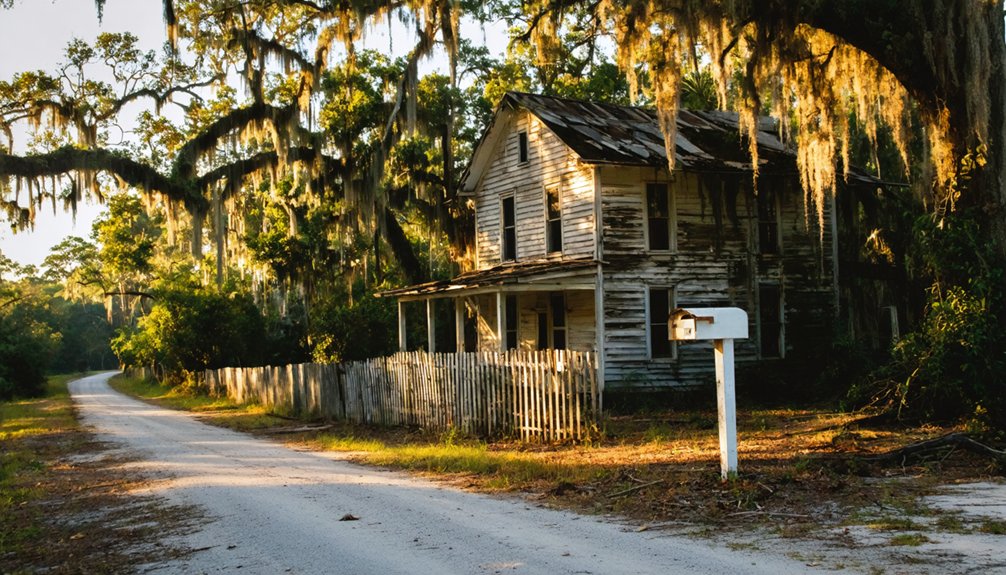
The families who built Green Pond weren’t wealthy landowners or powerful developers — they were hardworking settlers who carved a life out of Florida’s rough, swampy terrain.
You’ll find their stories embedded in the cemetery’s weathered stones and the overgrown land they once farmed.
The Judys Family helped establish the community’s early roots, while the Meeks Legacy centers on citrus farming that once drove the local economy.
The Raulerson Contributions shaped the agricultural backbone of the region, turning swampland into productive groves.
The Hancock History carries a deeper weight — one family member was a War of 1812 veteran who died in 1856, his grave now resting quietly in the cemetery.
These families built something real, and Green Pond’s remnants honor their forgotten effort.
What Still Stands in Green Pond Today?
When you arrive at Green Pond today, you won’t find much — but what remains tells the story honestly. The Green Pond Cemetery stands as the town’s most significant surviving landmark, making Cemetery Exploration the main draw for visitors.
You’ll walk among old graves, many unmarked, representing families who carved lives from this land. It’s quiet, raw, and real.
Beyond the cemetery, Historic Structures like an old grove barn still stand nearby, silently honoring the citrus industry that once sustained this community.
An old grove barn still stands, silently honoring the citrus industry that once sustained this quiet community.
Scattered remnants of cracker homes line Green Pond Road, offering fragmented glimpses into daily life here. Nothing is manicured or restored — and that’s exactly the point.
What survives does so honestly, asking you to piece together the past yourself.
What Can You See Along East Green Pond Road?
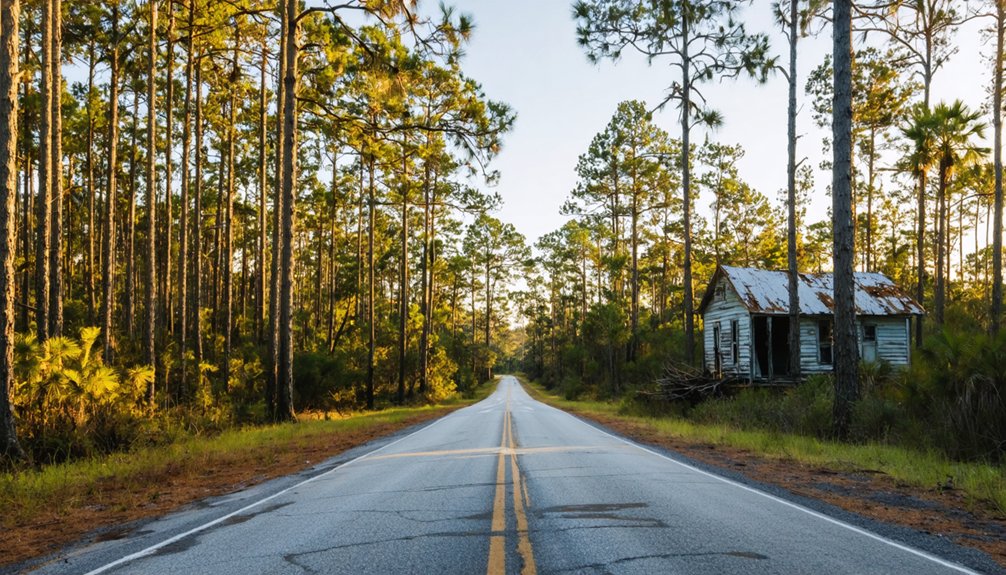
Driving East Green Pond Road pulls you deeper into the story that the cemetery and barn only begin to tell.
As you cruise near State Road 33, scattered remnants of old cracker homes emerge between the trees, their weathered frames whispering of families who once worked this land. These humble structures stand among the area’s quiet historic landmarks, connecting you directly to Green Pond’s 1879 roots.
The Green Swamp edges close here, and local wildlife moves freely through the brush — watch for birds, deer, and creatures that have reclaimed what families once farmed.
Nobody’s rushing you. The road rewards slow exploration and open eyes. Every overgrown lot and collapsed wall represents a chapter of citrus-era Florida that most travelers never discover.
This stretch belongs to the curious and the free.
How Do You Get to Green Pond, Florida?
Finding Green Pond means heading to northern Polk County, where the town sits south of Clermont and north of Polk City on the edge of the Green Swamp.
Your driving directions are straightforward — take State Road 33 and turn onto East Green Pond Road to reach the site. The coordinates 28°18.6’N latitude and 81°53.9’W longitude will guide you precisely if you’re using GPS.
You won’t need a specialized vehicle since the area’s classified as a 2WD grid location, meaning your standard car handles the terrain fine.
While you’re exploring local attractions nearby, Green Pond itself remains the quiet centerpiece — a forgotten community reclaimed by Florida’s wild landscape.
Pack your curiosity, give yourself open time, and let the road lead you somewhere history almost swallowed whole.
What Should You Pack for a Green Pond Day Trip?
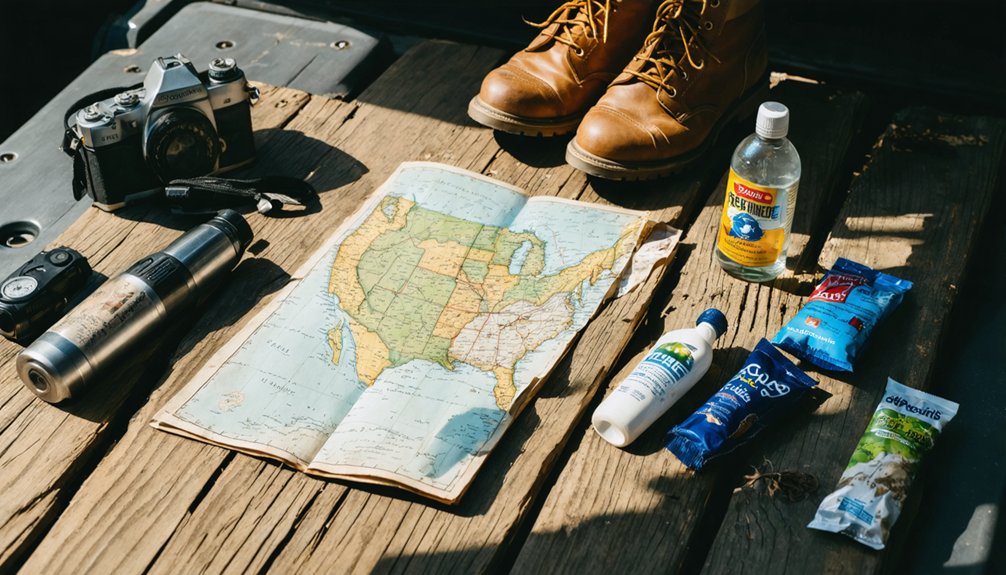
A day trip to Green Pond rewards the well-prepared traveler, so pack smart before you hit East Green Pond Road.
You’re venturing into edge-of-the-swamp terrain, so your packing essentials should reflect that reality. Bring plenty of water, insect repellent, and sturdy closed-toe shoes since the ground near Green Swamp gets unpredictable. Florida’s sun hits hard, so sunscreen and a wide-brimmed hat aren’t optional.
Carry a camera to document the cemetery’s weathered graves and the old grove barn before time erases them further. A printed map helps since cell service gets spotty near State Road 33.
Toss a first aid kit into your bag and let someone know your plans. This ghost town doesn’t ask much, but it rewards those who arrive ready.
What to Expect When You Visit Green Pond Today
Visiting Green Pond today means accepting that almost nothing survives from its 1879 origins. You won’t find ghost stories etched into crumbling walls or dramatic ruins demanding your attention.
Instead, you’ll encounter quiet remnants — a weathered cemetery holding unmarked graves, an old grove barn standing as silent proof of the citrus era that once defined this community, and scattered traces of cracker homes along Green Pond Road.
The historical significance here isn’t loud — it whispers. Walk among the cemetery’s forgotten plots belonging to families like the Judys, Meeks, and Raulersons, and you’ll feel the weight of lives completely erased by time.
Arrive via East Green Pond Road near State Road 33, bring your curiosity, and let the landscape speak for itself.
Frequently Asked Questions
Is Green Pond, Florida Officially Recognized as a Ghost Town?
Yes, you’ll find Green Pond officially recognized as a ghost town in Jim Warnke’s book. Its history exploration reveals forgotten local legends, crumbling remnants, and a haunting cemetery that’s calling your adventurous spirit forward.
Are There Any Paranormal or Supernatural Claims Associated With Green Pond?
You won’t find any documented ghost sightings or local legends tied to Green Pond. The records don’t capture supernatural claims, leaving the town’s eerie, forgotten atmosphere to speak for itself through crumbling remnants and silent, unmarked graves.
What Type of Vehicle Is Needed to Access Green Pond Safely?
You don’t need off-road vehicles to reach Green Pond — it’s classified as a 2WD-accessible location. Still, take safety precautions, as East Green Pond Road near State Road 33 winds through rugged, swampy Florida wilderness.
What Are the Exact Coordinates for Locating Green Pond, Florida?
Like a treasure map’s X marking forgotten dreams, you’ll find Green Pond’s historical significance at 28°18.6’N, 81°53.9’W—coordinates where local legends whisper through the swamp, guiding your free-spirited journey into Florida’s haunting past.
Is Preservation of Green Pond’s Remaining Ruins Actively Being Pursued Today?
Active preservation isn’t confirmed, but you’re encouraged to champion Green Pond’s historic significance through community involvement. These crumbling remnants whisper forgotten stories, and your advocacy can guarantee future generations explore this evocative ghost town’s haunting, irreplaceable legacy freely.
References
- https://floridatrailblazer.com/2015/07/20/roadside-history-ghost-town-of-green-pond-old-grove-barn/
- https://www.youtube.com/watch?v=DBFWB4tEVOs
- https://www.ghosttowns.com/states/fl/greenpond.html
- https://www.theledger.com/story/news/2005/05/01/deserted-polk-communities-reflect-industries-that-built-them/26155345007/
- https://en.wikipedia.org/wiki/List_of_ghost_towns_in_Florida
- https://en.wikipedia.org/wiki/Green_Pond
- https://www.ghosttowns.com/states/fl/fl.html
- https://www.youtube.com/watch?v=qoXXCVOijUM
- https://polkhistorycenter.contentdm.oclc.org/digital/api/collection/pchaquarterly/id/248/download
- https://en.wikipedia.org/wiki/Category:Former_populated_places_in_Florida