You’ll find Hardyville two miles north of Bullhead City off Highway 95, where Arizona’s first Mohave County seat once thrived as a Colorado River steamboat port before railroads and politics erased it from history. Watch for the brown historic site sign, then walk the 2.5-acre pioneer cemetery overlooking the river. Visit between December and April to avoid deadly summer heat. There’s far more to this ghost town‘s haunting story than the desert reveals at first glance.
Key Takeaways
- Hardyville sits two miles north of Bullhead City along Highway 95; look for a brown historic site sign to locate it easily.
- The pioneer cemetery spans 2.5 acres featuring cobblestone grave markers, with an estimated 16–24 burials and only 10 identified individuals.
- Founded in 1864, Hardyville declined after losing county seat status and being bypassed by the Southern Pacific Railroad.
- Visit during winter or early spring when temperatures range from 55–70°F; summer heat exceeds 110°F, making visits dangerous.
- Nearby attractions include Oatman’s gold mining history, Fort Mojave’s military markers, and Laughlin’s desert commerce stories along Highway 95.
What Was Hardyville, Arizona?
Before Bullhead City claimed the map, Hardyville ruled this stretch of the Colorado River. Founded in 1864 at the crossroads of the Colorado River and Mojave Road, this ghost town packed serious historical significance into a short lifespan.
Entrepreneur William H. Hardy built it into a thriving steamboat port and ferry crossing, drawing up to 300 residents at its peak.
William H. Hardy transformed a raw riverbank into a bustling steamboat port, attracting up to 300 ambitious frontier settlers.
Hardyville even served as Mohave County’s first county seat from 1864 to 1873. But losing that designation started its slide, and when the Southern Pacific Railroad bypassed the town, river traffic collapsed.
Warehouses emptied, wharves rotted, and people moved on. Today, only a pioneer cemetery marks where this ambitious frontier settlement once stood, two miles north of modern Bullhead City.
Why Hardyville Disappeared From the Map?
Hardyville’s rise was impressive, but its collapse came fast and hit hard.
Two brutal economic factors sealed its fate. First, it lost its county seat status in 1873, triggering an immediate population drain.
Then came the knockout blow — the Southern Pacific Railroad bypassed the town entirely, strangling river traffic that had kept Hardyville alive.
Without steamboats pushing upstream trade, the warehouses emptied.
The wharves rotted. Merchants packed up and chased opportunity elsewhere, the way free-spirited people always do when a place stops making sense.
Where Hardyville Sits on the Arizona Map
Two miles north of present-day Bullhead City, the ghost of Hardyville haunts the eastern bank of the Colorado River, tucked just off Highway 95 where a brown historic site sign still points the way.
Your map navigation is straightforward — head north on Highway 95, watch the east side of the road, and follow the directional arrows toward one of Arizona’s most overlooked landmarks.
The historical significance of this spot runs deeper than most realize.
Hardyville once anchored Mohave County as its first county seat, commanding river traffic at the intersection of the Colorado River and Mojave Road.
Today, a bridge to Laughlin, Nevada sits just south of the site, framing a landscape where empire once moved and silence now rules.
How to Get to the Hardyville Pioneer Cemetery
To reach the Hardyville Pioneer Cemetery, head north on Highway 95 from Bullhead City’s center and watch the east side of the road for a brown historic site sign with directional arrows.
You can’t miss the sign near the northern edge of town, just south of the bridge crossing into Laughlin, Nevada.
Once you’ve spotted it, follow the arrows and you’ll find the cemetery perched on a bluff overlooking the Colorado River, surrounded by modern homes that stand where steamboats once docked.
Finding Highway 95 Access
Finding the Hardyville Pioneer Cemetery is straightforward once you’re on Highway 95 in the northern edge of Bullhead City. Your highway navigation becomes effortless when you spot the brown historic site sign on the east side of the road, complete with directional arrows pointing you toward forgotten history.
Follow these steps for scenic stops and smooth arrival:
- Travel north on Highway 95 through Bullhead City toward the cemetery access point.
- Watch for the brown historic landmark sign positioned on the highway’s east side.
- Turn as directed by the arrows toward the bluff overlooking the Colorado River.
- Park near the surrounding residential area and approach the 2.5-acre cemetery on foot.
The bridge to Laughlin, Nevada sits just south, making this an easy detour worth every mile.
Locating The Historic Sign
Once you’ve made your turn off Highway 95, your eyes should lock onto the brown historic site sign standing on the road’s east side — a small but deliberate marker pointing toward what little remains of Hardyville’s story.
Follow the directional arrows without hesitation. They’ll guide you toward the cemetery sitting on a bluff overlooking the Colorado River, framed oddly by a nearby Safeway and modern homes.
This ghost town left almost nothing standing, making that sign your most critical landmark. It’s a quiet symbol of historic preservation efforts that kept this forgotten river port from vanishing entirely.
The cemetery’s roughly 2.5 acres hold an estimated 15 to 20 burials, most unmarked. Without that sign, you’d drive past Hardyville without ever knowing Arizona’s first Mohave County seat once thrived here.
A few key landmarks will anchor your approach to the Hardyville Pioneer Cemetery and keep you from circling Bullhead City’s modern sprawl in frustration.
Local folklore and ghost stories thrive in places you can actually find, so orient yourself using these four markers:
- Highway 95 runs directly past the cemetery’s eastern edge.
- A brown historic site sign sits on the highway’s east side with directional arrows.
- A Safeway store faces the bluff where the graves overlook the Colorado River.
- The Laughlin, Nevada bridge sits just south, confirming you’re in the right corridor.
You’re roughly two miles north of central Bullhead City.
Modern homes now surround the site, but the river-facing bluff remains unmistakable — a quiet, wind-worn threshold between Arizona’s living present and its restless past.
What You’ll Actually Find at the Cemetery?
Once you step into the Hardyville Pioneer Cemetery, you’ll notice the graves marked not by headstones but by circular piles of cobblestones, a raw and haunting reminder of frontier burial practices.
Heavy rains have eroded the bluff over the years, and you might spot exposed coffins edging dangerously close to the highway below.
Adding to the mystery, the University of Arizona reportedly removed original markers from the site and has refused to return them, leaving most graves unnamed and largely forgotten.
Cobblestone Grave Markers
Scattered across 2.5 acres of sun-baked Arizona earth, the cobblestone grave markers at Hardyville Pioneer Cemetery are the settlement’s last whispers to the living.
These circular stone arrangements reveal frontier burial practices where settlers used what the land offered.
Each cobblestone carries quiet symbolism worth understanding:
- Circles represented eternity — no beginning, no end, just like the river flowing beside them.
- River stones were chosen deliberately, connecting the dead to the Colorado’s endless current.
- Unmarked graves protected identities during lawless times, preserving dignity through anonymity.
- Clustered arrangements reflected community bonds — even in death, settlers stayed together.
You’re walking through history’s margins here.
These stones held their ground when everything else collapsed, eroded, or got swallowed by Bullhead City’s sprawl.
Erosion And Exposed Coffins
Those cobblestone circles have held their ground against time — but the earth beneath them hasn’t. Heavy rains have carved through the bluff, and erosion has done what no vandal could — exposed actual coffins to the open air and the passing highway.
You’re looking at a site where grave preservation isn’t just a historical courtesy; it’s an urgent, ongoing battle. The ground shifts, the river wind cuts hard, and decades of neglect compound every storm’s damage.
Cemetery restoration efforts remain frustratingly incomplete, with the University of Arizona reportedly holding removed markers and refusing to return them.
When you stand here, you feel the tension between what’s been lost and what barely survives. This place doesn’t just show you history — it dares you to reckon with it.
Missing Original Markers
What you’ll find at Hardyville Pioneer Cemetery isn’t what you’d expect from a historically significant site — no carved headstones, no iron fences, no engraved names catching the afternoon light. The missing markers tell their own story.
The University of Arizona reportedly removed original markers and refuses to return them, leaving burial preservation in a fragile state.
Here’s what actually greets you:
- Circular cobblestone piles marking individual graves
- Mostly unnamed, uninscribed resting places
- An estimated 10 known burials among roughly 16 to 24 total
- A landscape shaped more by neglect than by time
You’re standing where a frontier county seat once breathed. The absence itself becomes the artifact — raw, unpolished, and unapologetically honest about how history treats the forgotten.
The Cobblestone Grave Rings and Burial Mysteries at Hardyville
Among the most haunting features you’ll find at Hardyville’s pioneer cemetery are the cobblestone rings—circular arrangements of river stones that mark graves where wooden headboards have long since rotted away.
These deliberate circles reflect burial rituals practiced by early settlers who used what the land offered, giving cobblestone symbolism a quiet permanence that wood never could.
You’re looking at an estimated 15 to 20 graves, though Find-A-Grave lists only 11. The discrepancy hints at deeper mysteries—unmarked souls, lost records, forgotten stories.
Heavy rains have occasionally exposed coffins near the highway’s edge, reminding you that time doesn’t bury everything cleanly.
Walk carefully here. Each stone ring represents someone who helped build a thriving river town that the modern world nearly erased completely.
Who Is Buried at the Hardyville Pioneer Cemetery?
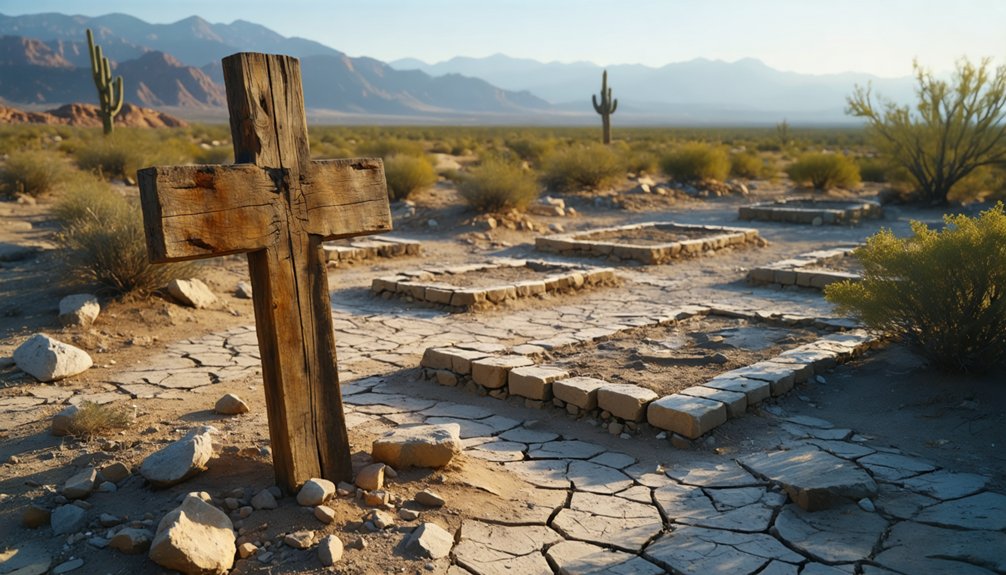
Piecing together who actually rests at Hardyville’s pioneer cemetery feels like detective work with half the evidence missing. The burial history here is frustratingly incomplete, yet what survives tells a raw frontier story worth chasing.
Find-A-Grave currently documents:
- 10 identified individuals with recorded names and partial histories
- 1 completely unknown burial lost to time and missing markers
- Several additional graves estimated between 16 and two dozen total
- No confirmed famous burials, though early settlers and river traders likely rest here
What makes this site haunting is what’s gone — the University of Arizona reportedly removed grave markers and refuses to return them.
You’re fundamentally walking above people history forgot. That tension between erasure and remembrance is exactly why Hardyville demands your visit.
Historic Sites Near Hardyville Worth Visiting the Same Day
Hardyville’s cemetery rewards your curiosity, but the surrounding region holds enough layered history to fill an entire day if you’re willing to push further down Highway 95.
Cross the bridge south into Laughlin, Nevada, where the Colorado River tells its own story of desert commerce and reinvention.
Drive north toward Oatman, a former gold mining settlement that breathes ghost town history through its weathered storefronts and wild burros roaming freely down Main Street.
Oatman’s pioneer life mirrors Hardyville’s scrappy ambition — both towns rose hard and faded faster than anyone expected.
Fort Mojave’s historical markers also sit within reasonable range, connecting military expansion to the same river corridor that once made Hardyville essential.
Pack water, keep your tank full, and let the Mojave reveal itself mile by mile.
Best Season to Visit the Hardyville Pioneer Cemetery
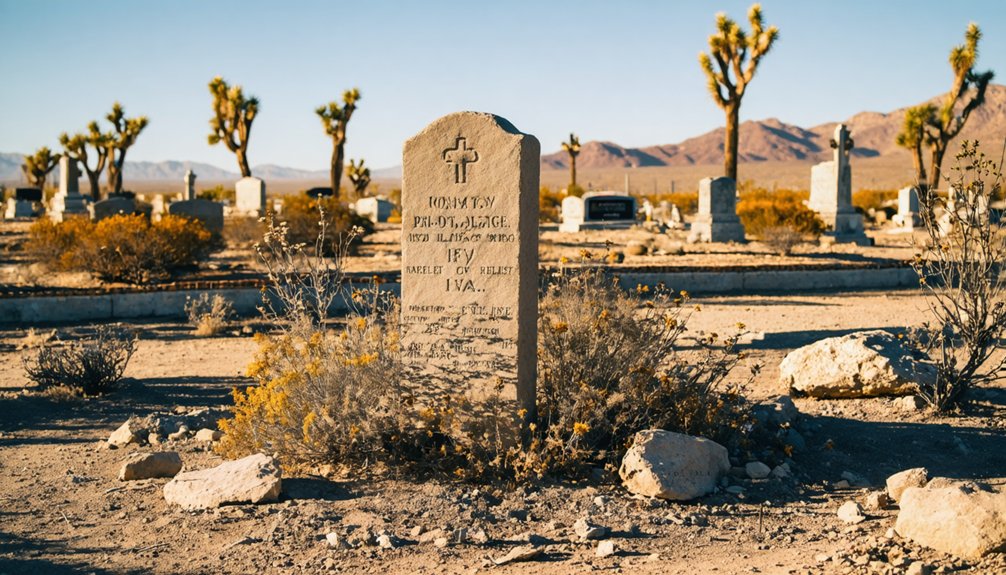
Winter and early spring hand you the best window for visiting the Hardyville Pioneer Cemetery, when desert temperatures drop into bearable ranges and the brutal Mojave sun stops punishing every step you take across the exposed bluff.
Weather considerations matter here — this open site offers zero shade. Plan your best time around these conditions:
- December through February delivers 55–70°F highs, ideal for unhurried exploration.
- March and April offer mild mornings before afternoon heat climbs aggressively.
- Summer months push temperatures past 110°F, making any outdoor cemetery walk genuinely dangerous.
- Rain seasons occasionally erode the bluff, sometimes exposing coffins near the highway’s edge.
You’re walking ground where 1860s steamboat crews and frontier settlers rest. Respect that history by arriving prepared, not desperate.
How to Visit Hardyville Without Damaging What Little Remains
What’s left of Hardyville fits inside 2.5 acres and roughly 15 to 20 graves marked by nothing more than cobblestone circles — so every careless step carries real consequence.
This ghost town already lost its buildings, its county seat status, and most of its markers. Don’t let it lose anything more.
Stay on visible pathways and keep your feet away from cobblestone arrangements. Those circular piles aren’t decorative — they’re the only evidence that someone lived, worked, and died here during Arizona’s earliest frontier chapter.
The historical significance of this site demands more than casual curiosity.
Don’t remove rocks, don’t let children treat the grounds as a playground, and don’t drive off-road near the bluff.
Respect earns you the right to explore freely. Carelessness closes sites permanently.
Frequently Asked Questions
Was Hardyville Ever Featured in Films or Television Westerns?
No records confirm Hardyville’s use as film locations or western legends on screen, but you’d feel its cinematic soul walking among cobblestone graves where steamboats once roared and frontier freedom defined every dusty, adventurous moment.
Can Metal Detectors Be Used Legally at the Hardyville Cemetery Site?
You shouldn’t use metal detectors here — cemetery preservation laws and metal detecting regulations protect this sacred ground. Respect the cobblestone graves marking Arizona’s pioneers; you’ll honor their legacy far more powerfully by simply bearing witness.
Are Any Descendants of Hardyville Founders Still Living in Arizona?
Though Hardyville’s buildings vanished, founder legacies live on—you’ll find descendant stories scattered across Arizona. Research local historical societies, and you might uncover living relatives who carry Hardy’s pioneering spirit in their veins today.
Has Any Treasure Ever Been Reported Hidden Near the Hardyville Settlement?
No confirmed treasure legends exist for Hardyville, but you’ll find hidden artifacts potentially buried beneath eroded soil near the old steamboat port. History’s adventurous spirit invites you to explore what rain and time haven’t yet revealed.
Does the Hardyville Cemetery Have Any Documented Paranormal Activity Reports?
Where there’s smoke, there’s fire — Hardyville’s cemetery history hasn’t produced documented ghost sightings, but you’ll still feel history’s weight walking among those cobblestone grave markers, where unmarked pioneers rest silently above the Colorado River.
References
- https://www.ghosttowns.com/states/az/hardyville.html
- https://coloradoriverhistoricalsociety.org/resources/the-story-of-hardyville.pdf
- https://www.arizonan.com/ghost-towns/hardyville/
- https://en.wikipedia.org/wiki/Hardyville
- https://www.facebook.com/thebeeaz/posts/did-you-knowwilliam-hardy-founded-the-town-of-hardyville-present-day-bullhead-ci/2052257994810461/
- https://en.wikipedia.org/wiki/List_of_ghost_towns_in_Arizona
- http://laughlinbuzz.blogspot.com/2013/08/a-visit-to-historic-hardyville-cemetery.html
- https://jandlresearchandexploration.blogspot.com/2018/05/hardyville-az.html
- http://genealogytrails.com/ariz/mohave/ghost-towns.html
- http://www.apcrp.org/HARDYVILLE/Hardyville_Cem_Text_011109.htm