Greyhound Mine sits nearly 8,000 feet up in Custer County’s Challis National Forest, and it’s one of Idaho’s most intact ghost towns. You’ll need a 4WD vehicle to navigate the rocky seven-mile stretch off Idaho 75. Visit in summer or fall for the best road conditions. Bring a paper map, sturdy boots, and extra water — cell service doesn’t exist out here. There’s far more to this silver and gold relic than first meets the eye.
Key Takeaways
- Greyhound Mine sits in Custer County’s Seafoam Mining District at nearly 8,000 feet elevation, roughly seven miles off Idaho 75 via rocky roads.
- A 4WD vehicle or ATV is strongly recommended due to narrow, winding road conditions and a log beam bridge creek crossing.
- Visitors can explore abandoned ore bins, mill ruins, and artifacts from a historic 10-stamp smelter showcasing 19th-century mining operations.
- Summer and fall offer the best visiting conditions, while winter snowfall makes roads completely impassable for access.
- Pack a detailed map, sturdy boots, extra water, and a first aid kit, as the area has no cell service.
Why Greyhound Mine Is One of Idaho’s Best-Preserved Ghost Towns
Tucked away in Custer County’s Seafoam Mining District at nearly 8,000 feet elevation, Greyhound Mine has quietly endured where countless other Idaho ghost towns have crumbled into obscurity.
Its remote location has ironically become its greatest protector, keeping casual visitors away while sheltering remarkable ghost town preservation across decades.
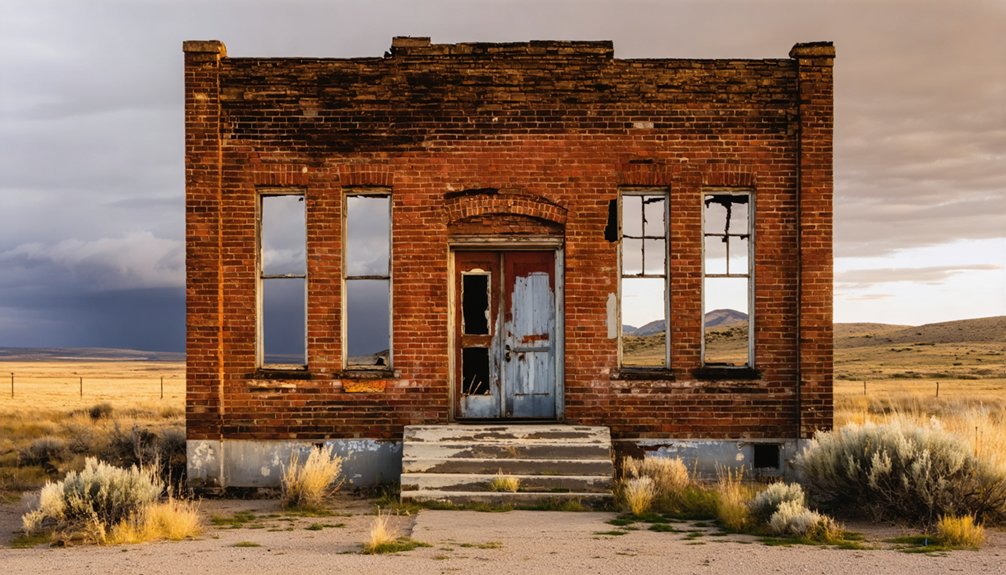
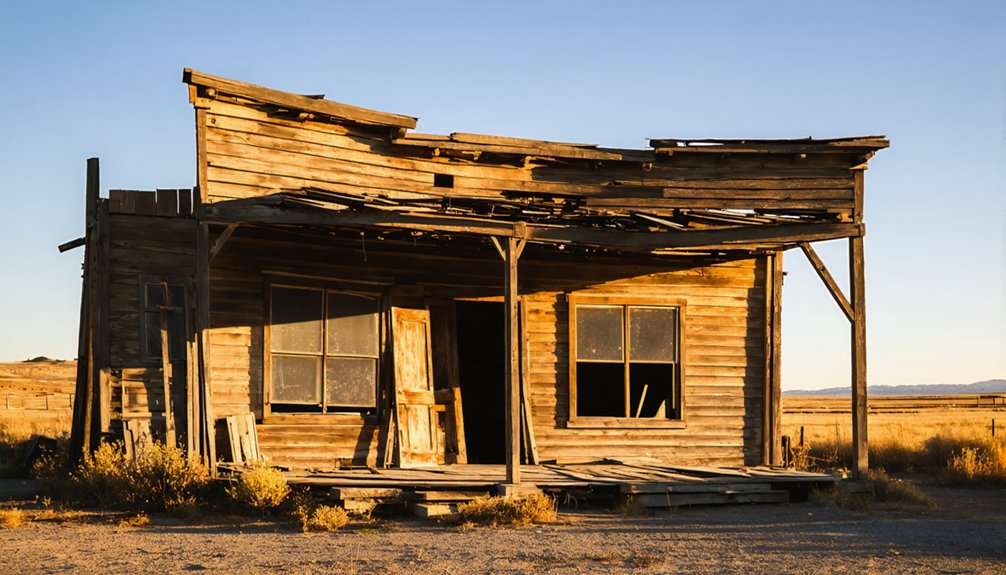
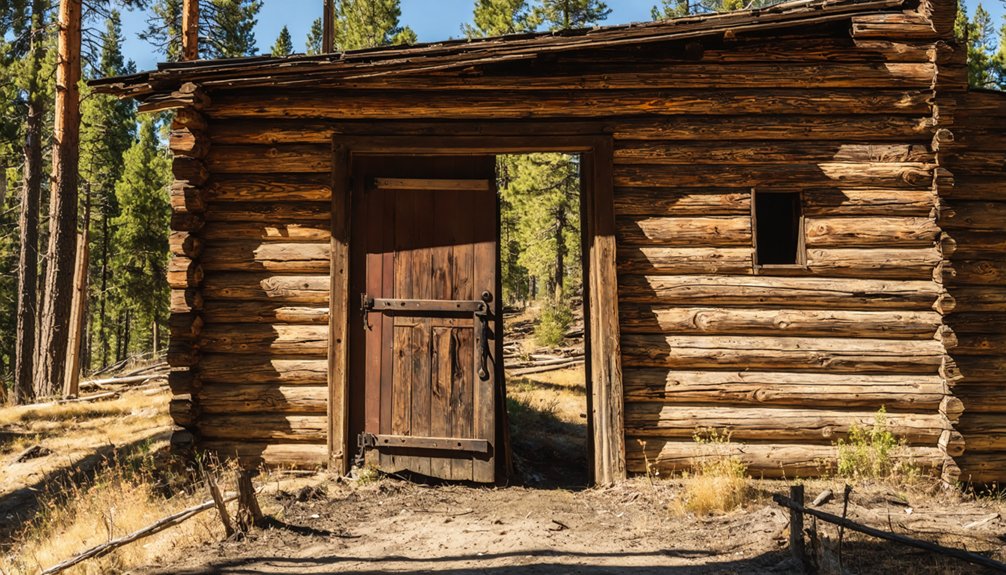
You’ll still find the abandoned ore bin and mill ruins standing as they did in 1994, offering a raw, unfiltered window into late-1800s silver and gold mining heritage.
The stamp mill, patented claim infrastructure, and scattered building remnants tell stories that polished museums simply can’t replicate.
This isn’t a reconstructed attraction — it’s the real thing.
South-central Idaho’s rugged backcountry has preserved what time and neglect typically erase everywhere else.
Where Is Greyhound Mine in Custer County, Idaho?
Greyhound Mine sits at nearly 8,000 feet in Custer County’s Seafoam Mining District, perched on the north side of a Sulphur Creek valley within Challis National Forest.
You’ll reach it by heading roughly seven miles off Idaho 75, traversing a rocky, narrow, winding road that demands a 4WD vehicle. The terrain isn’t forgiving, but that’s part of the draw.
Once you arrive, the cultural significance of this place hits immediately.
The past doesn’t whisper here — it hits you full force the moment you arrive.
You’re standing where silver and gold once drove an entire community into these remote mountains. Historical artifacts like the abandoned ore bin and mill ruins aren’t behind museum glass — they’re right in front of you, weathered and raw.
This is Idaho’s backcountry history unfiltered, waiting for those bold enough to seek it out.
The Silver and Gold History Behind Greyhound Mine
Silver and gold pulled desperate, ambitious men into these unforgiving Idaho mountains, and Greyhound Mine became the beating heart of that pursuit. This patented claim group held multiple lode claims — Republican, Buck Horn, Bull Dog, Idaho, Logan, Holy Terror, and others — each carved from shale-covered mountainsides rich with quartz and pyrite.
The mine’s historical significance becomes undeniable when you examine its infrastructure. Operators ran a 10-stamp smelter mill, processing ore with mining techniques that represented serious industrial ambition in such remote terrain.
Getting heavy equipment up these tortuous mountain roads wasn’t just difficult — it was a brutal test of human determination.
Today, abandoned ore bins and mill ruins still stand as silent proof of that relentless drive. You’re walking ground where fortunes were chased and sometimes found.
What’s Still Standing at the Greyhound Mine Site?
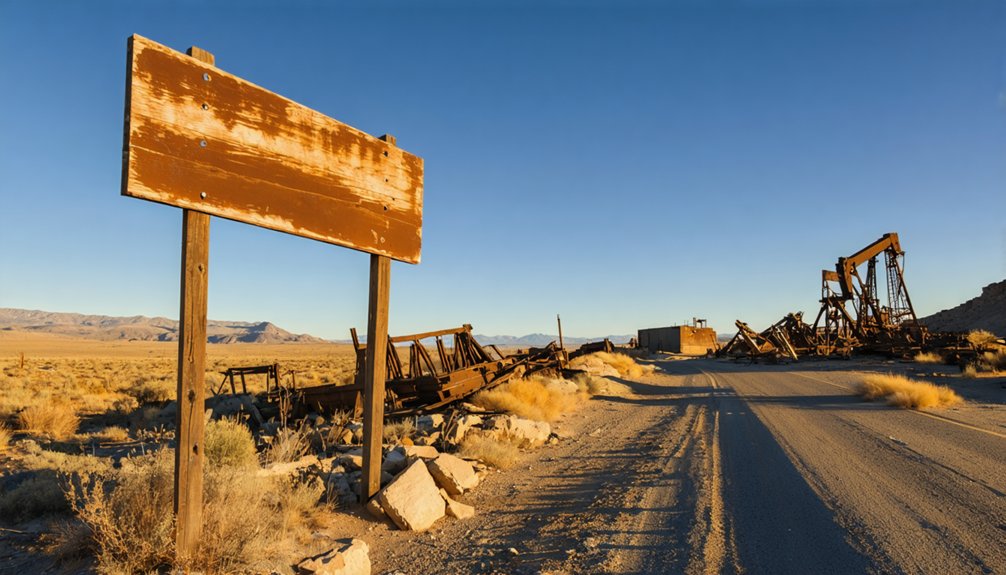
When you arrive at the Greyhound Mine site, you’ll find that time hasn’t completely erased its past — the abandoned ore bin and mill ruins still stand as quiet indicators of the operation’s industrial scale.
You can walk among the remnants of what was once a bustling 10-stamp smelter mill, its weathered bones telling the story of silver and gold pulled from these Idaho mountains.
These preserved structures make Greyhound one of south-central Idaho’s best-surviving mining sites, offering you a rare, tangible connection to late-1800s frontier mining life.
Abandoned Mill Ruins
Though nature has reclaimed much of the surrounding landscape, the abandoned mill ruins and ore bin at Greyhound Mine stand as striking reminders of the site’s industrial past.
You’ll find yourself standing among echoes of the 10-stamp smelter that once thundered through these Idaho mountains. Look closely and you’ll discover:
- Weathered structural remnants revealing 19th-century construction techniques
- Abandoned machinery frozen in time against the mountain backdrop
- Mining artifacts scattered throughout the ruins, telling stories of silver and gold extraction
Walk carefully through the site, respecting what remains. These ruins represent Greyhound Mine’s place among south-central Idaho’s best-preserved mining locations.
Capture everything with your camera, but leave every artifact exactly where you find it — preservation keeps this adventure alive for fellow explorers.
Ore Bin Remains
Beyond the mill ruins, the ore bin stands as one of Greyhound Mine’s most commanding survivors — a rugged symbol of the sheer scale of operations that once defined this remote Idaho canyon.
Its ore bin history stretches back to the late 1800s, when miners hauled silver and gold through these mountains, feeding raw rock into a system built to process wealth from wilderness.
As you approach, you’ll feel the weight of that era. These mining relics don’t just sit quietly — they speak.
The structure’s weathered framework tells you exactly how hard men worked at 7,999 feet, far from civilization.
Respect what’s still standing. Don’t touch or remove anything.
You’re walking through a preserved chapter of Idaho history that deserves to survive your visit completely intact.
The Best and Worst Times to Visit Greyhound Mine
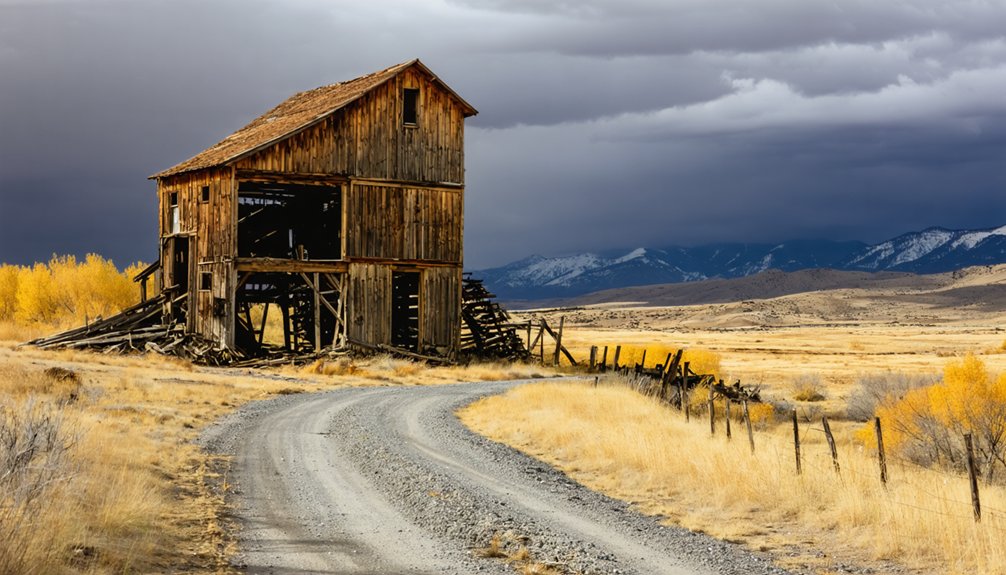
Planning your trip to Greyhound Mine around the right season can mean the difference between an unforgettable adventure and a frustrating dead end.
Sitting at nearly 8,000 feet, this remote site demands respect for its mountain climate.
Best visiting windows:
- Summer – Trails are clear, daylight is generous, and roads are passable.
- Fall – Crisp air and stunning foliage reward early arrivals before snow hits.
- Spring – Snowmelt opens access, though muddy conditions require 4WD readiness.
Worst visiting reality: Winter shuts everything down hard. Heavy snowfall makes roads completely impassable, and you won’t reach the site regardless of your vehicle.
Always check weather conditions before departing — mountain weather changes fast and shows no mercy.
How to Reach Greyhound Mine Without Getting Stuck?
Reaching Greyhound Mine means committing to roughly seven miles of rocky, narrow, winding road off Idaho 75 — and that road doesn’t forgive unprepared drivers.
Road conditions shift fast in these mountains, so check weather before you leave. Vehicle recommendations are straightforward: bring a 4WD, ATV, or arrive ready to hike.
Stop at the first creek crossing and cross the log beam bridge on foot.
Trail navigation rewards patience. You’ll spot photography spots around every bend, where scenic views of shale-covered mountainsides reveal the historical significance buried in this landscape.
Wildlife encounters are real here — stay alert and respectful.
Safety tips are simple: carry a detailed map, sturdy boots, extra water, and snacks.
Pack out everything you bring in. This place earns its freedom.
Crossing Sulphur Creek: The Final Mile to the Townsite
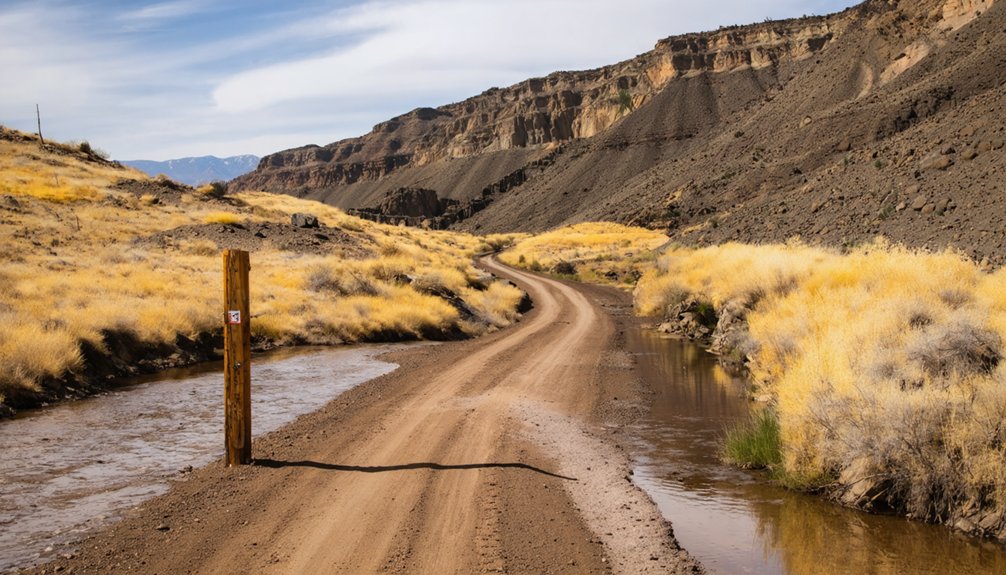
Once you’ve parked and crossed the log beam bridge on foot, Sulphur Creek becomes your guide for the final stretch to the townsite. That final crossing marks your shift from modern traveler to historical explorer.
Cross the log beam bridge, follow Sulphur Creek, and step from modern traveler into historical explorer.
Keep these essentials in mind:
- Watch your footing — creek-side rocks stay slick year-round, especially in spring runoff season.
- Follow established paths alongside Sulphur Creek to minimize erosion and protect the fragile terrain.
- Pack your camera — abandoned ore bins and mill ruins emerge dramatically around each bend.
The north valley wall rises sharply above you, revealing shale-covered mountainsides that once drove ambitious miners to haul 10-stamp mill equipment through impossibly rugged country.
Every step forward deepens your connection to Idaho’s raw, unfiltered mining past.
What to Pack Before You Leave for Greyhound Mine?
Packing smart separates a rewarding adventure from a miserable retreat at Greyhound Mine’s 7,999-foot elevation. Before you hit that rocky, narrow road toward Seafoam, gather your packing essentials carefully.
Throw a detailed map into your pack since cell service won’t bail you out here. Sturdy hiking boots handle the uneven terrain far better than sneakers ever could. Extra water and snacks keep your energy steady across the final foot approach. Your camera captures history you can’t recreate later.
Safety precautions matter equally. Check mountain weather conditions before departure — afternoon storms appear without warning at this elevation. Dress in layers, carry a basic first aid kit, and tell someone your planned route.
Freedom tastes sweetest when you’ve prepared for whatever the backcountry throws at you.
The Rules That Keep Greyhound Mine Standing
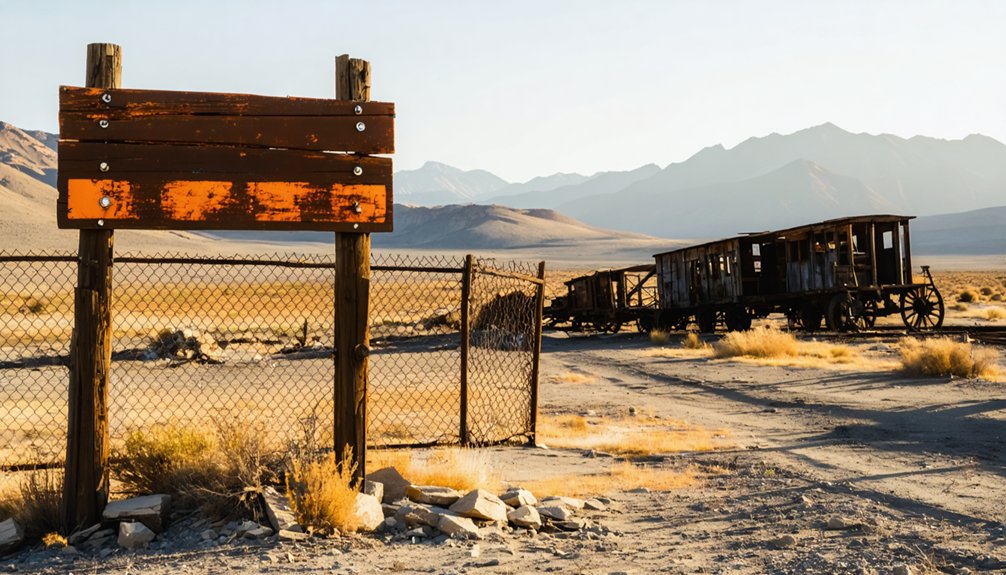
Greyhound Mine has survived this long because visitors respect a few simple rules — and you’re now part of that tradition.
Its historical significance depends entirely on how each person treats the site. Follow these three rules to support ongoing preservation efforts:
- Don’t touch or remove objects — every artifact stays exactly where history left it.
- Stick to established paths — wandering off-trail accelerates erosion and damages fragile structures.
- Pack out everything you bring — leave nothing behind except footprints.
These aren’t bureaucratic restrictions; they’re the reason Greyhound Mine still stands today.
You’ve traveled a rocky, winding road to witness something rare — a preserved slice of Idaho’s mining past. Honor that privilege by leaving it exactly as you found it.
Other Sites in the Seafoam District Worth Combining With Your Visit
The Seafoam Mining District rewards explorers who push a little further, and Greyhound Mine is just one piece of a much larger story scattered across this rugged stretch of central Idaho.
The surrounding Challis National Forest hides genuine hidden gems — abandoned claims, crumbling structures, and forgotten trails that most visitors never find. You’ll want to carve out extra time to wander beyond the main site.
Ridgelines above Sulphur Creek deliver breathtaking scenic views across mountain terrain that hasn’t changed much since prospectors first worked these slopes.
Pack detailed maps, because connecting multiple sites transforms a single-stop visit into a full backcountry adventure. The district rewards curiosity, so let your instincts guide you deeper into the valleys and you’ll uncover history that feels entirely your own.
Frequently Asked Questions
Are Camping Facilities Available Near the Greyhound Mine Site?
The knowledge doesn’t confirm camping facilities, but you’ll find camping options throughout Challis National Forest nearby. Explore local attractions like Seafoam’s rugged trails, breathe the wild mountain air, and embrace Idaho’s untamed freedom on your adventure!
Is a Permit Required to Visit Greyhound Mine?
No permit’s required to explore this ghost town history! At 7,999 feet, you’ll freely discover century-old mining techniques. Just respect the site — don’t remove artifacts, follow established paths, and leave only footprints behind.
Can Visitors Bring Dogs or Pets to Greyhound Mine?
The knowledge base doesn’t specify pet policies, but you’re free to explore! If you bring your pup, keep them leashed for dog-friendly activities, protect the fragile site, and make sure they don’t disturb the preserved historical remnants.
Are Guided Tours Ever Offered at the Greyhound Mine Site?
At nearly 8,000 feet elevation, no formal guided tours exist here — you’ll explore ghost town history and uncover mining techniques entirely on your own terms, making every independent discovery feel thrillingly yours to claim.
Has Greyhound Mine Ever Appeared in Documentaries or History Books?
The available knowledge doesn’t confirm Greyhound history appearing in documentary features or history books. You’ll want to explore local Custer County archives and Idaho historical societies — they’re your best adventure-ready resources for uncovering that fascinating story!
References
- https://www.ghosttowns.com/states/id/greyhoundmine.html
- https://www.idahogeology.org/pub/Staff_Reports/1997/S-97-6.pdf
- https://miningconnection.com/surface/featured_stories/article/idahos_mining_ghost_town_is_destination_for_hardy_adventurers
- https://westernmininghistory.com/mine-detail/10070826/
- https://www.mindat.org/loc-137480.html
- https://pnwphotoblog.com/category/ghost-town/ghost-towns-of-idaho/page/6/
- https://www.youtube.com/watch?v=-6HfwRPQdvQ
- https://visitidaho.org/things-to-do/ghost-towns-mining-history/