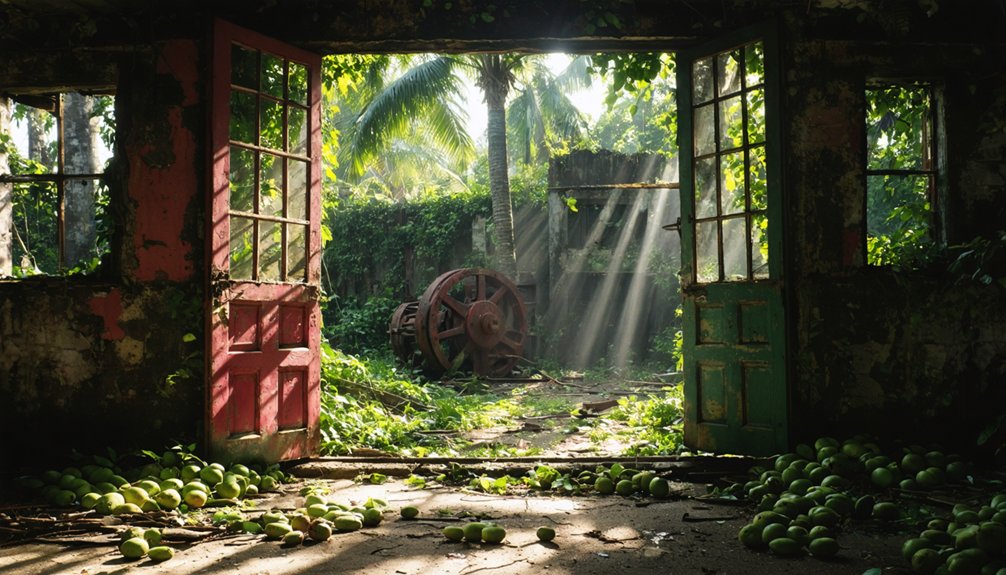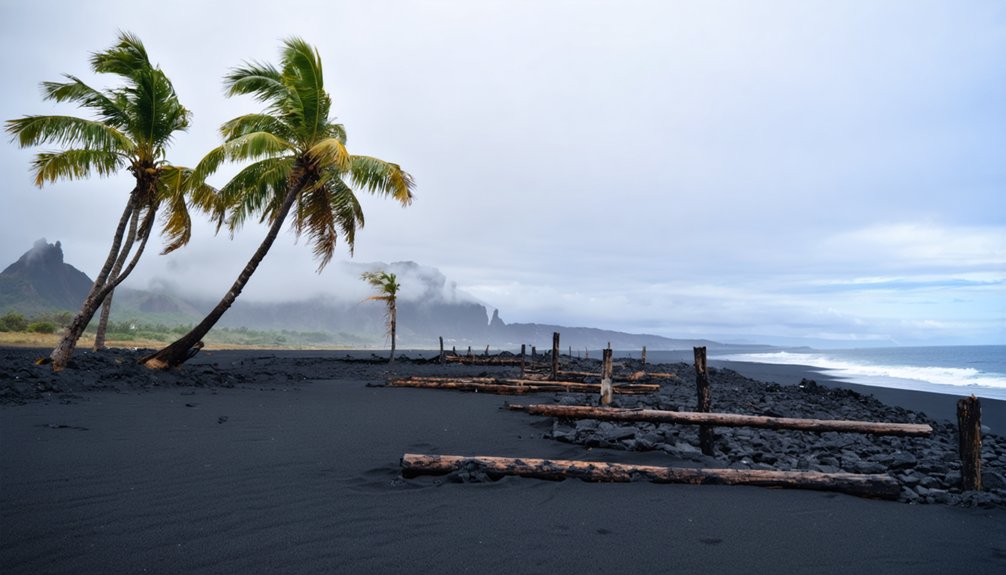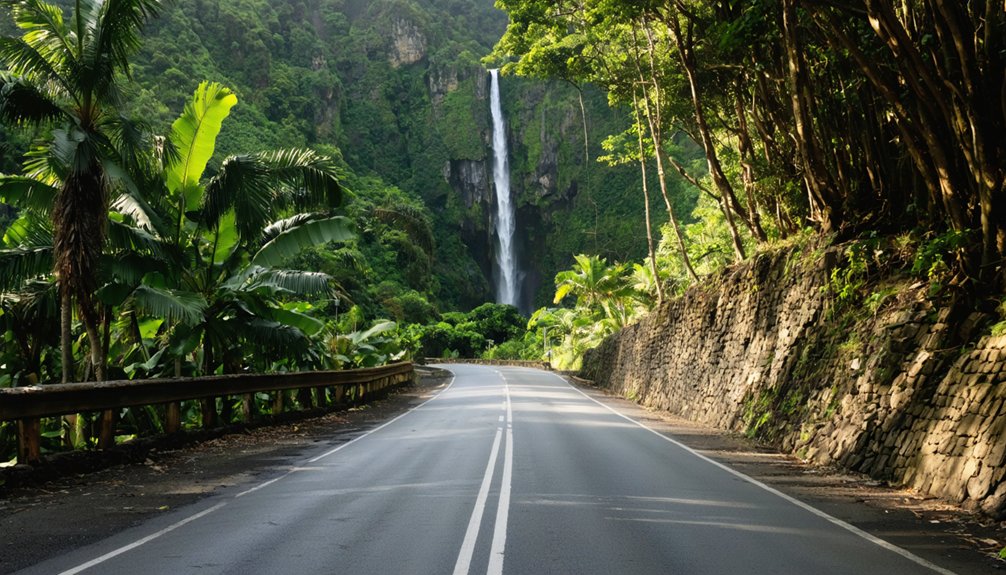
Planning a ghost town road trip to Halawa Valley means tackling a treacherous road on Molokaʻi where two tsunamis in 1946 and 1957 permanently erased an entire community. You’ll navigate steep 45% grades, blind corners, and 2,000 feet of elevation change before reaching haunting church ruins and foundations reclaimed by dense vegetation. Guided tours are required, so book early and pack sturdy footwear, water, and sun protection. Everything you need to know is just ahead.
Key Takeaways
- Halawa Valley on Molokaʻi is Hawaii’s most compelling ghost town, shaped by devastating back-to-back tsunamis in 1946 and 1957.
- The steep road descends 2,000 feet with blind corners and 45% grades, requiring a four-wheel drive vehicle and cautious driving.
- Access requires a guided tour; book early with local Molokaʻi operators, especially during peak travel months.
- Pack at least two liters of water, sunscreen, insect repellent, a dry bag, and sturdy water shoes for stream crossings.
- Other Hawaiian ghost towns worth visiting include Honu’apo, Kalapana, and Ho’okena, each with unique historical and cultural stories.
What Makes Halawa Valley Hawaii’s Most Compelling Ghost Town?
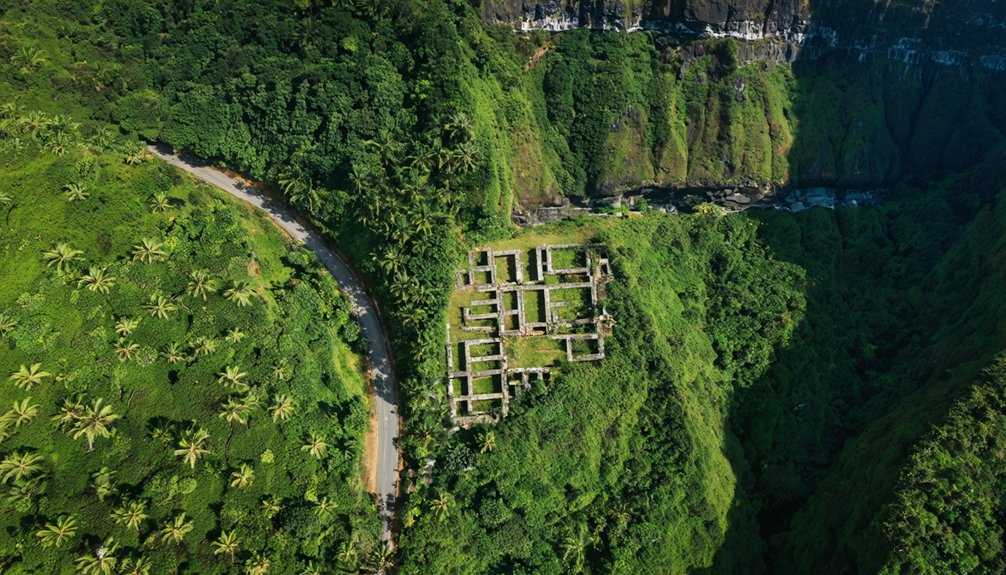
Few ghost towns carry the weight of Halawa Valley on the island of Molokaʻi, where back-to-back tsunamis in 1946 and 1957 didn’t just destroy structures — they erased an entire way of life.
What remains tells a story you can feel rather than simply observe. Building foundations still outline themselves in the grass, and a handful of historic churches stand quietly near the shoreline, holding their ground against time.
The valley’s cultural significance runs deep, shaped by displacement, loss, and the kind of silence that follows irreversible change.
Visitors often describe spiritual encounters here — moments where the landscape itself seems to carry memory. Steep green walls, dense vegetation, and cascading waterfalls frame what was once a thriving community, making Halawa one of Hawaii’s most hauntingly compelling destinations.
How Tsunamis Turned Halawa Valley Into an Abandoned Settlement
When you stand in Halawa Valley today, the silence around you tells a story of loss shaped by the ocean itself.
Two tsunamis — one in 1946 and another in 1957 — struck the valley with enough force to drive residents from their homes permanently. Some relocated to higher ground, while others left entirely, turning a once-thriving community into the quiet, overgrown landscape you’re now exploring.
Tsunamis Strike Halawa
Twice within eleven years, the ocean reclaimed Hālawa Valley—first in 1946, then again in 1957, when back-to-back tsunamis stripped away homes, structures, and the community’s will to rebuild.
Each wave didn’t just destroy buildings; it dismantled generations of cultural heritage tied to this remote eastern Molokaʻi settlement. Residents who’d weathered the first disaster and attempted recovery found themselves facing the same devastation just over a decade later.
That second blow proved too much. Families relocated to higher ground or abandoned the valley entirely, leaving behind only foundations and silence.
What you’ll find today reflects both the landscape’s natural resilience and the quiet grief of a community the sea ultimately forced out. The valley endured—its people simply couldn’t afford to stay.
Residents Abandon The Valley
After two tsunamis in eleven years, Hālawa Valley’s residents faced a brutal calculation: rebuild again or leave for good. Most chose to leave, scattering across Molokaʻi and beyond, carrying their valley memories with them.
Resident stories describe a community that didn’t fade gradually — it emptied decisively.
What remains tells that story clearly:
- Foundations outlined in grass mark where homes once stood before the waves erased them
- A handful of historic churches near the shoreline survived, standing as quiet witnesses to what was lost
- Dense vegetation has reclaimed the valley floor, concealing the full extent of former settlement life
You’re not walking through gradual decline here. You’re walking through the aftermath of nature forcing an entire community’s hand.
The Road to Halawa Valley: What a 45% Grade Actually Feels Like
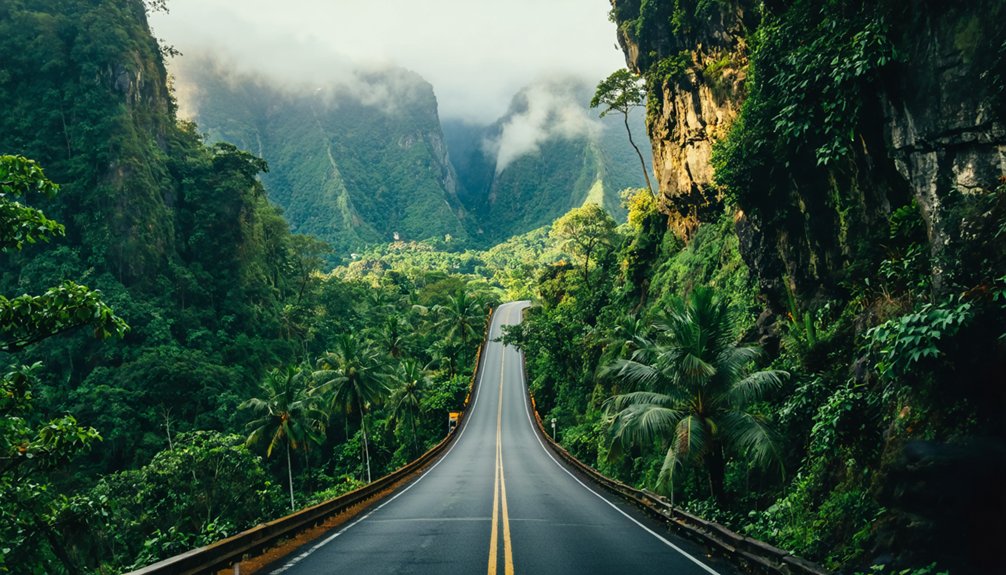
Before you even reach the abandoned foundations of Halawa Valley, the road itself tests your nerve.
You’ll navigate blind corners carved into cliffs that drop hundreds of feet, requiring you to creep forward and commit before you can see what’s coming.
Then the descent hits — a grade that reaches 45% in stretches, steep enough that your vehicle feels like it’s pitching nose-first toward the valley floor nearly 2,000 feet below.
Navigating Blind Corners Safely
The road descending into Hālawa Valley doesn’t ease you in — it drops you. Steep grades and blind corners demand full attention, not scenic daydreaming.
These blind corner techniques will keep you moving safely:
- Slow before every curve — you can’t see what’s coming, and neither can the driver headed uphill toward you.
- Hug the mountain side — staying close to the cliff wall gives oncoming vehicles room to pass on the narrow ledge.
- Use your horn on blind bends — locals do it, and it’s one of the most effective safe navigation tips on this road.
You’re not just driving here — you’re negotiating with the terrain. Respect the grade, respect the corners, and the valley rewards you completely.
Surviving The Steep Descent
Blind corners are only part of what makes this road unforgettable — once you’ve cleared them, the descent itself takes over. The road drops 2,000 feet in less than a mile, averaging a 25% grade with certain sections hitting 45%.
That’s not a statistic you feel in your head — you feel it in your chest, your brakes, and your grip on the wheel.
Road safety here isn’t optional. Four-wheel drive gives you the control you need when gravity seems determined to finish the job. Keep your speed low, your engine in a lower gear, and stay alert.
What you’re descending toward carries real historical significance — an abandoned valley reshaped by tsunamis, displacement, and silence. The road earns its reputation before you even arrive.
Do You Really Need Four-Wheel Drive to Reach Halawa?
How serious is the road to Halawa Valley? Serious enough that four-wheel drive isn’t optional — it’s essential.
Road conditions here push most vehicles to their limits, with a descent of 2,000 feet packed into less than a mile.
Here’s what you’re actually dealing with:
- Average grade of 25%, with some sections hitting a brutal 45%
- Narrow lanes with blind corners hugging steep cliffs with little margin for error
- Dense vegetation that limits visibility and keeps surfaces slick after rain
You’re not just driving to a destination — the road itself is part of the experience.
Respect it, prepare accordingly, and you’ll arrive at one of Molokaʻi’s most hauntingly beautiful valleys with a story worth telling.
How to Book a Guided Tour of Halawa Valley
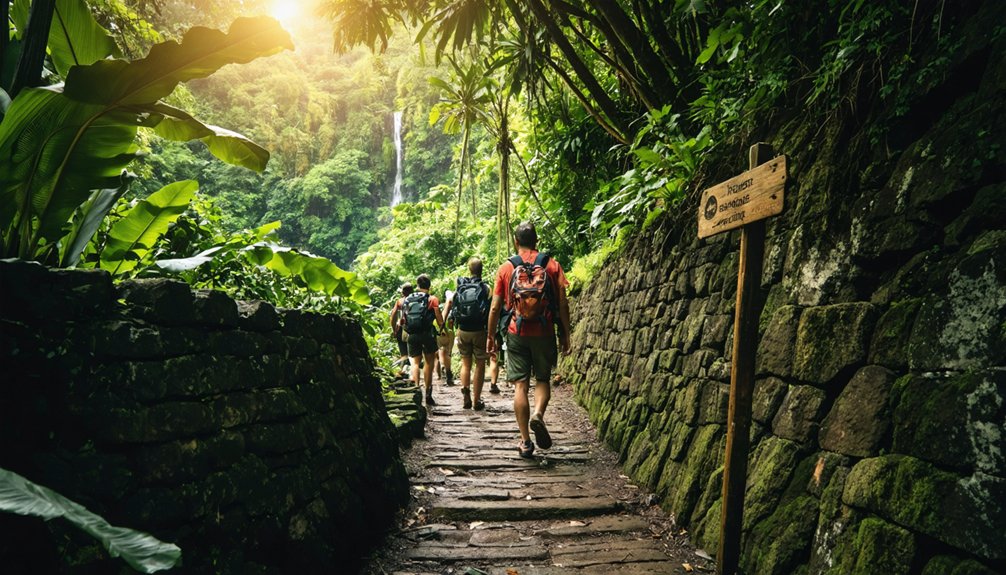
Reaching Halawa Valley isn’t just a matter of showing up — you’ll need a guided tour to access it. Local guides control entry and provide essential valley history that transforms the landscape from a pretty view into a meaningful destination.
Search for tour operators based on Molokaʻi who specialize in Halawa, and check recent reviews for strong tour guide recommendations before booking.
Contact operators directly, as availability changes seasonally and group sizes stay small. Book early, especially during peak travel months.
Wear good hiking shoes and bring water shoes since trails involve stream crossings. Your guide handles navigation and storytelling, so you’re free to absorb the waterfalls, the ruined foundations, and the quiet weight of a valley that history shaped and the ocean ultimately emptied.
What You’ll Find on the Halawa Valley Floor?
Once your guide leads you down into Halawa Valley, the floor opens up in ways that photographs never quite capture.
You’ll notice the landscape holds its historical significance quietly — building foundations still trace outlines through the grass, silent markers of lives interrupted by tsunamis in 1946 and 1957.
Your valley exploration will reveal:
- Church ruins standing near the rocky shoreline, among the few structures still intact
- Foundation outlines scattered across the grass, mapping where homes once stood
- Waterfalls and dense vegetation reclaiming what residents left behind
Wear solid hiking and water shoes — the terrain demands it.
The stillness you’ll feel here isn’t emptiness. It’s the weight of a community that once thrived, displaced by forces nobody could outrun.
Churches, Foundations, and Ruins Still Visible in Halawa Valley
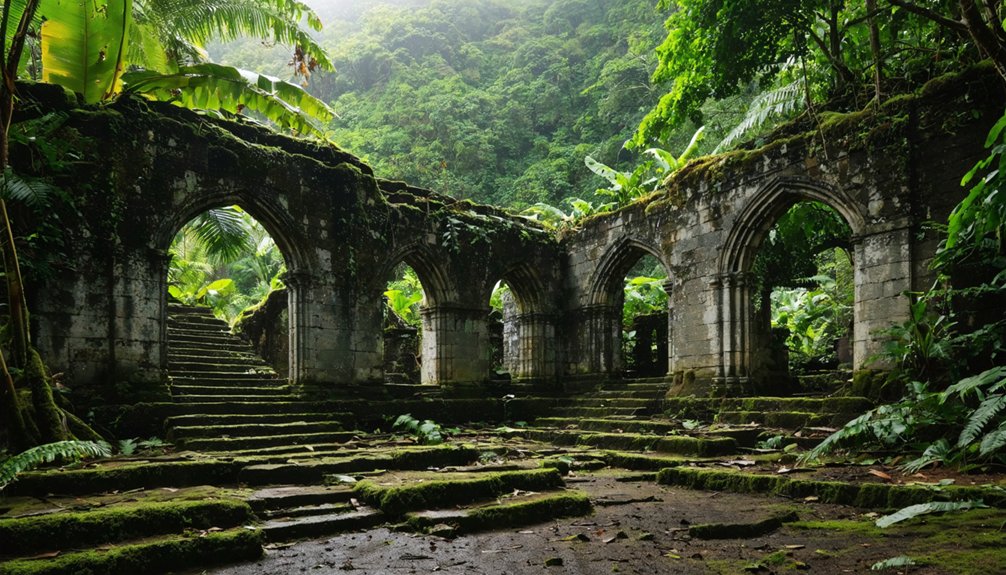
What remains in Halawa Valley doesn’t announce itself — you have to look. Outlines pressed into the grass mark where homes once stood, foundations that only reveal themselves once your eye learns what to find.
Near the rocky shoreline, a small number of churches remnants hold their ground, quiet survivors of two tsunamis that emptied this place of its people. These structures carry the weight of displacement without dramatizing it.
The valley echoes with that particular silence that only abandoned places produce — not emptiness, but accumulated absence. Nothing here performs its history for you. You read it through crumbling edges, moss-covered stone, and the occasional wall fragment swallowed by vegetation.
Halawa doesn’t beg for your attention; it rewards the visitor who pays it.
The Displacement Stories and Local Legends Behind Halawa Valley
Halawa Valley doesn’t just carry the scars of tsunamis — it carries the memory of the people those waves displaced. The displacement narratives here run deep, shaping both the landscape and its cultural significance for generations of Native Hawaiians.
As you walk the valley floor, remember what this land once held:
- Families who built lives before the 1946 and 1957 tsunamis permanently altered everything
- Cultural practices and traditions tied to this fertile, sacred valley that scattered alongside its residents
- Spirits some locals believe still linger, connecting Hawaiian folklore of displacement and trauma to the valley’s haunting quiet
You’re not just visiting an abandoned place — you’re standing inside a living story of loss, resilience, and the enduring connection between a people and their land.
What to Wear and Pack for Halawa Valley?

Before you head down that dramatic road into Halawa Valley, pack smart and dress for rugged terrain.
You’ll want good hiking shoes and water shoes, since the valley’s dense vegetation and wet landscape demand grip and protection for your feet.
Bring sun protection, water, and a light layer, because the steep walls and lush canopy create unpredictable pockets of shade and exposure throughout the tour.
Recommended Footwear Choices
Packing the right footwear makes a genuine difference when exploring Halawa Valley’s uneven terrain and wet conditions.
You’ll encounter slippery rocks, muddy trails, and shallow stream crossings, so choosing footwear materials designed for drainage and grip keeps you moving confidently through the landscape.
Consider these options before you head out:
- Waterproof hiking boots deliver hiking comfort on rocky switchbacks and rooted paths.
- Water shoes with rubber soles handle stream crossings without weighing you down after soaking through.
- Trail runners with drainage ports offer lightweight versatility across both dry ridgelines and wet valley floors.
Skip the sandals and flip-flops entirely.
They’ll betray you on the first wet rock you step on, turning an unforgettable adventure into an avoidable injury.
Essential Packing Items
Getting your pack right before descending into Halawa Valley can mean the difference between a smooth adventure and a miserable slog through one of Molokaʻi’s most demanding landscapes.
Beyond footwear, you’ll want layers since temperatures shift as you move beneath the steep green walls and dense local flora overhead.
Pack these essentials:
- Water – at least two liters; there’s no resupply once you’re in
- Sunscreen and insect repellent – the vegetation traps humidity and bugs
- A dry bag or waterproof pack cover – stream crossings happen
- Snacks with real calories – the terrain demands energy
- A small notebook or camera – the historical significance of visible foundations and ruins deserves documentation
Travel light, but don’t cut corners on protection.
Other Hawaiian Ghost Towns Worth Visiting
While Hālawa Valley stands out as one of Molokaʻi’s most haunting destinations, it’s far from Hawaii’s only ghost town worth exploring.
Hawaii’s volcanic landscapes and turbulent history have left behind several abandoned settlements rich in cultural heritage and natural beauty.
Consider adding these stops to your road trip:
- Honu’apo – A once-thriving coastal community completely destroyed by the 1946 tsunami, leaving only silence where a village once stood.
- Kalapana – Swallowed by lava flows from the Kūpaʻianahā vent in 1990, this Big Island town now lies frozen beneath hardened rock.
- Ho’okena – Gradually depopulated after the 1951 Kona earthquake and subsequent storms stripped away its residents and livelihood.
Each site tells a story that no museum can replicate.
Frequently Asked Questions
Is Camping Allowed Overnight in or Near Halawa Valley?
The knowledge doesn’t confirm camping’s allowed, so you’ll want to check current camping regulations and valley permits before visiting. Since it’s only accessible by guided tour, you’d better plan accordingly and contact local authorities first.
Are Children and Elderly Visitors Able to Complete the Tour?
You’ll want to take into account accessibility concerns before bringing elderly visitors or young children, as the rugged terrain and steep trails demand physical endurance. However, family friendly activities like scenic viewpoints make partial participation enjoyable for everyone.
What Is the Best Time of Year to Visit Halawa?
You’ll find the best weather from April to October, when drier conditions make the steep, narrow road safer to navigate. These months also align with ideal seasonal activities like hiking and exploring Halawa’s hauntingly beautiful, waterfall-draped valley.
Can Visitors Access Halawa Valley Without Joining an Official Tour?
Like a locked gate standing firm, valley access isn’t possible without an official guided tour — there aren’t any tour alternatives. You’ll need to join one to fully explore Halawa’s hauntingly beautiful, historically rich landscape.
Are There Restroom Facilities Available at Halawa Valley?
The knowledge base doesn’t confirm restroom accessibility or visitor amenities at Halawa Valley. You’ll want to check with your tour guide beforehand, as they’re your best resource for planning a comfortable, well-prepared visit to this remote destination.
References
- https://honoluluhaunts.com/the-most-haunted-hawaiian-roads/
- https://en.wikipedia.org/wiki/List_of_ghost_towns_in_Hawaii
- https://nvtami.com/2023/04/26/big-island-hawaii-ghost-towns/
- https://www.onlyinyourstate.com/trip-ideas/hawaii/haunted-road-trip-hi
- https://www.tripadvisor.com/Attraction_Review-g29221-d109858-Reviews-Halawa_Valley-Molokai_Hawaii.html
- https://www.youtube.com/watch?v=daDv94EEpqs
- https://www.youtube.com/watch?v=o2roY89fJM4