Planning a ghost town road trip to Castle Town, Montana means heading to Meagher County via Highway 12 and Forest Service Road 211 from White Sulphur Springs. You’ll find surviving cabins, stone foundations, and echoes of an 1880s silver boom that once drew over 2,000 settlers. Visit in summer for the best road conditions, pack sturdy boots, and secure landowner permission before exploring. There’s far more to this frontier story than first meets the eye.
Key Takeaways
- Castle Town sits at 5,978 feet in Meagher County, accessible from White Sulphur Springs via Highway 12 and Forest Service Road 211.
- Visit between June and August for the best road conditions, as spring mud and winter snow can make the route impassable.
- Pack sturdy boots, layered clothing, water, snacks, and a paper map, since cell service is severely limited at this elevation.
- Contact Meagher County locals or the Forest Service beforehand, as landowner permission is required to explore beyond the public road.
- Combine your trip with nearby attractions like Smith River State Park, White Sulphur Springs hot springs, and the Castle Mountains Trail System.
Why Castle Town Is One of Montana’s Most Intact Ghost Towns?
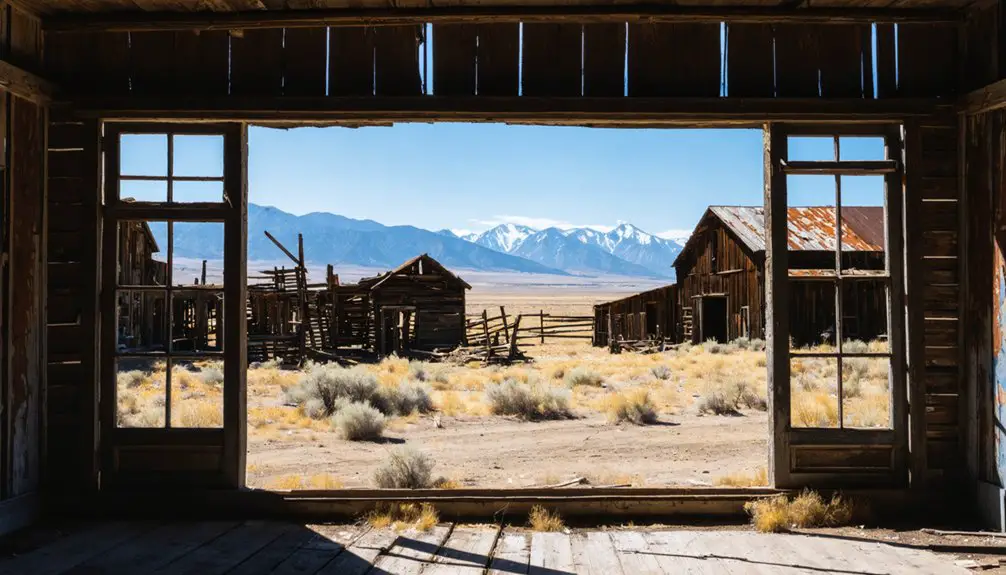
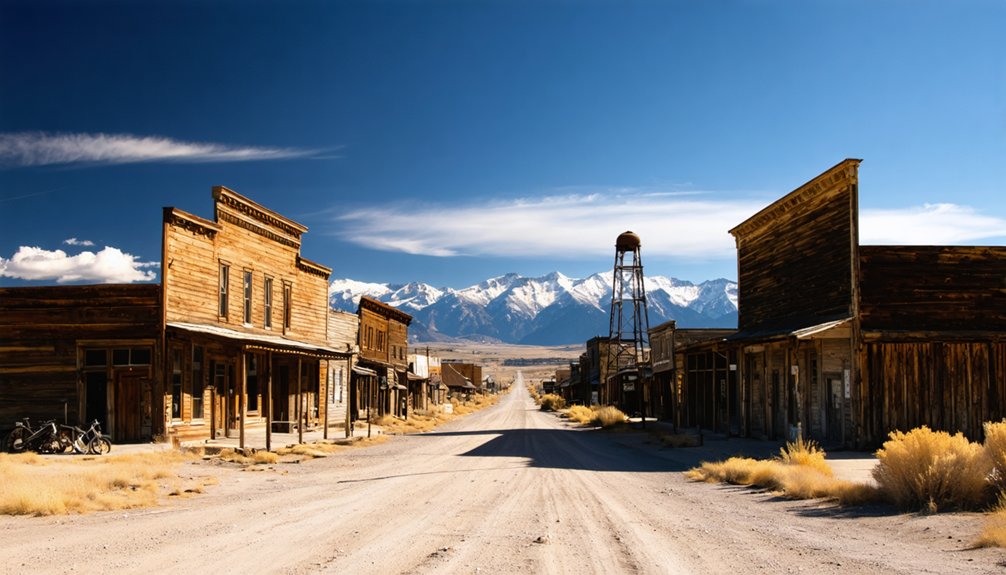
When you roll down the dusty road toward Castle Town, you half-expect tumbleweeds and collapsed timber — but what greets you instead is something far more striking: buildings still standing, stone foundations intact, and a schoolhouse that refuses to surrender to time.
Castle Town’s survival isn’t luck — it’s a reflection of Montana’s rugged preservation of Mining Heritage. Cabins, storefronts, and business foundations remain largely untouched since the last residents left in the 1930s.
Castle Town didn’t survive by accident — it survived because Montana doesn’t let its mining history disappear quietly.
Few ghost towns nationwide match this level of structural integrity.
The site carries deep Historical Significance, reflecting a boom that drew over 2,000 residents, produced rich silver ore, and shaped frontier Montana.
Standing here, you’re not reading about history — you’re walking through it, untamed and unapologetic.
A Short History of Castle Town, Montana
But to truly appreciate what you’re standing in the middle of, you’ve got to know how Castle Town came to be — and why it burned so bright before flickering out entirely.
Settlement began around 1882, driven by silver strikes in the Castle Mountains. By 1891, Castle Town had incorporated, boasting over 2,000 residents, fourteen saloons, seven brothels, a school, and three daily stage lines.
Its mining history reads like a classic boom-bust story — rich ore pulled from the hills, a smelter built, fortunes chased.
Then the Silver Panic of 1893 gutted it. Mines closed, miners scattered, and the railroad arrived in 1903 — a decade too late.
The historical significance here isn’t just survival. It’s that Castle Town stands as proof of how fast the American frontier could rise, and fall.
How Calamity Jane’s Time in Castle Town Ended in Failure
Among the more colorful characters who drifted through Castle Town was Calamity Jane, and her time here ended exactly as you’d expect — in spectacular failure.
She rolled into this rowdy silver camp with big dreams, attempting to open a restaurant that never saw its first customer. Calamity Jane’s ambitions collided hard with the reality of a town running on whiskey, silver dust, and chaos.
She couldn’t straighten out her life here, and Castle Town’s legacy swallowed her attempt whole. Eventually, she moved on, leaving behind nothing but a story worth telling.
When you walk these grounds today, you’re standing where legends tried and stumbled — and that raw, unfiltered truth makes Castle Town’s history all the more compelling.
The Silver Boom That Built Castle Town and the Panic That Killed It
Silver pulled Castle Town out of the earth and gave it life, with miners flooding the Castle Mountains after rich ore strikes turned this remote Montana wilderness into a boomtown of over 2,000 souls.
You’d think fortune was guaranteed, but hauling ore by wagon across rugged terrain ate into profits before a single silver dollar reached anyone’s pocket, leaving the town perpetually fighting its own geography.
Then the Silver Panic of 1893 delivered the killing blow, shuttering mines across the district before the railroad that might’ve saved everything ever laid a single rail.
Silver Mining Boom Begins
When silver fever struck the Castle Mountains in the 1880s, it transformed a rugged Montana hillside into a roaring boomtown almost overnight. Silver mining pulled fortune-seekers from across the frontier, and the economic impact reshaped everything around it.
The hills delivered real wealth:
- The Yellowstone and Cumberland mines produced significant silver ore, driving frenzied development.
- Over 991 mining claims were registered within seven years, signaling explosive growth.
- A smelter rose to process ore, pushing production further.
You can almost feel that raw energy standing near the old townsite today. Miners flooded in, businesses followed, and Castle Town swelled past 2,000 residents at its peak.
That relentless pursuit of silver turned wilderness into commerce — fast, bold, and unrestrained.
Transportation Challenges Hindered Profits
The ore was there — no question about it — but getting it out of the Castle Mountains and to market was a brutal, expensive problem that ate into every dollar the mines produced.
The transportation routes available in the 1880s meant wagons hauling heavy loads across rugged terrain, burning profits before the silver ever reached a smelter.
Miners built a smelter on-site to cut costs, but mining logistics still demanded expensive wagon haulage beyond it.
Richard A. Harlowe’s railroad finally arrived in 1903, which would’ve changed everything — except it came a decade too late.
The Silver Panic of 1893 had already gutted the camp.
Castle Town didn’t die from bad ore. It died because moving that ore cost too much, too slowly.
Silver Panic Ends Prosperity
Fortunes built on silver can vanish just as fast as they’re made, and Castle Town learned that lesson the hard way in 1893. The Silver Panic hit silver mining communities like a sledgehammer, wiping out the economic impact Castle Town had worked fiercely to build.
Almost overnight, you’d have watched the boom town unravel:
- Mines shuttered as silver prices collapsed, sending miners packing
- Merchants, saloon keepers, and residents abandoned their livelihoods
- A population that once exceeded 2,000 souls dissolved into silence
The railroad Richard Harlowe finally completed in 1903 arrived a decade too late. Brief revivals flickered, but prosperity never returned.
What you’ll explore today stands as raw proof that economic tides answer to no one.
Getting to Castle Town From White Sulphur Springs
Reaching Castle Town starts in White Sulphur Springs, where you’ll head south on Highway 12 before turning onto Forest Service Road 211, which winds through the Castle Mountains toward the Elk Peak turnoff.
These scenic routes deliver more than pavement—they carry you through terrain that once echoed with wagon wheels hauling silver ore.
Castle Town sits south of White Sulphur Springs, off Highway 294 between White Sulphur Springs and Martinsdale, tucked at 5,978 feet in Meagher County.
The roads are good, making the drive accessible for most vehicles. Remember, the site sits on private land, so you’ll need permission before stepping close.
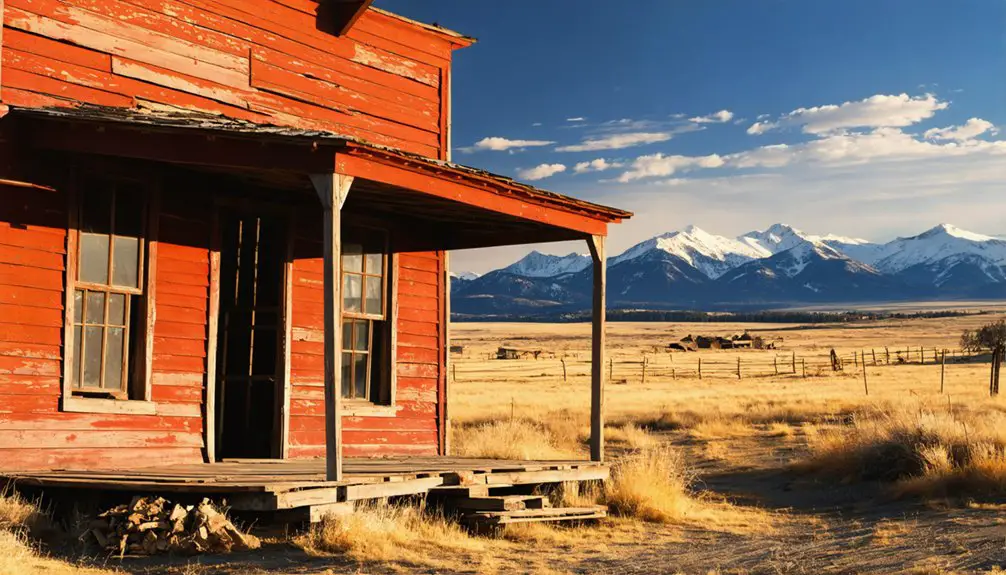
From the public road, though, you’ll spot hidden treasures—standing cabins, a schoolhouse, stone foundations—remnants of a town that once held over 2,000 souls.
What You’ll Actually See at Castle Town Today
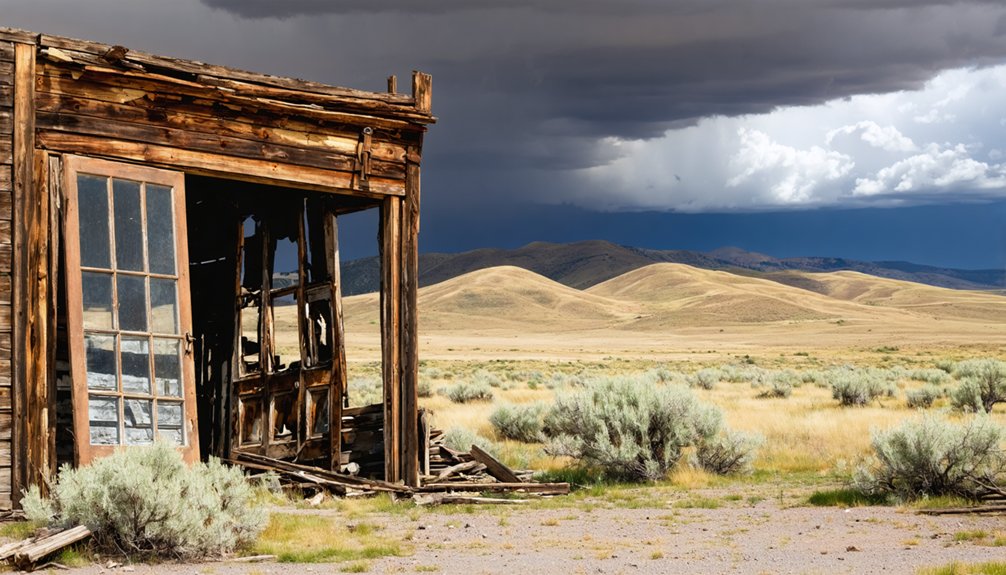
Once you’ve parked and stepped out into that mountain air at 5,978 feet, Castle Town’s surviving structures will hit you with quiet force.
Ghost town preservation here isn’t perfect, but it’s honest—raw timber, stone foundations, and weathered walls that still carry the weight of a boomtown that once held over 2,000 souls.
You’ll spot:
- Cabins and the old schoolhouse, standing as silent proof of everyday frontier life
- Stone foundations and business remnants from Main Street’s baker, butcher, and furniture dealer
- Structural outlines where fourteen saloons and seven brothels once ran full tilt
The historical significance is unmistakable.
You’re reading a real landscape, not a reconstruction. Since it’s private land, respect the boundary—the public road delivers plenty.
You Need Permission to Visit Castle Town and Here’s How to Get It
Castle Town sits on private land, so before you walk those weathered grounds, you’ll need to track down the landowner and ask permission directly. That’s non-negotiable ghost town etiquette, and honestly, it’s part of the adventure.
Start by contacting Meagher County locals or the Forest Service for current landowner information, since ownership can shift. When you reach out, be straightforward — explain who you are, why Castle Town matters to you, and ask respectfully.
If permission’s granted, follow these visitation tips: leave gates as you find them, touch nothing, photograph everything, and take only memories.
The public road already offers solid views of standing cabins, the schoolhouse, and stone foundations. Respect earns access; disrespect closes doors for every explorer who comes after you.
When to Visit Castle Town: Road Conditions and Seasonal Access
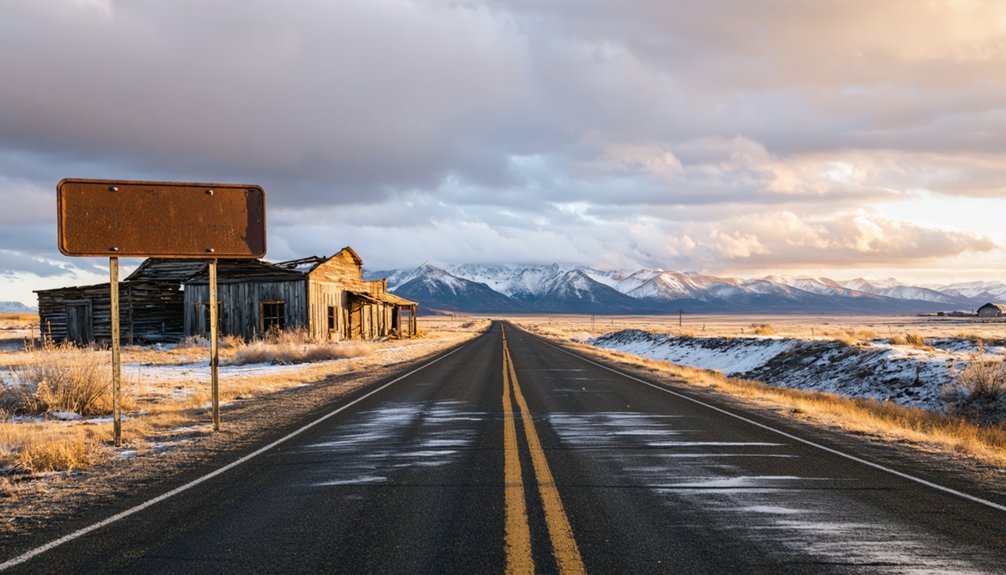
Timing your visit to Castle Town matters as much as getting permission, because Forest Service Road 211 through the Castle Mountains can turn punishing or impassable depending on the season.
Snow closes access well into spring, and autumn storms arrive earlier than you’d expect at 5,978 feet.
- Summer (June–August): Best window for passable roads and ghost town preservation walks among standing cabins and stone foundations
- Spring/Fall: Mud and snow create unpredictable conditions; seasonal wildlife, including elk, roam actively near Elk Peak
- Winter: Road typically impassable; skip it
Plan your drive when the ground is firm and the sky is clear.
Castle Town rewards patience and preparation, not impulse.
Check current Forest Service road conditions before you load up and head south off Highway 12.
What to Bring on a Day Trip to Castle Town
Getting to Castle Town prepared means the difference between a rewarding ghost town ramble and a miserable retreat back down Forest Service Road 211. Pack your packing essentials smart: sturdy boots handle uneven terrain around stone foundations and collapsed cabins, while layers combat elevation swings at nearly 6,000 feet.
Carry water, snacks, and a paper map since cell service disappears fast in Castle Mountains.
For photography tips, arrive during golden hour when low light deepens shadows across weathered wood and crumbling walls, transforming the schoolhouse and remaining cabins into something cinematic.
A wide-angle lens captures sweeping mountain context; a macro lens pulls out rusted hardware and peeling paint. Bring extra batteries since cold mountain air drains them quickly.
Respect the private land boundaries and shoot freely from the public road.
Nearby Attractions to Pair With a Castle Town Visit
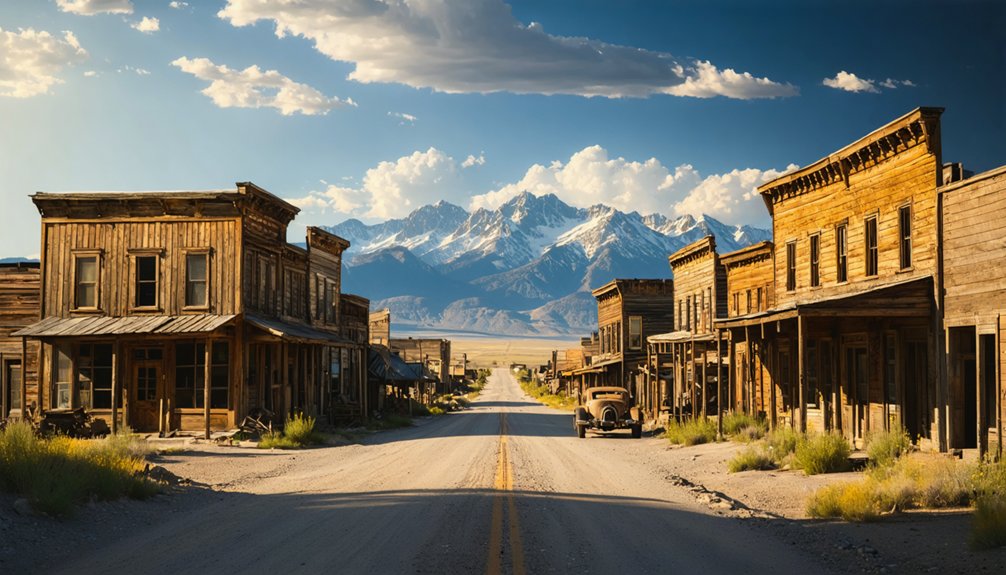
White Sulphur Springs sits just north of Castle Town on Highway 294, and it’s worth folding into your route for its hot springs and the Meagher County Historical Museum, where regional mining heritage fills in the gaps that weathered ghost town walls can’t tell you.
Extend your ghost town experiences by exploring the wider Castle Mountains corridor:
- Smith River State Park – remote fishing and canyon scenery just west, perfect for overnight extensions
- Martinsdale – a quiet ranching community southeast along Highway 294 with its own faded frontier character
- Castle Mountains Trail System – Forest Service roads weave through the same hills miners once worked, offering context no museum fully captures
Together, these stops transform a single ghost town visit into a full, freedom-driven Montana adventure.
Frequently Asked Questions
Can You Camp Overnight Near Castle Town in the Castle Mountains?
Like a pioneer under endless Montana skies, you can camp overnight near Castle Town! Check camping regulations for Custer Gallatin National Forest nearby. You’ll find nearby attractions like Castle Mountains trails perfect for your adventurous, freedom-seeking spirit.
Are Guided Ghost Town Tours of Castle Town Available for Visitors?
No guided tours are confirmed for Castle Town. You’ll explore its ghost town history solo—roaming cabins, saloons, and stone foundations on your own adventure. Remember, it’s private land, so you’ll need permission first.
Is Castle Town Listed on the National Register of Historic Places?
Coincidentally, our knowledge doesn’t confirm Castle Town’s National Register status, but its historical significance speaks for itself. You’ll find preservation efforts visible in standing cabins and stone foundations, inviting you to explore this untamed Montana relic freely.
What Wildlife Might You Encounter Driving Forest Service Road 211?
The knowledge doesn’t cover wildlife sightings on Forest Service Road 211, but you’ll love these road trip tips: watch for deer, elk, and eagles roaming Castle Mountains’ wild terrain as you’re adventuring toward Montana’s storied ghost town.
Are There Any Castle Town Artifacts Displayed in Nearby Museums?
Dusty relics whispering local legends await you! The knowledge doesn’t confirm museums displaying Castle Town artifacts, but you’ll want to explore White Sulphur Springs’ local resources for historical significance tied to this remarkable ghost town’s adventurous past.
References
- https://www.montanapictures.net/castle-town-ghost-town-montanapictures-net/
- https://www.ultimatemontana.com/central montana/3379-castle-ghost-town
- https://www.youtube.com/watch?v=oevl00UbspY
- https://www.atlasobscura.com/places/castle-town-ghost-town
- https://westernmininghistory.com/towns/montana/castle-town/
- https://www.onlyinyourstate.com/experiences/montana/abandoned-town-in-mt
- https://www.youtube.com/watch?v=yL1U62eyajg