Planning a road trip to Hart, California means venturing deep into the Mojave Desert to explore a gold rush ghost town that boomed in 1907 and faded almost as quickly. You’ll find crumbling stone walls, weathered wooden frames, and a BLM historical plaque marking where five hotels and eight saloons once stood. Approach via Hitt Siding, pack plenty of water, and avoid summer’s brutal heat. There’s far more to discover about this fascinating desert relic ahead.
Key Takeaways
- Hart, California, was a gold rush boomtown founded in 1907, boasting 400 residents, five hotels, and eight saloons before its abandonment.
- Navigate using offline maps or a AAA San Bernardino County map; the route is accessible for standard 2WD vehicles.
- Visit during spring or fall for mild temperatures, as summer heat regularly exceeds 100°F, making exploration dangerous.
- Nearby attractions include Castle Mountains National Monument and Mojave National Preserve, offering volcanic peaks, sand dunes, and photography opportunities.
- Pack ample water, charge communication devices, stay on established paths, and never remove artifacts, as federal protections apply.
What Made Hart, California a Boomtown?
In December 1907, Jim Hart and the Hitt Brothers struck gold in the Castle Mountains, and that single discovery transformed a barren stretch of Mojave Desert into a bustling boomtown almost overnight.
The gold discovery sparked rapid growth that’s hard to imagine against such a harsh desert landscape. Within months, Hart’s transient population swelled to roughly 400 miners, merchants, and laborers chasing economic boom opportunities.
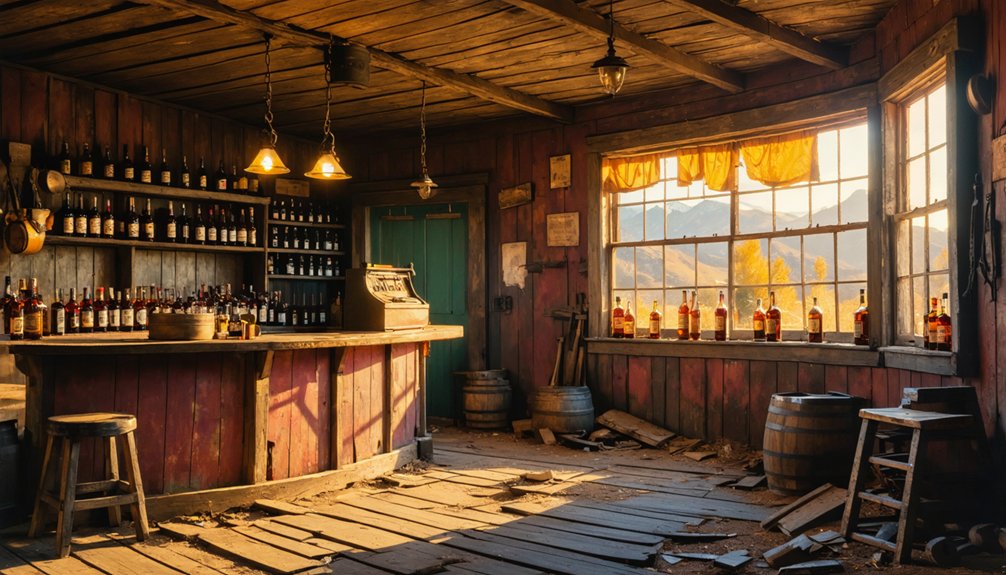
You’d have found five hotels and eight saloons driving social interaction in a mining community that had no church or school — just raw ambition and opportunity.
Hart even supported its own newspaper from 1908 to 1909, cementing its historical significance as a legitimate frontier settlement.
Freedom-seekers and fortune-hunters alike flooded in, making Hart a textbook example of Western boom-era intensity.
How Do You Get to Hart Ghost Town by Road?
Getting to Hart ghost town requires a few navigational tools, but the journey itself rewards you with raw Mojave scenery you won’t easily forget.
Grab a AAA map of San Bernardino County before you head out — it’ll point you toward this remote corner of the eastern Mojave Desert without leaving you guessing.
The good news on road conditions is that 2WD vehicles handle the route fine, so you don’t need a heavy-duty rig to make it happen.
A few practical travel tips worth keeping in mind: avoid summer visits when temperatures routinely blast past 100°F, and plan your approach through the Hitt siding connection roughly 3.5 miles northwest of the site.
Pack water, fuel up early, and move at your own pace through the open desert.
What’s Left to See at the Hart Town Site?
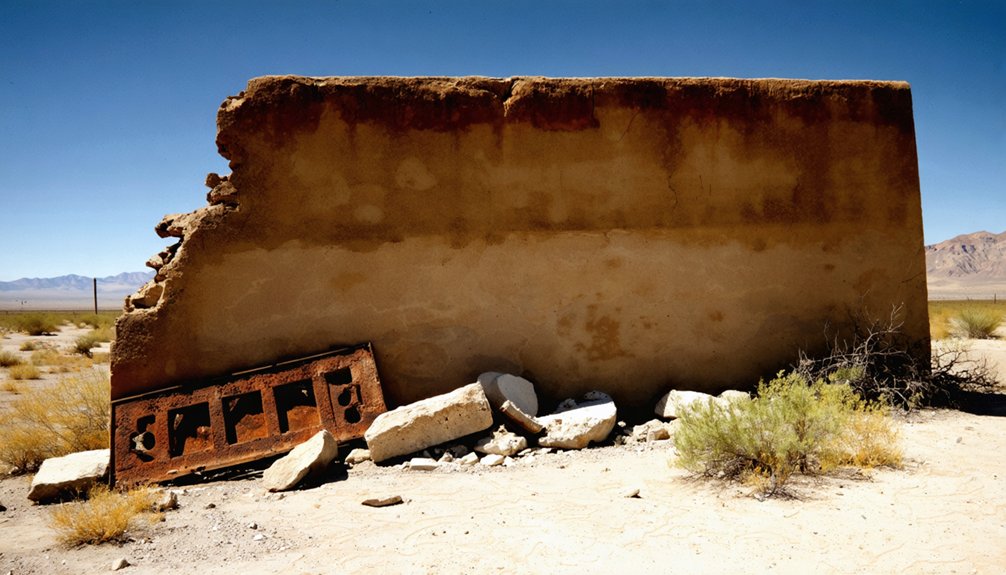
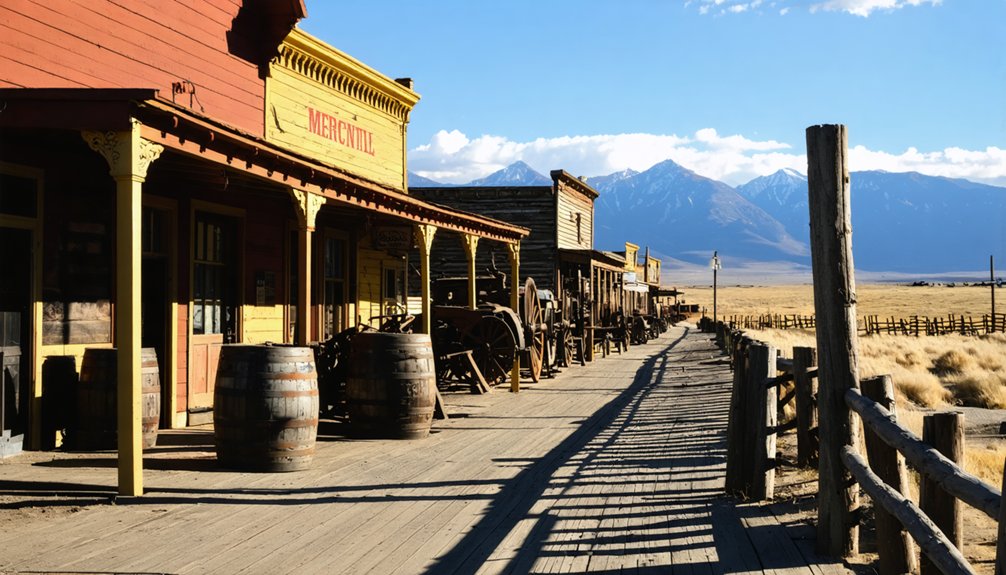
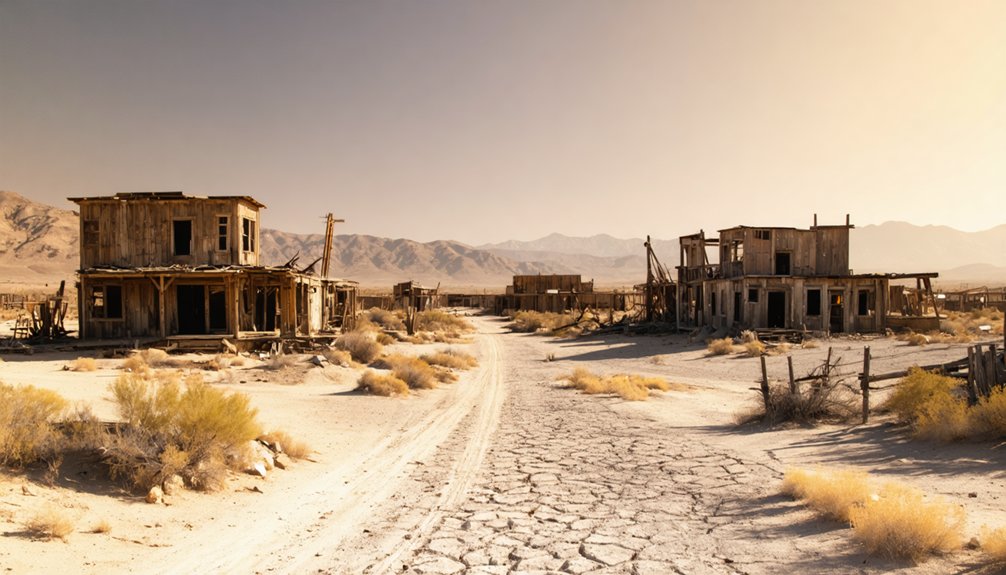
Once you arrive at Hart, you’ll find crumbling stone and wooden structures scattered across the desert floor, silent remnants of the town’s brief but lively ten-year run.
You can walk the old dirt streets where eight saloons and five hotels once served a population of 400 miners and merchants.
Before you leave, make sure you stop at the BLM historical plaque, which pulls the whole story together with details about Jim Hart, the Hitt Brothers, and the 1907 gold discovery that sparked it all.
Remaining Structures On Site
Although time and the desert have claimed most of Hart’s structures, you’ll still find crumbling stone and wooden remnants scattered across the site.
These remaining structures carry real historical significance, offering a raw, unfiltered glimpse into a once-thriving gold rush community.
Here’s what you can expect to encounter:
- Weathered stone walls standing partially upright, scorched by over a century of desert sun
- Decaying wooden framework from former saloons and hotels, slowly surrendering to wind and erosion
- A BLM historical plaque anchoring the site with context about Hart’s founding and rapid decline
You won’t find a polished museum here — just open desert, silence, and the honest bones of a town that burned bright and disappeared fast.
BLM Historical Plaque
Among the scattered ruins, one feature stands out as the site’s clearest anchor to the past — the BLM historical plaque. Installed by the Bureau of Land Management, it captures the town’s historical significance in compact, readable detail, recounting Jim Hart and the Hitt Brothers’ 1907 gold discovery and the boomtown that briefly thrived here.
For visitor experiences, the plaque serves as your starting point. Before you wander the crumbling stone foundations or photograph the weathered wooden remnants, stop here first.
It reframes everything you’re looking at, transforming anonymous rubble into a story you can actually follow. There’s no guided tour, no ranger on site — just you, the desert silence, and a marker that does the talking.
That’s the kind of freedom ghost town exploration delivers best.
What’s the Best Time of Year to Visit Hart, California?
You’ll want to skip the summer months entirely, as temperatures at Hart regularly blast past 100°F, turning the exposed desert site into a punishing ordeal.
Fall and spring offer the sweet spot — mild temperatures, clear skies, and comfortable conditions for exploring the remaining stone structures at your own pace.
Winter visits are doable, but you should prepare for cold nights and occasionally rough road conditions across the San Bernardino high desert.
Avoid Summer Heat Extremes
Since Hart sits at roughly 3,500 feet in the Mojave Desert, summer temperatures routinely blast past 100°F, making a visit genuinely miserable and potentially dangerous.
Heat safety isn’t optional out here—it’s survival. Smart summer alternatives put you in this ghost town when the desert actually rewards exploration.
The best windows for visiting Hart are:
- Spring (March–May): Wildflowers dot the high desert, temperatures stay mild, and golden light makes those crumbling stone structures look cinematic.
- Fall (September–November): Crowds disappear, heat breaks dramatically, and the silence feels almost electric.
- Winter (December–February): Crisp, clear skies sharpen every distant mountain view, rewarding photographers and history hunters alike.
Plan around the heat, and Hart delivers an unforgettable, wide-open experience worth every dusty mile.
Fall And Spring Benefits
Spring and fall transform Hart from a brutal endurance test into something genuinely worth the drive. Temperatures drop into comfortable ranges, letting you explore the crumbling stone structures and read the BLM plaque without watching the thermometer climb past 100°F.
Spring blooms push color across the Mojave Desert floor, turning the high desert basin into something unexpectedly alive around the abandoned townsite. You’ll move freely between ruins without the punishing heat forcing you back to your vehicle every few minutes.
Fall activities suit the site equally well. Cooler air, quieter roads, and softer light make photographing the remnants of Hart’s eight saloons and five hotels far more rewarding.
Both seasons give you the freedom to linger, explore, and actually absorb what this short-lived gold rush town was.
Winter Visit Considerations
Winter brings its own set of trade-offs to Hart, and it’s worth understanding them before you plan the trip. The desert cold surprises many visitors, dropping sharply after sunset and turning the high desert into a stark, frozen landscape.
Pack the right travel gear, and you’ll find the winter weather actually rewards you with solitude and crisp visibility.
- Frost-covered rock formations catch the morning light, creating sharp contrasts against the pale desert sky
- Empty dirt roads stretch ahead with zero traffic, giving you complete freedom to explore at your own pace
- Crumbling stone structures stand quietly against grey winter skies, looking exactly like the forgotten remnants they are
Come prepared, stay flexible, and winter hands you Hart almost entirely to yourself.
What Should You Know Before Driving Out to Hart?
Before you load up the car and head out to Hart, there are a few practical things you’ll want to know. The road conditions are manageable for standard 2WD vehicles, so you won’t need a specialized rig to reach the site.
Summer heat routinely exceeds 100°F, making spring or fall the smarter choice for your visit.
Summer temperatures regularly top 100°F, so plan your Hart visit for spring or fall instead.
Watch for local wildlife crossing the desert terrain, particularly reptiles and small mammals active during cooler morning hours. Carry extra water, as no services exist anywhere near the site.
Cell service is unreliable this deep into the Mojave, so download offline maps beforehand. AAA maps of San Bernardino County can also guide you accurately.
The BLM plaque and crumbling stone structures reward visitors who come prepared.
Which Nearby Sites Are Worth Adding to Your Route?
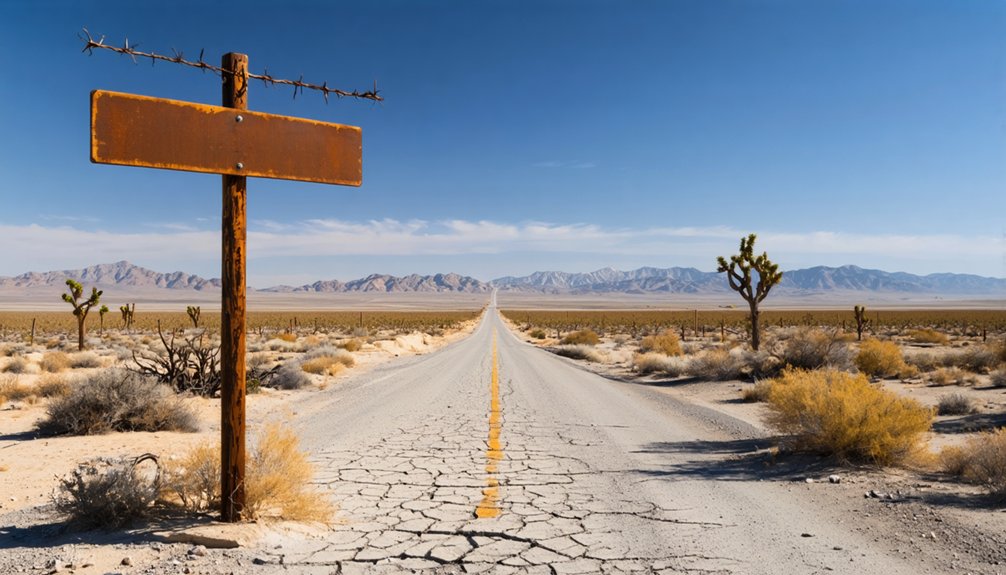
Once you’ve checked Hart off your list, the surrounding Mojave offers more worth seeing without doubling back far.
These nearby attractions keep your road trip tips simple — stay loose, stay curious, and let the desert reward you.
- Castle Mountains National Monument — Just 10 miles southeast, rugged volcanic peaks rise sharply against open sky, sheltering Joshua trees and abandoned mine remnants worth exploring on foot.
- Mojave National Preserve — Sprawling sand dunes, lava fields, and ghost railroad stops create a landscape that feels completely untamed and endlessly photogenic.
- Hitt Siding Site — Only 3.5 miles northwest, this former rail connection point offers a quiet, forgotten corner where you can feel the echo of early 20th-century desert commerce without crowds.
How Do You Explore Hart Safely and Responsibly?
Exploring Hart means stepping into a fragile environment where the desert heat, crumbling structures, and remote location demand real preparation.
Summer temperatures regularly exceed 100°F, so you’ll want to visit during cooler months and carry far more water than you think you’ll need. Your safety precautions should include sturdy footwear, sun protection, and a fully charged phone or satellite communicator since cell coverage is unreliable out here.
Responsible exploration means keeping your hands off the remaining stone structures — they’re unstable and historically irreplaceable.
Don’t remove artifacts or disturb the site; federal protections apply within the Mojave Desert Preserve. Stick to established paths, pack out everything you bring in, and let someone know your itinerary before heading out.
Hart’s story deserves respect, not recklessness.
Frequently Asked Questions
What Were Hart’s Peak Population Demographics During Its Gold Rush Years?
Like a magnet, Hart’s gold rush drew 400 souls — you’d find miners, merchants, and laborers forming its mining population. Their historical significance lives in how they built a thriving community from pure desert ambition.
Did Hart, California Ever Have a Church or School?
Hart never had a church or school, adding to its historical significance. You’ll find only saloons and hotels shaped its social fabric, leaving architectural remnants that reflect a raw, freedom-driven mining community unbothered by formal institutions.
Who Exactly Were the Founders of the Hart Gold Discovery?
You’ll find Jim Hart and brothers Bert and Clark Hitt as the founders whose mining motivations drove their December 1907 gold discovery. Their diverse founder backgrounds sparked Hart’s explosive growth in California’s untamed Mojave Desert.
What Elevation Is the Hart Ghost Town Site Located At?
You’ll feel like you’re touching the sky at Hart’s ghost town geography — the elevation significance here sits at roughly 3,500 feet above sea level, placing you high in California’s breathtaking Mojave Desert arid basin.
How Long Did Hart, California Actually Operate Before Being Abandoned?
You’ll find Hart’s ghost town history spans just ten years — from its 1907 gold discovery to 1917 abandonment. Its mining legacy burned bright but fast, leaving only crumbling structures behind for you to explore today.
References
- https://www.youtube.com/watch?v=qkdCNHnSx3Y
- https://www.visitcalifornia.com/road-trips/ghost-towns/
- https://www.ghosttowns.com/states/ca/hart.html
- https://www.hertz.com/p/american-road-trip-planner/west-coast/ghost-towns-of-the-west
- https://www.visitcalifornia.com/now/road-trip-california-ghost-towns/?kui=E7kpKOgr9CsvlaPE5i_TLA
- https://gohlingyong.com/blog/top-14-ghost-town-road-trip-routes-to-try-for-exploring-americas-forgotten-west-this-year
- https://maps.apple.com/guides?curated=4967423230723135405&_provider=9902
- https://www.visitcalifornia.com/kr/road-trips/goseuteu-taun/
- https://myfamilytravels.com/explore-californias-forgotten-towns-with-these-eerie-road-adventures/
- https://www.youtube.com/watch?v=FEiWdlOSoiw