You’ll find Hot Springs, Nevada exactly as history left it — a crumbling two-building ghost town at the crossroads of US Route 6 and the Extraterrestrial Highway, where stagecoaches once paused and nine stubborn souls once called home. Established in 1866, this remote Nye County relic sits 40 miles east of Tonopah, surrounded by austere Great Basin scenery and local legends. There’s far more to this forgotten crossroads than first meets the eye.
Key Takeaways
- Hot Springs, Nevada, is located at the junction of US Route 6 and State Route 375, 40 miles east of Tonopah in Nye County.
- Access the ghost town from Tonopah heading east 40 miles, from Ely heading west 120 miles, or from Crystal Springs heading north 100 miles.
- No services or permanent residents exist, so fuel up, check tires, carry extra water, and download offline maps beforehand.
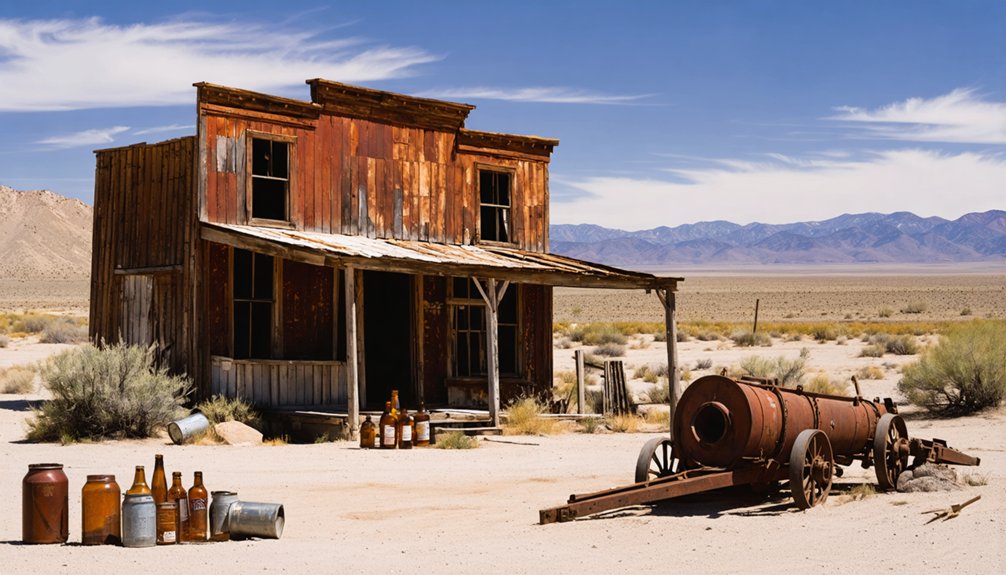
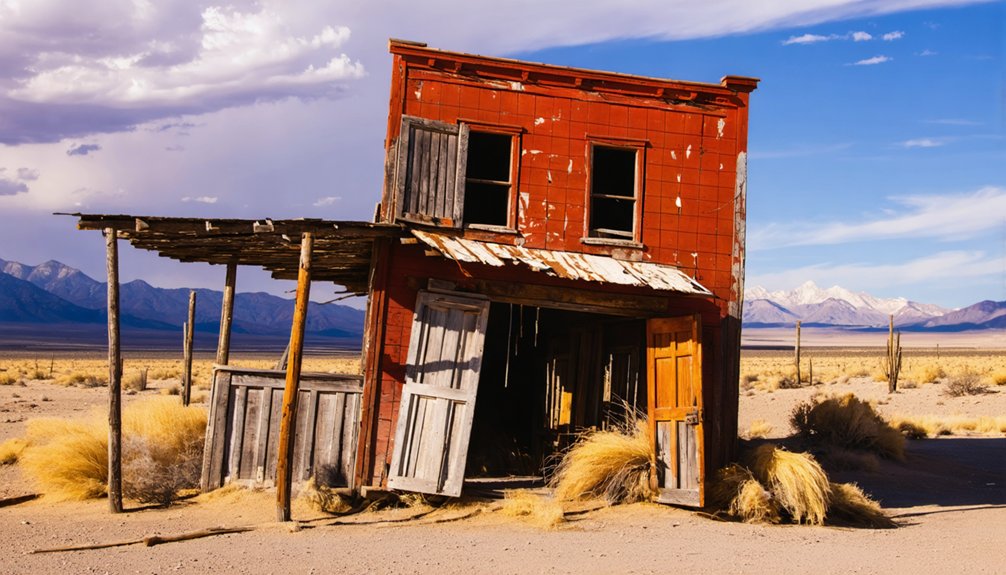
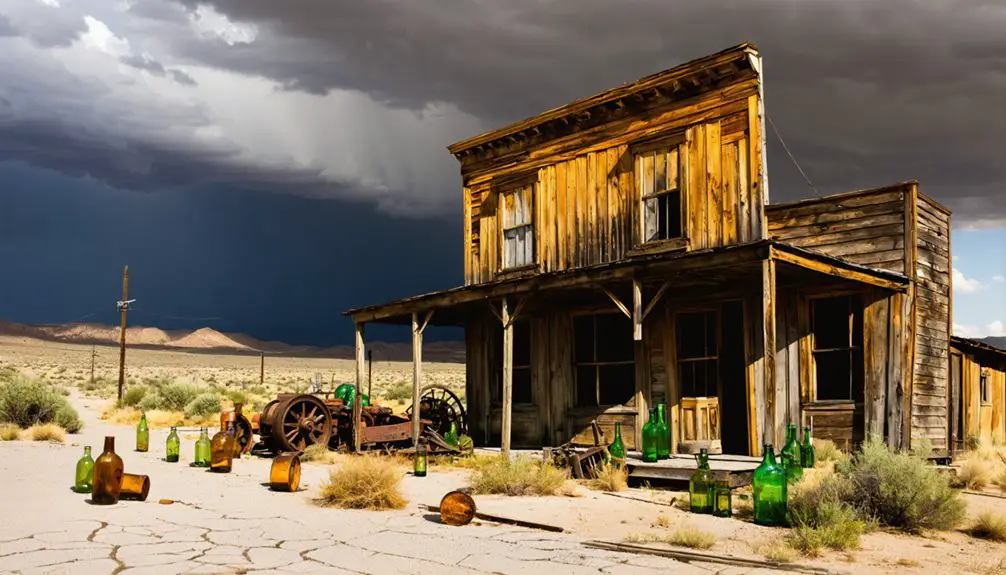
- Only two abandoned buildings and a single crumbling street remain, with warm spring remnants and a rusted telephone box worth exploring.
- Nearby ghost towns like Berlin, Rhyolite, and Belmont make excellent additions to extend your Nevada ghost town road trip itinerary.
What Is Hot Springs, Nevada?
Hot Springs, Nevada, is a true ghost town sitting at the junction of US Route 6 and State Route 375 in Nye County, tucked into the Tonopah Basin between the Kawich and Hot Creek mountain ranges.
Its history stretches back to 1866, when travelers relied on it as a stagecoach and freight wagon stopover. The town’s warm springs fed early settlers, supporting a boarding house, store, and post office that operated until 1929.
By 1940, only nine residents remained, and the population kept shrinking until Hot Springs earned its ghost town status.
Today, you’ll find just two abandoned buildings and remnant huts still standing over pools fed by those same warm springs — proof that nature outlasts civilization every time.
How Hot Springs Went From Stagecoach Stop to Ghost Town
Back in 1866, Hot Springs earned its place on the map as a critical stopover for stagecoaches and freight wagons pushing across the brutal Nevada desert, with the first settlers constructing a stone house beside a warm spring stream.
By the early 1900s, the settlement had grown just enough to support a boarding house, a store, and eventually a post office that operated from 1924 to 1929.
Yet the town never surpassed a population of nine residents, and by the mid-20th century, the slow bleed of people leaving had transformed this once-vital waypoint into the ghost town you can explore today.
Stagecoach Era Beginnings
During the stagecoach era of 1866, weary travelers crossing Nevada’s rugged Tonopah Basin first recognized Hot Springs as a reliable stopover, where a stone house built beside a warm spring stream offered rare comfort between Tonopah and Ely.
This remote outpost shaped early trade routes across unforgiving desert terrain. The stagecoach history here reveals four defining features that made Hot Springs essential:
- Fresh water from warm springs sustained horses and passengers
- Shelter provided by the original stone structure against harsh elements
- Supply access through a boarding house and store in the early 1900s
- Mail service via a functioning post office from 1924 to 1929
These resources transformed a desert spring into a genuine crossroads where freedom-seeking pioneers pushed westward.
Early Settlement Growth
What began as a simple stone house beside a warm spring grew into something slightly more ambitious—though “growth” in Hot Springs, Nevada, always remained a relative term.
Early settlers transformed that initial structure into a functioning boarding house and store during the early 1900s, creating a fragile but real community dynamic around the reliable warm springs. A post office even operated from 1924 to 1929, signaling brief institutional legitimacy.
Yet the town never shed its identity as a tiny settlement—nine residents in 1940 represented peak population.
When the Fallini brothers purchased the property in 1947, decline had already taken hold.
You’re now visiting a place where community dynamics collapsed quietly, leaving only two abandoned buildings standing against the Nevada desert silence.
Inevitable Population Decline
The story of Hot Springs follows a trajectory familiar to Nevada’s forgotten settlements: a brief, purposeful existence tied to transit needs, followed by swift abandonment once those needs evaporated.
Population trends here tell a stark story:
- 1866 – Stagecoach traffic sustains the settlement’s earliest purpose
- 1924–1929 – A functioning post office marks the final pulse of community life
- 1940 – Only nine residents remain, revealing ghost town dynamics already in motion
- 1947 – The Fallini brothers purchase the property, sealing its fate as a private remnant
You’re looking at a place that never exceeded a tiny settlement.
Once freight wagons rerouted and travelers found faster passages, Hot Springs couldn’t hold its people. The warm springs kept flowing — the residents didn’t.
Where Is Hot Springs, Nevada?
You’ll find Hot Springs, Nevada tucked into the remote Tonopah Basin, wedged between the Kawich and Hot Creek mountain ranges in Nye County.
The ghost town sits at the junction of US Route 6 and State Route 375, the latter famously designated the “Extraterrestrial Highway.”
Whether you’re driving 40 miles east from Tonopah or 120 miles west from Ely, the turnoff appears on your left where these two desert highways converge.
Nevada’s Remote Desert Location
Nestled between the Kawich and Hot Creek mountain ranges in Nye County, Nevada, Hot Springs sits roughly 40 miles east of Tonopah along US Route 6 — a stretch of high desert so remote that the town’s peak population never climbed beyond nine souls.
These remote landscapes reward explorers who crave genuine solitude:
- Desert wildlife roams freely across the Tonopah Basin
- US Route 6 cuts through open terrain toward the Extraterrestrial Highway junction
- State Route 375 approaches from Crystal Springs, roughly 100 miles southeast
- Ely anchors the northeastern approach, sitting 120 miles away
You’re entering territory where warm springs bubble up from ancient geology, stagecoaches once carved rutted paths, and civilization feels deliberately, gloriously distant.
Pack supplies before leaving Tonopah — there’s nothing out here but history and open sky.
Key Highway Intersections Nearby
Two highways converge at Hot Springs, Nevada, defining both its geographic identity and your best routes in: US Route 6, running east-west across the high desert, meets State Route 375 — the federally designated “Extraterrestrial Highway” — at a junction that puts you squarely at the ghost town‘s doorstep.
These roads carry serious highway history. Route 6 once moved stagecoaches and freight wagons through Tonopah Basin, threading between the Kawich and Hot Creek mountain ranges. Route 375 earned its extraterrestrial nickname from the UFO lore surrounding nearby test ranges.
Together, they frame one of Nevada’s most compelling ghost town attractions. You’re sitting 40 miles east of Tonopah and 120 miles west of Ely — remote enough to feel frontier, accessible enough to reach without abandoning civilization entirely.
Driving Routes And Distances
Three roads lead to Hot Springs, Nevada, each cutting through a different slice of the Great Basin’s austere beauty. Ghost town legends and scenic drives converge at this remote junction:
- From Tonopah: Head east 40 miles on US Route 6
- From Ely: Drive west 120 miles on US Route 6
- From Crystal Springs: Travel north 100 miles on State Route 375, the “Extraterrestrial Highway”
- At the junction: Turn left where Route 6 meets Route 375 — you’ve arrived
You’ll find Hot Springs nestled between the Kawich and Hot Creek mountain ranges inside Tonopah Basin.
Whatever direction you approach from, you’re trading civilization for solitude, rolling through high desert terrain that swallowed entire communities whole and barely noticed.
How to Get to Hot Springs From Tonopah
Reaching Hot Springs from Tonopah is straightforward: head 40 miles east on US Route 6, and you’ll find the site on your left at the junction where the “Extraterrestrial Highway,” State Route 375, splits off to the southeast.
This stretch of open Nevada highway cuts through the Tonopah Basin, flanked by the Kawich and Hot Creek mountain ranges. You’re not just driving toward hidden treasures of the frontier era — you’re tracing routes that stagecoaches and freight wagons carved out back in 1866.
Local legends whisper through the desert wind here, especially with the Extraterrestrial Highway nearby. Keep your eyes open for the mystery airstrip just down the road. The isolation feels deliberate, raw, and entirely worth every mile.
What’s Left to See at Hot Springs Today?
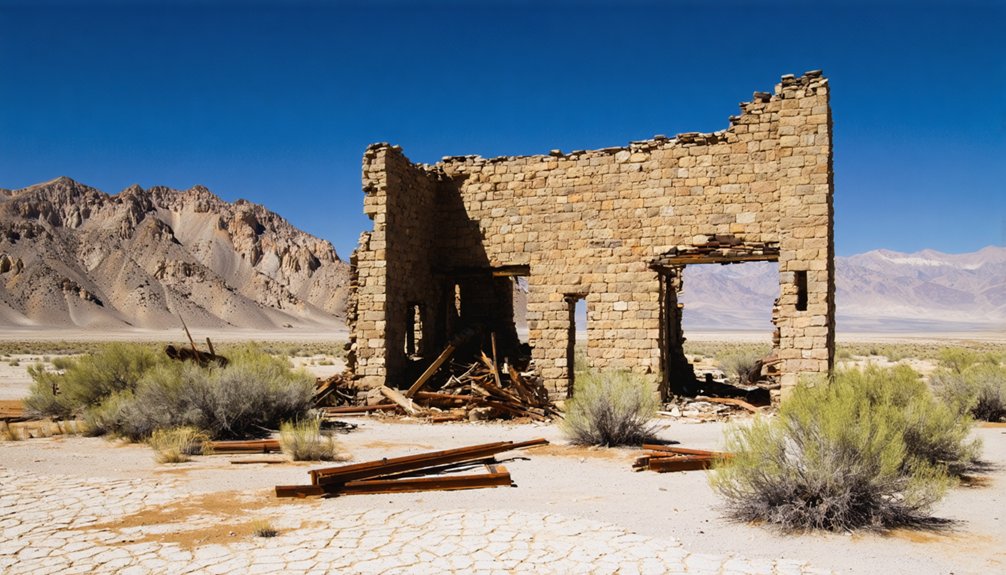
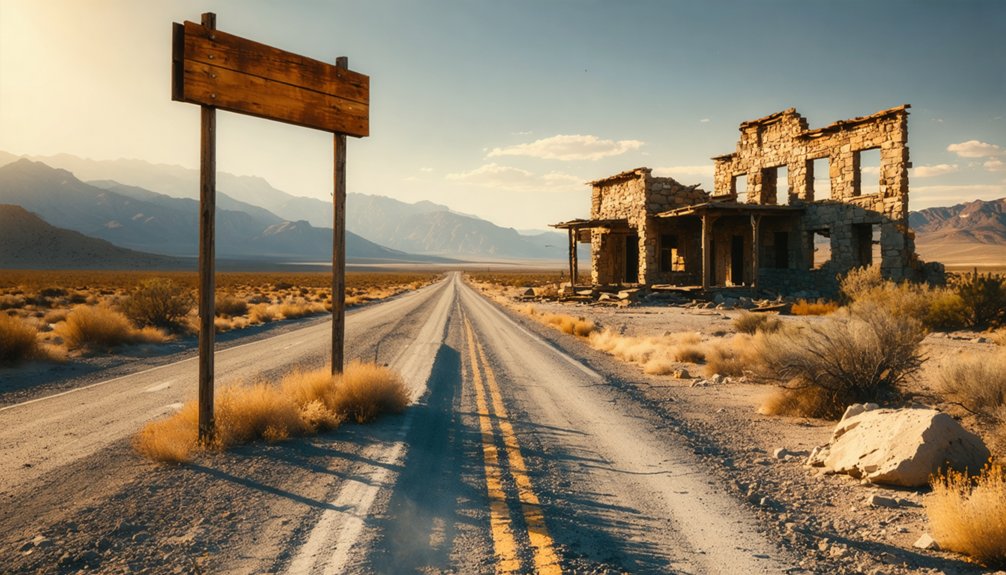
Once you pull off US Route 6, the ghost town of Hot Springs reveals itself in fragments — and honestly, fragments are all that’s left.
Two abandoned structures still stand, quietly daring you to imagine the 1866 stagecoach stopover they once supported.
Here’s what you’ll find:
- Two weathered buildings — the last survivors of a settlement that peaked at nine residents in 1940
- Warm spring pools — still feeding the huts above them, just as they did for early travelers
- A rusted telephone box — a ghost of mid-century communication
- A single crumbling street — stripped of its streetlights
Local legends swirl around this junction where the Extraterrestrial Highway meets Route 6.
Explore freely — nobody’s stopping you.
The Warm Springs That Named the Town
Before settlers ever scratched a post office into the Nevada desert or ran freight wagons across Tonopah Basin, the warm springs here were already doing the real work — drawing people in. Their historical significance runs deeper than any building that’s since crumbled.
Back in 1866, that first stone house went up right beside a warm spring stream — not by accident, but by necessity. Water meant survival out here.
Today, you’ll still find the remaining huts standing directly over pools fed by those same warm springs, quietly bubbling as if nothing changed. The town vanished, the streetlights shattered, the post office closed — but the springs kept flowing.
When you stand over those pools, you’re touching the one thing Hot Springs never lost.
What to Know Before You Visit Hot Springs, Nevada?
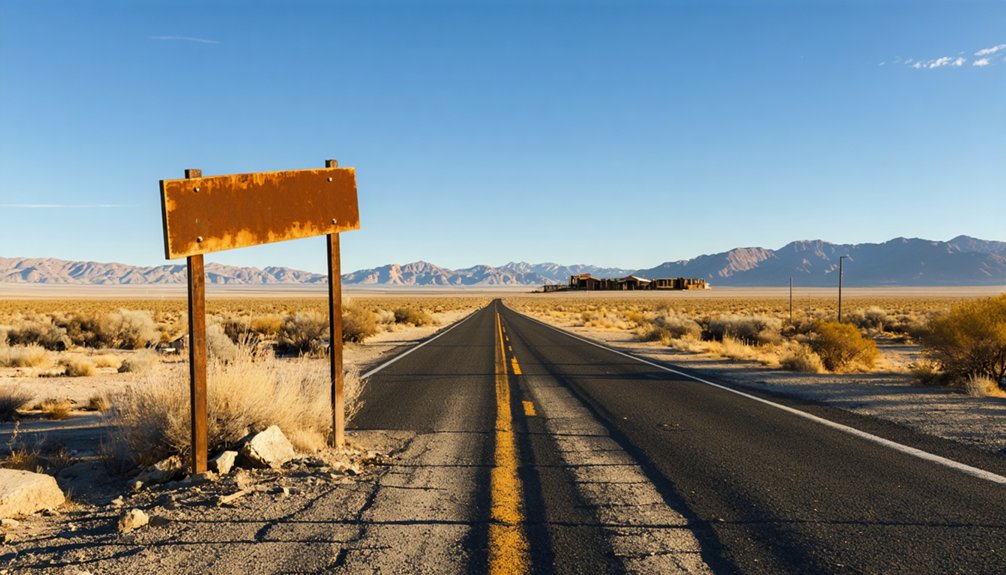
Before you head out, you’ll want to plan your route carefully — whether you’re driving 40 miles east from Tonopah on US Route 6 or cruising 120 miles west from Ely along the same highway, the remote Nye County terrain demands a full tank, water, and a reliable vehicle.
Once you arrive at the junction of Route 6 and the “Extraterrestrial Highway” (State Route 375), you’ll find only two abandoned buildings standing, a crumbling single street with missing streetlights, and an old telephone box that’s all that remains of a once-functioning settlement.
The site’s isolation is real — there are no permanent residents, no services, and no guardrails between you and the ghost town’s quiet, sun-bleached remnants.
Getting There Safely
Planning your route to Hot Springs, Nevada means committing to serious desert driving across one of the most remote stretches of the American West. Your road trip demands preparation, not improvisation.
Follow these safety tips before you roll out:
- Fuel up in Tonopah — there’s nothing between there and the junction 40 miles east on US Route 6.
- Check tire condition — desert roads punish worn rubber without mercy.
- Carry extra water — summer heat across Tonopah Basin turns mistakes deadly fast.
- Download offline maps — cell service vanishes long before you reach the Route 6 and State Route 375 junction.
You’re chasing a ghost town swallowed by the Mojave’s silence. Respect that silence, and it’ll let you leave.
Site Conditions Today
What greets you at Hot Springs today is a skeleton of a settlement that never managed to grow past nine souls even at its peak in 1940.
Two abandoned structures still stand, weathered but stubbornly upright, carrying the historical significance of a town that served stagecoaches, freight wagons, and desert wanderers for decades.
You’ll spot a deteriorating single street where streetlights once guided travelers through the Nevada dark. An old telephone box lingers near the former huts, and those huts themselves still hover over warm spring pools that gave this place its name and its only lasting identity.
The springs keep flowing — indifferent to the town’s collapse.
Walk carefully, explore freely, and respect what little remains of this quietly defiant desert outpost.
Ghost Towns Near Hot Springs Worth Stopping For
While Hot Springs itself rewards the curious traveler, Nevada’s ghost town circuit doesn’t stop there.
Hot Springs rewards the curious — but Nevada’s ghost town circuit runs deeper, wilder, and far from finished.
The surrounding region holds ghost town legends that’ll pull you deeper into the desert’s forgotten past. Consider adding these abandoned structures and storied stops to your route:
- Berlin – A preserved mining camp frozen in time, complete with a stamp mill and crumbling stone walls.
- Virginia City – Nevada’s most celebrated boomtown, rich with Victorian architecture and silver rush history.
- Belmont – A courthouse still stands sentinel over this quiet Nye County ruin.
- Rhyolite – Striking bottle-built ruins near Death Valley that define Mojave desert abandonment.
Each stop deepens the story.
You’re not just sightseeing — you’re tracing Nevada’s raw, restless past mile by mile.
How to Drive the Extraterrestrial Highway to Hot Springs
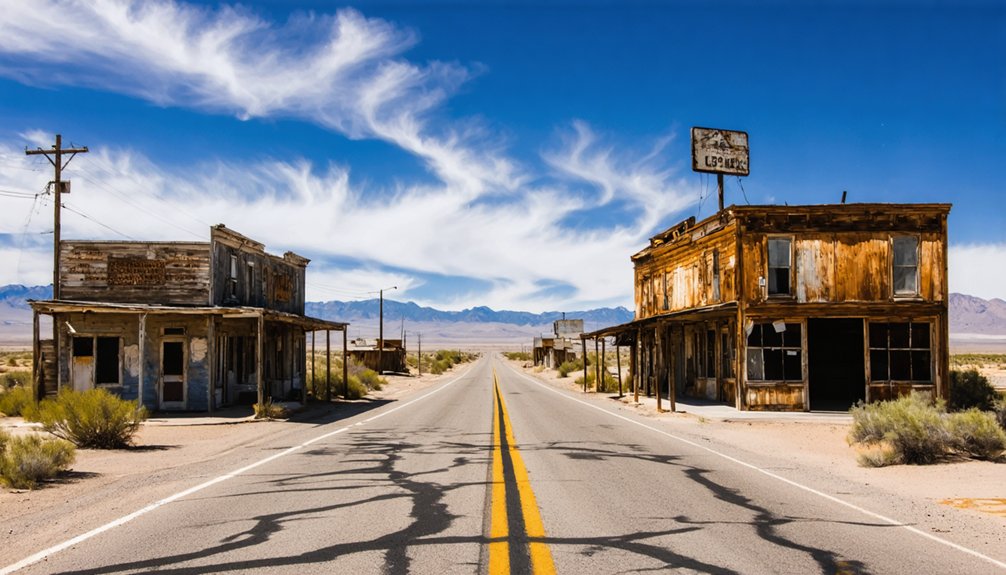
One road ties the ghost town circuit together and earns its strange nickname along the way. State Route 375, officially designated the “Extraterrestrial Highway,” stretches 100 miles from Crystal Springs northwest to the Route 6 junction where Hot Springs once stood.
You’ll drive through open basin country flanked by the Kawich and Hot Creek ranges, scanning skies that locals swear harbor extraterrestrial sightings. The desolation feels deliberate out here.
Watch for the mystery airstrip appearing roadside without explanation or signage, a landmark that sharpens the highway’s reputation considerably.
Turn left at the Route 6 intersection and you’ve arrived. Coming from Tonopah, head 40 miles east instead. Either approach deposits you at the same crumbling buildings beside warm springs that gave this forgotten settlement its name.
Best Time of Year to Visit Hot Springs, Nevada
Spring and fall deliver the most forgiving conditions for exploring Hot Springs, when desert temperatures settle into ranges that won’t punish you for lingering near the warm spring pools or poking through the two remaining structures.
Plan your visit around these windows for the best seasonal activities:
Plan your visit strategically—Hot Springs rewards those who respect its desert rhythms and unforgiving seasonal extremes.
- Spring (March–May): Cool mornings sharpen ideal photography spots around the pools and abandoned buildings.
- Fall (September–November): Golden light flatters the stark desert landscape beautifully.
- Avoid summer: Nye County heat exceeds 100°F, punishing exposed terrain without mercy.
- Winter access: Highway 6 stays passable, but freezing nights demand preparation.
Dawn and dusk offer the most dramatic light for capturing this 1866 settlement’s haunting remnants before the Nevada desert reclaims what little remains standing.
Frequently Asked Questions
Who Were the Fallini Brothers That Purchased Hot Springs in 1947?
The knowledge doesn’t detail who the Fallini brothers were, but you’ll appreciate their Fallini legacy — they claimed Hot Springs in 1947, cementing its historic significance as a privately held Nevada ghost town you can still explore today.
How Long Did the Hot Springs Post Office Operate Before Closing?
You’ll find the post office history spans just five years, operating from 1924 until 1929. That brief run adds to Hot Springs’ ghost town significance — a fleeting lifeline before the settlement surrendered to Nevada’s vast, untamed wilderness.
What Was the Maximum Population Hot Springs Ever Reached?
Imagine 1940 — you’d have counted just nine souls calling Hot Springs home, its peak population. That’s the historical significance of this settlement’s population growth: never more than nine hardy, freedom-seeking residents ever claimed this desert outpost.
How Far Is Hot Springs From Crystal Springs via State Route 375?
You’ll cover 100 miles on State Route 375, the legendary “Extraterrestrial Highway,” on your road trip from Crystal Springs. This scenic route delivers an adventurous, freedom-filled journey straight into Hot Springs’ hauntingly historic, desolate embrace.
What Mountain Ranges Border the Tonopah Basin Near Hot Springs?
Picture rugged ridgelines framing your journey — you’ll find the Kawich and Hot Creek mountain ranges bordering Tonopah Basin near Hot Springs. These peaks shape the Tonopah geology and echo the ghost town history surrounding this adventurous, freedom-calling Nevada destination.
References
- https://www.carolynsrvlife.com/abandoned-hot-springs-nevada/
- https://www.theoutbound.com/nevada/chillin/soak-in-the-warm-springs-hot-spring
- https://pinintheatlas.com/travel-blogs/hwy-95-road-trip/
- https://www.youtube.com/watch?v=y-3tZW49eSI
- https://www.youtube.com/watch?v=WVsHQkf_LhU
- https://www.borntobenomadic.com/2019/06/30/abandoned-hot-springs/
- https://www.thisexpansiveadventure.com/destinations/north-america/route50-nevada-day-2-roadtrip/
- https://roadtrippers.com/magazine/dark-skies-and-ghost-towns-stops-on-a-spooky-nevada-road-trip/
- https://www.youtube.com/watch?v=kGR8s0hRxmY
- https://triptalesbook.com/road-tripping-through-nevada-silver-mines-fire-waves-hot-springs-and-space-aliens/