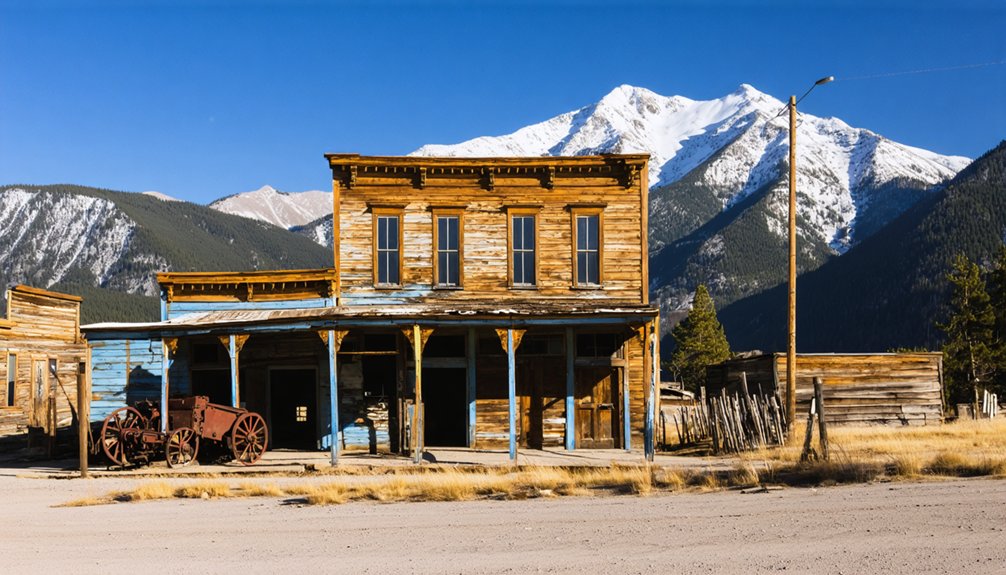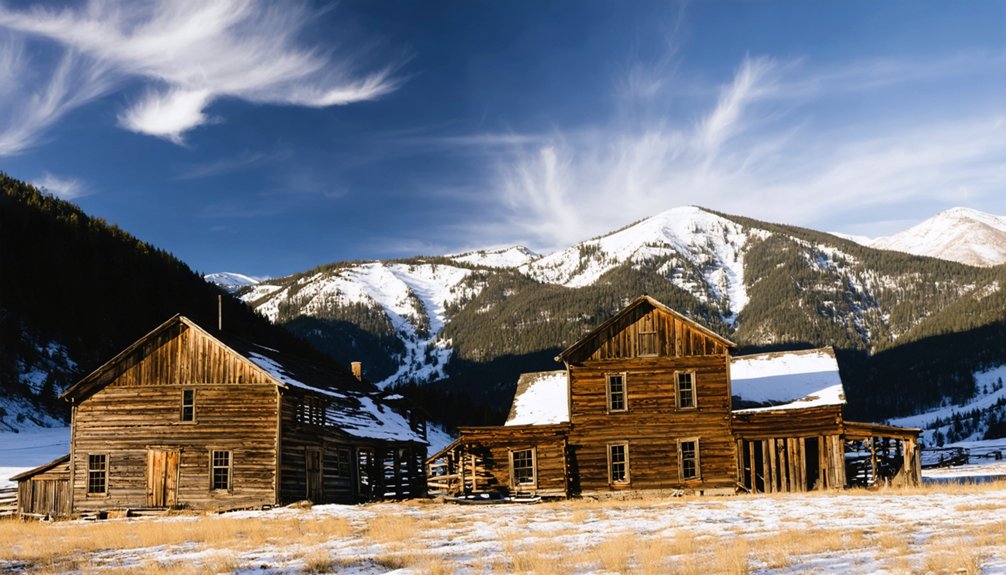
Planning a ghost town road trip to Howbert, Colorado means visiting a town you can’t actually walk through—it’s completely submerged beneath Eleven Mile Reservoir, flooded after the dam’s completion in 1932. Drive about an hour from Colorado Springs via US-24 West, and pair the stop with visible ghost towns like St. Elmo for a fuller experience. What you’ll find at Howbert’s site is both haunting and fascinating, and there’s much more to uncover about this drowned Colorado community.
Key Takeaways
- Howbert, Colorado, is a ghost town submerged beneath Eleven Mile Reservoir since 1932, offering a unique, absence-defined historical experience.
- Reach the reservoir in approximately one hour from Colorado Springs via US-24 West, passing through scenic Woodland Park along the way.
- Visit in summer or fall for optimal conditions; bring layered clothing, sturdy shoes, a map, and sufficient water.
- Pair the Howbert stop with St. Elmo and Independence Pass for a balanced mix of submerged, preserved, and ruined ghost towns.
- No interpretive signs mark Howbert’s location, so bring a printed historical map to provide meaningful context during your visit.
What Was Howbert, Colorado?
Although it’s now swallowed beneath the waters of Eleven Mile Reservoir, Howbert, Colorado once thrived as a railroad and ranching town in Park County, established in 1887 and named after Frank E. Howbert, a prominent Colorado Springs civic leader and businessman.
Its historical importance stems from its direct ties to Colorado Midland Railroad expansion, which opened central Colorado to settlers, ranchers, and commerce during a transformative era. You can picture a functioning community built around rail lines, nearby stations like Freshwater Station and Idlewild, and the broader development of the Ute Pass corridor.
What You’ll Actually See at the Howbert Site Today
When you arrive at the Howbert site today, you won’t find crumbling walls or weathered storefronts — the entire townsite lies beneath Eleven Mile Reservoir.
You’ll drive the roads skirting the shoreline, scanning a stretch of water that quietly erased what was once a functioning railroad and ranching community.
No standing ruins remain, so you’re really visiting a site defined by absence, where the reservoir itself becomes the only visible marker of what once existed here.
Reservoir Covers Original Townsite
Eleven Mile Reservoir now covers every last trace of Howbert’s original townsite, so don’t arrive expecting weathered storefronts or crumbling foundations. The water claimed everything when the reservoir filled in the 1930s, erasing the physical evidence of a town that once served railroad workers and ranchers alike.
That reservoir significance actually deepens the town history rather than diminishing it. Standing at the shoreline, you’re looking directly over a submerged community that thrived during Colorado’s railroad expansion era and simply vanished beneath rising water.
No rope lines or interpretive signs mark the spot.
What you gain here is imagination and context. The open reservoir stretching before you tells a quieter, stranger story than any preserved ruin could — a Colorado town swallowed whole, frozen in time beneath the surface.
Shoreline Views Only
Four things will greet you when you pull up to the Eleven Mile Reservoir shoreline: open water, mountain sky, the quiet hum of wind, and absolutely nothing that looks like a town.
Howbert’s gone — buried beneath the surface you’re standing beside.
What you’ll actually find here:
- Shoreline fishing access points where you can cast a line directly above the submerged townsite
- Scenic photography opportunities framing the Rockies against wide reservoir water
- Open space that rewards quiet exploration without crowds or fences blocking your view
You won’t find foundations, street grids, or signage marking Howbert’s exact location.
What you’ll find instead is a landscape that swallowed an entire community whole — and somehow, that’s more haunting than ruins ever could be.
No Standing Ruins Remain
Unlike most ghost towns that greet you with crumbling walls or rusted machinery, Howbert offers nothing you can touch, photograph up close, or point to on a map. The reservoir swallowed everything. Streets, foundations, and storefronts vanished beneath the waterline decades ago, leaving no standing ruins to explore.
That absence carries its own ghost town significance. You’re standing above submerged history, and that awareness reshapes how you experience the site. There’s no interpretive kiosk, no roped-off relic, no dramatic collapsed structure framing your shot. What remains is the lake, the shoreline, and your imagination.
If you crave tangible ruins, Howbert will frustrate you. But if you’re drawn to places erased completely, this stop delivers something most ghost towns simply can’t.
Why Howbert Is Now Beneath Eleven Mile Reservoir
When the Denver Water Board completed Eleven Mile Dam in 1932, it sealed Howbert’s fate beneath the rising waters of what’s now Eleven Mile Reservoir.
This submerged history represents more than a flooded town — it’s a community erased by infrastructure decisions that prioritized water supply over preservation. The reservoir impact permanently buried streets, buildings, and decades of railroad-era life.
What drove Howbert underwater:
- Dam construction — The 1932 dam raised water levels, flooding the entire townsite within a year
- Water demand — Denver’s growing population required expanded reservoir capacity, sacrificing low-lying communities
- No relocation effort — Residents abandoned the town without any attempt to preserve structures
Today, you’re standing at the edge of a watery grave for an entire Colorado railroad community.
Plan Your Drive to Eleven Mile Reservoir
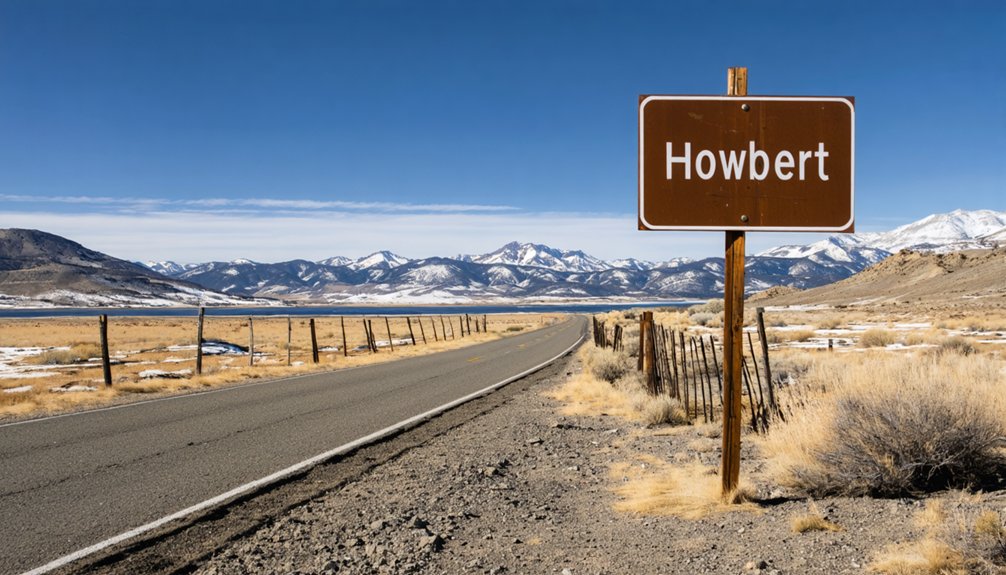
Reaching Eleven Mile Reservoir from Colorado Springs takes roughly an hour, with US-24 West serving as your main artery toward the heart of Park County.
Follow US-24 through Woodland Park, then head south on County Road 90 toward the reservoir. The drive itself rewards you with scenic viewpoints across open meadows and rugged terrain that define central Colorado’s character.
Follow US-24 through Woodland Park, then head south on County Road 90 toward breathtaking meadows and rugged Colorado terrain.
Once you arrive, pull over where regulations allow and scan the shoreline — local wildlife including deer, eagles, and osprey frequent this area regularly.
You won’t find a preserved townsite waiting, but the reservoir’s vast surface tells its own quiet story.
Bring a map, check county road access rules beforehand, and give yourself extra time to absorb the landscape surrounding Howbert’s submerged history.
Best Times of Year to Visit This Colorado Ghost Town
Timing your visit to Eleven Mile Reservoir shapes how much you’ll actually enjoy the experience. Weather considerations matter greatly at this elevation, so choosing among the best seasons keeps frustration low and exploration high.
Each season offers something distinct:
- Summer (June–August): Long daylight hours and clear skies maximize your exploration time around the reservoir’s edge.
- Fall (September–October): Cooler temperatures and brilliant foliage create dramatic scenery with lighter crowds.
- Spring (May–June): Snowmelt reveals shoreline areas, though muddy access roads can challenge your route.
Winter visits are possible but harsh mountain conditions often restrict road access entirely.
You’ll experience Howbert’s submerged story most powerfully when you’re not battling ice or whiteouts. Plan accordingly and the reservoir rewards you.
Ghost Towns That Pair Well With Howbert
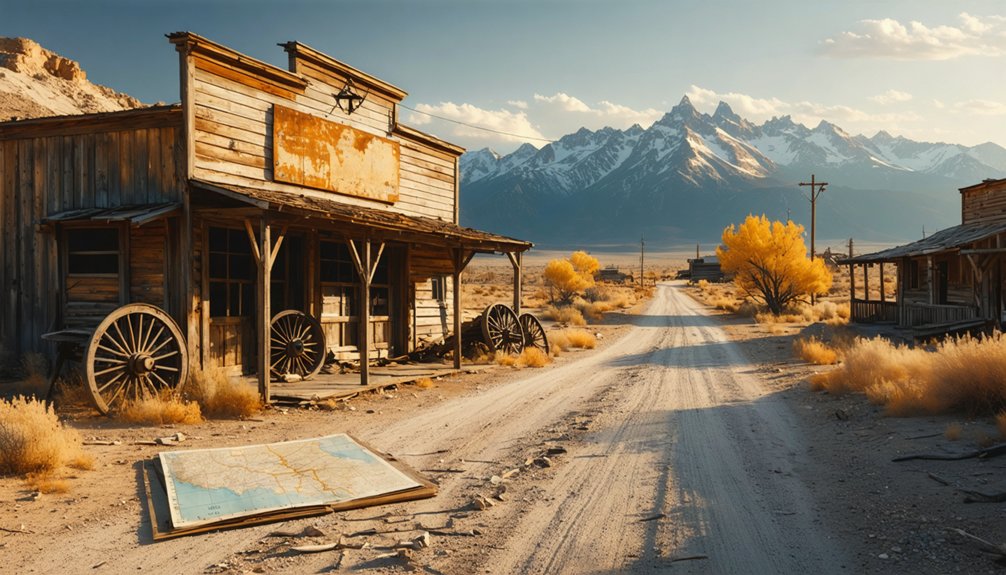
Once you’ve locked in your best travel window, the next step is building out your itinerary—and Howbert pairs remarkably well with several other Colorado ghost towns that round out the story of the state’s railroad and mining past.
St. Elmo gives you a preserved, walkable townsite that contrasts sharply with Howbert’s submerged history. Independence Pass takes you to a high-elevation mining ruin with dramatic scenery. Teller City adds a North Park silver-camp perspective.
Each stop deepens your understanding of how abandoned railroads, failed economies, and shifting populations shaped Colorado’s landscape. Together, these sites create a layered road trip that moves beyond simple ruins—connecting you to communities that boomed, collapsed, and sometimes disappeared beneath the water entirely.
What to Bring for a Reservoir Ghost Town Visit
Pack these three essentials before you leave:
Pack three essentials before you leave — binoculars, a printed historical map, and a weatherproof journal. Curiosity demands preparation.
- Binoculars — scan the reservoir shoreline during low water for exposed foundations or sediment patterns.
- A printed historical map — cell service near Eleven Mile Reservoir is unreliable, and context transforms an empty shoreline into a living story.
- A weatherproof journal — document what you see, because your observations contribute to informal preservation records.
Dress in layers, wear sturdy shoes for uneven terrain, and bring enough water.
You’re exploring on your own terms, and Howbert rewards curiosity over comfort.
How to Route a Central Colorado Ghost Town Road Trip
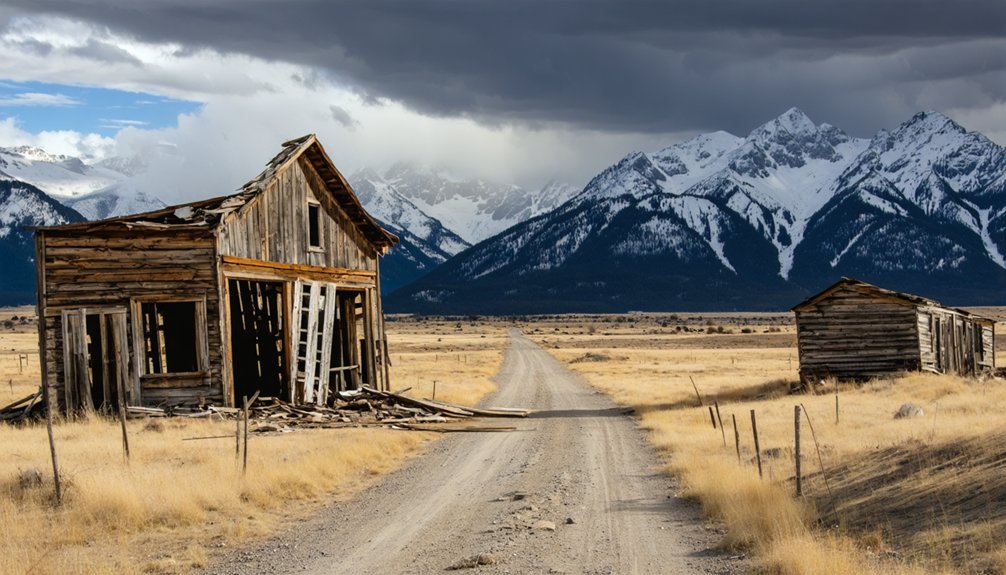
Once you’ve decided to make Howbert the centerpiece of your road trip, you can build a compelling central Colorado loop around it by pairing it with towns that offer what Howbert can’t — visible ruins and walkable history.
St. Elmo gives you a well-preserved mining-era streetscape, while Independence Pass adds a dramatic high-elevation ghost town experience that contrasts sharply with Howbert’s reservoir-submerged story.
Route your drive along Highway 24 and the roads skirting Eleven Mile Reservoir to connect these sites efficiently, keeping your mileage manageable while covering a solid range of Colorado ghost town types.
Central Colorado Route Planning
Routing a central Colorado ghost town road trip around Howbert takes some creative planning, since the original townsite now sits beneath Eleven Mile Reservoir rather than along an accessible road.
You’ll build your route around the reservoir’s scenic routes and nearby historical markers rather than a walkable townsite. That flexibility actually opens up a richer itinerary.
Consider anchoring your trip around these stops:
- Eleven Mile Reservoir – your closest access point to Howbert’s submerged history
- St. Elmo – a well-preserved mining town offering visible, walkable ruins
- Independence Pass area – high-elevation ghost town remnants with dramatic scenery
Threading these sites together gives you contrast between preserved, ruined, and submerged ghost towns, making your road trip genuinely varied rather than repetitive.
Pairing Nearby Ghost Towns
Since Howbert’s original townsite lies underwater, you’ll get the most out of your trip by pairing it with nearby ghost towns that offer the physical experience the reservoir can’t.
After your reservoir exploration around Eleven Mile, head toward St. Elmo for well-preserved buildings that put ghost town history directly in front of you.
Independence Pass delivers a high-elevation mining site with raw, windswept character. If you’re pushing further, the Lake City area opens up Engineer Pass remnants worth the drive.
Each pairing creates contrast — submerged versus standing, erased versus preserved.
You’ll leave central Colorado with a complete picture of how communities rose, fell, and disappeared in entirely different ways, making your road trip far richer than any single stop could deliver.
Frequently Asked Questions
Who Was Frank E. Howbert, and Why Was the Town Named After Him?
You’ll find Frank Howbert’s legacy rooted in Colorado Springs, where he thrived as a civic leader and businessman. His historical significance earned him the honor of having this railroad and ranching town named after him in 1887.
Were Any Buildings or Artifacts Saved Before Howbert Was Flooded?
Records don’t confirm any historic preservation efforts before 1933’s flooding claimed Howbert. You’re left imagining submerged artifacts beneath Eleven Mile Reservoir’s surface — one of Colorado’s roughly 350 ghost towns erased completely, offering no salvaged structures to explore today.
Are There Entry Fees or Permits Required to Access Eleven Mile Reservoir?
You’ll need to check Colorado Parks & Wildlife for current entry requirements and fishing regulations before visiting Eleven Mile Reservoir. They manage access, so you’re looking at potential day-use fees and permit needs depending on your activities.
Can You Fish or Boat Directly Above the Submerged Howbert Townsite?
Over 800 acres of water cover Howbert’s remains — you can fish and boat directly above it! Just follow Colorado’s fishing regulations and boating safety guidelines to freely explore this hauntingly unique aquatic ghost town experience.
Did Any Former Howbert Residents Document Their Memories of the Town?
You’ll find that documented resident stories about Howbert’s town history are scarce, but local Colorado historical societies occasionally preserve firsthand accounts—so you’d want to dig into Park County archives for any surviving memories.
References
- https://tranquiltrekker.com/central-colorado-ghost-towns-independence-pass/
- https://janmackellcollins.wordpress.com/2024/12/29/a-fleeting-glimpse-howbert-colorado-and-a-watery-grave/
- https://95rockfm.com/the-ultimate-ghost-town-road-trip-through-colorado/
- https://www.youtube.com/watch?v=srF-pMXQ9zM
- https://en.wikipedia.org/wiki/List_of_ghost_towns_in_Colorado
- https://www.colorado.com/articles/colorado-ghost-towns
- https://www.theflume.com/news/parked-in-the-past-46-years-in-howbert-1887-1933/article_a62a9afa-1fbe-11e2-9c13-0019bb30f31a.html
- https://www.facebook.com/groups/abandonedrails/posts/1623103304389845/
- https://www.facebook.com/groups/142407802509796/posts/5792309877519532/
- https://www.facebook.com/groups/whatshappeningleadville/posts/880652767302170/