If you’re craving a road trip off the beaten path, Jennings, Oklahoma is your destination. Once a thriving oil boomtown in the 1890s, it’s now a fascinating ghost town sitting about 60 miles northwest of Tulsa via US-64. You’ll find weathered storefronts, crumbling infrastructure, and echoes of a bustling past frozen in time. Pack supplies, fuel up, and bring your camera — there’s far more to uncover about this forgotten Oklahoma treasure than meets the eye.
Key Takeaways
- Jennings is located about 60 miles northwest of Tulsa via US-64 and 80 miles from Oklahoma City via US-270 and State Highway 99.
- Carry gas, water, snacks, and cash, as services are limited along routes leading to Jennings and surrounding remote areas.
- Explore during daylight hours and use nearby towns like Pawhuska, Pawnee, or Cleveland for overnight lodging options.
- Wear sturdy boots, download offline maps, respect property boundaries, and consider weather conditions before heading out.
- Jennings serves as a starting point for visiting other ghost towns, including Picher, a former lead and zinc mining hub.
The Oil Boom That Built and Abandoned Jennings, Oklahoma
When the oil boom swept through Pawnee County in the 1890s, it transformed Jennings from a quiet agricultural settlement into a bustling industrial hub. Migrants flooded the region, chasing opportunity as oil derricks replaced farmland and infrastructure rapidly expanded.
By the 1920s, Jennings had cemented its oil legacy as a regional production center, drawing workers and commerce into its streets.
By the 1920s, Jennings stood as a thriving oil hub, its streets alive with workers and commerce.
But boom cycles don’t last forever. As oil production declined, the economic collapse hit hard and fast. Businesses shuttered, residents left, and the population steadily eroded — dropping from 373 in 2000 to just 363 by 2010.
What you’ll find today is a town frozen in time, its weathered buildings quietly telling the story of ambition, prosperity, and inevitable decline.
What Made Jennings a True Ghost Town?
Though the oil industry set Jennings on its path to prosperity, its departure is what sealed the town’s fate. When oil production dried up, economic decline swept through quickly, leaving behind empty storefronts and crumbling infrastructure.
Residents followed the work elsewhere, and the population shrank from hundreds to a quiet few.
What you’ll find today is a town frozen in time, where the cultural legacy of hardworking settlers still echoes through weathered buildings and abandoned lots.
The population dropped from 373 in 2000 to just 363 by 2010, a slow bleed that tells the full story. Jennings didn’t vanish overnight — it faded gradually, which is exactly what makes it such a compelling ghost town worth exploring on your own terms.
What’s Still Standing in Jennings Today
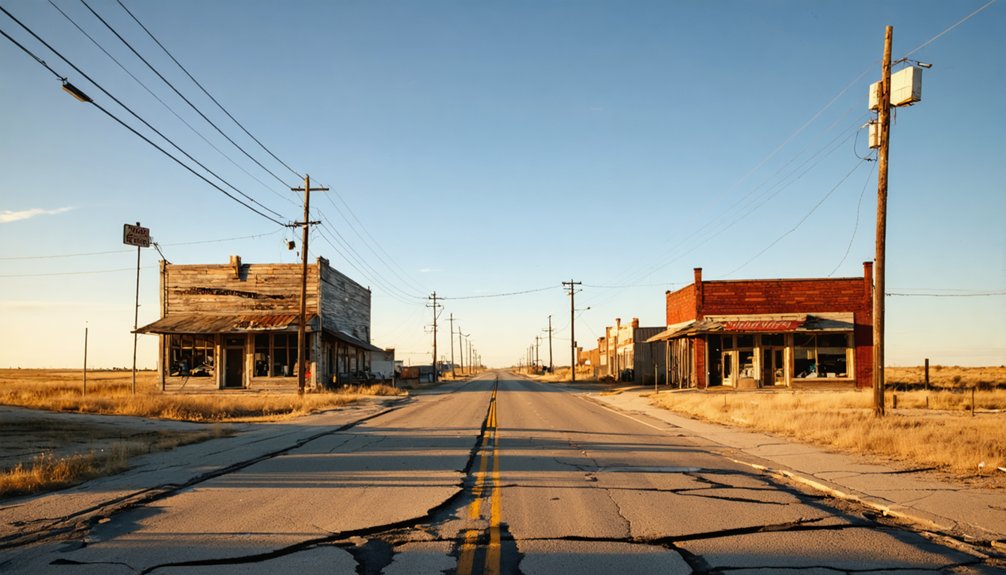
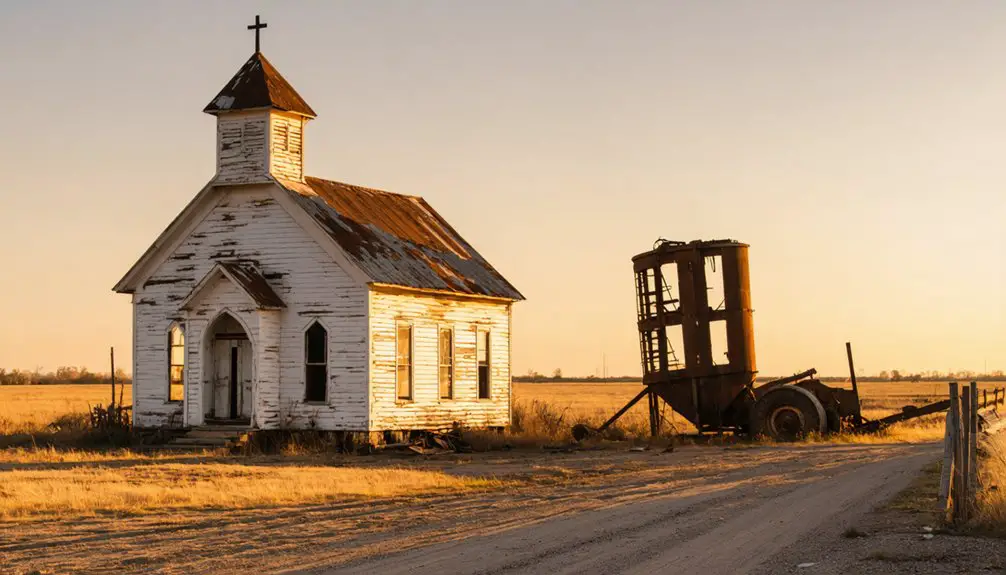
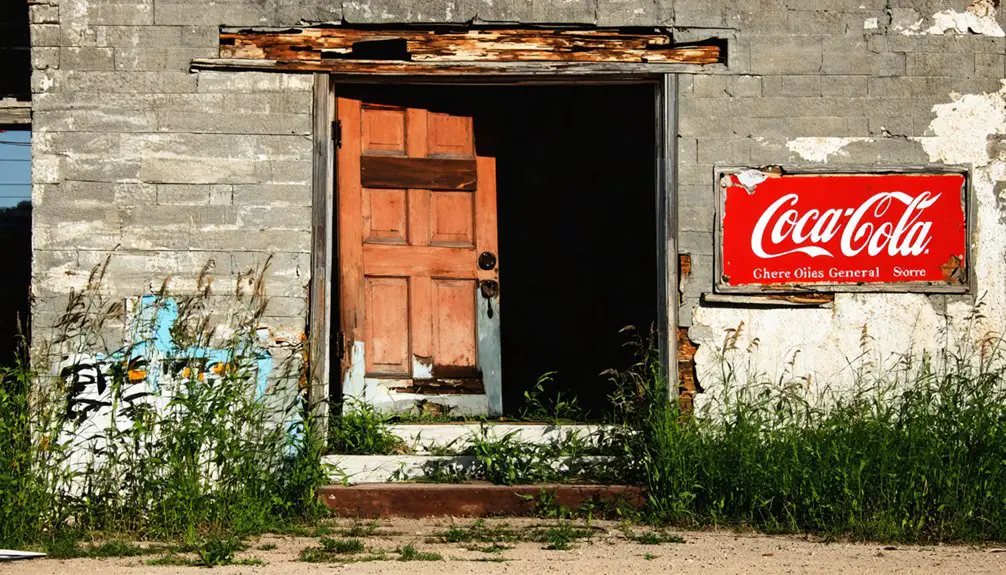
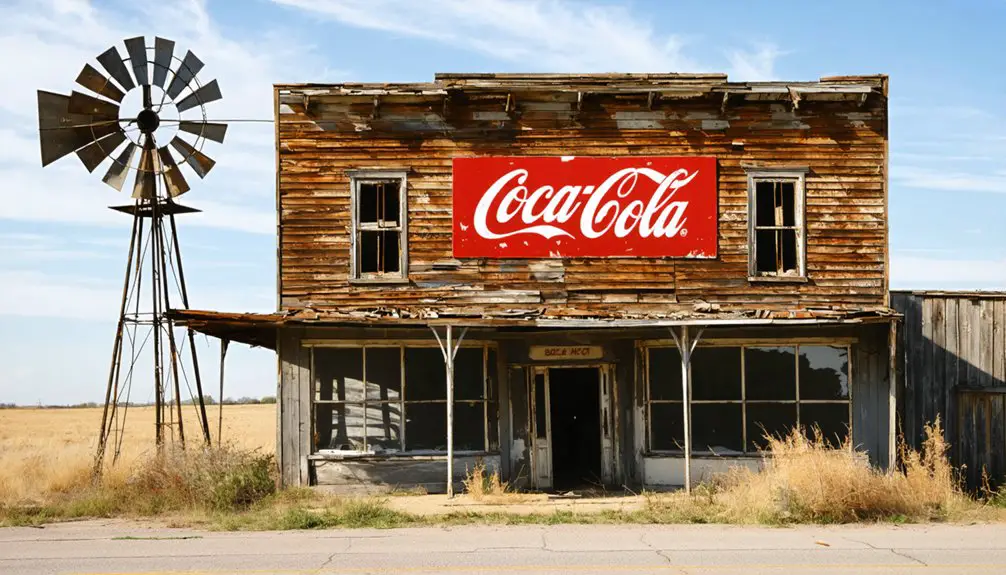
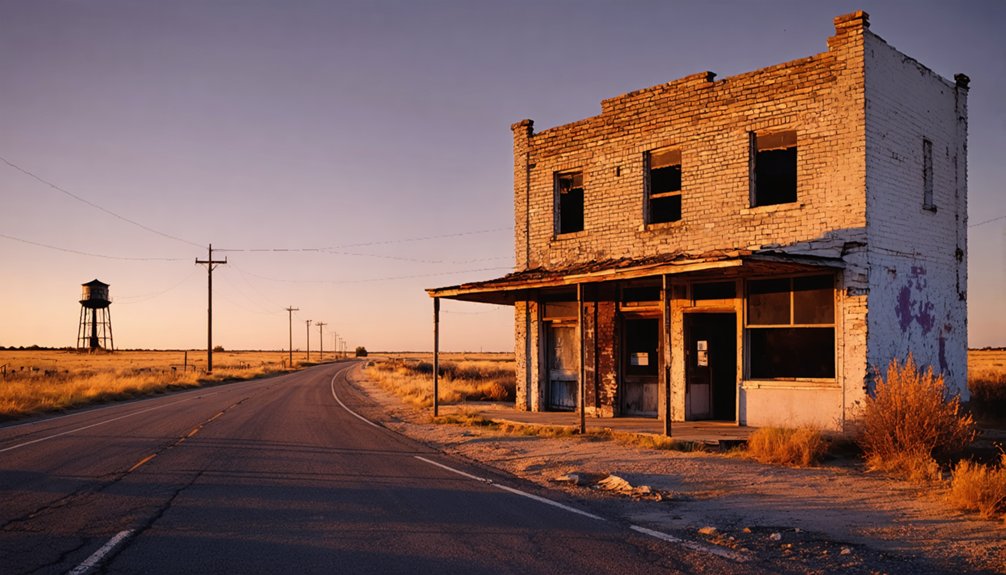
As you walk through Jennings, you’ll find historic buildings that have quietly endured decades of decline, their weathered facades telling the story of a once-thriving oil town.
You can still spot preserved cultural landmarks that reflect the community’s proud heritage, from early settler structures to remnants of the resource boom era.
The rusting echoes of the oil industry also dot the landscape, giving you a tangible connection to the wells and pipelines that once fueled this small Oklahoma town’s explosive growth.
Historic Buildings Still Standing
Despite its dwindling population, Jennings still holds onto a handful of historic structures that tell the story of its oil boom days.
You’ll find buildings that reflect the town’s early 20th-century growth, their architectural features speaking to an era when oil money flowed freely through Pawnee County.
Historic preservation efforts have kept several storefronts and community buildings standing, giving you a tangible connection to the town’s industrial past.
Walk the quiet streets and you’ll notice the craftsmanship of structures built during the 1920s boom period — brick facades, weathered wood details, and old-school construction techniques rarely seen today.
These buildings aren’t just relics; they’re your gateway into understanding how a small Oklahoma settlement transformed itself around the promise of oil and gas.
Preserved Cultural Landmarks
Beyond the storefronts and weathered facades, Jennings holds onto a few cultural landmarks that anchor the town’s identity to its resource-driven past.
You’ll find historical preservation efforts scattered throughout, where locals have worked to maintain structures that tell the story of the oil boom era that once defined this community.
Cultural festivals have periodically brought residents together to celebrate that legacy, keeping traditions alive even as the population continues to shrink.
These gatherings honor the early settlers, farmers, and oil workers who shaped Jennings into what it became.
When you visit, take time to walk the grounds and absorb what remains.
These landmarks aren’t polished tourist attractions — they’re raw, authentic connections to a working town that refused to be completely forgotten.
Remnants Of Oil Industry
When you walk through Jennings today, the oil industry’s fingerprints are still pressed into the landscape — rusted equipment, weathered infrastructure, and scattered remnants of a production era that once drove this town’s entire economy.
Oil derrick remnants lean against the Oklahoma sky like forgotten monuments, quietly marking where workers once hauled wealth from the earth. Abandoned pipelines snake through overgrown fields, tracing the veins of an industry that swelled this community during the 1920s boom before fading into economic silence.
You can move freely through these open-air relics, photographing decay without ropes or admission fees. It’s raw, unfiltered history you experience on your own terms — a landscape that doesn’t sanitize the past but lets you read it directly.
How to Get to Jennings, Oklahoma
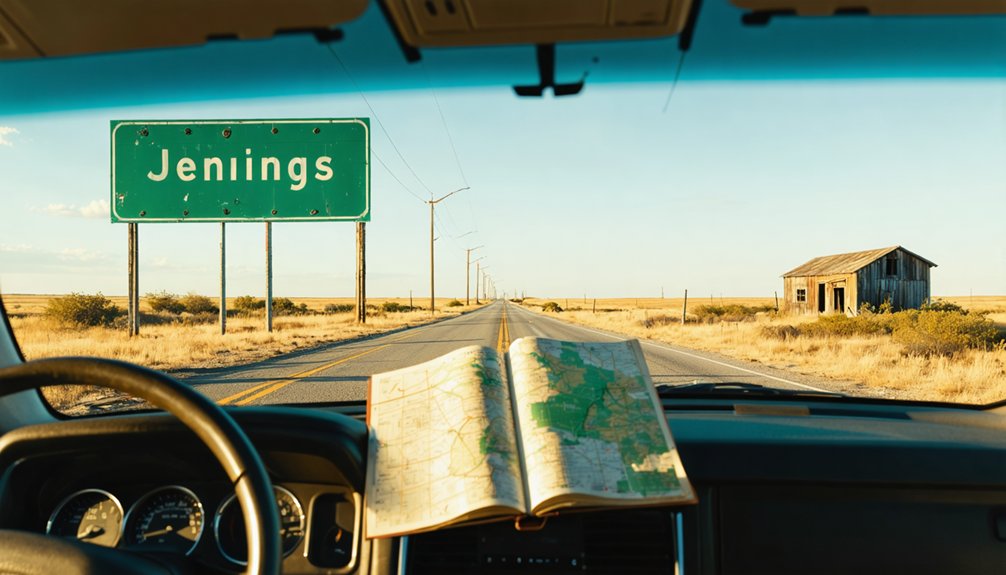
Getting to Jennings, Oklahoma is a straightforward drive through the heart of Pawnee County. From Tulsa, you’ll head northwest on US-64, covering roughly 60 miles before reaching this quiet ghost town.
If you’re coming from Oklahoma City, take US-270 north, then connect to State Highway 99, putting you about 80 miles from your destination.
For route options, Google Maps or Waze will keep you on track, but don’t ignore paper maps—cell service gets spotty in rural Oklahoma.
A few travel tips worth noting: fill your gas tank before leaving any major city, and pack water and snacks since services along the way are limited.
Plan your arrival during daylight hours so you can fully explore Jennings’ fascinating remnants without rushing.
Where to Stay Near Jennings for Your Road Trip
Since Jennings itself offers no lodging, you’ll need to base yourself in one of 3 nearby towns that put you within comfortable striking distance.
Pawhuska, roughly 30 miles north, offers charming bed-and-breakfast accommodation options alongside local eateries worth exploring.
Pawnee, just 15 miles southwest, provides budget-friendly motels and diners serving hearty Oklahoma cooking.
Cleveland, sitting about 20 miles southeast, rounds out your choices with practical overnight stays and casual restaurants.
Each town gives you the flexibility to explore Jennings during the day while retreating to a comfortable base at night.
Book ahead during warmer months when road-trippers flood the region, and check local visitor sites for current rates and availability before you hit the road.
The Best Oklahoma Ghost Towns to Visit After Jennings
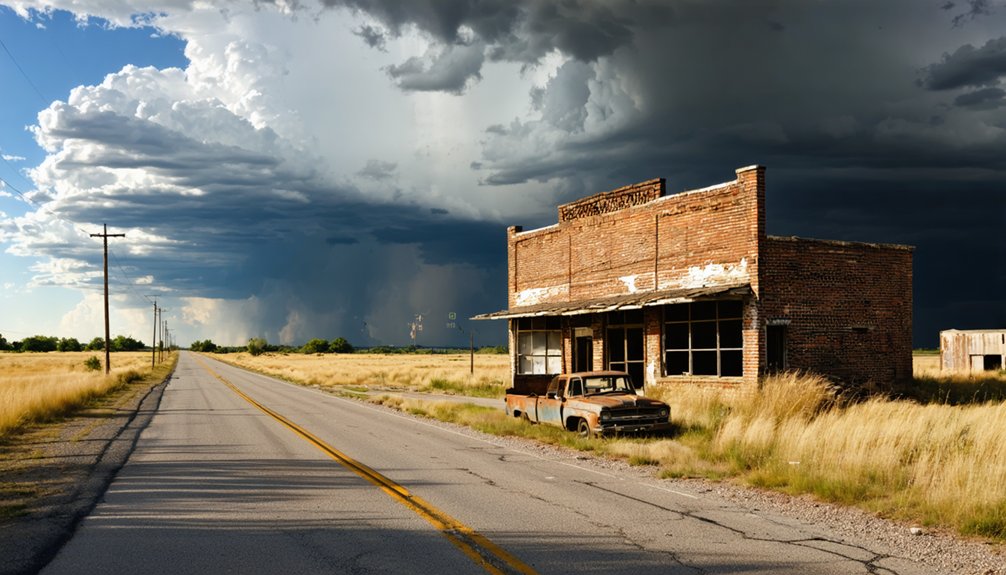
Once you’ve soaked in everything Jennings has to offer, Oklahoma’s backroads will lead you to even more fascinating ghost towns worth exploring.
You’ll find abandoned settlements scattered across the state, each carrying its own story of boom-and-bust cycles tied to oil, farming, and frontier life.
Start mapping your next stop now, because the Sooner State’s forgotten communities are too compelling to leave for another trip.
Nearby Ghost Towns Explored
Jennings makes a perfect launching pad for exploring some of Oklahoma’s most fascinating ghost towns, and the surrounding Pawnee County region doesn’t disappoint.
Strike out toward Quay, where abandoned structures tell silent stories of a once-thriving railroad community.
Head next to Skedee, another forgotten settlement where local legends speak of prosperous farms swallowed by time.
Cleveland, just a short drive away, offers remnants of the oil boom era that shaped this entire region’s identity.
Each stop reveals a different chapter of Oklahoma’s frontier history, from failed agricultural experiments to collapsed resource economies.
You’ll find these towns surprisingly accessible, connected by open highways that reward curious travelers willing to venture beyond the beaten path.
Pack a camera, fuel up in Jennings, and let history guide your route.
Planning Your Next Stop
Where do you head after Jennings has sparked your ghost town obsession? Oklahoma’s history runs deep, and plenty of forgotten towns are waiting for your next adventure.
Picher, once a booming lead and zinc mining hub, offers haunting local attractions including abandoned infrastructure and toxic chat piles that tell a grim industrial story.
Cement, another worthwhile stop, features crumbling buildings frozen in time.
For practical travel tips, map your route along Highway 66, which connects several abandoned communities within driving distance.
Carry cash, download offline maps, and top off your gas tank before venturing into remote areas.
Pack a camera, wear sturdy boots, and respect posted property boundaries.
Oklahoma rewards the curious traveler who’s willing to chase history down its quietest, most forgotten roads.
Frequently Asked Questions
What Is the Best Time of Year to Visit Jennings?
You’ll find spring and fall offer the best seasonal highlights for your visit. Climate considerations favor these cooler months, letting you explore Jennings’ historic oil town remnants comfortably without summer’s intense Oklahoma heat slowing you down.
Are There Any Guided Tours Available in Jennings, Oklahoma?
Like a window to the past, ghost tours and historical guides breathe life into Jennings’ rich legacy. You’ll uncover fascinating stories of oil booms and early settlers, making your visit an unforgettable, freedom-filled adventure.
Is Jennings, Oklahoma Safe to Explore as a Visitor?
You’ll find Jennings generally safe to explore, but you should always practice smart ghost town safety. Take visitor precautions like wearing sturdy shoes, staying aware of your surroundings, and respecting aging structures as you freely discover this historic Oklahoma treasure.
What Should Visitors Bring When Exploring a Ghost Town?
Sure, forget everything—just show up empty-handed! Actually, pack your exploration essentials: water, sturdy boots, and a first-aid kit. For photography tips, you’ll want a charged camera to capture Jennings’ hauntingly beautiful, forgotten history.
Are There Any Local Events or Festivals Held in Jennings?
You’ll find local events celebrating Jennings’ cultural significance and local history, where community gatherings bring ghost stories to life! These festivals honor the town’s oil boom legacy, letting you experience its unique, free-spirited heritage firsthand.
References
- https://www.youtube.com/watch?v=V93KhkfWrkU
- https://www.geocaching.com/geocache/GC7YWNM
- https://www.youtube.com/watch?v=pnypSASsuBY
- https://www.youtube.com/watch?v=3__MXoTjH9w
- https://www.okhistory.org/publications/enc/entry?entry=GH002
- https://en.wikipedia.org/wiki/List_of_ghost_towns_in_Oklahoma
- https://www.goodreads.com/en/book/show/1452491
- https://www.dccoks.org/cities/jennings
- https://www.nailhed.com/2017/10/the-ghost-town-that-moved.html
- https://www.youtube.com/watch?v=OF-bpvVR6-I