Planning a ghost town road trip to Kents Corner, Vermont means stepping into a hauntingly preserved crossroads where stagecoach-era taverns, an old general store, and a historic barn still stand. You’ll explore a community that thrived in the late 1700s before quietly fading into living history. Listed on the National Register of Historic Places, this forgotten hamlet rewards curious travelers year-round. Stick around to uncover everything you’ll need to make your journey unforgettable.
Key Takeaways
- Kents Corner, Vermont, features a preserved historic crossroads with a tavern museum, general store, and barn that reflect stagecoach-era life.
- The hamlet is accessible year-round via Kent Hill Road and Old West Church Road, though winter requires four-wheel drive and preparation.
- Nearby ghost towns like Glastenbury, Ricker Basin, and Somerset can be combined with Kents Corner for a fuller road trip experience.
- Pack layers, sturdy boots, a printed map, and emergency supplies, as cell service is spotty and weather is unpredictable.
- Summer and fall offer the best road conditions, while spring mud season and winter snow create more challenging driving situations.
What Makes Kents Corner a Ghost Town Destination?
Kents Corner isn’t your typical ghost town — there’s no crumbling main street or rusted-out machinery swallowed by weeds. Instead, you’ll find a remarkably preserved Vermont crossroads where time simply slowed down.
Settled in the late 1780s, this hamlet in Calais retains its original tavern, general store, and barn — structures that whisper stories of stagecoach travelers and frontier life.
Established in the 1780s, Kents Corner’s original tavern and general store still stand, echoing stagecoach-era frontier life.
What earns it ghost town status isn’t abandonment but atmosphere. Local folklore surrounds the old buildings, and haunted legends drift through conversations about the region’s isolated past.
You’re standing where a thriving community once hummed with commerce and now exists in quiet suspension. That tension between living history and faded purpose is exactly what draws freedom-seeking travelers off the beaten path.
The History Behind Kents Corner, Vermont
Nestled at a rural Vermont crossroads, this quiet hamlet carries a history that stretches back to the late 1780s, when members of the Wheelock family first settled the land.
Remember Kent cemented Kent’s Legacy in 1797, building a log cabin that still stands as part of a nearby structure today. The Kents expanded the settlement into a functioning stagecoach stop, adding a tavern and general store that served travelers along the Montpelier-to-Montreal route.
The community grew steadily, supporting small mills and a brickyard while maintaining its rural agricultural character.
Historical Preservation efforts earned Kents Corner a spot on the National Register of Historic Places in 1973, with an expanded listing in 2006.
You’re fundamentally walking through a carefully protected slice of early American frontier life.
Inside the Kent Tavern and the Buildings That Survived
Walking through Kents Corner means stepping inside buildings that have genuinely outlasted their original purpose. The former tavern, a Federal period brick structure, now operates as a history museum, letting you explore its tavern history firsthand.
You’ll notice the architectural features typical of early Vermont construction — solid brickwork, restrained ornamentation, and practical proportions built for harsh winters and working travelers.
The old general store and barn still anchor the crossroads, giving you a clear sense of how commerce once flowed along this stagecoach route.
The old general store and barn still mark the crossroads where stagecoach commerce once passed through.
Head east, and you’ll find the former church repurposed as Calais Town Hall. Each building tells a distinct story. Rather than crumbling ruins, Kents Corner offers standing structures you can actually walk around, photograph, and genuinely understand in their historical context.
The 19th-Century Sawmill and Forgotten Sites on Robinson Cemetery Road
As you head north from the crossroads along Robinson Cemetery Road, you’ll spot the 19th-century sawmill standing as one of Kents Corner’s most tangible links to its industrial past.
This mill once powered the rural economy, processing timber that fueled construction across the region, and it now serves as a striking example of industrial archaeology still embedded in the landscape.
Keep your eyes open as you travel this road, because forgotten structures and layered histories reveal themselves around nearly every bend.
Sawmill’s Historical Significance
Robinson Cemetery Road holds more history than its name suggests, and if you follow it north from the junction, you’ll find the remnants of a 19th-century sawmill that once powered the economic life of Kents Corner.
This mill wasn’t just a building — it represented the sawmill technology that transformed raw timber into the lumber fueling Vermont’s agricultural and domestic growth. Farmers, builders, and tradespeople depended on it.
Today, historical preservation efforts keep these industrial archaeological resources visible and accessible, so you can stand where workers once stood and understand how rural communities truly functioned.
The site connects Kents Corner’s story beyond taverns and stagecoaches, revealing the industrial backbone beneath its pastoral surface.
Don’t rush past it — this is where the region’s working-class history quietly survives.
Exploring Forgotten Road Sites
Venture north along Robinson Cemetery Road and you’ll find yourself stepping into layers of Vermont’s working past that most travelers drive right past. The 19th-century sawmill stands as one of the region’s most compelling forgotten landmarks, quietly marking where timber fueled community growth for generations.
You’re not just looking at old wood and stone — you’re reading the economic backbone of rural Vermont.
This stretch rewards patient rural exploration. Watch for mill foundations, stone walls, and earthworks tucked between tree lines — industrial archaeological traces hiding in plain sight.
Bring sturdy footwear and a curious eye. These forgotten road sites don’t announce themselves with signs; they reveal themselves to travelers willing to slow down, step off the pavement, and read the landscape directly.
Ghost Towns Near Kents Corner Worth Visiting
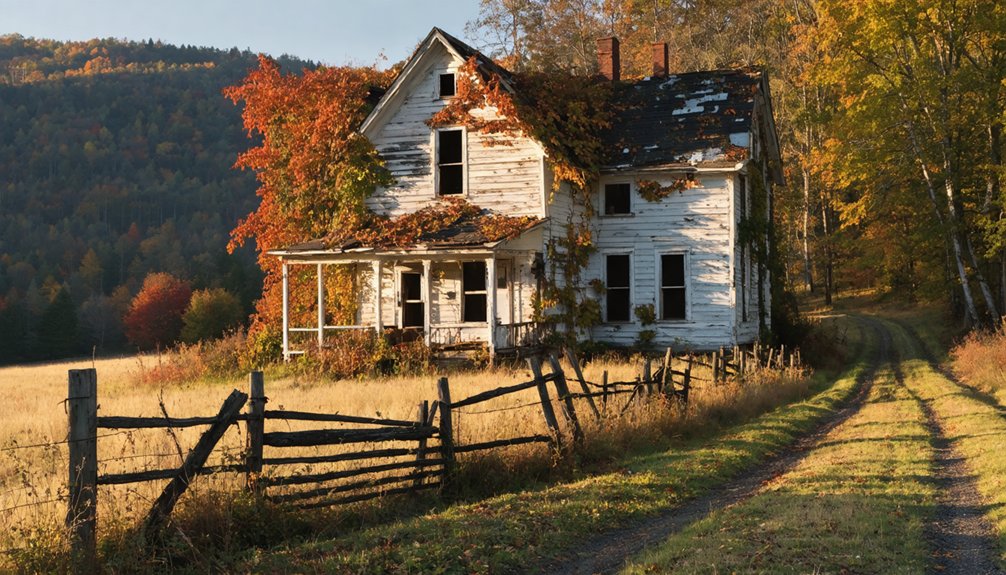
While Kents Corner itself offers a compelling slice of Vermont’s past, the surrounding region is dotted with ghost towns that’ll deepen any history-focused road trip.
Head south toward Glastenbury, where abandoned structures and local legends collide in what’s known as the Bennington Triangle. Five mysterious disappearances between 1945 and 1950 cemented its eerie reputation, making it irresistible for curious explorers.
You’ll also want to swing through Fayville, Glastenbury’s original settlement, which thrived in the 1790s before residents finally departed in 1937.
For more variety, add Ricker Basin, Somerset, or Greenbank’s Hollow to your route. Each site rewards patient travelers with raw, unfiltered Vermont history.
Combined with Kents Corner’s preserved crossroads charm, these stops create a genuinely unforgettable journey through the state’s forgotten landscapes.
Vermont Ghost Towns Within a Day’s Drive of Kents Corner
Beyond Kents Corner’s crossroads, Vermont’s back roads connect you to a remarkable network of ghost towns all within a day’s drive. Each destination carries its own chapter of Vermont history, ghost town legends, and local folklore worth discovering firsthand.
Head south toward Glastenbury, where abandoned structures and eerie disappearances between 1945 and 1950 fuel ongoing mystery along the Bennington Triangle.
West Castleton and Somerset offer equally compelling rural exploration through landscapes shaped by forgotten industries.
Ricker Basin and Copperfield reward historically curious travelers with raw, unfiltered cultural heritage preserved in weathered foundations and overgrown cellar holes.
These scenic routes aren’t just drives—they’re immersive experiences connecting you directly to Vermont’s layered past, where historical preservation meets the undeniable freedom of open roads and untamed wilderness.
Driving to Kents Corner: Roads and Access Points
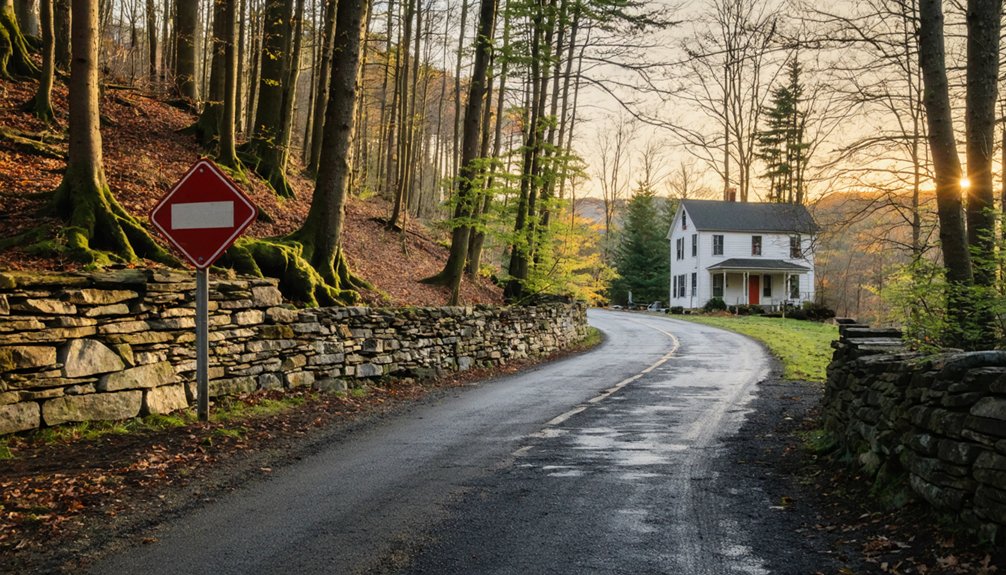
You’ll reach Kents Corner by traveling Kent Hill Road from the east or west, or by following Old West Church Road along the historic north-south stagecoach route that once connected Montpelier to Montreal.
The crossroads sit at the junction of these two roads plus Robinson Cemetery Road, so finding your way in is straightforward once you identify the Kent tavern as your central landmark.
Vermont’s rural back roads can turn rough or icy in winter and muddy during spring thaw, so check local road conditions before you head out if you’re visiting outside of summer or early fall.
Main Access Roads
Tucked into the rural crossroads of Calais, Vermont, Kents Corner is accessible primarily via two intersecting roads: Kent Hill Road, which runs east-west, and Old West Church Road, which follows a north-south trajectory as part of the historic Montpelier-to-Montreal stagecoach route.
Both access points deliver you directly to the hamlet’s historic core. Road conditions are generally manageable year-round, though Vermont winters demand preparation.
As you approach, picture these defining moments:
- Kent Hill Road narrows through dense woodland before opening to open farmland.
- Old West Church Road reveals rolling hills stretching toward the Quebec border.
- Robinson Cemetery Road branches northward, guiding you past a 19th-century sawmill site.
Each route rewards you with raw Vermont landscape and genuine freedom of exploration.
Seasonal Road Conditions
Knowing your access roads is only half the preparation — Vermont’s seasons shape the driving experience as much as the routes themselves.
Spring thaw turns rural dirt roads into muddy traps, and seasonal accessibility drops sharply between March and May when road maintenance crews post weight limits or close sections entirely.
Summer and fall offer the most reliable conditions, with firm surfaces and stunning foliage framing Kent Hill Road and Old West Church Road beautifully.
Winter demands four-wheel drive and chains, as snow accumulates fast in Calais’s elevated terrain.
You’ll want to check Vermont’s 511 travel information line before heading out during shoulder seasons. Flexibility keeps your trip alive — if one route closes, loop through nearby ghost towns and reroute without losing momentum.
Year-Round Road Conditions at Kents Corner
While Kents Corner stays accessible year-round, road conditions shift dramatically with the seasons, so you’ll want to plan accordingly. Weather considerations directly affect your experience on Kent Hill Road and Old West Church Road.
- Winter blankets the crossroads in snow and ice, making four-wheel drive essential for traversing rural Vermont’s unpaved stretches.
- Spring mud season turns dirt roads into thick, axle-deep mire — high-clearance vehicles handle these conditions far better than standard cars.
- Summer and fall offer the smoothest year-round accessibility, with dry roads perfect for bikers, hikers, and road-trippers exploring the preserved landscape and historic mill sites.
Check Vermont 511 road reports before departing, and always carry emergency supplies when venturing into remote crossroads communities like Kents Corner.
What to Pack for a Kents Corner Ghost Town Drive

Once you’ve checked the road conditions and loaded up with emergency supplies, what you pack can make or break your Kents Corner ghost town drive.
Bring layers for Vermont’s unpredictable weather, sturdy hiking boots for exploring mill sites and Robinson Cemetery Road, and a solid camera to capture the Greek Revival architecture.
Pack a printed map since cell service gets spotty around these rural crossroads. A notebook helps you document ghost stories and local legends you’ll hear from passing locals or discover at the Kent Tavern history museum.
Toss in snacks, water, and a flashlight if you’re planning a late afternoon visit.
Freedom means being prepared enough to roam without limitations, so pack smart and explore Kents Corner on your own terms.
Frequently Asked Questions
Is There an Entrance Fee to Visit Kents Corner Historic Sites?
You don’t need to pay an entrance fee to explore Kents Corner’s historic significance! You’re free to roam its Greek Revival buildings, former tavern, and scenic crossroads, making it an ideal stop for independent travelers craving authentic Vermont history.
Are Pets Allowed on Hiking Trails Around Kents Corner?
You’ll find pet friendly trails welcome your dog around Kents Corner! Imagine hiking with your pup past the old sawmill. Practice hiking safety by keeping pets leashed on rural crossroads paths year-round.
Can Visitors Park Near the Kent Tavern and General Store?
You’ll find parking options along Kent Hill Road and Old West Church Road near the tavern and store. Follow visitor guidelines by respecting the rural crossroads, keeping access clear for locals and fellow explorers alike!
Are Guided Tours Available at the Calais Town Hall Museum?
The knowledge doesn’t confirm guided tour options at Calais Town Hall, but you’ll find museum exhibits inside the former church building. It’s worth contacting them directly to explore what’s available for your visit!
Is Camping Permitted Near Kents Corner or Bliss Town Forest?
Like a wild spirit yearning to roam, you’ll find camping regulations don’t permit camping in Bliss Town Forest itself, but nearby campgrounds dot Vermont’s landscape, offering you the perfect free-spirited base for your Kents Corner adventure!
References
- https://en.wikipedia.org/wiki/Kents_Corner_Historic_District
- https://mysterioushillsdotcom.wordpress.com/2021/02/13/snapshots-of-a-ghost-town-fayville-vt-2004/
- https://www.kentscorner.org/historic-district
- https://www.youtube.com/watch?v=gxePk0rsBx4
- https://vermontcountry.com/wp-content/uploads/2021/08/UPCO-Sept-Oct21.pdf