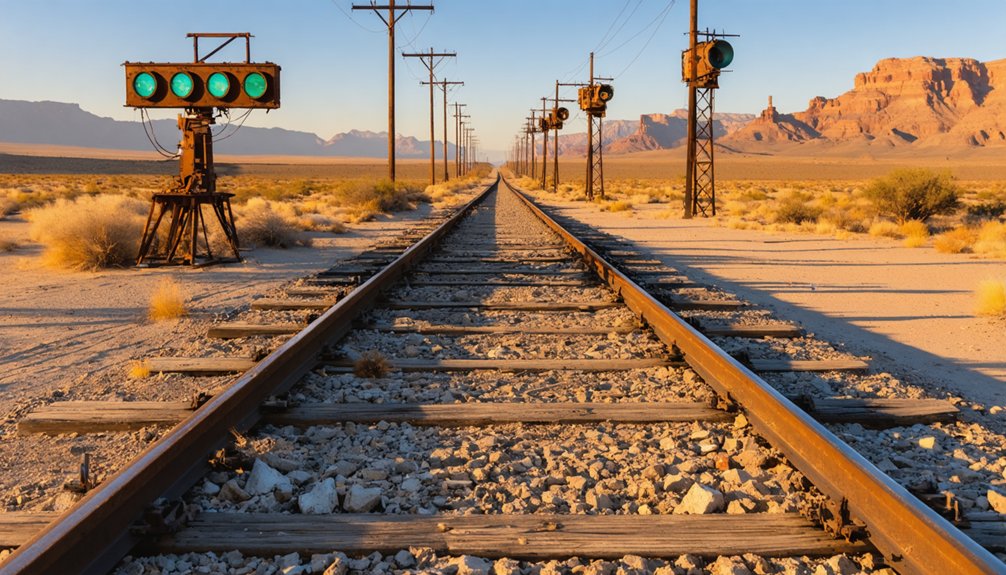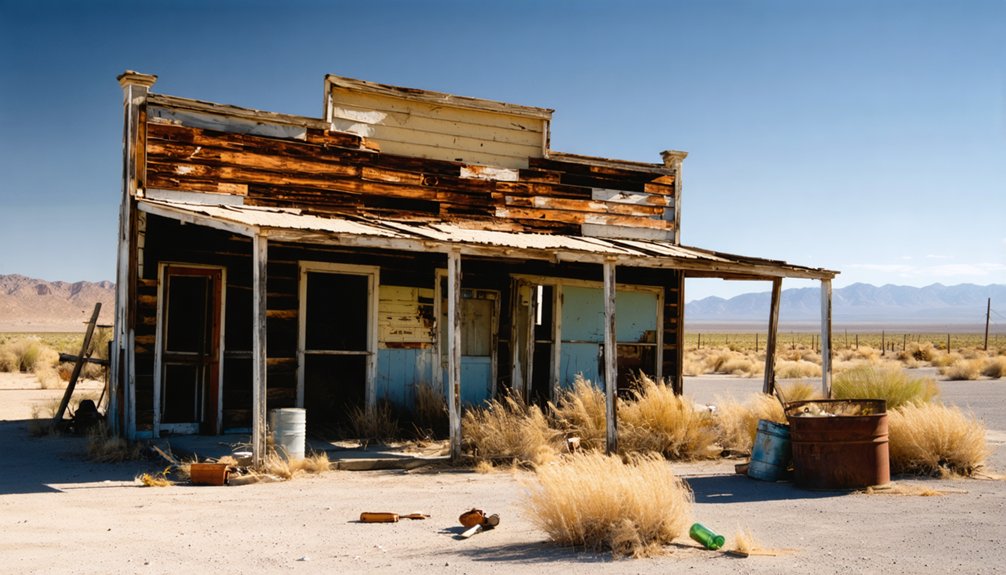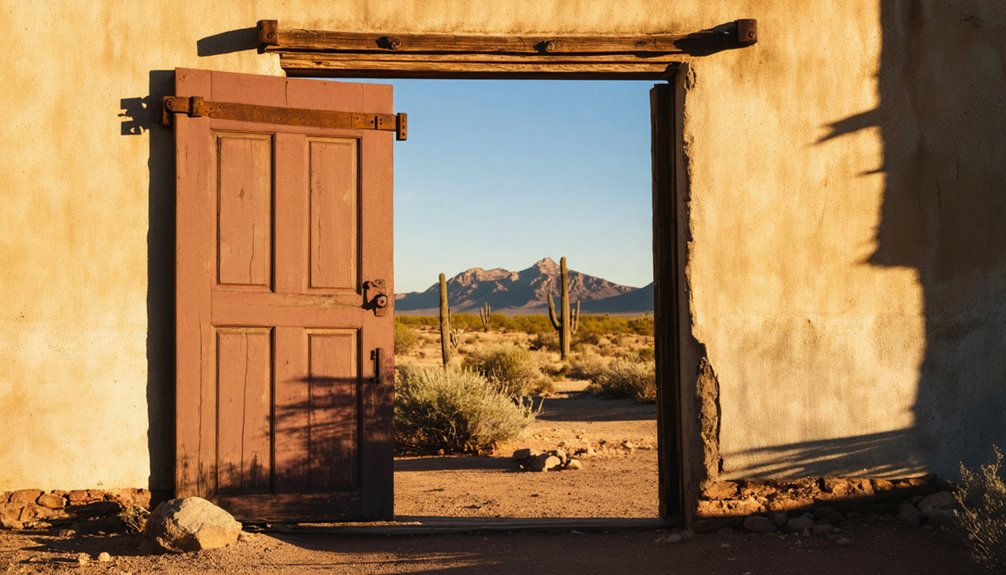
Santa Claus, Arizona is a crumbling Christmas-themed ghost town baking in the Mojave Desert, about 14 miles northwest of Kingman off U.S. Route 93. Built in 1937 as a Depression-era marketing stunt, it’s now a hauntingly photogenic ruin of graffitied walls and faded foundations. You’ll want to visit between October and April, pack plenty of water, and watch for rattlesnakes. Pair it with nearby Route 66 ghost towns for a full desert adventure — and there’s plenty more to uncover about planning this unforgettable trip.
Key Takeaways
- Santa Claus, Arizona, a Christmas-themed ghost town 14 miles northwest of Kingman, is accessible via U.S. Route 93.
- Most attractions were demolished in 2021–2022, leaving graffitied walls and faded foundations for explorers to discover.
- Visit between October and April, arriving before 10 a.m. to avoid extreme heat and enjoy eerie stillness.
- Carry one gallon of water per person, wear sun protection, and use sturdy closed-toe boots for safety.
- Nearby ghost towns Oatman, Chloride, and Hackberry offer additional stops along a rewarding Route 66 circuit.
What Is Santa Claus, Arizona?
Once a quirky Christmas-themed resort town in the heart of the Mojave Desert, Santa Claus, Arizona sits 14 miles northwest of Kingman along U.S. Route 93, between mile markers 57 and 58.
Realtor Nina Talbot founded this peculiar desert attraction in 1937, dreaming up a Christmas history unlike anything the Southwest had seen. She built pointy roofs, peppermint candy paint schemes, and year-round Santa visits to lure land buyers to the parched landscape.
For decades, it ranked among the Mojave’s most unexpected desert attractions, drawing road-trippers, celebrities, and curious families.
Today, you’ll find a mostly erased ghost town, demolished in late 2021 or early 2022, where rattlesnakes now roam freely among the sparse remnants of a once-beloved roadside escape.
How a California Realtor Built a Christmas Town in the Mojave Desert
During the Great Depression, when most Americans were struggling to survive, Nina Talbot spotted opportunity in the desert. A California realtor who’d relocated to Kingman with her husband Edward in the early 1930s, she understood that selling parched Mojave land required creative Christmas marketing.
In 1937, she built something nobody expected: a full Christmas-themed resort town along U.S. Route 93, complete with pointy roofs, peppermint candy paint schemes, and year-round Santa visits.
It’s a masterclass in desert resilience — turning sun-scorched scrubland into a destination families actually wanted to reach.
She named it Santa Claus, Arizona, added a Swiss chalet-inspired doll house, a guest inn, and a post office famous for its holiday postmarks.
The desert didn’t stop her; it became her canvas.
What Made Santa Claus, Arizona a Legitimate Tourist Destination
By 1942, Santa Claus had evolved from a clever marketing gimmick into a genuine roadside destination worth stopping for. The Santa Claus attractions drew travelers craving a real break from desert driving — not just a quick photo op.
You could duck into an air-conditioned restaurant, dig into home-cooked meals like rum pie à la Kris Kringle, and let your kids meet Santa year-round. The Swiss chalet-inspired Cinderella’s Doll House and the pink children’s train called “Old 1225” gave families something memorable to explore.
Duncan Hines himself praised it as one of the best stops on the road. This tourism evolution turned a quirky Christmas concept into a legitimate destination, even inspiring Robert A. Heinlein to feature it in his 1950 short story *Cliff and the Calories*.
What You’ll Actually Find at Santa Claus, Arizona Today
The Santa Claus you’ll find today is barely recognizable from its mid-century heyday. The abandoned attractions that once drew road-trippers from across the country are almost entirely gone, torn down in late 2021 or early 2022.
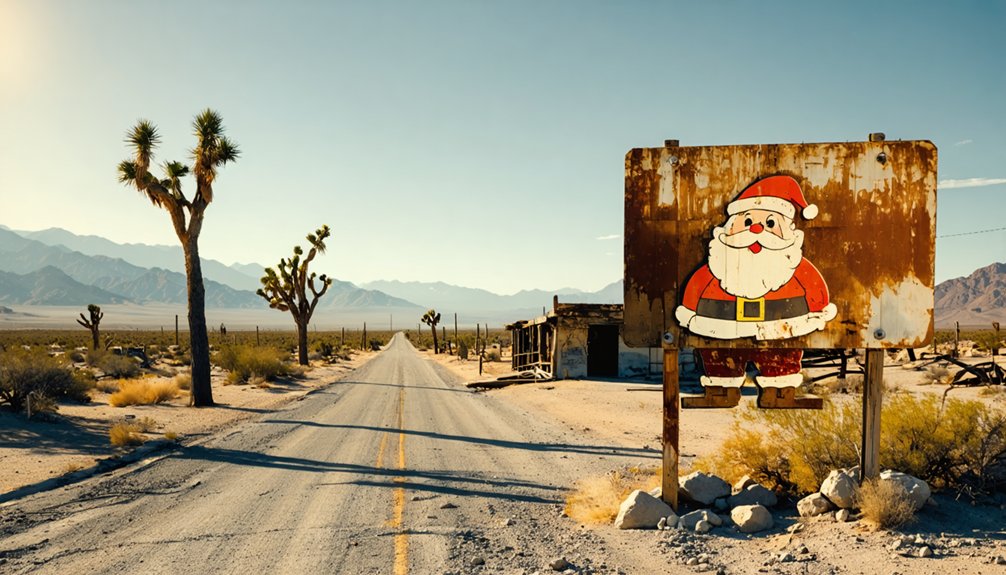
You won’t find elves, candy-striped buildings, or a whimsical pink train anymore. Someone even stole Santa’s face from the front sign.
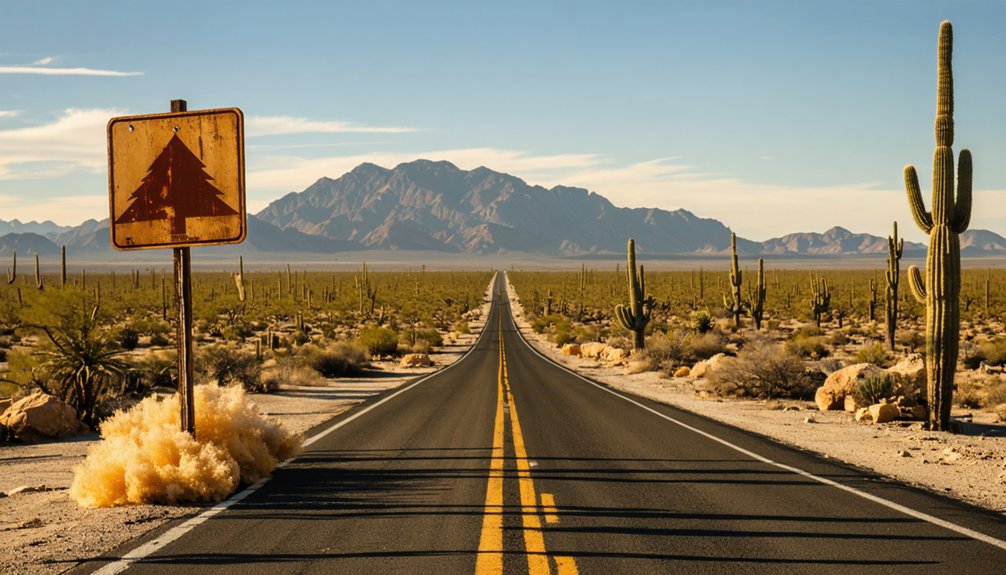
What remains is raw desert — Joshua trees, rock formations, and the kind of silence that makes you feel genuinely free.
Desert wildlife has reclaimed the land, including rattlesnakes that now call this place home. A few graffitied walls and faded foundations hint at what once stood here.
It’s a humbling reminder that even the most festive dreams eventually surrender to the desert.
The Route 66 Ghost Towns You Can Pair With This Stop
Since Santa Claus sits just off Route 66 country, you can easily build a ghost town circuit that stretches across the Mojave Desert.
Nearby abandoned towns like Oatman, Chloride, and Hackberry give you a fuller picture of Arizona’s boom-and-bust past, each one crumbling in its own distinct way.
Map your stops in advance, keep your gas tank full, and bring water — the desert doesn’t forgive poor planning.
Nearby Route 66 Towns
Santa Claus, Arizona sits just 14 miles northwest of Kingman, which puts you within easy striking distance of Route 66‘s most hauntingly photogenic ghost towns.
Hackberry, with its frozen-in-time general store, sits about 23 miles east. Push further and you’ll hit Peach Springs, a quieter stretch where the old highway breathes slowly.
Goldroad and Oatman lie southwest, where wild burros roam crumbling streets and history feels almost touchable. These ghost towns aren’t museum pieces — they’re raw, weathered, and unapologetically real.
Stringing them together with your Santa Claus stop creates a road trip that rewards curiosity and punishes no one for wandering off-schedule.
Pack water, keep your tank full, and let the open Mojave desert highway dictate your pace.
Planning Your Ghost Town Circuit
Plotting your ghost town circuit starts with a simple anchor: Santa Claus, Arizona, sitting 14 miles northwest of Kingman on U.S. Route 93.
From here, swing east toward Route 66 and you’ll reveal a string of ghost town attractions worth exploring. Oatman delivers wild burros roaming sun-cracked streets. Hackberry preserves a frozen-in-time general store. Chloride, just north of Santa Claus, still breathes with actual residents and outdoor murals.
Plan your drive early morning before desert wildlife retreats from the heat — you’ll spot roadrunners, lizards, and the occasional rattlesnake between stops.
Keep Kingman as your base; it’s central, affordable, and stocked with fuel and food. String these stops together on one loop and you’ve got a full day of raw Mojave history.
Best Time To Visit Santa Claus, Arizona
If you’re planning a road trip to Santa Claus, Arizona, you’ll want to avoid the brutal Mojave Desert summers, when temperatures regularly exceed 110°F and make any outdoor exploration genuinely dangerous.
Spring and fall offer the most comfortable conditions for poking around the abandoned ruins, with mild temperatures and clear skies that make the desolate landscape feel almost cinematic.
If nostalgia is your goal, a December visit carries a quiet, eerie magic — standing in the shadow of what was once a Christmas-themed resort town, surrounded by silence and desert scrub, hits differently when the rest of the world is busy decking the halls.
Ideal Visiting Seasons
Planning a visit to Santa Claus, Arizona means reckoning with the Mojave Desert’s brutal climate, so timing is everything. Summer temperatures routinely exceed 110°F, making exploration genuinely dangerous. You’ll want to avoid June through August entirely.
Instead, aim for October through April, when temperatures stay manageable and you can actually explore the site comfortably.
Winter visits carry special seasonal attractions — wandering an abandoned Christmas-themed ghost town during December feels strangely poetic, connecting you directly to its historical significance as a Depression-era holiday destination.
Spring offers blooming desert wildflowers alongside the haunting Joshua trees, creating a striking contrast against the abandoned ruins.
Early morning arrivals beat the heat regardless of season. Bring water, sturdy footwear, and watch for rattlesnakes — they’ve claimed the town as their own now.
Avoiding Extreme Heat
Surviving a visit to Santa Claus, Arizona starts with one non-negotiable rule: stay out of the Mojave Desert between June and August. Summer temperatures become genuinely dangerous, turning your road trip dream into a heat emergency fast.
Smart heat preparation means planning around the desert’s brutal rhythms. Follow these essentials for sun safety:
- Visit between October and April when temperatures stay manageable and exploration feels rewarding.
- Carry at least one gallon of water per person since no services exist at this abandoned site.
- Arrive before 10 a.m. to avoid peak sun exposure among the Joshua trees and crumbling ruins.
The desert doesn’t negotiate. You respect its terms, or you pay the consequences. Plan smart, and Santa Claus reveals itself on your schedule.
December For Nostalgia
December transforms Santa Claus, Arizona into something unexpectedly poignant. Visiting during the holiday season connects you to the town’s original Christmas-themed identity, stirring nostalgic memories of what this desert attraction once represented.
Nina Talbot built this place specifically for December magic — year-round Santa visits, festive postmarks, and holiday traditions that drew families off Route 93 for decades.
Now abandoned, the site carries a haunting stillness that feels strangely appropriate during winter. Temperatures drop to comfortable levels, making exploration genuinely pleasant rather than dangerous.
You’ll walk through a ghost town that was literally born from Christmas spirit, imagining children pressing faces against Cinderella’s Doll House windows.
The contrast between its festive origins and current decay hits differently in December — making this the most emotionally resonant time to visit.
What To Pack Before Visiting This Remote Desert Site
Because Santa Claus, Arizona sits in the heart of the Mojave Desert with no services, shade, or civilization nearby, you’ll need to pack smart before making the trip.
Desert survival depends entirely on preparation, and your packing essentials will determine whether this adventure stays memorable or turns dangerous.
- Water – Carry at least one gallon per person; summer temperatures exceed 110°F with zero shade available.
- Sun Protection – Pack sunscreen, UV-blocking sunglasses, and a wide-brimmed hat to shield against relentless Mojave exposure.
- Sturdy Footwear – Rattlesnakes now inhabit the abandoned grounds, making closed-toe boots non-negotiable for safe exploration.
Charge your phone, download offline maps, and tell someone your exact route before heading out alone.
Who Should Make the Drive to Santa Claus, Arizona?
Once you’ve got your supplies sorted and your boots laced up, the next question is whether Santa Claus, Arizona is actually worth your time.
This desert adventure suits curious road trip travelers who find beauty in decay and history in ruins. If you’re drawn to forgotten places, abandoned dreams, and America’s quirky roadside past, you’ll feel right at home here.
History buffs, Route 66 enthusiasts, and photographers chasing unique desert landscapes will appreciate what remains. However, if you expect polished attractions or family-friendly fun, look elsewhere.
Santa Claus rewards those comfortable with raw, unfiltered exploration — rattlesnakes included. It’s a stop for independent spirits who understand that freedom sometimes means standing alone in the Mojave heat, piecing together a ghost town’s faded story.
Frequently Asked Questions
Can You Legally Enter or Explore the Santa Claus, Arizona Property?
You can’t legally enter Santa Claus, Arizona’s property without permission—trespassing carries serious legal implications. Respect property access boundaries, or you’ll risk fines. Admire this haunting, rattlesnake-inhabited ghost town from the roadside instead!
Are There Any Preserved Artifacts or Memorabilia From Santa Claus, Arizona?
You won’t find many ghost town artifacts on-site, as demolition erased most remnants. However, collectors and local museums may hold Santa Claus memorabilia, including vintage postcards, postmarks, and photographs celebrating this quirky desert landmark’s fascinating history.
Was Santa Claus, Arizona Ever Considered for Historical Landmark Status?
Only 5% of nominated sites earn landmark status. Santa Claus, Arizona never met landmark criteria despite its historical significance—you’d find no formal preservation efforts protected this quirky 1937 desert gem before demolition claimed it in 2021.
Did Nina Talbot Ever Successfully Sell the Surrounding Subdivided Land?
Nina Talbot’s vision didn’t quite pan out—you’ll find no evidence she successfully conquered land development challenges. The parched desert deterred buyers, leaving her subdivided lots largely unsold despite Santa Claus, Arizona’s whimsical charm attracting curious travelers.
Has Santa Claus, Arizona Appeared in Any Films or Documentaries?
Like a mirage in the desert, Santa Claus, Arizona’s film history remains elusive. You won’t find it starring in major films, but it’s woven into ghost towns’ urban legends, enchanting documentary filmmakers drawn to its haunting, abandoned mystique.
References
- https://en.wikipedia.org/wiki/Santa_Claus
- https://roadtrippers.com/magazine/once-festive-town-santa-claus-arizona/
- https://www.youtube.com/watch?v=M8kNAQsxQO8
- https://xceldelivery.com/santa-claus-lived-arizona-knew/
- https://www.atlasobscura.com/places/santa-claus-arizona
- https://www.arizonahighways.com/article/santa-claus-arizona