Planning a road trip to the Lawton Mushroom Mine means stepping into one of Kentucky’s most layered abandoned sites — a place where limestone quarrying, underground mushroom farming, unsolved murders, and criminal history collide beneath Carter County’s hills. You’ll need offline navigation, sturdy boots, multiple light sources, and warm layers before entering 2.6 million square feet of pitch-black tunnels. It’s equal parts history and hazard, and there’s far more to this ghost town than most visitors expect.
Key Takeaways
- Lawton Mushroom Mine is located in Carter County, Kentucky, near Olive Hill, accessible via back roads from Haldeman with spotty cell service.
- Carry offline navigation tools, extra fuel, sturdy waterproof boots, multiple flashlights, and a basic first-aid kit for safe exploration.
- The tunnels span 2.6 million square feet, featuring an underground lake, decaying mushroom farming equipment, and pitch-black passages.
- Visit during late spring or early fall to maximize daylight hours and avoid treacherous winter road conditions.
- Be aware of structural instability, complete darkness in deeper sections, and a documented history of criminal activity within the tunnels.
What Made Lawton, Kentucky Worth Building a Town Around
Tucked away in Carter County, Kentucky, Lawton existed for one reason: limestone. The Lawton Limestone Company incorporated in 1910, targeting a 30-foot thick ledge perfect for flux and ballast. These limestone origins transformed a quiet mountainside into a working community worth settling near.
By 1917, the Tygart Limestone Company expanded operations, carving 2.6 million square feet of tunnels using gunpowder, mules, and wagons. The economic drivers were straightforward — raw material pulled from the earth fueled industries beyond the region, justifying an entire town’s existence.
When World War II ended, so did the demand. Operations ceased, workers left, and Lawton faded.
What remains today are crumbling buildings, sagging electric lines, and miles of dark tunnels that once justified building a community from nothing.
From Limestone Quarry to Mushroom Farm: Lawton’s Buried History
Abandonment didn’t mean the end for Lawton’s tunnels — it meant a second life. The Lawton Limestone Company first broke ground in 1910, carving through a 30-foot thick ledge for flux and ballast. By 1917, the Tygart Limestone Company expanded operations using gunpowder, mules, and wagons, eventually cutting 2.6 million square feet of tunnels into the mountainside.
After World War II, operations ceased, leaving behind abandoned structures and silence.
Then, in the mid-1960s, Eastern Kentucky mushroom growers recognized the historical significance these tunnels held for their purposes — consistent 50-58°F temperatures and 85% humidity made them ideal growing chambers. Kentucky Mushroom Farms, Inc. worked the tunnels until the mid-1980s.
Today, you’re walking through layers of industrial history stacked inside a single mountain.
How to Find the Lawton Mushroom Mine in Carter County
To reach the Lawton Mushroom Mine, you’ll head to Carter County, Kentucky, setting your sights on the small community of Olive Hill as your initial landmark.
From there, you’ll navigate past Haldeman, winding along back roads that lead you toward the ghost town of Lawton.
Once you’ve arrived, the mine entrances are accessible by vehicle, so you can drive right up to the mouth of the tunnels before stepping into the darkness on foot.
Getting to Carter County
Finding the Lawton Mushroom Mine takes you deep into Carter County, Kentucky, where the small ghost town of Lawton sits quietly past Haldeman near Olive Hill.
You’ll navigate back roads that cut through rolling Appalachian terrain, so keep your travel tips in mind before heading out.
Pack a reliable map or download offline navigation since cell service gets spotty in these rural stretches.
You’ll pass through Haldeman first, then follow the road toward Olive Hill until Lawton’s crumbling structures come into view.
A back road runs directly through what remains of downtown, making access straightforward if you’re paying attention.
Carter County rewards explorers who come prepared.
Bring extra fuel, sturdy footwear, and a flashlight — because once you arrive, the real adventure begins underground.
Navigating to the Mine
Once you’ve made it through Haldeman, the route toward Lawton opens up along a back road that cuts through Carter County’s rugged Appalachian landscape.
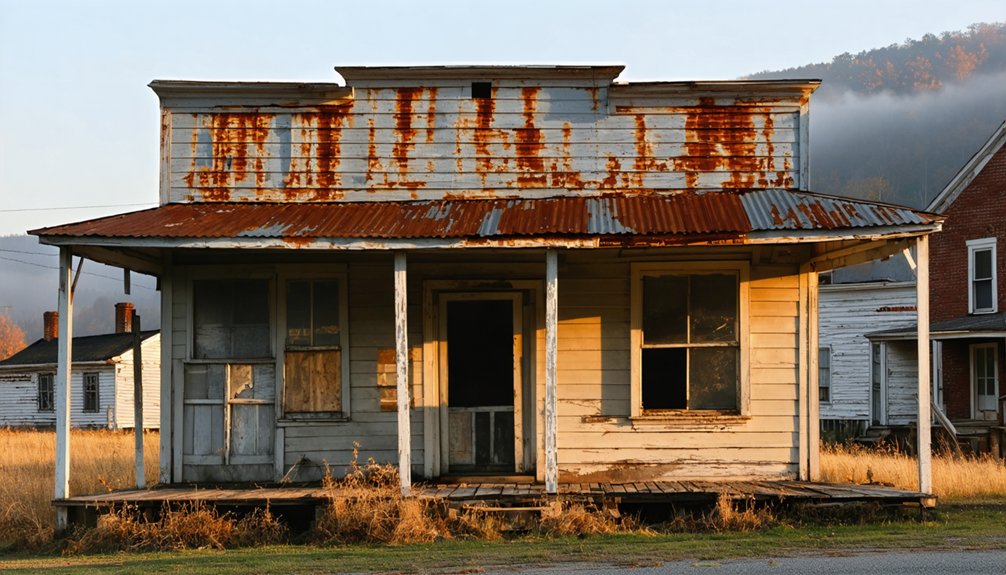
You’ll pass crumbling buildings and sagging electric lines — quiet reminders of this ghost town‘s historical significance before you even reach the mine.
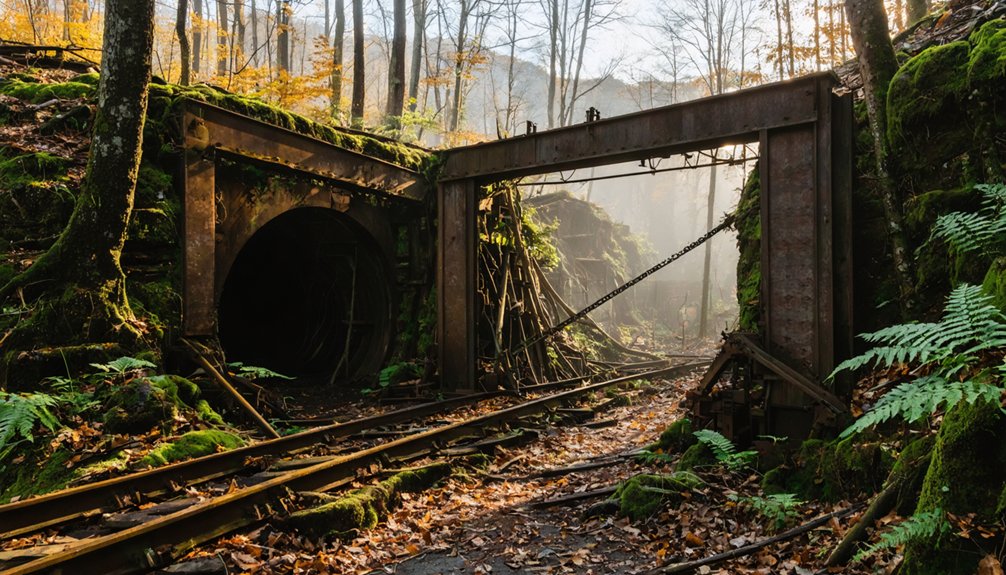
Follow the road until you spot the mountainside entrances carved into the limestone. You can drive right up to them, and you’ll likely notice vehicle tracks from previous explorers who’ve ventured inside.
The shift from daylight into the tunnels happens fast — bright Kentucky sunshine gives way to complete darkness within steps.
Pack strong flashlights before you commit to serious ghost town exploration here. Without them, Lawton’s 2.6 million square feet of tunnels become dangerously disorienting, and you won’t get far.
What’s Actually Inside the Lawton Mushroom Mine Tunnels
Once you step past the entrance and your eyes adjust, you’re looking at a sprawling maze of limestone tunnels stretching across roughly 2.6 million square feet, with a massive underground lake hiding somewhere deep in the darkness.
You’ll spot remnants of the mushroom farming era scattered throughout — rotting growing beds, old equipment, and other ghostly leftovers from when Kentucky Mushroom Farms, Inc. shut down in the mid-1980s.
Watch your step carefully, though, because the deeper you push into the tunnels, the more you’ll face crumbling floors, pitch-black passages, and the very real risk of getting disoriented in an underground network that swallows light whole.
Tunnels And Underground Lake
Stepping inside the Lawton Mushroom Mine, you’re immediately swallowed by a tunnel network sprawling across roughly 2.6 million square feet of carved limestone. The sheer scale makes tunnel exploration feel both thrilling and humbling.
Temperatures hold steady between 50 and 58°F, while humidity sits around 85%, creating underground ecosystems that once sustained thousands of mushroom crops. Natural limestone walls tower above you as daylight fades behind, replaced by absolute darkness requiring a reliable flashlight.
Push deeper, and you’ll eventually reach the mine’s most jaw-dropping secret — a massive underground lake hidden within the mountain’s core. The still, dark water stretches beyond your beam’s reach, creating an atmosphere that’s equal parts breathtaking and unsettling.
Few explorers ever expect something this dramatic waiting beneath Kentucky’s quiet hills.
Remnants Of Mushroom Farming
Scattered throughout the tunnels, the remnants of Kentucky Mushroom Farms, Inc.’s operation tell a quiet story of what once thrived underground.
You’ll spot decaying equipment, abandoned growing beds, and scattered materials left behind when mushroom cultivation ceased in the mid-1980s. These artifacts aren’t just historical curiosities — they’re physical proof that this limestone maze supported a thriving agricultural enterprise for nearly two decades.
As you venture deeper, the remnants grow eerier.
Rotting wooden structures lean against tunnel walls, and forgotten tools rust in corners where workers once harvested crops. Many explorers report ghostly encounters here, describing an unsettling feeling of being watched among the decaying infrastructure.
Whether that’s your imagination or something else entirely, these remnants transform the tunnels into something far more haunting than an empty cave.
Darkness And Structural Hazards
Beyond the ghostly artifacts and rotting mushroom beds, the tunnels themselves present a far more immediate threat. The eerie atmosphere shifts dramatically once you move past the entrance — sunlight disappears entirely, leaving you dependent on whatever light you’ve brought.
Three hazards demand your respect:
- Complete darkness — Deeper sections offer zero natural light, turning simple navigation into a disorienting challenge without reliable flashlights.
- Unstable flooring — Decades of moisture and abandonment have compromised surfaces throughout, making every step potentially dangerous.
- Structural deterioration — Ceiling sections and support areas show serious wear, creating genuine collapse risks.
Explorers have reported haunted encounters deep inside — strange sounds, an unsettling feeling of being watched.
Whether supernatural or psychological, the mine’s darkness amplifies every sensation, demanding both preparation and serious caution.
The Murders, Crimes, and Scams That Happened at This Site
While the Lawton mushroom mines draw curious explorers, the site carries a darker history that goes well beyond its industrial past.
In 2004, investigators discovered a real murder mystery when they found Gary and Cheryl Young‘s bodies a quarter mile inside the tunnels. The crime scene pointed directly to Gary’s son, Andrew Young, who faced two counts of murder, while his girlfriend, Stephanie Griffith, received kidnapping charges.
The darkness doesn’t stop there. Reports of drug deals occurring deep within the tunnels remain ongoing concerns for anyone venturing inside.
Then in 2006, con artists attempted exploiting the mines’ reputation by pitching a fraudulent data storage facility scheme to unsuspecting investors.
You’re fundamentally walking through layers of criminal history every time you step past those entrances.
What Real Visitors Say About the Lawton Mine’s Haunted Reputation
How do you describe a place that feels like it’s actively watching you? Real visitors to the Lawton Mine consistently report experiences that go beyond simple unease:
- Ghostly encounters that interrupt sleep, with explorers describing sudden awakenings and unexplained presences deep within the tunnels.
- Eerie sounds echoing through the darkness — unidentifiable noises that have no logical source given the mine’s abandoned state.
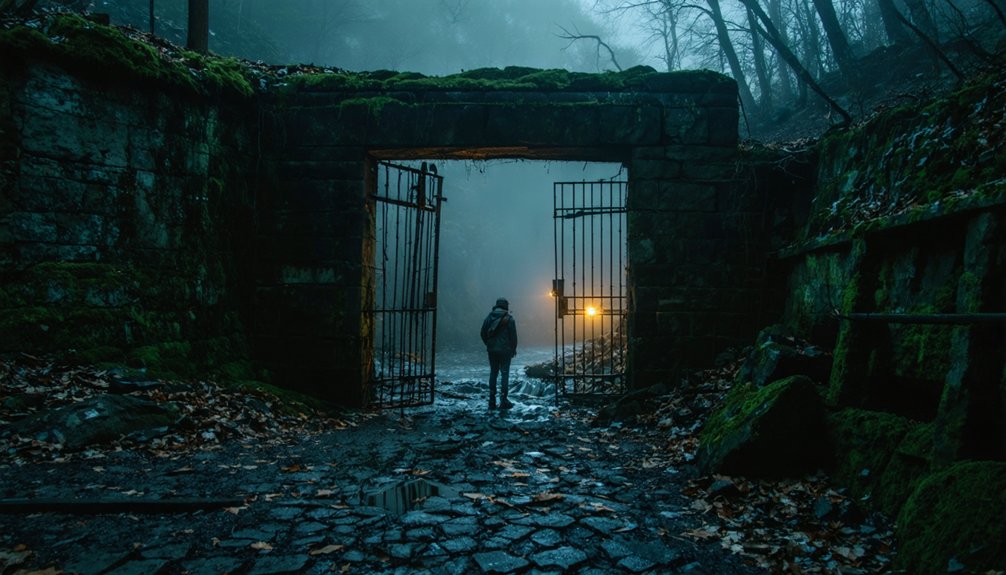
- A suffocating psychological weight that visitors call a “gateway to the Abyss” sensation, where the shift from sunlit entrance to complete blackness feels like crossing into something else entirely.
You’ll feel the temperature drop, the humidity cling to your skin, and the silence press against your ears.
Whether you believe in hauntings or not, this place demands your respect.
What to Bring Into the Lawton Mushroom Mine
Surviving a trip into the Lawton Mushroom Mine starts before you ever reach the entrance — what you pack determines how far in you’ll go and how safely you’ll come back out.
Essential gear begins with multiple light sources: a headlamp plus backup flashlights, since complete darkness swallows everything beyond the lit entrance zone. Temperatures hold steady between 50–58°F with 85% humidity, so layer up and wear waterproof boots.
Complete darkness demands multiple light sources. Steady cold and soaring humidity demand layers, waterproof boots, and serious preparation.
Safety precautions also mean bringing a fully charged phone, a physical map if available, and a trusted person who knows your plans. Don’t enter alone. Sturdy footwear protects against unstable floors, and a basic first-aid kit earns its weight fast inside crumbling tunnels.
Pack smart, stay aware, and you’ll explore on your own terms.
Unstable Tunnels, Active Crime, and the Risks That End Trips Early
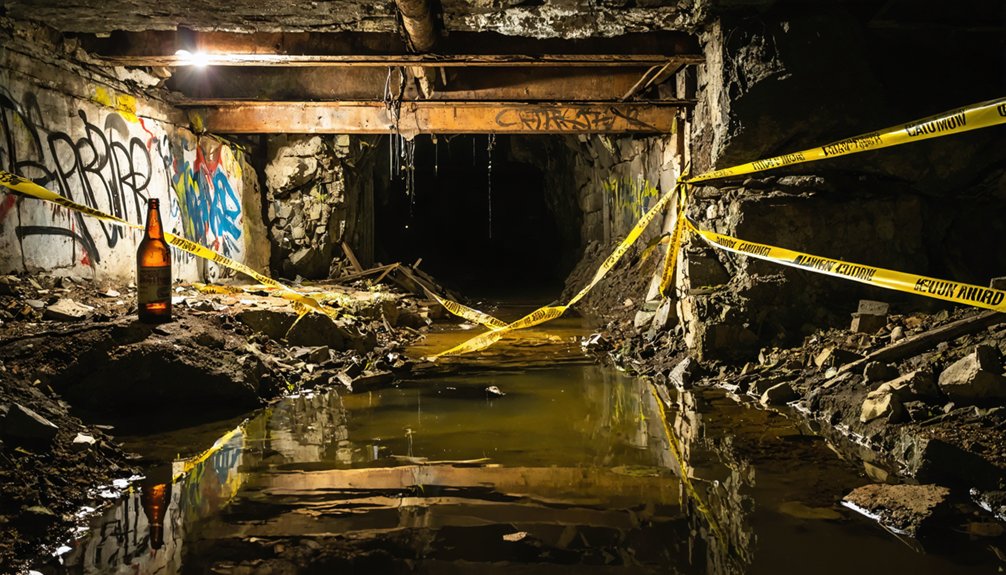
The Lawton Mushroom Mine doesn’t just test your nerve — it carries real, documented risks that have ended visits permanently.
Tunnel safety isn’t optional here; it’s the difference between a story you tell and one others tell about you.
Before your urban exploration goes sideways, know what you’re walking into:
- Structural instability — Floors rot, ceilings shift, and decades of abandonment mean nothing holds like it should.
- Active criminal activity — Drug deals and violent crime have occurred inside these tunnels, including two documented murders in 2004.
- Disorienting darkness — Venture past the lit entrance zones and complete blackness swallows everything; losing your bearings happens fast.
Respect these dangers or don’t go.
Freedom means making informed choices, not reckless ones.
When to Visit the Lawton Ghost Town and What to Expect
Knowing the risks changes how you plan — and smart planning starts with timing. Visit Lawton during late spring or early fall when daylight stretches longer and roads stay passable.
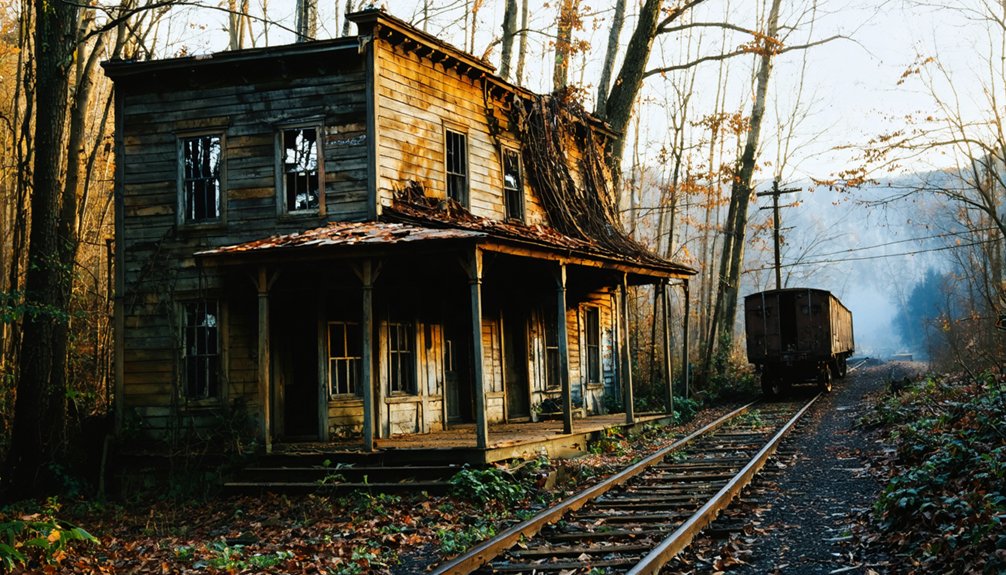
Avoid winter months when mud and ice make the back roads treacherous. Daytime visits give you the best light for ghost town exploration, letting you photograph crumbling buildings and train track remnants before darkness swallows the mine entrances.
Bring multiple flashlights — the tunnels shift from dim to absolute black fast. Expect cool temperatures inside year-round, hovering between 50-58°F, so layer up regardless of outside weather.
The historical significance here runs deep, from limestone quarrying to mushroom farming. Come curious, come prepared, and respect what remains. This place rewards the deliberate traveler.
Frequently Asked Questions
Are Permits Required to Explore the Lawton Mushroom Mine Tunnels Legally?
The knowledge doesn’t confirm permit requirements, but you’ll want to research local regulations before exploring. Respect the tunnel safety and historical significance of Lawton’s haunting passages — they’re yours to discover responsibly!
Is the Lawton Site Protected Under Any Historical Preservation Laws?
No official historical preservation efforts currently protect Lawton’s historical significance. You’re free to explore this forgotten gem, but remember, that freedom comes with responsibility—respect the crumbling structures, the eerie tunnels, and the haunting stories they silently hold.
Can Visitors Camp Overnight Near the Lawton Ghost Town Area?
You’ll find no official camping options or ghost town amenities at Lawton’s abandoned site. It’s a rugged, lawless landscape where you’re exploring at your own risk, traversing crumbling structures, dark mines, and unpredictable activity.
Are There Guided Tours Available at the Lawton Mushroom Mine?
No guided tours are available, so you’ll explore freely on your own! Grab your flashlight, embrace the tour experience, and uncover the historical significance of these eerie, abandoned tunnels where limestone quarrying and mushroom farming once thrived.
Has Any Official Archaeological Survey Been Conducted at Lawton?
With 2.6 million square feet of tunnels, no official archaeological survey’s been conducted at Lawton. You won’t find documented archaeological findings here, yet its historical significance—spanning over a century—makes it a compelling destination worth exploring yourself.
References
- https://www.youtube.com/watch?v=TpRPdOI0xP8
- http://thekyfiles.blogspot.com/2015/09/ghost-town-and-abandoned-mines.html
- https://www.youtube.com/watch?v=Gcbau01Tah4
- https://cartercountytimes.com/local-news/training-at-the-mushroom-mines/
- https://www.ghosttowns.com/states/ky/lawton.html
- https://podcasts.apple.com/us/podcast/s02-e11-lawton-mushroom-mines/id1583839282?i=1000626212245
- https://thewanderingrver.com/tag/mushroom-mine/