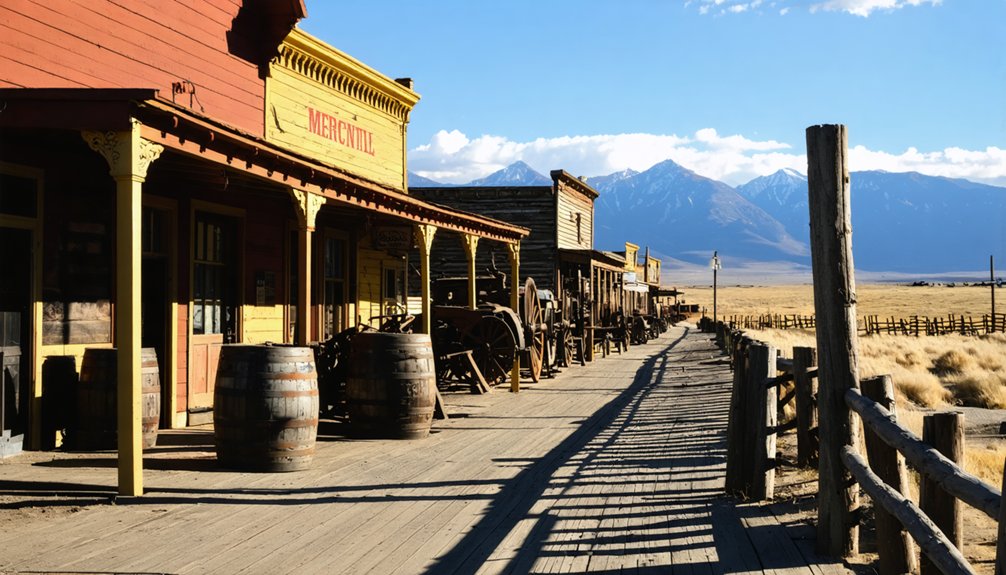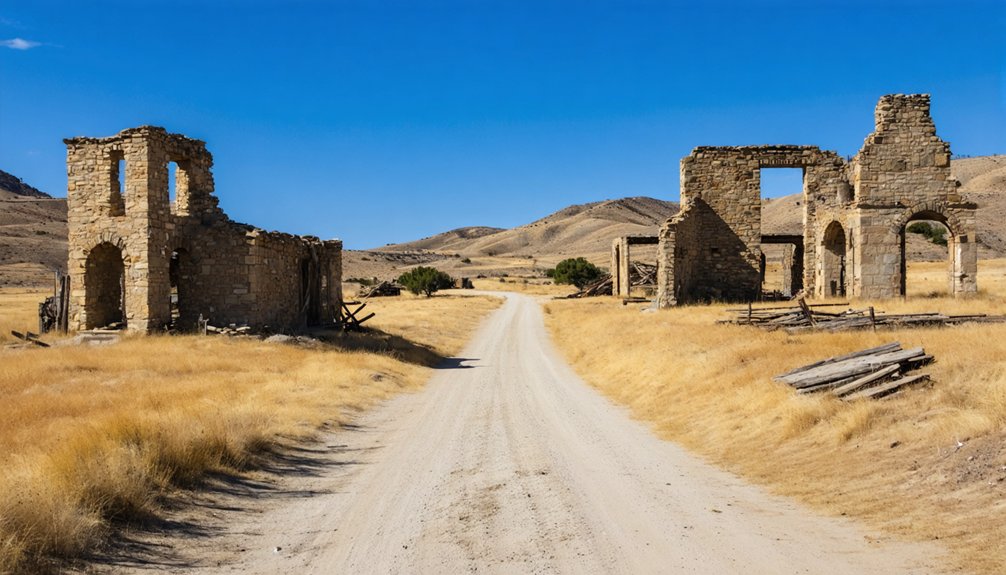
Planning a ghost town road trip to Timbuctoo, California means stepping into one of the Gold Rush era‘s most atmospheric remnants. Founded in 1855 and silenced by the 1884 Sawyer Decision banning hydraulic mining, this haunting site near Smartsville still shows ruins of its Wells Fargo building from the road. You’ll want to visit in spring, bring binoculars, and respect strict preservation boundaries. Everything you need to make this trip unforgettable is just ahead.
Key Takeaways
- Timbuctoo, founded in 1855, was a Gold Rush boomtown that declined after the 1884 Sawyer Decision banned hydraulic mining.
- Access the site via Timbuctoo Road near Smartsville, where ruins of the Wells Fargo building are visible from the road.
- Spring is the ideal season to visit, offering mild temperatures, clear roads, and blooming wildflowers for exploration.
- Bring binoculars, a camera, sturdy walking shoes, water, and sunscreen to make the most of your visit.
- Respect private land boundaries, avoid touching ruins, and leave diggings undisturbed to help preserve this fragile historical site.
Why Timbuctoo Is Worth the Drive
Few ghost towns earn the label “ghost town of a ghost town,” but Timbuctoo wears it with a strange pride. Founded in 1855 during California’s Gold Rush, this eastern Yuba County settlement built its fortune on evolving mining techniques — from early placer methods to the earth-shaking power of hydraulic operations that extracted millions in gold.
Timbuctoo history runs deeper than crumbling bricks and vandalized walls. At its peak, you’d have found a theater seating 800, hotels, saloons, and a Wells Fargo office humming with wealth.
At its peak, Timbuctoo wasn’t just a mining camp — it was a full, breathing town with ambitions to match.
A single 1884 court ruling silenced it all.
Today, you can drive Timbuctoo Road, read the landscape’s scars, and feel the weight of what unbridled ambition builds — and abandons. That experience is worth every mile.
How Timbuctoo Went From Gold Rush Boomtown to Ghost Town
Timbuctoo’s rise was fast, loud, and built on borrowed time. At its peak, you’d have found a roaring boomtown carved from California wilderness — then the 1884 Sawyer Decision banned hydraulic mining, and everything unraveled. Ghost town stories don’t get more decisive than this.
Here’s what that collapse looked like on the ground:
- Hydraulic cannons silenced overnight, leaving massive slickens mounds behind.
- Families and merchants packing wagons, abandoning hotels, saloons, and an 800-seat theater.
- Chinese immigrants moving into the theater basement, scraping whatever gold remained.
- A 1878 fire already having gutted the post office and wooden buildings beforehand.
The Timbuctoo legacy isn’t failure — it’s a raw snapshot of how quickly fortune-chasing communities rise, burn, and vanish when the money stops flowing.
Other Gold Rush Ghost Towns to Pair With Your Timbuctoo Visit
Once you’ve walked Timbuctoo Road and stared down those crumbling Wells Fargo bricks, you’ll likely want more — and California’s Gold Rush corridor delivers.
Several nearby ghost towns reward curiosity and reward historical preservation efforts with tangible ruins and stories.
Rough and Ready, just west of Grass Valley, briefly seceded from the Union in 1850.
Bodie, preserved as a California State Historic Park, freezes gold mining’s brutal final chapter in stunning detail.
North Bloomfield showcases hydraulic gold mining devastation inside Malakoff Diggins State Historic Park — eerily similar to Timbuctoo’s own fate.
Each town adds a distinct chapter to the same relentless story: boom, extraction, collapse, silence.
String them together, and you’re not just road-tripping — you’re reconstructing a vanished world on your own terms.
How to Get to Timbuctoo, California
Reaching Timbuctoo takes a little more intention than punching an address into your phone and driving. You’re chasing ghost town legends through eastern Yuba County, so expect a two-mile stretch of repaved Timbuctoo Road leading you there.
Most property sits behind private fencing, so respect boundaries.
Plan your approach using these landmarks:
- Smartsville serves as your nearest reference point along the Yuba River corridor
- Timbuctoo Road branches off toward the site, clearly driveable in spring conditions
- The historic marker sits five miles out — no direct signage guides you closer
- The Wells Fargo brick ruins are visible from the road, silently carrying Timbuctoo history forward
Spring offers the best visiting conditions, so time your trip accordingly.
Best Time of Year to Visit Timbuctoo
Spring is your best bet for visiting Timbuctoo, when mild temperatures and clear roads make exploring the ruins and cemetery far more comfortable.
Summer’s intense Central Valley heat turns the exposed, shadeless site into an endurance test you’ll want to avoid.
Winter rains can render Timbuctoo Road treacherous, cutting off access to this already remote stretch of eastern Yuba County.
Spring Conditions Are Ideal
Although Timbuctoo exists as little more than crumbling bricks and earthen mounds, timing your visit right makes the difference between a rewarding experience and a muddy, sun-scorched disappointment.
Spring delivers the ideal window for exploring this forgotten corner of Yuba County.
- Wildflowers and spring blooms carpet the surrounding hillsides, softening the stark, scarred landscape left behind by hydraulic mining.
- Wildlife sightings increase dramatically as deer, hawks, and songbirds reclaim the quiet valley.
- Mild temperatures let you roam the road, study the ruins, and wander the cemetery without battling summer’s brutal heat.
- Clear visibility reveals the dramatic slickens mounds and eroded terrain in sharp relief before dry-season grasses obscure the details.
You’ll move freely, see clearly, and feel the history beneath your feet.
Summer Heat Warnings
Summer transforms Timbuctoo’s open terrain into a punishing environment, where temperatures regularly climb past 100°F and shade is virtually nonexistent. The exposed slickens mounds and crumbling brick ruins offer no refuge from relentless heat, making summer activities here genuinely dangerous rather than adventurous.
If you’re determined to visit during summer, take serious heat precautions: carry at least two liters of water, start before 8 a.m., and retreat before midday temperatures peak. Wear light-colored, loose clothing and a wide-brimmed hat.
The surrounding Yuba County terrain amplifies heat radiating off dry earth and rock formations.
You’re free to explore on your own terms, but nature won’t negotiate. Timbuctoo’s ruins will wait — visiting when conditions favor you makes the experience worth having.
Winter Access Challenges
Winter flips Timbuctoo’s challenges entirely. Instead of brutal heat, you’re battling muddy, unpaved stretches and slick conditions that make winter road conditions genuinely treacherous. Timbuctoo Road’s two-mile stretch becomes unforgiving when rainfall saturates eastern Yuba County’s clay-heavy soil.
What winter actually looks like out there:
- Fog settles thick over the Yuba River bluffs, shrouding crumbling brick ruins in eerie silence.
- Standing water pools across low sections, cutting off casual access entirely.
- Mud ruts deepen with each passing vehicle, threatening ghost town preservation by accelerating erosion around fragile structures.
- Grey skies flatten the landscape, stripping away the dramatic shadows that define the slickens mounds.
You’ll need high clearance and genuine commitment. Spring remains your smarter choice.
What You Can Actually See When You Arrive
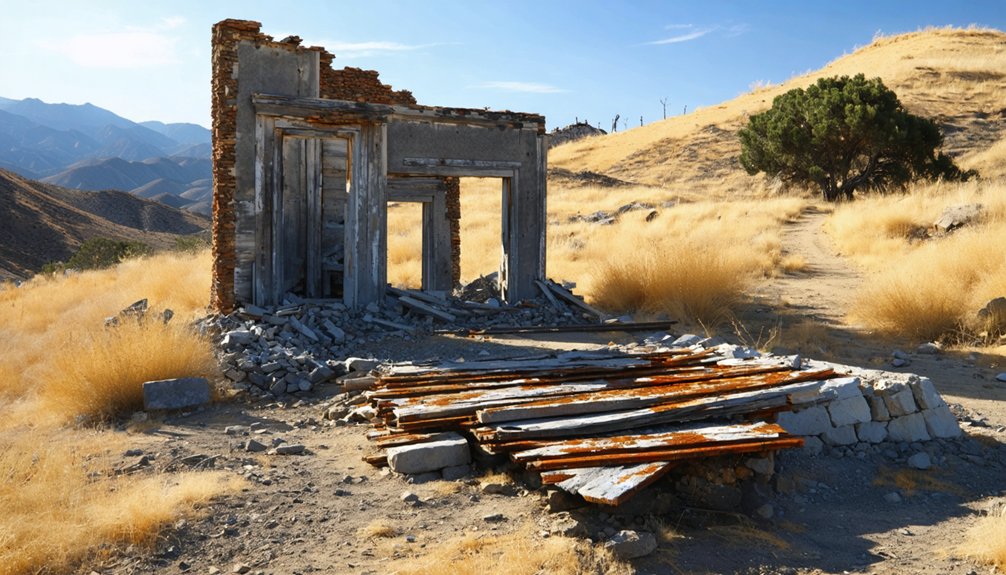
When you pull up to Timbuctoo, you’ll view the crumbling brick ruins of the old Wells Fargo building right from the road, though vandals have already picked through much of what remained.
Don’t overlook the cemetery, established in 1855 and still active as recently as 2018, offering a striking reminder that this wasn’t just a boom-and-bust footnote but a living community.
The surrounding landscape tells its own story through the slickens — those eerie mounds of hydraulic mining tailings that reshaped the earth and ultimately sealed the town’s fate.
Visible Ruins From Road
Pulling up to Timbuctoo, you’ll notice three things almost immediately: a crumbling brick facade, mounds of hydraulic tailings scarring the landscape, and an overwhelming silence where 800-seat theaters and Wells Fargo offices once hummed with Gold Rush ambition.
The historical significance here hits hard, and ghost town photography enthusiasts will find raw, unfiltered decay worth capturing.
From Timbuctoo Road, you’ll see:
- Vandalized brick walls of the Wells Fargo building, pockmarked by treasure hunters chasing rumored hidden gold
- Slickens mounds — pale, eerie earthen ridges left by hydraulic mining operations
- Collapsed foundations barely distinguishable from surrounding brush
- Open diggings stretching across the landscape, exposing how aggressively miners stripped this land
Most property sits behind private fencing, so respect boundaries and experience this forgotten place from the road.
Cemetery And Slickens Features
Two features anchor your Timbuctoo visit beyond the brick ruins: the 1855 cemetery and the haunting slickens fields left behind by hydraulic mining.
The cemetery history here runs deep — established the same year the town was founded, it remains active, with its most recent burial recorded in 2018.
Walking among the headstones connects you directly to the miners, families, and dreamers who built something real in this remote valley.
The slickens features are equally striking. Those strange, rolling mounds of pale gravel stretching across the landscape aren’t natural terrain — they’re hydraulic mining tailings, debris that choked the Yuba River and triggered the 1884 court ruling that killed the town.
You’re basically walking through the evidence of Timbuctoo’s destruction, preserved in plain sight.
What to Bring for Your Timbuctoo Visit
Since Timbuctoo sits on mostly private, fenced land with little more than crumbling brick ruins and open slickens mounds to explore from the roadside, you’ll want to pack smart.
Respecting ghost town preservation means observing without disturbing, so come prepared to document Timbuctoo history rather than handle it.
Timbuctoo rewards the curious eye, not the grabbing hand — observe, document, and leave history undisturbed.
- Binoculars to examine the vandalized Wells Fargo brick walls from Timbuctoo Road without trespassing
- A camera or smartphone to capture the slickens mounds and hydraulic diggings scarring the landscape
- Sturdy walking shoes for traversing uneven roadside terrain near the cemetery
- Water and sunscreen since spring visits offer the best conditions but still expose you to open California sun
Stay roadside, stay respectful, and let the ruins speak.
How to Explore Timbuctoo Without Causing Damage
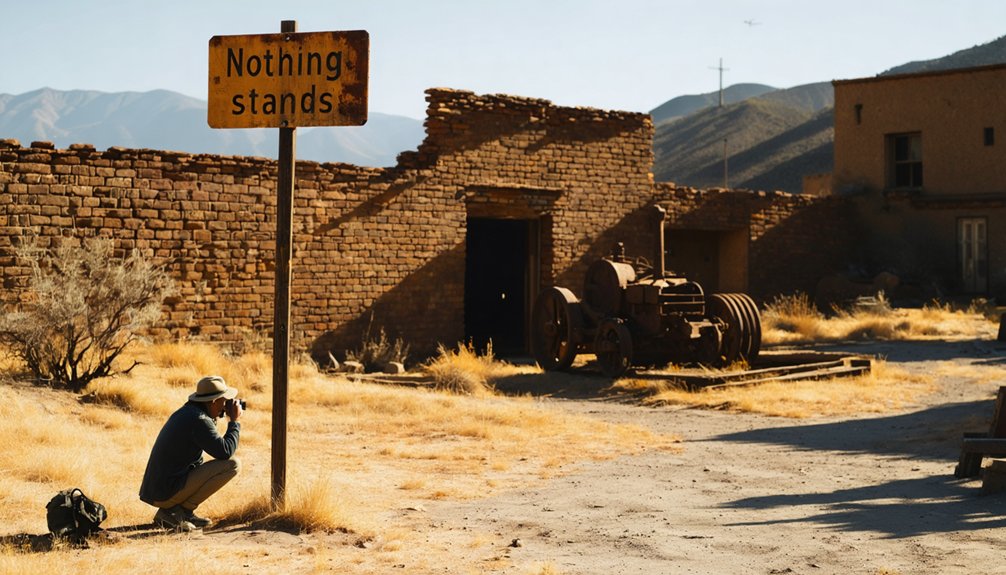
Timbuctoo earns its reputation as a “ghost town of a ghost town,” and you’ll want to keep it that way. Responsible exploration means respecting boundaries — most land surrounding the ruins is privately fenced, so stay on Timbuctoo Road while viewing the crumbling Wells Fargo brick building.
Don’t touch or remove anything. Vandals have already chipped away at the structure searching for rumored hidden gold, accelerating its deterioration. Ghost town preservation depends on visitors like you choosing restraint over curiosity.
Walk the cemetery thoughtfully — it’s still active, with burials as recent as 2018.
Photograph the slickens mounds freely, but leave the diggings undisturbed. Every brick, every depression in the earth tells a story that belongs to history, not your pocket.
Frequently Asked Questions
Is There an Entrance Fee to Visit Timbuctoo’s Ruins?
You don’t pay any entrance fees to visit Timbuctoo’s ghost town ruins. Simply drive along Timbuctoo Road, view the crumbling Wells Fargo brick building, and explore freely — though you’ll want to respect the surrounding private property boundaries.
Can You Legally Metal Detect or Pan for Gold at Timbuctoo?
You’ll need to check metal detecting regulations and secure gold panning permits before prospecting at Timbuctoo. Most land’s privately fenced, so always get landowner permission first — freedom means respecting boundaries while chasing your golden dreams.
Are Restroom Facilities Available Anywhere Near the Timbuctoo Site?
Like a lone prospector far from camp, you’ll find no restroom locations at Timbuctoo itself. Plan ahead — nearby attractions like Smartsville offer your best chances before exploring this remote, hauntingly beautiful ghost town.
Is Timbuctoo Accessible for Visitors With Mobility Limitations?
Wheelchair access at Timbuctoo is limited, but you can still absorb its historical significance from your vehicle. You’ll view the crumbling Wells Fargo ruins and slickens mounds along Timbuctoo Road without leaving your car.
Can Visitors Make Rubbings or Take Brick Fragments as Souvenirs?
You’ll want to “leave your mark” responsibly here. Souvenir etiquette means you shouldn’t take brick fragments—preservation concerns are real, as vandals already ravage these ruins. Capture memories photographically instead, honoring Timbuctoo’s fragile, irreplaceable remnants for future freedom-seeking explorers.
References
- https://www.timbuctoocalifornia.com/history
- https://www.atlasobscura.com/places/timbuctoo
- https://www.kqed.org/news/11650014/timbuctoo-the-ghost-of-a-ghost-town
- https://pitsenberger.com/blog/were-on-our-way-to-timbuctoo
- https://www.youtube.com/watch?v=7zqGMs85nnU
- https://www.timbuctoocalifornia.com
- https://www.calexplornia.com/timbuctoo-prominent-town-yuba-countys-distant-past/
- https://storymaps.arcgis.com/stories/ec2f9e6beb26421f9a7cb2e9e3f27bbb