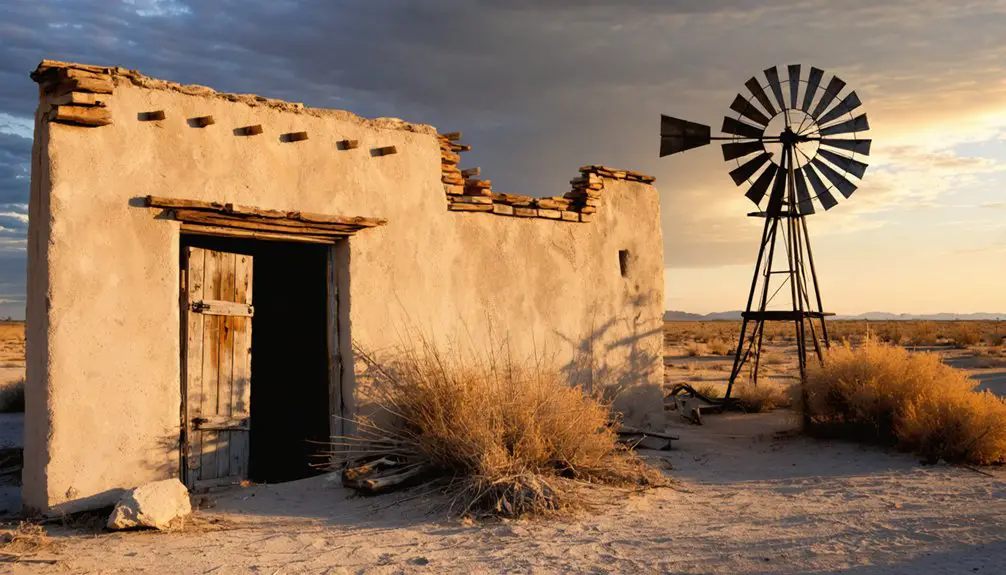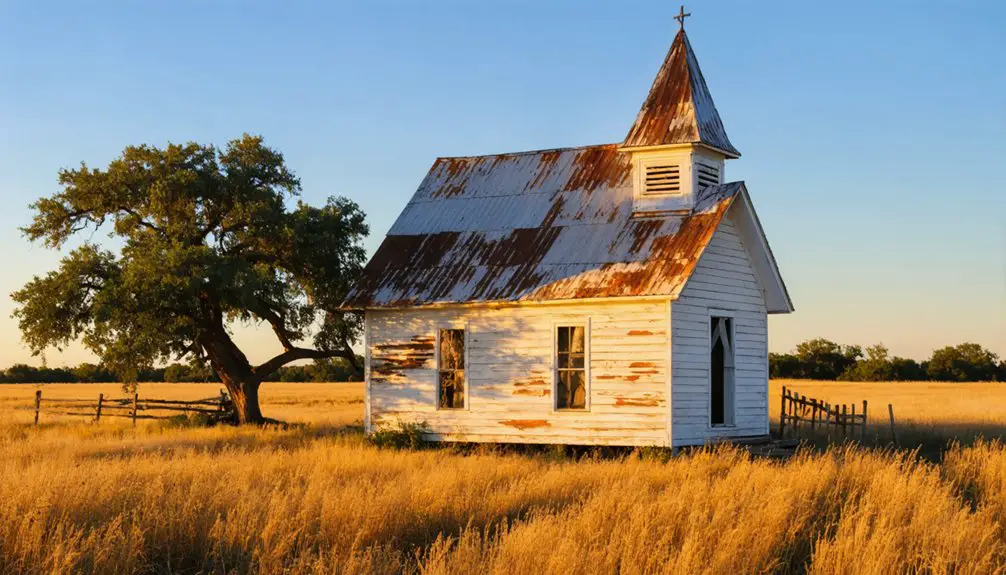
Plan your road trip to Loma Vista by heading into Zavala County, Texas, where farming ambitions crumbled in the 1870s and left behind silent ranchland and caliche roads. You’ll want to visit between October and April, pack water, sturdy boots, and local maps, and navigate from US-83 toward Tortuga Creek. The ghost of Edison School still waits out there, and there’s far more to this forgotten corner of South Texas than you’d expect.
Key Takeaways
- Loma Vista, a ghost town in Zavala County, Texas, features remnants of the historic Edison School, once serving nineteen isolated ranch families.
- Access Loma Vista via US-83, navigating caliche and dirt roads, using Tortuga Creek as a landmark; dry weather is essential for safe travel.
- Visit between October and April for cooler temperatures, spring wildflowers, and ideal winter photography conditions; summer heat can exceed 100°F.
- Pack water, a first-aid kit, sturdy boots, local maps, and camera gear, as remote areas lack cell service and amenities.
- Pair Loma Vista with nearby ghost towns like Terlingua, Shafter, or Indianola to explore Texas’s diverse stories of ambition and decline.
Where Is Loma Vista Located in Zavala County?
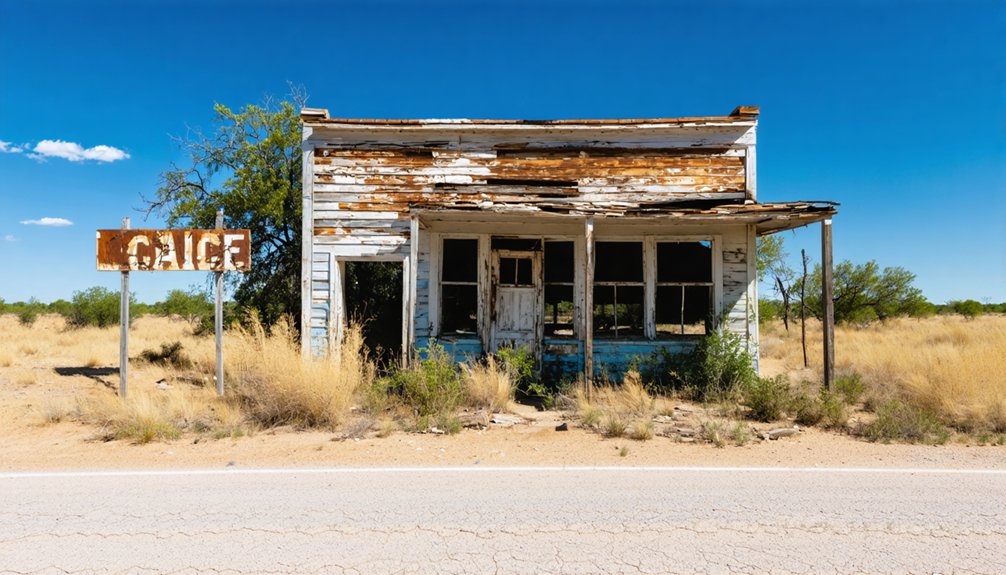
Tucked into the remote ranchlands of Zavala County, Loma Vista — also recorded as Luma Vista — sits in a stretch of South Texas where mid-1870s settlers once gambled on dryland farming and lost.
That Loma Vista geography tells its own story: land too stubborn for crops eventually surrendered to ranching, reshaping the entire county’s identity.
When you trace Zavala County history, you’ll find that failure often wrote the most honest chapters. Settlers who couldn’t coax harvests from the soil pivoted to cattle, and the land around Tortuga Creek became ranching territory instead of farmland.
Loma Vista grew from that pivot — briefly. Today, it’s a ghost town, but getting there means driving through open ranchland that still feels untamed, which is exactly the point.
What Turned Loma Vista Into a Ghost Town?
Standing on that same ranchland that swallowed settlers’ farming dreams, you start to wonder what finally finished Loma Vista off. The answer’s simpler than you’d expect — farming failures broke the community’s back.
When settlers arrived in the mid-1870s, they pushed hard against Zavala County’s unforgiving soil. Dryland farming refused to cooperate, leaving families with worthless crops and mounting losses.
Ranching dominance gradually replaced those broken agricultural ambitions, but ranching required fewer hands, fewer neighbors, fewer reasons to stay.
What Can You Still See at the Edison School Site?
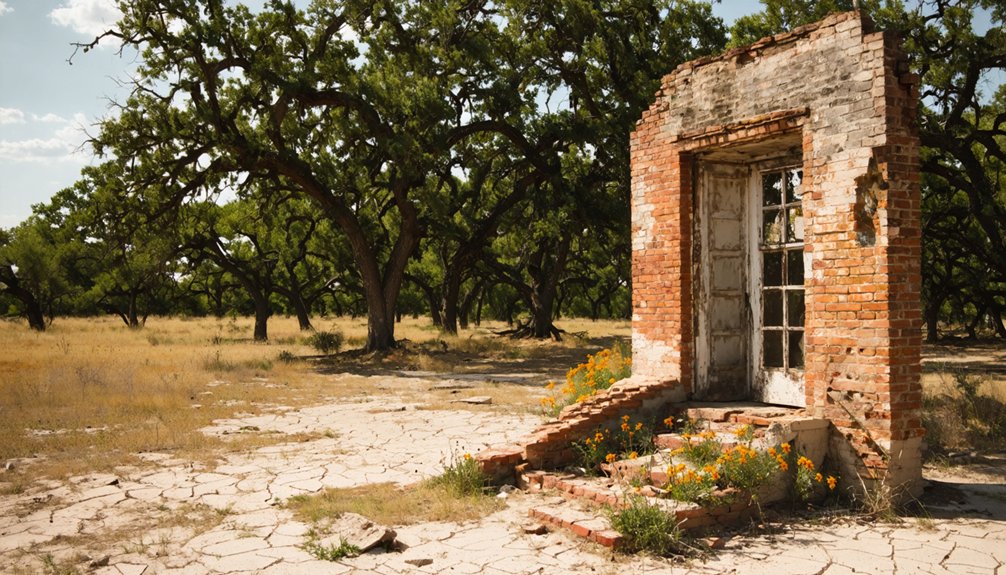
Where the Edison School once gathered nineteen students under one roof, you’ll find a site that rewards patient exploration. Known alternately as Tortuga School and West Loma Vista School, its historical significance runs deeper than crumbling foundations suggest.
Walk the grounds and you’ll notice subtle architectural features — remnants of a structure built to serve isolated ranch families scratching out survival in Zavala County’s unforgiving terrain.
Local legends speak of teachers who rode miles through brush country to keep that single classroom alive.
Today, historical markers near the Edison School vicinity help orient your search. Bring water, wear boots, and move slowly — the land reveals details only to those willing to look.
This site connects you directly to a community that refused to disappear quietly.
How Do You Actually Get to Loma Vista?
You’ll reach Loma Vista by traversing rural Zavala County roads branching off major South Texas highways, so plot your route carefully before leaving pavement behind.
The terrain that once challenged homesteaders still demands respect, making dry-weather travel essential for any vehicle attempting the ranchland approaches near Tortuga Creek.
Stock your supplies before you head out, because this forgotten stretch of Texas offers almost no facilities between you and the ghost of Edison’s one-room school.
Rural Road Access Routes
Getting to Loma Vista means trading paved comfort for the kind of caliche and dirt roads that once carried ranch hands and dryland farmers through Zavala County‘s sun-baked terrain.
These rural roadways demand a capable vehicle and dry weather — rain turns the clay-heavy ground into something that’ll swallow tires whole.
You’ll navigate scenic routes threading through ranchlands that haven’t changed much since the 1870s settlers first arrived hoping to farm them.
Head out from Crystal City or Cotulla along county roads that push deep into open country.
Keep your bearings using Tortuga Creek as a landmark — it guided early ranchers to the Holdsworth Ranch site, and it’ll guide you now.
Bring a paper map; cell service disappears fast out here.
Major Highway Starting Points
Those caliche roads don’t appear out of nowhere — they branch off larger arteries that cut through South Texas ranch country, and knowing which highway to start from makes the difference between a purposeful drive and a frustrating loop through unmarked ranchland.
US-83 runs like a spine through Zavala County, connecting Crystal City and La Pryor, giving you the cleanest entry point toward the Holdsworth Ranch territory near Tortuga Creek.
From US-83, you’ll peel onto county roads heading west, where historic landmarks like the Edison School vicinity occasionally surface as weathered mile markers of a vanished community.
Watch for local wildlife — javelinas and white-tailed deer cross freely through this brushland.
Keep your tank full before you leave any town with a gas pump. Freedom here means arriving prepared.
Weather And Terrain Prep
Caliche roads turn treacherous after even modest rainfall, so timing your Loma Vista run during a dry stretch isn’t optional — it’s survival strategy.
South Texas weather patterns shift fast — clear mornings can dissolve into afternoon thunderstorms that transform ranch roads into muddy traps within minutes.
Zavala County’s terrain challenges include scrubby brush, uneven caliche surfaces, and zero guardrails between you and the ranchland.
You’re driving through the same remote corridors that defeated 19th-century farming families — respect that history by packing water, a spare tire, and basic recovery gear.
Spring and fall offer the most forgiving conditions.
Summer heat out here isn’t romantic; it’s dangerous.
Go prepared, go light, and go when the ground’s dry.
The ghost of Edison doesn’t wait for you to catch up.
Best Time of Year to Visit Loma Vista
You’ll want to plan your Loma Vista visit between October and April, when South Texas temperatures stay manageable and the ranch roads through Zavala County hold firm underfoot.
Summer heat can push past 100°F, turning the same caliche trails that once carried Edison-era ranchers into punishing, dusty obstacles.
Spring and fall strike the best balance, giving you cool mornings to explore the Holdsworth Ranch area and clear skies that make the wide, quiet ranchlands feel like stepping back into the 1870s.
Ideal Visiting Seasons
Timing your visit to Loma Vista can mean the difference between an atmospheric adventure and a grueling ordeal beneath the unrelenting South Texas sun.
You’ll want to plan your trip between October and April, when cooler temperatures make exploring Zavala County’s rugged ranchlands genuinely rewarding. Spring mornings carry wildflowers across the terrain surrounding Holdsworth Ranch, heightening your ghost town experiences with unexpected beauty.
Winter offers crisp clarity perfect for photography and absorbing historical insights among the abandoned school sites near Tortuga Creek.
Summer’s brutal heat transforms remote rural roads into exhausting slogs, draining your energy before you’ve scratched the surface. Since facilities are nonexistent here, seasonal timing isn’t preference — it’s strategy.
Choose wisely, and Loma Vista rewards you with an authentically untamed slice of forgotten Texas history.
Weather and Road Conditions
South Texas weather doesn’t negotiate — it dictates. Summer heat bakes Zavala County’s ranchlands into cracked, unforgiving terrain, while winter cold snaps arrive without warning.
For road safety and genuine access, plan your visit between October and April, when temperatures stay manageable and rainfall stays predictable.
Weather patterns here shift fast. A morning drizzle transforms those unpaved rural roads into muddy traps that’ll strand your vehicle miles from help.
The Holdsworth Ranch area near Tortuga Creek sits on terrain that absorbs water poorly, turning dirt tracks into slick obstacles.
Check forecasts obsessively before departure. Carry extra water, a basic tool kit, and don’t travel alone.
This land swallowed struggling settlers whole — don’t let it swallow your road trip ambitions too.
Other Texas Ghost Towns to Pair With Loma Vista
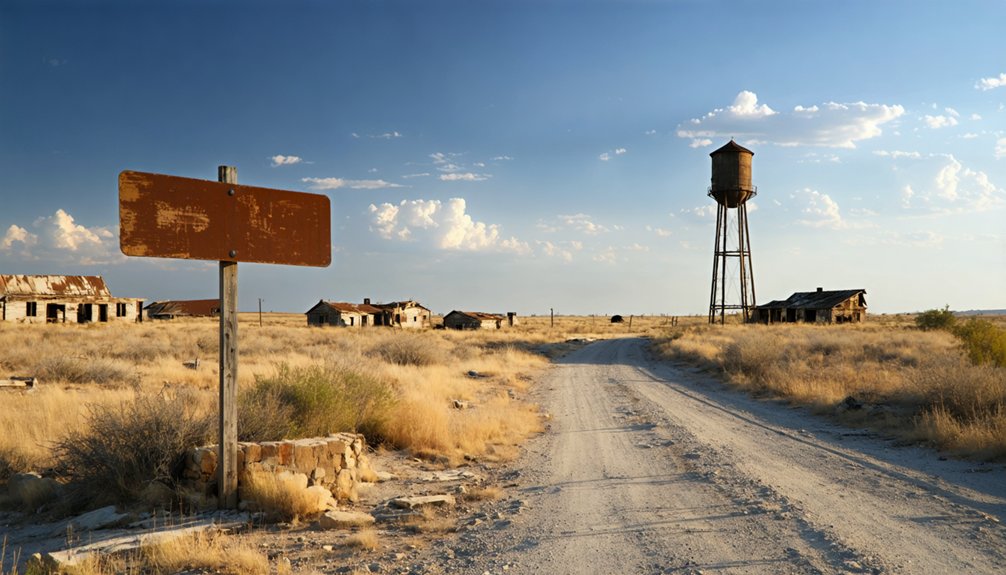
While Loma Vista’s quiet ranchlands tell one kind of Texas ghost town story, pairing it with other abandoned settlements reveals the full range of the state’s forgotten past.
Mingus history shows how coal once fueled a 10,000-person boomtown before silence reclaimed it by the 1930s.
Coal turned Mingus into a roaring 10,000-person boomtown — then the 1930s arrived and swallowed it whole.
Head west for Shafter mining remnants, where silver operations launched in 1884 built a community that eventually crumbled into desert stillness.
Terlingua ruins offer haunting cemetery walks through a former quicksilver camp.
Belle Plain collapsed after railways bypassed it, while Indianola hurricanes in 1875 and 1886 erased a thriving Gulf port entirely.
These ghost town contrasts, spanning South Texas and beyond, underscore the historical significance of ambition, disaster, and inevitable abandonment shaping the Texas landscape you’re exploring.
What to Bring for a Day Trip to Loma Vista
Packing smart separates a rewarding ghost town excursion from a miserable one, especially when Loma Vista’s remote Zavala County ranchlands offer no convenience stores or paved comforts between you and the remnants of Edison’s forgotten community.
Load your essential supplies: water, a first-aid kit, and sturdy boots for traversing abandoned ranch terrain. Download local maps before you lose cell signal—digital connections vanish quickly on rural South Texas roads.
Bring camera gear loaded with extra batteries and memory cards; the Edison School site and Holdsworth Ranch structures reward photographers willing to capture weathered history.
Pack picnic essentials since you’ll eat surrounded by open ranchland silence that once echoed with homesteaders’ struggles.
Dry conditions make visits manageable, so check weather forecasts before committing to unpaved county roads.
Frequently Asked Questions
Was Loma Vista Ever Known by a Different Name Historically?
Yes, you’ll find Loma Vista’s historical significance runs deep — it’s also known as Luma Vista! Explore its name origins across Zavala County records, where this adventurous ghost town carried both spellings through its storied past.
How Many Students Attended the One-Teacher Edison School Originally?
Like a lone lantern cutting through prairie darkness, nineteen students kindled Edison School’s educational legacy. You’re tracing historical significance every time you visit — nineteen young ranch kids who learned, survived, and shaped Loma Vista’s enduring frontier spirit.
When Exactly Did the Edison Post Office Open for Business?
You’ll uncover that Edison history came alive in 1907 when postal services launched, connecting frontier ranchers to the wider world. That single date marks your gateway into Loma Vista’s adventurous, fleeting past worth exploring!
Which Ranch Was Edison Town Originally Established Upon?
Once thriving, now forgotten — you’ll find Edison’s ranch origins rooted in the Holdsworth Ranch near Tortuga Creek. Tracing this Edison history means standing where ranchers once carved life from untamed South Texas soil.
Is Loma Vista Sometimes Incorrectly Listed Under Wilson County?
Yes, you’ll encounter Loma Vista geography confusion, as Wilson County misconceptions appear in some records. It actually belongs to Zavala County, so don’t let faulty historical listings steer your adventurous ghost town journey off course!
References
- https://www.texasescapes.com/SouthTexasTowns/Edison-Texas.htm
- https://www.youtube.com/watch?v=phjUE19A8HM
- https://en.wikipedia.org/wiki/List_of_ghost_towns_in_Texas
- https://texashighways.com/travel-news/four-texas-ghost-towns/
- https://authentictexas.com/texas-ghost-towns/
- https://www.youtube.com/watch?v=3-ufnE7hdUE
- https://www.texasescapes.com/SouthTexasTowns/Loma-Vista-Texas.htm