Planning a ghost town road trip to Lorraine, Pennsylvania puts you in the heart of Schuylkill County’s forgotten coal history. You’ll find stone foundations, abandoned rail spurs, and colliery remnants tucked beneath overgrown hillsides near St. Clair. There’s no visitor center, so you’re finding your way through this one on your own. Late spring and early fall offer the best conditions for exploring. Stick around, and you’ll uncover everything you need to make this trip unforgettable.
Key Takeaways
- Lorraine, Pennsylvania, is a ghost town in Schuylkill County with visible stone foundations, abandoned rail spurs, and colliery remnants from its coal-mining past.
- The town was built by the Philadelphia and Reading Coal and Iron Company, thriving in 1918 before collapsing after the mine closed in 1930.
- From Harrisburg, Lorraine is approximately 1.5 hours east; follow Route 901 into East Norwegian Township near St. Clair using GPS coordinates 40.72°N, 76.22°W.
- Visit during late April–May or September–October for the best conditions; bring sturdy boots, printed maps, water, snacks, and a first-aid kit.
- Nearby ghost towns like Centralia and Lausanne Landing offer additional exploration opportunities, enriching your road trip through Pennsylvania’s coal-mining heritage.
What Makes Lorraine, Pennsylvania Worth the Drive?
Though it’s easy to dismiss a ghost town as just another forgotten patch of overgrown land, Lorraine pulls you in with something more tangible—the physical remnants of a community that thrived during anthracite coal’s peak and collapsed within a single decade.
That ghost town allure isn’t manufactured nostalgia; it’s embedded in the crumbling foundations, stripped building sites, and overgrown mine entrances you’ll actually walk through.
The historical significance here runs deep. The Philadelphia and Reading Coal and Iron Company built Lorraine from nothing, and the Great Depression dismantled it just as completely.
How Did Lorraine Rise and Fall as a Coal Patch Town?
When the Philadelphia and Reading Coal and Iron Company carved Lorraine out of East Norwegian Township, they weren’t building a neighborhood—they were building a workforce. Coal mining defined every aspect of community life here.
By 1918, Lorraine was thriving. By 1930, the mine closed, and everything unraveled fast.
By 1918, Lorraine was a living, breathing village. Twelve years later, the mine closed—and so did everything else.
Here’s how the cycle played out:
- Rise – The company constructed homes, creating an instant village dependent entirely on anthracite production.
- Decline – When the mine shut down in 1930, residents lost both jobs and purpose for staying.
- Erasure – The Great Depression drove people to strip the buildings for materials, leaving almost nothing standing by 1938.
You’re literally walking through the bones of someone else’s forced community.
How to Get to Lorraine From Major Pennsylvania Cities
Getting to Lorraine isn’t complicated, but it does require some patience with rural Pennsylvania roads.
From Harrisburg, you’re looking at roughly 1.5 hours, heading east toward Schuylkill County. From Philadelphia, budget about 2.5 hours, taking the Pennsylvania Turnpike Northeast Extension (I-476) to the Pottsville exit.
Once you’re near St. Clair, follow Route 901 into East Norwegian Township. Park near St. Clair and follow unmarked trails on foot — the scenic hikes through overgrown terrain are part of the experience.
GPS coordinates around 40.72°N, 76.22°W will guide you close enough.
There are no crowds, no fences, no schedules. Just open land, ghost town legends, and the quiet ruins of a forgotten coal community waiting for you to explore on your own terms.
What You’ll Find at Lorraine, Pennsylvania Today
Most of what you’ll find at Lorraine today is silence — and the kind of silence that feels earned.
You’re walking through ghost town preservation without the velvet ropes, just raw history under your boots.
Expect to discover:
- Stone foundations half-swallowed by vegetation, marking where miners’ families once built daily lives
- Abandoned rail spurs and colliery remnants scattered across the landscape, connecting you physically to the 1930s collapse
- Local folklore whispered among regional historians — stories of families stripping their own homes during the Depression rather than leaving empty-handed
There’s no visitor center, no guided tour.
You’ll navigate unmarked trails, read the land yourself, and leave with something most tourist stops can’t offer — a genuine encounter with forgotten American history.
Foundations, Mine Entrances, and What Survives at Lorraine
As you explore the Lorraine site, you’ll spot the stone foundations of patch homes that once housed mining families during the industry’s 1918 peak.
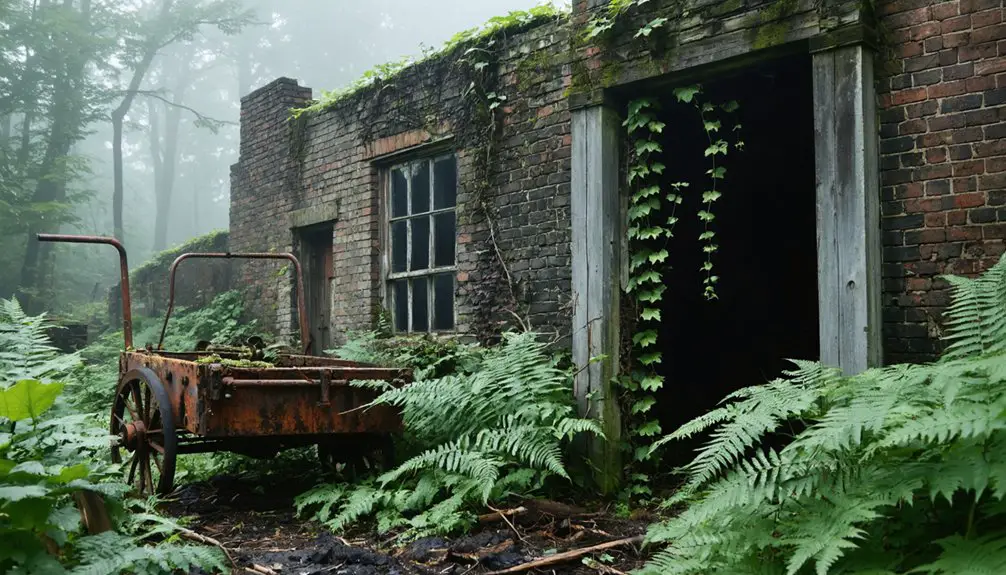
Overgrown mine entrances push through the vegetation, hinting at the underground network that once drove the entire village’s existence.
Nature has quietly reclaimed most of the land, so you’ll need to look carefully beneath the brush to piece together what this thriving community looked like before the 1930 mine closure erased it.
Surviving Foundations and Ruins
What remains of Lorraine today tells a quiet but striking story of industrial collapse.
You’ll find foundational remnants scattered across an overgrown landscape that carries deep historical significance. Nature’s reclaimed most of it, but enough survives to spark your imagination.
Here’s what you can expect to discover on foot:
- Stone foundations from original patch homes built during Lorraine’s 1918 peak, now partially buried beneath vegetation.
- Overgrown mine entrances where anthracite was once extracted before the 1930 abandonment ended everything.
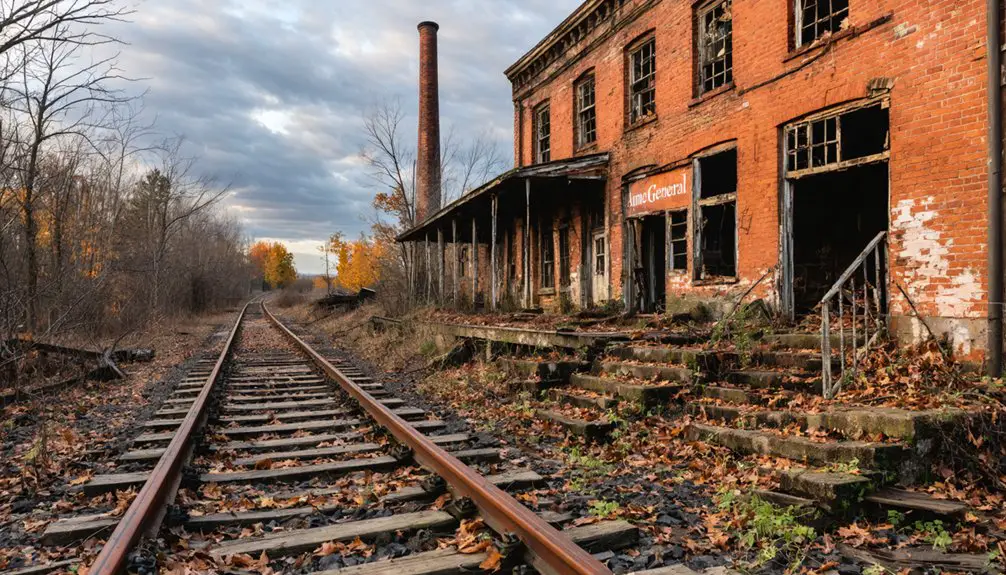
- Abandoned rail spurs and colliery debris stretching across the hillside, remnants of a once-active industrial operation.
Bring sturdy boots and a camera.
You’re walking through layers of Pennsylvania’s coal history, and every crumbling stone has something honest to say.
Overgrown Mine Entrances
Scattered across Lorraine’s hillside, several overgrown mine entrances still break through the vegetation, hinting at the underground network that once drove the entire community’s existence.
You’ll notice collapsed timber frames swallowed by decades of growth, their dark openings partially sealed by soil and roots. These spots aren’t marked or maintained, so you’re practically discovering hidden treasures on your own terms.
The overgrown vegetation makes exploration feel genuinely raw and unscripted.
Watch your footing carefully near any opening, as unstable ground surrounds most entrances. Don’t attempt entry into any shaft — structural integrity is nonexistent after nearly a century of neglect.
Instead, take your time photographing the eerie contrast between creeping greenery and crumbling industrial remnants. Each entrance tells you something powerful about how quickly nature reclaims what industry abandons.
Best Time of Year to Visit Lorraine, Pennsylvania
Late spring and early fall offer the best windows for exploring Lorraine’s overgrown foundations and colliery remnants. During these best visiting seasons, vegetation stays manageable, trails remain dry, and natural light filters beautifully through the canopy.
Seasonal activities align well with moderate temperatures, making your hike comfortable and rewarding.
Seasonal activities sync naturally with mild temperatures, turning every step through Lorraine’s ruins into something genuinely worth the effort.
Top reasons to visit during these windows:
- Late April–May: Wildflowers frame the ruins, and foliage hasn’t fully obscured the foundations yet.
- September–October: Cooler air makes hiking easier, and autumn color dramatically highlights the abandoned landscape.
- Avoid July–August: Dense vegetation swallows most artifacts, and heat makes exploration exhausting.
You’ll navigate this forgotten patch town far more effectively when nature isn’t actively fighting you every step forward.
What to Bring to Lorraine, Pennsylvania
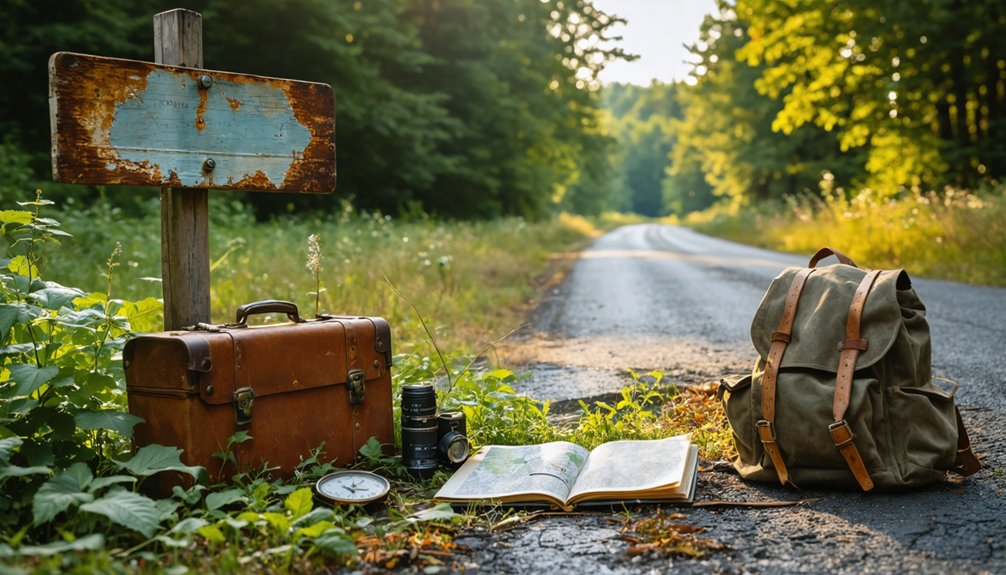
Reaching Lorraine’s overgrown foundations demands preparation, since the site offers no amenities, marked trails, or cell service.
Pack these ghost town essentials before you leave civilization behind. Wear sturdy boots for uneven terrain, collapsed foundations, and dense vegetation. Bring a printed map or downloaded offline GPS coordinates — approximately 40.72°N, 76.22°W — since your signal will likely vanish near East Norwegian Township.
Carry at least two liters of water, high-energy snacks, and a basic first-aid kit. A camera captures the haunting remnants of 1918-era patch homes beautifully.
Follow these exploration tips: bring a walking stick for stability, wear long pants against overgrowth, and pack a flashlight for examining shadowed foundation walls. Your freedom to explore depends entirely on your readiness.
Other Abandoned Schuylkill Coal Towns Worth Visiting Nearby
Once you’ve packed your gear and explored Lorraine’s stripped foundations, Schuylkill County’s surrounding hills hold several more ghost towns worth adding to your itinerary.
These abandoned towns share Lorraine’s coal history and reward curious explorers willing to roam freely.
- Centralia – A modern ghost town where a 1962 underground mine fire still burns, forcing evacuations and leaving eerie cracked roads behind.
- Similar Schuylkill Patch Towns – Dozens of small mining communities collapsed after the 1930s coal bust, leaving foundations and rail spurs scattered across the ridgelines.
- Lausanne Landing – Cross into Carbon County to find riverside ruins of a former tavern site along the Lehigh River.
Each site deepens your understanding of Pennsylvania’s dramatic coal history and industrial collapse.
Frequently Asked Questions
Is It Legal to Visit the Lorraine Ghost Town Site?
You’ll want to verify ghost town regulations before visiting Lorraine, as land ownership affects access. Its historical significance draws explorers, but always check local Pennsylvania township rules to guarantee you’re legally entering this fascinating abandoned site.
Are There Any Guided Tours Available for Lorraine, Pennsylvania?
You’ll search a thousand miles before finding an official guided exploration of Lorraine’s ghost town history! No formal tours exist, so you’re blazing your own trail through these hauntingly forgotten ruins solo.
Can You Camp Overnight Near the Lorraine Ghost Town Ruins?
You can camp near Lorraine’s ruins on surrounding public lands! Pitch your tent, swap ghost stories under the stars, and follow Leave No Trace camping tips to keep your freedom-filled adventure respectful and unforgettable.
Has Any Historical Preservation Effort Been Made for Lorraine?
You won’t find formal preservation efforts for Lorraine—its historical significance fades beneath overgrowth and neglect. Preservation challenges like remote access and private land have kept restoration out of reach, leaving you to explore its raw, untamed ruins freely.
Are There Any Local Museums Displaying Lorraine Coal Mining Artifacts?
You won’t find a museum dedicated solely to Lorraine, but you’ll discover coal mining history and local folklore at Schuylkill County’s nearby museums, where artifacts and stories vividly capture the region’s anthracite heritage.
References
- https://wynninghistory.com/2025/08/21/lorraine-schuylkill-decline/
- https://pawilds.com/a-severely-haunted-road/
- https://en.wikipedia.org/wiki/Lausanne_Landing
- https://www.youtube.com/watch?v=4I9j30fvz8M
- http://ohiorr.railfan.net/lase.html