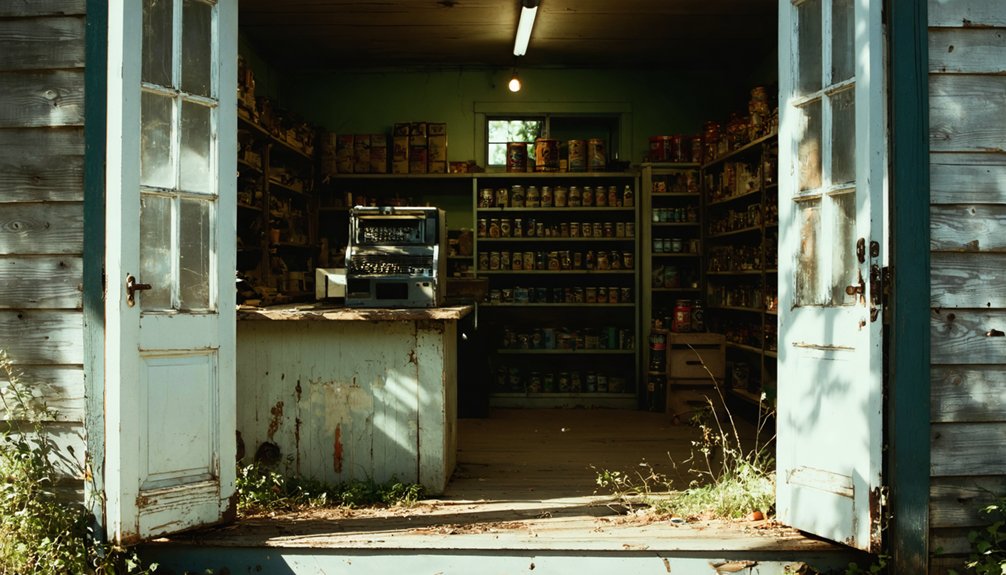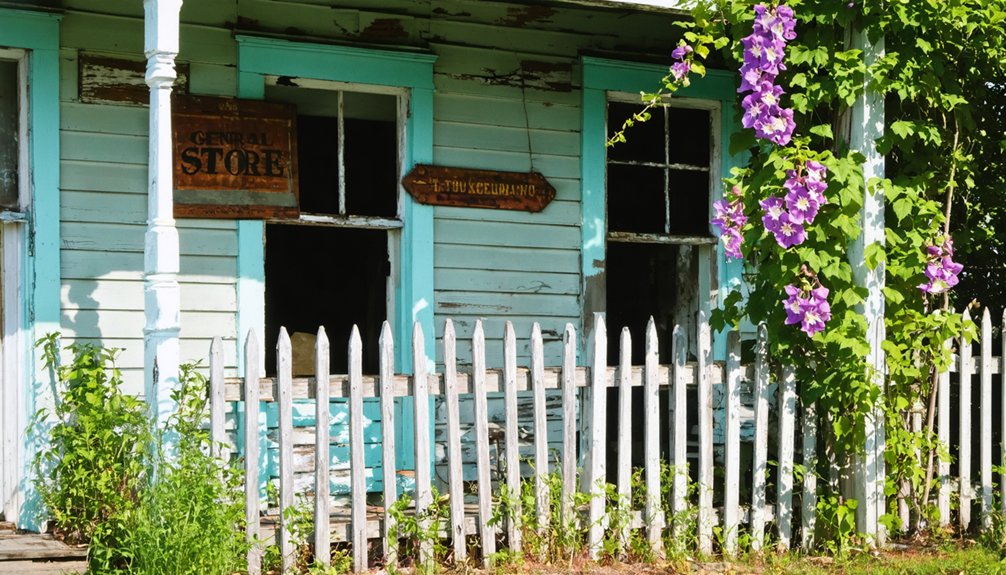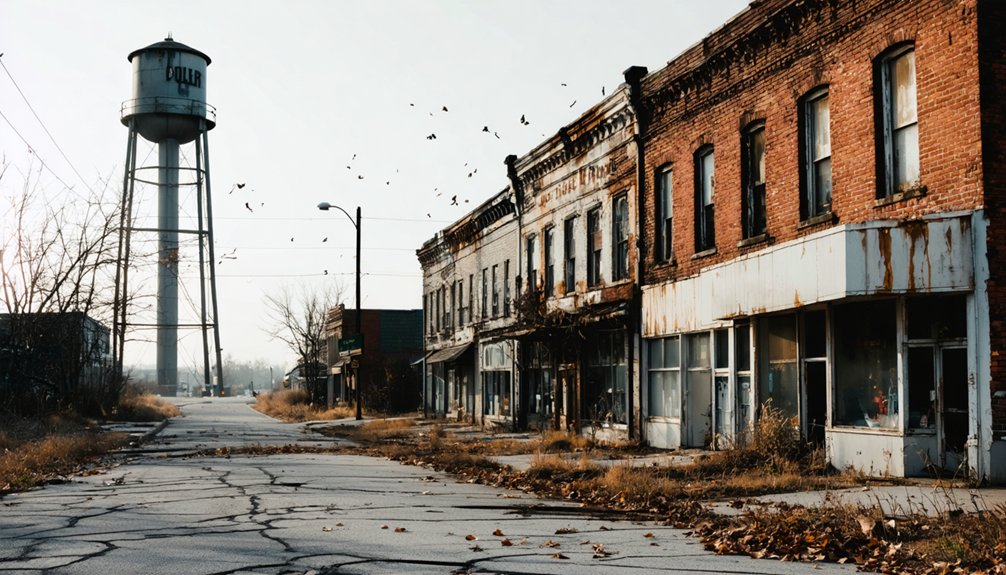
Planning a ghost town road trip to Banning, Delaware means stepping into Delaware’s forgotten past without the polish of tourist traps. You’ll navigate back roads from Wilmington via Route 9, trading pavement for unpaved lanes that lead to crumbling foundations, rusted relics, and haunting silence. Pack sturdy boots, a reliable flashlight, and layers for changing weather. Visit in late spring or early fall for the best conditions. There’s far more to uncover about this remarkable destination ahead.
Key Takeaways
- From Wilmington, take Route 9 southwest, then navigate back roads; download offline maps due to unreliable cell service in the area.
- Pack sturdy ankle-support boots, a reliable flashlight, first aid kit, water, and layered clothing for changing weather conditions.
- Visit during late spring or early fall for mild temperatures, golden foliage, and optimal photography conditions.
- Avoid touching or removing artifacts, steer clear of unstable structures, and pack out everything you bring in.
- Expect crumbling foundations, rusted relics, and collapsed structures across uneven terrain revealing Banning’s forgotten history.
What Makes Banning, Delaware Worth the Drive?
Tucked away in the quiet stretches of Delaware, Banning rewards curious road-trippers with something increasingly rare — a genuine ghost town that hasn’t been sanitized for tourism.
You’ll find Banning attractions rooted in historical significance, where nature reclamation has slowly swallowed structures once filled with community memories. Crumbling walls and abandoned artifacts tell stories that no museum exhibit can replicate. Local folklore adds another layer, with whispered tales of why residents vanished and never returned.
The scenic viewpoints surrounding Banning make it exceptional photography spots territory, offering dramatic contrasts between wilderness and decay. You’re not walking through a reconstruction — you’re standing inside actual history.
For travelers craving authentic exploration over curated experiences, Banning delivers raw, unfiltered access to Delaware’s forgotten past on your own terms.
The Dark History Behind Why Banning Was Abandoned
Although Delaware’s ghost town history stretches back centuries — beginning with Zwaanendael, a settlement wiped out within a single year after a violent clash with Native Americans killed every last inhabitant — Banning’s abandonment carries its own haunting weight.
Delaware’s ghost town history runs deep — from violent erasure to quiet abandonment, each forgotten place carries its own haunting weight.
You’ll find that abandonment theories surrounding Banning point to economic decline and shifting industry, forces that quietly drained the community of its purpose.
As you walk through what remains, the historical significance becomes undeniable — this wasn’t just a place people left; it was a way of life that collapsed beneath them.
Unlike Zwaanendael’s violent erasure, Banning faded gradually, which somehow feels more unsettling.
Understanding why communities disappear gives you a sharper appreciation for what you’re exploring and why preserving these forgotten places still matters.
The Ruins, Roads, and Relics You’ll Find in Banning
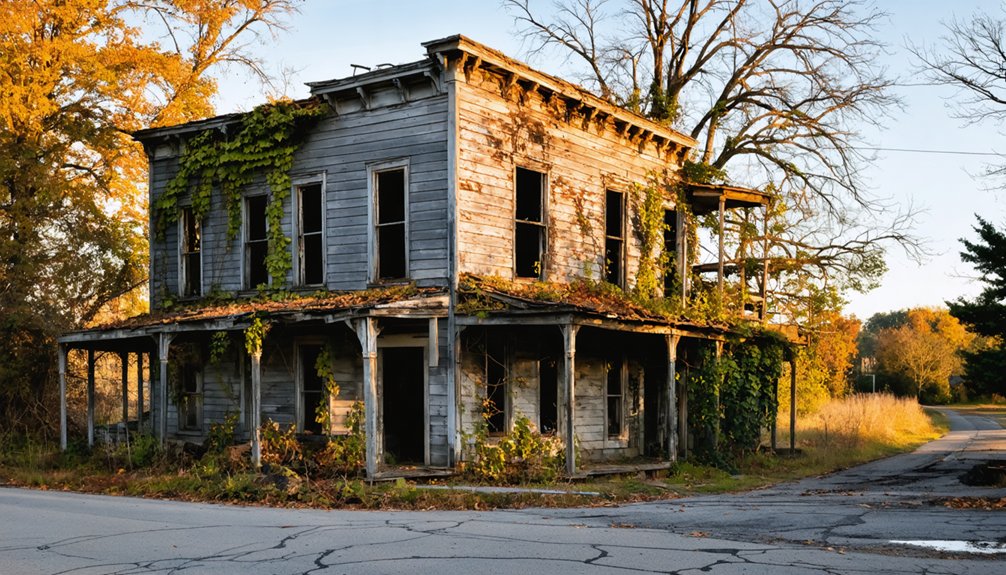
Walking through Banning, you’ll encounter a landscape frozen mid-collapse — crumbling foundations half-swallowed by vegetation, rusted relics scattered where industry once hummed, and roads that dead-end into nothing but overgrown memory.
Urban exploration here rewards the curious. You’ll spot collapsed wooden structures, their frames sagging under decades of neglect, alongside scattered household remnants that hint at ordinary lives abruptly interrupted.
Ghostly encounters feel almost inevitable when you’re standing inside a roofless shell, wind pushing through empty window frames.
The main road fractures into dirt paths leading toward former residential clusters, each bend revealing another forgotten artifact.
Bring sturdy boots — the terrain’s uneven and reclaimed by nature.
Banning doesn’t announce itself loudly; it whispers through broken walls, letting you piece its story together one relic at a time.
Where Banning Sits in Delaware’s Ghost Town Timeline
When you zoom out from Banning’s crumbling streets, you see it fits into a long tradition of Delaware communities that simply ceased to exist.
Delaware’s ghost town story actually starts back in the 1600s with Zwaanendael, a settlement wiped out within a year of its founding after a violent clash with Native Americans killed every last inhabitant.
Banning’s abandonment came much later, placing it closer to Glenville’s more recent decline in New Castle County, but the pattern of isolation, neglect, and eventual desertion remains strikingly familiar across every era.
Delaware’s Earliest Ghost Towns
Delaware’s ghost town history stretches back further than most people realize, and Banning fits into a timeline that’s both surprising and sobering.
From violent colonial erasure to quiet modern abandonment, Delaware decay tells a powerful story of communities that simply vanished.
Here’s how the timeline unfolds:
- Zwaanendael Settlement history marks Delaware’s first ghost town — wiped out within a year by a fatal clash with Native Americans, leaving nothing standing.
- Lana Del stories and Millbrook Village architecture represent mid-era abandonments, where structures survived but populations didn’t.
- Glenville relics and the haunting Walpack atmosphere reflect the most recent wave of desertion — communities fading through economic decline.
You’ll feel this progression deeply when Banning’s quiet streets finally come into view.
Banning’s Historical Placement
Banning doesn’t sit at either extreme of Delaware’s ghost town timeline — it occupies a quieter middle ground that makes it uniquely revealing.
Unlike Zwaanendael, which vanished violently within its first year, or Glenville, which faded recently in New Castle County, Banning dissolved gradually — leaving you space to interpret its silence.
That measured pace shaped Banning legends differently than trauma-driven abandonments did. You’ll find Banning folklore rooted not in catastrophe but in slow departure, economic drift, and forgotten choices.
That distinction matters when you’re exploring. You’re not walking through aftermath — you’re walking through erosion. Banning reminds you that communities don’t always end dramatically. Sometimes they simply stop.
Understanding where Banning falls chronologically sharpens everything you’ll notice once you arrive on-site.
Timeline Of Abandonment
Stretch Delaware’s ghost town history across a timeline and you’ll see Banning land somewhere in the middle — past the violent erasure of Zwaanendael in the early colonial period, but well before Glenville’s quiet retreat in New Castle County.
Understanding abandonment patterns gives Banning its real historical significance.
Consider these three timeline markers:
- Zwaanendael (1631) — Delaware’s first ghost town, destroyed within one year by conflict with Native Americans.
- Banning (mid-era) — gradual economic decline replacing sudden violence as the abandonment pattern.
- Glenville (most recent) — New Castle County’s quiet fade, just 8 miles southwest of its neighboring communities.
You’re not just visiting ruins when you explore Banning — you’re reading Delaware’s evolving story of how communities disappear across centuries.
The Best Season To Road Trip Through Banning
Late spring and early fall offer you the sweetest conditions for exploring Banning, with mild temperatures keeping the experience comfortable without summer’s oppressive heat or crowds.
You’ll want to time your visit to avoid peak tourist season in the Delaware Water Gap corridor, since heavy traffic can slow your road trip and thin your patience.
Clear skies and bare or thinning foliage in early spring and late October sharpen your sightlines into abandoned structures, letting you spot architectural details and ruins that dense summer greenery typically swallows whole.
Ideal Weather For Exploring
When planning a ghost town road trip through Banning, Delaware, timing is everything. The right weather transforms abandoned ruins into perfect photography spots and keeps your exploration comfortable.
Best Conditions for Exploring Banning:
1. Spring (April–May): Mild temperatures reveal emerging vegetation around crumbling structures, creating stunning contrasts ideal for capturing haunting images.
Local wildlife observations become rewarding as animals return to abandoned spaces.
2. Early Fall (September–October): Crisp air and golden foliage frame decayed buildings dramatically, offering photographers rich, atmospheric lighting without summer’s oppressive humidity.
3. Overcast Days: Diffused light eliminates harsh shadows, making ruins appear more dramatic and mysterious in photographs.
Avoid summer’s intense humidity and winter’s unpredictable freezing conditions.
You’ll navigate terrain more safely and capture Banning’s eerie character most authentically during these prime windows.
Avoiding Crowds And Delays
Though spring and fall offer ideal photography conditions, timing your road trip to Banning around crowd patterns and regional traffic will make the difference between a seamless adventure and a frustrating slog.
Weekday visits dramatically reduce congestion, giving you uninterrupted access to abandoned structures perfect for ghost town photography. Summer weekends draw curious tourists and history enthusiasts, crowding spots where local folklore comes alive through weathered signage and crumbling walls.
Arrive early morning when golden light enhances your shots and fellow explorers haven’t yet claimed prime vantage points. Delaware’s holiday weekends spike traffic considerably, so avoid Memorial Day and Labor Day stretches entirely.
Late October draws seasonal visitors chasing atmospheric scenery, but mid-week fall trips reward you with solitude, crisp air, and unhurried exploration of Banning’s haunting remnants.
Peak Visibility Season Tips
Timing your road trip around crowd-free windows gets you through the gate, but choosing the right season reveals Banning’s full visual potential. Each season transforms these ruins differently, shaping your photographic opportunities and deepening your connection to local legends.
- Late Autumn strips away foliage, exposing structural details and creating stark contrasts perfect for dramatic photography.
- Winter delivers low-angle sunlight that casts long shadows across abandoned foundations, amplifying the eerie atmosphere ghost town explorers crave.
- Early Spring brings mist and soft morning light, layering an almost mythical quality over crumbling walls that local legends describe as eternally haunted.
You’ll capture sharper images, experience fewer distractions, and feel the weight of Banning’s forgotten history most intensely during these seasonal sweet spots.
Getting To Banning: Routes, Road Conditions, and Parking
Reaching Banning requires a bit of planning, but it’s a straightforward drive once you know the route. From Wilmington, head southwest on Route 9, then cut through New Castle County’s back roads toward the site.
The final stretch involves unpaved lanes, so a vehicle with decent clearance handles it better than a standard sedan. Park along the roadside shoulder near the tree line — there’s no designated lot, so you’ll exercise judgment about placement.
Morning arrivals secure the best light for ghost town photography, casting dramatic shadows across the historical architecture still standing throughout the settlement.
Road conditions shift seasonally, so check recent weather before heading out. Spring mud and winter ice create genuine obstacles.
Download an offline map since cell service gets unreliable once you leave the main highway.
Delaware Ghost Towns Worth Pairing With Banning
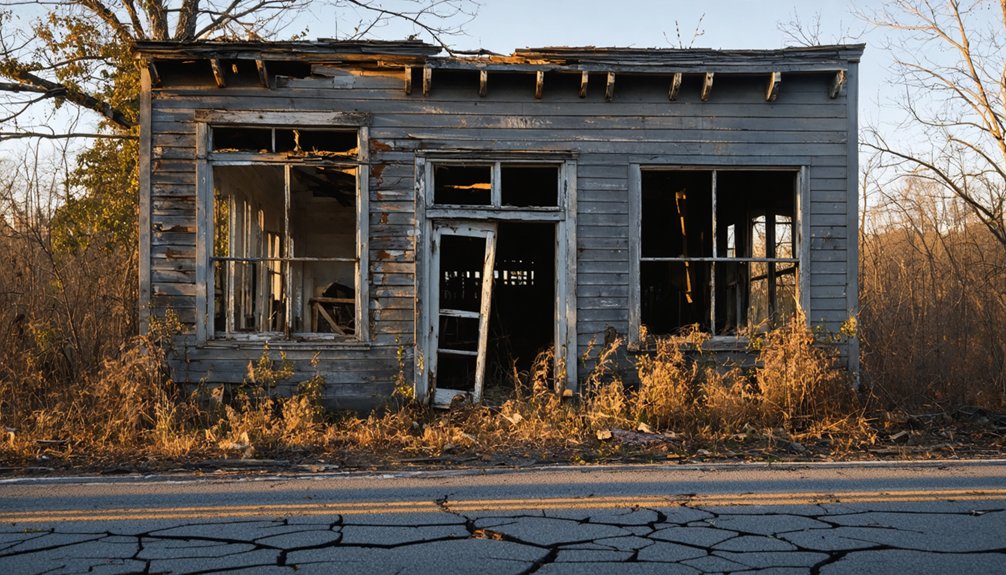
While Banning makes a compelling destination on its own, Delaware’s ghost town circuit rewards explorers who extend their itinerary.
These forgotten places carry haunting stories that deepen your appreciation for the region’s turbulent past.
These forgotten places whisper haunting stories, pulling you deeper into the region’s turbulent and shadowed past.
- Zwaanendael Settlement – Delaware’s earliest ghost town, wiped out within one year after a violent clash with Native Americans left no survivors. It’s a sobering stop.
- Glenville Ghost Town – Tucked 8 miles southwest in New Castle County, this recently abandoned community still holds relics reflecting regional decline.
- Lana Del Ghost Town – An enigmatic vanished settlement with layered histories that’ll pull you deeper into Delaware’s lost places.
Connecting these sites into one road trip transforms a single afternoon into an unforgettable journey through Delaware’s buried chapters.
The Gear and Supplies You Need Before Entering Banning
Exploring Delaware’s ghost towns rewards the prepared traveler, and Banning demands that preparation more than most. Before you step onto its overgrown paths, gather your essential gear carefully.
Wear sturdy boots with ankle support since uneven terrain and hidden debris will challenge every step. Bring a reliable flashlight with backup batteries because shadows swallow interior spaces completely.
Your safety supplies should include a basic first aid kit, water, and high-energy snacks for sustained energy. Cell service gets unreliable in isolated areas, so download offline maps beforehand.
Wear layered clothing appropriate for shifting weather conditions. A dust mask protects against disturbed materials inside deteriorating structures.
Tell someone your planned route and estimated return time. You’re exploring forgotten history, and smart preparation guarantees you actually return to tell the story.
Ghost Town Etiquette: How To Explore Banning Without Causing Damage
Banning’s crumbling structures and weathered relics have survived decades of abandonment, and your visit shouldn’t end that survival prematurely. Responsible exploration keeps this forgotten Delaware community accessible for future adventurers while honoring historical preservation principles.
Banning’s ruins have outlasted generations of neglect — don’t let one careless visit undo what time carefully preserved.
Follow these three non-negotiable rules:
- Don’t touch or remove anything — ghost town photography captures decay beautifully without disturbing artifacts. Let every rusted hinge and splintered beam stay exactly where time left it.
- Stay off unstable structures — collapsing floors and weakened walls aren’t worth the risk. Photograph from safe distances.
- Pack out everything you bring in — Banning’s eeriness comes from authenticity, not litter.
You’re a witness here, not an owner. Treat Banning’s remains with the same respect you’d want shown to your own history.
Why Banning Stands Apart From Every Other Delaware Ghost Town
Delaware has no shortage of ghost towns, but none of them hit quite like Banning. While Zwaanendael vanished violently within its first year and Glenville quietly faded from New Castle County, Banning occupies a completely different category.
You’ll find Banning mysteries layered beneath ghostly legends rooted in authentic local folklore, giving you something deeper than crumbling walls. Its abandoned structures carry genuine historical significance that preservation efforts have kept partially intact, creating rare photographic opportunities you won’t encounter elsewhere.
Eerie encounters feel earned here rather than manufactured. Hidden treasures — architectural details, forgotten artifacts, unmarked histories — reward curious explorers who move slowly and deliberately.
Follow smart exploration tips, respect what remains, and you’ll understand exactly why Banning stands alone among Delaware’s lost places.
Frequently Asked Questions
Are Guided Tours of Banning, Delaware Available for First-Time Visitors?
You’ll find guided exploration options available for first-time visitors to Banning, Delaware. These tours highlight the town’s historical significance, letting you uncover abandoned ruins, forgotten stories, and eerie remnants while freely experiencing this hauntingly enchanting ghost town destination.
Can Children Safely Explore the Ruins Found Throughout Banning?
Children can explore Banning’s ruins with proper safety precautions in place! You’ll want to supervise kids closely near unstable structures. Seek out kid-friendly activities like guided walks, ensuring your little adventurers enjoy this hauntingly enchanting experience safely and freely.
Is Overnight Camping Permitted Anywhere Near Banning Ghost Town?
Like a wanderer seeking shelter under open skies, you’ll find camping regulations vary near Banning. Check nearby facilities for designated spots where you can pitch your tent and embrace the ghost town’s haunting freedom overnight.
Are There Any Local Legends or Ghost Stories Specific to Banning?
You’ll find Banning’s haunting history rich with mystery, though specific legends remain elusive. Locals whisper about spectral sightings among the ruins, and you’re free to let your imagination wander through its eerily abandoned, freedom-inviting landscape.
Does Banning Ghost Town Appear in Any Films or Documentaries?
You won’t find Banning history featured prominently in major film locations or documentaries, but its haunting ruins could easily inspire filmmakers seeking authentic, forgotten Americana that speaks to your spirit of exploration and freedom.
References
- https://www.youtube.com/watch?v=AxFvQa1_els
- https://www.youtube.com/watch?v=ex8Hld_imPU
- https://delawarestateparks.reserveamerica.com/tourDetails.do?contractCode=DE&parkId=360113&tourId=7099&cat=1
- https://www.wanderthewest.com/threads/ghost-town-tour.15966/
- https://www.visitkeweenaw.com/listing/delaware-the-ghost-town/515/