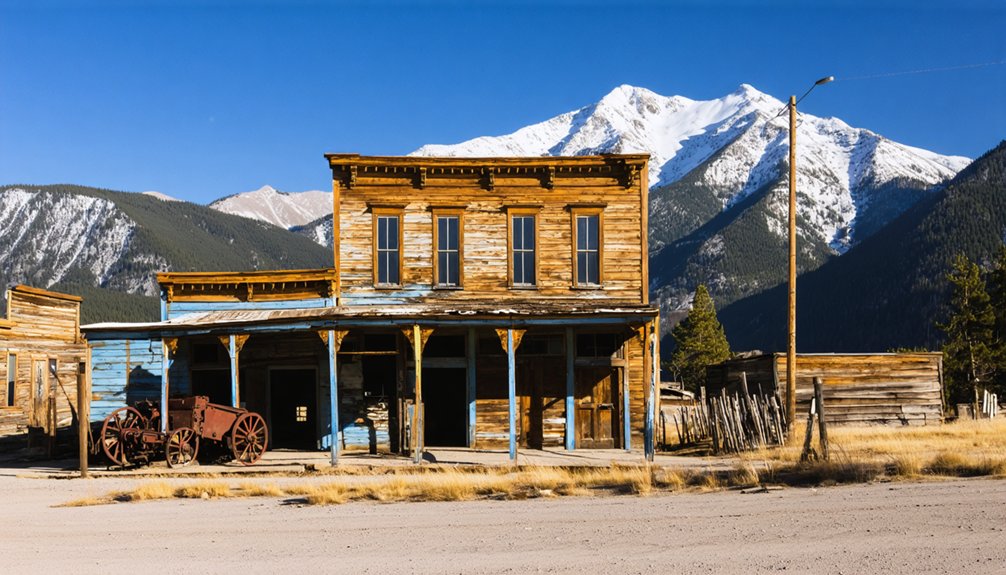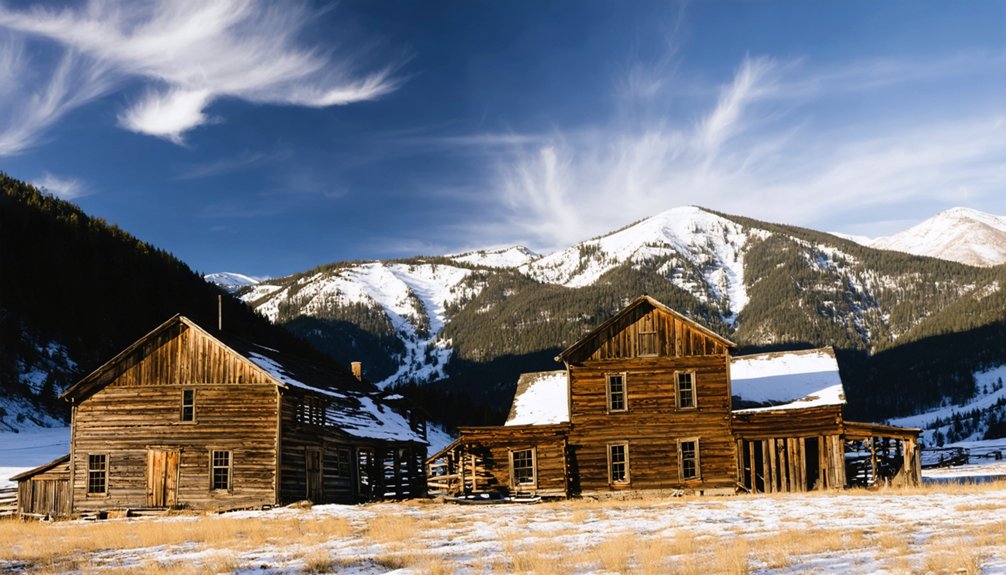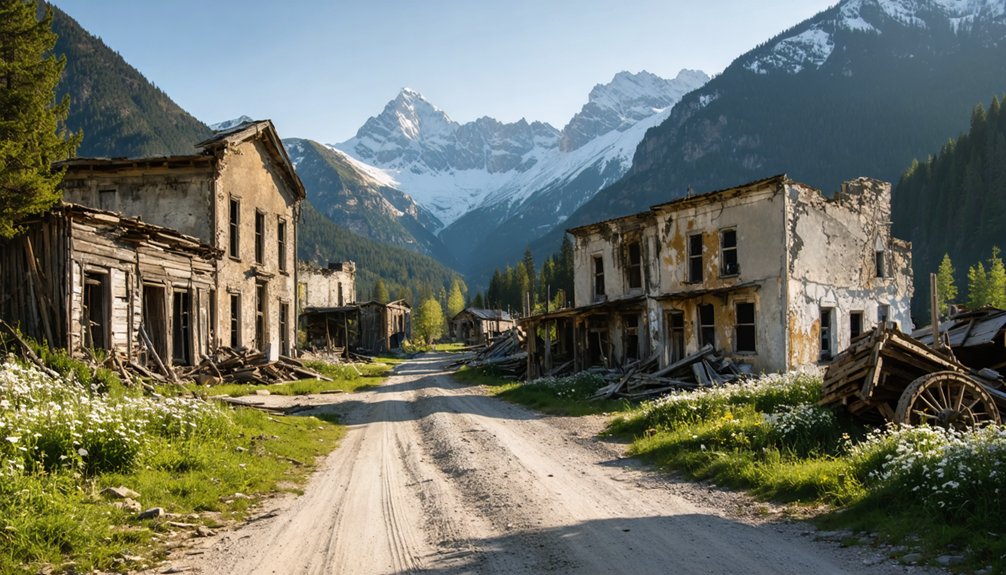
Planning a ghost town road trip to Marble, Colorado means trading smooth pavement for rocky mountain roads and exchanging the modern world for a place where history still breathes. You’ll explore crumbling remnants of a once-thriving boomtown, visit the iconic 1893 Crystal Mill, and navigate dramatic terrain that rewards the adventurous. Sitting at nearly 8,000 feet in the Crystal River Valley, Marble tells a story you can almost touch — and there’s much more to uncover.
Key Takeaways
- Marble, Colorado, sits at 7,992 feet in the Crystal River Valley, 58 miles southwest of Aspen, with roughly 300 current residents.
- Crystal Mill, built in 1893, is Colorado’s most photographed site and powered drills for silver and lead mining operations.
- A true 4×4 high-clearance vehicle is mandatory for the 5.4-mile rocky County Road 3 leading to Crystal Mill.
- The best visiting window runs July through early September, as roads typically open late May after snowmelt clears.
- Nearby attractions include Gothic Ghost Town, Yule Marble Quarry, Schofield Pass, and the Maroon Bells-Snowmass Wilderness for additional exploration.
Where Is Marble, Colorado and Why Visit?
Tucked into the upper Crystal River Valley at 7,992 feet, Marble, Colorado sits 28 miles south of Carbondale and 58 miles southwest of Aspen — remote enough to feel forgotten, yet rich enough in history to pull you back in time.
Marble history runs deep here: gold seekers stumbled upon white stone in 1873, and by 1912, over 1,400 residents called this mountain enclave home. The Colorado-Yule Marble Quarry produced stone shaping national landmarks like the Lincoln Memorial and Tomb of the Unknowns.
Beyond the town itself, six miles east along a rugged dirt road waits Crystal ghost town, where Crystal photography opportunities rival anywhere in Colorado.
If you’re chasing wide-open roads, raw landscapes, and authentic history, Marble delivers without apology.
How Marble Went From Gold Rush to Ghost Town
When you walk Marble’s quiet streets today, you’re retracing the steps of gold seekers who first stumbled upon brilliant white stone here in 1873.
By 1899, the town had incorporated, and by 1912, the Colorado-Yule Marble Company had driven the population to 1,400, supplying stone for landmarks like the Lincoln Memorial and the Tomb of the Unknowns.
Then the quarry closed, the workers left, and Marble joined the long list of Colorado ghost towns — frozen in the silence of its own boom-and-bust story.
Gold Rush Origins
Though gold lured the first prospectors into this high valley in 1873, it was the brilliant white stone beneath their boots that would define Marble’s destiny. That initial gold discovery set ambitions in motion, but the real treasure proved to be the vast marble deposits waiting to be unearthed.
By 1899, town development had transformed this remote mountain hollow into an incorporated community humming with purpose and possibility.
You can almost feel the energy of those early settlers — men who came chasing one dream and stumbled into another entirely. At its peak between 1912 and 1917, nearly 1,400 souls called Marble home.
They built lives here, carved into the mountainside, and created something lasting from stone that would eventually grace the Lincoln Memorial itself.
Quarry Boom And Bust
The Colorado-Yule Marble Company transformed this quiet mountain town into an industrial powerhouse, supplying the gleaming white stone that now lines the Lincoln Memorial and cradles the Tomb of the Unknowns.
Between 1912 and 1917, Marble’s population swelled to 1,400 residents, its quarry history defining an entire era of American monumental architecture.
Then the company closed, and silence reclaimed the valley. Population decline gutted the town almost overnight, leaving behind empty streets and fading ambitions.
What had once buzzed with quarry workers and machinery surrendered itself to the mountains.
The quarry reopened in 1990, breathing modest life back into Marble, now home to roughly 300 residents.
That resilience is exactly what draws road-trippers like you here today.
What the Crystal Mill and Ghost Town Look Like Today
When you arrive at Crystal Mill, you’re standing before an 1893 wooden powerhouse perched dramatically over a rushing waterfall — no wonder it’s reputed to be the most photographed site in Colorado.
The mill once harnessed the river’s force to power a compressor that drove drills into the surrounding Sheep and Bear Mountains, and you can still feel that industrial ghost in its weathered timbers.
Beyond the mill, several original buildings from the mining town remain standing, with rusted equipment and scattered remnants that make it easy to imagine the lives once lived here.
Crystal Mill’s Historic Features
Built in 1893, Crystal Mill still clings to its rocky perch above the Crystal River like it’s refusing to let go of the past. Its weathered wooden mill architecture—a skeletal frame balanced over rushing water—has earned it the title of Colorado’s most photographed site, and you’ll understand why the moment you see it.
The mill’s historical significance runs deeper than its striking appearance. It once harnessed river water to power a compressor, driving drills into the surrounding Sheep and Bear Mountains in pursuit of silver and lead.
You’re standing where men worked hard and lived harder. Several original buildings still rise from the ghost town grounds nearby, and scattered mining equipment tells the rest of the story without needing a single word.
Remaining Ghost Town Structures
Scattered across the site, a handful of original structures still stand against the mountain silence, their weathered timber and rusted hardware frozen somewhere between ruin and memory.
You’ll find mining remnants and old equipment scattered throughout the grounds, each piece quietly testifying to the town’s historical significance.
The ghost town architecture here isn’t polished or preserved — it’s raw, tilted, and honest about what time does to ambition.
Several buildings from the original settlement remain upright, their interiors open to wind and weather.
Walking among them, you’ll feel the weight of lives once lived at elevation, chasing silver and survival in equal measure.
There’s no curator here, no velvet rope — just open land, open sky, and the freedom to explore it on your own terms.
Do You Need a 4×4 to Reach Crystal Mill?
Yes, you’ll need a true 4×4 vehicle with high clearance to tackle the final stretch to Crystal Mill — the road isn’t just rough, it’s relentlessly rocky, narrow, and unforgiving.
Among the 4×4 essentials, understanding the terrain beforehand separates confident adventurers from stranded ones.
County Road 3 stretches 5.4 miles east from Marble before the real challenge begins. The route runs one way, meaning you’ll back up if another vehicle appears. No shortcuts exist here.
Prefer scenic routes on foot? The 9-mile round-trip hike delivers the same breathtaking reward without the mechanical risk.
Either way, pack extra water, snacks, and a jacket — mountain weather shifts without warning, and the road offers no bathrooms, no services, and absolutely no guarantees.
Can You Hike to Crystal Mill Without a Vehicle?
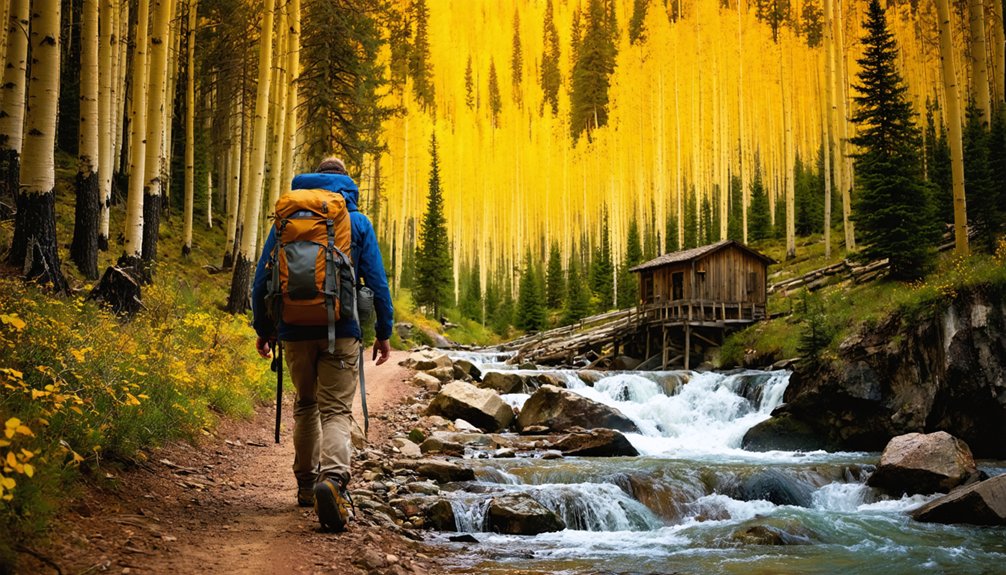
Leaving the 4×4 behind doesn’t mean leaving Crystal Mill out of reach. If you crave the journey on your own two feet, the 9-mile round trip offers one of Colorado’s most rewarding hiking trails. You’ll trace the same rocky path along the Crystal River that miners once traveled, breathing in the same thin mountain air that shaped this forgotten valley.
The hiking accessibility options here are surprisingly straightforward — lace up your boots in Marble and follow County Road 3 eastward. There are no bathrooms along the route, so plan accordingly.
Pack extra water, snacks, and a jacket because mountain weather shifts without warning. Arriving at that weathered 1893 mill on foot carries its own quiet triumph — earned, unhurried, and entirely yours.
How to Drive County Road 3 Safely
County Road 3 doesn’t forgive the unprepared. You’ll need a true 4×4 with high clearance — no exceptions. The driving conditions shift fast: loose rock, sheer drop-offs, and a road so narrow you’ll back up for oncoming traffic. That’s not drama; that’s Tuesday out here.
Follow these safety tips before you roll out: pack extra water, snacks, and a jacket. Mountain weather turns without warning, and there’s not a bathroom between Marble and Crystal’s lone outhouse.
The road runs roughly 5 miles of raw, unfiltered terrain — the kind that reminds you exactly why you came.
Go slow, stay alert, and respect the edge. The freedom out here is real, but it’s earned by those who drive it with their eyes wide open.
What to Pack Before Driving to Marble, Colorado
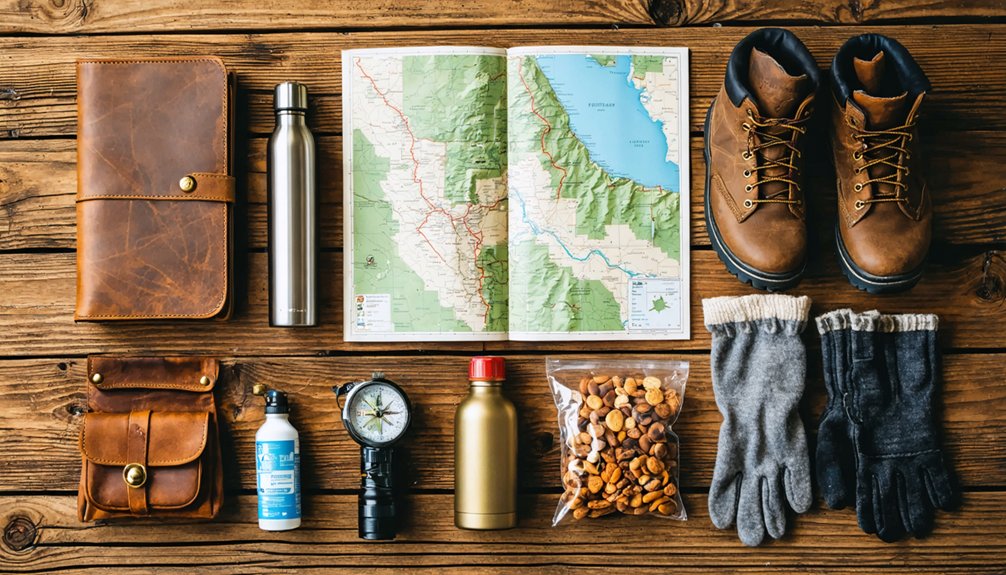
Getting the drive right is only half the equation — what’s in your vehicle matters just as much.
These roads don’t forgive unpreparedness, and the freedom to explore them comes with real responsibility.
Follow these packing essentials before you roll out:
- Extra water – Mountain air is dry, and the drive is longer than it looks on a map.
- Snacks – There’s nothing between Marble and Crystal.
- Layered jackets – Weather shifts fast above 8,000 feet.
- A full tank – No gas stations exist once you leave Carbondale.
- A recovery strap – Rocky terrain is unforgiving on tires.
Among the most overlooked driving tips: tell someone your route.
These canyons are beautiful, remote, and indifferent to cell service.
When Is the Crystal Mill Road Open and Passable?
Timing your visit to Crystal Mill isn’t a minor detail — it’s the difference between a memorable road trip and a frustrating turnaround.
Crystal Mill accessibility depends almost entirely on seasonal road conditions, which shift dramatically across the calendar year. The road typically opens in late May or early June, once snowmelt recedes enough to make the rocky 4×4 route passable.
July through early September offers the most reliable window — dry enough to navigate, wild enough to feel like genuine adventure. By October, early snowfall can close the route without warning.
Spring visits carry serious risks; runoff turns sections into muddy, unstable terrain. Always check current road conditions with local rangers before you leave Marble. The mountains don’t wait for anyone.
What Else Is Worth Seeing Near Marble and Crystal?
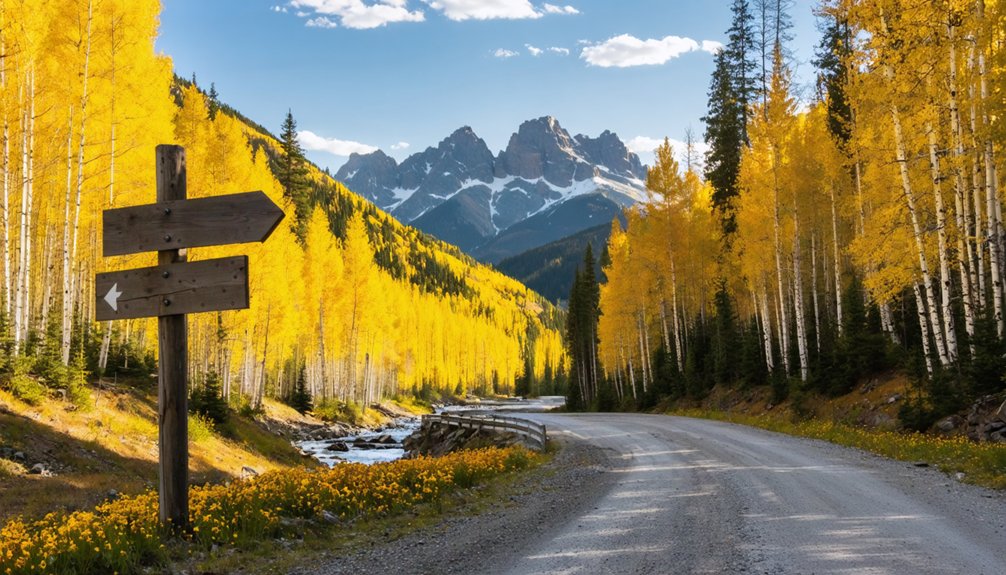
Once you’ve made it to Crystal, the surrounding landscape rewards curiosity beyond the mill’s famous silhouette.
History and wilderness converge here, offering natural attractions and historic landmarks that deserve your attention.
History and wilderness converge here, where natural wonders and landmark sites reward every curious traveler.
Nearby stops worth adding to your itinerary:
- Gothic Ghost Town – a hauntingly preserved settlement along Forest Road 317, rich with cultural heritage and photography spots
- Yule Marble Quarry – the source of stone shaping the Lincoln Memorial, connecting you to living American history
- Schofield Pass – dramatic scenic viewpoints where outdoor activities and local wildlife sightings reward the adventurous
- Maroon Bells-Snowmass Wilderness – pristine backcountry framing the valley, perfect for hiking and immersive natural exploration
Seven sites within one square mile of Marble appear on the National Historic Register, making every direction you turn worth exploring.
Frequently Asked Questions
Are There Any Guided Tours Available for Visiting Crystal Mill?
The knowledge doesn’t mention guided tour options, but you can explore Crystal Mill’s rich history independently — hike the 9-mile round trip or drive your 4×4, breathing in that untamed freedom the open road’s always promised you.
Is Camping Allowed Near Crystal Ghost Town or Along County Road 3?
The knowledge doesn’t explicitly cover camping regulations, but you’ll find nearby campsites waiting like hidden treasures! Explore the surrounding Maroon Bells-Snowmass Wilderness for your freedom fix, and always verify current camping regulations before hitting County Road 3’s rugged, unforgettable terrain.
What Is the Best Time of Year to Visit Marble, Colorado?
Summer’s your sweet spot for seasonal activities, when wildflowers carpet mountain roads and crystal-clear skies invite exploration. Weather considerations matter though — pack layers, as afternoon storms roll in fast, turning those rugged 4×4 trails into slick, unpredictable adventures.
Are Pets Allowed on the Hiking Trail to Crystal Mill?
The knowledge base doesn’t confirm pet-friendly trails to Crystal Mill, so check local regulations before heading out. You’ll want to prioritize hiking safety, keeping your furry companion close on those rugged, wild, breathtaking 9-mile mountain paths.
Is There Cell Phone Service Along County Road 3 to Crystal?
Don’t count on cell service coverage along County Road 3—reception issues are real out here. You’re venturing into raw, untamed wilderness, where the mountains reclaim the silence. Embrace it, but tell someone your plans first.
References
- https://www.facebook.com/groups/999313021058041/posts/1617130912609579/
- https://www.uncovercolorado.com/ghost-towns/crystal/
- https://www.youtube.com/watch?v=H29KBACbOFw
- https://www.islands.com/1975215/secret-colorado-abandoned-mine-ghost-town-hidden-marble-mountain-waterfall-views-crystal/
- https://www.pigseye.com/hj/USA/ColoUtah2014/index.htm
- http://www.bootjockey.org/index.php/destinations/co/co_cent/marble/marble_info
- https://adventuresofmel.com/overlanding-crystal-mill-marble-colorado/
- https://thegenxtravels.com/2021/01/26/jeeping-to-crystal-mill-colorado/
- https://www.aspentrailfinder.com/crystal-city/
- https://marblecolorado.org/attractions/town-of-crystal/