Planning a ghost town road trip to Milton, Brown County, Illinois means tracking down a settlement that’s been swallowed by time since the 1800s. You’ll navigate rural roads using coordinates 39.9117° N, 90.7865° W, where native flora now covers what ambition once built. Visit in late spring or early fall for the best conditions. Confirm land ownership before stepping foot on the property. There’s far more to uncover about making this journey worthwhile.
Key Takeaways
- Milton, founded in 1836 in Brown County, Illinois, is a ghost town accessible via GPS coordinates 39.9117° N and 90.7865° W.
- Visit in late spring or early fall for optimal visibility, avoiding midsummer when dense vegetation obscures the site.
- Confirm land ownership with the Brown County recorder’s office before visiting, as most surrounding land is privately held.
- Bring sturdy boots, water, a charged phone, and a printed map, as rural roads lack services and reliable cell coverage.
- Respect exploration ethics by leaving foundations and artifacts undisturbed to preserve Milton’s historical significance for future visitors.
Why Milton, Illinois Belongs on Your Ghost Town List
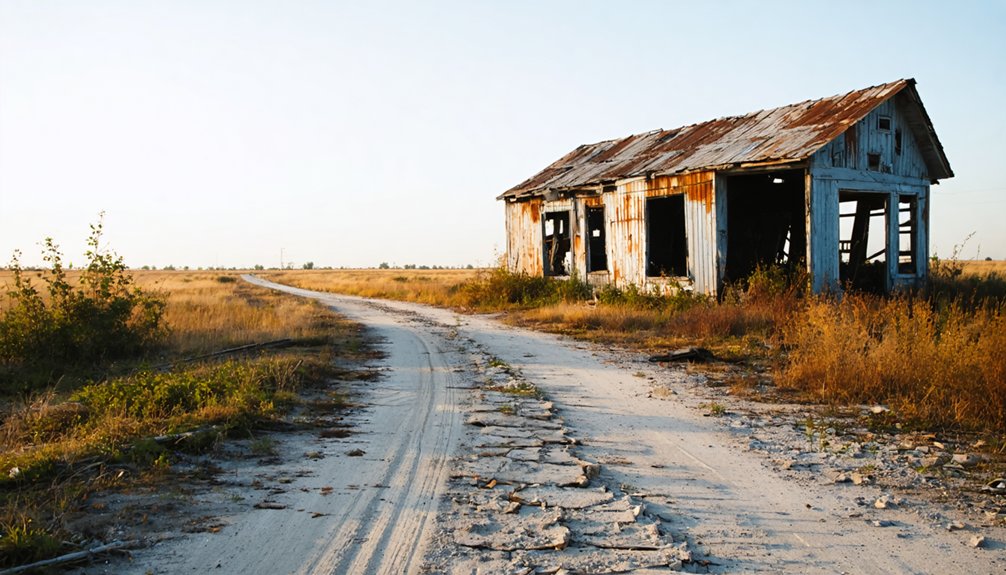
Milton, Illinois isn’t just another dot on an old census map — it’s a layered piece of frontier history quietly dissolving back into the Illinois earth. Founded in 1836 by Lewis Gay and William C. Ralls, this Brown County settlement once bustled with ambition, sitting four miles from the Illinois River on McKee Creek.
Its historical significance runs deep — early promoters sold lots promising prime navigation access, and residents built lives around that vision. Then the economic tides shifted, transportation routes bypassed the town, and Milton faded into silence.
For ghost town exploration enthusiasts, that silence speaks volumes. You’ll find foundations swallowed by native flora, land reclaimed by time, and a story worth chasing. Milton earns its place on your list.
How to Find Milton in Brown County
Once you’ve decided Milton deserves a spot on your road trip itinerary, finding it takes a little preparation.
Milton isn’t the easiest destination to find, but a little preparation makes the journey worth it.
For accurate ghost town navigation, plug coordinates 39.9117° N and 90.7865° W into your GPS before leaving home. Milton sits in Brown County, four miles from the Illinois River on McKee Creek, straddling sections 31 and 32 of local land surveys.
Expect rural roads with little to no modern signage marking the site. The area’s historical significance traces back to August 26, 1836, giving you context for what you’re searching for.
Bring a printed map as a backup since cell service can be unreliable. Verify land ownership status beforehand, since the surrounding acreage remains privately held agricultural property.
What You’ll See When You Arrive at Milton?
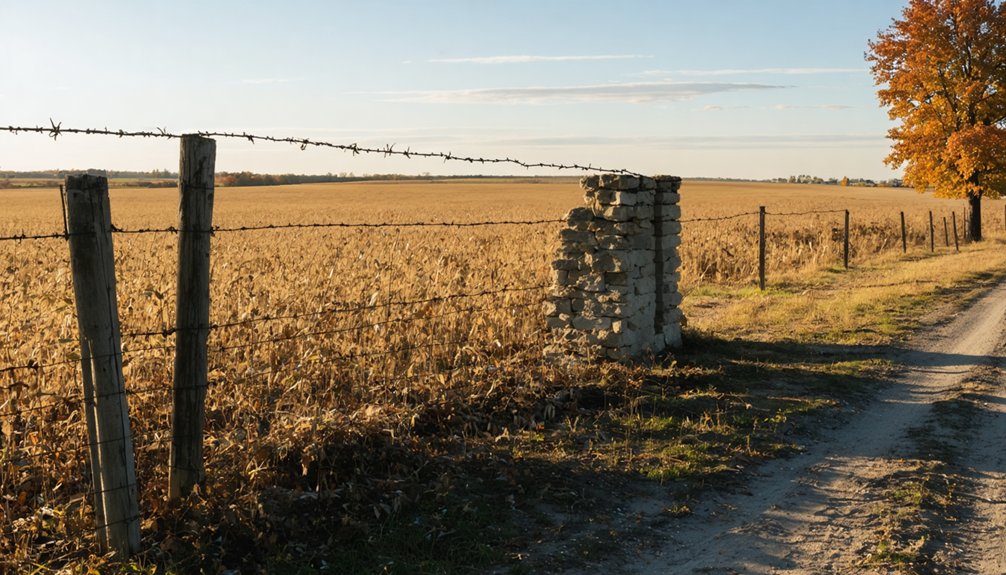
Arriving at Milton, you’ll find little evidence that a thriving settlement once stood here. Nature has reclaimed the land almost entirely, with native flora covering what were once foundations, pathways, and gathering spaces.
You’ll spot scattered debris and remnants of old structures if you look carefully, but the vegetation dominates every corner.
Despite the silence, the historical significance of this 1836 settlement remains powerful. Lewis Gay and William C. Ralls once envisioned a prosperous river-access community here, and standing on this ground connects you directly to that forgotten ambition.
Ghost town exploration rewards patience and sharp eyes. Walk slowly, photograph the foundations you uncover, and let the overgrown landscape tell its story.
Milton doesn’t announce itself — you’ll have to read between the weeds to truly see it.
Other Brown County Ghost Towns Worth Combining
Brown County holds several other ghost towns worth adding to your route, so you won’t have to travel far to stretch your visit into a full day of exploration.
You’ll find these abandoned settlements clustered across the county’s rural landscape, many sharing the same economic collapse and migration patterns that erased Milton from the map.
Planning a multi-stop route means researching coordinates and land ownership in advance, so you can move efficiently between sites without losing time to dead ends or restricted access.
Nearby Abandoned Illinois Settlements
While Milton makes for a compelling destination on its own, pairing it with other nearby Brown County ghost towns can transform your trip into a fuller picture of rural Illinois’s forgotten past.
Brown County’s old census maps reveal clusters of abandoned settlements scattered across the same rural landscape you’ll already be driving through. Each carries its own historical significance, reflecting the same economic pressures and migration patterns that erased Milton from the map.
You won’t find tourist infrastructure at these sites, so bring your coordinates, keep your tank full, and respect private land boundaries.
Moving between these forgotten communities gives you a rare, unfiltered look at how entire ways of life simply dissolved, leaving behind only overgrown foundations and silence where neighborhoods once stood.
Regional Ghost Town Clusters
Scattered across Brown County’s rural grid, ghost towns like those found on old Illinois census maps cluster close enough together that you can hit several in a single day’s drive without backtracking.
Each settlement carries its own ghost town history, yet they share strikingly similar stories of economic decline — agriculture dried up, transportation routes shifted, and residents moved on. That pattern repeats itself across the county’s landscape like a worn-out template.
You’ll find foundations, overgrown lots, and reclaimed fields at nearly every stop. Plotting these clusters on a single route means you’re not just visiting Milton; you’re reading an entire regional chapter of human ambition and abandonment.
Use old census maps alongside modern GPS coordinates to build a loop that connects these vanished communities efficiently.
Planning Multi-Stop Routes
Once you’ve locked in Milton’s coordinates, building a multi-stop route through Brown County becomes straightforward — pull up old Illinois census maps, cross-reference them with GPS waypoints, and you’ve got the backbone of a full day’s drive.
Multi-stop planning works best when you cluster nearby abandoned settlements geographically rather than chasing them chronologically. Route optimization matters here because rural Brown County roads aren’t always well-maintained, so minimizing backtracking saves both time and fuel.
Stack your stops by proximity, note which sites sit on private land, and confirm access beforehand. Bring printed maps as backup since cell signals drop in these rural corridors.
Each additional ghost town adds historical context, making the overall trip richer and transforming a single-site visit into a genuinely immersive exploration of Illinois’s forgotten settlements.
When to Visit Milton for the Best Experience
Late spring and early fall offer you the clearest views of Milton’s sparse foundations before summer vegetation fully reclaims the land or winter mud makes rural roads impassable.
You’ll want to arrive in the morning when soft light enhances photography and cooler temperatures make walking the overgrown site more comfortable.
Avoid midsummer visits, as dense native flora will obscure much of what little structural evidence remains.
Best Seasons To Visit
Though Milton sits quietly abandoned year-round, the season you choose to visit dramatically shapes your experience of this Brown County ghost town.
Spring and fall deliver the best weather for exploration, offering mild temperatures and manageable terrain. The ideal months fall between April through May and September through October, when overgrowth stays manageable enough to reveal foundations and scattered remnants beneath thinning vegetation.
Summer brings lush greenery that conceals much of the site while heat and humidity make walking uncomfortable.
Winter strips the landscape bare, exposing structural remains clearly, but muddy rural roads can trap unprepared vehicles.
Fall strikes the perfect balance — crisp air, visible ruins, and golden-lit photography opportunities that capture Milton’s haunting stillness beautifully.
Plan accordingly, and you’ll leave with both discoveries and stunning documentation.
Weather Considerations For Travelers
Weather shapes every ghost town visit, and Milton’s rural Brown County setting makes the forecast more than just background noise — it directly affects road conditions, site visibility, and your overall safety.
Understanding weather patterns before you leave home keeps your trip from turning into a muddy, miserable detour.
Seasonal variations hit hard out here. Summer brings intense heat and humidity, making overgrown terrain exhausting to navigate.
Spring and fall offer milder temperatures but unpredictable rainfall that turns dirt roads slick.
Winter delivers frozen ground that’s actually firm underfoot, though ice creates driving hazards on rural routes.
Always check a reliable forecast 24 to 48 hours before departure.
Rural Illinois offers no shelter, no services, and no rescue if conditions shift fast against you.
Ideal Time Of Day
During the golden hours of early morning, Milton reveals itself at its most photogenic — soft light catches the overgrown foundations, shadows define structural remnants, and the rural silence feels genuinely undisturbed.
You’ll find prime lighting conditions between sunrise and mid-morning, when directional light creates depth across scattered debris and reclaimed vegetation.
Late afternoon offers a second window of ideal photo opportunities, as golden-hour warmth bathes the landscape before darkness limits visibility and navigation.
Midday harsh overhead light flattens textures, making structural details harder to capture meaningfully.
Avoid arriving after dusk — private land ownership makes nighttime visits legally risky, and uneven terrain becomes genuinely dangerous without adequate light.
Plan your arrival around natural light cycles, and you’ll leave Milton with compelling documentation of its quietly disappearing past.
What to Know Before Walking an Abandoned Site
Before you set foot on the grounds of a ghost town like Milton, you’ll want to confirm whether the land is privately owned—because trespassing carries real legal consequences.
Most of Milton’s remaining land is privately held, so contact the Brown County recorder’s office before you go.
Beyond legal safety precautions, practice solid exploration ethics by leaving everything exactly as you find it.
Don’t disturb foundations, remove artifacts, or damage overgrown vegetation. These remnants are irreplaceable pieces of history.
Leave Milton’s foundations, artifacts, and vegetation untouched—these remnants are irreplaceable pieces of history.
Wear sturdy boots since uneven terrain, hidden debris, and unstable structures create real injury risks.
Bring water, a charged phone, and a paper map since cell service is unreliable in rural Brown County.
Respecting the site protects both you and the story Milton still tells.
Frequently Asked Questions
Who Originally Founded Milton and When Was It Officially Established?
Lewis Gay and William C. Ralls founded Milton, shaping its Founding History on August 26, 1836. You’ll discover these Early Inhabitants sold lots near the old Johnson Mill, sparking a bold, free-spirited settlement dream.
What Are the Exact GPS Coordinates for Navigating to Milton?
You’ll find Milton’s ghost town history waiting at 39.9117°N, 90.7865°W. Coincidentally, these navigation tips align perfectly with your adventurous spirit — plug in the coordinates, embrace the open road, and discover Illinois’s forgotten past freely.
Is the Land at Milton Privately Owned or Open to Public Access?
The land at Milton’s private ownership means you don’t have open public access. Before you explore, check ownership status carefully to respect boundaries and avoid trespassing, ensuring your ghost town adventure stays both thrilling and legally sound!
What Elevation Does the Milton Ghost Town Site Sit At?
You’ll find Milton’s ghost town significance sits at roughly 614 feet above sea level, where historical landmarks once thrived. That elevation frames a compelling rural landscape, letting you truly appreciate this forgotten settlement’s enduring, mysterious presence.
What Time Zone Does Milton Brown County Illinois Observe?
Like a clock frozen in time, Milton observes Central Standard Time (CST) year-round. You’ll find no time zone differences here, honoring the historical significance of this ghost town’s timeless, abandoned spirit awaiting your exploration.
References
- https://en.wikipedia.org/wiki/Milton
- https://en.wikipedia.org/wiki/List_of_ghost_towns_in_Illinois
- https://drloihjournal.blogspot.com/2022/09/lost-towns-of-illinois-milton-illinois.html
- https://kids.kiddle.co/List_of_ghost_towns_in_Illinois
- https://en.wikipedia.org/wiki/Category:Ghost_towns_in_Illinois
- https://www.wikiwand.com/en/articles/List_of_ghost_towns_in_Illinois
- https://sites.rootsweb.com/~iltttp/ghosttowns.htm
- https://www.onlyinyourstate.com/trip-ideas/illinois/alton-haunted-small-town-il
- https://www.youtube.com/watch?v=93k0qtvzkn4&vl=en-US
- http://cantontornado36.blogspot.com/2017/04/fulton-county-ghost-towns-part-2.html