Brookville, Kansas is a true ghost town frozen in the late 19th century, with dusty unpaved streets, hand-cut sandstone buildings, and a population of just 27. It’s only 15 miles from Salina via Kansas Highway 140, making it an easy road trip stop. You’ll want to bring water, closed-toe shoes, and a fully charged phone before exploring. There’s far more to this forgotten railroad boomtown than first meets the eye.
Key Takeaways
- Brookville, Kansas, is located 15 miles from Salina via Kansas Highway 140, making it an easy 20-minute drive.
- Visit during late spring or early fall to avoid extreme summer heat and harsh winter conditions.
- Pack closed-toe shoes, sealed bags, extra water, and a fully charged phone due to inconsistent cell coverage.
- Explore sandstone buildings and the historic Brookville Hotel, which reflect the town’s late 19th-century commercial peak.
- Take a leisurely pace through unpaved streets, engaging with preserved structures and Brookville’s rich railroad history.
What Makes Brookville, Kansas a True Ghost Town?
Once a thriving railroad town with nearly 300 residents, Brookville has dwindled to just 27 inhabitants, earning its reputation as one of Kansas’s most authentic ghost towns. Its ghost town characteristics are impossible to miss — unpaved, dusty streets lined with sandstone buildings and wooden storefronts frozen in the late 19th century.
You’ll find no bustling commerce here, just whispers of a past shaped by the Kansas Pacific Railroad‘s 1867 arrival. The town’s historical significance runs deep, from its 1873 incorporation to the long-silent bank and telegraph office that once served a growing community.
Walking these streets, you’re stepping into a living time capsule. Brookville doesn’t perform its history — it simply exists within it, raw and unrestored.
How Brookville Went From Railroad Boomtown to Near-Abandoned
When the Kansas Pacific Railroad drove its tracks through the area in 1867, Brookville exploded into existence almost overnight. Railroad impact transformed empty plains into a commercial hub featuring stores, telegraph offices, and a newspaper by 1879.
Then the momentum reversed.
Then the railroad moved on, and Brookville had no answer for the silence that followed.
Three forces drove Brookville’s population decline:
- Railroad route shifts redirected commerce toward larger nearby cities like Salina.
- Agricultural mechanization eliminated jobs that once sustained rural Kansas towns.
- Economic consolidation shuttered the local bank and businesses, leaving residents little reason to stay.
From 280 residents recorded in 1910, Brookville shrank to roughly 27 people today.
What you’ll find now are sandstone buildings standing silent on unpaved streets — authentic remnants of a town that once had genuine momentum and lost it completely.
What’s Still Standing on Brookville’s Historic Streets?
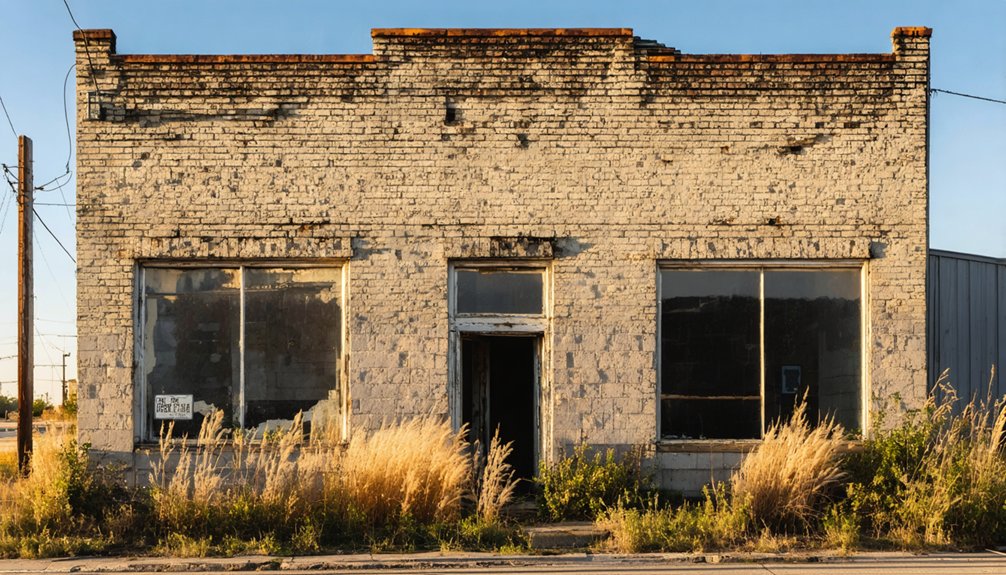
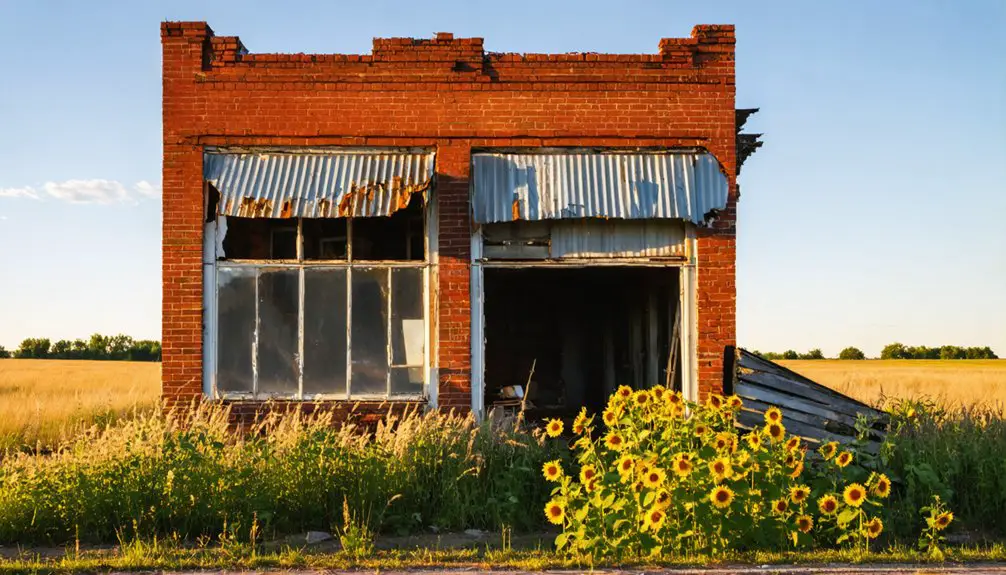
When you walk Brookville’s unpaved streets, you’ll find sandstone buildings that have stood for over a century still anchoring the townscape alongside wooden storefronts that retain their original late 19th-century facades.
The preserved architecture gives you a rare, unfiltered glimpse into what a Kansas railroad town actually looked like during its peak years.
Most significantly, the Brookville Hotel rises as the town’s landmark centerpiece, drawing visitors who want more than just photographs of empty plains.
Sandstone Buildings Still Standing
Several sandstone buildings still line Brookville’s historic streets, standing as quiet monuments to a town that peaked over a century ago. Their sandstone history runs deep, reflecting both the architectural significance of 19th-century Kansas craftsmanship and the raw determination of early settlers who built to last.
When you walk these unpaved streets, you’ll notice details worth pausing over:
- Thick sandstone walls that have withstood Kansas weather for more than 150 years
- Original stonework patterns revealing hand-cut craftsmanship unavailable in modern construction
- Preserved facades that transport you directly into Brookville’s commercial peak era
You won’t find these structures behind velvet ropes or admission booths. They’re simply there, open to explore, quietly holding their ground against time.
Preserved Wooden Storefronts
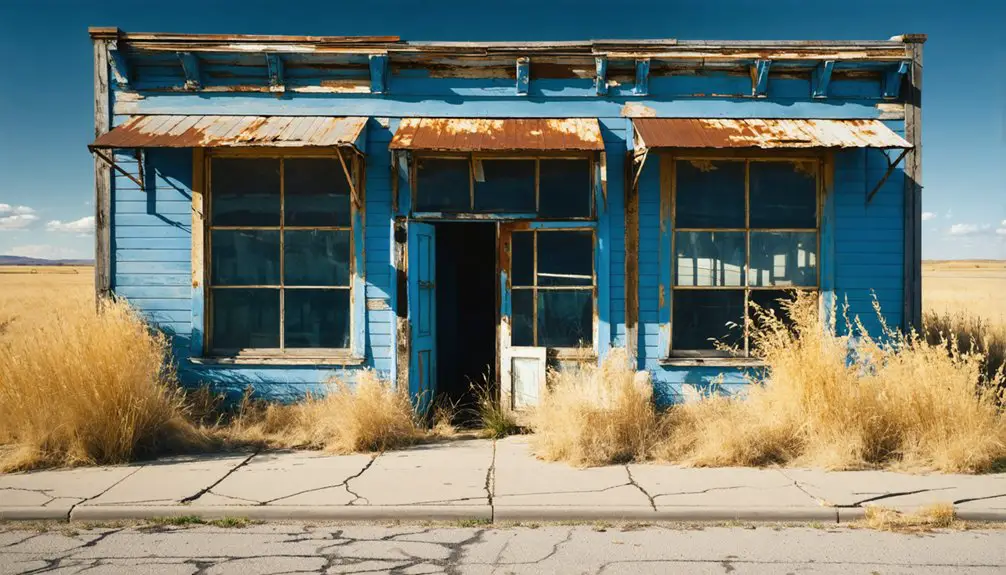
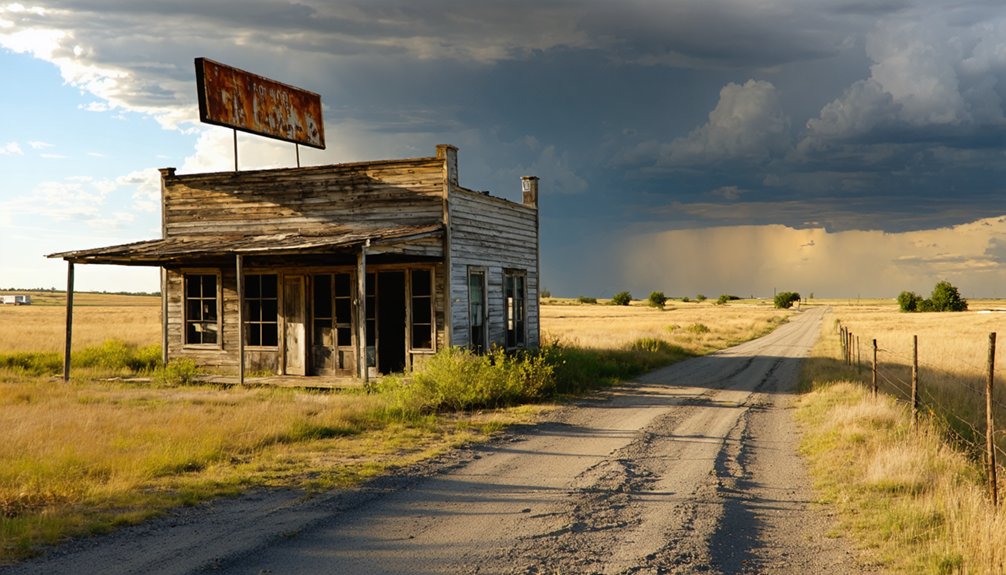
Alongside the sandstone structures, a few wooden storefronts still hold their original appearance on Brookville’s historic streets, their weathered facades carrying the visual language of late 19th-century Kansas commerce.
You’ll notice how their architectural significance becomes immediately apparent — these aren’t reconstructed replicas but authentic remnants of a working frontier town. Every warped plank and faded trim detail reflects genuine historic preservation without the polish of a museum exhibit.
Walking these unpaved streets, you’re seeing commerce frozen in time. The storefronts stand largely as merchants left them, offering you a raw, unfiltered connection to Kansas’s settlement era.
No velvet ropes, no admission fees — just open streets and honest history. For travelers craving authentic discovery over manufactured experience, Brookville’s wooden storefronts deliver exactly that freedom.
The Brookville Hotel
Standing at the heart of Brookville’s historic streetscape, the Brookville Hotel serves as the town’s most prominent surviving landmark. Its enduring presence reminds you that this near-ghost town once supported a full, functioning community.
Its hotel architecture tells a story that no history book quite captures — you can read Brookville history simply by studying its walls.
When you visit, keep these highlights in mind:
- Architectural details — Notice original construction elements that reflect late 19th-century building traditions.
- Historical context — The hotel stood during Brookville’s commercial peak, witnessing the town’s rise and gradual decline.
- Landmark status — Travel guides consistently recommend it as your primary stop on any ghost town exploration.
Step inside this living relic and let Brookville’s past speak directly to you.
The Brookville Hotel and Its Role in the Town’s Survival
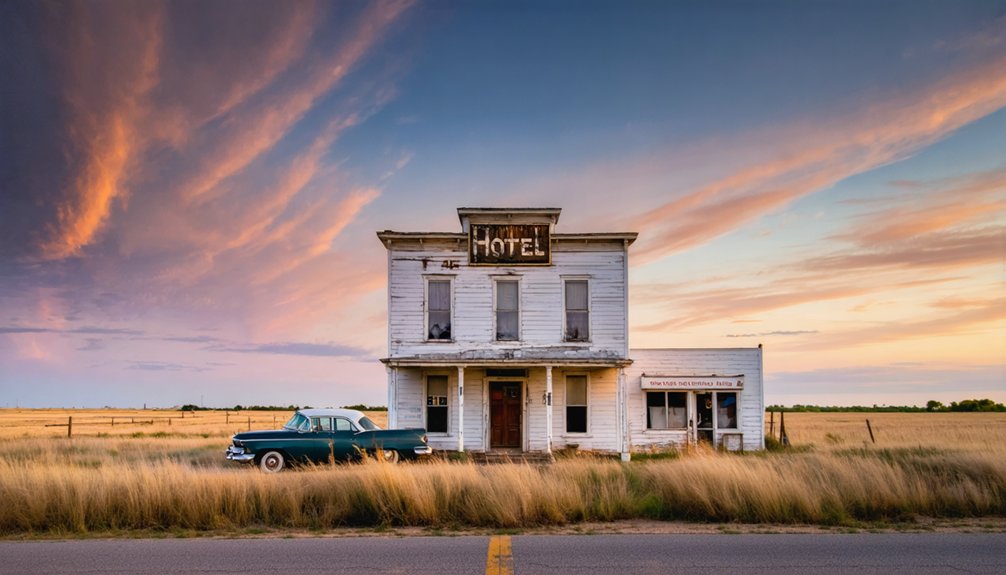
As you walk Brookville’s quiet streets, the Brookville Hotel stands out as the town’s most enduring landmark, anchoring a community that time has nearly swallowed whole.
It’s served as a cultural touchstone, keeping Brookville on the map long after its population dwindled to just a few dozen residents.
When you visit, you’ll quickly see how this single structure carries the weight of the town’s identity and its fragile claim to survival.
Hotel’s Historical Significance
The Brookville Hotel has long served as the town’s anchor, giving visitors a reason to make the drive down Kansas Highway 140 when little else remains. Its hotel architecture reflects the rugged simplicity of late 19th-century Kansas, and its historical preservation keeps that era alive for anyone willing to explore.
Here’s why the hotel matters:
- Living history — It connects you directly to Brookville’s commercial peak, when the town supported a bank, telegraph office, and thriving storefronts.
- Architectural authenticity — Original construction details remain intact, giving you an unfiltered look at frontier-era building craftsmanship.
- Cultural anchor — Without it, Brookville would likely exist only on ghost town lists, forgotten entirely.
You’re not just visiting a building — you’re stepping into a story that Kansas nearly lost.
Preserving Brookville’s Legacy
Without the Brookville Hotel anchoring this fading Kansas settlement, you’d likely drive past without a second glance. This landmark does more than serve meals — it’s actively holding Brookville’s identity together through genuine historical preservation efforts that keep the town’s story alive.
You’ll notice that community engagement drives much of what sustains Brookville today. Local advocates and visitors alike recognize that sandstone buildings and wooden storefronts don’t survive neglect — they require intentional care and consistent attention.
The hotel draws curious travelers who then explore surrounding streets, creating economic momentum that supports preservation work.
When you visit, you’re participating in something meaningful. Your presence signals that small, nearly forgotten places deserve recognition. Brookville’s survival isn’t accidental — it reflects deliberate choices made by people who refused to let history quietly disappear.
How to Get to Brookville From Salina
Getting to Brookville from Salina takes just a short 15-mile drive southwest, and you’ll reach it by heading out on Kansas Highway 140. Among the Salina routes heading into open Kansas plains, this one delivers you straight into ghost town history without complicated turns or backtracking.
Here’s what to expect along the way:
- Flat, open terrain lines the entire drive, giving you unobstructed views of central Kansas agricultural land.
- Kansas Highway 140 runs directly into town, making navigation effortless from Salina’s city center.
- The drive takes roughly 20 minutes, leaving you plenty of daylight to explore sandstone buildings and wooden storefronts.
You’ll arrive ready to walk unpaved streets and experience a living snapshot of 19th-century Kansas life firsthand.
Best Time of Year to Visit Brookville, Kansas
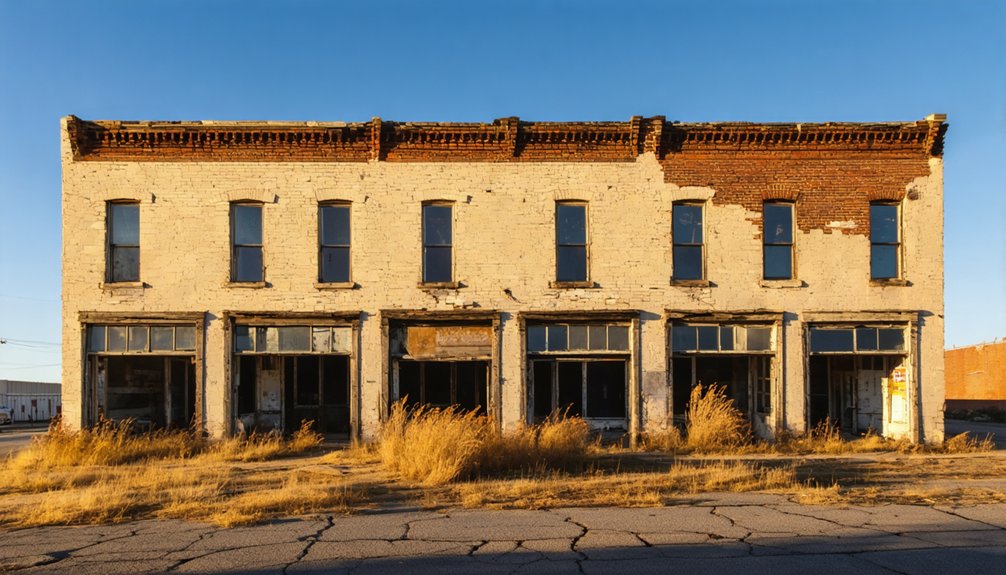
Spring and fall offer you the most comfortable conditions for exploring Brookville’s dusty, unpaved streets, with mild temperatures keeping the experience enjoyable rather than grueling.
You’ll want to avoid midsummer visits, when central Kansas heat can push temperatures well above 90°F and make walking the historic sandstone district genuinely unpleasant.
Brookville sees its modest peak in visitor traffic during autumn, when cooler air and golden plains scenery make the ghost town’s weathered storefronts feel especially atmospheric.
Ideal Visiting Seasons
Late spring and early fall offer the most rewarding conditions for exploring Brookville’s dusty streets and weathered sandstone buildings.
Mild temperatures make walking the unpaved roads comfortable, and the open Kansas plains come alive with seasonal attractions that enhance your visitor experiences.
Plan your trip around these ideal windows:
- Late April through May – Wildflowers dot the surrounding plains, temperatures hover between 60–75°F, and harsh summer heat hasn’t arrived yet.
- September through October – Cooler air returns, harvest season transforms the agricultural landscape, and golden light flatters your photographs of wooden storefronts.
- Avoid mid-summer – July and August bring intense heat exceeding 95°F, making extended outdoor exploration genuinely uncomfortable on Brookville’s shadeless streets.
You’ll capture the town’s haunting atmosphere best during these shoulder seasons.
Weather Considerations For Travel
Kansas weather can shift dramatically, so you’ll want to time your Brookville visit carefully. Central Kansas weather patterns mean scorching summers where temperatures regularly exceed 100°F, making outdoor exploration uncomfortable and even dangerous.
Winter months bring bitter winds across the flat plains, with ice and snow potentially limiting road access to this rural community.
Seasonal variations make spring and fall your smartest windows for visiting. April through early June delivers mild temperatures and vibrant prairie landscapes perfect for photographing those weathered sandstone buildings and wooden storefronts.
September and October offer similarly comfortable conditions with golden light that highlights the town’s historic architecture beautifully.
Whatever season you choose, check forecasts before heading out — Kansas storms develop quickly, and Brookville’s remote location leaves little shelter if severe weather rolls in unexpectedly.
Peak Tourism Periods
Once you’ve accounted for the weather patterns shaping your visit, narrowing down the actual peak periods helps you make the most of Brookville’s quiet, time-capsule atmosphere.
Tourism trends show three windows when visits feel most rewarding:
- Spring (April–May): Mild temperatures make walking unpaved streets and examining sandstone buildings comfortable before summer heat arrives.
- Early Fall (September–October): Cooler air returns, and seasonal events occasionally draw visitors exploring Kansas ghost town routes during harvest season.
- Summer Weekends: Families on road trips frequently stop between June and August, giving the town its highest foot traffic despite intense heat.
Avoiding holiday weekends keeps crowds minimal, letting you experience Brookville’s near-abandoned stillness authentically.
You’ll move freely through preserved storefronts without distraction—exactly what this forgotten Kansas settlement deserves.
Why Brookville’s Unpaved Streets Require More Prep Than a Typical Day Trip
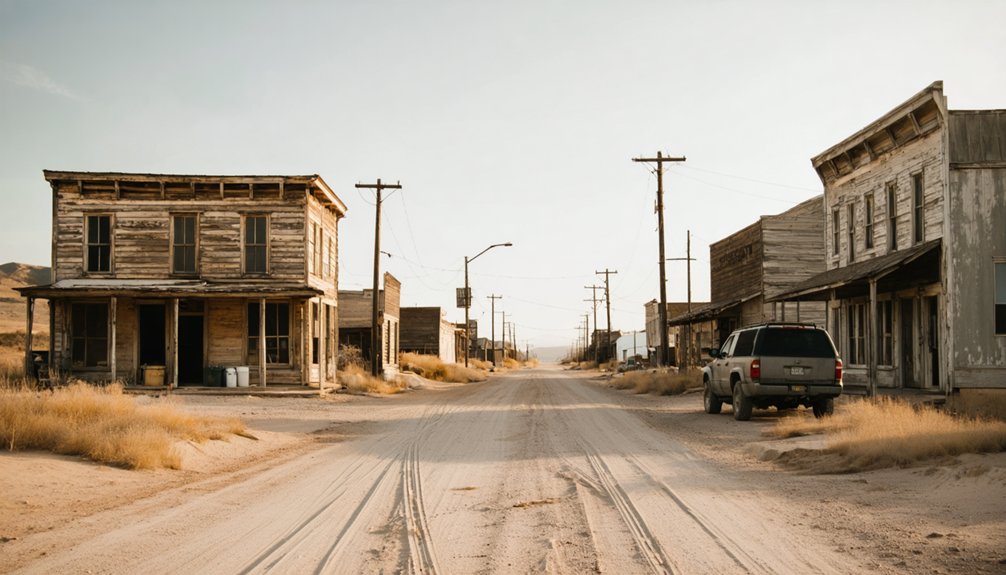
Brookville’s unpaved, dusty streets look charming in photos, but they’ll demand a little more from you than a standard paved-road destination.
Traversing unpaved roadways means dust coats everything, so pack a bag that seals tightly and cover any camera gear you’re bringing along. Wear closed-toe shoes, because loose gravel and uneven ground make sandals a poor choice.
Your travel preparations should also include checking weather forecasts beforehand, since Kansas rain turns dry dirt roads into slick, muddy challenges. Bring extra water, because this town sits in open plains with minimal shade and no convenience stores nearby.
Kansas rain transforms dirt roads into muddy obstacles, so check forecasts and pack extra water before visiting.
A fully charged phone matters too, since cell coverage can be inconsistent. A little planning transforms this ghost town visit from frustrating to genuinely unforgettable.
How Brookville Fits Into a Wider Kansas Ghost Town Road Trip
Brookville fits naturally into a broader Kansas ghost town itinerary, since Saline County and its surrounding regions hold several near-abandoned settlements worth combining into a single road trip.
You’re already deep in Kansas history once you arrive, so extending your journey makes sense. Build your route around these stops:
- Brookville – Explore sandstone buildings, wooden storefronts, and the historic Brookville Hotel.
- Salina – Use it as your base camp, sitting just 15 miles northeast for fuel, food, and lodging.
- Nearby ghost towns – Research additional Saline County settlements that round out your Kansas history experience.
Connecting these locations lets you cover significant ground without backtracking, giving you the freedom to move at your own pace through central Kansas.
Where to Eat and Stay Near Brookville
Since Brookville itself offers virtually no dining or lodging options, you’ll need to rely on Salina—just 15 miles northeast—as your home base for the trip.
Salina delivers solid choices for both local dining and nearby accommodations, giving you the flexibility to explore on your own terms.
For meals, hit Salina’s downtown district, where independent restaurants serve everything from barbecue to farm-fresh Kansas cuisine.
Chain options line Interstate 70 if you prefer something familiar and fast.
For nearby accommodations, Salina offers budget motels, mid-range hotels, and a handful of boutique options that won’t drain your travel fund.
Book ahead on weekends, especially during warmer months when road trippers pass through frequently.
A comfortable Salina base lets you roll into Brookville refreshed and ready to wander.
How to Make the Most of One Day in Brookville
With only a handful of streets to cover, you’ll want to move deliberately through Brookville rather than rush—every crumbling facade and weathered sandstone block tells a story worth slowing down for.
To fully absorb the ghost town experiences this place offers, structure your visit intentionally.
- Start at the Brookville Hotel — its historical significance anchors everything else you’ll observe walking those unpaved streets.
- Photograph the wooden storefronts — original 19th-century details disappear faster than people realize, so document what remains.
- Walk Kansas Highway 140’s edges — understanding the railroad’s 1867 arrival explains why Brookville exists at all.
You’re not rushing between attractions here.
You’re reading a town like a primary source—one that’s been quietly preserving itself for anyone willing to pay attention.
Frequently Asked Questions
Is Brookville, Kansas Safe to Explore for Solo Travelers?
You’ll find Brookville generally safe for solo travel! Explore its dusty, sandstone-lined streets confidently, but follow basic safety tips: tell someone your plans, stay aware of your surroundings, and embrace the freedom of this hauntingly beautiful ghost town.
Are There Guided Tours Specifically Available for Brookville’s Historic Streets?
You won’t find formal guided tours, but you can enjoy self-guided exploration of Brookville’s historic streets, uncovering local history through preserved sandstone buildings, wooden storefronts, and the landmark Brookville Hotel at your own pace.
Can Visitors Legally Enter and Photograph All Abandoned Brookville Structures?
Weathered sandstone walls whisper forgotten stories, but you can’t freely enter all abandoned structures—private property laws apply. Respect photography ethics, shoot from public streets, and you’ll capture Brookville’s haunting beauty without legal trouble.
What Photography Equipment Works Best for Capturing Brookville’s Dusty Streets?
For Brookville’s dusty streets, you’ll want a wide-angle lens and vintage lenses to capture that timeless grit. Street photography thrives here with a mirrorless camera, letting you freely document every weathered sandstone corner authentically.
Does Brookville Have Any Annual Events or Festivals for Visitors?
Like echoes of a forgotten era, Brookville’s local traditions and seasonal celebrations aren’t well-documented. You’ll want to contact Saline County tourism directly to uncover any living festivals breathing life into this hauntingly beautiful ghost town.
References
- https://www.legendsofamerica.com/ks-brookville/
- https://www.facebook.com/LegendsOfKansasLOK/posts/brookville-got-its-start-when-the-tracks-of-the-kansas-pacific-railroad-reached-/1153976273400185/
- https://lostkansas.ccrsdigitalprojects.com/sites/lostkansas/files/private_static/2022-12/LT_SA_Brookville_Shaw.pdf
- https://postcardhistory.net/2021/09/the-brookville-hotel/
- https://legendsofkansas.com/kansas-ghost-town-list/
- https://www.youtube.com/watch?v=sMEeeY8q3m4
- https://michael-hankins.com/2026/01/06/bavaria-kansas/
- https://en.wikipedia.org/wiki/Terra_Cotta
- https://www.kansashistory.gov/index.php?url=p/little-known-or-extinct-towns-ca-1940/11305
- https://www.legendsofamerica.com/ks-ghosttowns/