Plan your road trip to Miners Basin by heading east of Moab along the La Sal Mountain Loop Road, climbing to a 10,000-foot ghost town frozen since the early 1900s. You’ll find rusted ore carts, weathered log cabins, and crumbling foundations left behind when copper yields collapsed and 75 residents quietly disappeared. Visit between late spring and early fall for the best road conditions. Everything you need to make the most of this haunting journey is just ahead.
Key Takeaways
- Miners Basin, a ghost town in Utah’s La Sal Mountains, sits at 10,000 feet elevation and is accessible via La Sal Mountain Loop Road.
- Visit between late spring and early fall for the best road conditions, with June through August offering peak exploration weather.
- Pack sturdy boots, water, sunscreen, a rain jacket, snacks, a first-aid kit, and a paper map for the high-altitude terrain.
- Rusted machinery, ore carts, weathered cabins, and crumbling foundations offer an authentic, untouched glimpse into 1800s copper mining history.
- Respect the site by staying on established paths, leaving all artifacts untouched, and honoring private property boundaries throughout your visit.
Miners Basin at a Glance: What Kind of Ghost Town Is This?
Tucked into the La Sal Mountains east of Moab, Miners Basin is a high-elevation ghost town that tells a familiar but compelling story of western boom-and-bust mining. Copper drew prospectors here in 1888, and by 1898, a full mining district had taken shape at roughly 10,000 feet.
At its peak, around 75 to 80 residents called this remote mountain settlement home. By 1908, only a handful of families remained.
At its peak, Miners Basin sheltered 75 to 80 souls. Within two decades, nearly all had vanished.
What you’ll find today is an honest ghost town exploration experience — rusted machinery, surviving cabins, crumbling foundations, and the unmistakable weight of abandoned ambition.
Nearly 700 acres remain private property, so you’ll want to tread respectfully. Miners Basin isn’t a manicured attraction; it’s raw mining heritage preserved by altitude, isolation, and time.
How Miners Basin Went From Boomtown to Ghost Town in a Decade
Copper was first discovered in the La Sal Mountains in 1888, but it wasn’t until 1898 that the Miners Basin Mining District officially took shape, drawing prospectors hungry for gold, silver, and copper into this remote high-elevation terrain.
At its peak, you’d have found a company town of 75 to 80 residents carving a living out of the mountain, a genuine boomtown by frontier standards.
But the ore didn’t hold, profits dried up fast, and by 1908 only six or seven families remained — the mines had fundamentally closed the year before, leaving the town to the wind and the pines.
The Mining Boom Begins
When copper was first discovered in the La Sal Mountains in 1888, few could’ve predicted that a full-blown mining district would follow a decade later.
By 1898, prospectors had staked their claims, and the Miners Basin Mining District was officially born. Miners flooded in, drawn by promises of gold, silver, and copper buried deep in the mountain rock.
Using the mining techniques of the era, workers carved into the earth at nearly 10,000 feet elevation, building a company town that would eventually house 75 to 80 residents at its peak.
What started as raw ambition became one of the more compelling ghost town legends of Grand County.
You’re standing at the beginning of a story that burned bright and faded fast.
Rapid Decline and Abandonment
The boom that built Miners Basin lasted barely a decade before the mountains stopped giving back. By 1907, declining ore yields and shifting economic factors made extraction unsustainable. Miners had pushed available mining techniques to their limits at this elevation, and the returns simply didn’t justify staying.
Community dynamics shifted fast. Families packed up quietly, one by one, until only six or seven households remained by 1908. There was no dramatic collapse — just the slow, honest math of a played-out mountain camp.
Understanding this historical context helps you appreciate what you’re walking into when you visit today. Miners Basin didn’t fail dramatically; it just emptied out.
That quiet abandonment is precisely what makes exploring its surviving cabins and rusted machinery feel so raw and real.
How to Get to Miners Basin From Moab
Reaching Miners Basin means heading east out of Moab into the La Sal Mountains, climbing from red-rock desert to alpine terrain at roughly 10,000 feet.
You’ll follow the La Sal Mountain Loop Road, one of the most rewarding access routes in southeastern Utah, passing scenic viewpoints that stretch across canyon country toward the Colorado border.
The road is considered 2WD accessible, though mountain conditions can shift fast, so check weather before you go.
Snowy winters shut things down, but warmer months open the mountains wide.
Once you’re up in the pines and aspens, the ghost town sits tucked into the landscape like a secret the La Sals kept for themselves.
Follow the route, trust your instincts, and let the elevation guide you in.
Is the Road to Miners Basin Passable in a Regular Car?
Whether you’re rolling out of Moab in a sedan or a pickup, the road to Miners Basin is generally passable in a regular 2WD vehicle during the warmer months.
Road conditions shift dramatically once snow arrives, so timing your visit between late spring and early fall gives you the clearest shot at reaching this remote ghost town sitting at roughly 10,000 feet.
Vehicle recommendations lean practical here — decent ground clearance helps, and you’ll want tires with solid tread before climbing into the La Sal Mountains.
The route rewards those willing to push a little further than the average tourist.
Once you arrive, rusted machinery and weathered cabins stand as quiet proof that hundreds of miners once carved a living from these peaks.
What Remains at the Miners Basin Ghost Town
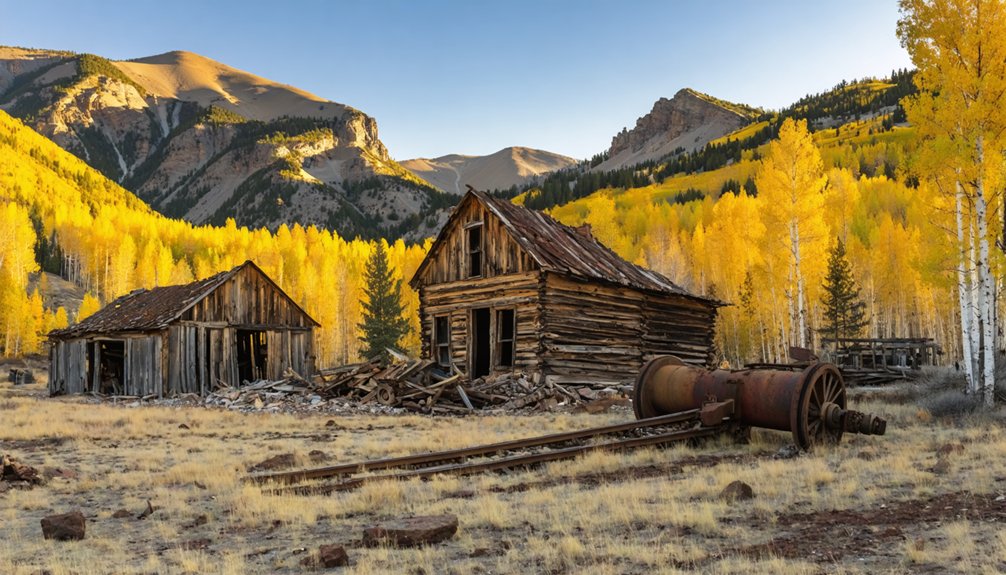
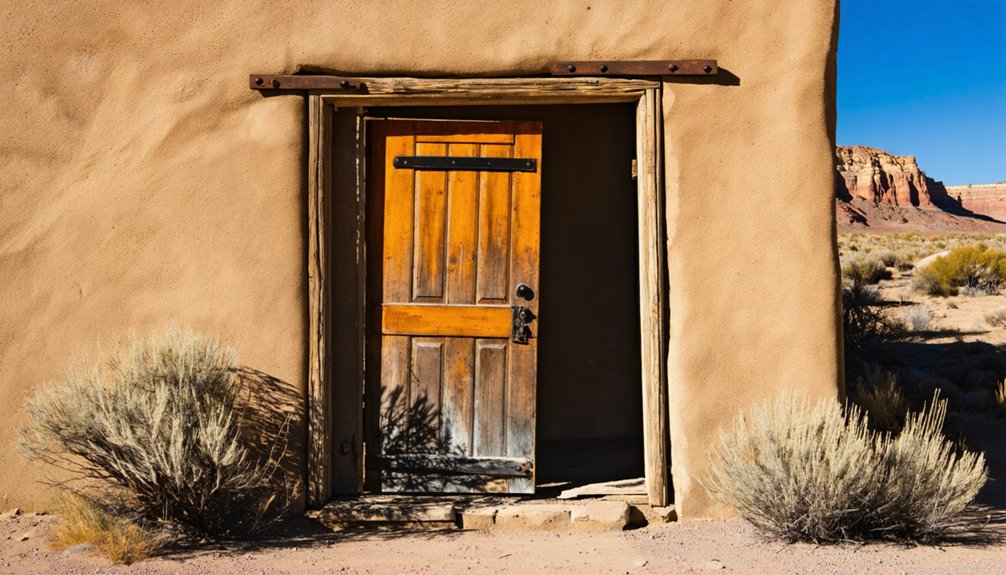
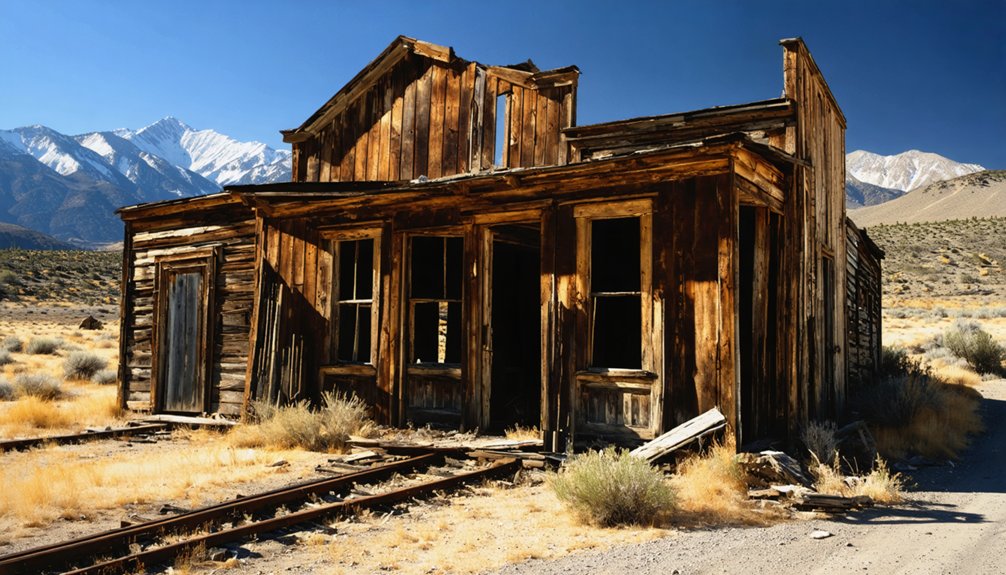
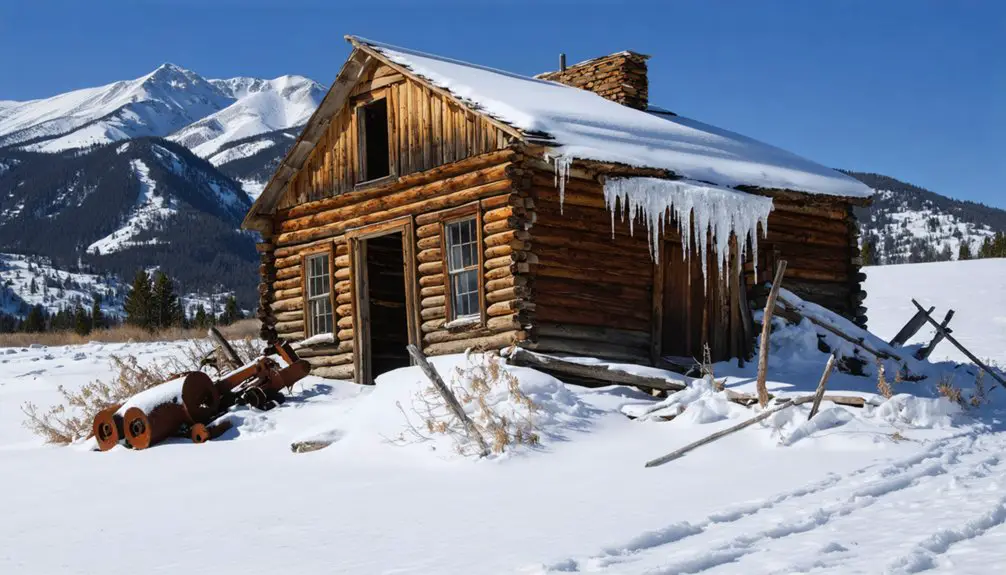
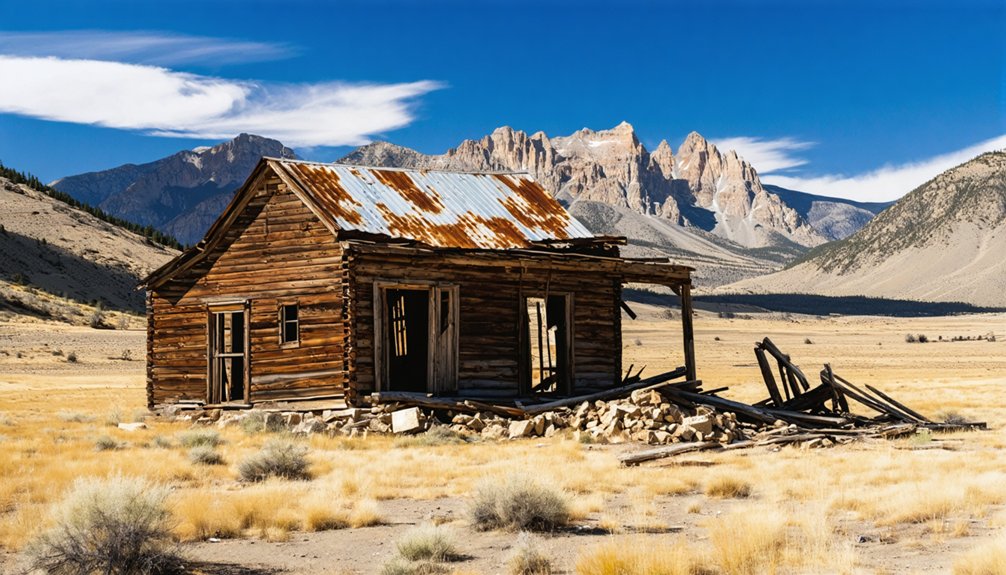
When you arrive at Miners Basin, you’ll find a handful of standing cabins and log structures still holding their own against the mountain weather.
Rusted mining machinery sits where workers left it over a century ago, a quiet reminder of the copper, gold, and silver rush that once drew dozens of families to this remote La Sal outpost.
You can also spot old foundations scattered across the landscape, the skeletal remains of a town that burned bright from 1898 to 1908 before the ore ran out and the people moved on.
Standing Cabins And Structures
Scattered across the mountainside at roughly 10,000 feet, the surviving cabins and log structures of Miners Basin are among the most tangible reminders of the settlement’s brief but intense boom between 1898 and 1908.
You’ll find weathered log walls still standing against the mountain air, their cabin preservation a reflection of the isolation that once defined daily life here.
Walk through these structures and you’re stepping into the lived reality of the 75 to 80 residents who once called this remote settlement home.
The historical significance of what remains isn’t subtle — it’s written into every warped timber and rusted hinge.
Don’t rush through this site. Let the silence and the elevation do their work on you.
Rusted Mining Machinery Remnants
Beyond the cabin walls, the machinery tells a different kind of story. Rusted relics of ore carts, hoisting equipment, and processing gear still scatter the terrain, frozen mid-task like workers who simply walked away.
You’ll find these remnants half-buried in mountain soil, reclaimed slowly by weather and time.
Running your hand across corroded iron, you sense the urgency that once drove this place. Men hauled gold, silver, and copper from these slopes with ambition burning hotter than any Utah summer.
The mining heritage embedded here isn’t polished or preserved — it’s raw, honest, and unfiltered.
That authenticity is exactly what makes Miners Basin worth the drive. No museum recreates this feeling. You’re standing inside a real moment, weathered but intact, waiting for curious travelers willing to seek it out.
Old Foundations Left Behind
Where cabins once stood, only their stone and timber bones remain. These foundational features quietly mark where 75 to 80 miners once built their lives at 10,000 feet.
You’ll walk ground that tells a story no museum can replicate.
Look closely and you’ll recognize three distinct remnants of historical significance:
- Stone foundations — rectangular outlines pressed into the earth where family cabins once stood
- Timber framing fragments — weathered wood that survived Utah’s brutal mountain winters
- Earthen depressions — subtle floor imprints revealing room layouts from over a century ago
You don’t need a guide to feel the weight of this place. The land itself speaks.
Trace those outlines with your boots and let 1898 find you.
What to Pack for Your Miners Basin Visit at 10,000 Feet
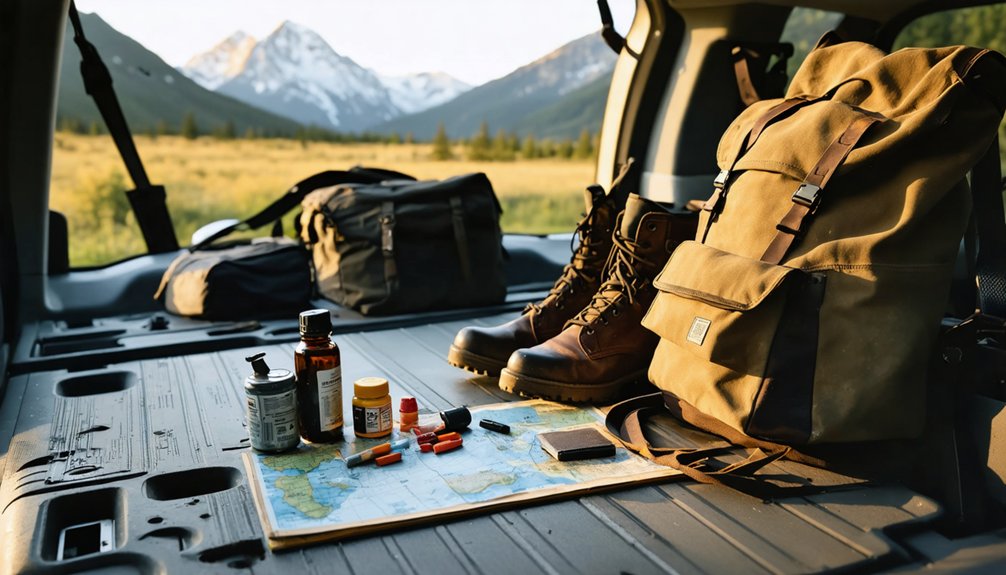
At nearly 10,000 feet, Miners Basin demands respect—the same rugged elevation that once pushed copper miners to their limits will test yours too.
Altitude preparation isn’t optional here; it’s survival strategy. Pack layers, because mountain weather shifts fast and unforgivingly. Your ghost town essentials should include sturdy boots for uneven terrain, plenty of water, high-SPF sunscreen, and snacks that sustain real energy.
Altitude preparation isn’t optional at Miners Basin—it’s survival strategy. Pack layers, water, and boots that mean business.
Bring a first-aid kit and a paper map—cell service won’t bail you out. A light rain jacket earns its weight every time. Sun glare at elevation is intense, so quality sunglasses matter.
You’re chasing history through remote mountain terrain, not a paved tourist trail. Pack smart, move freely, and let the La Sal Mountains reward your preparation.
The Best Time of Year to Visit Miners Basin
- Summer (June–August): Your clearest window. Roads open up, seasonal activities peak, and wildlife observation rewards early risers with elk and mule deer moving through the La Sals.
- Fall (September–October): Aspens ignite in gold. Crowds thin, temperatures cool, and the ghost town feels authentically isolated.
- Winter: Snow buries access roads and the ruins alike. Unless you’re experienced in backcountry conditions, avoid it.
Those ten-year miners didn’t choose this terrain carelessly — respect it the same way.
Hit Miners Basin during summer or fall, and the mountains will meet you right.
Castleton, La Sal Loop, and Other Stops Near Miners Basin
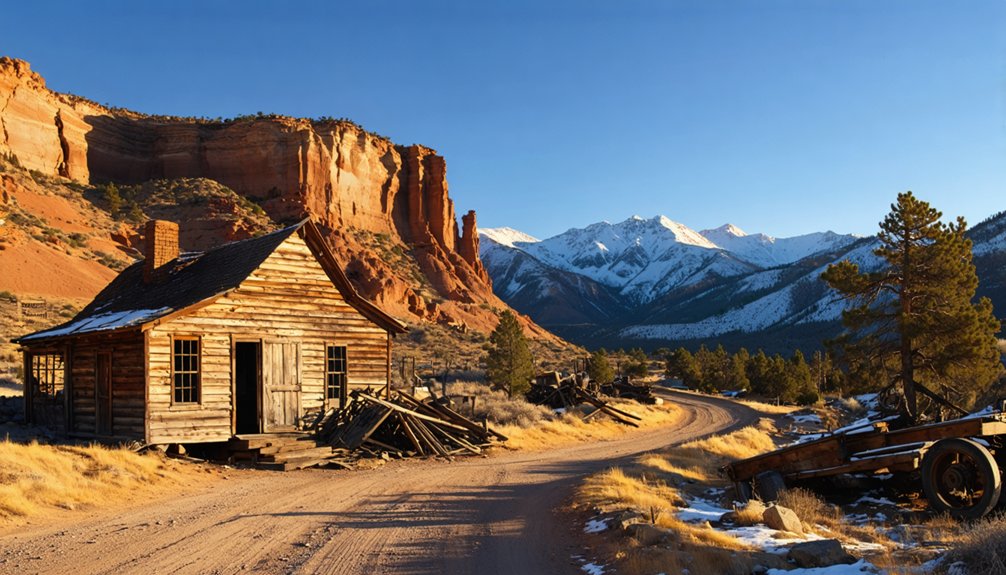
Miners Basin doesn’t exist in isolation — the surrounding La Sal Mountains hold their own stories, and the drive connecting them is half the adventure.
Follow the La Sal Loop Road and you’ll encounter jaw-dropping La Sal scenery at every bend, with red rock canyons giving way to alpine forests.
The La Sal Loop Road winds through a world that shifts — red rock below, cool pines above.
Stop in Castleton, where Castleton history runs deep as a former route stop connecting isolated communities across the plateau.
It’s a grounding reminder of mining heritage and the tough lives built across this landscape.
You’ll also find nearby attractions worth exploring — hiking trails threading through quiet ridgelines, overlooks above canyon country, and ghost town legends scattered across the region.
This whole corridor rewards curious travelers willing to slow down and let the land speak.
How to Explore Miners Basin Without Disturbing the Site
When you walk into Miners Basin, you’re stepping into a place that outlasted the people who built it — and that fragility deserves respect.
Ghost town etiquette and responsible exploration aren’t just suggestions here — they’re your code.
Follow these three rules:
- Leave everything untouched. Rusted machinery, cabin timbers, and scattered artifacts belong where time left them.
- Stay on established paths. Nearly 700 acres sit on private property, so know your boundaries before wandering.
- Take only photographs. Every object removed erases a piece of the story permanently.
These mountains buried a boom-and-bust era that deserves honest witnessing, not looting.
You came for the freedom of open country and real history — honor it by leaving Miners Basin exactly as you found it.
Frequently Asked Questions
Is Miners Basin Accessible to Visitors With Physical Disabilities or Mobility Limitations?
Miners Basin isn’t designed for wheelchair accessibility, and visitor amenities are nearly nonexistent. You’ll navigate rugged mountain terrain at 10,000 feet, where the wild, historically rich landscape demands physical readiness and an adventurous spirit.
Are There Any Guided Tours Available Specifically for the Miners Basin Ghost Town?
No dedicated guided tours exist for Miners Basin, but you’ll discover ghost town history and mining heritage on your own terms — roaming freely through rusted machinery, weathered cabins, and echoes of Utah’s bold, boom-and-bust frontier spirit.
Can Visitors Camp Overnight Anywhere Near the Miners Basin Site Legally?
Nearly 700 acres here sit on private property, so you’ll want to check camping regulations carefully. Seek nearby accommodations in the La Sal Mountains’ public lands — they’ll ground your adventurous spirit in the same rugged freedom those 1898 miners fiercely chased.
Has Miners Basin Ever Been Featured in Films or Television Productions?
No confirmed film locations or ghost town documentaries featuring Miners Basin have surfaced, but you’ll find its weathered cabins and rusted machinery evoke a cinematic, historically-grounded spirit that feels like you’re living your own adventure film.
Are There Any Local Historical Societies Dedicated to Preserving Miners Basin?
No dedicated society preserves Miners Basin’s ghost town history, but don’t let that stop you — you’ll uncover historical preservation efforts through Grand County’s broader heritage organizations, where the past quietly waits to be discovered.
References
- https://en.wikipedia.org/wiki/Miners_Basin
- https://utahstories.com/2023/11/ghost-towns-of-grand-county-utah/
- https://www.ghosttowns.com/states/ut/minersbasin.html
- https://moabsunnews.com/2021/11/18/a-tour-of-a-mountain-ghost-town-the-moab-museum-takes-us-to-miners-basin/
- https://jacobbarlow.com/tag/historic/page/36/
- https://kids.kiddle.co/Miners_Basin
- https://jacobbarlow.com/2016/04/07/miners-basin/
- https://www.grandcountyutah.net/388/Ghost-Towns-Communities
- https://www.facebook.com/groups/864060180303556/posts/24009160745366839/
- https://moabmuseum.org/moab-history-a-miners-basin-memory/