Planning a ghost town road trip to Minersville, Kansas starts in Concordia, your closest jumping-off point in Cloud County. You’re heading to a place where lignite coal once fueled ambitions and community bands played summer evenings away. The site sits on private land, so you’ll experience it through respectful boundary-keeping and nearby museums. A 2025 documentary even offers a virtual walking tour. There’s far more history here than a quiet field lets on.
Key Takeaways
- Minersville, a former coal mining ghost town in Cloud County, Kansas, is best accessed via Concordia or Belleville as your starting point.
- The site sits on private property, so visitors must respect boundaries and experience it through nearby museums or the upcoming 2025 documentary.
- Visit the Cloud County Historical Society Museum and Miners Hall Museum for authentic artifacts and historical context before exploring the area.
- Spring and early fall offer ideal weather and lighting conditions for photography around Minersville’s surrounding landscape.
- A free public documentary screening about Minersville is scheduled for April 24, 2025, in Belleville at the Republic County Historical Society.
What Is Minersville, Kansas?
Deep in the rolling plains of Cloud County, Kansas, Minersville once thrived as a coal mining community that burned bright and faded fast. Established around 1855 and hitting its stride by 1872, this forgotten settlement sits north of Concordia, stretching into Republic County. It holds the distinction of producing the first lignite mined in central Kansas — a piece of mining history worth knowing.
You won’t find bustling streets today, but the community legacy here runs deep. Miners once dug shafts 20 to 80 feet below the prairie, pulling coal from a seam just 20 inches thick.
Families built churches, schools, and a baseball team from scratch. By 1945, it was gone — swallowed by progress, railroads, and better coal from distant places.
Where Exactly Is Minersville Located?
When you set your sights on Minersville, you’ll find it tucked into the northern reaches of Cloud County, Kansas, just north of Concordia.
The old mining community didn’t confine itself to a single county line, though — it pushed its boundaries eastward into Republic County, spanning sections 35 T4S R3W and 5S R3W.
If you’re plotting your route, Concordia serves as your best landmark and jumping-off point for tracing this forgotten town’s geography.
Cloud County’s Northern Territory
Tucked into the northern reaches of Cloud County, Kansas, Minersville sits just north of Concordia, straddling the border where Cloud County bleeds into Republic County.
The town’s footprint extended into Republic County’s sections 35 T4S R3W and 5S R3W, a detail worth noting before you plan your route.
You’re not chasing a well-marked destination here — you’re tracking down a place defined by its mining heritage and the community culture that once pulsed through its dugouts, stone houses, and church pews.
Concordia serves as your logical jumping-off point, grounding you in familiar infrastructure before you head north into quieter, emptier terrain.
The landscape itself hasn’t forgotten what happened here, even if the maps barely acknowledge it anymore.
Republic County Border Extension
Minersville doesn’t fit neatly inside one county’s boundaries — it straddles the line, with its core settled north of Concordia in Cloud County while its reach extended into Republic County’s sections 35 T4S R3W and 5S R3W.
That cross-county sprawl wasn’t accidental. Miners and families followed the coal seams wherever they led, caring little for surveyor’s lines drawn across the prairie. Republic County absorbed part of that mining heritage, quietly sharing in the town’s historical significance without always getting the credit.
When you trace Minersville‘s footprint on an old map today, you feel the community legacy stretching beyond convenient borders — free people carving out a life wherever the earth offered something worth digging for.
That spirit defied boundaries then, and it still does.
Near Concordia, Kansas
Straddling county lines was just one part of Minersville’s identity — the other was its anchor near Concordia, the Cloud County seat that gave the community its closest connection to the wider world.
When you trace Minersville history, you find a settlement that relied on Concordia’s infrastructure while carving out its own coal economy just north of town.
Miners working those lignite shafts — some barely six feet wide, sunk thirty feet into Kansas earth — lived rough, independent lives far from city conveniences.
Yet the community legacy they built included churches, a school, and a baseball team.
Understanding Minersville’s geography matters because Concordia was its lifeline.
Without that proximity, the mining techniques and small-town culture that defined this place might never have taken root.
The Lignite Mines That Built a Community
When you picture Minersville’s early days, you’re looking at a community literally carved from the earth — four shaft and slope mines operating by 1871, with shafts stretching 6 to 8 feet wide and up to 80 feet deep.
The lignite coal pulled from those 20-inch seams wasn’t glamorous fuel, but it heated homes and powered steam engines across central Kansas, making Minersville the region’s first lignite producer.
That underground labor — paying miners around $2 a day for six months of work — breathed life into a town that soon boasted churches, a school, a store, and even a baseball team.
Lignite Mining Operations Explained
Four shaft and slope mines dotted the landscape around Minersville by 1871, each shaft carved six to eight feet wide and plunging anywhere from 20 to 80 feet into the earth.
These lignite extraction techniques were raw, labor-intensive, and dangerously intimate with the land.
Imagine the men who worked here:
- Earning just $2 daily, fueling families and futures
- Operating only six months yearly, chasing seasonal survival
- Relying on mining safety practices that were minimal at best
- Extracting 102,948 bushels from six mines in 1885 alone
The coal seam stretched just 20 inches thick — barely enough to sustain a community, yet enough to power heating stoves and steam engines across central Kansas.
These miners carved freedom directly from the earth, one dangerous shovelful at a time.
Coal’s Community Economic Impact
Those $2 daily wages didn’t just feed miners — they built Minersville from the ground up. Picture it: raw prairie transformed into a living, breathing community through economic sustainability rooted in coal. Wages circulated through a general store, hotel, post office, and two churches.
Mine owners erected sturdy stone houses while homesteaders earned extra income housing transient workers. You can feel the community resilience embedded in every detail — a baseball team, a brass band, neighbors building something real together on Kansas grassland.
Six mines extracted nearly 103,000 bushels in 1885 alone, sustaining families through harsh winters and long seasons. Lignite wasn’t glamorous coal, but it powered homes, steam engines, and ambitions.
For roughly 90 years, Minersville proved that even modest resources could anchor a determined community.
The Rise and Fall of a Kansas Coal Town
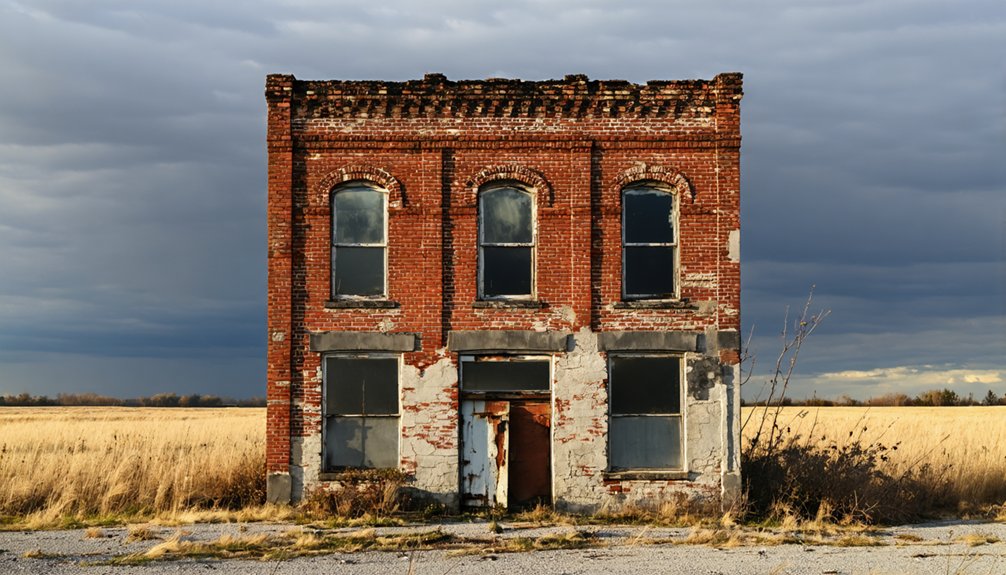
Before the railroads reshaped the region’s fuel economy, Minersville thrived as a scrappy coal town carved out of the Kansas prairie north of Concordia.
Community dynamics ran deep here — miners lived in dugouts while owners built stone houses, yet everyone gathered around shared purpose.
Primitive mining techniques pulled lignite from shafts just 6–8 feet wide and 80 feet deep, fueling homes and steam engines across central Kansas.
Then the railroads arrived, hauling higher-quality coal from distant regions, and Minersville’s reason for existing quietly vanished.
What you’d have witnessed disappearing:
- A post office that connected isolated families
- Churches anchoring Methodist and LDS congregations
- A baseball team and community band filling summer evenings
- Six productive mines employing hardworking independent laborers
What Did Daily Life Look Like in Minersville?
Picture two distinct worlds sharing the same dusty Kansas landscape: mine owners settled into sturdy stone houses while their laborers burrowed into dugouts carved from the earth.
Yet somehow, Minersville’s residents forged a genuine community from those contrasts.
In Minersville, stark divisions between owner and laborer somehow gave way to something richer — genuine community.
When miners weren’t pulling lignite from six-to-eight-foot shafts, they gathered around miner traditions that gave life texture beyond exhausting shifts. Community events brought everyone together — a spirited baseball team took the field, a community band filled the prairie air with music, and two churches anchored the town’s soul.
Homesteaders opened their doors to transient workers, trading spare rooms for income. The general store, post office, and hotel kept daily rhythms moving.
You can almost feel the hard-earned freedom that defined this forgotten corner of Kansas.
Can You Still Visit Minersville Today?
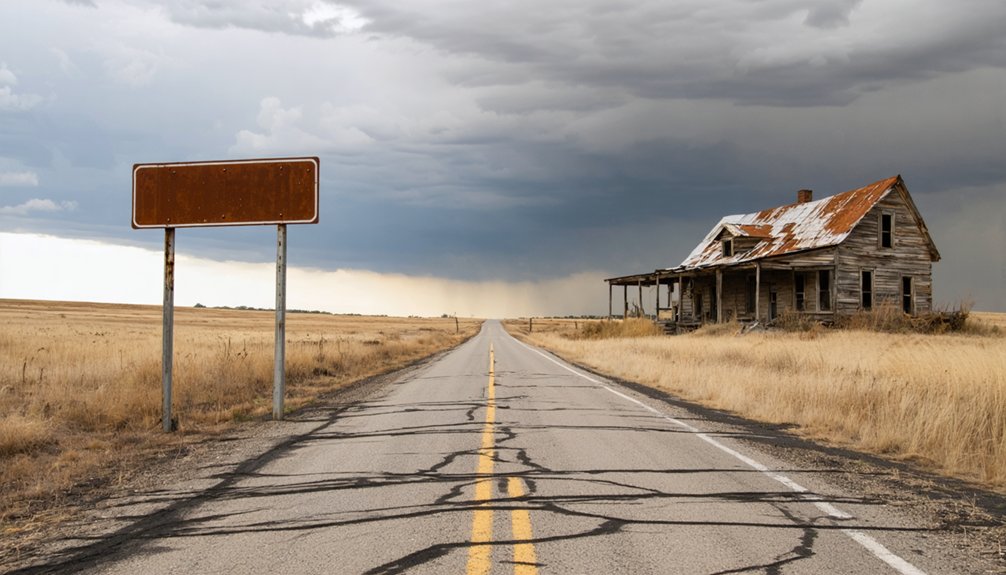
If you’re hoping to walk the grounds of Minersville yourself, you’ll find the remaining structures sitting quietly on private land, off-limits to casual visitors.
You can, however, catch the 2025 documentary *Minersville: The Town, the Mines, the People, the Legacy*, which screened at the Cloud County Historical Society Museum and the Republic County Historical Society, offering a guided walking tour of the site through film.
For a hands-on taste of the region’s mining past, the nearby Miners Hall Museum keeps that history alive and welcomes the public.
Visiting Minersville Today
Though Minersville still exists in scattered remnants across the Kansas prairie, you won’t find a welcome sign or a paved road leading you there — the site sits on private land, quietly crumbling under open skies.
This ghost town holds a mining legacy worth honoring, even from a respectful distance. Here’s how you can connect with Minersville’s story:
- Visit the Miners Hall Museum for authentic regional mining history
- Catch the 2025 documentary Minersville: The Town, the Mines, the People, the Legacy
- Attend a free screening in Belleville on April 24 with a live panel discussion
- Explore the Cloud County Historical Society Museum for deeper historical context
Minersville won’t greet you with open gates — but its memory reaches out across the windswept plains anyway.
Nearby Historical Attractions
While Minersville itself sits behind fences on private land, the surrounding region holds several touchstones where you can walk through the same era that shaped this vanished coal town.
Head to the Miners Hall Museum, where ghost town history breathes through authentic tools, photographs, and artifacts that honor the miners’ legacy etched into Cloud County’s soil.
The Cloud County Historical Society Museum in Concordia deepens that story, connecting Minersville’s lignite operations to the broader pioneer struggle across the plains.
If you’re timing your visit right, catch a screening of *Minersville: The Town, the Mines, the People, the Legacy*, premiering in 2025, complete with panel discussions.
These stops transform your road trip from casual curiosity into a genuine reckoning with the lives once rooted here.
Nearby Museums and Landmarks Worth Stopping For
Since Minersville itself sits on private land, you’ll want to plan a few nearby stops to round out the experience.
These landmarks keep the stories of ghost towns and local legends alive for those willing to seek them out.
- Cloud County Historical Society Museum – Screened the 2025 Minersville documentary March 22; staff connects you to the region’s buried past
- Miners Hall Museum – Dedicated entirely to Kansas mining history; touch the tools, feel the weight of those $2 workdays
- Republic County Historical Society – Hosted the April 24 Belleville screening with a free panel discussion
- Concordia’s Downtown Historic District – Anchors your road trip with architecture and context that frames everything Minersville once aspired to become
Best Time of Year to Visit Minersville
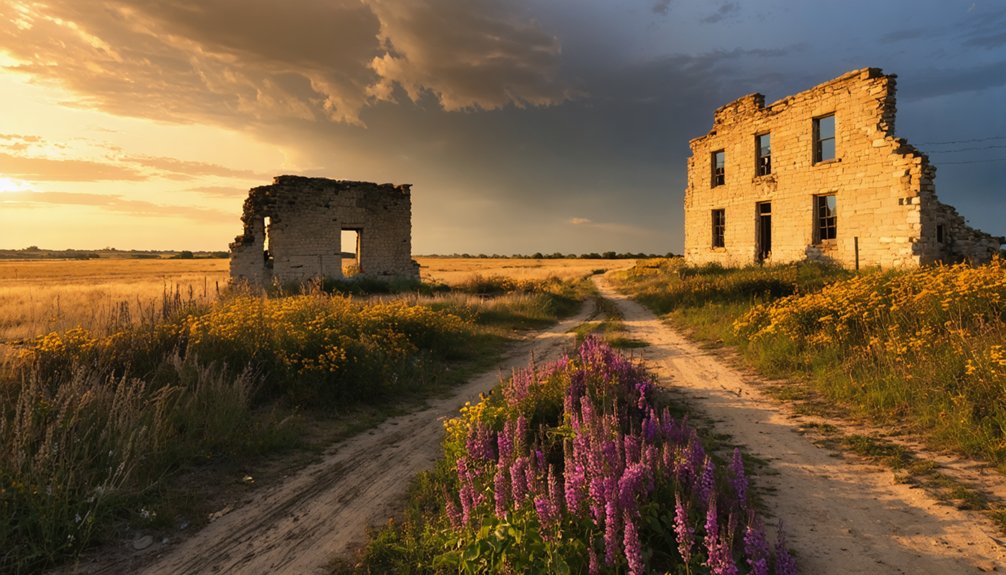
Once you’ve mapped out your museum stops, timing your actual visit to the Minersville site becomes the next puzzle to solve.
Spring and early fall offer the clearest conditions for photography spots among the remaining stone foundations, with softer light cutting through the prairie grasses. Summer heat can feel punishing on open Kansas ground, though longer days give you more exploring hours.
Winter strips the landscape bare, revealing structural outlines that vegetation otherwise swallows.
For seasonal activities tied directly to Minersville’s story, mark your calendar for the 2025 documentary screenings — March 22 at Cloud County Historical Society Museum and April 24 in Belleville, Republic County.
These events connect you to living history before you ever set foot on the quiet, windswept land where miners once worked.
The 2025 Documentary Bringing Minersville Back to Life
These documentary insights honor a community legacy worth knowing:
- Screenings at Cloud County Historical Society Museum on March 22
- A free public showing with a panel discussion in Belleville
- Republic County screening on April 24
- A walking tour through the actual site featured on film
You don’t need a time machine.
You just need to show up, watch, and let Minersville speak for itself.
How to Plan a Minersville Day Trip From Concordia or Belleville
Whether you’re driving out from Concordia or making the trip down from Belleville, Minersville sits close enough for a half-day excursion that doesn’t demand much planning.
Both towns put you within easy reach of this quiet ghost town, where the historical significance of Kansas’s first lignite mining community still lingers in the landscape.
Before you head out, swing by the Cloud County Historical Society Museum in Concordia or the Miners Hall Museum for context that’ll sharpen what you’re seeing.
Since Minersville occupies private land, respect boundaries and stick to public roads.
Pair your visit with a screening of the 2025 documentary for a richer experience.
Pack a lunch, bring your curiosity, and give yourself the freedom to wander the surrounding countryside at your own pace.
Frequently Asked Questions
Was Minersville Ever Officially Incorporated as a Kansas Town?
The records don’t show Minersville ever achieving official incorporation. You’ll find its ghost town history rooted purely in mining legacy — a free, rugged community that lived, thrived, and quietly faded without formal municipal status.
Are Any Descendants of Minersville Miners Still Living Nearby Today?
Yes, descendants likely still live nearby. You won’t find a census, but family connections run deep in Cloud and Republic Counties. Dig into historical records — living links to Minersville’s miners may surprise you.
Did Minersville Ever Have a Local Newspaper During Its Operation?
The records don’t confirm Minersville had its own newspaper. You’d need to explore historical archives and local journalism from Concordia for traces of its story — those pages hold the nostalgic echoes of a free, hardworking community.
How Many People Lived in Minersville at Its Population Peak?
The records don’t capture Minersville’s peak population, but like a candle burning brightest before it fades, this ghost town’s mining history once drew enough souls to sustain churches, schools, and a community band — you’d have felt its pulse.
Were Any Mining Accidents or Disasters Recorded at Minersville Mines?
The available records don’t capture any mining accidents at Minersville. Yet you’d feel the weight of mining safety’s historical impact — men toiling in 80-foot shafts, earning $2 daily, chasing freedom underground in lignite’s dusty, nostalgic embrace.
References
- https://kclyradio.com/education/unearthing-the-past-documentary-on-forgotten-ghost-town-minersville-premieres-april-24-in-belleville/
- https://www.humanitieskansas.org/get-involved/kansas-stories/places/mining-for-stories-in-a-kansas-ghost-town
- https://www.travelks.com/kansas-magazine/articles/post/a-coal-mine-on-the-plains/
- https://www.youtube.com/watch?v=8dtIPX7pIqI
- https://salinapost.com/posts/d2914e85-4a02-4b57-855b-995acfaeec37
- https://www.kgs.ku.edu/Publications/Bulletins/96_2/page2.html