Planning a ghost town road trip to Mortimer, North Carolina means venturing deep into the Blue Ridge Mountains to explore a once-thriving lumber town that floods and fire ultimately destroyed. Start at the Wilson Creek Visitor Center for maps and trail conditions, then navigate using GPS coordinates to find crumbling foundations, rusted mill machinery, and stone outlines of former homes. Pack sturdy boots, layers, and emergency supplies — and there’s far more to this hauntingly beautiful destination than meets the eye.
Key Takeaways
- Mortimer, NC, a former 1904 lumber town in the Blue Ridge Mountains, was abandoned after devastating floods and wildfires by 1917.
- Use GPS coordinates 35°59′07″N 81°45′40″W and start at Wilson Creek Visitor Center for maps and current trail conditions.
- Explore rusted mill machinery, crumbling foundations, and stone outlines of original structures, including homes, a hotel, and a church.
- Pack water, paper maps, sturdy boots, layered clothing, a first aid kit, headlamp, and emergency whistle for a safe visit.
- Mortimer Campground sits within the ghost town’s footprint, offering rustic camping and access to Thorps Creek Trail’s moderate hiking.
What Is Mortimer, NC: and Why Visit This Ghost Town?
Nestled deep in the Blue Ridge Mountains of northwestern North Carolina, Mortimer is a ghost town that’s slowly being swallowed by the very wilderness it once tamed. Founded in 1904, this former lumber town peaked at 800 residents before catastrophic floods and fires drove everyone out by 1940.
Today, you’ll find rusted machinery, crumbling foundations, and nature aggressively reclaiming what humans abandoned. It’s raw, unfiltered history tourism at its finest.
Why visit? Because Mortimer doesn’t sanitize the past. There are no gift shops or guided tours — just you, the forest, and the silent evidence of a community that once thrived and vanished.
If you crave authentic ghost town exploration off the beaten path, Mortimer delivers exactly that kind of untamed freedom.
How a Lumber Company Built an 800-Person Town From Scratch
When Ritter Lumber Company arrived in 1904, they didn’t just set up a sawmill — they built an entire world from scratch. Driven by the lumber industry’s relentless demand, the company constructed worker housing, a company store, blacksmith shop, church, school, hotel, and even a movie theater.
Ritter Lumber didn’t just harvest timber — they built an entire civilization, sawmill to movie theater, deep in the mountains.
By 1907, the town officially incorporated and carried the name of Bill Mortimer. Community development happened fast, and within years, nearly 800 residents called this remote North Carolina valley home.
A railroad stop connected Mortimer to the outside world, while textile operations ran alongside the sawmills.
You’d have found everything you needed without leaving town. It was a self-contained mountain community carved directly out of the Appalachian wilderness — ambitious, functional, and entirely dependent on one industry’s survival.
The Floods and Fires That Wiped Mortimer Off the Map
When you look at Mortimer’s history, you’ll find that nature delivered two devastating blows that sealed the town’s fate.
In 1916, a fire tearing down from Grandfather Mountain combined with a catastrophic flood along Wilson Creek, killing 80 people and forcing residents to abandon the town by 1917.
Then, just when recovery seemed possible, a 1940 hurricane sent Wilson Creek surging up to 94 feet deep, wiping out whatever remained and ending Mortimer’s story for good.
The 1916 Devastating Disasters
Though Mortimer had carved a thriving community out of the Appalachian wilderness, 1916 delivered a one-two punch that the town simply couldn’t survive.
Two catastrophic events shattered any hope of community resilience:
- Wildfire roared from Grandfather Mountain through Wilson Creek, incinerating timber operations and worker housing.
- Flash flooding followed immediately after, killing 80 residents and destroying remaining infrastructure.
- Economic collapse hit instantly, as the lumber industry couldn’t justify rebuilding what nature had so violently reclaimed.
- Mass exodus emptied Mortimer completely by 1917, leaving only silence where 800 people once lived.
The 1916 aftermath transformed a bustling industrial town into abandoned foundations within months.
When you visit today, you’re walking through what nature ultimately won back from human ambition.
The 1940 Fatal Flood
Mortimer’s story didn’t end with 1916. The town clawed back, demonstrating remarkable community resilience through the 1920s and 1930s.
The Civilian Conservation Corps even overhauled the area during the Great Depression, breathing temporary life back into the hollow.
Then 1940 arrived.
A devastating hurricane sent Wilson Creek surging to an almost incomprehensible 94 feet deep. The flood aftermath was catastrophic and absolute — what remained of Mortimer’s infrastructure simply vanished beneath walls of churning water.
Unlike 1916, no rebuilding followed. Residents abandoned the site permanently, surrendering the land back to the mountains.
World War II delivered the final blow when workers dismantled the railroad for the war effort. Nature moved in swiftly, reclaiming every street, foundation, and memory Mortimer once held.
What’s Left of the Mortimer Ghost Town Site Today
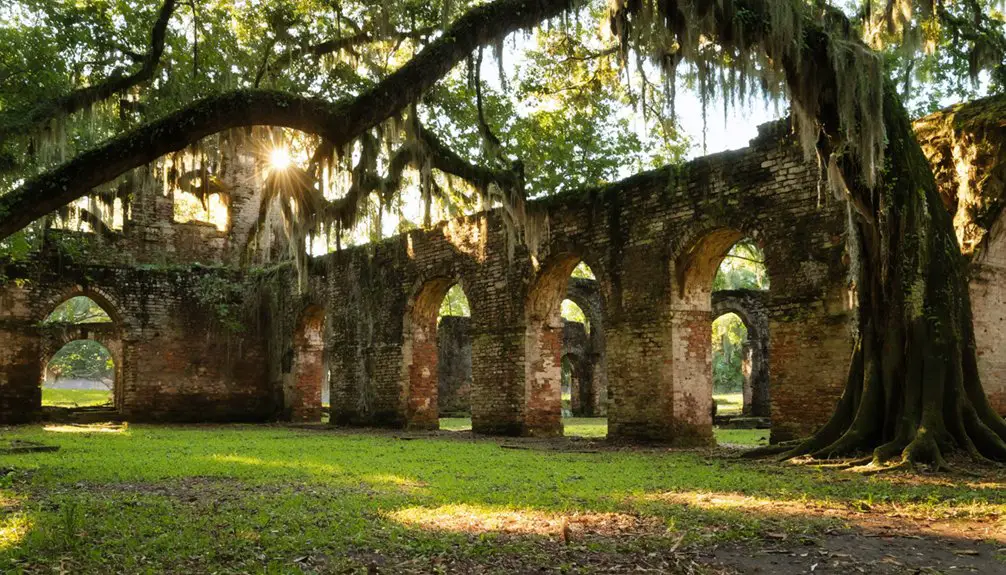
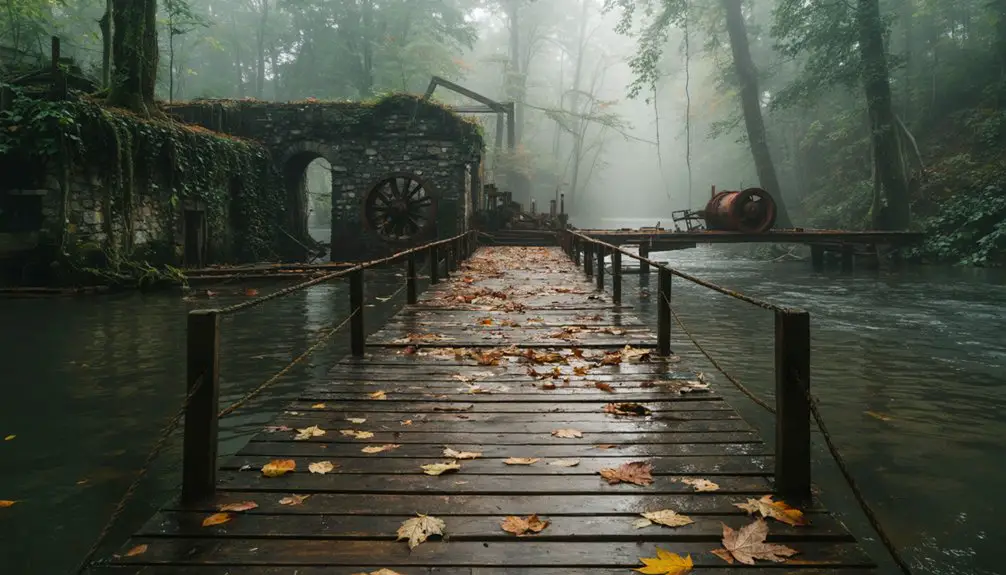
When you visit the Mortimer ghost town site today, you’ll find rusted mill machinery and crumbling building foundations half-swallowed by the encroaching forest.
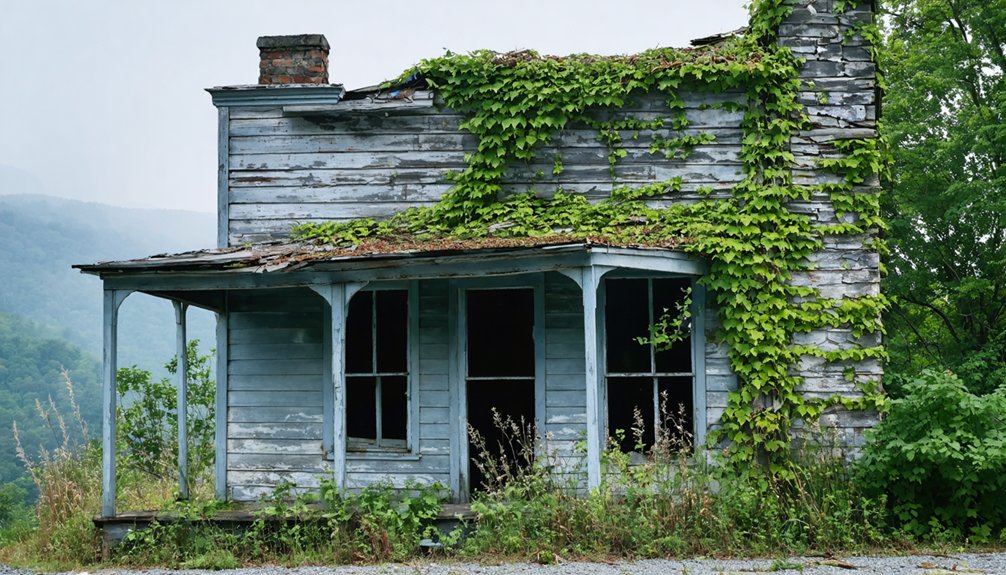
Nature has aggressively reclaimed what the floods and fires left behind, draping collapsed structures in thick vegetation that softens their haunting silhouettes.
You can wander through this eerie landscape where the wilderness and wreckage merge, making it a favorite destination for photographers and dark tourists drawn to Appalachia’s forgotten past.
Ruins and Remaining Structures
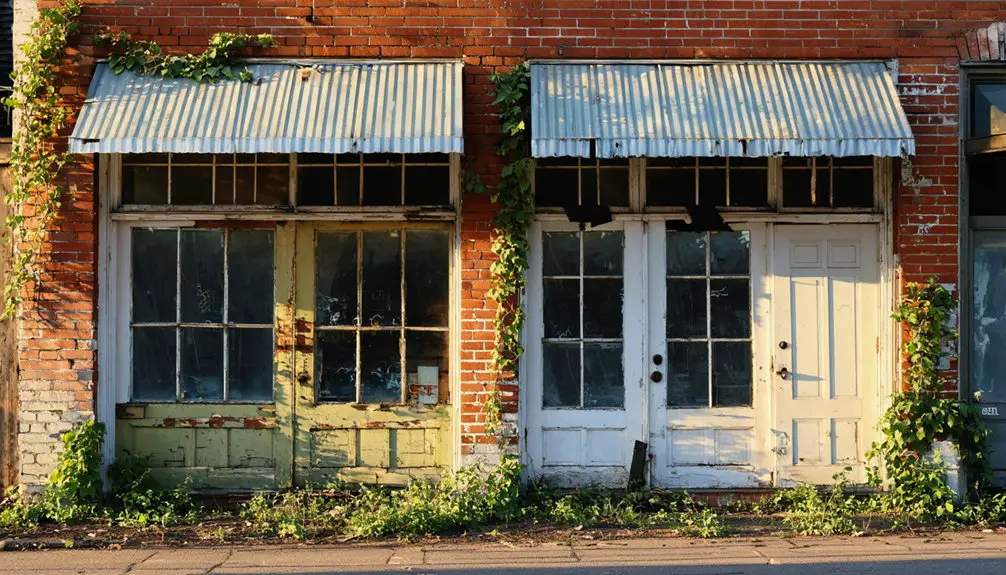
Once a thriving mill town of 800 residents, Mortimer today is a hauntingly beautiful shell of its former self, where rusted machinery and crumbling foundations peek through dense forest undergrowth.
Your ruins exploration reveals layers of historical significance at every turn. Here’s what you’ll discover:
- Rusted mill machinery — Silent remnants of once state-of-the-art sawmill operations
- Building foundations — Stone outlines marking where homes, a hotel, and a church once stood
- Overgrown collapsed structures — Nature’s slow reclamation creates dramatic photographic opportunities
- Mortimer Campground — Rustic backcountry sites positioned directly within the ghost town’s footprint
You’re walking through an open-air museum here.
The forest has swallowed most structures, but enough remains to fuel your imagination about this community’s remarkable, turbulent past.
Nature Reclaiming the Site
Decades after its final abandonment, nature has quietly but decisively reclaimed Mortimer, transforming what was once a bustling industrial town into a cathedral of second-growth forest.
You’ll find towering hardwoods threading through collapsed foundations, their roots splitting concrete and masonry with effortless persistence — a striking demonstration of nature’s resilience. Moss blankets rusted machinery, wildflowers push through cracked floors, and Wilson Creek rushes past it all indifferently.
Yet historical echoes remain unmistakable. Partial walls still break the tree line, and scattered structural remnants remind you that hundreds once lived, worked, and raised families here.
The forest hasn’t erased Mortimer — it’s absorbed it. Walking through, you’re experiencing something genuinely rare: wilderness and history occupying the same space, each making the other more profound.
How to Actually Reach Mortimer (It’s More Remote Than You Think)
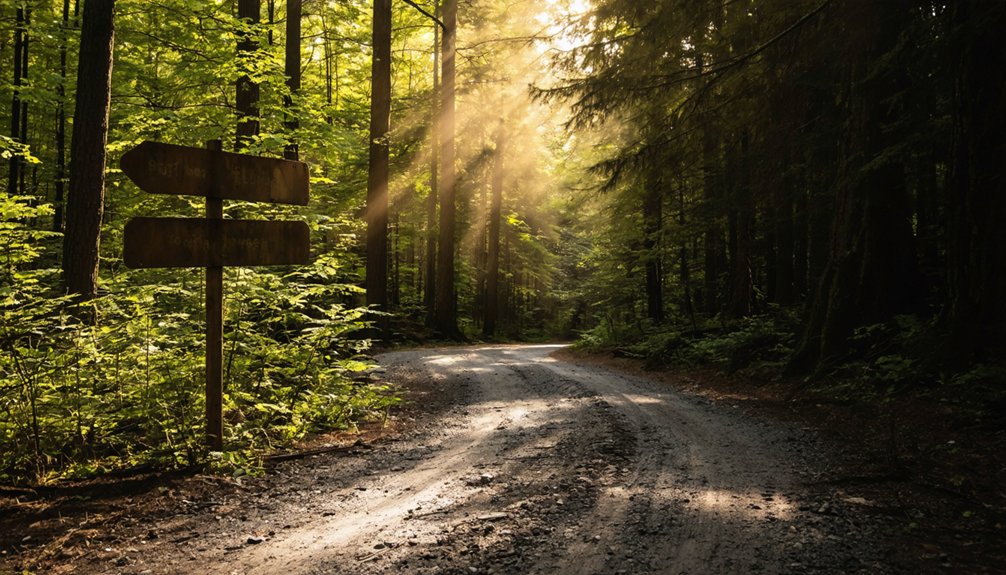
Getting to Mortimer requires more planning than your average road trip destination—this ghost town doesn’t advertise itself with highway signs or convenient off-ramps.
Mortimer doesn’t hold your hand—no signs, no off-ramps, just wilderness waiting for those willing to seek it out.
Tucked into Caldwell County’s wilderness, it’s one of those hidden gems that rewards the prepared traveler with local legends and raw Appalachian beauty.
Here’s how to navigate there successfully:
- Start at Wilson Creek Visitor Center — grab maps and current trail conditions before heading deeper.
- Use coordinates 35°59′07″N 81°45′40″W — standard GPS often loses signal on mountain roads.
- Drive Wilson’s Wilds Scenic Byway — designated “America’s Favorite Drive,” it delivers stunning views en route.
- Check seasonal access — the campground operates seasonally, though the site remains freely accessible year-round.
Cell service disappears fast, so download offline maps before you leave civilization.
The Scenic Drive Through Wilson Creek That Leads to Mortimer
Winding through the heart of Caldwell County, Wilson’s Wilds Scenic Byway earns its “America’s Favorite Drive” title long before you reach Mortimer.
You’ll navigate forested ridgelines and riverside stretches where scenic vistas open up without warning, rewarding every curve with raw Appalachian beauty.
The drive itself carries historical significance — these same roads once supported a thriving lumber town bustling with 800 residents, railroad cars, and sawmill operations.
As you roll deeper into Wilson Creek’s gorge, the landscape shifts from open farmland to dense, cathedral-like forest.
Stop at the Wilson Creek Visitor Center to orient yourself before continuing toward Mortimer.
The byway isn’t just a route — it’s your first real conversation with the region’s layered past and untamed present.
The Best Trails, Swimming Holes, and Campsites Near Mortimer
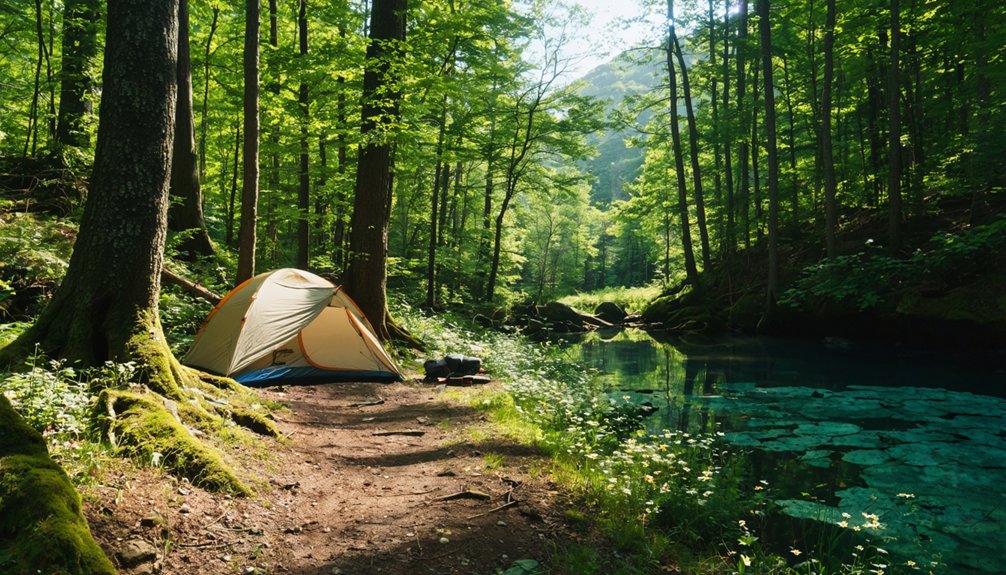
Once you’ve parked near the ghost town remnants, Mortimer opens into a surprisingly rich outdoor playground.
Wilson Creek’s rushing waters and surrounding Pisgah National Forest trails reward every type of adventurer.
Top experiences you shouldn’t miss:
- Hiking tips: Follow the Thorps Creek Trail for moderate terrain with rewarding ridge views and historical mill ruins along the path.
- Wilson Creek Swimming Holes: Wade into the clearest natural pools downstream from the campground during summer’s peak warmth.
- Swimming safety: Always check water levels before entering — flash flooding remains a genuine danger in this canyon corridor.
- Mortimer Campground: Claim a rustic backcountry site surrounded by hardwood forest, available seasonally through the U.S. Forest Service.
You’ll leave understanding why people keep returning here.
What to Bring Before You Head to Mortimer
Packing smart makes the difference between a miserable slog and a genuinely memorable ghost town adventure. Mortimer sits deep in Pisgah National Forest with zero amenities, so your packing essentials matter enormously.
Bring plenty of water, trail snacks, and a detailed paper map since cell service disappears fast out here. Sturdy hiking boots handle the uneven, root-tangled terrain far better than sneakers. Pack layers, because mountain weather shifts without warning.
For safety tips, tell someone your exact route and expected return time before leaving. Carry a first aid kit, headlamp, and emergency whistle. Wilson Creek’s currents run deceptively strong, so exercise caution near the water.
Respect the ruins by leaving everything untouched. Your freedom to explore this forgotten place depends on responsible visits protecting it for future adventurers.
Frequently Asked Questions
Is Mortimer’s Ghost Town Site Wheelchair Accessible for Visitors With Mobility Limitations?
Mortimer’s ghost town site isn’t wheelchair accessible, as you’ll encounter rugged, overgrown terrain and collapsed structures. Mobility aids won’t navigate these backcountry trails easily, but you’ll still experience the area’s wild, untamed freedom from accessible viewpoints nearby.
Are Pets Allowed on the Trails and Campgrounds Near Mortimer?
Your furry companion’s tail will wag endlessly! Pets are welcome on trails and campgrounds near Mortimer. Follow trail etiquette by leashing your pet, and enjoy countless pet friendly activities throughout Wilson Creek’s breathtaking wilderness together!
Does the Mortimer Campground Require Advance Reservations During Peak Seasons?
The knowledge doesn’t confirm reservation requirements, so you’ll want to contact the U.S. Forest Service directly. Don’t miss Mortimer’s campground amenities and peak season activities — it’s your gateway to unrestricted Appalachian adventure and freedom!
Is Cell Service Available Near the Mortimer Ghost Town Site?
You’ll find little to no cell coverage near Mortimer’s ghost town site. Embrace the freedom as you explore hiking trails through Pisgah National Forest, where nature’s raw beauty disconnects you from the modern world completely.
Are Guided Tours of the Mortimer Ghost Town Site Available?
No formal guided tours exist, but you’ll freely explore Mortimer’s ruins on your own terms! Embrace the guided exploration of its historical significance through trail maps and exhibits at the Wilson Creek Visitor Center before venturing in independently.
References
- https://en.wikipedia.org/wiki/Mortimer
- https://www.islands.com/1988321/mortimer-north-carolina-abandoned-ghost-town-historic-pisgah-national-forest/
- https://www.youtube.com/watch?v=nxOGwCFhRRQ
- https://marksphototravels.blogspot.com/2012/02/wilson-creek-and-ghost-town-of-mortimer.html
- https://www.atlasobscura.com/places/mortimer-north-carolina
- https://www.appalachianhistory.net/2018/08/north-carolina-ghost-town.html