Plan your Pembroke Industrial ghost town road trip by heading north out of Fort Meade on SR17, watching for the Pembroke Road turnoff as phosphate country quietly unfolds around you. Visit between November and March when the humidity drops and the ruins feel more alive somehow. Bring sturdy boots, a camera, and offline maps — cell service fades fast out here. There’s far more to know before you go.
Key Takeaways
- Pembroke Industrial sits in Polk County, Florida, at 27°47.2’N, 81°48.3’W, accessible via SR17 north of Fort Meade, turning onto Pembroke Road.
- Visit between November and March for cooler temperatures, manageable humidity, and nearby festivals in Fort Meade and Mulberry.
- Verify access with Mosaic Company’s public access policies and stay on SR17 and Pembroke Road for legal roadside exploration.
- Pack sturdy boots, offline navigation tools, work gloves, hydration, and a camera to safely document the industrial ruins.
- Extend your road trip by visiting nearby ghost towns, including Mulberry’s phosphate ruins, Chassahowitzka, Osceola, and Fort Meade’s preserved architecture.
What Is Pembroke Industrial and Why Did It Vanish?
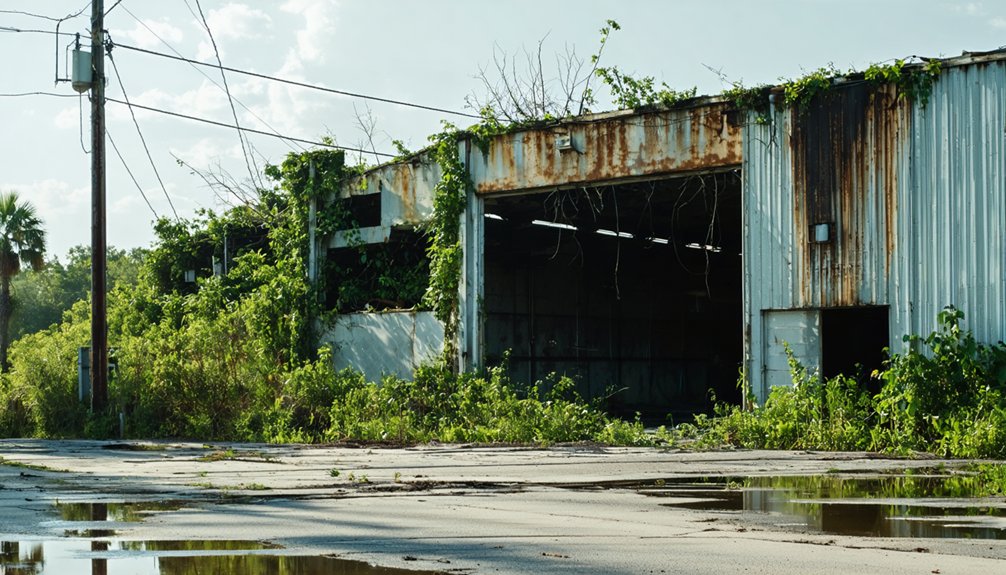
Polk County, Florida holds more ghost towns than most people realize, and Pembroke Industrial is one of its quieter secrets.
You won’t find its name in many travel guides, but its coordinates — 27°47.2’N, 81°48.3’W — still mark a place where industry once shaped daily life.
Pembroke history traces back to a tight-knit community built around resource extraction, likely phosphate mining or a related trade that defined this corner of Florida.
Like so many forgotten Florida towns, Pembroke was built on extraction — and buried when the resources ran dry.
When industrial decline set in, workers left, buildings emptied, and nature quietly reclaimed what remained.
No precise dates mark its birth or death, which somehow makes it feel more haunting.
It’s a place that reminds you how quickly a thriving community can dissolve when the work disappears.
How Did the Phosphate Boom Create Ghost Towns Like Pembroke Industrial?
When phosphate fever swept through central Florida in the late 1800s, it didn’t just reshape the land — it conjured entire towns from scratch. Companies hauled in workers, built housing, stores, and rail lines almost overnight.
Polk County became the epicenter of phosphate history, producing wealth that felt endless.
But it wasn’t.
Once a deposit ran dry or machinery grew obsolete, companies simply moved on. Workers followed the paycheck, not the place.
Industrial decline hit fast and quietly — no dramatic collapse, just a slow exhale as people drifted away. What remained were foundations, smokestacks, and silence.
Pembroke Industrial followed this exact pattern.
You’re not visiting a failure when you explore it — you’re walking through the honest, unfiltered cost of a boom-and-bust economy.
When Is the Best Time To Visit Pembroke Industrial?
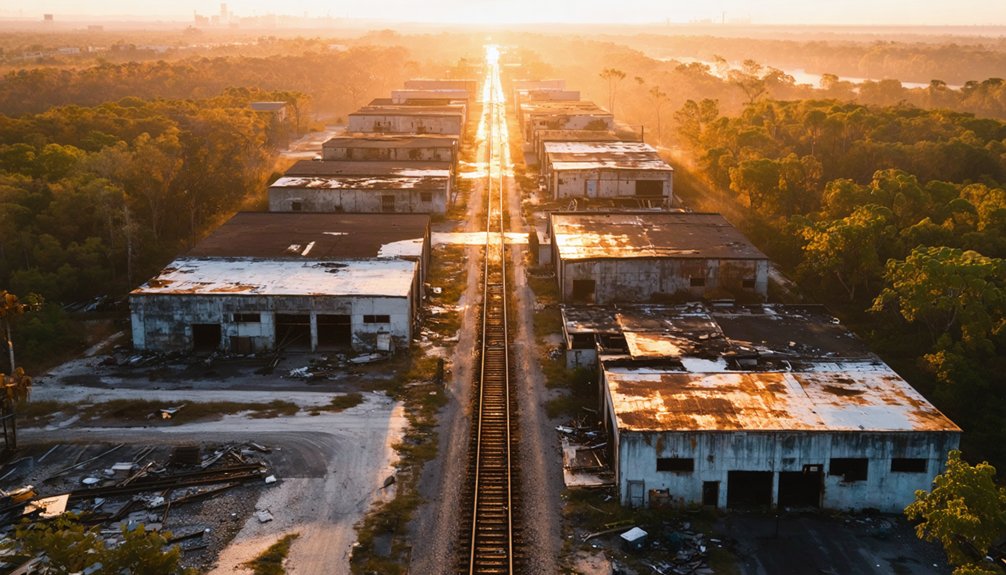
Knowing when phosphate towns like Pembroke Industrial rose and fell matters — but knowing when *you* should show up matters just as much.
Florida’s brutal summers bring oppressive heat and afternoon thunderstorms that’ll turn dirt roads into muddy traps, so plan wisely. The best seasons for exploring Pembroke Industrial are fall through early spring, when cooler temperatures make wandering open fields and industrial ruins genuinely enjoyable.
November through March offers crisp mornings, manageable humidity, and golden light that makes old smokestacks and forgotten foundations feel almost alive again.
Check nearby local festivals in Fort Meade or Mulberry’s Phosphate Museum events — they often run during these cooler months, letting you layer history with community.
You’ll leave with full notebooks and no regrets.
Where Exactly Is Pembroke Industrial Located in Polk County?
You’ll find Pembroke Industrial tucked into Polk County at coordinates 27°47.2’N 81°48.3’W, a quiet pinpoint on the map that once hummed with industrial purpose.
To reach it, head north of Fort Meade on SR17, then turn right onto Pembroke Road, where the pavement gives way to a landscape carrying echoes of a busier past.
It’s a surprisingly straightforward drive to a place that time has all but erased.
Polk County Coordinates
Tucked into Polk County at coordinates 27°47.2’N 81°48.3’W, Pembroke Industrial sits north of Fort Meade along SR17, where a right turn onto Pembroke Road carries you into what was once a humming industrial corridor.
Polk County Geography shaped this site’s rise and fall, placing it within Florida’s phosphate-rich heartland before Industrial Decline quietly erased its purpose.
Use these landmarks to orient yourself:
- SR17 northbound from Fort Meade serves as your primary navigation anchor
- Pembroke Road branches right, threading toward forgotten structures and open fields
- Mulberry lies nearby, offering geographic and historical context for the broader phosphate corridor
You’ll feel the weight of abandonment the moment the road narrows, the landscape shifting from ordinary Florida countryside into something unmistakably, beautifully left behind.
SR17 Access Point
Finding Pembroke Industrial means committing to a straightforward but rewarding stretch of Florida backroad: head north out of Fort Meade on SR17, then hang a right onto Pembroke Road.
That simple turn drops you into terrain carrying real historical significance — land shaped by phosphate extraction and the industrial heritage that defined Polk County’s backbone for generations.
You’re not following a tourist corridor here. You’re tracing a route workers once drove daily, hauling resources that built fortunes and communities alike.
SR17 itself threads through landscapes where smokestacks replaced pine canopies and rail lines cut across open scrub. Pembroke Road delivers you directly into that forgotten world.
Keep your eyes open — the shift from ordinary Florida highway to something genuinely abandoned happens faster than you’d expect.
How To Reach Pembroke Industrial From Fort Meade
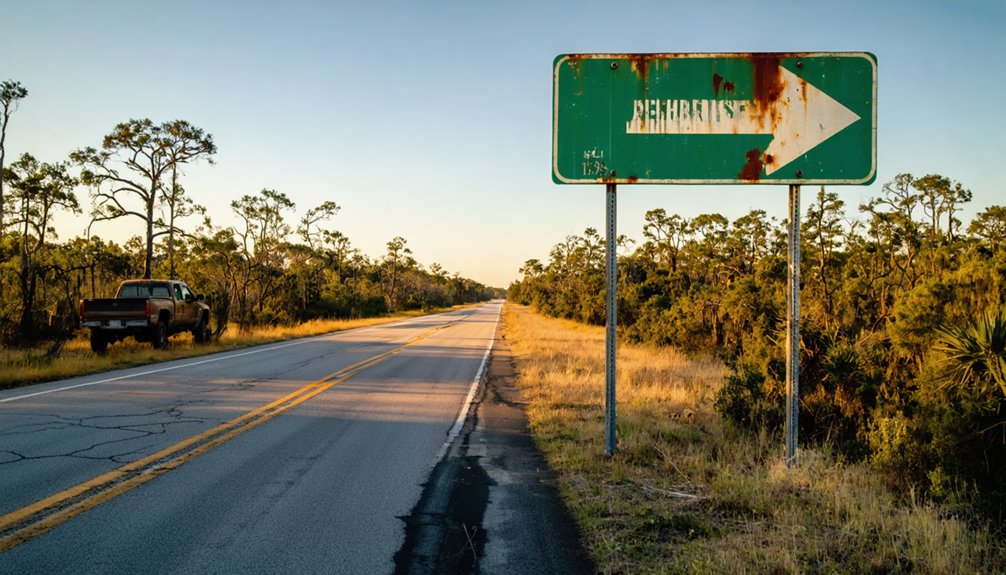
You’ll begin your journey north of Fort Meade on SR17, where the flat Florida landscape stretches out like a faded postcard from another era.
When you spot Pembroke Road, turn right and let that quiet two-lane path carry you deeper into Polk County’s phosphate-scarred past.
The final stretch feels almost conspiratorial, as if the road itself is reluctant to reveal what little remains of this forgotten industrial outpost.
Starting Point On SR17
State Road 17 gives you a straight shot north out of Fort Meade, cutting through sun-baked flatlands where phosphate country opens up on either side.
The SR17 scenery hits differently once you’re moving — open sky, scattered palmettos, and the quiet weight of Pembroke history pressing against the landscape.
Keep your eyes sharp for these landmarks:
- Mile markers shifting north signal you’re leaving Fort Meade’s 19th-century streetscape behind
- Flat industrial horizons hint at the phosphate operations that once fueled communities like Pembroke
- Pembroke Road turnoff on your right marks your exit from SR17 into forgotten territory
You’re not just driving a highway — you’re tracing the bones of an economy that collapsed and left ghost towns scattered across Polk County’s soil.
Turning Onto Pembroke Road
One right turn separates you from Pembroke Industrial’s forgotten world — watch for Pembroke Road branching off SR17 and take it without hesitation.
This modest turn carries real weight; you’re leaving behind the familiar hum of modern Florida and rolling toward one of the state’s quietly erased communities.
Pembroke Road feels different almost immediately. The landscape shifts, opening into stretches that hint at what industrial ambition once looked like before it collapsed under its own obsolescence.
Ghost towns don’t announce themselves with signs or fanfare — they reveal themselves gradually, through silence and scattered remnants.
Keep your speed down and your eyes open. Every overgrown edge along Pembroke Road holds memory.
You’ve earned this moment simply by choosing the road less traveled.
Navigating The Final Stretch
From Fort Meade, the route north on SR17 unspools like a forgotten chapter — familiar enough to drive without thinking, specific enough to miss if you’re not paying attention.
Ghost town exploration rewards the deliberate traveler.
Watch for these markers as you close in:
- SR17 northbound carries you out of Fort Meade’s 19th-century streetscape into open Polk County countryside
- Pembroke Road appears on your right — don’t rush past it
- Industrial history announces itself subtly: shifting land textures, fading infrastructure, phosphate-country silence
You’re entering terrain that once hummed with industrial purpose.
The landscape doesn’t dramatize its past — it simply holds it.
Stay present, keep your speed down, and let Pembroke Industrial reveal itself on its own quiet terms.
What Ruins and Relics Can You Still Find at the Site?
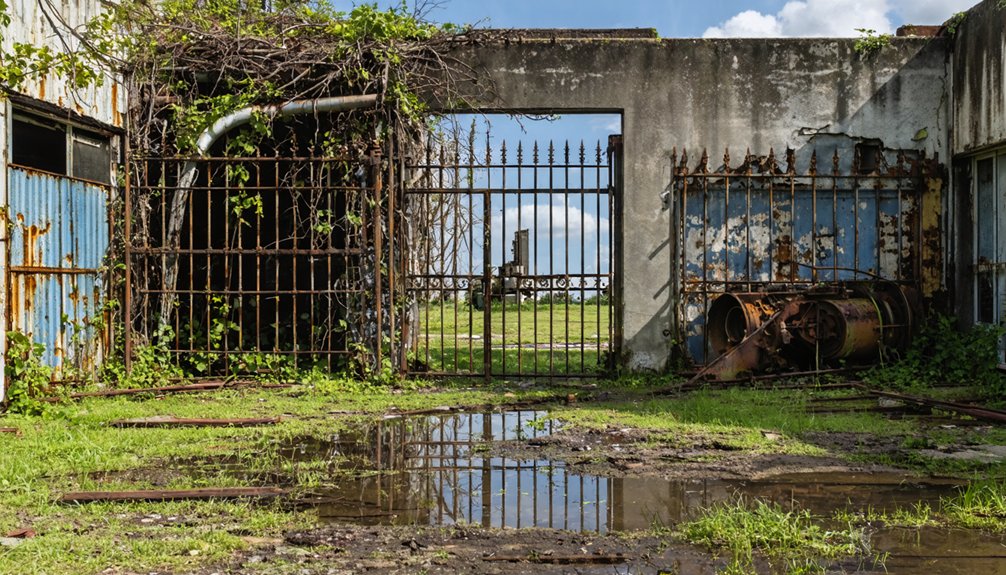
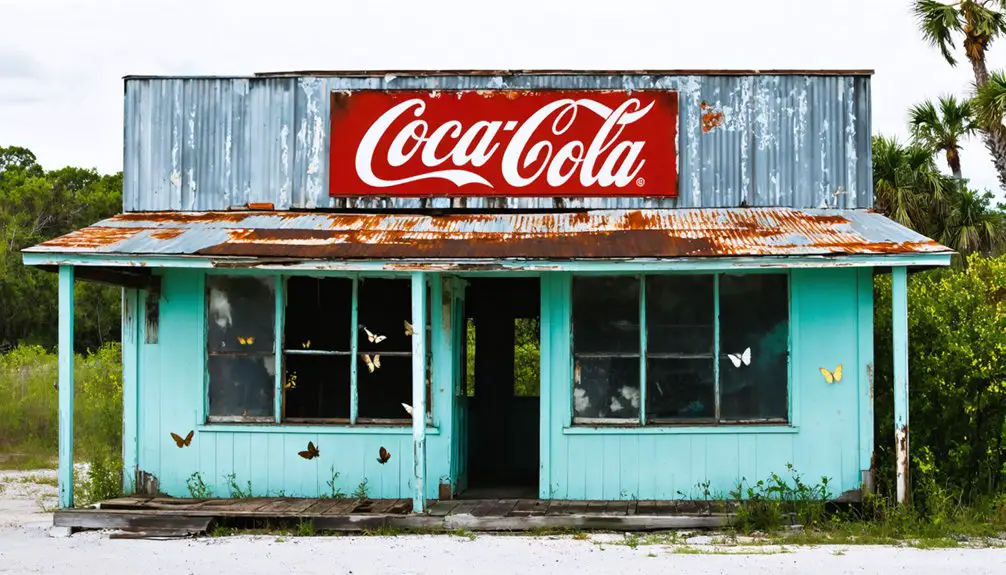
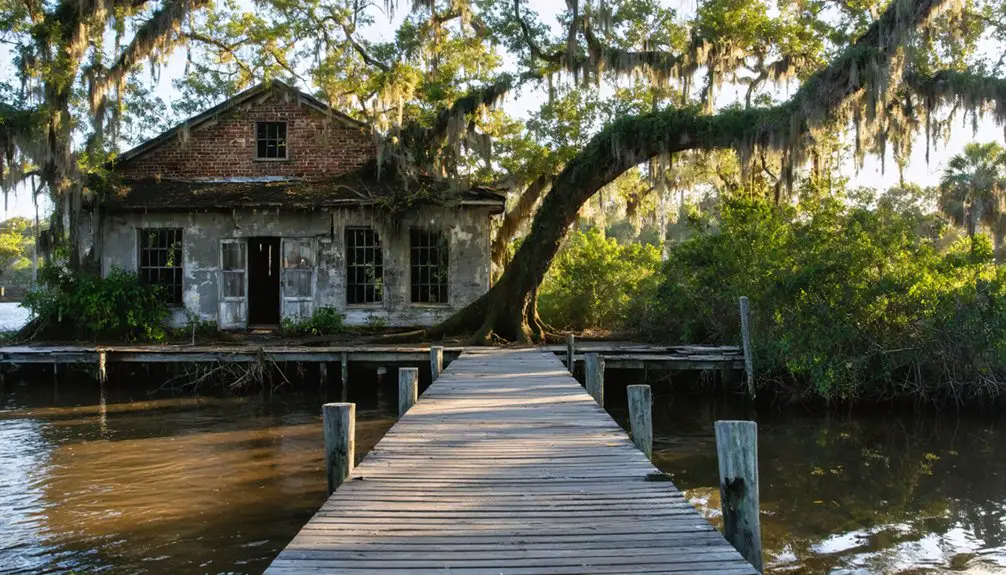
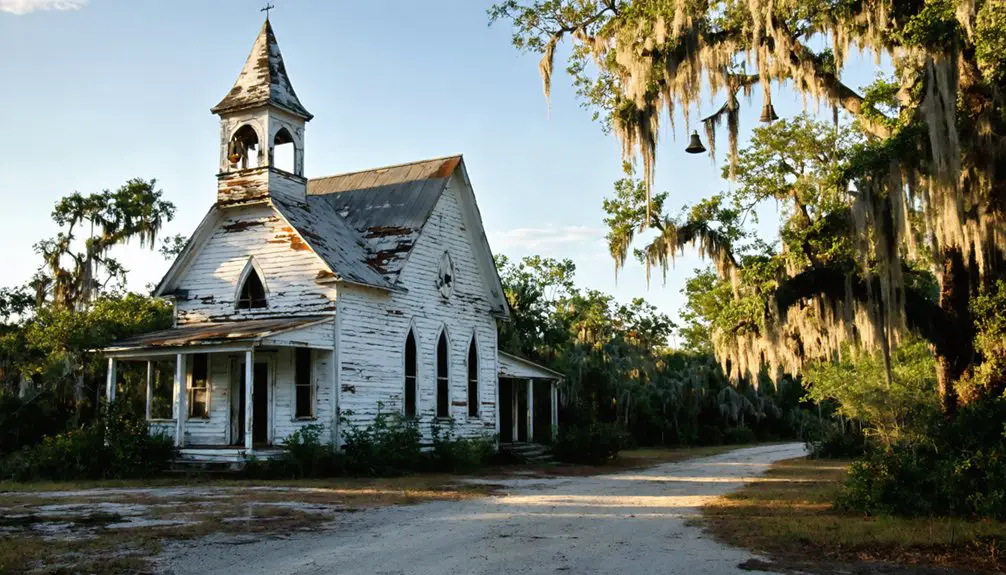
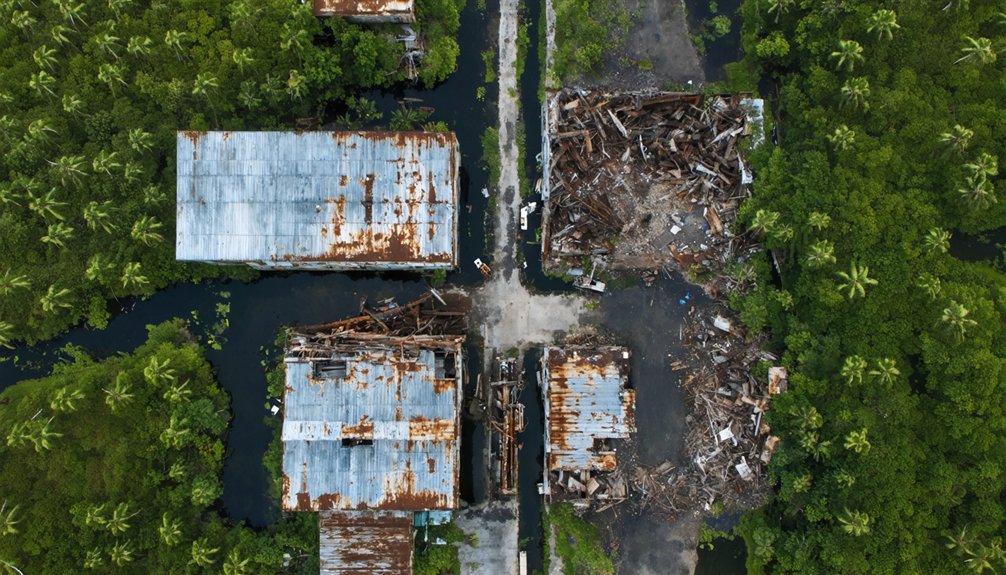
Although much of Pembroke Industrial has surrendered to time and overgrowth, you’ll still find scattered industrial relics that hint at the site’s working past. Ruin exploration here rewards the patient visitor — crumbling structural remnants, rusted metal fragments, and weathered concrete foundations quietly tell stories of phosphate-era labor and ambition.
The industrial heritage embedded in this landscape speaks loudly if you slow down and look carefully.
Open fields now dominate where workers once moved with purpose, yet remnants persist beneath the brush. Nearby Mosaic Company lands preserve similar ghostly silhouettes — smokestacks and power plant ruins standing like monuments to a vanished economy.
Bring sturdy boots, a camera, and curiosity. What remains isn’t polished or preserved, but that raw authenticity is exactly what makes Pembroke Industrial worth seeking out.
Can You Actually Visit Pembroke Industrial Without Trespassing?
Visiting Pembroke Industrial without crossing legal boundaries is genuinely possible, but it demands a little homework before you load up the car. Much of this industrial heritage land falls under private or corporate ownership, likely Mosaic Company, so you’ll want to verify access before you wander.
Start your ghost town exploration smartly:
- Check Mosaic Company’s public access policies before arriving, since phosphate lands occasionally permit visitors.
- Stay on SR17 and Pembroke Road, where roadside views offer glimpses without risking trespass.
- Contact Polk County for any recorded easements or publicly accessible parcels near the site.
Respecting boundaries doesn’t mean sacrificing discovery. You can still breathe in the heavy air of forgotten industry, photograph crumbling silhouettes from legal ground, and honor what these ruins quietly remember.
What To Bring When Visiting Pembroke Industrial

Before you set foot on Pembroke Road, pack sturdy boots and a first aid kit, because overgrown industrial sites don’t forgive careless steps.
You’ll want a wide-angle lens and extra batteries to capture the haunting geometry of rusted relics against Florida’s flat, sun-bleached horizon.
Bring water, a printed map, and a healthy respect for the silence that settles over places where whole communities once clocked in and never came back.
Essential Gear For Exploration
Wandering through Pembroke Industrial’s forgotten landscape demands the right preparation, so pack a sturdy pair of boots with ankle support to navigate uneven terrain, crumbling foundations, and overgrown fields that’ve swallowed the town’s industrial bones.
Your exploration essentials should fuel both safety and discovery. These gear recommendations keep you moving freely through the site:
- Navigation tools: A downloaded offline map and compass, since cell service fades near Polk County’s remote phosphate corridors
- Protection layers: Work gloves and long sleeves guard against rusted metal edges and Florida’s relentless vegetation
- Documentation kit: A charged camera and small notebook capture fleeting details that memory surrenders
Carry water for the heat, and bring a flashlight for shadowed ruins.
Respecting the land means leaving nothing behind except your footprints.
Safety Items To Pack
Carry a compact first aid kit stocked with antiseptic wipes, bandages, and blister treatments — rusted edges and uneven ground claim the unprepared quickly.
Sturdy boots with ankle support aren’t optional here. Bring a whistle, a charged backup battery, and a paper map, because cell signals don’t respect your curiosity.
Wear long sleeves and pants to guard against both sun and hidden debris. Hydration matters more than you’d expect in Polk County’s heat.
Respect the silence of this forgotten place — and make sure you’re equipped to walk back out of it.
Capturing Memories With Photography
Pembroke Industrial doesn’t always offer second chances — faded paint peels a little faster each season, and corroded metal surrenders its shape to time whether you’re there to witness it or not.
Capture ghost town aesthetics before decay claims what’s left.
Pack intentionally for photography techniques that honor this forgotten place:
- Wide-angle lens — pulls vast open fields and distant industrial silhouettes into a single haunting frame
- Golden hour timing — early morning or late afternoon light carves dramatic shadows across rusted relics
- Polarizing filter — cuts Florida’s harsh glare, revealing textures in weathered surfaces
Shoot low angles to emphasize scale.
Let peeling walls fill your frame completely.
You’re not just documenting ruins — you’re preserving evidence that something real once thrived here, refusing to let Pembroke Industrial disappear entirely.
Which Ghost Towns Pair Best With a Pembroke Industrial Trip?
Why stop at just one ghost town when Polk County’s industrial past stretches across a whole web of forgotten sites?
Ghost town pairings sharpen your understanding of the region’s industrial history, letting you connect the dots between phosphate booms, railroad declines, and vanished communities.
Pairing ghost towns turns scattered ruins into a readable map of booms, busts, and erased communities.
After walking Pembroke Industrial’s silent fields, head toward Mulberry’s phosphate ruins, where smokestacks still pierce the sky.
Chase that with Mosaic Company’s abandoned power plant structures nearby.
If you’re pushing farther, Chassahowitzka and Osceola offer contrasting stories of Florida’s resource-driven settlements.
Fort Meade anchors any route with its preserved 19th-century architecture, grounding you in the era that birthed these forgotten places.
You’ll leave with a richer, more layered picture of what Florida sacrificed for industrial progress.
Why Should You Visit the Mulberry Phosphate Museum First?
Before you set foot in Pembroke Industrial’s quiet fields, stop at the Mulberry Phosphate Museum and let it reframe everything you’re about to see.
Mulberry history runs deep here, and the phosphate legacy that shaped this entire region becomes tangible the moment you walk through those doors.
The museum gives you the interpretive lens you’ll need to read the landscape ahead:
- Industrial context: Understand how phosphate mining built and erased entire communities overnight
- Artifact collections: See the machinery, tools, and photographs that ghost towns like Pembroke Industrial left behind
- Timeline clarity: Trace the boom-and-bust cycles that explain every abandoned field you’ll wander through
You’ll leave Mulberry with sharper eyes and a deeper hunger for what’s waiting down Pembroke Road.
Frequently Asked Questions
Are There Guided Tours Available Specifically for Pembroke Industrial Ghost Town?
No official Pembroke Industrial tours exist, but you’re free to explore its ghost town history independently. Drive Pembroke Road, breathe in that nostalgic industrial decay, and let the ruins tell their own forgotten, hauntingly beautiful story.
What Wildlife or Plant Species Now Inhabit the Pembroke Industrial Site?
Where industry once roared, nature’s now reclaimed it. You’ll find native species thriving amid forgotten ruins, their ecological impact transforming barren wastelands into wild, freeing landscapes — a hauntingly beautiful reminder that nature always wins.
Has Pembroke Industrial Ever Appeared in Films or Documentaries?
No records confirm Pembroke history’s Film appearances in documentaries or movies. You haven’t missed hidden footage—this forgotten industrial ghost town quietly crumbles, its haunting story waiting for a filmmaker bold enough to capture its fading, untamed freedom.
Are There Any Local Legends or Ghost Stories Tied to Pembroke Industrial?
No documented Pembroke hauntings or Industrial myths exist, but you’ll *feel* forgotten echoes walking those abandoned fields — restless machinery spirits, vanished workers’ whispers, and rust-stained memories haunting every crumbling relic you’re free to discover.
Can Children Safely Explore the Pembroke Industrial Ghost Town Area?
You’ll want to prioritize child safety here — supervision’s essential among forgotten industrial relics. Follow smart exploration tips: stay on clear paths, avoid unstable structures, and let curiosity roam freely through Pembroke’s hauntingly beautiful, rust-kissed remnants of yesterday’s bustling world.
References
- https://kids.kiddle.co/Pembroke
- https://en.wikipedia.org/wiki/List_of_ghost_towns_in_Florida
- https://floridatrailblazer.com/tag/ghost-towns/
- https://www.ghosttowns.com/states/fl/pembroke.html
- https://www.youtube.com/watch?v=OWy7bai2Hws