Rayado, New Mexico isn’t your typical ghost town — it’s a frontier landmark frozen in time. Founded in 1848 by Lucien Maxwell, it sits where the Santa Fe Trail’s Mountain and Cimarron routes meet, just 10 miles south of Cimarron off Highway 21. You’ll find restored adobe buildings, the Kit Carson Museum, and interpretive tours maintained by Philmont Scout Ranch. Plan a full day trip and keep exploring — there’s far more history waiting along this route than most travelers expect.
Key Takeaways
- Rayado, founded in 1848, is a historically rich site maintained by Philmont Scout Ranch, featuring restored adobe buildings and the Kit Carson Museum.
- To reach Rayado, turn off Highway 21 approximately 10 miles south of Cimarron, navigating rolling high-desert terrain with limited signage along the route.
- The site offers interpretive tours with period-style presentations, providing visitors hands-on insights into frontier life and regional history.
- Notable nearby stops include Cimarron’s St. James Hotel, Fort Union National Monument, and Wagon Mound, enriching the overall road trip experience.
- Highway 21 is a scenic, underrated route threading open rangeland with stunning Sangre de Cristo mountain views, perfect for unhurried exploration.
The First Settlement in Colfax County: Rayado’s Place in New Mexico History
When you pull off Highway 21 about 10 miles south of Cimarron, you’re standing on ground that carries more historical weight than its quiet surroundings suggest.
Lucien B. Maxwell founded Rayado in 1848, making it the first settlement in Colfax County and the first plains settlement in New Mexico east of the Sangre de Cristo mountain valleys.
That Rayado heritage runs deep. Maxwell built here at the close of the Mexican-American War, planting roots where the Santa Fe Trail‘s Mountain and Cimarron routes crossed.
The settlement significance goes beyond geography — this was where frontier New Mexico began taking shape, where travelers found footing, and where early American expansion met raw, open land.
You’re not just visiting a relic. You’re visiting a starting point.
How Lucien Maxwell Built Rayado After the Mexican-American War
When the Mexican-American War ended in 1848, Lucien B. Maxwell didn’t wait long to act—he staked his claim at Rayado and built the first permanent settlement in what would become Colfax County.
You’ll find his story woven into the land itself, as he developed the site along the Santa Fe Trail‘s Mountain Route, positioning Rayado as a natural stop for traders, travelers, and military patrols moving through the region.
His ambitions ran deep, and Rayado became the foundation of a much larger empire tied to the sprawling Maxwell Land Grant that would eventually shape the entire northeastern corner of New Mexico.
Maxwell’s Post-War Settlement
After the Mexican-American War ended in 1848, Lucien B. Maxwell planted roots in the raw New Mexico territory, founding Rayado as the region’s first plains settlement east of the Sangre de Cristo mountains.
Maxwell’s Vision stretched far beyond a simple homestead — he was building an empire tied to the expansive Maxwell Land Grant.
You’re stepping into territory where post-war challenges were relentless. Apache and Comanche raiders threatened livestock and lives, making survival a daily negotiation.
Maxwell responded decisively, persuading frontiersman Kit Carson to help secure the settlement in 1849, followed by a U.S. Army Dragoon detachment in 1850.
Rayado wasn’t accidental — it was deliberately positioned near the Santa Fe Trail‘s critical Mountain and Cimarron routes, making it both a strategic outpost and a thriving frontier crossroads.
Building Along The Trail
Lucien Maxwell didn’t just settle Rayado — he built it with purpose, stacking adobe walls and laying out structures that would serve both commerce and survival along one of the frontier’s busiest corridors.
His trailside architecture wasn’t decorative; it was functional, designed to anchor travelers, traders, and eventually soldiers moving between the Mountain and Cimarron routes of the Santa Fe Trail.
You can still see that intentionality today in the preserved buildings maintained by Philmont Scout Ranch.
The historical significance of what Maxwell constructed here reaches beyond frontier nostalgia — these structures represented real infrastructure in a land where infrastructure meant survival.
When you walk this site, you’re moving through the bones of a settlement that shaped northern New Mexico’s earliest American-era identity.
Rayado’s Frontier Foundation
The year 1848 carried enormous weight for the American Southwest — the Mexican-American War had just ended, treaties had been signed, and a vast stretch of territory suddenly needed settlers willing to actually stay.
Lucien Maxwell answered that call directly. He planted roots at Rayado, creating one of the region’s earliest frontier settlements with clear historical significance.
Three facts frame what he accomplished:
- He founded Rayado in 1848 on land from the massive Maxwell Land Grant.
- He established the first settlement in Colfax County.
- He built the first plains settlement east of the Sangre de Cristo valleys.
You’re looking at ground zero for Anglo settlement in this corner of New Mexico — raw, deliberate, and built to last.
Kit Carson, Frontier Security, and the Early Years at Rayado
By 1849, Rayado had already earned a reputation as a rugged outpost on the edge of contested frontier territory, and Maxwell knew he needed more than adobe walls to keep it alive. He persuaded Kit Carson to join the settlement, bringing real muscle to the security concerns that defined frontier life here.
Carson’s presence wasn’t ceremonial — Apache and Comanche raiders regularly threatened livestock and lives. By 1850, Maxwell secured a detachment of U.S. Army Dragoons to base at Rayado, adding military weight to an already tense situation.
Kit Carson didn’t come to Rayado for show — he came because the frontier demanded real teeth.
In April of that year, Jicarilla Apache raiders struck, stealing horses and wounding two Mexican herders. The Army pursued them hard.
When you stand at Rayado today, you’re standing where that raw, unfiltered chapter of American expansion actually played out.
Apache Raids and the U.S. Army Dragoons at Rayado in 1850
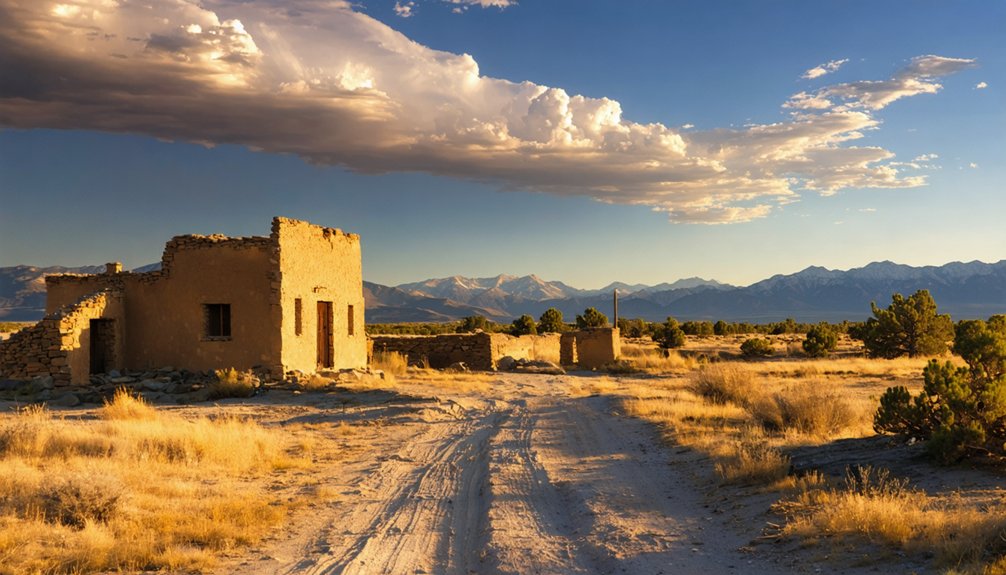
April 1850 brought the kind of violence that defined frontier life at Rayado. Jicarilla Apache conflict struck hard when raiders stole horses and seriously wounded two Mexican herders. The military presence responded swiftly.
Sergeant William Holbrook led U.S. Army Dragoons in pursuit, attacking the raiders’ camp with decisive force. Here’s what that confrontation produced:
- Five Apache raiders killed
- Two Apache wounded
- Stolen livestock recovered
That response signaled something important — the frontier wasn’t ungoverned. The Dragoon detachment stationed at Rayado in 1850 represented real federal commitment to protecting settlers who’d staked everything on this exposed landscape.
You can still feel that tension today walking the grounds, where history didn’t just happen — it bled into the soil.
Ghost Town or Living Museum? What Historic Buildings Still Stand at Rayado
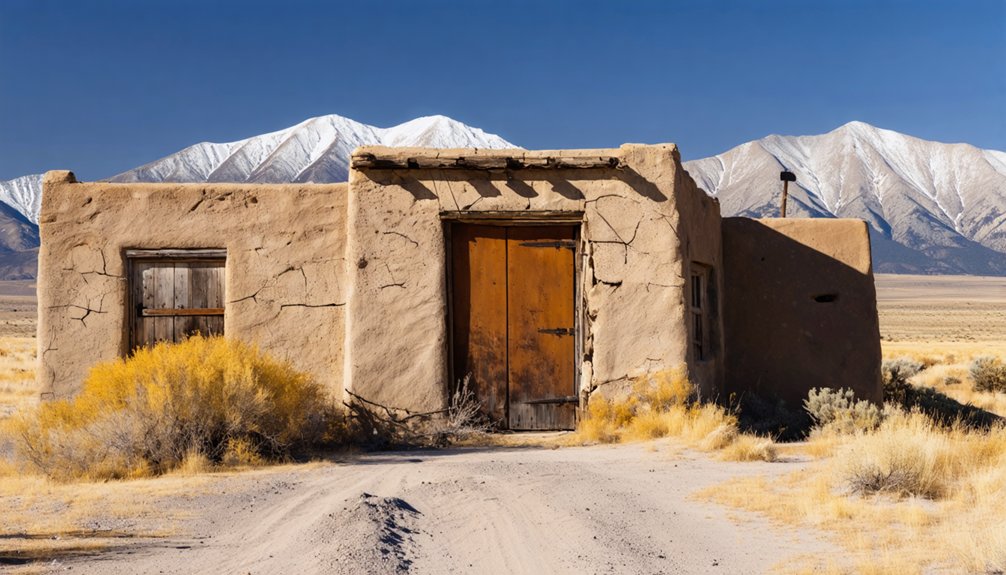
Rayado defies the ghost town label the moment you arrive. Instead of crumbling walls and empty lots, you’ll find restored adobe buildings standing with quiet authority.
Ghost town preservation here means something different — it means Philmont Scout Ranch actively maintains what survives, giving these structures a second life. You can walk through a stagecoach stop, step inside a frontier store, and explore the Kit Carson Museum, all within a compact footprint.
The historical significance becomes tangible when you realize these aren’t reconstructions — they’re the real bones of an 1848 settlement. Philmont staff lead interpretive tours in period style, turning the site into a living classroom rather than a forgotten ruin.
You won’t leave disappointed, but you’ll leave rethinking what a ghost town can be.
Kit Carson Museum at Rayado: Tours, Hours, and What to Expect On-Site
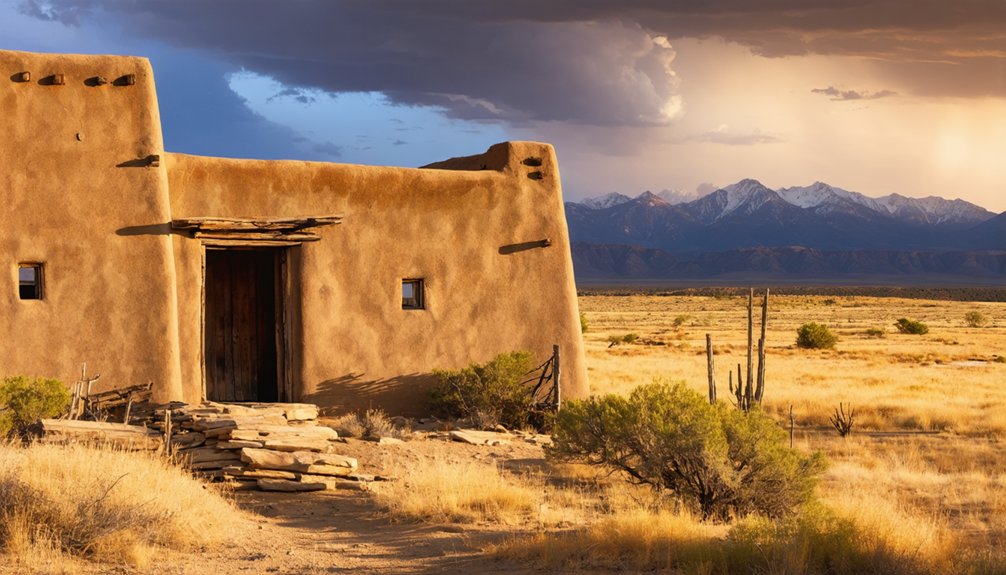
Standing at the center of Rayado’s preserved landscape, the Kit Carson Museum pulls the whole story into focus.
Philmont staff lead interpretive tours in period style, making the Tour Experience feel lived-in rather than staged.
Museum Highlights include:
- Adobe buildings restored to their 1850s appearance, including a stagecoach stop and frontier store
- Artifacts and displays connecting Kit Carson, Lucien Maxwell, and the Santa Fe Trail corridor
- Hands-on storytelling from guides dressed in period clothing
You won’t find corporate signage or crowded parking lots here.
The site runs on Philmont’s schedule, so confirm hours before you arrive.
The visit stays compact, letting you move through history at your own pace and hit the road toward your next northern New Mexico stop.
How to Reach Rayado on Highway 21 South of Cimarron
Getting to Rayado takes just one straightforward turn off Highway 21, roughly 10 miles south of Cimarron. You won’t find bold signage pointing the way, so local directions matter here.
Keep your eyes open as you roll south through rolling high-desert terrain — the turnoff arrives quietly, much like the ghost towns hidden throughout New Mexico’s forgotten corridors.
Stay alert — the turnoff arrives quietly, like the ghost towns scattered through New Mexico’s forgotten corridors.
Highway 21 itself rewards the drive. It’s one of northern New Mexico’s most underrated scenic routes, threading through open rangeland with the Sangre de Cristo peaks anchoring the western skyline.
You’ll feel the freedom of genuine open road before Rayado even comes into view. Plan your approach from Cimarron heading south, stay alert for the site entrance, and give yourself unhurried time to absorb what’s waiting there.
Day Trip From Rayado: Santa Fe Trail Stops Worth Adding to Your Route
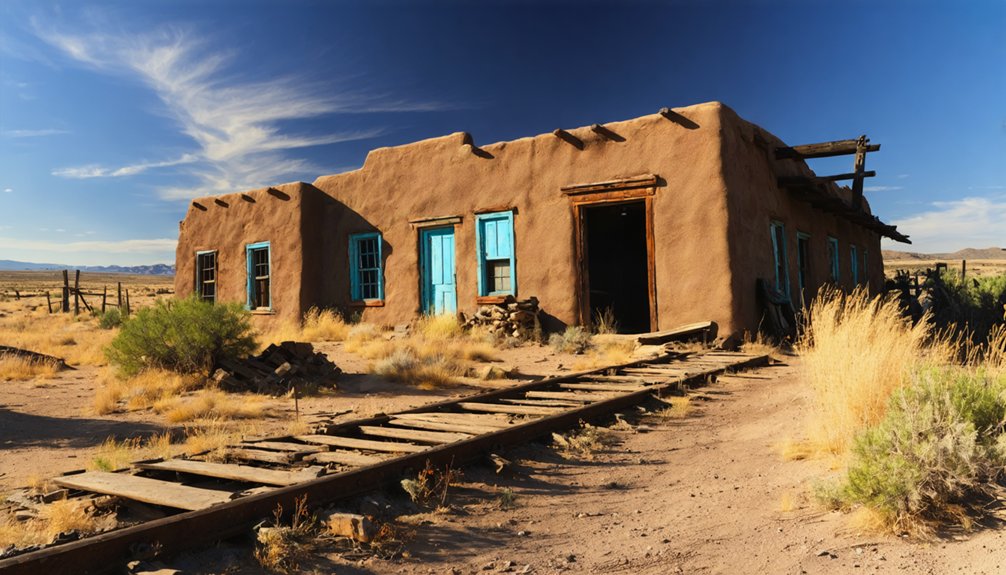
Once you’ve walked the adobe rooms at Rayado and let the frontier quiet settle over you, the Santa Fe Trail corridor pulls you forward with more history than a single stop can hold.
These scenic routes reward explorers who keep moving:
- Cimarron – Ten miles north, the St. James Hotel carries bullet holes and outlaw legends inside its walls.
- Fort Union National Monument – The largest frontier fort ruins in the Southwest anchor this historic landmark along open grassland roads.
- Wagon Mound – A volcanic landmark that trail travelers used as a natural navigation point rising dramatically from the plains.
Each stop deepens your understanding of what movement, trade, and survival actually looked like across northern New Mexico’s untamed frontier.
Frequently Asked Questions
Is Rayado Suitable for Young Children or Families With Strollers?
Hark, yes! Rayado’s compact historic grounds offer child friendly activities like interpretive tours, though stroller accessibility may challenge you on uneven adobe terrain. You’ll discover frontier history together, making it a memorable family adventure worth every bumpy step.
Are Pets Allowed When Visiting the Rayado Historic Site?
Rayado’s pet policies aren’t officially documented, so you’ll want to call Philmont Scout Ranch directly before visiting. Don’t let uncertainty stop you from experiencing this site’s remarkable historical significance along New Mexico’s legendary Santa Fe Trail frontier.
What Is the Best Time of Year to Visit Rayado?
You’ll love visiting Rayado history in late spring or early fall, when cooler temperatures make exploring scenic routes more enjoyable. The mild weather lets you soak in the frontier atmosphere without summer’s intense New Mexico heat slowing you down.
Is There an Admission Fee to Visit Rayado or the Museum?
Like a gift from the past, Rayado’s admission policies won’t chain your wallet — visiting is typically free! Confirm museum hours before you go, as Philmont Scout Ranch manages the site and schedules can vary seasonally.
Are There Restrooms or Food Options Available at the Rayado Site?
The knowledge base doesn’t confirm restroom facilities or dining options at Rayado. You’ll want to stock up in Cimarron before heading out, since this remote frontier site offers history-rich exploration rather than modern visitor conveniences.
References
- https://coloradosghosttowns.com/Rayado NM.html
- https://www.legendsofamerica.com/rayado-new-mexico/
- https://magazine.frva.com/2005/04/01/ghost-towns-of-new-mexico/
- https://compaslife.com/blogs/journal/abandoned-enchantment-ghost-towns-of-new-mexico-1
- https://www.philmontscoutranch.org/museums/rayado/
- https://newmexiconomad.com/elizabethtown/
- https://en.wikipedia.org/wiki/List_of_ghost_towns_in_New_Mexico
- https://www.newmexico.org/places-to-visit/ghost-towns/
- https://www.newmexicoghosttowns.net/waldo-nm
- https://www.newmexicomagazine.org/blog/post/abandoned-ghost-towns-new-mexico/