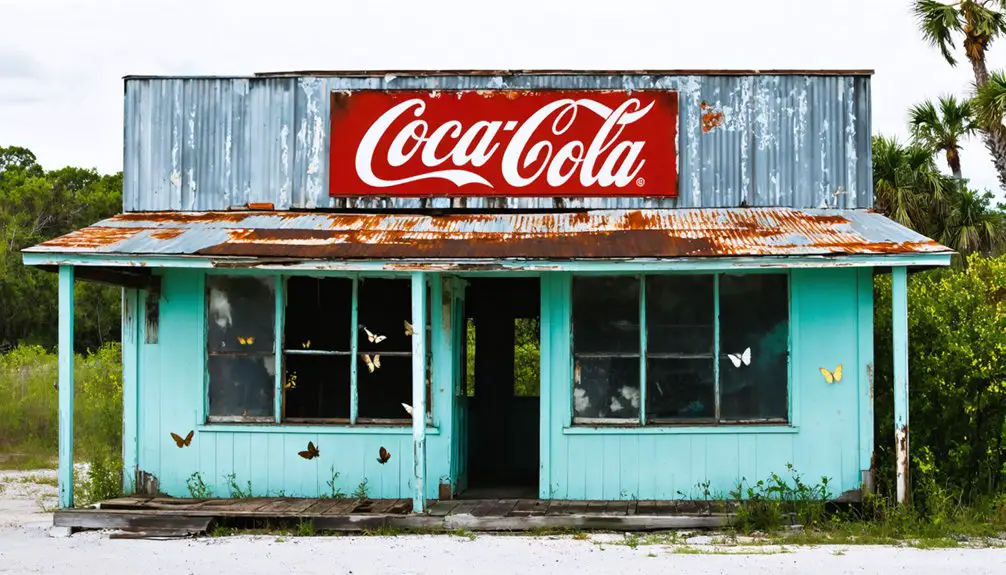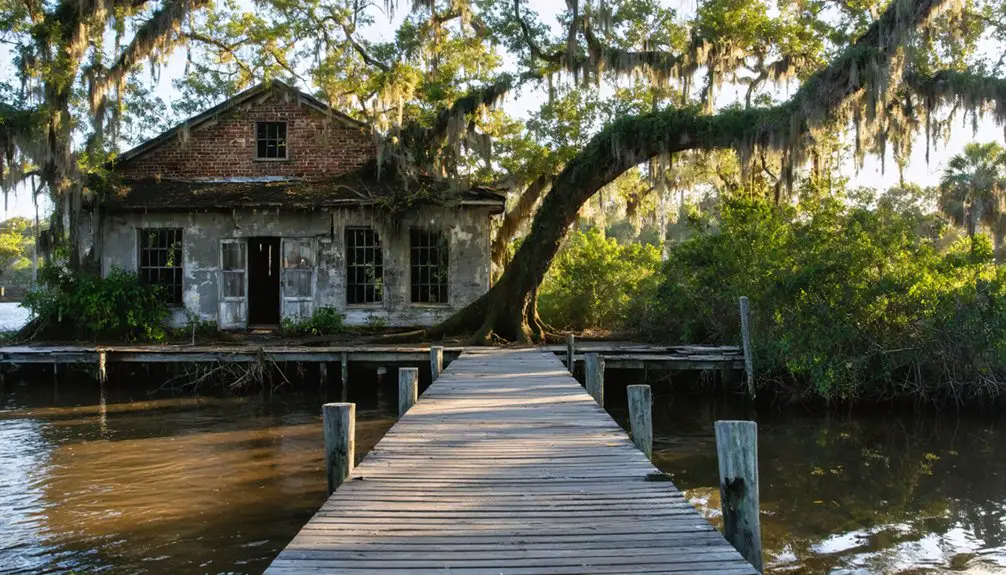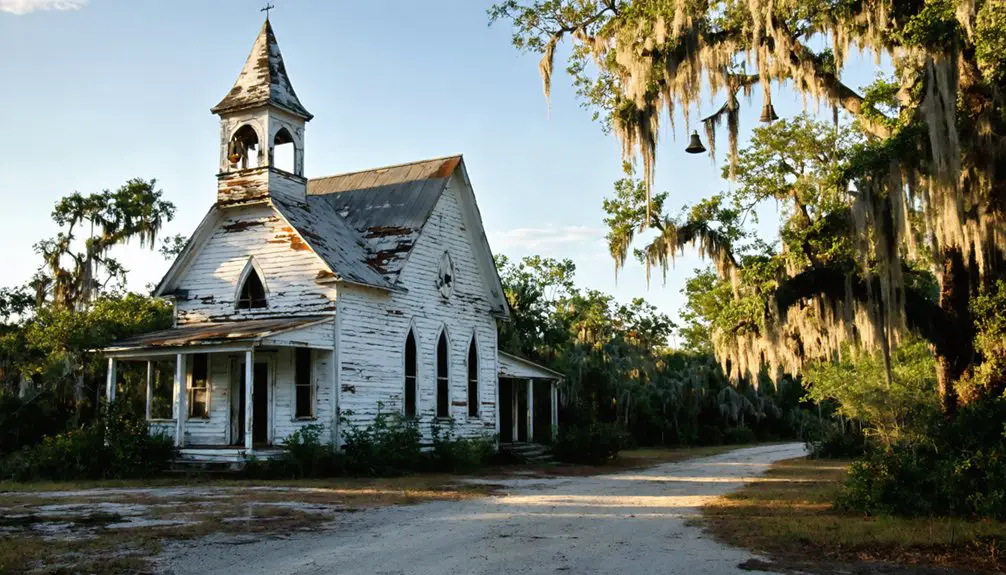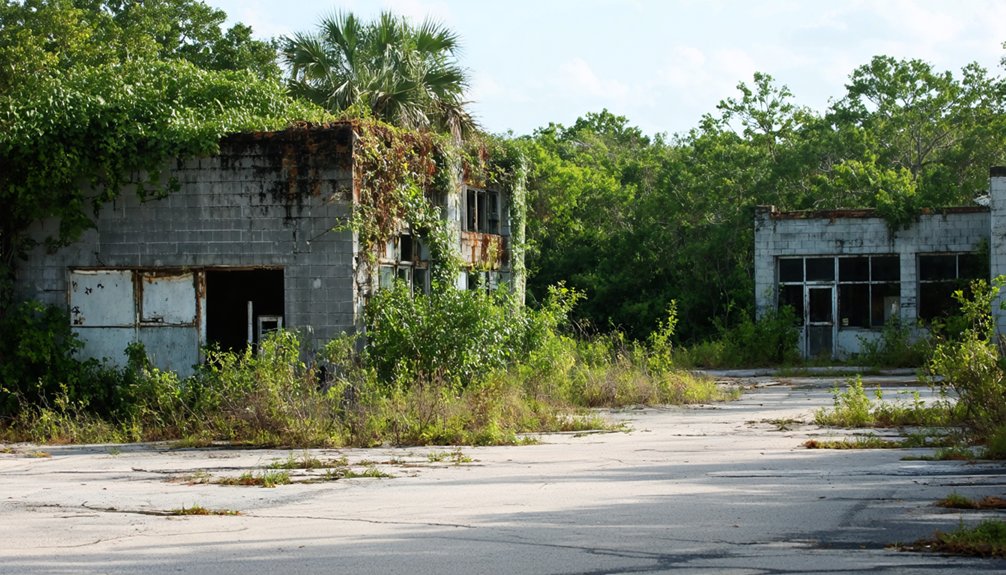
To plan your ghost town road trip to Romeo, Florida, head to Marion County off Highway 41, about 4 miles north of Dunnellon. You’ll find crumbling foundations, abandoned vehicles, and overgrown paths tracing a once-thriving 1850s farming community. Visit between November and April for the best weather and pack water, sturdy shoes, and insect repellent since GPS can be unreliable out there. Everything you need to make this trip unforgettable is just ahead.
Key Takeaways
- Romeo, Florida, is a ghost town in Marion County, located off Highway 41, approximately 4 miles north of Dunnellon.
- Visit during the dry season (November–April) for the best weather, with winter and spring offering ideal photography and exploration conditions.
- Bring water, sturdy shoes, insect repellent, a first aid kit, and navigation tools, as the terrain is overgrown and remote.
- GPS may be unreliable in Romeo, so carry a traditional map to navigate the area’s overgrown paths and crumbling remnants.
- Combine your visit with nearby attractions like Dunnellon, Rodman Reservoir, and Lake George for a full day of exploration.
What Romeo, Florida Actually Is and Why Ghost Town Hunters Come Here
Tucked off Highway 41 in Marion County, Romeo, Florida is a forgotten farming community that once thrived in the mid-1800s before quietly fading into wilderness.
Settlers arrived around the 1850s, dividing land tracts by 1880 and establishing a post office in 1886. A store, local businesses, and fertile farmland once made this place pulse with life.
Then it all unraveled.
How Romeo Went From Farming Community to Forgotten Town
Romeo’s story begins in the 1850s when settlers recognized the area’s fertile land and carved out a farming community that thrived well into the late 1800s.
By 1880, land tracts were formally divided, a post office opened in 1886, and local businesses gave the town a pulse that felt permanent.
But a store fire, population drift, and the slow creep of time stripped Romeo of its liveliness, leaving behind only foundations, abandoned vehicles, and overgrown paths for you to piece together today.
Early Farming Community Roots
Before the silence and overgrown paths took over, Romeo thrived as a bustling farming community, drawing settlers to Marion County with promises of fertile land and economic opportunity. You can trace its farming legacy back to the 1850s, when pioneers first staked their claims in this untamed Florida wilderness.
By 1880, settlement patterns had taken shape, with land tracts formally divided and community life beginning to flourish. A local store and surrounding businesses signaled real growth, transforming raw wilderness into a working town.
Settlers weren’t just surviving — they were building something lasting. That ambition echoes through every abandoned foundation you’ll encounter today.
Walking these overgrown paths connects you directly to a community that carved civilization from wilderness, only to watch time quietly reclaim it.
Economic Decline And Abandonment
What thriving communities build, time and misfortune can quietly undo. Romeo’s story reflects how quickly economic factors can unravel even the most promising settlements. Once alive with commerce and community spirit, Romeo couldn’t escape the forces that drove its decline.
Key events accelerated community decline:
- The store burned down, stripping residents of a commercial lifeline
- Population loss surged through the mid-1900s, leaving structures abandoned
- The post office closed in 1955, severing Romeo’s last official connection to the outside world
What remains today are scattered abandoned vehicles, crumbling foundations, and overgrown paths reclaimed by Florida wilderness. You’re not visiting failure here — you’re witnessing a raw, honest chapter of American frontier life slowly returning to nature.
The Ruins, Foundations, and Abandoned Vehicles You’ll Find There
When you step into what remains of Romeo, you’ll find crumbling foundations poking through the underbrush, silent proof that a real community once thrived here.
Rusted, abandoned vehicles sit scattered across the landscape like forgotten relics, slowly being swallowed by Florida’s relentless vegetation.
Every overgrown path you follow tells its own story, pulling you deeper into a world frozen somewhere in the mid-1900s.
Crumbling Foundations Still Standing
Although nature has worked hard to reclaim Romeo, Florida, the ghost town still holds onto its past through crumbling foundations, decayed structures, and abandoned vehicles that seem frozen in time.
These crumbling structures carry real historical significance, offering you a direct connection to 19th-century pioneer life.
As you explore, you’ll discover:
- Stone and brick foundations outlining where homes and businesses once stood
- Overgrown pathways that trace the original town layout from over a century ago
- Skeletal remnants of walls that hint at Romeo’s once-thriving community
Each step reveals something raw and real.
You’re not just walking through ruins — you’re reading history written in weathered stone and reclaimed earth.
Wear sturdy shoes and move carefully through the uneven terrain.
Rusted Abandoned Vehicles Scattered
Beyond the foundations and crumbling walls, Romeo’s most striking remnants aren’t made of stone — they’re made of steel. Scattered across the overgrown landscape, rusted relics of abandoned vehicles sit frozen in time, swallowed by decades of Florida wilderness.
These ghostly echoes of daily life tell a raw, unfiltered story of a community that simply walked away.
You’ll spot them half-buried beneath tangled vegetation, their metal frames oxidized into deep shades of amber and rust. Each one represents someone’s livelihood, a working machine that once moved people and goods through this thriving farming town.
Walk carefully around them — the ground is uneven, and the structures are unstable.
Photograph everything, touch nothing, and let the silence do the storytelling. This is freedom found in forgotten places.
Overgrown Paths Tell Stories
Every overgrown path in Romeo whispers a chapter of the town’s forgotten story, pulling you deeper into a landscape where nature and history have merged into something hauntingly beautiful.
Nature’s reclamation is relentless here, yet it preserves an overgrown history worth uncovering.
As you push through the brush, you’ll discover:
- Crumbling foundations that outline where families once built their lives
- Abandoned vehicles swallowed by vegetation, frozen mid-decay like sculptures of a vanished era
- Worn pathways tracing routes settlers traveled daily for generations
Each step reveals how completely the wilderness has retaken this land.
Wear sturdy shoes, stay alert for unstable ground, and let curiosity guide you.
Romeo rewards those willing to read what nature’s written across its forgotten landscape.
How to Get to Romeo Off Highway 41
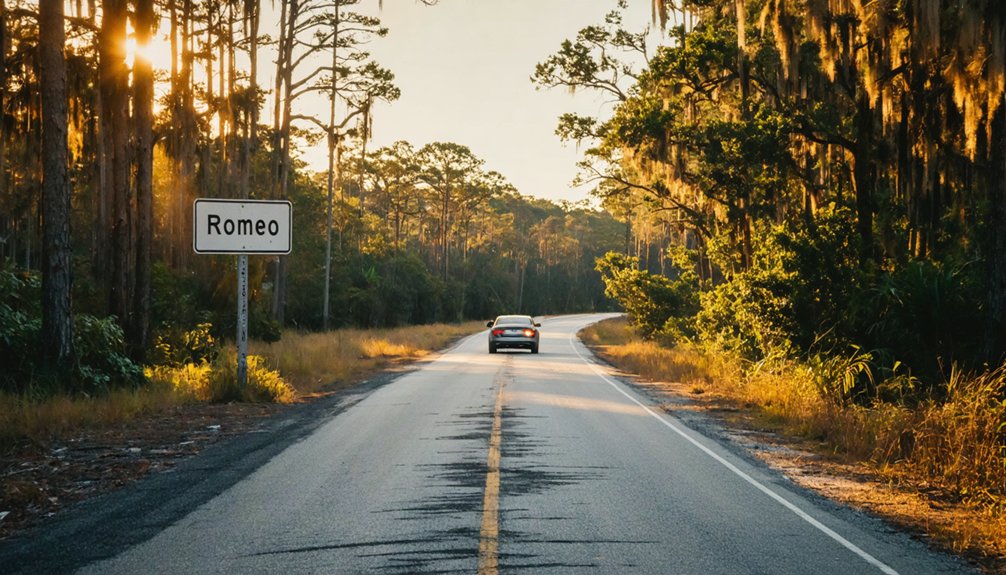
Finding Romeo takes just a few simple steps, but you’ll want to pay close attention since GPS can be unreliable in this remote stretch of Marion County. Your directions navigation starts on Highway 41, heading approximately 4 miles north of Dunnellon.
Keep your eyes open because the turnoff blends seamlessly into Florida’s wild landscape. Use a reliable map rather than solely trusting your phone’s GPS — cell signals fade fast out here.
The scenic routes leading toward Romeo are framed by dense wilderness, making the drive itself feel like stepping back in time. Your destination coordinates land near 1805 Northwest 190th Avenue, Dunnellon, Florida 34432.
Paved roads give way to rugged terrain, so arrive prepared, stay alert, and embrace the untamed freedom that this forgotten corner of Florida offers.
The Best Time of Year to Visit Romeo
You’ll find Romeo most welcoming during Florida’s dry season, from November through April, when cooler temperatures and lower humidity make trekking through overgrown terrain far more bearable.
Summer months bring intense heat, afternoon thunderstorms, and swarms of insects that can turn an adventurous exploration into a miserable ordeal.
Since Romeo draws only a niche crowd of ghost town enthusiasts, you won’t face overwhelming visitor traffic in any season, but weekdays offer the quietest experience if you prefer having the ruins entirely to yourself.
Ideal Seasonal Visiting Windows
Timing your visit to Romeo, Florida can make or break the experience. Seasonal weather dramatically shapes what you’ll encounter among the ruins. The ideal visiting windows are:
- Fall (October–November): Cooler temperatures make hiking comfortable, and wildlife encounters are less intense without summer’s aggressive insects.
- Winter (December–February): Mild Florida winters offer clear skies and dry trails, perfect for photographing abandoned structures without heat exhaustion.
- Spring (March–April): Wildflowers reclaim the overgrown paths, creating stunning contrasts against crumbling foundations before humidity spikes.
Avoid summer visits when oppressive heat, heavy rainfall, and aggressive wildlife encounters can turn exploration into misery.
You’ll navigate Romeo’s remote terrain far more freely when nature isn’t working against you. Plan smart, pack water, and choose your window wisely.
Weather Conditions To Consider
Weather shapes every aspect of your Romeo exploration, from trail conditions underfoot to how long you can safely stay out in the field. Florida’s weather patterns shift dramatically across the calendar, making timing everything.
Summer brings brutal heat, suffocating humidity, and afternoon thunderstorms that turn overgrown paths into muddy obstacles. You’ll want to avoid those months entirely.
Seasonal changes tip in your favor between November and April, when temperatures cool, rainfall drops, and the wilderness becomes genuinely navigable.
Winter mornings deliver crisp air, firm ground, and manageable vegetation. Spring edges toward warmth but remains tolerable before summer’s heat resurges.
Watch forecasts closely regardless of season — Florida surprises even experienced travelers. Pack water, dress in layers for cooler months, and always check conditions before you head out.
Avoiding Peak Crowd Times
Since Romeo draws curious explorers rather than tourist buses, crowds aren’t your biggest concern — timing your visit around Florida’s natural rhythms matters far more.
Even at this ghost town, peak times can make your experience uncomfortable rather than adventurous.
Plan your visit strategically:
- Fall through early spring (October–March): Cooler temperatures and lower humidity make trekking through overgrown terrain far more bearable.
- Weekday mornings: You’ll likely have the ruins entirely to yourself, creating a genuinely immersive experience.
- Avoid summer months: Florida’s intense heat, afternoon thunderstorms, and oppressive humidity can turn exploration into an ordeal fast.
Arriving early also maximizes your natural light, letting you photograph the abandoned structures and weathered remnants before shadows swallow the details you came to discover.
What to Pack Before You Head Into the Florida Wilderness
Before you venture into the remote Florida wilderness surrounding Romeo, packing the right gear can mean the difference between a memorable adventure and a miserable one.
Your packing essentials should include plenty of water, as there’s no access to hydration along the way. Wilderness survival demands sturdy shoes to handle overgrown terrain and unstable ground around crumbling foundations.
Toss in a basic first aid kit, insect repellent, and sunscreen — Florida’s sun and bugs don’t negotiate. Bring a reliable GPS map, since standard navigation often struggles in this off-the-beaten-path location.
A fully charged phone and a backup battery keep you connected if plans shift. Travel with a friend or tell someone your itinerary before heading out into this beautifully isolated stretch of Florida wilderness.
How to Stay Safe While Exploring Romeo
Exploring Romeo rewards the cautious adventurer, so treat every crumbling structure as a potential hazard and keep your distance until you’re confident it’s stable.
Group exploration isn’t just smart—it’s essential when you’re traversing remote Florida wilderness with limited outside contact.
Pack your safety equipment and follow these non-negotiables:
- Tell someone your plans before you leave, including your expected return time and exact coordinates near Northwest 190th Avenue.
- Stay together during group exploration—wandering solo through unstable ruins dramatically increases your risk.
- Carry water and a charged phone, because the remote terrain off Highway 41 offers zero conveniences if something goes wrong.
Respect the ruins by leaving artifacts untouched and taking only photos.
Romeo’s history deserves preservation, and your safety guarantees you’ll live to tell the story.
Nearby Stops Worth Adding to Your Romeo Visit
After you’ve finished poking through Romeo’s ruins, the surrounding area offers several worthy detours that make the drive even more rewarding.
Dunnellon, just four miles south, stocks supplies and offers a civilized pause before your next adventure. Head toward Highway 316 and Highway 19 to reach Lake George, where open water contrasts beautifully with Romeo’s landlocked ghost town photography opportunities.
Continue past Rodman Reservoir, a scenic landmark worth a stop for fishing or simply soaking in Florida’s wild interior. Stay on the route to reach Lake CER, or turn left toward Morehead boat ramp for waterfront access.
Rodman Reservoir rewards those who linger — cast a line, breathe the wild air, then follow the road deeper in.
Each stop deepens your appreciation for the region’s historical significance, connecting Romeo’s quiet decay to a broader landscape shaped by time, nature, and human ambition.
A Full Day Trip Itinerary Built Around Romeo, Florida
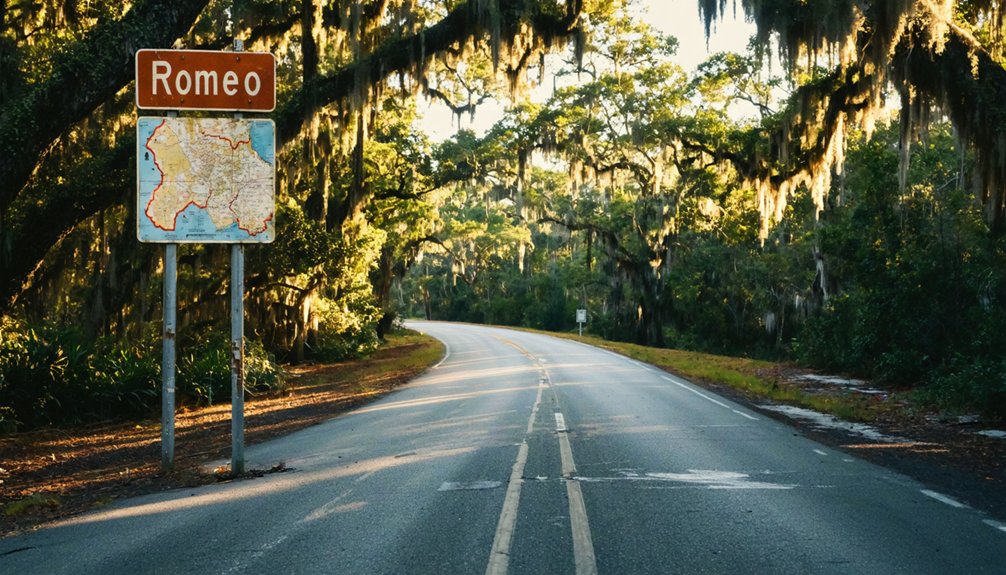
Planning a full day around Romeo transforms a simple ghost town visit into a rich Florida adventure that balances history, nature, and exploration. Start early in Dunnellon, grab supplies, then head north on Highway 41 toward Romeo’s ghost town exploration.
Walk the overgrown paths, photograph abandoned foundations, and absorb the historical significance of a community that thrived over a century ago.
After Romeo, build momentum into your afternoon:
- Rodman Reservoir – Follow Highway 316 for scenic waterside views
- Lake George – Access via Highway 19 for open water and wildlife
- Morehead Boat Ramp – A quiet stop perfect for unwinding after exploration
Wear sturdy shoes, carry water, and tell someone your plans. Romeo rewards curious, freedom-seeking travelers who embrace Florida’s untamed, forgotten landscapes.
How Romeo Compares to Other Florida Ghost Towns Worth Visiting
Florida hides dozens of ghost towns within its wilderness, and Romeo stands out as one of the most raw and accessible among them.
Unlike Ellaville or Cassadaga, which carry polished haunted history and curated local legends, Romeo strips away the theatrics. You’ll find no guided tours or gift shops here. Instead, you get crumbling foundations, abandoned vehicles, and overgrown paths telling an unfiltered story of rise and collapse.
Towns like Port St. Joe offer dramatic backstories tied to hurricanes, but Romeo delivers something quieter and arguably more haunting — a farming community that simply faded.
If you crave authentic exploration over packaged history, Romeo earns its place at the top of your Florida ghost town list.
Frequently Asked Questions
Is Romeo, Florida Legally Open to the Public for Exploration?
You’ll find Romeo’s ghost town history open for exploration, but you’re responsible for your own exploration safety. Respect the ruins, don’t disturb artifacts, and you’ll enjoy this adventurous, freely accessible slice of Florida’s forgotten past.
Are There Any Guided Tours Available for Visiting Romeo, Florida?
No guided tours exist for Romeo, Florida, but that’s what makes it thrilling! You’ll explore its guided experiences independently, uncovering local legends and forgotten history on your own adventurous terms, completely free to roam.
Does Romeo, Florida Have Any Cell Phone Signal for Emergencies?
You can’t count on cell coverage in Romeo’s remote wilderness, so don’t rely on it for emergency services. Tell someone your plans before you venture out and carry a backup communication device!
Is Photography or Filming Commercially in Romeo, Florida Permitted?
Like pioneers staking unclaimed land, you’ll need to research commercial permits and photography regulations before filming in Romeo — the knowledge base doesn’t confirm specific rules, so contact Marion County authorities to guarantee your creative freedom stays protected.
Has Romeo, Florida Ever Been Considered for Historical Preservation Efforts?
You’ll find Romeo’s historical significance isn’t formally recognized through preservation efforts, yet preservation challenges remain real — overgrown terrain, unstable structures, and remote access make protecting this forgotten Florida frontier an adventurous, ongoing community conversation worth exploring yourself.
References
- https://travelmadepersonal.com/romeo-florida-ghost-town/
- https://ghosttownadventures.wordpress.com/2018/03/
- https://www.narcity.com/miami/17-abandoned-ghost-towns-you-must-visit-in-florida
- https://travelmadepersonal.com/category/florida/florida-ghost-towns/
- https://www.youtube.com/watch?v=DHpp5BcRxkU
- https://patchproflorida.com/blog/the-fascinating-history-of-floridas-ghost-towns/
- https://www.youtube.com/watch?v=oiS5w2an3sI
- https://en.wikipedia.org/wiki/List_of_ghost_towns_in_Florida
- https://urbexunderground.com/ghost-towns-in-florida/
- https://www.ghosttowns.com/states/fl/fl.html