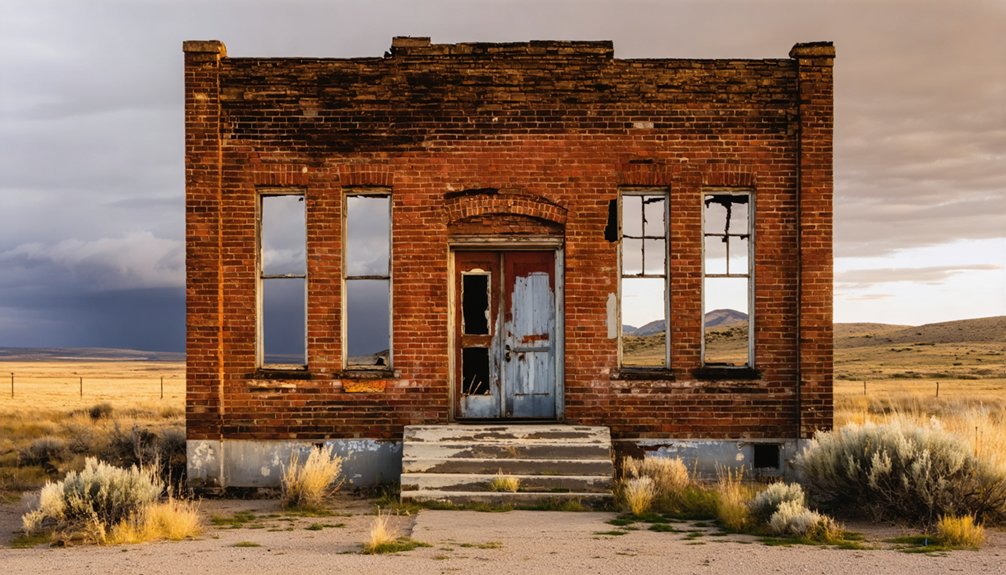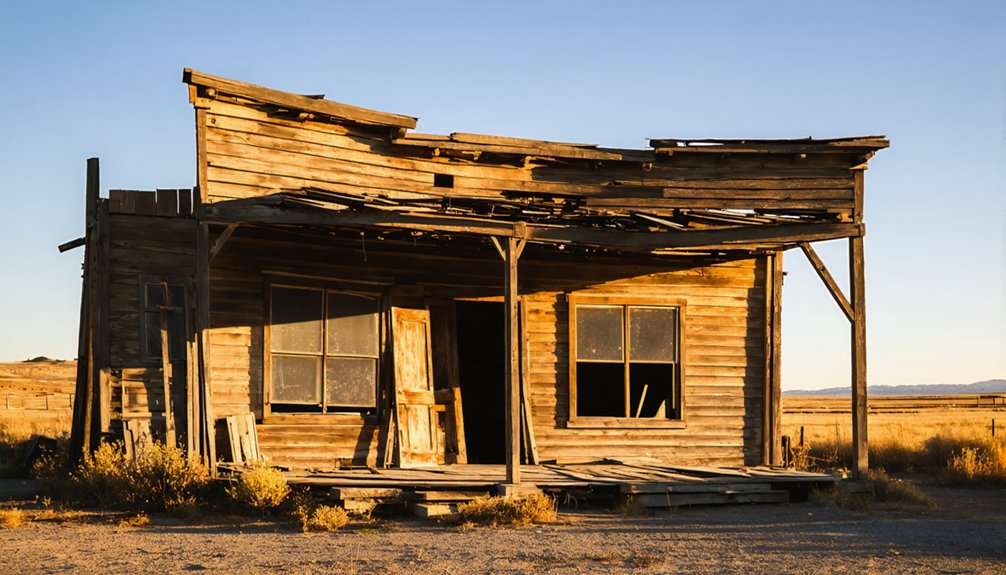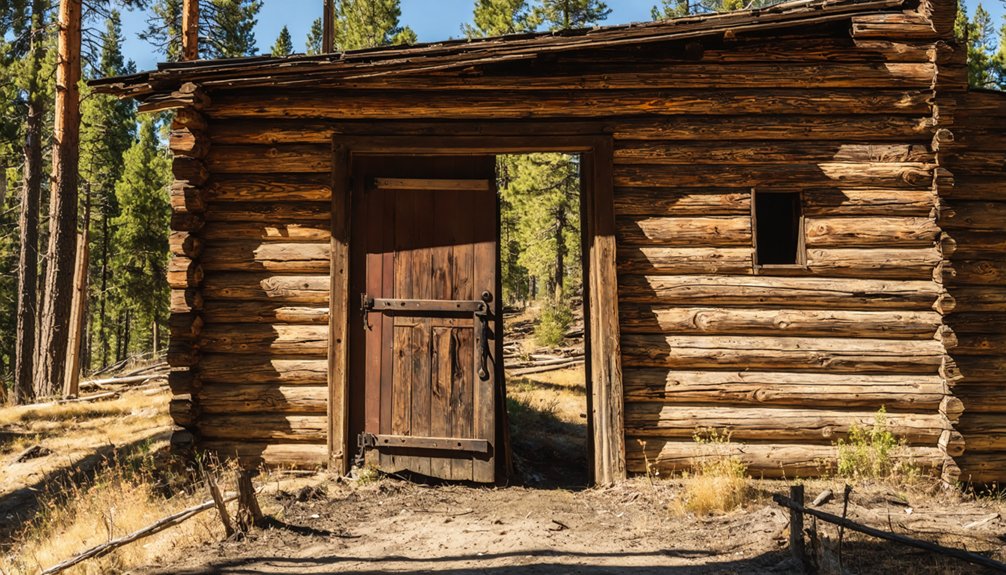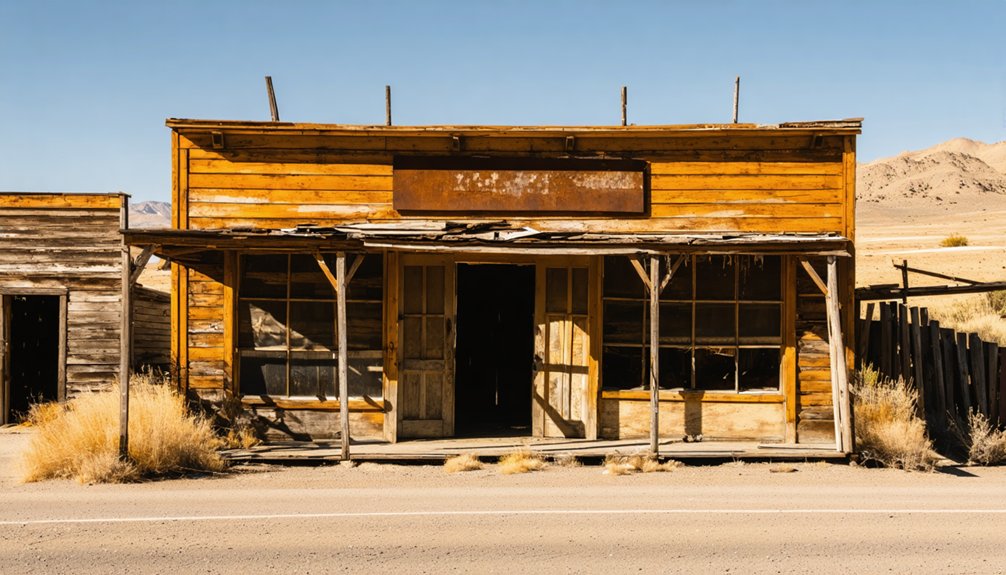
Planning a ghost town road trip to Roosevelt, Idaho means venturing deep into the Salmon River Mountains to find a gold rush town that’s literally underwater. Start your journey in Yellowpine, stock up on supplies, and follow Forest Road 375 into the wilderness. You’ll discover weathered remnants along Roosevelt Lake’s shoreline, where an entire town sank after an epic 1909 landslide. There’s far more to this haunting destination than meets the eye.
Key Takeaways
- Roosevelt, Idaho, a gold rush town founded in 1901, was submerged by a landslide-created lake in 1909, earning the nickname “Idaho’s Atlantis.”
- Start your road trip from Yellowpine, the last reliable fuel and supply stop, following Forest Road 375 in a high-clearance vehicle.
- Visit between late June and early September for optimal weather and accessible roads, avoiding heavy winter snowfall.
- Pack essential gear including a reliable tent, waterproof boots, food, water, a first-aid kit, and a topographic map.
- Explore weathered shoreline remnants or dive underwater to discover preserved debris fields from the submerged ghost town.
Roosevelt, Idaho: Idaho’s Underwater Ghost Town
Deep in the forests of northern Idaho lies one of the state’s most fascinating ghost towns — Roosevelt, Idaho, a place you can’t simply walk through because much of it sits beneath the surface of Roosevelt Lake.
Its historical significance stretches back to 1901, when miners flooded the Thunder Mountain District chasing gold rumors. The town thrived briefly before a 1909 landslide dammed Monumental Creek, slowly swallowing Roosevelt beneath a brand-new lake.
Unlike most ghost towns, you won’t find standing structures here — just scattered boards and remnants along the shoreline.
Unlike typical ghost towns, Roosevelt offers no standing structures — only weathered boards and eerie remnants scattered along the water’s edge.
Ghostly legends surround this submerged settlement, earning it the nickname “Idaho’s Atlantis.” When you visit, you’re standing above a drowned town, and that eerie reality makes Roosevelt unlike any ghost town you’ll ever explore.
The 1909 Landslide That Created Roosevelt Lake
What ended Roosevelt wasn’t a fire, a bust, or a mass exodus — it was the earth itself giving way.
In 1909, a massive landslide sent debris crashing into Monumental Creek, damming it completely. The resulting blockage stretched three miles long and rose 200 feet high, and the landslide impact was immediate and irreversible.
Water backed up fast, and historic flooding swallowed the town within days. Buildings didn’t burn or collapse — they floated. Fortunately, the slide moved slowly enough that residents had time to escape, and no lives were lost.
Roosevelt Lake now sits where the town once stood. You can still spot a few boards and remnants along the shoreline — quiet evidence of a community the mountain simply reclaimed on its own terms.
How Roosevelt Went From Gold Rush to Ghost Town
Roosevelt’s story didn’t begin with a flood — it began with gold fever. In 1901, prospectors flooded into the Thunder Mountain District, chasing rumors of a massive gold find. The town history unfolded fast: businesses sprouted, timber operations launched, and Roosevelt quickly became a thriving hub deep in Idaho’s wilderness.
But the gold mining reality never matched the dream. The Dewey Mine, Roosevelt’s primary operation, fell far short of expectations and shut down by 1907.
Without gold, the town’s purpose evaporated. A handful of stubborn miners stayed behind, but Roosevelt was already dying before the 1909 landslide ever arrived.
Getting to Roosevelt, Idaho From Yellowpine
Once Roosevelt’s gold rush faded and the floodwaters swallowed what remained, the town became one of Idaho’s most fascinating ghost town destinations.
Reaching it today is an adventure in itself. Starting from Yellowpine, you’ll navigate scenic routes through dense Idaho forests heading east toward the site.
Follow these travel tips for the journey:
- Start in Yellowpine — your last reliable fuel and supply stop before heading out
- Take Forest Road 375 — the primary scenic route connecting Yellowpine to the Roosevelt area
- Drive a high-clearance vehicle — rough terrain makes standard cars impractical
- Go in summer — snow closes mountain roads well into spring
The drive rewards you with stunning wilderness views before arriving at Idaho’s own Atlantis.
What You Can Still See at the Roosevelt Lake Site
Although Roosevelt Lake swallowed most of the town in 1909, you’ll still find tangible remnants of its submerged past scattered along the shoreline. Weathered boards and structural fragments peek out from the water’s edge, offering ghostly remnants of what was once a thriving mining community.
Roosevelt Lake swallowed the town whole, yet weathered fragments still surface along the shoreline like quiet ghosts.
If you’re drawn to underwater exploration, the lake holds even more secrets beneath its surface. Buildings that once housed miners and their families floated briefly before sinking, leaving debris fields that adventurous divers have explored over the years.
The slow-moving 1909 landslide preserved much of the town’s layout rather than scattering it chaotically.
Standing at the shoreline, you’ll feel the weight of Roosevelt’s short but dramatic history — a gold rush town that nature quietly reclaimed without taking a single life.
Best Time of Year to Visit Roosevelt, Idaho
Planning when to visit makes all the difference between a rewarding trip and a frustrating one. Roosevelt’s remote location and elevation mean weather dictates your access.
Best seasons to experience ideal weather:
- Late June – Snow melts, roads open, and the forest bursts with fresh greenery.
- July – Warm, dry days offer peak visibility of the lake’s remnants along the shoreline.
- August – Ideal weather continues, with long daylight hours maximizing your exploration time.
- Early September – Crowds thin out, temperatures stay comfortable, and fall colors begin emerging.
Avoid winter entirely — heavy snowfall makes roads impassable and dangerous.
Spring can bring muddy, unstable conditions. You’ll want dry, stable ground when you’re traversing this rugged, forested terrain on your own terms.
What to Bring for Your Roosevelt Ghost Town Road Trip
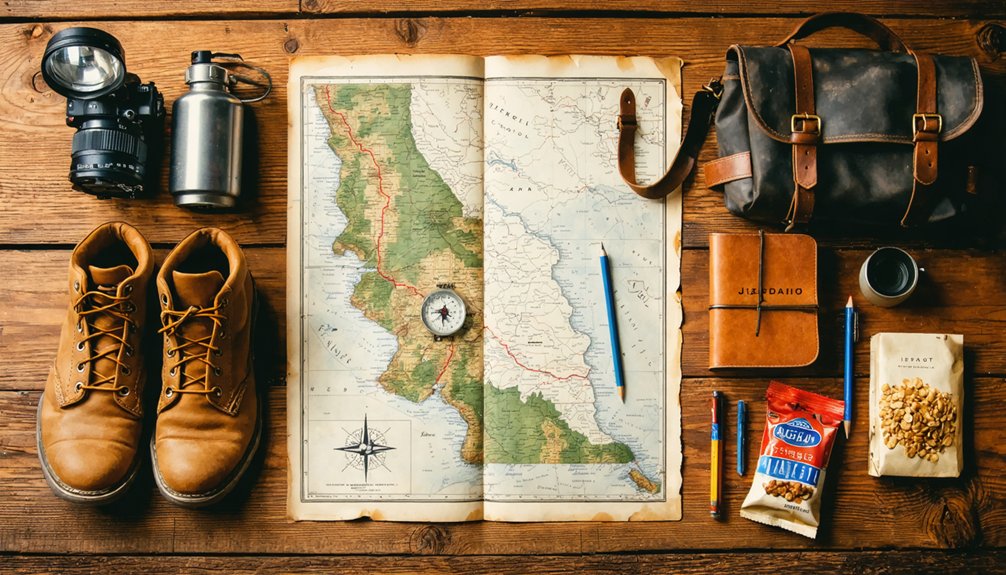
Packing the right gear can mean the difference between a smooth adventure and an uncomfortable ordeal at Roosevelt’s remote, high-elevation site. At 6,073 feet, temperatures shift quickly, so layer your clothing accordingly.
Your camping essentials should include a reliable tent, waterproof boots, and enough food and water for several days, since services don’t exist out here. Bring a first-aid kit and a detailed topographic map, as cell service is virtually nonexistent.
Pack smart: reliable shelter, waterproof boots, ample supplies, a first-aid kit, and a topographic map are non-negotiable out here.
For photography tips, arrive during golden hour to capture the haunting shoreline remnants in warm, dramatic light. A wide-angle lens works beautifully for the surrounding forested landscape, while a macro lens highlights weathered wood details along the water’s edge.
Don’t forget extra batteries — you’ll want every shot documented.
Nearby Idaho Ghost Towns to Combine With Your Roosevelt Visit
Since you’re already venturing deep into Idaho’s remote backcountry, pairing your Roosevelt visit with stops at nearby ghost towns makes the long drive worthwhile.
The region’s rich mining heritage stretches far beyond Roosevelt, offering you multiple destinations steeped in ghostly legends and abandoned history.
- Yellowpine – A small community west of Roosevelt with remnants of its mining past still visible along dusty backroads.
- Cinnabar – A forgotten settlement where miners once chased silver dreams through rugged terrain.
- Edwardsburg – A remote outpost near the Frank Church Wilderness that once supported Thunder Mountain miners.
- Profile – A quiet ghost town offering crumbling structures and striking mountain scenery worth photographing.
Combining these stops transforms your Roosevelt road trip into an unforgettable multi-site backcountry adventure.
Frequently Asked Questions
Was Roosevelt, Idaho Ever Officially Incorporated as a Town Before Flooding?
The knowledge doesn’t confirm Roosevelt’s official incorporation, but you’ll find its ghost town history fascinating! Roosevelt significance shines as miners settled in 1901, built a thriving community, then watched it flood into Idaho’s legendary underwater ghost town.
Are There Any Diving Tours Available to Explore the Submerged Roosevelt Ruins?
The knowledge doesn’t confirm any ghost town diving tours for underwater exploration at Roosevelt. You’ll find scattered boards along the shoreline, but you’re best contacting local Idaho outfitters directly to discover current diving opportunities available.
Did Teddy Roosevelt Ever Personally Visit the Idaho Town Named After Him?
The records don’t spill the beans on Teddy Roosevelt personally gracing Idaho’s historical significance with his boots. You won’t find documentation of a visit, yet Teddy Roosevelt’s legacy lives on through this remarkable, flood-claimed ghost town bearing his name.
Were Any Historical Artifacts Recovered From Roosevelt Lake After the Flooding?
The knowledge doesn’t confirm you’ll find artifact discoveries or underwater archaeology records for Roosevelt Lake. You can explore the shoreline today, though, where you’ll still spot a few boards and building remnants from the 1909 flooding.
Is Roosevelt Lake Still a Permanent Body of Water That Exists Today?
Still kicking, Roosevelt Lake remains a permanent body of water today! You’ll find its lake ecology thriving with historical significance, as remnants of the flooded ghost town still peek along its shoreline, enchanting your adventurous spirit.
References
- https://cascadechamber.com/place-to-visit-the-ghost-town-of-roosevelt/
- https://www.rickjust.com/blog/one-of-idahos-famous-drowned-towns
- https://yellowpinetimes.wordpress.com/2019/04/07/idaho-history-april-7-2019/
- https://1043wowcountry.com/idaho-has-its-own-atlantis-explore-the-underwater-ghost-town/
- https://www.startpackingidaho.com/blog/idahos-ghost-towns/
- https://westernmininghistory.com/towns/idaho/roosevelt/
- https://www.lib.uidaho.edu/digital/archivalidaho/items/archivalidaho441.html
- https://yellowpinetimes.wordpress.com/2019/07/14/idaho-history-july-14-2019/
- https://yellowpinetimes.wordpress.com/category/weekly-history/page/19/
- https://yellowpinetimes.wordpress.com/2019/04/28/idaho-history-april-28-2019/