Low, Utah isn’t a real ghost town — you’re likely thinking of Loa, Utah, which is very much alive. No historical records or verified maps confirm “Low” ever existed. But don’t let that stop your adventure. Utah’s real ghost towns, like Frisco, Grafton, and Sego, offer genuine history, crumbling ruins, and unforgettable scenery. Stick around, and you’ll discover everything you need to plan the ultimate Utah ghost town road trip.
Key Takeaways
- Low, Utah, has no verified historical records or maps, making it likely a myth confused with Loa, Utah.
- Real ghost towns like Frisco, Grafton, and Sego offer genuine history and rewarding exploration experiences instead.
- Plan your road trip in spring or fall, when temperatures stay between 50–75°F for ideal conditions.
- Start from Salt Lake City, visiting Frisco, Grafton, Sego, and Thistle over a structured six-day route.
- Pack one gallon of water daily, a physical map, flashlight, first aid kit, and sturdy boots for safety.
Why Low, Utah Ghost Towns Don’t Exist (And Where to Go Instead)
If you’ve been searching for ghost towns in “Low, Utah,” you’re chasing a place that simply doesn’t exist — no historical records, no verified maps, and no tourism data back it up.
It’s one of those persistent ghost town myths that circulates online without any factual foundation. You might be confusing it with Loa, Utah, a small living town with no abandoned status.
Don’t let that stop your adventure, though. Utah’s real ghost towns carry genuine historical significance that’ll reward every mile you drive.
Don’t let that stop your adventure — Utah’s real ghost towns carry genuine historical significance worth every mile.
Frisco, Grafton, Sego, Thistle, and Kelton each tell authentic stories of mining booms, Mormon settlements, and railroad abandonment.
These verified destinations offer standing structures, canyon scenery, and rich history — everything you’re actually looking for on a meaningful road trip.
Best Utah Ghost Towns to Visit Instead
Since Utah’s real ghost towns deliver exactly what the myth of “Low” promised, here are the five best stops worth building your trip around.
Frisco pulls you into raw mining history through crumbling charcoal kilns and collapsed mine shafts.
Grafton stands beautifully preserved near the Virgin River, its 19th-century structures echoing ghost town legends of Mormon frontier life.
Thistle offers something genuinely eerie — submerged railroad ruins swallowed by a 1983 landslide.
Sego rewards the adventurous with canyon petroglyphs alongside abandoned mining camps.
Kelton sits quietly in Utah’s West Desert, forgotten after the 1880s boom collapsed.
Each destination gives you authentic history, dramatic landscapes, and the freedom to explore on your own terms — no fabricated mythology required, just open roads and real stories.
When to Plan Your Utah Ghost Town Road Trip
You’ll want to time your Utah ghost town road trip carefully, since the season you choose can make or break the experience.
Spring (March–May) and fall (September–November) offer the most favorable conditions, with temperatures ranging from 50–75°F, clear roads, and excellent visibility.
Avoid summer’s brutal 100°F+ heat in southern Utah and winter’s snow-blocked canyon roads, as both seasons can turn an adventure into a genuine safety risk.
Best Seasons To Visit
Planning your Utah ghost town road trip around the right season can mean the difference between a smooth, scenic adventure and a miserable slog through extreme heat or snow-blocked roads.
Spring (March–May) and fall (September–November) are your best windows. You’ll enjoy temperatures between 50–75°F, clear roads, and perfect lighting for ghost town photography. Spring wildflowers add dramatic backdrops to crumbling structures, while fall foliage enhances canyon scenery beautifully.
Avoid summer if you can. Southern Utah temperatures regularly exceed 100°F, threatening both your safety and your equipment.
Winter brings road closures at higher elevations, cutting off access to key sites entirely.
April and October hit the sweet spot — comfortable driving conditions, manageable crowds, and prime daylight hours for historical research and exploration at every stop along your route.
Months To Avoid
While spring and fall earn top marks for Utah ghost town exploration, summer and winter are seasons you’ll want to strike from your itinerary entirely.
Southern Utah summers routinely push past 100°F, turning your road trip planning into a survival exercise rather than an adventure. Heat exhaustion becomes a real threat when you’re hiking remote terrain miles from help.
Winter brings an equally punishing set of obstacles. Snow blankets higher elevations, triggering road closures that cut off access to Utah ghost towns like Thistle in Spanish Fork Canyon. Ice-covered gravel roads demand extreme caution.
Simply put, June through August and December through February work against you. Protect your freedom to roam by choosing months when the landscape welcomes exploration rather than punishes it.
Build Your Utah Ghost Town Route From Salt Lake City
Starting your ghost town adventure from Salt Lake City puts you within striking distance of Utah’s most haunting historic sites, and a smart route can get you through them all in seven days.
Head southwest on Day 1 toward Frisco, a West Desert mining town carrying ghost town legends tied to silver booms and sudden abandonment.
Day 2 takes you through Cedar City toward Grafton, where 19th-century Mormon history carries deep historical significance.
By Day 3, you’re pushing through Zion toward Paria and Widtsoe.
Days 4 and 5 open up Sego Canyon’s petroglyphs and Thistle’s submerged ruins.
Days 6 and 7 loop you back north via I-70 and I-15, with optional stops at Kelton or Iosepa before returning home.
What to Pack for Remote Utah Ghost Towns
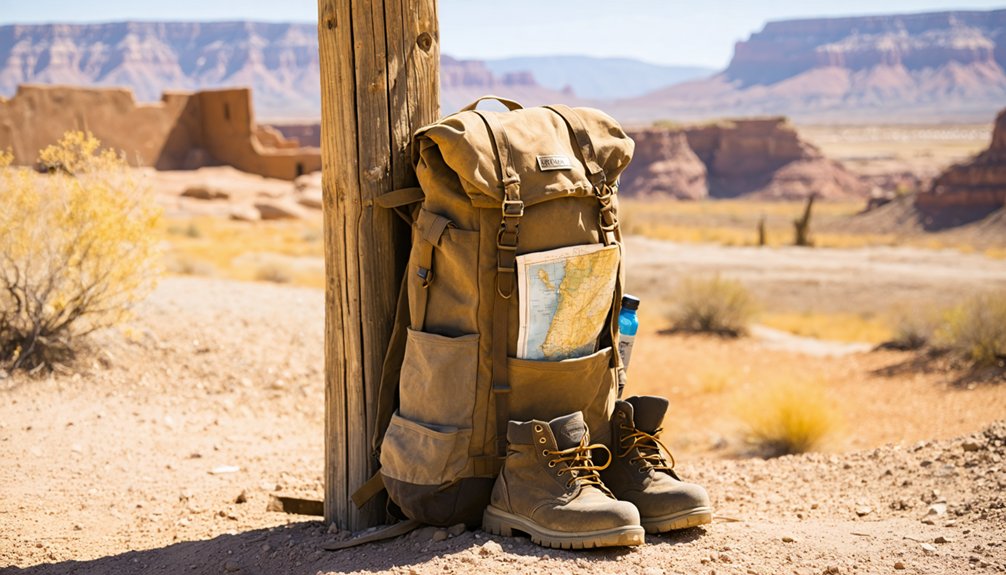
When you’re heading out to remote Utah ghost towns like those scattered across the West Desert and canyon country, what you pack can make or break your trip.
You’ll want to prioritize an essential gear checklist that includes one gallon of water per person per day, a portable charger, a physical map or compass, and a reliable flashlight for exploring dark structures.
Your safety supplies should also cover sun protection, a first-aid kit, and enough food to sustain you through stretches where no services exist for miles.
Essential Gear To Pack
Packing smart can mean the difference between an incredible adventure and a dangerous situation when you’re exploring Utah’s remote ghost towns. Follow these essential gear packing tips before hitting the open road:
- Water: Carry at least one gallon per person daily — no sources exist in the backcountry.
- Portable charger: Dead phones happen fast where cell signals disappear.
- Paper maps or compass: GPS fails near canyon walls, so don’t rely solely on technology.
- Flashlight or headlamp: Dark ruins demand reliable lighting for safe exploration.
- First aid kit: Remote locations mean delayed emergency response, so prepare accordingly.
These aren’t optional extras — they’re your lifeline.
Utah’s ghost towns reward prepared explorers with unforgettable experiences, but they’re unforgiving to those who arrive underprepared.
Safety Supplies Checklist
Before you load the car and chase Utah’s forgotten towns, build your safety kit around these non-negotiables — because remote desert terrain doesn’t forgive oversights:
- Water: One gallon per person, per day — no exceptions in the West Desert heat.
- Portable charger: Dead phones kill ghost town photography opportunities and emergency calls.
- Map and compass: Canyon walls disrupt GPS signals where your historical research leads you deepest.
- Flashlight: Explore crumbling structures and submerged ruins safely after daylight fades.
- First aid kit: Bandages, antiseptic, and blister treatment for uneven, debris-covered terrain.
- Extra fuel: Gas stations disappear fast once you leave the interstate.
- Property signage awareness: Confirm public access before entering; trespassing citations end road trips abruptly.
Pack smart. Your freedom depends on it.
How Much a Utah Ghost Town Road Trip Actually Costs
Planning a Utah ghost town road trip won’t drain your wallet as much as you’d expect, with most travelers spending between $500 and $1,000 per person for a full seven-day journey.
Smart budget tips and travel hacks keep costs manageable across every category:
- Gas: $120–$180 for roughly 1,200 miles
- Lodging: $150–$250 per night near Cedar City or St. George
- Food: $40–$60 daily at local diners or grocery stores
- Entry fees: Most ghost towns are free; Zion costs $25 if detoured
- Extras: Portable chargers, maps, and water supplies run $30–$50 upfront
You’ll spend almost nothing entering most sites, meaning your biggest expenses stay predictable.
Pack smart, plan your stops ahead, and your freedom-fueled adventure stays well within reach.
How to Stay Safe at Utah’s Remote Ghost Towns
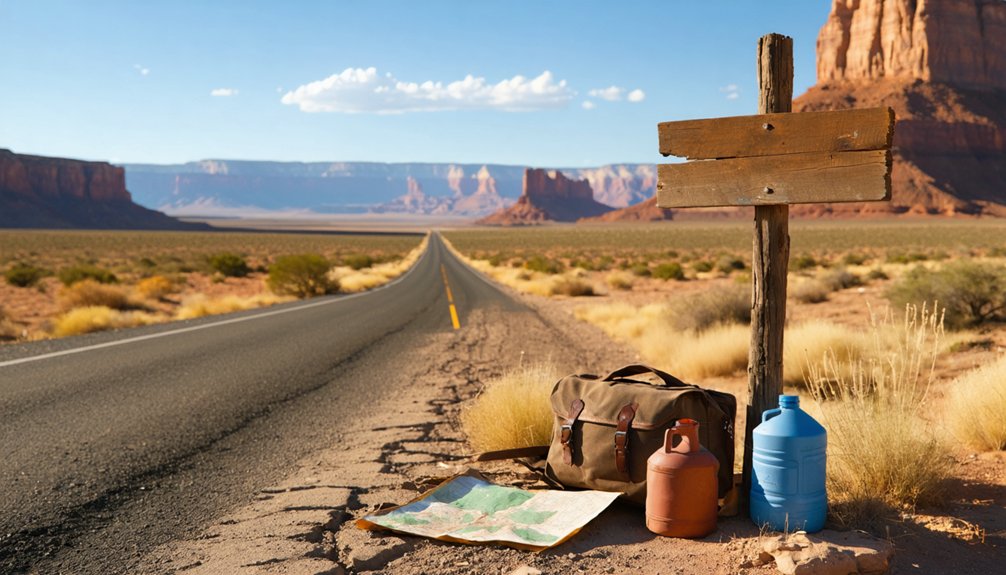
Remote Utah ghost towns reward bold explorers, but they’ll punish the unprepared fast. Before you chase ghost town photography opportunities or soak in the historical significance of crumbling structures, pack smart.
Carry one gallon of water per person daily — there’s no refilling in the West Desert. Bring a portable charger because cell service vanishes near canyon walls. Toss a physical map in your bag since GPS fails exactly when you need it most.
Pack one gallon of water daily, a portable charger, and a physical map — the desert forgives nothing.
Always check property signage before entering any structure. Many ruins sit on private land, and trespassing fines kill road trip momentum quickly.
Wear sturdy boots, watch for unstable floors, and never explore dark ruins without a flashlight.
Respect the land, stay alert, and these ghost towns will deliver unforgettable experiences.
Lesser-Known Utah Ghost Towns Worth the Detour
While Grafton and Frisco steal most of the spotlight, Utah’s lesser-known ghost towns deliver equally compelling history without the crowds.
These off-the-radar stops reward curious travelers with raw, abandoned beauty and hidden history that mainstream destinations simply can’t offer.
Add these underrated gems to your route:
- Modena – A railroad relic near the Nevada border with crumbling brick structures
- Harrisburg – A quiet Mormon settlement near St. George with stone foundations and orchard remnants
- Iosepa – A Hawaiian immigrant colony in Tooele Valley carrying a deeply moving cultural story
- Paria – A weathered film location and frontier town surrounded by red canyon walls
- Widtsoe – A drought-abandoned farming community tucked inside Grand Staircase-Escalante
You’ll find freedom in these forgotten places that no guidebook fully captures.
Frequently Asked Questions
Can I Camp Overnight Near Utah Ghost Towns Instead of Booking Motels?
Under star-drenched skies, you can camp near Utah’s ghost towns! Check camping regulations beforehand, as ghost town amenities are scarce. Carry water, maps, and gear—you’ll embrace true freedom sleeping where history whispers.
Are Utah Ghost Towns Accessible for Visitors With Mobility Limitations or Disabilities?
Some Utah ghost towns offer limited wheelchair access. Grafton’s flat terrain and historical significance make it your best bet. You’ll find preserved structures you can explore, though rugged sites like Sego require mobility considerations before visiting.
Do Any Utah Ghost Towns Allow Metal Detecting or Artifact Collection?
Like ancient scrolls forbidding plunder, Utah’s metal detecting regulations protect artifact preservation—you can’t legally collect artifacts at ghost towns. Respect these rules; they safeguard history for future explorers craving that same frontier freedom you cherish.
Are Guided Ghost Town Tours Available, or Is Self-Guided Exploration Only?
You’ll find guided tours at preserved sites like Grafton, where experts enrich your experience with history. Or, you can embrace self exploration at remote spots like Frisco, roaming freely on your own terms.
Can Children Safely Explore Utah Ghost Town Ruins and Abandoned Structures?
Yes, your children can safely explore Utah’s ghost towns with proper supervision! Prioritize child safety by keeping kids away from unstable structures. Follow these exploration tips: carry water, wear sturdy shoes, and stay on marked paths together.
References
- https://www.onlyinyourstate.com/trip-ideas/utah/road-trip-ut-ghost-towns
- https://www.youtube.com/watch?v=JDIhYM_i-vU
- https://x.com/i/grok/share/ABEvnMY8NC4da16h0ndNJqylY
- https://www.onlyinyourstate.com/trip-ideas/utah/abandoned-places-road-trip-ut
- https://www.roadtripryan.com/go/t/utah/moab/sego-ghost-town
- https://www.visitutah.com/things-to-do/history-culture/ghost-towns
- https://www.youtube.com/watch?v=05MpUor2KC8
- https://kslnewsradio.com/1947650/utah-ghost-towns/
- https://www.deseret.com/utah/2023/1/21/23549285/utah-ghost-towns-mormon-history/
- https://www.youtube.com/watch?v=P_Ep1sMRsE0