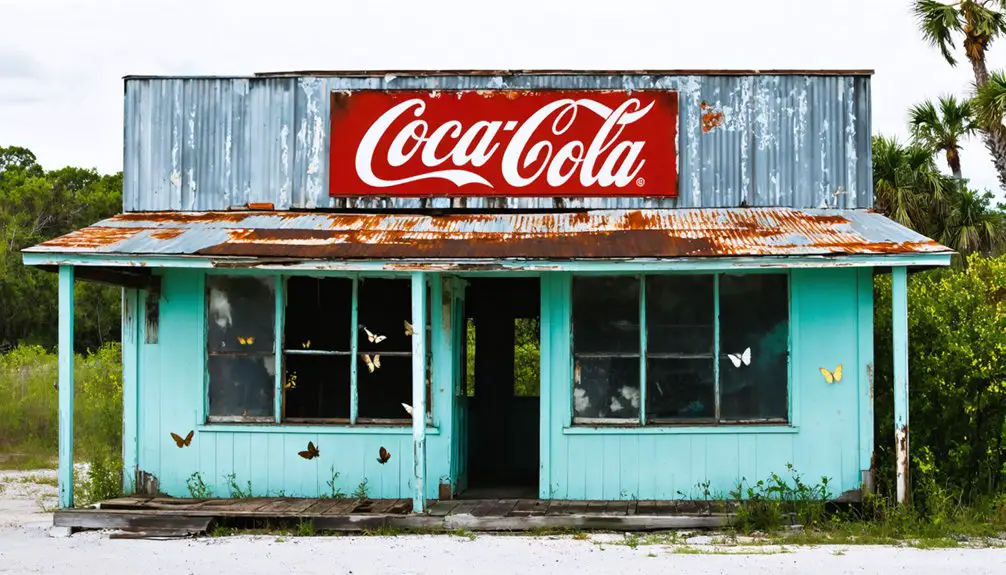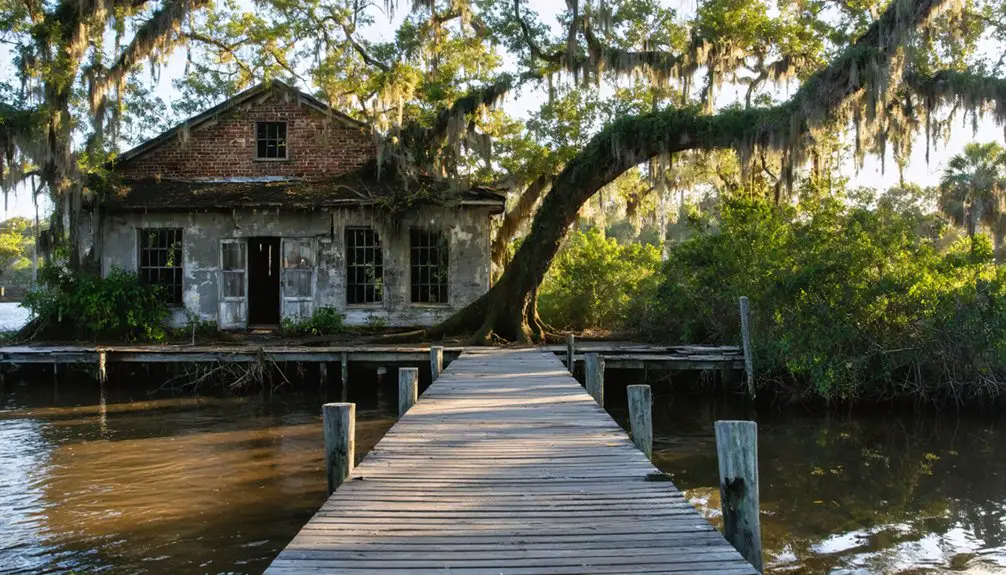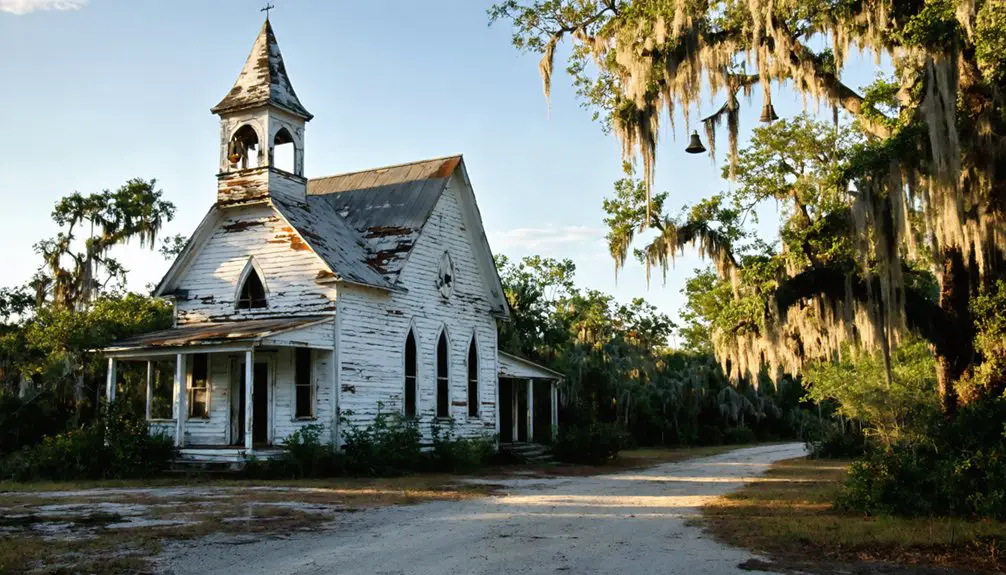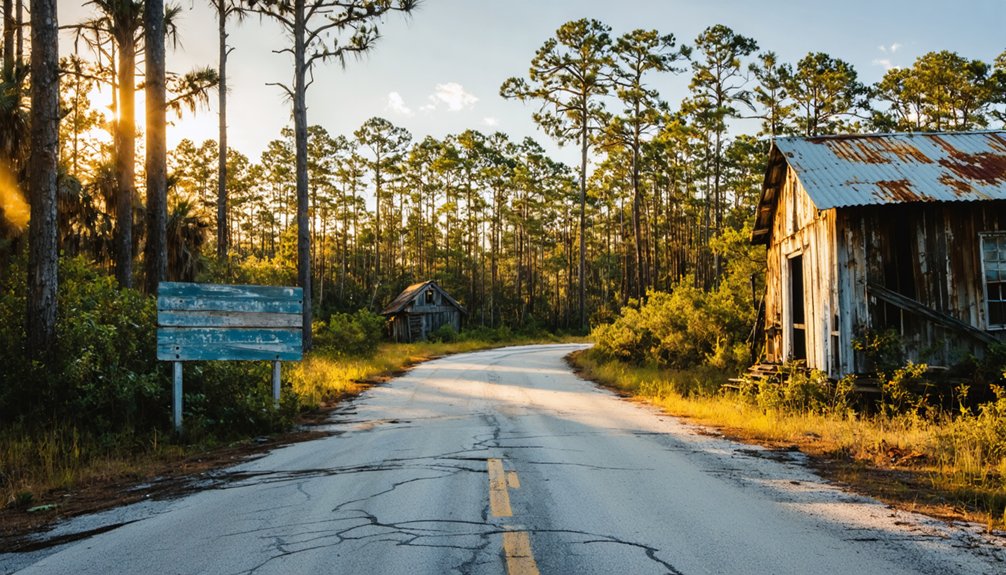
Planning a ghost town road trip to Sampson City, Florida starts in Starke, where you’ll fuel up before heading southwest along county roads toward Sampson Lake. Founded in the late 1800s and devastated by the Big Freeze of 1894–1895, this Bradford County ghost town offers scattered ruins, a historic railroad grade, and eerie quiet. Arrive by 9 a.m. between November and March for the best experience. There’s far more to this forgotten settlement than meets the eye.
Key Takeaways
- Sampson City, in Bradford County, Florida, was founded in the late 1800s and declined after the devastating Big Freeze of 1894–1895.
- Navigate using GPS coordinates 29°55.0′N, 82°12.3′W, and stock up on fuel and food in Starke before heading out.
- Visit between November and March for cooler weather, arriving by 9 a.m. to maximize daylight and photography conditions.
- Pack water, snacks, insect repellent, sturdy shoes, an offline map, and a basic emergency kit for this remote exploration.
- Nearby ghost towns Capps and Ellaville offer additional stops; respect private property and stay on public roads throughout.
What Is Sampson City, Florida’s Forgotten Ghost Town?
Tucked away in Bradford County’s rural heartland, Sampson City is a near-abandoned Florida community that most people drive right past without knowing it ever existed.
Colonel C. L. Peek founded it in the late 1800s, draining Sampson Lake’s swamp to carve out buildable land for a promising rural settlement.
Sampson City history took a brutal turn when the catastrophic Big Freeze of 1894–1895 gutted the local agricultural economy, sending residents packing and businesses into collapse.
What remains today are scattered wood-frame homes, a traceable railroad grade, and ghost town legends that draw curious road-trippers hunting Florida’s forgotten past.
You won’t find welcome signs or visitor centers here — just open countryside, quiet roads, and a community that time quietly walked away from.
How Sampson City Became a Ghost Town After the Big Freeze
When you look into why Sampson City faded away, one brutal winter explains almost everything.
The Big Freeze of 1894–1895 wiped out Florida’s citrus and agricultural economy, and Sampson City’s fragile, farm-dependent community couldn’t survive the blow.
Residents packed up and left, abandoning the town to time and leaving only scattered homes and a ghost of a railroad grade behind.
Freeze Devastates Local Economy
The Big Freeze of 1894–1895 didn’t just damage Florida’s citrus groves—it gutted Sampson City’s fragile economy almost overnight. Crops failed, land values collapsed, and the agricultural foundation Colonel Peek had built the town upon simply vanished.
The economic impact hit hard and fast, leaving residents with little reason to stay. You can picture the exodus—families packing wagons, businesses shuttering, the railroad spur carrying people out rather than goods in.
Community resilience wasn’t enough to overcome back-to-back brutal winters that wiped out harvests across north Florida. Without agricultural revenue, Sampson City couldn’t sustain its infrastructure or attract new investment.
What the freeze started, time finished. Population dwindled, buildings aged without upkeep, and a once-promising small town quietly faded into the rural Bradford County landscape.
Residents Abandon The Town
Once the freeze shattered Sampson City’s economic backbone, staying simply stopped making sense for most residents. Farmers lost crops, businesses folded, and families packed up and moved toward more stable ground. The exodus happened quickly, leaving behind abandoned structures that now define the town’s eerie, time-frozen character.
What remains carries real historical significance. You’re walking through a place that once represented someone’s genuine ambition — Colonel Peek’s vision of a thriving rural community. The departing residents didn’t just leave buildings behind; they left an unfinished story frozen in the Florida landscape.
Today, scattered wood-frame houses stand as quiet evidence of that rapid decline. When you visit, you’re fundamentally reading history written in weathered timber and overgrown lots — a raw, honest record of what one devastating winter permanently undid.
Scattered Remains Left Behind
After the exodus, what Sampson City left behind wasn’t a clean absence — it was a frozen, half-finished landscape that tells the story more honestly than any historical marker could.
You’ll find scattered remnants of wood-frame houses standing where a bustling agricultural community once operated. The old railroad grade still cuts through the countryside, readable if you know what you’re looking for.
These physical traces carry real historical significance — they connect you directly to the economic collapse that followed the Big Freeze of 1894–1895. No museum recreates this; the land itself does the explaining.
Drive slowly, keep your windows down, and let the quiet do its work. What remains isn’t polished for tourists, and that’s exactly what makes it worth seeing.
What’s Left of Sampson City: Old Homes, Railroad Traces, and Rural Ruins
Scattered across the rural Bradford County landscape, what’s left of Sampson City tells a quiet but legible story.
You’ll spot wood-frame houses with aging rooflines standing as examples of historic architecture that survived long after the town’s economy collapsed. These aren’t museum pieces — some remain occupied, so stay on public roads during your rural exploration.
Look beyond the homes and you’ll notice the old railroad grade still cutting through the countryside as a subtle earthen trace. That linear scar once carried freight and ambition through drained swampland.
Today it’s reclaimed by grass and light brush.
The surrounding landscape stays pastoral and open, giving you clear sightlines across former agricultural fields.
It’s minimalist, honest, and worth the detour if you value places that wear their history plainly.
How to Drive to Sampson City From Starke
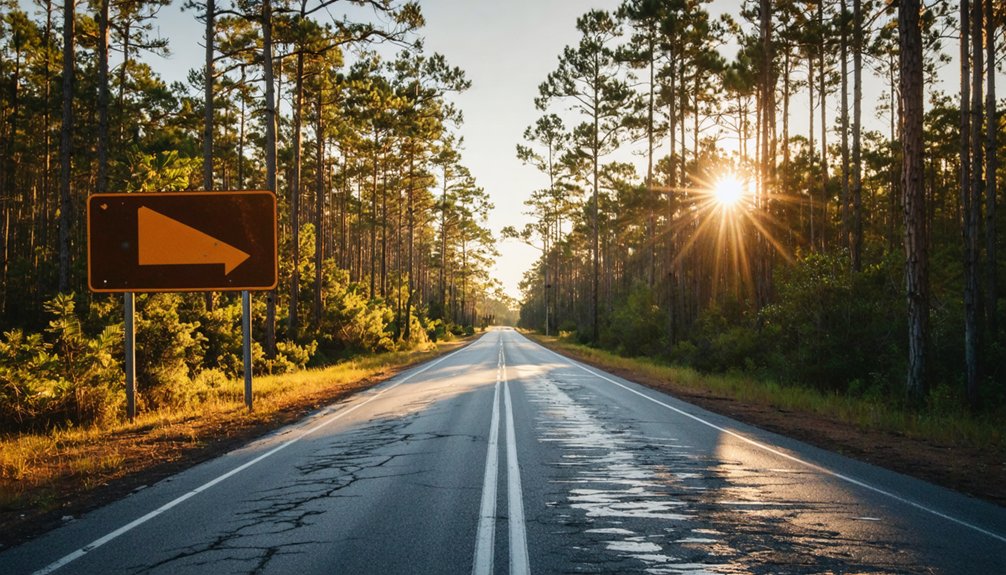
Getting to those remnants starts with a straightforward drive southwest out of Starke. From U.S. Highway 301, you’ll head southwest along local county roads, using GPS coordinates 29°55.0′N, 82°12.3′W as your anchor.
Your directions overview is simple: leave the 301 corridor, follow paved county roads toward Sampson Lake, then shift onto smaller improved roads as the landscape opens into quiet pastures and tree lines.
Don’t expect signs announcing your arrival — navigation here rewards the self-reliant traveler. The scenic routes along this stretch offer glimpses of north Florida’s rural character: flat farmland, scattered pines, and glimpses of lake margins.
Your vehicle handles the roads fine, but fuel up and grab food in Starke before heading out. Services disappear fast once you leave the main corridors.
Capps, Ellaville, and Other Ghost Towns to Visit Near Sampson City
Once you’ve explored Sampson City’s quiet roads, the surrounding north Florida back-country opens up a broader ghost-town circuit worth chasing.
Capps history traces back to another small agricultural settlement that, like Sampson City, couldn’t survive economic hardship and population flight. It makes a natural add-on stop for anyone already traversing Bradford County’s rural web of roads.
Ellaville remnants sit further along the circuit, offering tangible echoes of a once-active community along the Suwannee River, where old structures and foundations reward curious explorers.
Together, these stops create a full day’s worth of back-roads discovery. Pack water, download offline maps, and respect private property boundaries at each site.
The freedom of this kind of unscripted road trip is exactly what north Florida’s forgotten towns deliver best.
Best Time to Visit Sampson City and What to Bring
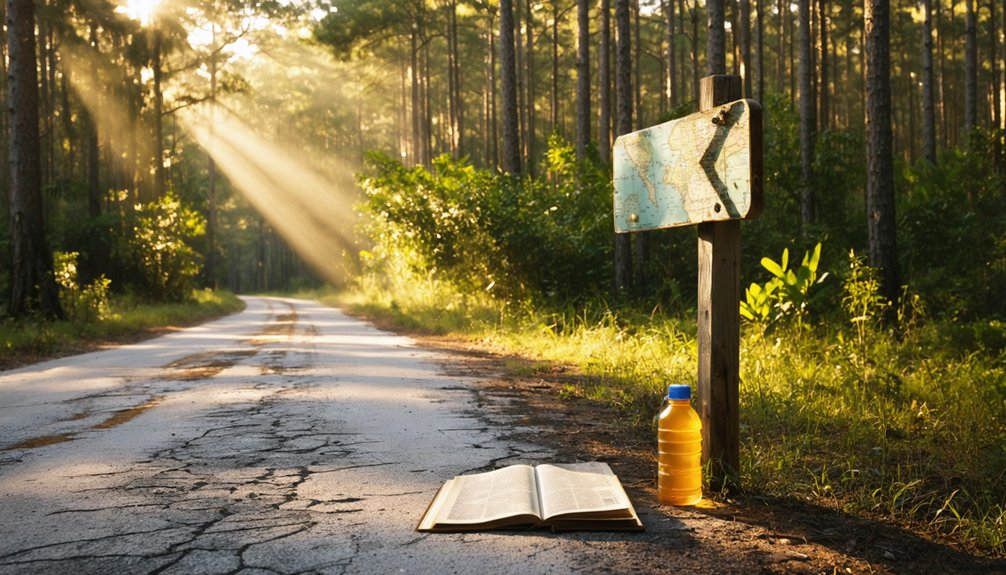
You’ll get the most out of Sampson City by visiting between November and March, when cooler temperatures and lower mosquito activity make outdoor exploration far more comfortable.
Pack essentials like water, snacks, insect repellent, and a fully charged phone loaded with GPS coordinates, since you won’t find convenience stores or signage once you leave the main highways.
Plan your arrival for morning or early afternoon so you have plenty of daylight to navigate the back roads and scout the scattered remnants before dusk cuts your time short.
Ideal Visiting Seasons
Although Sampson City sits in rural north Florida year-round, the cooler months between October and March offer the most comfortable conditions for a back-roads visit. Temperatures stay mild, mosquito activity drops considerably, and the ideal weather makes long stretches on scenic routes genuinely enjoyable rather than exhausting.
You’ll move freely through Bradford County’s open landscape without battling oppressive humidity or afternoon thunderstorms that dominate summer months.
Spring and fall shoulder seasons also work well if you’re flexible, but avoid peak summer unless you’re prepared for intense heat and heavy insect pressure.
Winter weekdays are especially quiet, giving you uninterrupted access to the area’s rural roads.
Plan your arrival during daylight hours, since Sampson City has no lighting infrastructure and the back roads demand clear visibility.
Essential Gear To Pack
Packing smart makes the difference between a rewarding back-roads adventure and a miserable afternoon stranded on a narrow Bradford County road.
Bring a printed or downloaded offline map, since cell coverage gets spotty once you leave U.S. 301. Pack water, snacks, sunscreen, and insect repellent—summer heat and mosquitoes don’t care about your curiosity.
Sturdy walking shoes help you navigate uneven terrain while you investigate scattered remnants tied to Sampson City’s historical significance. A camera captures weathered wood-frame structures better than a phone in harsh midday light.
Carry a small notebook to jot down local legends you pick up from passing residents. Finally, a basic roadside emergency kit—jumper cables, a spare tire, and a flashlight—keeps your freedom-fueled adventure from turning into an unwanted overnight stay.
Daylight Hours Matter
Three hours of good daylight can make or break your visit to Sampson City. Arriving early gives you clean light for photography and cooler temperatures for daylight exploration.
Respect ghost town etiquette by staying on public roads and keeping noise low.
Plan your timing around these four priorities:
- Arrive by 9 a.m. — Morning light flatters the wood-frame structures and keeps heat manageable.
- Allow two hours minimum — You’ll want time to document the railroad grade and scattered homes without rushing.
- Leave before dusk — Unmarked roads become disorienting after dark.
- Visit October through March — Cooler temperatures and reduced mosquito pressure make exploration far more comfortable.
Own your schedule, respect the land, and you’ll leave with unforgettable shots and zero regrets.
Frequently Asked Questions
Who Founded Sampson City and What Was Their Background?
Coincidentally, you’re tracing Sampson City history back to Colonel C. L. Peek — a Starke real-estate developer whose founder biography reveals he drained Sampson Lake’s swamp, carving this bold, free-spirited community from Florida’s wild landscape.
What Were the GPS Coordinates for Sampson City, Florida?
You’ll find Sampson City’s abandoned structures and local legends waiting at approximately 29°55.0′N, 82°12.3′W in Bradford County, Florida — a hauntingly quiet coordinates that’ll guide your spirit of adventure straight into history.
Is Sampson City Technically Considered an Official Ghost Town?
Sampson City isn’t officially designated a ghost town, but you’ll find it’s widely recognized for its historical significance, scattered remnants, and local legends that draw free-spirited explorers seeking Florida’s forgotten, quietly haunting back-road communities.
Was Sampson Lake Drained to Build Sampson City?
You’ll find it fascinating that Colonel C. L. Peek drained Sampson Lake’s swamp to build Sampson City, a decision carrying immense Historical Significance—it transformed wetlands into free, buildable land for this bold, short-lived frontier community.
Are There Restrooms or Fuel Stops Near Sampson City?
Once you leave U.S. 301 or State Road 100, restroom availability and fuel options fundamentally vanish. You’ll want to tank up and plan ahead before venturing into Sampson City’s beautifully remote, off-grid backroads freedom.
References
- https://www.ghosttowns.com/states/fl/sampsoncity.html
- https://en.wikipedia.org/wiki/List_of_ghost_towns_in_Florida
- https://www.ghosttowns.com/states/fl/fl.html
- https://commons.wikimedia.org/wiki/Category:Ghost_towns_in_Florida
- https://www.youtube.com/watch?v=ResV_evnR54
- https://www.timeout.com/florida/florida-ghost-towns
- http://fcit.usf.edu/florida/maps/pages/400/f405/f405.htm
- https://en.wikipedia.org/wiki/Sampson_City
- https://www.facebook.com/groups/abandonedrails/posts/1709197062447135/
- https://www.youtube.com/watch?v=FS0v3OQMNgw