Planning a ghost town road trip to South Kirby, Vermont starts in St. Johnsbury, where you’ll head east on U.S. Route 2 into Kirby’s quiet countryside. You’ll spot overgrown foundations, crumbling farmsteads, and hidden graveyards without leaving your car. Watch for moose, deer, and red-tailed hawks along the way. Fall offers the most stunning scenery, while summer greenery can obscure historical remnants. Everything you need to explore this forgotten corner of Vermont is just ahead.
Key Takeaways
- South Kirby, located off U.S. Route 2 in Vermont, is a ghost town featuring overgrown foundations, cellar holes, and hidden graveyards.
- Start your road trip in St. Johnsbury, heading east on U.S. Route 2, then transitioning onto narrow dirt roads into Kirby.
- Visit during late September to October for peak fall foliage, which enhances the atmosphere of this abandoned settlement.
- Bring offline maps, as cell service is limited, and check Vermont’s Agency of Transportation for seasonal road closures.
- Extend your trip by visiting nearby ghost towns like Ricker Basin, South Glastenbury, and Kelley Stand across Vermont.
What Is South Kirby and Why Does It Count as a Vermont Ghost Town?
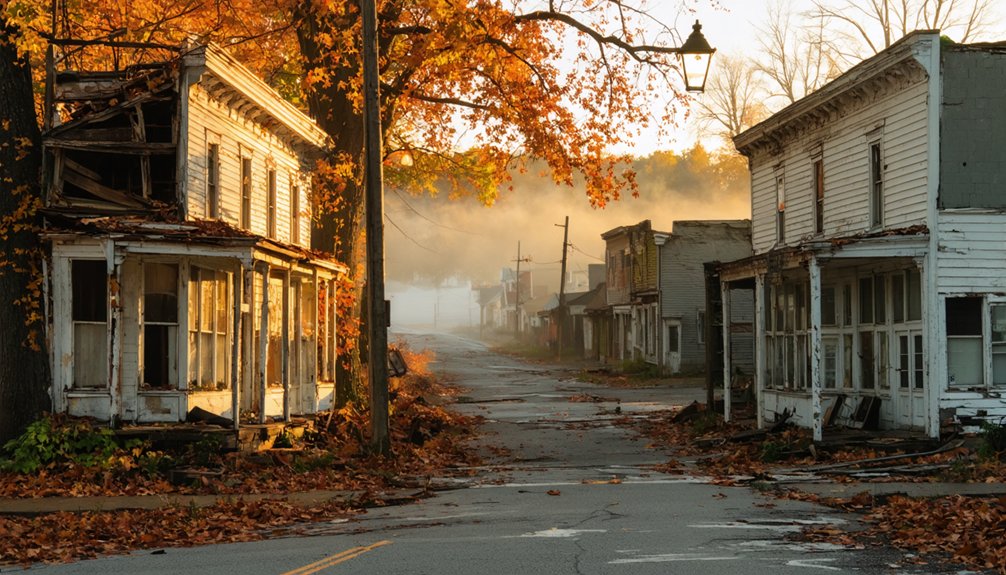
Tucked into a small wedge of Kirby, Vermont, South Kirby sits quietly off U.S. Route 2, east of St. Johnsbury. You won’t find bustling streets or tourist markers here — just dirt roads dissolving into countryside, possible cellar holes hidden beneath overgrowth, and the lingering silence of a community that once existed.
South Kirby earns its place among Vermont’s ghost towns through a familiar regional story: early settlement, likely tied to 19th-century farming or logging, followed by gradual abandonment.
A familiar story of settlement and silence — farming, logging, and the slow surrender of a place to time.
Like many Vermont ghost towns, it probably succumbed to westward migration, flooding, or simply unsustainable mountain living. No dramatic collapse, just a slow fade.
That quiet erasure is exactly what draws curious travelers. You’re not visiting ruins — you’re reading a landscape that remembers something history forgot to record.
What You Can Still See in South Kirby Today
As you cruise east on Route 2 through South Kirby, you’ll notice subtle signs of the settlement that once stood here — overgrown foundations and cellar holes half-hidden beneath decades of encroaching brush.
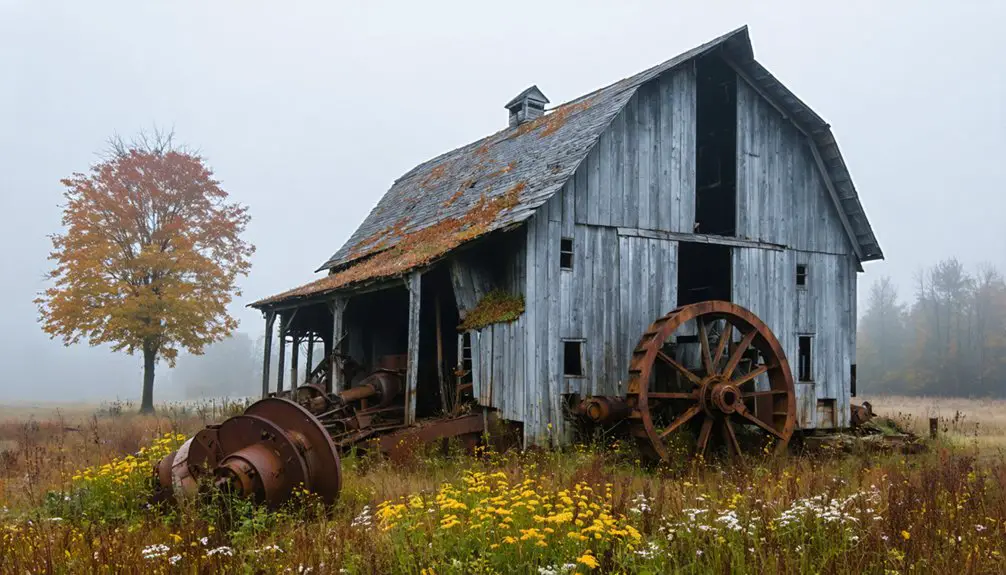
If you slow down and look carefully along the roadside, you can spot crumbling remnants of farm structures that nature has slowly been reclaiming.
Venture a little farther off the road, and you might even stumble upon forgotten graveyards tucked between the trees, their weathered stones hinting at the families who once carved out a life in this quiet Vermont corner.
Overgrown Foundations And Cellar Holes
While South Kirby won’t dazzle you with dramatic ruins like those at Ricker Basin or South Glastenbury, the landscape still holds quiet evidence of the people who once lived here.
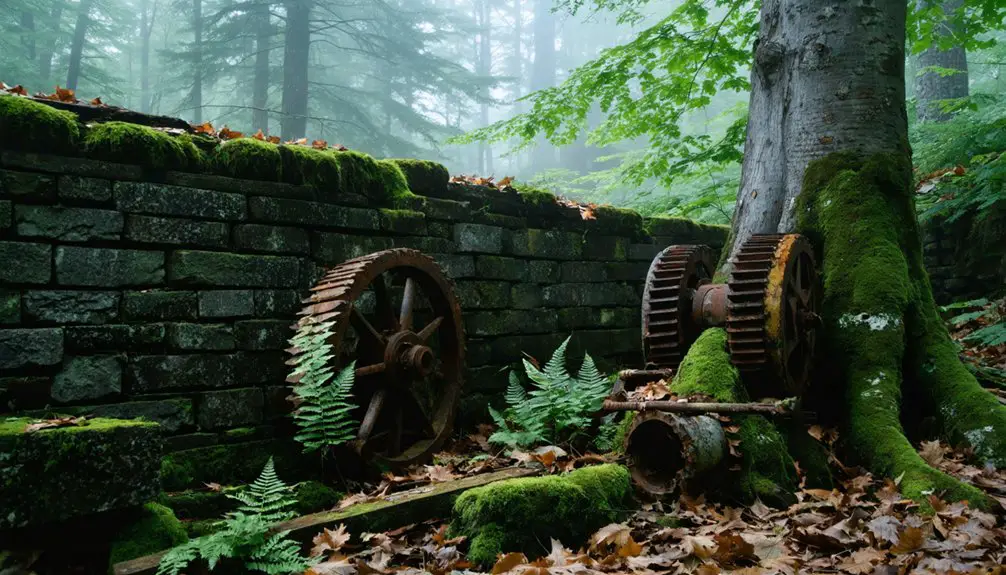
As you explore the overgrown landscapes along the dirt roads, keep your eyes low. Cellar holes hide beneath thick tangles of vegetation, their stone edges softened by decades of moss and root growth.
Collapsed foundations peek through the brush, hinting at homes and farm structures that once defined this small community. These subtle remnants carry real historical significance, connecting you to early settlers who carved lives from Vermont’s demanding terrain.
Slow down, step carefully, and let the silence speak. You’re walking through someone’s forgotten world, and that deserves a moment of respect.
Roadside Ruins From Route 2
Not every ghost town asks you to pull on boots and fight through the brush to find its story. South Kirby reveals its forgotten history right from your car window as you cruise east on Route 2.
Keep your eyes open and you’ll catch roadside discoveries hiding in plain sight — stone walls running along field edges, old fence lines disappearing into tree lines, and structural remnants half-swallowed by Vermont’s relentless greenery.
The road itself tells you something once existed here worth staying for. You don’t need to trespass or trek deep into the woods. Simply slowing down rewards you with glimpses of foundations and cleared land that hint at lives once lived.
South Kirby speaks quietly, but it speaks clearly from the road.
Hidden Graveyards And Farm Remnants
Step off the pavement and South Kirby’s deeper secrets start revealing themselves. Push through the overgrowth and you’ll discover hidden treasures that most travelers completely miss — weathered gravestones tilting under decades of moss, their inscriptions worn but still whispering names of early Vermont settlers.
Stone walls snake through the woods, marking boundaries of farms that fed families long before westward migration emptied these hills.
Cellar holes punctuate the forest floor, framed by remnant lilac bushes that homesteaders once planted near doorways. These aren’t just curiosities — they carry genuine historical significance, connecting you directly to Vermont’s 19th-century farming and logging communities.
Walk carefully, respect private land boundaries, and let the silence of these forgotten homesteads settle around you. South Kirby rewards the curious explorer.
How to Get to South Kirby From St. Johnsbury on Route 2
To kick off your ghost town adventure, you’ll start in St. Johnsbury, a charming northeast Vermont hub with easy highway access.
From there, head east on U.S. Route 2, following the road as it winds through quiet, wooded terrain toward the small town of Kirby.
Once you cross into Kirby’s territory, you’ll notice the pavement giving way to narrow dirt roads that signal your arrival into South Kirby’s rural, time-forgotten landscape.
Starting Point St. Johnsbury
Starting your ghost town adventure is as simple as pointing your car east on U.S. Route 2 out of St. Johnsbury. This Northeast Kingdom hub makes a perfect launching pad — fuel up, grab supplies, and embrace the open road ahead.
As you roll eastward, Vermont’s countryside unfolds through scenic overlooks that hint at forgotten lives buried beneath the overgrowth. The drive threads through Kirby’s rural landscape, where dirt roads branch off like veins into deeper wilderness.
Locals carry local folklore about these vanished communities, so don’t hesitate to chat with anyone you meet along the way. St. Johnsbury itself rewards an early arrival — explore its Victorian architecture before trading sidewalks for the untamed roads leading toward South Kirby’s mysterious remnants.
Heading East On Route 2
Once you’ve topped off the tank and loaded up on snacks in St. Johnsbury, point your vehicle east on U.S. Route 2.
This straightforward drive pulls you deeper into Vermont’s quiet countryside, where the landscape gradually shifts from town infrastructure to open fields and forested ridgelines offering stunning scenic views.
Keep your eyes peeled as Kirby’s small wedge of territory appears almost without announcement. South Kirby sits tucked within this rural pocket, accessible directly from Route 2 without complicated detours.
The drive itself sets the tone for historical exploration, hinting at a region shaped by early settlers who carved lives from this rugged land.
Watch for dirt road turnoffs, as they mark your change from modern travel into Vermont’s layered, forgotten past.
Entering Kirby’s Rural Roads
As Route 2 carries you eastward out of St. Johnsbury, the landscape shifts noticeably. Manicured roadsides give way to dense tree lines, and pavement eventually surrenders to packed dirt.
You’re entering Kirby’s rural network — a quiet wedge of Vermont where scenic drives reward curious travelers willing to slow down.
South Kirby sits tucked within this area, reachable by continuing east and watching for Kirby’s characteristic dirt road turnoffs. Historical exploration feels natural here, where overgrown foundations and cellar holes hint at forgotten lives.
Keep these essentials in mind:
- Navigation: Cell service gets spotty; download offline maps beforehand
- Road conditions: Dirt roads can turn rough after rain
- Timing: Arrive with daylight; these roads offer little lighting after dark
Wildlife and Scenery You Might Encounter Near South Kirby
The dirt roads winding through Kirby reward patient travelers with a quiet, unhurried Vermont that’s increasingly hard to find.
You’ll move through dense forest corridors where light filters through maple and birch canopies, creating scenic landscapes that shift dramatically with each season. Fall transforms these roads into corridors of amber and crimson, while summer keeps them cool and green.
Wildlife sightings happen regularly here. Slow down near stream crossings and forest edges — moose frequently browse in marshy lowlands, white-tailed deer cross at dusk, and red-tailed hawks circle overhead.
You might also spot wild turkeys picking through roadside brush.
Keep your windows down. You’ll hear the streams before you see them, and that sound alone makes the detour worth it.
The Best Time of Year to Drive to South Kirby
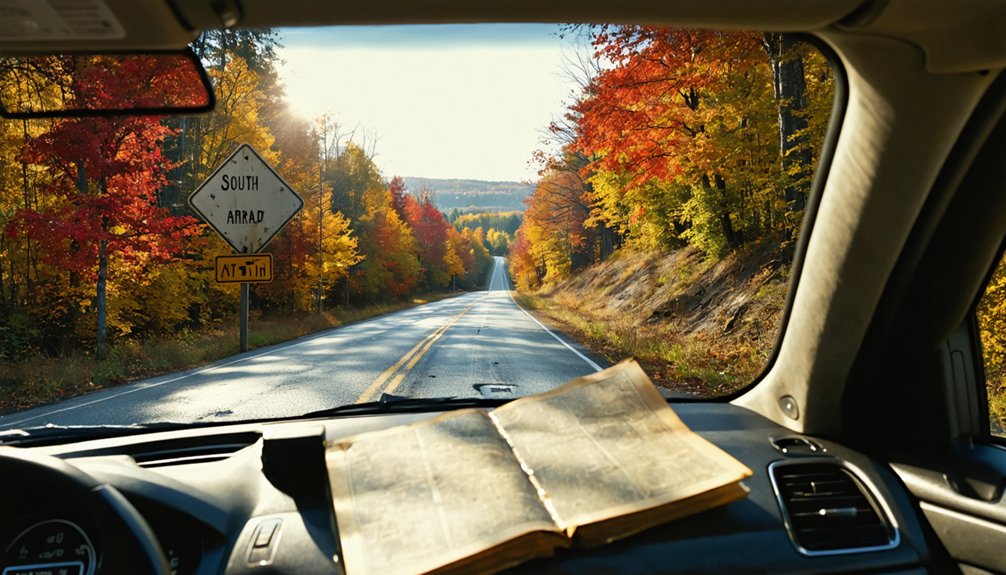
Fall earns its reputation on these roads. When you drive east out of St. Johnsbury toward South Kirby in late September or October, the fall foliage transforms every bend into something vivid and memorable. The dirt roads of Kirby glow with amber and crimson, rewarding anyone who craves open exploration over crowded destinations.
Amber and crimson ignite every bend as fall transforms Kirby’s dirt roads into something vivid and unforgettable.
- Fall delivers peak foliage color and comfortable hiking temperatures for investigating overgrown foundations.
- Early morning drives maximize wildlife sightings, including moose emerging along stream corridors.
- Summer offers passable dirt roads and lush greenery, though foliage can obscure historical remnants.
Avoid winter visits since connecting dirt roads close or become dangerously icy. Spring thaw turns unpaved routes into muddy obstacles. Your best window remains that sharp, golden stretch between late September and mid-October.
Which Roads in Kirby Are Paved, Dirt, or Closed Seasonally?
Steering through Kirby means accepting that pavement quickly gives way to gravel and dirt once you leave U.S. Route 2. That main corridor stays paved and reliable year-round, but the moment you turn onto the township’s interior roads, you’re traversing genuine dirt paths that demand a capable vehicle.
Road maintenance out here is minimal, so expect washboards, mud in spring, and unpredictable surfaces after heavy rain. Seasonal closures hit harder than you’d expect — some connecting roads toward Granby and Stannard shut down entirely through winter and mud season, typically between late November and early May.
Before you venture off Route 2, check Vermont’s Agency of Transportation site for current closure updates. Freedom out here is real, but only if you’ve done your homework first.
Other Vermont Ghost Towns You Can Pair With This Route
Once you’ve threaded through South Kirby’s quiet back roads, Vermont’s wider constellation of ghost towns pulls you deeper into the state’s haunted rural past.
Vermont history rewards those who wander, and rural exploration opens doors to places most travelers never find.
Vermont rewards wanderers. The back roads lead somewhere most travelers will never think to look.
Add these stops to your route:
- Ricker Basin near Waterbury offers cellar holes and graveyards swallowed by forest, accessed through Little River State Park’s trail network.
- South Glastenbury sits deep in the Bennington Triangle, where an entire mountain community simply disappeared into the trees.
- Kelley Stand delivers a remote, atmospheric drive through southern Vermont’s Green Mountain wilderness, connecting logging-era ghosts to modern dirt-road adventure.
Each destination layers another chapter onto Vermont’s story of abandoned settlements and vanished lives.
Safety Tips for Driving Vermont’s Ghost Town Back Roads
Dirt roads in Vermont can shift from scenic to treacherous without much warning, so you’ll want to prepare before you leave pavement behind.
For solid back road navigation, download offline maps since cell service drops fast in Kirby and surrounding towns. Carry extra water, a first aid kit, and jumper cables — breakdowns happen on remote stretches where help is far away.
Watch your speed on loose gravel, especially after rain when roads wash out or flood unexpectedly. Wildlife encounters are common here, so stay alert for moose and deer darting across at dusk.
Tell someone your planned route before heading out. Some roads near Granby and Stannard close seasonally, so confirm access beforehand.
Respecting private land boundaries keeps your adventure both safe and legal.
What You Should and Shouldn’t Do When Visiting These Sites?
Keeping yourself safe on Vermont’s back roads is only half the equation — how you behave at these sites matters just as much.
Ghost town etiquette isn’t just courtesy; it’s how these places preserve their historical significance for future explorers like you.
Follow these essentials when you visit:
- Don’t remove artifacts or disturb foundations — cellar holes and overgrown ruins are irreplaceable pieces of Vermont’s past.
- Stay on visible paths — trampling vegetation around fragile sites accelerates erosion and destroys buried evidence.
- Respect private land boundaries — many of these areas border working properties or protected preserves.
You’re a guest in these forgotten spaces.
Tread lightly, photograph freely, and leave everything exactly as you found it.
Frequently Asked Questions
Are There Any Guided Ghost Town Tours Available Near South Kirby?
You won’t find formal guided tours near South Kirby, but you can explore its ghost town history independently. Local legends await you along scenic dirt roads, where you’ll uncover Vermont’s mysteriously abandoned past at your own pace.
Can You Camp Overnight Near South Kirby or in Kirby Town?
Under star-filled skies, you can camp near Kirby! Check camping regulations at nearby Green Mountain National Forest sites. You’ll find nearby attractions like scenic dirt roads and wildlife, embracing Vermont’s wild, freeing spirit perfectly.
Is South Kirby Accessible for Visitors With Limited Mobility or Disabilities?
South Kirby’s dirt roads and rugged terrain make it challenging for mobility aids. You’ll find few accessible attractions here, but you can still enjoy Vermont’s stunning countryside views from paved Route 2 nearby.
Are There Any Local Restaurants or Lodging Options Near South Kirby?
Like a hidden gem waiting to be discovered, St. Johnsbury’s your best bet for local dining and lodging options near South Kirby, offering you cozy inns and restaurants before you explore Vermont’s rural backroads freely.
Does South Kirby Appear on Official Vermont State Historical Registry Maps?
You won’t find South Kirby on official Vermont State Historical Registry maps, but don’t let that dim its historical significance. Its town legends and mysterious, overgrown remnants make it an irresistibly free-spirited discovery waiting for your exploration.
References
- https://www.vermonter.com/ricker-basin-vermont-ghost-town/
- https://www.burlingtonfreepress.com/story/news/2018/10/29/history-space-tale-two-vt-ghost-towns/38202243/
- https://www.instagram.com/reel/DBqvoTHO7Ck/
- https://www.facebook.com/vermonterdotcom/posts/travelers-heading-east-on-us-route-2-out-of-st-johnsbury-drive-through-a-small-w/1243469243673966/
- https://www.youtube.com/watch?v=ScW-H7A8yL8
- https://thebridgevt.org/2022/10/ghost-towns-of-new-england/
- https://happyvermont.com/2020/09/11/6-vermont-scenic-dirt-roads-fall/
- https://www.youtube.com/watch?v=2fvPo9iQC-w
- https://www.reddit.com/r/vermont/comments/1rflulu/looking_for_a_ghost_town_or_abandoned_factories/
- https://www.facebook.com/groups/BenningtonBlotter/posts/2084150884950089/