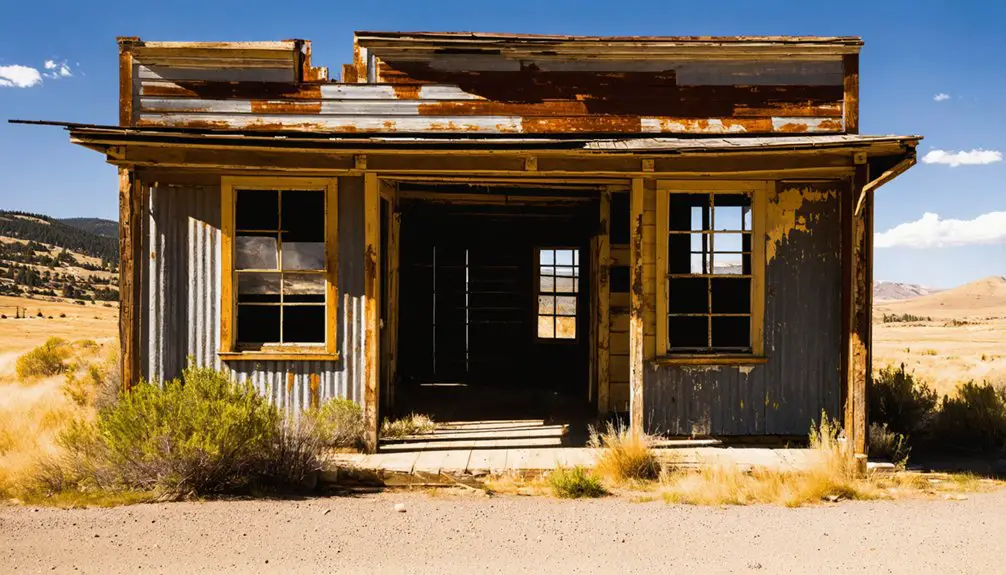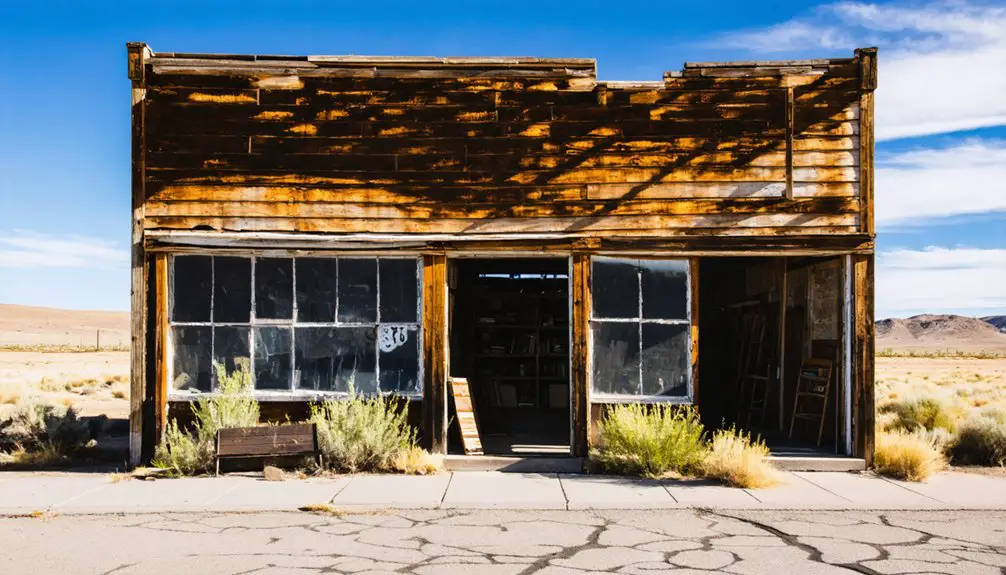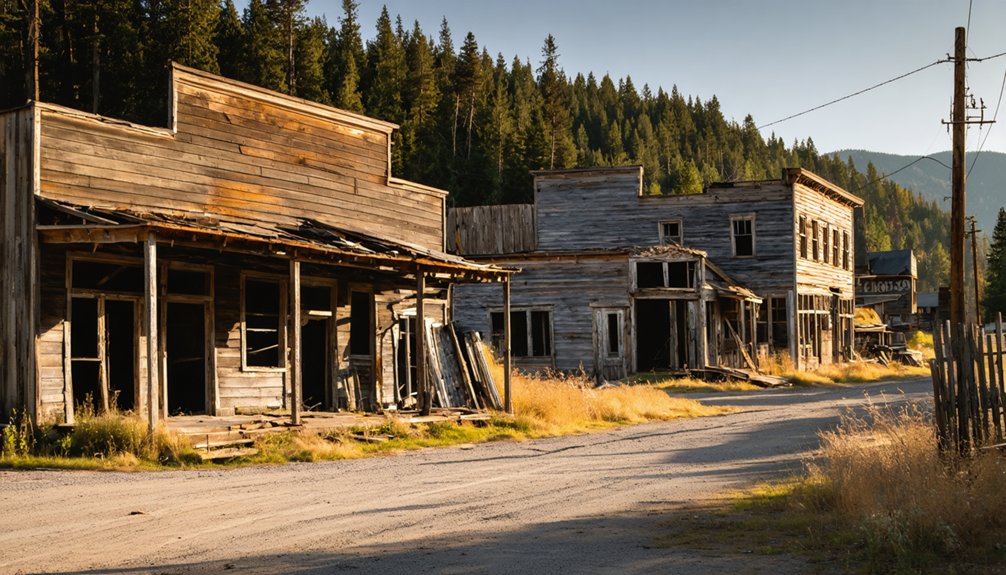
Planning a ghost town road trip to Greenhorn, Oregon means committing to 40 miles of winding mountain roads through lodgepole pine forests to reach the state’s highest incorporated city at 6,306 feet. With a current population of zero, this former gold rush boomtown still holds original cabins, historic buildings, and mining artifacts from its 1890s heyday. Pack extra water, paper maps, and layered clothing before you go—there’s much more to uncover about this forgotten mountain relic.
Key Takeaways
- Greenhorn sits at 6,306 feet in Oregon’s Blue Mountains, making it the highest incorporated city in the state with a population of zero.
- Reaching Greenhorn requires navigating roughly 40 miles of challenging mountain roads from nearby towns, so check road conditions before departing.
- Pack extra water, food, paper maps, and layered clothing, as cell service is unreliable and weather changes rapidly at high elevation.
- Historic highlights include original cabins, a standing bank building, and scattered mining artifacts connecting visitors to the Bonanza Mine era.
- Nearby Sumpter Valley Railway and surrounding ghost towns offer additional gold rush history, enriching the overall road trip experience.
Greenhorn Oregon: The Forgotten Story of the State’s Highest Ghost Town
Tucked deep in the Blue Mountains of eastern Oregon, Greenhorn sits at 6,306 feet — making it the highest incorporated city in the state and the highest mining ghost town in Oregon.
Despite its official status, the population today reads zero. You’re fundamentally visiting a living relic.
The town’s mining heritage stretches back to 1890, when two Eastern novices — greenhorns — reportedly stumbled upon rich blossom ore and asked a barkeep where to find gold.
Two Eastern novices stumbled upon rich ore in 1890 — and unknowingly gave a ghost town its name.
That encounter sparked Greenhorn legends that still define the place’s identity. By 1903, Greenhorn had incorporated, boasting hotels, saloons, a newspaper, and a waterworks system.
Gold drove everything here. When federal wartime laws shut down mining in 1942, the town never recovered — leaving behind cabins, stories, and silence.
How Do You Actually Get to Greenhorn on Oregon’s Remote Mountain Roads?
Getting to Greenhorn requires commitment — this isn’t a casual detour off the interstate. You’re traversing deep into Oregon’s Blue Mountains, roughly 40 miles from nearby towns, on roads that demand respect and preparation.
Your scenic routes wind through lodgepole pine forests, climbing steadily toward 6,306 feet. Mountain travel here means watching for sharp curves, unpaved stretches, and elevation changes that can surprise unprepared drivers.
Check road conditions before you leave — weather shifts fast at this altitude.
The Sumpter Valley Railway area serves as a practical launching point, letting you combine multiple destinations into one rewarding drive.
Bring a paper map as backup, pack extra water, and fuel up beforehand. Remote freedom comes with responsibility, but the isolation you’ll find in Greenhorn makes every mile worth driving.
What Can You Still See Among Greenhorn’s Historic Buildings and Ruins?
What remains standing in Greenhorn tells a surprisingly layered story for a town with zero permanent residents. You’ll find original cabins scattered among newer structures, proof that some property owners still care enough to build here.
The original bank building stands as one of the most compelling examples of historic architecture surviving at this elevation.
Mining artifacts pepper the landscape, connecting you directly to the Bonanza Mine era and the lode gold operations that once sustained 500 residents plus 2,000 surrounding miners.
The wooden jail famously disappeared — it’s now preserved at Canyon City’s courthouse — but its absence becomes its own story.
Lodgepole pines and grassy underbrush frame everything beautifully, giving Greenhorn a raw, preserved quality that feels genuinely undisturbed rather than staged for tourists.
What Should You Bring and Expect Before Driving to Greenhorn?
Reaching Greenhorn at 6,306 feet demands real preparation, not just a full tank of gas. Mountain roads twist through remote terrain, and you won’t find a convenience store waiting at the top.
Smart packing essentials and solid road trip tips make the difference between adventure and disaster.
Before you go, remember these essentials:
- Extra water and food — isolation means no rescue options nearby
- Detailed paper maps — cell service vanishes deep in the Blue Mountains
- Layered clothing — high-elevation temperatures drop fast, even in summer
Expect gravel stretches, steep grades, and jaw-dropping scenery that rewards every careful mile.
You’re not just driving somewhere — you’re earning the right to stand where history froze in time.
What Other Ghost Towns and Mining Sites Are Worth Visiting Near Greenhorn?
Once your gear’s packed and you’re ready to earn that mountain drive, it’s worth knowing that Greenhorn doesn’t stand alone out there. The surrounding Blue Mountains region holds several compelling stops that reward curious explorers.
Sumpter Ghosts linger across the valley, where the historic Sumpter Valley Railway still runs and remnants of a once-thriving gold rush community remain walkable and vivid. You can pair that stop easily with your Greenhorn visit since both share the same mining heritage.
Closer to Greenhorn itself, the Bonanza Mine anchored the town’s economy and shaped its entire identity. Exploring its remnants gives you real context for why hundreds of miners once flooded these mountains.
Together, these sites create a full picture of eastern Oregon’s gold rush history.
Frequently Asked Questions
Is Greenhorn Oregon Still a Legally Incorporated City Today?
Yes, Greenhorn’s still officially incorporated — because nothing screams freedom like a zero-population ghost town holding its historical significance with pride! You’ll find local legends alive where Oregon’s highest city stands, defying logic at 6,306 feet.
Can You Camp Overnight Near Greenhorn During Your Visit?
You’ll find camping regulations allow overnight stays near Greenhorn, with nearby campgrounds nestled among the Blue Mountains’ lodgepole pines. Embrace the freedom of sleeping under Oregon’s stars after exploring this hauntingly beautiful ghost town!
Are There Any Guided Tours Available Specifically for Greenhorn?
You won’t find formal guided tours specifically for Greenhorn, but you’re free to explore its ghost town history independently, uncovering local legends like the greenhorn miners’ tale as you wander authentically through this remarkable, remote Oregon treasure.
What Is the Best Season to Visit Greenhorn Without Weather Issues?
Coincidentally, summer’s your best time to visit! You’ll dodge harsh weather conditions at 6,306 feet elevation. July and August offer clear mountain roads, warm days, and the freedom to fully explore Greenhorn’s haunting, beautiful ghost town landscape.
Does Anyone Currently Own Property or Live in Greenhorn?
Yes, some people do own property in Greenhorn! You’ll spot new houses built alongside original cabins, reflecting rich local history. Property ownership briefly revived the town in the 1900s to discourage tourist speculators from taking over.
References
- https://www.historicsumpter.com/greenhorn-oregon-ghost-town/
- https://www.youtube.com/watch?v=abvJF1b5nNg
- https://offbeatoregon.com/1505d.greenhorn-smallest-city-jail-stolen-340.html
- https://www.youtube.com/watch?v=k9lTFl9OtIY
- https://rvlife.com/stop-in-oregons-smallest-and-highest-incorporated-city/
- https://westernmininghistory.com/towns/oregon/greenhorn-city/
- https://www.facebook.com/groups/ForgottenOregon/posts/2001229556811639/
- https://en.wikipedia.org/wiki/Greenhorn
- https://heritagedata.prd.state.or.us/historic/index.cfm?do=main.loadFile&load=37422.pdf
- https://centraloregonian.com/2026/04/24/greenhorn-is-the-highest-mining-ghost-town-in-oregon/