Plan your Summit City road trip between July and September, when snowmelt opens the alpine passes into this forgotten Sierra Nevada basin. You’ll trace wagon roads once used to supply a boomtown of 4,000, arriving at crumbling foundations and a solitary grave — all that remain after gold fever burned bright and collapsed fast. Bring a high-clearance 4×4 and a taste for history, because Summit City rewards the curious who come prepared.
Key Takeaways
- Summit City, established in 1863, is a California ghost town featuring foundation outlines, an 1858 dam, and Henry Hartley’s solitary grave.
- Visit between July and September when snowmelt opens alpine passes, revealing the ghost town’s basin and optimal road conditions.
- High-clearance 4×4 vehicles are recommended due to rugged granite terrain rising 1,000 feet above the townsite.
- Nearby attractions include Hope Valley’s alpine meadows four miles northeast and Upper Blue Lake’s scenic waters 2.5 miles southeast.
- Limited amenities exist on-site, but hiking opportunities and historical markers create an immersive ghost town exploration experience.
What Made Summit City a Boomtown: and a Ghost Town?
When Henry Hartley drove his stakes into the Sierra Nevada soil in June 1863, he couldn’t have imagined the frenzy he’d release.
Within two years, Summit City exploded into a gold rush settlement of 4,000 summer residents, 80 saloons, six breweries, and a daily newspaper.
You’re looking at one of California’s most dramatic boom-and-bust stories.
The problem? The ore was rebellious.
Eight stamp mills worked 10,910 claims but yielded frustratingly little gold.
Mining decline hit fast and mercilessly. By 1869, only 60 residents remained.
By 1873, just Hartley himself haunted the hillsides.
That collapse is exactly what makes Summit City magnetic today.
You’re not chasing ruins of failure — you’re tracing the ghost of wild ambition that burned brilliantly, then vanished.
What You’ll Actually Find at the Summit City Site Today
Though Summit City once roared with 80 saloons and a stock exchange, you’ll arrive today to find a site humbled by time, floods, and silence.
Where 80 saloons once roared, only silence remains — Summit City, humbled by time.
The Great Thaw floods of 1923 and 1998 erased most historical remnants, leaving little beyond foundation outlines and the 1858 dam near Meadow Lake’s shore.
Henry Hartley’s grave rests quietly on the hillside west of town, a solitary marker worth seeking out.
Don’t overlook the old immigrant road scattered with forgotten graves and freight-lowering tackle sites.
What the site lacks in structures, it repays in scenic views — alpine meadows stretching toward granite peaks, the Mokelumne River’s headwaters glittering below.
You’re standing where 4,000 people once dreamed. That weight alone makes the journey worthwhile.
How to Get to Summit City Ghost Town
Reaching Summit City means retracing a route the modern world nearly forgot. Follow these historic routes through the northern Sierra Nevada, where every mile deepens Summit City’s mining legacy:
- Navigate Fordyce Creek’s long-forgotten wagon road, where pack trains once hauled supplies during July through September.
- Expect granite peaks rising 1,000 feet above the townsite — the same walls that isolated 4,000 residents each brutal winter.
- Bring a high-clearance 4×4; this terrain doesn’t forgive unpreparedness.
- Time your visit between July and September, when snow retreats and the alpine passes finally open.
You’re not just driving to a destination — you’re rolling through corridors that freight teams, dreamers, and desperate prospectors carved into Sierra stone.
Best Time of Year to Visit Summit City
Summit City rewards visitors who time their arrival well — July through September marks the only window when snowmelt retreats enough to reveal the alpine passes and expose the ghost town‘s granite-framed basin.
Seasonal weather here isn’t gentle; the winter of 1866-67 buried this place under thirty feet of snow, paralyzing the very boomtown that once housed 4,000 souls. That same brutal climate eventually accelerated Summit City‘s abandonment.
Arriving in summer means you’ll walk terrain that historical events transformed — from frenzied gold rush chaos to eerie silence — without battling the snowpack that swallowed it all.
September tightens fast, so don’t linger in planning. Pack layers, expect afternoon storms, and move with the confidence of someone reclaiming a forgotten corner of American history.
Hope Valley, Upper Blue Lake, and Other Sites Near Summit City
After exploring Summit City’s haunted silence, you’ll find Hope Valley’s sweeping alpine meadows just four miles to the northeast, where the same mountain light that once guided gold-hungry prospectors now illuminates a landscape largely unchanged since the 1860s.
Upper Blue Lake, only 2.5 miles southeast, rewards the curious traveler with crystalline Sierra Nevada waters that reflect the granite peaks looming above the old immigrant road.
If one ghost town isn’t enough to satisfy your appetite for California’s vanished past, Bodie State Historic Park—a National Historic Landmark preserving 170 weathered buildings—waits further afield as the state’s most celebrated monument to gold rush ambition and abandonment.
Hope Valley Alpine Scenery
Nestled just four miles northeast of Summit City’s vanished streets, Hope Valley opens like a reward for the historically curious traveler — a sweeping alpine meadow framed by granite peaks and the kind of silence that makes you understand why miners once dreamed of staying forever.
Let these scenic vistas anchor your imagination:
- Wildflower corridors — alpine flora carpets the valley floor in summer bursts of violet and gold
- Mirror-still Upper Blue Lake — reflecting granite walls just 2.5 miles from Summit City’s footprint
- Mokelumne River headwaters — the same watershed that once powered gold operations below
- Immigrant road remnants — scattered graves marking desperate westward crossings through this breathtaking corridor
You’re standing where ambition and wilderness collided. That tension still hums here.
Upper Blue Lake Exploration
Just 2.5 miles from where Summit City’s streets once buzzed with speculators and saloon keepers, Upper Blue Lake sits cool and indifferent to all that human noise — a granite-rimmed mirror reflecting the same Sierra sky that watched a boomtown rise and vanish within a single decade.
You’ll find lake activities here that demand nothing from you except presence: kayaking glassy water, casting lines for trout, or simply breathing mountain air the gold rush crowds never appreciated.
Scenic views stretch toward ridgelines that once guided exhausted freight teams hauling supplies to 4,000 desperate dreamers.
Wildlife spotting rewards the patient — deer, osprey, and marmots inhabit terrain the miners stripped and abandoned.
Upper Blue doesn’t mourn Summit City. It simply endures, which somehow feels like the better outcome.
Bodie Ghost Town Nearby
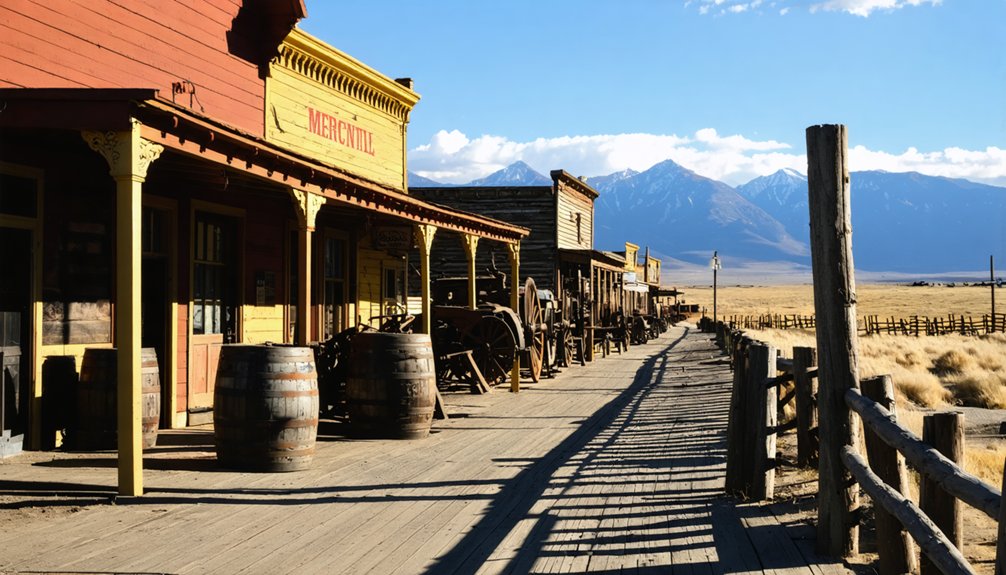
Bodie waits for you like a dare — California’s official gold rush ghost town, a National Historic Landmark preserving 170 weathered buildings in a state of “arrested decay” across high desert terrain that couldn’t be more different from Summit City’s alpine meadows.
Bodie history runs deep, and Bodie attractions pull hard at anyone chasing gold rush ghosts.
Don’t miss these haunting details:
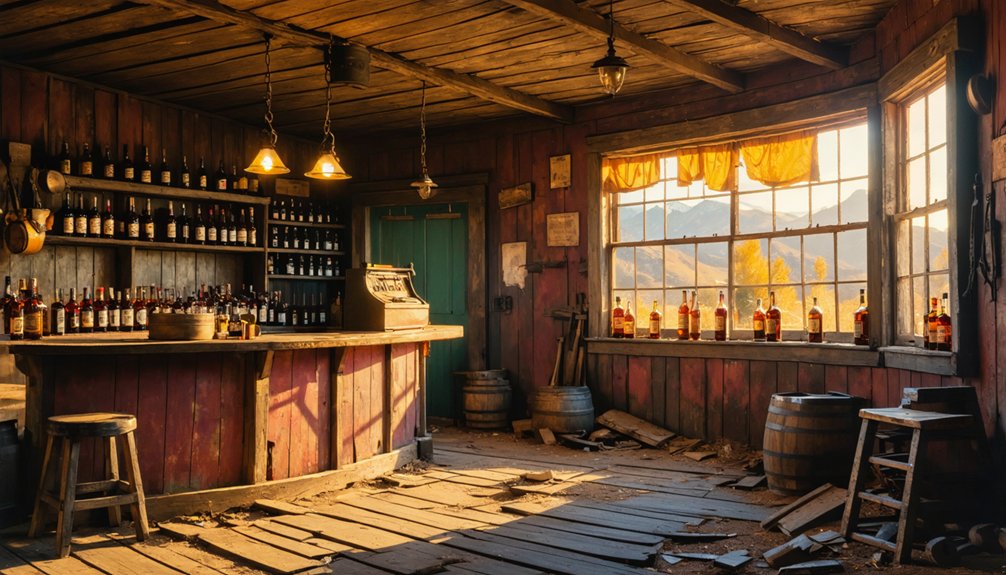
- Saloons frozen mid-pour, bottles still lining dust-covered shelves
- A schoolhouse where chalk dust seems to hang in the cold desert air
- Mining machinery rusting under brutal high-altitude sun
- Empty streets that once roared with 10,000 souls during the 1870s boom
Pair Bodie with Summit City’s silence, and you’ve got California’s ultimate ghost town contrast.
Gear and Vehicle Checklist for Reaching Summit City
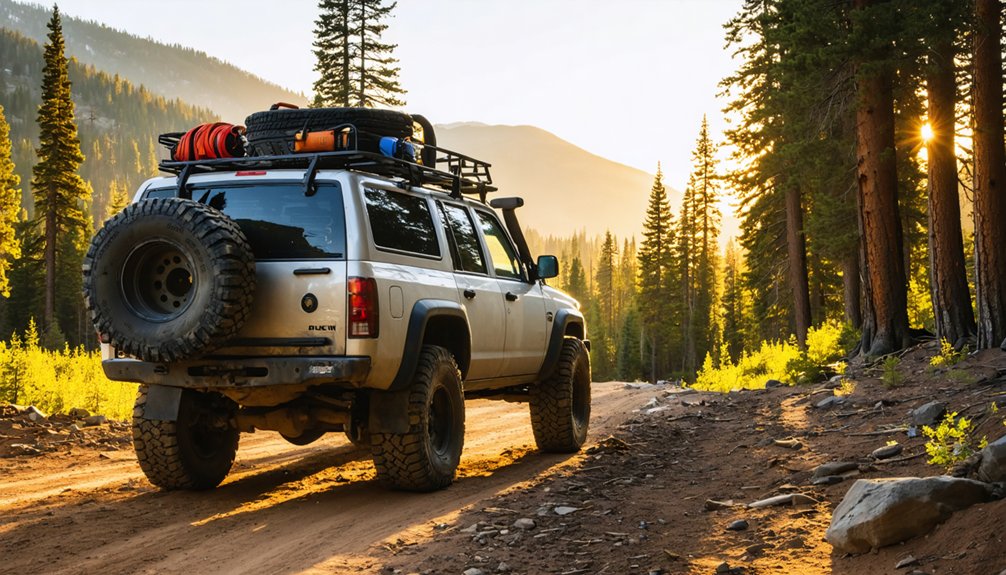
Reaching Summit City demands the same rugged determination that drove 4,000 fortune-seekers to haul freight up these granite peaks via block and tackle in the 1860s.
Your gear essentials include topographic maps, extra fuel, water, and emergency supplies since you’re traversing remote Sierra Nevada terrain with zero services nearby.
Vehicle recommendations start with high-clearance 4×4 rigs capable of handling the long-forgotten wagon route along Fordyce Creek, accessible only July through September.
Pack trail tools, recovery gear, and satellite communication because cell service doesn’t exist up here.
The old immigrant road that once carried dreamers toward fortune now rewards only the self-sufficient traveler.
Come prepared, and Summit City’s silent granite landscape will deliver an authentically wild slice of California’s forgotten history.
Frequently Asked Questions
Was Summit City Ever Officially Designated a California Historical Landmark?
The knowledge doesn’t confirm Summit City’s official landmark designation, but you’ll find its ghost town history and historical significance impossible to ignore as you wander these forgotten Sierra Nevada shores, where freedom once thundered through 80 wild saloons.
Are There Guided Tours Available Specifically for Summit City Ghost Town?
No guided tours exist for Summit City, but you’ll forge your own path through ghost town legends, embracing historical preservation firsthand. Grab your 4×4, follow forgotten wagon routes, and let Summit City’s untamed spirit ignite your wanderlust.
Did Summit City Have Any Connection to the Transcontinental Railroad Construction?
Imagine miners abandoning Summit City for railroad camps nearby. This ghost town’s railroad history isn’t direct, but you’d find workers drawn away by transcontinental construction buzz, draining Summit City’s population as tracks pushed westward through Sierra Nevada.
Is Camping Permitted Overnight Near the Summit City Ghost Town Site?
The knowledge doesn’t specify camping regulations near Summit City, so you’ll want to verify with local authorities. Don’t let uncertainty stop you—ghost town amenities are minimal, but the wild Sierra Nevada freedom you’ll discover there is boundless.
Were Any Summit City Artifacts Preserved in Local Museums After the Floods?
The knowledge doesn’t confirm artifact preservation in local museums. Flood impact from 1923 and 1998 swept remnants away, leaving you to chase Summit City’s ghost through historical records, scattered foundations, and your own adventurous imagination.
References
- https://www.facebook.com/100063519214225/posts/california-gold-rush-ghost-town-summit-city-meadow-lakein-june-of-1863-the-trapp/1453715933422367/
- https://www.highsierratopix.com/community/viewtopic.php?t=13493
- https://metalcloak.com/blog/magic-at-the-meadow
- https://amadorgold.net/tours/ghosttowns/summitcity/index.html
- https://www.youtube.com/watch?v=ZbAp1HubqLQ
- https://www.youtube.com/watch?v=DZoSIrbFPxs
- https://en.wikipedia.org/wiki/List_of_ghost_towns_in_California
- https://en.wikipedia.org/wiki/Bodie
- https://ingasadventures.com/2009/08/25/meandering-toward-meadow-lake-ghost-town-of-the-gold-rush-era/
- https://westernmininghistory.com/towns/california/meadow-lake/