Summit Siding in Sutton, Vermont, is a forgotten 19th-century rail siding tucked into the foothills of the Green Mountains. You can reach it via scenic routes off Interstate 91, and it’s best explored from late spring through early fall. Pack sturdy boots, a first-aid kit, and a charged phone before you go. It’s a compelling starting point for a broader Vermont ghost town road trip, and there’s far more to uncover ahead.
Key Takeaways
- Summit Siding is located in Sutton, Caledonia County, Vermont, accessible via scenic routes from Interstate 91 near the Green Mountains foothills.
- Visit between late spring and early fall for the most favorable weather and exploration conditions.
- The site features overgrown earthworks and structural fragments, offering authentic ghost town exploration alongside nearby towns like Glastenbury and Somerset.
- Pack sturdy boots, a first-aid kit, hard hat, heavy gloves, water, flashlight, and a paper map before visiting.
- Stay on visible paths, avoid testing old structures, and inform someone of your itinerary before departing.
What Is Summit Siding and Why Does It Matter?
Tucked away in the Town of Sutton, Caledonia County, Vermont, Summit Siding is one of those forgotten places that rewards curious travelers willing to seek it out.
Nestled near the hamlet of Perry in the foothills of the Green Mountains, this former 19th-century rail siding once moved agricultural goods and timber across the region.
You’ll find it carries more than just historical weight. Summit Siding holds cultural significance as a window into Vermont’s industrial past, when rail lines shaped entire communities.
Local legends still drift through the surrounding hills, adding mystery to your visit. It’s now largely abandoned, but that’s exactly what makes it compelling.
If you crave open roads, forgotten history, and genuine discovery, Summit Siding deserves a spot on your itinerary.
Where Exactly Is Summit Siding in Vermont?
Nestled in the Town of Sutton, Caledonia County, Summit Siding sits at approximate coordinates 44.97273° N, 72.28145° W — a precise pinpoint in Vermont’s rural northeast.
Tucked into Caledonia County’s quiet expanse, Summit Siding rests at 44.97273° N, 72.28145° W — Vermont’s rural northeast, precisely.
You’ll find it tucked within the foothills of the Green Mountains, near the quiet hamlet of Perry. The surrounding landscape shapes your visitor experience immediately — rolling terrain, sparse settlement, and that unmistakable sense of stepping somewhere forgotten.
You can reach the site via local roads, with marked trails threading through the township. Its position in northeastern Vermont adds to its historical significance; this wasn’t a random stop but a deliberate industrial node serving regional agriculture and timber networks.
Pack your map, verify road conditions before you go, and embrace the rural remoteness — it’s exactly what makes Summit Siding worth the drive.
The Railroad History That Made Summit Siding
When you look into Summit Siding‘s past, you’ll find its roots planted firmly in 19th-century rail expansion, when the site emerged as a working siding to move agricultural goods and timber out of Vermont’s rugged interior.
At its peak, it kept local industry connected to broader markets, making it a small but essential cog in the regional economy.
Rail operations eventually lost ground through the mid-20th century, and Summit Siding slipped into abandonment, leaving behind only traces of the commerce it once supported.
19th Century Rail Origins
During the 19th century, Summit Siding emerged as an essential cog in Vermont’s regional rail network, established specifically to move agricultural goods and timber out of the rugged foothills of the Green Mountains.
Its railroad impact stretched far beyond simple transportation — it connected isolated rural communities to broader markets, fueling local economies and shaping the entire region’s development.
You can almost picture the steam engines rolling through Caledonia County, loaded with freshly cut timber and farm goods destined for distant cities.
The historical significance of this modest siding shouldn’t be underestimated; it represented Vermont’s industrial ambitions during a transformative era.
Rail lines gave remote settlements like Summit Siding a lifeline, turning wilderness outposts into productive hubs that defined northeastern Vermont’s 19th-century identity.
Agricultural And Timber Trade
The railroads that gave Summit Siding its purpose ran on two commodities above all else: timber and agricultural goods. Vermont’s dense forests fed a hungry lumber industry, and timber transportation through Summit Siding moved raw material efficiently across regional lines.
You can almost picture the loaded flatcars creaking down the tracks, carrying freshly cut logs toward mills and markets.
Agricultural logistics shaped the site just as powerfully. Local farms relied on rail connections to ship produce, dairy, and grain beyond Vermont’s mountain borders.
Summit Siding wasn’t just a stop — it was a lifeline that linked isolated communities to broader commerce. When you visit today, you’re standing where that economic engine once roared, a reminder that freedom and industry once moved together on iron rails.
Decline Of Rail Operations
As the mid-20th century arrived, rail’s grip on Vermont’s economy began to loosen. Highways expanded, trucks grew more efficient, and Summit Siding’s role in transportation history quietly faded. You can almost feel that change standing here — the silence where freight cars once rumbled tells the whole story.
Railway decline wasn’t sudden. It crept in as industries modernized and rural communities lost their economic anchors.
Summit Siding, once a crucial hub for agricultural goods and timber, found itself bypassed by progress. Operations slowed, then stopped entirely.
What you’re visiting today is the physical evidence of that shift — a landscape frozen between purpose and abandonment. That tension is exactly what makes Summit Siding compelling.
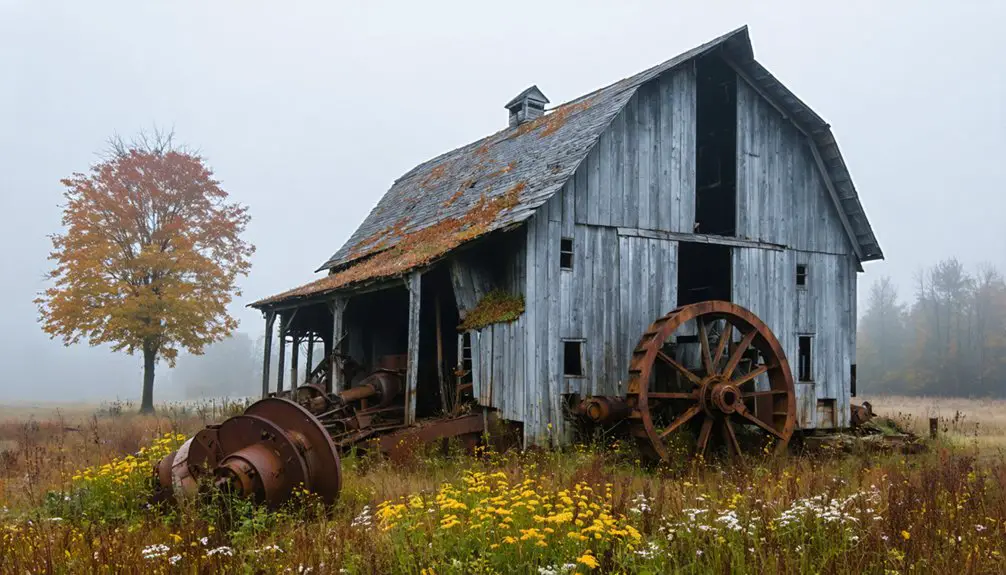
You’re not just seeing a relic; you’re witnessing an economic turning point written in weathered wood and rusted iron.
How To Get to Summit Siding

Nestled in the Town of Sutton, Caledonia County, Summit Siding sits near the hamlet of Perry in northeastern Vermont’s Green Mountain foothills, at approximately latitude 44.97273 and longitude -72.28145 (NAD83).
You’ll reach this ghost town exploration destination via local roads threading through Vermont’s stunning rural landscape. From Interstate 91, head west toward Sutton, following scenic routes that wind through forested hillsides and open farmland.
The surrounding township offers marked trails, making navigation straightforward once you’re in the area. You’ll want a reliable map or GPS since rural signage can be sparse.
The roads are accessible by standard vehicle, though seasonal conditions—particularly winter snow and spring mud—can affect travel. Plan your arrival during late spring through early fall for the most rewarding experience.
What Remains at Summit Siding Today
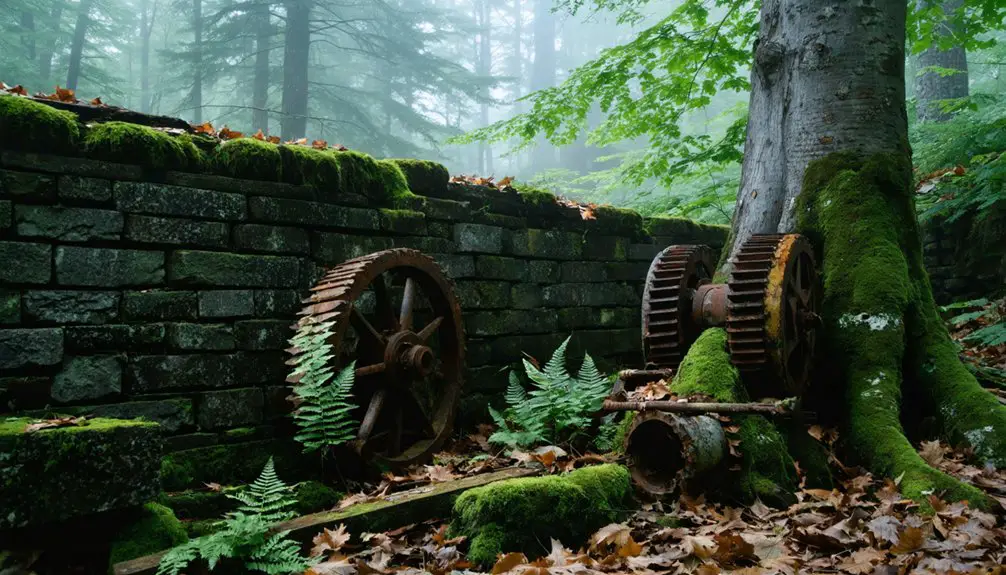
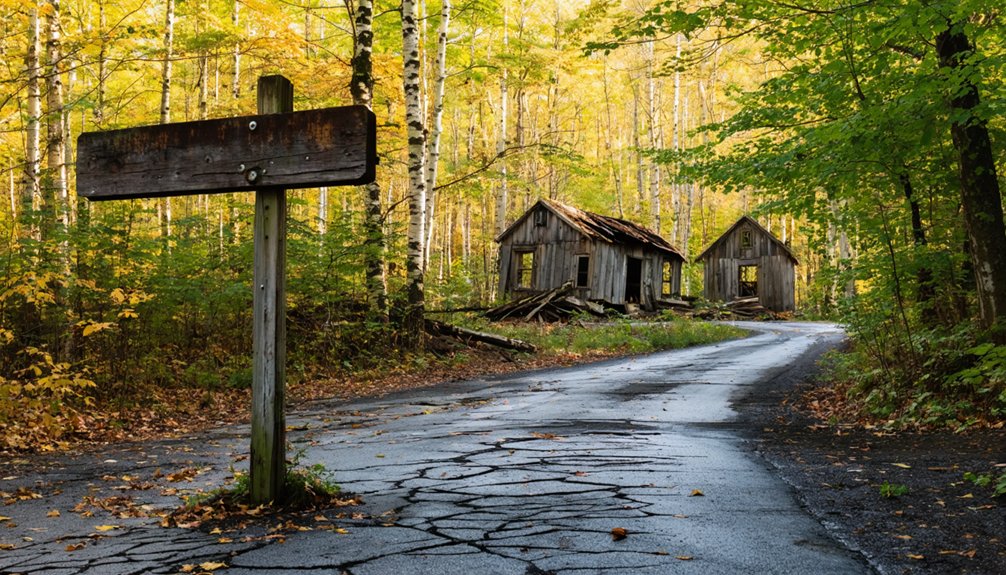
Once you’ve navigated those winding roads and arrived at Summit Siding, you’ll find a site that wears its abandonment quietly. The former rail infrastructure has largely surrendered to Vermont’s relentless seasons, leaving scattered remnants that reward careful ghost town exploration.
You’ll notice traces of the old siding — overgrown earthworks, faint grade lines, and occasional structural fragments half-consumed by vegetation.
The surrounding landscape itself tells the story. Mature trees have reclaimed what industry once carved out, yet the historical significance of this 19th-century agricultural and timber hub remains palpable underfoot.
You’re standing where loaded rail cars once rolled through the Green Mountain foothills. Nothing’s been sanitized or restored here — it’s raw, authentic Vermont history.
Bring your curiosity, walk slowly, and let the silence do the talking.
Nearby Ghost Towns Worth Adding to Your Trip
Summit Siding doesn’t have to be your only stop — Vermont’s ghost town circuit runs deep, and several abandoned sites are worth folding into your itinerary.
If ghost town exploration is your goal, you’ve got compelling options across the state.
Head southwest to Glastenbury, a woodland settlement northeast of Bennington that vanished after its logging industry collapsed.
Glastenbury, northeast of Bennington, is a woodland ghost town swallowed by silence after its logging industry collapsed.
Somerset, also in southwestern Vermont, offers another layer of quiet, forgotten history. Both reward curious travelers who appreciate authentic historic landmarks rather than curated tourist traps.
Closer to central Vermont, Tyson Furnace along Route 100 between Ludlow and Plymouth tells an industrial story, while West Castleton near Lake Bomoseen reveals a lakeside community that simply faded away.
String these stops together and you’ll experience Vermont’s past on your own terms.
How To Explore Summit Siding Without Getting Hurt
Before you set foot on Summit Siding’s abandoned grounds, you’ll want to research current site conditions, local regulations, and weather forecasts to avoid unnecessary risks.
Pack sturdy boots, a first-aid kit, and protective clothing, since deteriorating rail infrastructure and uneven terrain can turn a minor misstep into a serious injury.
Watch every step you take, stay on visible paths, and never test the stability of old structures no matter how solid they appear.
Know Before You Go
Exploring an abandoned site like Summit Siding can be genuinely rewarding, but it demands real preparation. Before you load up the car and head into Caledonia County, understand what you’re walking into.
Ghost town exploration isn’t casual sightseeing — it’s a commitment to respecting both the historical significance of a place and your own safety.
Check current road and trail conditions before you leave, since Vermont’s mountain weather shifts fast. Wear sturdy boots, bring a charged phone, and tell someone your itinerary.
Carry water, a paper map, and a flashlight even for daytime visits. Don’t enter structurally compromised buildings — the thrill isn’t worth a collapse.
Summit Siding rewards the prepared traveler, so go in with eyes open and leave nothing but footprints behind.
Wear Proper Safety Gear
Rugged terrain and decaying infrastructure make proper gear non-negotiable when you’re visiting Summit Siding. Pack the right safety equipment before you hit those mountain roads.
- Sturdy hiking boots — ankle support prevents twisted joints on uneven, root-crossed trails through Vermont’s Green Mountain foothills.
- Hard hat or helmet — crumbling rail-era structures can shed debris without warning; protect your head from overhead hazards.
- Heavy work gloves — rusted metal edges and rotting timber splinters are everywhere along abandoned sidings.
- First aid kit — remote rural locations near Perry mean emergency response takes time; carry essentials yourself.
Follow standard hiking precautions: tell someone your destination, carry water, and bring a charged phone.
Freedom means exploring boldly — not recklessly.
Navigate Terrain Carefully
Once you step onto Summit Siding‘s grounds, the terrain demands your full attention — decaying rail ties shift underfoot, embankments crumble at their edges, and rusted hardware hides beneath leaf litter and overgrowth.
Rural exploration rewards the prepared, not the careless. Move deliberately. Test each surface before committing your full weight, especially near eroded embankment edges where soil gives way without warning.
Ghost towns like Summit Siding don’t maintain their grounds — that’s part of their raw appeal, but it’s also what makes them unforgiving. Stick to visible paths when possible, and scan ahead for unstable debris fields.
Trekking poles provide added stability on uneven ground. Tell someone your planned route before heading out. Freedom in exploration means knowing your limits and steering wisely.
Frequently Asked Questions
What Is the Best Time of Year to Visit Summit Siding?
Summer’s golden light hits Summit Siding’s misty Green Mountain trails just right — you’ll find the best weather from June through September, when seasonal activities like hiking and exploring Vermont’s hauntingly beautiful abandoned railroad history truly come alive.
Are There Any Guided Tours Available at Summit Siding?
You won’t find formal guided tours at Summit Siding, but you can embrace independent guided exploration using local historical insights to uncover the site’s rich railroad past and roam freely through Vermont’s rugged, untamed wilderness.
Can You Camp Overnight Near Summit Siding in Vermont?
You can camp overnight near Summit Siding! Check local camping regulations first, then explore nearby campgrounds nestled in Vermont’s stunning Green Mountains foothills — they’ll give you the freedom to fully immerse yourself in this wild, untamed landscape.
What Local Legends or Ghost Stories Surround Summit Siding?
You’ll find Summit Siding’s haunted history shrouded in mystery. Local folklore whispers of ghostly rail workers and phantom trains echoing through the Green Mountains—legends that’ll send chills down your spine as you explore this abandoned Vermont site.
Are Pets Allowed When Visiting Summit Siding and Nearby Sites?
You’ll want to check local pet regulations before bringing your furry companion to Summit Siding. Most rural Vermont trails welcome leashed pets, and you’ll find pet friendly accommodations nearby to make your adventure comfortable.
References
- https://en.wikipedia.org/wiki/List_of_ghost_towns_in_Vermont
- https://sites.rootsweb.com/~vtcbarne/sutton_history.htm
- https://mapcarta.com/22829116
- https://en.wikipedia.org/wiki/Category:Ghost_towns_in_Vermont
- https://topoquest.com/map.php?lat=44.97273&lon=-72.28145&datum=nad83&zoom=64&map=auto&coord=d&mode=zoomin&size=m&cross=on
- https://nvtami.com/2022/03/09/summit-station-ghost-town/
- http://morrisoncountyhistory.org/ghosttownmap.pdf
- https://ghost-towns.close-to-me.com/states/vermont/
- https://www.educationdirectory.net/articles/are-there-ghost-towns-in-vermont
- https://newenglandwithlove.com/ghost-towns-in-vermont/