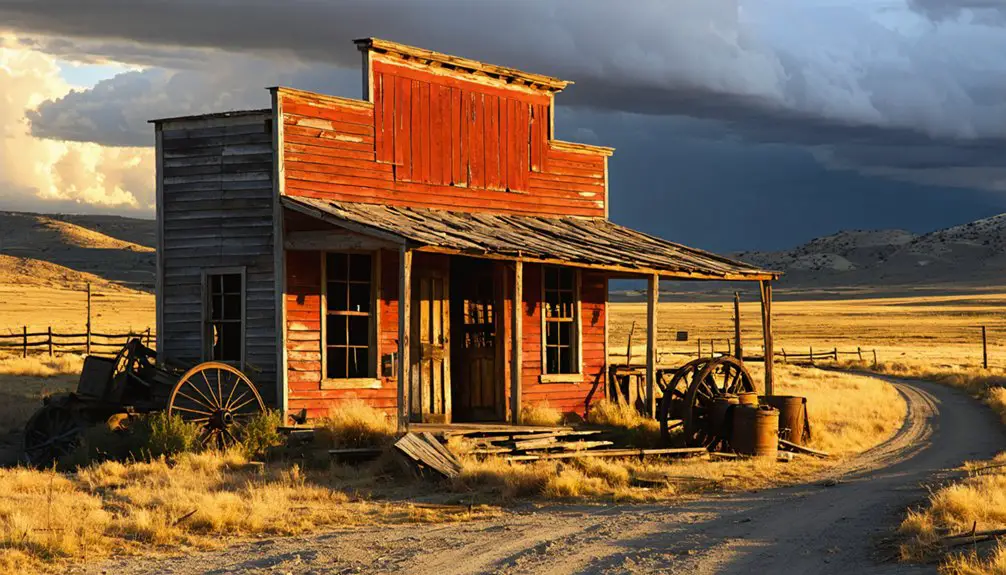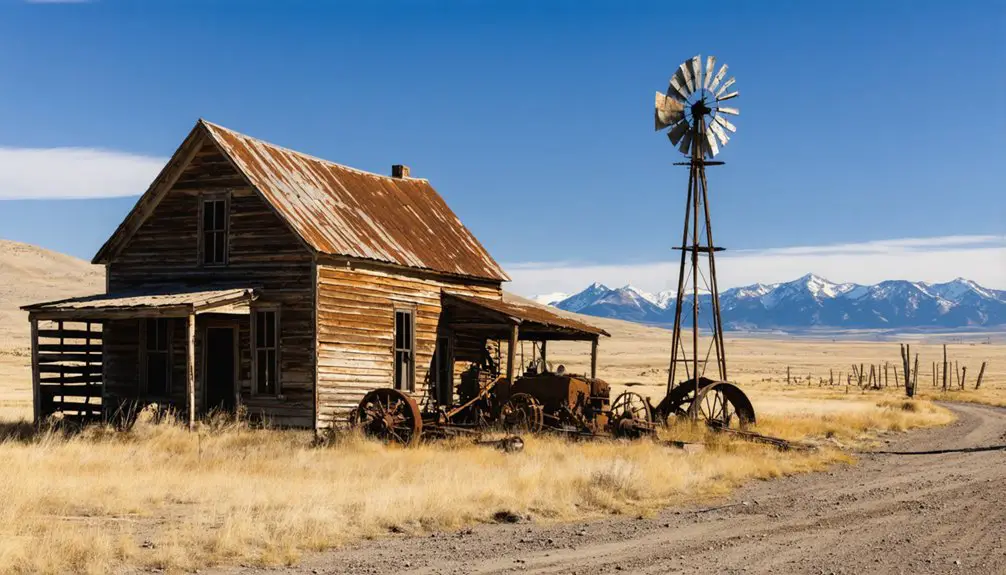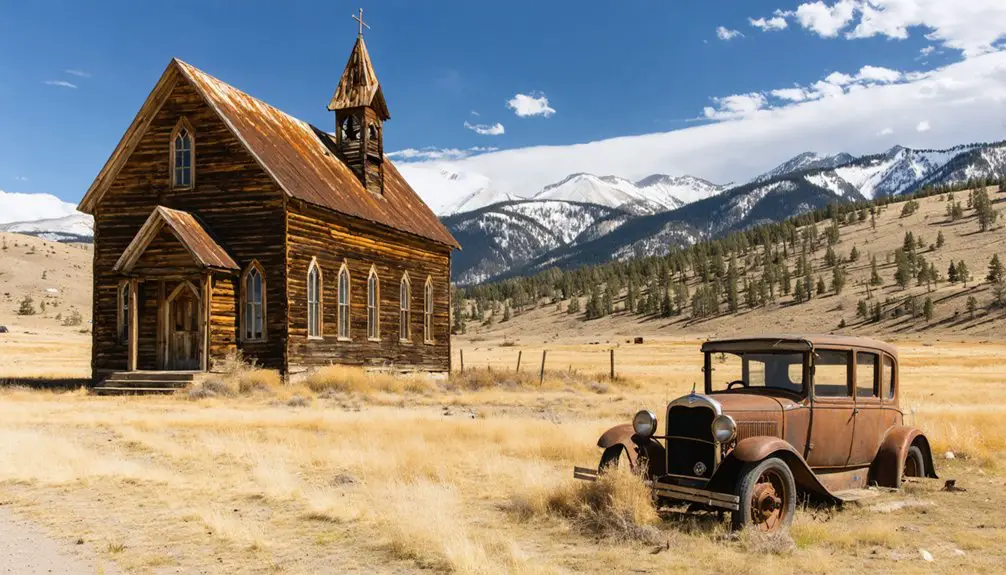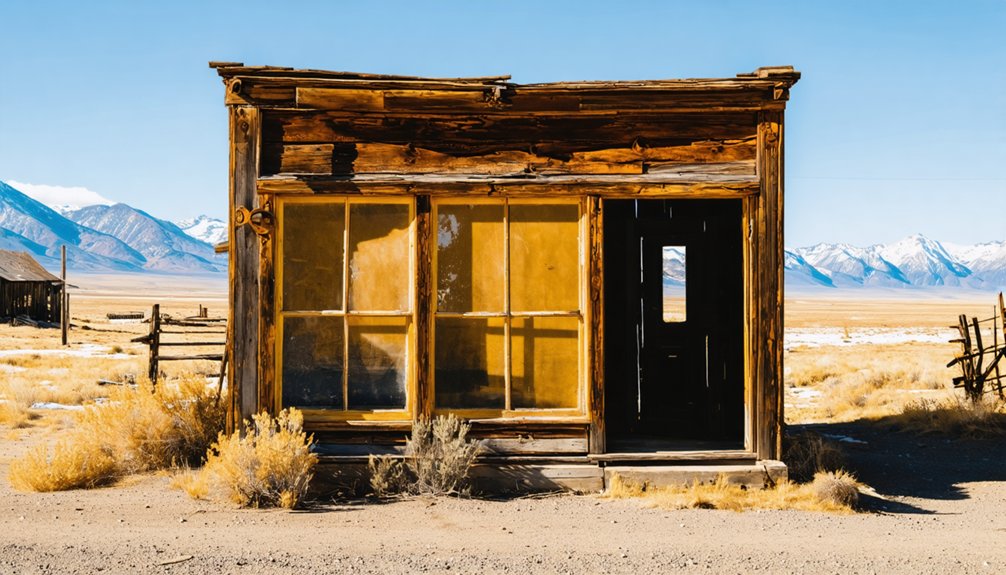
Planning a ghost town road trip to Barrett Town, Wyoming means tracing the boom-and-bust legacy of a frontier settlement that prospectors built and fortune abandoned. You’ll navigate sagebrush flats, pack sturdy boots, and carry extra fuel for remote roads. Visit between late June and early September for the best conditions. The stone foundations, scattered mining artifacts, and collapsed cellars tell a story that’s far bigger than what a quick stop can capture.
Key Takeaways
- Barrett Town, founded in the 1800s, offers rich mining history with visible stone foundations, scattered artifacts, and fascinating boom-and-bust frontier heritage.
- Travel from Casper via Highway 220, bringing extra fuel and paper maps, as services along remote Wyoming routes are extremely limited.
- Visit between late June and early September for ideal temperatures, or weekday fall visits for solitude and optimal photography opportunities.
- Pack sturdy boots, three liters of water, a satellite communicator, first-aid kit, and topographic map for safe exploration of rugged terrain.
- Extend your road trip by visiting nearby ghost towns Battle, Rudefeha, and Copperton, each offering unique frontier history and local folklore.
What Made Barrett Town, Wyoming Worth Settling in the First Place?
When prospectors and pioneers pushed into Wyoming’s rugged interior during the 1800s, they weren’t wandering blindly — they were chasing specific promises buried in the land itself, and Barrett Town emerged from exactly that kind of calculated gamble.
Rich mineral deposits drew hardened men willing to stake everything on uncertain ground. That’s the raw DNA of Barrett Town’s ghost town origins.
Mineral wealth pulled desperate men toward uncertain ground — and that hunger built Barrett Town from nothing.
You’ve got to understand Wyoming’s mining history to appreciate what made this place worth building. Settlements didn’t sprout from sentiment — they grew from ore, from profit, from the brutal mathematics of extraction.
Men hauled equipment across unforgiving terrain because the ground demanded it.
Barrett Town represented that classic frontier equation: valuable resources plus determined people equals instant community.
When the resources disappeared, so did everything else.
How Barrett Town Went From Boomtown to Ghost Town
Once the ore played out, Barrett Town’s fate was sealed with brutal efficiency — the same forces that built it dismantled it just as fast.
Workers packed their tools overnight. Families abandoned homes mid-season. The railroad rerouted, and suddenly Barrett Town had nothing left to offer a world that only valued what it could extract.
What remained fed the ghost stories. Locals whispered about lantern lights moving through empty structures, footsteps on collapsed floorboards.
Those local legends aren’t just campfire talk — they’re the town’s final language, spoken by people who refused to let it disappear completely.
When you drive out here, you’re retracing that collapse. You’ll feel the weight of ambition that burned fast and bright, then simply stopped.
How to Get to Barrett Town: Driving Directions From Major Wyoming Cities
Whether you’re setting out from Cheyenne or Casper, reaching Barrett Town means trading pavement for the kind of rough, lonesome roads that once carried miners and supply wagons into Wyoming’s high country.
From Cheyenne, you’ll head northwest on I-25, then cut west on smaller state routes as the terrain shifts from plains to rugged elevation.
Casper riders push southwest, following corridors that ghost town hunters have traced for decades across the sagebrush flats.
Routes From Cheyenne
Cheyenne, Wyoming’s storied capital, gives you two primary routes to Barrett Town, each cutting through landscapes that once fueled the state’s wildest boom-and-bust dreams.
Head northwest on I-80, then cut north on Highway 30, tracing rails that carried fortune-seekers chasing Barrett Town myths through sagebrush flats and wind-scraped ridgelines.
Alternatively, take US-287 north, threading past Laramie’s high plains before swinging west toward the Carbon County badlands, where ghost town legends have outlasted the settlements themselves.
Both routes demand a capable vehicle, paper maps, and honest fuel planning. Cell service vanishes fast out here.
That isolation isn’t a warning — it’s the invitation. Barrett Town didn’t survive, but the raw, uncompromising country surrounding it absolutely did.
Casper Driving Directions
Casper sits roughly 180 miles north of Cheyenne, making it a natural launching point if you’re approaching Barrett Town from central Wyoming rather than the south.
Casper history runs deep — oil booms, frontier trading posts, and Wyoming folklore surrounding outlaws who vanished into these high plains.
From Casper, head southwest on Wyoming Highway 220, letting the North Platte River guide your instincts. The landscape opens wide here, unforgiving and honest.
You’ll feel the weight of abandoned ambition long before Barrett Town appears on the horizon.
Budget approximately three hours depending on road conditions, which shift unpredictably through Wyoming’s interior.
Carry extra fuel — stations thin out fast once you leave Casper’s edges and commit yourself to the open, indifferent expanse stretching endlessly westward.
Best Time of Year to Visit Barrett Town
You’ll find Barrett Town most alive in summer’s peak windows, when long Wyoming days stretch across the high plains and dirt roads dry enough to welcome your tires without complaint.
Come fall, the surrounding terrain shifts into burnt amber and gold, offering a haunting backdrop that suits a ghost town perfectly.
Winter closes these roads hard, so unless you’ve got chains and nerve to spare, you’ll want to plan your visit before the first November snows lock the landscape down.
Peak Summer Visit Windows
While Wyoming’s high desert can punish visitors with brutal winters and unpredictable spring storms, Barrett Town rewards the patient traveler who times their visit between late June and early September, when mountain passes clear, wildflowers carpet the surrounding terrain, and the ghost town’s skeletal remains emerge fully from the snowmelt.
You’ll find ideal weather during July and August, with daytime temperatures hovering between 70°F and 85°F, giving you long, golden hours to explore crumbling foundations and photograph decaying structures.
Summer activities expand your experience beyond the town itself—hiking adjacent ridgelines, photographing wildlife, and tracing old mining roads demand full days. Pack light layers anyway; Wyoming afternoons shift fast.
This narrow seasonal window isn’t a limitation—it’s your invitation to experience Barrett Town exactly as it deserves.
Fall Foliage Timing
September pulls a curtain across Barrett Town that summer never could—aspen groves ignite in gold and amber, painting the ridgelines above the old settlement in colors that make the ruins look almost alive again.
The fall foliage peaks between mid-September and early October, giving you a narrow but spectacular window to catch Wyoming’s high country before first snowfall closes the back roads.
You’ll want to arrive on a weekday if possible. Autumn colors draw photographers and wanderers alike, and the solitude that defines a true ghost town experience disappears fast on fall weekends.
Pack layers, expect overnight temperatures near freezing, and keep your tank full. Out here, the closest gas station doesn’t care about your schedule—but the aspens absolutely reward yours.
Winter Road Accessibility
Once November arrives, Barrett Town stops welcoming casual visitors and starts testing serious ones—snow closes the unpaved access roads quickly, and no plow crew considers a ghost town worth their time.
Winter road conditions transform manageable dirt tracks into treacherous, unmarked hazards. Accessibility challenges demand respect, not improvisation.
Before you attempt a winter visit, know these realities:
- Four-wheel drive isn’t optional — it’s your minimum entry requirement once ice sets in.
- Daylight shrinks fast — Wyoming’s short winter days leave little margin for navigation errors on remote terrain.
- Cell service disappears — carry a satellite communicator, because no signal reaches abandoned ground.
The miners who once endured these Wyoming winters weren’t romanticizing hardship—they were surviving it.
You should plan smarter than they could.
Essential Gear for Exploring Barrett Town’s Terrain
Exploring Barrett Town’s rugged Wyoming terrain demands preparation, so you’ll want to pack smart before you hit the trail.
Sturdy ankle-support boots handle the uneven ground where old foundations hide beneath sagebrush. Layer your clothing — Wyoming’s high-elevation weather shifts without warning.
Carry a reliable topographic map and compass; cell service disappears fast out here. Pack at least three liters of water, high-calorie trail food, and a basic first-aid kit.
A headlamp proves essential if ghost town legends draw you deeper into exploration than daylight allows.
Bring a weatherproof journal to record local folklore details you’ll encounter — inscriptions, structural remnants, stories from the land itself. A camera with extra batteries captures what words sometimes can’t.
Freedom favors the prepared traveler.
Standing Structures, Ruins, and Artifacts Still Visible at Barrett Town
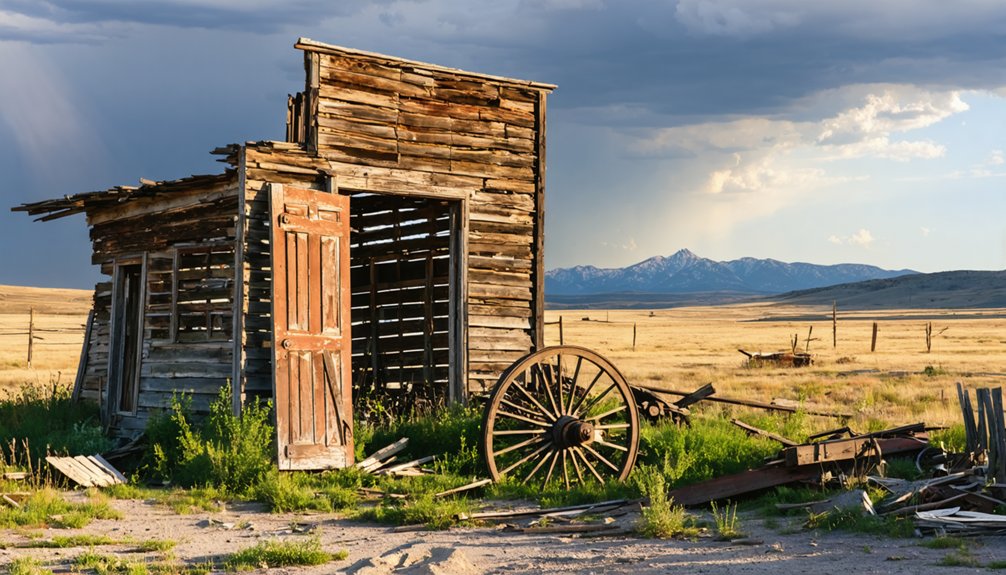
As you pick your way through Barrett Town’s overgrowth, you’ll spot stone foundations still holding their rough geometry against Wyoming’s relentless weather.
Scattered across the site, rusted mining artifacts—drill bits, broken tools, fragments of ore carts—tell the story of hands that once worked these grounds with purpose.
You’re walking through an open-air archive, where every collapsed wall and corroded relic anchors you to the boom-and-bust rhythm that defined Wyoming’s frontier economy.
Surviving Stone Foundations
Though time has reduced Barrett Town to little more than whispers in the Wyoming wind, you’ll still find stubborn stone foundations jutting from the earth like the town’s refusal to be entirely forgotten.
These stone remnants carry real historical significance, anchoring you to lives once lived here.
As you explore, watch for:
- Rectangular foundation outlines marking where homes and workshops once stood
- Stacked limestone corners that reveal skilled frontier craftsmanship
- Collapsed cellar depressions hinting at storage spaces settlers depended on for survival
Run your hand along the rough-cut edges. These aren’t just rocks — they’re the skeleton of ambition.
Every foundation tells you someone bet everything on this place, and that bet deserves your respect.
Scattered Mining Artifacts
Beyond the foundations, the ground itself starts telling a different story — one written in iron and rust. Scattered across Barrett Town’s earth, you’ll find broken drill bits, ore cart fragments, and corroded hand tools half-swallowed by Wyoming soil.
These remnants aren’t decoration — they’re mining history made tangible.
Pick your way carefully through the sagebrush and you’ll stumble onto pieces that ghost town legends are built from: a crushed lantern casing, a rusted spike, the ghost of a pulley mechanism.
Each artifact marks where someone gambled everything on what lay underground.
You’re walking a working floor frozen mid-shift. Nothing’s been curated or roped off. It’s raw, unfiltered, and yours to explore — exactly the kind of freedom serious road trippers chase across Wyoming’s forgotten corners.
Nearby Ghost Towns Worth Adding to Your Barrett Town Route
While you’re tracing Barrett Town’s forgotten footsteps, Wyoming’s broader ghost town landscape rewards the curious traveler willing to push a little further down unpaved roads.
Each nearby settlement carries its own ghost town legends and local folklore waiting to be uncovered.
Extend your route and explore these three stops:
- Battle — Perched on the Continental Divide, this copper-mining remnant offers striking high-altitude ruins and raw frontier atmosphere.
- Rudefeha — Named from its founders’ initials, this isolated site whispers stories of boom-era ambition buried beneath sagebrush.
- Copperton — A weathered reflection of Wyoming’s industrial past, where collapsed structures speak louder than any written record.
Each town rewards explorers who crave unscripted discovery, open roads, and history that nobody’s polished into a tourist brochure.
Where to Stay Near Barrett Town, Wyoming
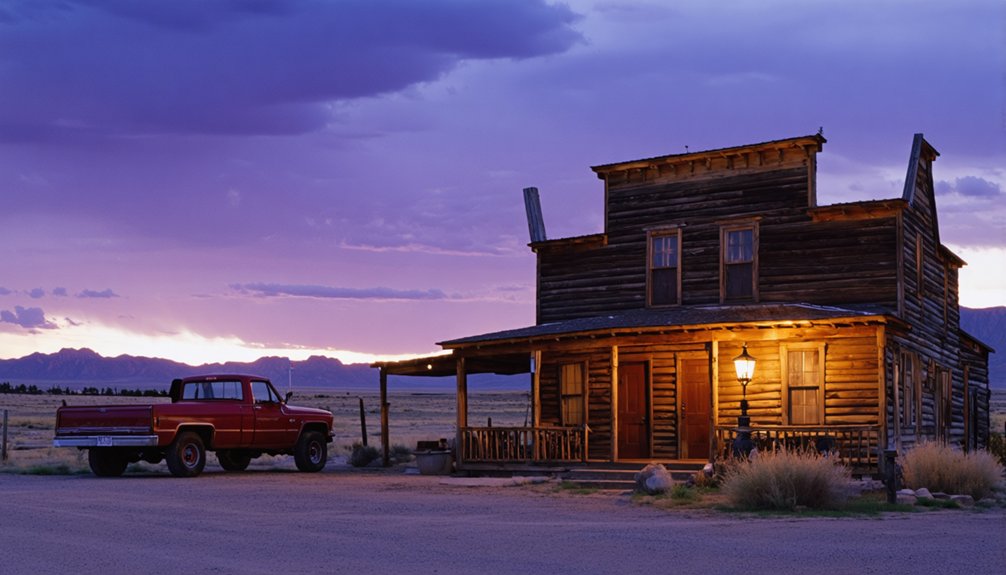
Settling in for the night after a day chasing Barrett Town’s silence means choosing from a handful of basecamp options scattered across Wyoming’s high desert.
Rawlins offers solid motel stops where locals still trade ghost town legends over coffee at dawn. Push further into the basin and you’ll find rustic cabins that sit close enough to the wind-scoured landscape to feel genuinely remote.
Camping along Bureau of Land Management stretches lets you sleep under skies unmarked by light pollution, where local folklore travels freely around a fire.
You’re not looking for luxury here — you’re looking for proximity to something raw. Choose your lodging like you choose your route: deliberately, with room left for the unexpected.
Barrett Town Safety: What to Watch for Before You Explore
Stepping into Barrett Town means stepping into a place that time didn’t gently retire — it collapsed. Ghost town legends romanticize these ruins, but real safety tips keep you exploring freely and returning home. Rotted floorboards, unstable walls, and forgotten mine shafts don’t announce themselves.
Before you wander, lock in these three essentials:
- Wear sturdy boots — debris fields hide rusted metal, broken glass, and uneven ground beneath decades of overgrowth.
- Never enter roofed structures — compromised beams collapse without warning, turning curiosity into catastrophe.
- Tell someone your route — remote Wyoming terrain offers zero cell service, and self-rescue isn’t guaranteed.
Barrett Town rewards the bold, not the careless. Respect what remains, and the ghost town gives you its story intact.
How to Photograph Barrett Town Like a Pro
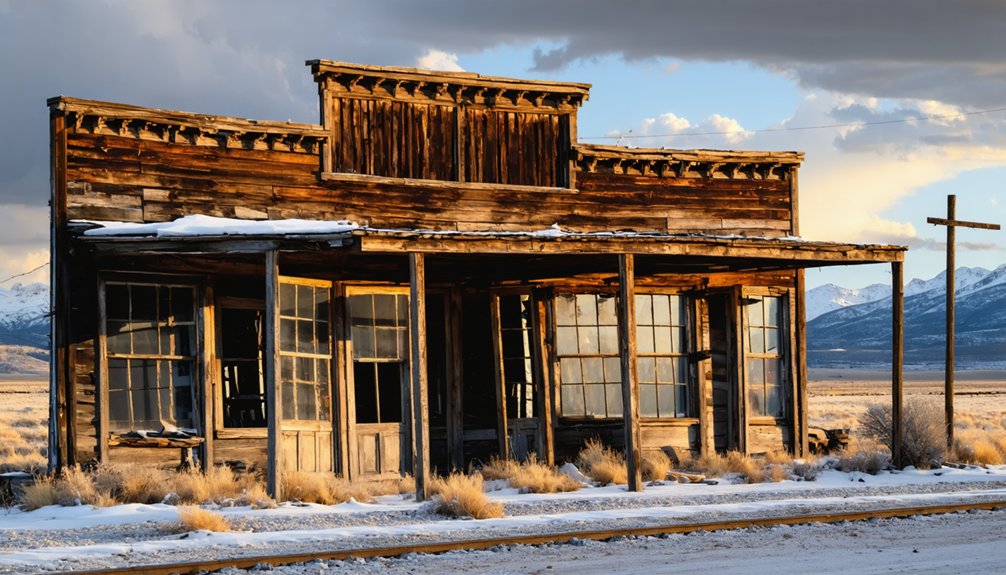
Once you’ve secured your safety plan, your camera becomes the next essential tool for honoring Barrett Town’s story. Ghost town aesthetics thrive in early morning or golden hour light, when long shadows carve texture into weathered wood and crumbling stone.
Use these photography techniques to capture authenticity: shoot wide for environmental context, then move close for intimate decay — a rusted hinge, a collapsed doorframe, a faded wall.
Embrace natural framing. Broken windows and doorways create powerful foreground depth. Shoot in RAW format so you preserve detail in high-contrast scenes. Avoid over-editing; Barrett Town deserves honest documentation, not dramatic filters.
Let the silence guide your eye. You’re not just taking pictures — you’re preserving witness to lives once lived here, before the land reclaimed everything.
Frequently Asked Questions
Is Barrett Town, Wyoming Listed on Any Official Historical Registry?
Barrett Town, Wyoming doesn’t exist on any official historical registry—you’d search a million archives and find nothing. Its historical significance remains unverified, making ghost town preservation efforts impossible for this unconfirmed location.
Are Guided Tours Available for Exploring Barrett Town’s Abandoned Site?
No verified guided experiences exist for Barrett Town’s ghost town exploration — it’s not on any confirmed map. You’re free to chase Wyoming’s wild history, but stick to documented abandoned sites for your adventurous journey.
Can Metal Detecting Be Legally Practiced Within Barrett Town’s Boundaries?
No verified records confirm Barrett Town exists, so metal detecting laws and historical significance can’t apply here. You’d be chasing ghost shadows — research legitimate Wyoming ghost towns before you grab your detector and venture out.
Has Barrett Town Appeared in Any Films or Documentary Productions?
You won’t find Barrett Town’s film history or documentary significance on any screen — it’s an unverified ghost town. Chase real Wyoming legends like Battle or Copperton instead; they’ll fuel your adventurous spirit authentically.
Are There Any Preserved Artifacts From Barrett Town in Wyoming Museums?
You won’t find Barrett Town history or mining artifacts in Wyoming museums — no verified records confirm this settlement existed. Chase real ghost town treasures instead; authentic sites like Rudefeha hold genuinely preserved relics waiting for your adventurous discovery.
References
- https://en.wikipedia.org/wiki/List_of_ghost_towns_in_Wyoming
- https://www.deseret.com/1998/10/17/20773949/marker-identifies-point-of-departure-for-1860s-pioneers/
- https://haunttracker.com/haunted-places/wyoming/
- https://www.wyomingcarboncounty.com/things-to-do/?id=123:5-ghost-towns-to-explore
- https://travelwyoming.com/blog/stories/post/5-wyoming-ghost-towns-you-need-to-explore/
- https://wyomingwhispers.com/wyomings-ghost-towns/
- https://www.youtube.com/watch?v=ErvYfYCW0qk
- https://windriver.org/spookiest-places-wyoming/
- https://www.youtube.com/watch?v=GEoxbcwf8Ks
- https://www.yellowstonepark.com/things-to-do/attractions/ghost-town/